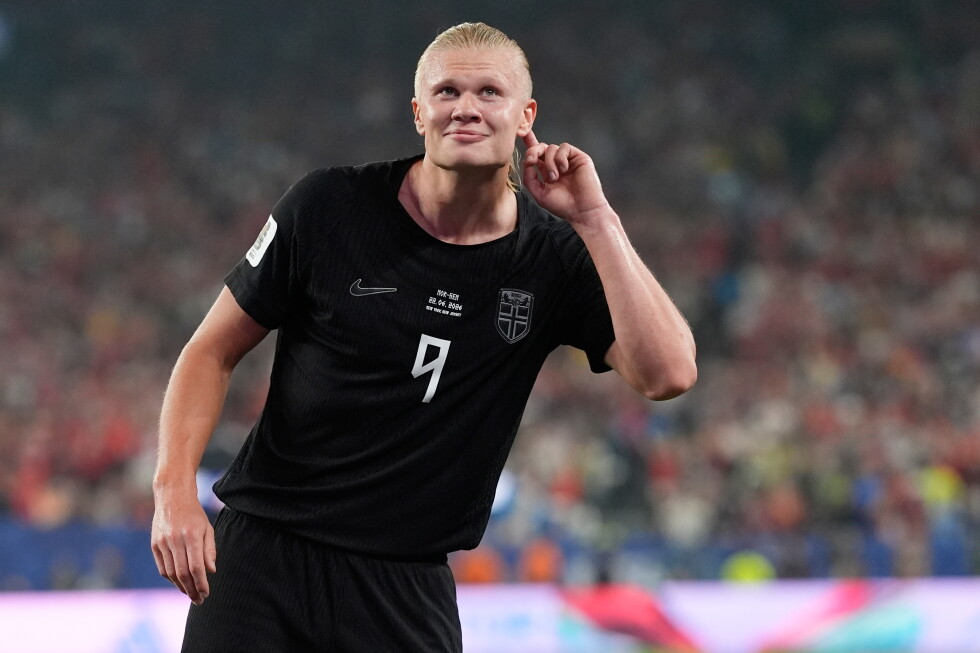
Standing 6 foot 5 inches tall and boasting elite scoring prowess that has outmatched every defender he has faced at the 2026 FIFA World Cup, Erling Haaland has long been known as a seemingly unstoppable on-pitch machine. But to a rapidly growing legion of new, loyal fans across social media, the Norwegian star is far more than just a top striker — he is their beloved “babygirl” and “pretty Norwegian princess.” Haaland’s unprecedented cross-over fame, which has turned casual sports observers and even soccer newcomers into diehard fans, is reshaping how modern athletes connect with global audiences, proving that personality off the pitch can amplify stardom as much as skill on it.
Haaland’s viral appeal stems from a striking contrast that fans cannot get enough of: his imposing physical dominance and clinical finishing as the Premier League’s all-time top scorer collide with an unexpectedly goofy, unfiltered online persona that feels deeply relatable to young audiences. From his signature flowing blond mane and matching color-coordinated hair ties to playful, off-the-cuff social media content, Haaland has leaned into internet culture in a way few elite athletes have before. One of his most famous posts is a Snapchat-filtered selfie where he dubbed animated character Shrek his “twin,” a moment that quickly spread across TikTok, Instagram, and X. This contrast between fierce on-pitch competitiveness and a softer, playful off-pitch presence is what has earned Haaland the internet’s “babygirl” label — a fan slang term used for endearing male public figures who read as warm, approachable, and even unexpectedly vulnerable.
As Haaland leads Norway into a World Cup quarterfinal match against England, his fame has reached a fever pitch that extends far beyond traditional soccer circles. Sarah Wilson, a 31-year-old baseball content creator based in New York, is one of the many new fans who caught “Haaland fever” in recent weeks. Her viral TikTok declaring her love for the star, where she called him both a stunning “pretty Norwegian princess” and one of the best strikers in the world, racked up millions of views and resonated with thousands of new fans like herself. Wilson told the Associated Press that Haaland’s mass appeal boils down to two core pillars: unmatched talent and unapologetically Gen Z energy. “Him being really, really talented — that’s the first pillar of it all. And then you find out that he’s 25 years old and he’s probably the most Gen Z athlete in the World Cup,” she explained, pointing to his regular use of playful Snapchat filters, casual self-posted content, and willingness to joke about himself.
Haaland has actively leaned into his viral fame rather than shying away from it, constantly interacting with fans and leaning into the meme culture that has grown up around him. After scoring two goals to knock Brazil out of the tournament, he posted a cheeky, smug locker room selfie to Instagram with the simple caption: “Well well well.” When an Instagram video with nearly 100 million views joked that his silhouette and hair made him look like a green onion, Haaland commented on the post with a viral side-eyeing dog GIF, playing along with the joke. When Google added an interactive Viking row animation to Haaland’s search results (a nod to a popular Norwegian team tradition), he shared the discovery on X with a winking emoji, encouraging his followers to check it out. In a press conference ahead of the quarterfinal, Haaland said he has enjoyed the overwhelming warm reception he has received in the United States during the tournament. “I think it’s a good thing because I like the Americans. I think they are kind of hilarious as well. They are funny. I like the way they are,” he said. “I think it’s just good and honestly, on every single thing, the World Cup so far here has been amazing.”
Scholars who study athlete-fan dynamics say Haaland’s cross-over success reflects a larger shift in how sports and pop culture intersect in the social media era. Jeffrey Kassing, an Arizona State University professor who researches athlete social media use, noted that sports have long functioned as a powerful cultural force on par with politics and religion, making it natural for top athletes to break into mainstream pop culture. What makes Haaland’s moment unique, he explained, is how much control modern athletes have over their own public image, a stark change from decades past when athletes only interacted with the public through formal press conferences and managed media interviews. “There used to be a whole lot of gatekeeping that would happen with athletes; you would only ever hear from athletes maybe in an interview or in a press conference,” Kassing said. Haaland, he added, is clear evidence of how much more autonomy players have to shape their own public image today.
This increased access to athletes has fostered what academics call parasocial relationships, where fans feel a deep, personal connection to public figures even though the connection is one-way. Gayle Stever, a professor at Empire State University who has studied celebrity-fan dynamics for decades, noted that the vast majority of these relationships are positive, healthy, and normal, with only a small share of fans taking interactions to an unhealthy extreme. Skyla Clarke, a 19-year-old sports management student in Brisbane, Australia and lifelong soccer fan, says she has seen the darker side of modern fan culture: unprompted harassment of players after poor performances, and even targeted abuse of athletes’ family members, is an all-too-common occurrence. Haaland himself has spoken out about the risks of unregulated AI-generated deepfake content targeting players, calling it “bit scary.” But he also framed the widespread viral attention around his team and their traditions as a net positive, noting that widespread interest is usually a sign that a team and a country are succeeding on the global stage.
Haaland is not the only top player to receive this affectionate, playful rebranding from internet fans. Croatian star Luka Modrić, who is widely expected to play his final World Cup match this tournament, has also been dubbed a “babygirl” by fans, who often describe feeling a protective, maternal pull toward him. Modrić’s well-documented difficult childhood growing up amid the dissolution of Yugoslavia has deepened this fan connection, with creators like Clarke sharing childhood photos of the star to help new fans connect with his story. One of Clarke’s TikTok videos about Modrić’s potential retirement gained hundreds of thousands of views in just a few days. Even with Modrić’s much more reserved social media presence, Kassing notes that fans often take it upon themselves to shape the public perception of athletes they feel connected to, often adding playful edits like bows and heart emojis to their photos.\n\nAhead of Haaland’s quarterfinal match against England, fans have also latched onto his longstanding friendship with former teammate Jude Bellingham, the English star, with many fans “shipping” the pair and creating viral fan edits of the two celebrating together. Fans have even dubbed the pairing “heated Haalandry,” a playful reference to the popular romantic drama *Heated Rivalry*, which centers on a relationship between two opposing pro hockey players. For fans like Nulara Ratwatté, a 19-year-old art student at the University of Melbourne, the affection for Haaland transcends soccer skill — even for fans who do not follow the sport regularly. Ratwatté, who went viral for her own videos gushing about the Norwegian star, says she once considered herself outside of soccer culture, but has fully embraced Haaland fandom. She describes him as a “big, friendly giant,” and now tunes into every Norway match to cheer him on. “Truly, from the bottom of my heart,” she said, “I love him.”