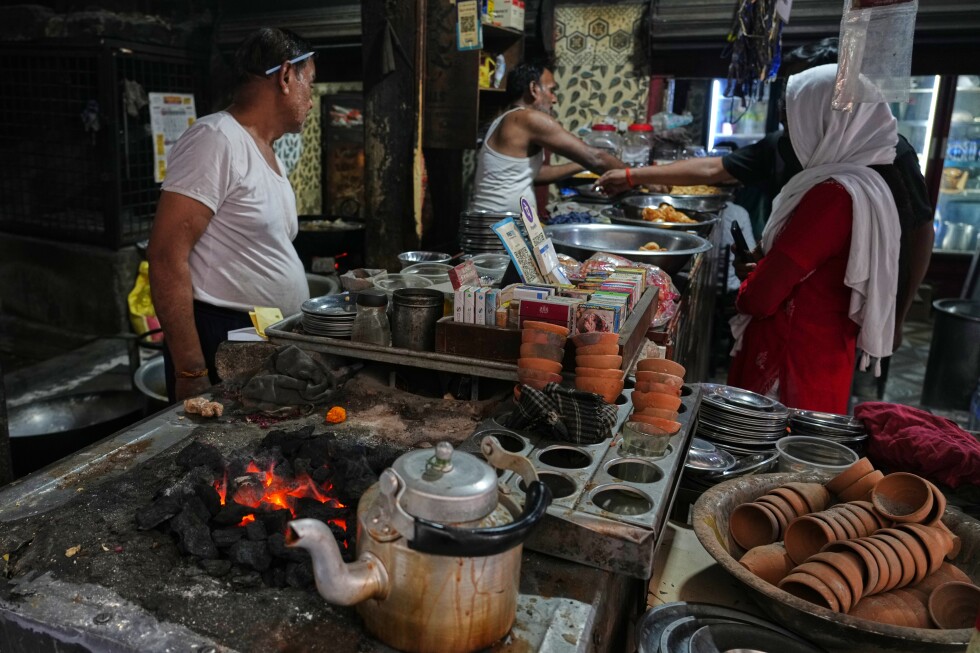
In the dense, informal corridors of Nairobi’s Kibera settlement, one of East Africa’s largest unplanned urban communities, Brenda Obare’s daily routine has shifted backward in recent months. Where a quick twist of her stove knob once ignited a steady blue flame of liquefied petroleum gas (LPG) to cook dinner for her family before sunset, her stove now sits cold most nights. Instead, she crouches over a smoky open charcoal burner outside her tin-roofed home, fanning the flame to bring water to a boil. For Obare and millions of other low-income households across the Global South, LPG has slipped out of reach: skyrocketing prices driven by global energy disruptions tied to the Iran war have made the cleaner fuel unaffordable and often impossible to source. Charcoal, the dirty household fuel that public health and conservation campaigners spent decades working to replace, is once again the only accessible option.
“We don’t have many options,” Obare explained. “You use what you can afford.”
Her story is far from unique. For nearly a generation, governments and environmental organizations across Africa and South Asia have pushed a coordinated transition away from biomass fuels — firewood and charcoal — to LPG, a far cleaner alternative that delivers major public health and conservation benefits. The push was rooted in stark public health data: the World Health Organization estimates that toxic indoor air pollution from burning solid fuels killed 2.9 million people globally in 2021 alone. Beyond public health, the transition was designed to ease relentless pressure on global forests and critical wildlife habitats: unregulated harvesting of trees for charcoal and firewood outpaces regrowth in most regions, driving accelerating deforestation that destroys ecosystems and displaces native species.
Now, the energy crisis sparked by the Iran war has erased years of hard-won progress in just a few months. As households across low-income communities abandon LPG for cheaper, locally available solid fuels, conservation leaders and public health experts are warning of cascading risks that extend far beyond residential kitchens, threatening forests, wildlife, global conservation funding, and even human-wildlife disease prevention.
When communities shift back to harvesting wood from wild areas, people are forced to travel deeper into previously undisturbed forests to meet their fuel needs, bringing them into closer contact with wild animal populations. This increased interaction, paired with economic strain that pushes more people toward poaching and illegal bushmeat hunting, raises the risk of zoonotic disease spillover from animals to humans. The crisis has also weakened core conservation infrastructure: falling international tourism, driven by skyrocketing fuel prices that raise air travel costs and disrupt Middle Eastern aviation hubs, has cut off a critical source of funding for protected area management in wildlife-dependent economies across Africa. For countries like Kenya and Tanzania, where tourism contributes roughly 14% of national GDP and funds anti-poaching patrols, park maintenance, and community conservation programs, even a small drop in visitor numbers creates massive gaps in conservation resourcing. Less funding means fewer rangers on the ground, creating openings for opportunistic poaching that targets already vulnerable wildlife populations.
“The longer this debacle runs, the harder it is going to hit conservation,” noted Mayukh Chatterjee, co-chair of the International Union for Conservation of Nature’s conflict and co-existence specialist group.
Paula Kahumbu, a leading Kenyan wildlife conservationist and CEO of Nairobi-based nonprofit WildlifeDirect, emphasized that the risk to conservation from global energy shocks is not an abstract, distant threat — it starts in household kitchens. “The first conservation risk from an energy shock in Africa is not abstract. It is household fuel switching,” she explained. Rising demand for charcoal and firewood does not only erode forests: it also degrades critical watersheds and fragments wildlife habitats, pushing already endangered species closer to extinction. Beyond conservation, experts warn that linked shocks — rising diesel costs for farm equipment and skyrocketing fertilizer prices — will also cut agricultural productivity, worsening regional food insecurity that pushes more vulnerable communities toward unsustainable natural resource exploitation.
In Nairobi’s low-income settlements, charcoal sellers already report surging demand for their product. “Demand is climbing every week,” said Munyao Kitheka, a long-time charcoal vendor in the city. Charcoal, produced by slow-burning wood in rudimentary kilns, is already the most widely used cooking fuel across sub-Saharan Africa, and one of the single largest drivers of deforestation on the continent.
The same reversal of progress is playing out thousands of kilometers away in India, the world’s second-largest importer of liquefied natural gas, with roughly 60% of its supply originating from Gulf region producers impacted by the Iran war. In Bhalswa, a low-income neighborhood on the outskirts of New Delhi, social worker Rama — who goes by a single name — spent years working with local waste-picking families to help them switch to LPG cooking under government clean energy schemes. Today, most of those families live on less than $3 per day, and can no longer afford inflated LPG cylinder prices. Many have reverted to burning firewood for cooking, while others have moved back to rural villages where free wood is easier to source.
“Things are very, very bad,” Rama said.
The shift back to biomass fuel also deepens gender inequality across low-income communities, experts note. Women and girls are typically responsible for collecting fuel for household use, and the shift back to firewood means they now spend several extra hours each day searching for wood, time that could otherwise be spent on paid work or attending school. “Years of work went into making LPG aspirational. But a global issue like this can reverse some of those gains,” said Neha Saigal, a consultant with New Delhi-based environmental and social justice startup Asar Social Impact Advisors.
Chatterjee, who also works with the UK’s Chester Zoo, pointed to successful conservation projects that are now at risk of unravelling. In India’s northeastern Assam state, a community-led elephant conservation program helped local eateries cut their reliance on wild-harvested wood by switching to LPG, reducing human-elephant conflict as fewer people entered elephant habitats to collect fuel. If households and businesses shift back to solid fuel, Chatterjee warned, that entire project will be set back to its starting point. “That all risks going back to square one,” he said.
Beyond cutting tourism funding, higher fuel prices also disrupt day-to-day conservation field work. Remote conservation projects, anti-poaching patrols, and rapid response teams that intervene to defuse human-wildlife conflict all rely on fuel for vehicles. When fuel prices surge and supplies become unreliable, response times slow. In cases where wild elephants or other large animals wander into populated areas, rapid deployment of trained teams is critical to safely move the animal without injury or death to either humans or the animal. Delays caused by fuel shortages dramatically raise the risk of bad outcomes for both sides.
African and Asian governments have the policy tools to cushion the blow of the energy crisis for low-income households and protect decades of conservation progress, conservation leaders say, but policy action has lagged far behind need. Kahumbu called for targeted, pro-poor subsidies to keep LPG affordable for low-income households, investments in stronger local clean energy supply chains, and expanded support for locally appropriate renewable energy sources such as household biogas, solar-powered cooking, and geothermal energy.
“Treat conservation as essential infrastructure during economic shocks,” she urged.
This reporting was part of a global climate and environmental coverage effort by The Associated Press, which receives philanthropic funding for this work from private foundations, with full editorial control remaining with AP.