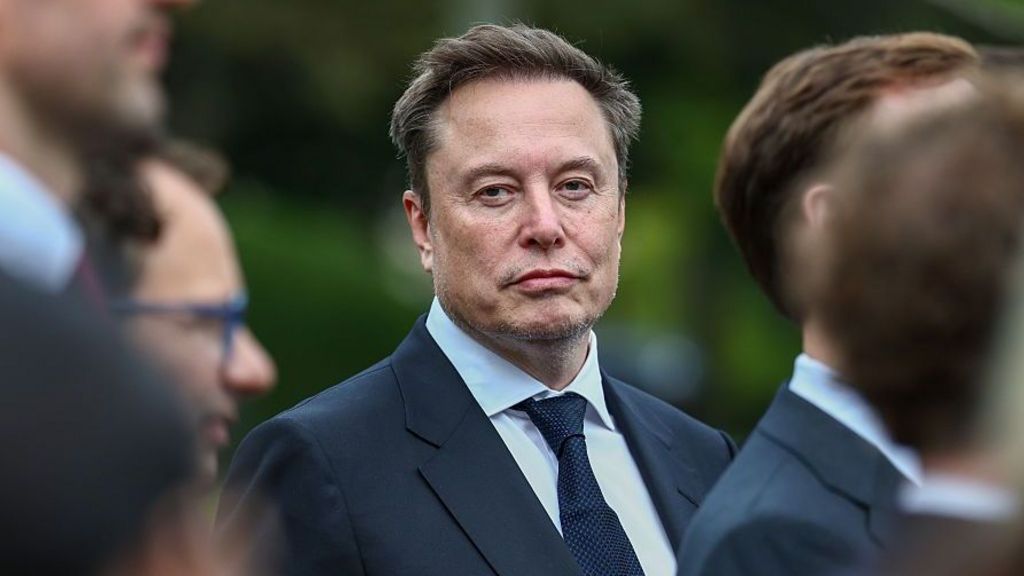
For more than a decade, Elon Musk has built two of the most valuable and ambitious technology companies in modern history: electric vehicle and clean energy leader Tesla, and aerospace innovator SpaceX. Now, the billionaire CEO is actively exploring a combination of the two firms that would reshape the global tech industry and mark the largest corporate merger of all time.
When asked during a Tuesday appearance whether merging the two companies would be a positive move, Musk gave an unqualified confirmation: “Yes.” What makes the conversation more than just speculative discussion is that special independent committees have already been convened to evaluate the feasibility and terms of a potential deal. Musk has been careful to note that no final agreement is guaranteed, and no binding arrangements have been reached at this stage.
With Tesla carrying a current market capitalization of approximately $1.5 trillion (£1.1 trillion) and private-market valuations placing SpaceX at roughly $2 trillion (£1.5 trillion), a merged entity would carry a combined valuation of $3.5 trillion, a figure that dwarfs any previous corporate combination. Any final transaction will require formal approval from shareholders of both companies, but Musk argues that the synergies between the two firms create significant value that can only be unlocked by combining operations.
Industry observers say this move has been foreshadowed for months. Last week’s public unveiling of the next-generation Tesla Roadster, a high-performance electric vehicle equipped with rocket thruster technology licensed from SpaceX, served as a clear symbolic signal that the two companies were moving closer to full integration, according to David Nicholson, Chief Technology Advisor at market research firm The Futurum Group. When asked if the merger will ultimately move forward, Nicholson said: “In my opinion, 100%. It’s just a question of when.”
Musk has framed the merger as a natural alignment of overlapping technological development. Both companies are currently advancing work in next-generation semiconductors, artificial intelligence, and advanced automation, areas where combined research and development would cut costs and accelerate innovation. The merged firm would combine Tesla’s core portfolios of electric vehicles, humanoid robotics, and autonomous driving software with SpaceX’s existing operations in rocket development, satellite infrastructure, large-scale data centers, and global satellite telecommunications.
For Musk, the merger is also a major step toward his long-stated, deeply ambitious goal of establishing a permanently self-sustaining human city on Mars. That vision has drawn skepticism from some industry and scientific observers, but it has also attracted fierce support from many of Musk’s loyal backers and investors.
This potential merger is part of a broader pattern of consolidation across Musk’s business holdings over the past 12 months. In the last year alone, SpaceX absorbed Musk’s artificial intelligence startup xAI and acquired social media platform X, formerly known as Twitter, ahead of a planned public listing for those assets later this year.
Despite broad alignment on long-term benefits, the merger faces a notable procedural hurdle: it must win approval from a majority of disinterested Tesla shareholders, a threshold Musk himself has acknowledged is “quite a high hurdle.” As CEO of both companies, Musk is barred from participating in formal shareholder deliberations to avoid conflicts of interest.
Even with that challenge, many market analysts expect the deal will ultimately win approval in the next few years. Dan Sheehan, an investment analyst at Telos Wealth Advisors, notes that the core technologies of the two companies are highly complementary, a point that will resonate with shareholders looking for long-term growth. Sheehan added, however, that the deal will leave existing Tesla shareholders holding a smaller proportional stake in a far larger, more complex combined business. “There’s no real precedent for how a public company like Tesla gets priced in this,” he explained.
News of the potential merger immediately moved markets: SpaceX shares climbed 8% in after-hours trading following the announcement, while Tesla shares posted a 1.5% gain. For consumers, though, experts say even a completed merger will not bring dramatic near-term changes for Tesla vehicle owners. Nicholson noted that consumer vehicles are already becoming an afterthought in the broader strategic vision, with the primary focus shifting to combining the two firms’ advanced technology capabilities.
Tesla has already been undergoing internal strategic shifts this year. The company has reoriented its production priorities to focus on its top-selling Model 3 and Model Y lines, scaling back development and production targets for slower-selling models. It has also repurposed a portion of its California manufacturing facility to begin production of its Optimus line of humanoid robots.
Sheehan explained that pairing Tesla’s autonomous driving algorithms and robotics platforms with SpaceX’s advanced AI work and global Starlink satellite network could ultimately produce far more capable connected vehicles over the long term. “The question is how much priority cars get inside a company increasingly driven by AI infrastructure,” he added.
Tu Le, founder of automotive advisory firm Sino Auto Insights, noted that integrating SpaceX technology into future Tesla vehicle models, as previewed by the Roadster’s rocket thrusters, could help the company stand out in an increasingly crowded global EV market. Tesla is facing growing competitive pressure from Chinese EV maker BYD, which overtook Tesla as the world’s top-selling electric vehicle manufacturer by volume earlier this year.
While the merger would create value for a range of stakeholders, analysts agree that Musk himself would be the most notable beneficiary. Musk, already the world’s richest person and the first individual to reach a net worth of $1 trillion earlier this year, would gain greater consolidated voting control over the combined entity than he currently holds at Tesla, a key issue that the independent committees evaluating the deal will be required to address. A single combined company would also allow Musk to implement his long-term AI strategy without navigating competing governance structures across separate firms. “The deal itself doesn’t add to Musk’s wealth, but it concentrates it further in one stock,” Sheehan explained.
That increased concentration and influence has the potential to draw greater regulatory and public scrutiny, Nicholson warned. Musk is already a deeply polarizing figure in U.S. politics and business, and the merger could face heightened regulatory pushback if the Democratic Party, whose members have been broadly critical of Musk’s growing influence, gains additional seats in upcoming U.S. congressional elections next month.
Historically, Tesla shareholders have supported Musk’s strategic initiatives. Last year, investors approved a record-breaking compensation package for Musk valued at approximately $1tn, a move that gave the CEO further leverage to pursue his long-term goals. Nicholson argues that Musk’s primary motivation for the merger is not personal enrichment, but advancing his core life mission: making human colonization of Mars a reality. “I honestly don’t think Musk will be keeping track of what the merger will do for his wealth,” Nicholson said.