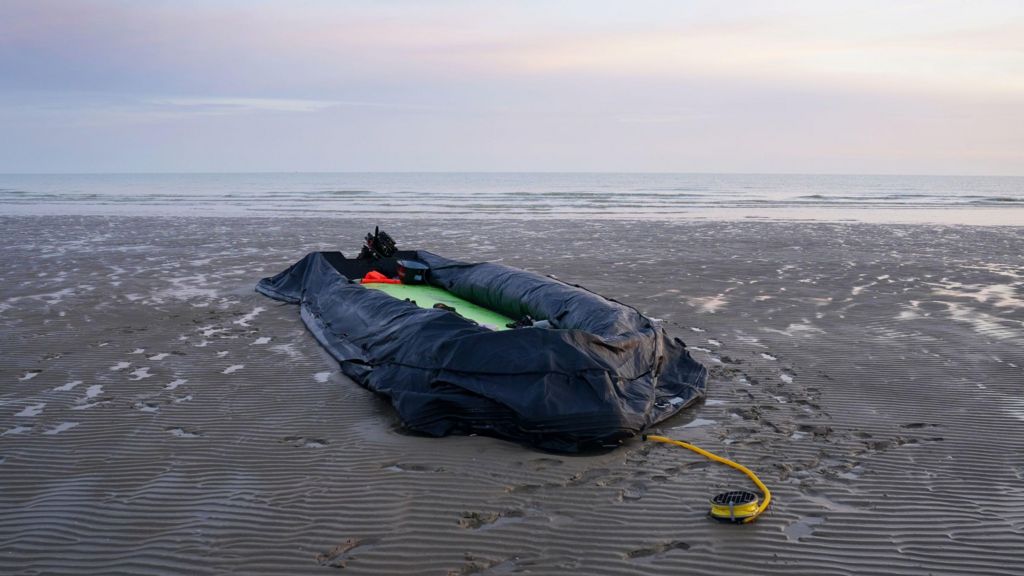
For years, the vast majority of small migrant boats attempting the perilous English Channel crossing to the UK have set off from northern French coastal hotspots including Calais and Dunkirk. But a recent high-profile interdiction has exposed a rapidly evolving tactic by criminal smuggling networks, as authorities confirmed a disabled vessel carrying 38 migrants was launched from Dutch territory before being found adrift without an engine near the Cadzand coast last Saturday.
Dover’s local Member of Parliament Mike Tapp, who has long overseen regional border security matters, emphasized that smuggling gangs will continuously revise their operations in response to stepped-up enforcement. “As we ramp up disruptions at traditional launch sites, these criminal networks will adapt, and a core part of that adaptation is scouting out entirely new departure points and untested methods,” Tapp noted. “That means our operational response has to be just as agile to keep up. We have recorded a significant drop in total crossing attempts this year, but there is still a huge amount of work left to do to end these dangerous journeys entirely.”
Bastiaan van Blokland, a representative from the Netherlands Red Cross who responded to the stranded vessel, described the incident as highly unusual. “This crossing was completely out of the ordinary, and the boat did not look remotely seaworthy,” he explained. “We rarely see cases like this at all. The conditions were dire: 38 people packed onto a tiny craft, many with their legs dangling over the sides, exposed to cold temperatures, and completely adrift once the engine failed. We were all surprised this situation unfolded, and our teams will be on heightened alert for similar activity moving forward.” Dutch authorities confirmed two men remain in custody for questioning on suspicion of leading people smuggling operations.
The incident marks the latest expansion of smuggling routes that have stretched far beyond the short, heavily patrolled Dover Strait in 2024 alone. Earlier this year, a sharp uptick in launches from Belgian coastal areas was linked to intensified French enforcement patrols around Calais and Dunkirk. While Dutch police noted small, isolated prior cases of smugglers attempting to use private yachts to move migrants across the Channel from their shores, the small boat incident represents a notable new development.
Former UK Border Force Director General Tony Smith warned that the trend of diversifying launch sites is a deliberate strategy by smuggling rings to evade detection. “It is abundantly clear that the criminal networks running these operations across Europe are constantly testing new routes to get unauthorized entrants into the UK,” Smith said. “Over recent months, we have seen launches originating from Normandy’s western beaches, the Belgian coast, and now as far north as the Netherlands, moving far past the original model of short crossings directly across the strait to Dover. It is critical that the UK’s Border Security Command evolves its operational strategies to meet this ever-expanding challenge.”
UK government data shows that this year’s summer migrant arrival figures, a period that historically sees a surge in crossings due to warmer, calmer weather, are the lowest recorded since 2020. After a three-week pause in attempts caused by severe recent Channel storms, small boat departures resumed last week. Authorities have highlighted that coordinated cross-border partnerships are driving much of the progress: in October, the UK Home Secretary signed a bilateral agreement with Belgium’s interior minister to streamline real-time intelligence sharing between the two countries’ law enforcement agencies, with the explicit goal of disrupting and dismantling organized smuggling networks. Roughly 1,050 French law enforcement officers are now deployed to joint UK-France border security operations, with an additional specialized surge team recently deployed to patrol western French coastal stretches.
A Home Office spokesperson emphasized the scale of collective progress to date, noting: “Since the current government took office, joint operations with our international partners have blocked more than 50,000 migrant crossing attempts, and seized over 1,100 boats and engines used by smuggling gangs. But we cannot stop there. That is why we are deploying more frontline officers to patrol French coastal areas, and working to eliminate the pull factors that draw people to take these illegal, deadly routes across the Channel.”
Dutch launch shows smugglers are adapting, says MP