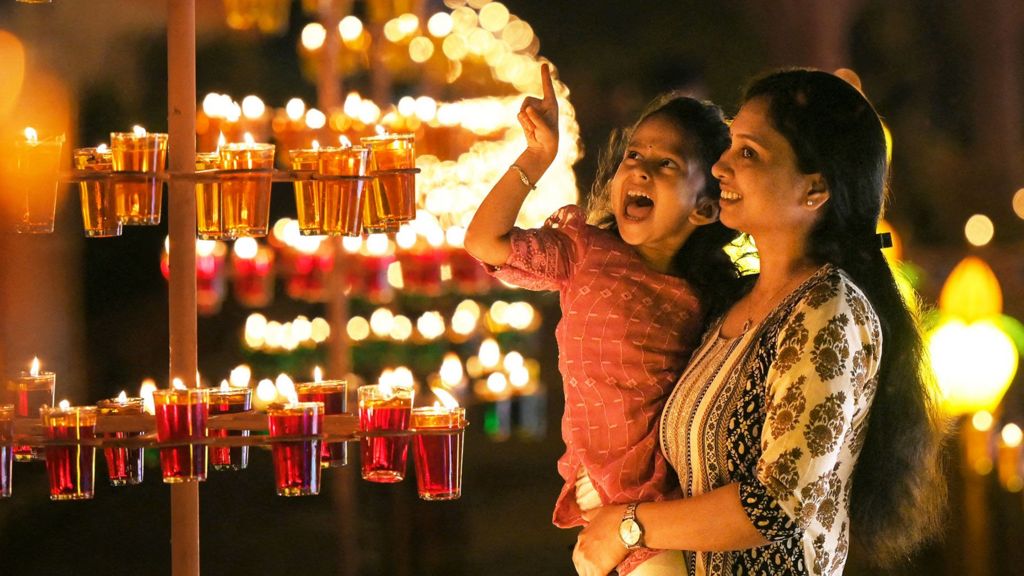
As the Hindu lunar month of Kartik reaches its darkest, moonless night, hundreds of millions of people across India and global diaspora communities are preparing to mark Diwali, the beloved Festival of Lights, whose cultural and social reach has long transcended its original Hindu religious roots. The core symbolic meaning of the festival centers on the timeless victory of light over darkness, good over evil, and wisdom over ignorance, with traditions varying widely across India’s diverse regional and demographic landscapes. Rooted in the Hindu epic Ramayana, the festival commemorates the triumphant homecoming of Lord Ram to Ayodhya after defeating the tyrannical King Ravan, but it holds deeply significant sacred meaning for other minority faiths in India as well. For Sikh communities, Diwali coincides with Bandi Chhor Divas, the solemn observance honoring the 17th-century release of their sixth spiritual leader, Guru Hargobind, from unjust imprisonment at Gwalior Fort. For Jain followers, the date marks the moment the 24th and final Tirthankara, Lord Mahavira, attained moksha, or full liberation from the cycle of worldly rebirth. The five-day long festive cycle kicks off on November 6 with Dhanteras, a day widely regarded as exceptionally auspicious for purchasing gold, silver, new kitchen utensils, or other high-value items that many believe invite lasting prosperity into the home. Subsequent days include Chhoti Diwali (the smaller, preliminary day of light), the main Diwali night dedicated to prayers for Goddess Lakshmi, the Hindu deity of wealth and abundance, regional New Year celebrations observed by many communities, and the closing day of Bhai Dooj, a warm, heartfelt occasion honoring the unbreakable bond between brothers and sisters. In the weeks leading up to the main event, households across the country engage in thorough spring cleaning, drape their spaces in marigold garlands and twinkling string lights, arrange intricate colorful rangoli patterns at entryways, and line their floors, windowsills and thresholds with hand-thrown clay diyas, the traditional ghee-fueled oil lamps handcrafted and painted by generations of local potters. Marketplaces buzz with carnival-like energy, crowded with shoppers stocking up on festive treats, gift sets, decorative lanterns, and supplies for celebrations, while families plan elaborate shared feasts and the exchange of iconic regional Indian sweets as a gesture of love and goodwill. Even India’s major national stock exchanges take part in the cultural tradition, hosting a special one-hour Muhurat Trading session this year on November 8, a custom for investors who believe conducting trades on the auspicious festival day brings long-term financial success. However, this year’s joyful run-up to Diwali unfolds against a troubling backdrop of chronically poor air quality across much of northern and western India, driven by seasonal stagnant weather patterns and widespread agricultural crop residue burning in surrounding rural regions. Ahead of the main celebrations, Delhi’s Air Quality Index (AQI) hit 391 on a recent Friday morning, landing firmly in the official “very poor” classification, while India’s financial hub Mumbai recorded an AQI of 322 on October 24, only recently dropping to a “moderate” 104 level that public health officials fear could spike dramatically once firework displays begin. In a bid to mitigate the anticipated pollution surge, India’s Supreme Court issued a ruling earlier in the week allowing only the production, sale, and limited-time use of certified “green firecrackers” in Delhi and its adjacent national capital region, a specially formulated alternative that generates 20 to 30 percent fewer toxic emissions than conventional pyrotechnics. Critics of the measure, however, have raised sharp doubts about its real-world effectiveness, pointing to longstanding records of repeated firecracker ban violations across Indian cities, and warning that unregulated high-emission traditional fireworks will almost certainly be smuggled into the capital from neighboring states, worsening post-celebration smog levels that often linger for days after the festival ends.