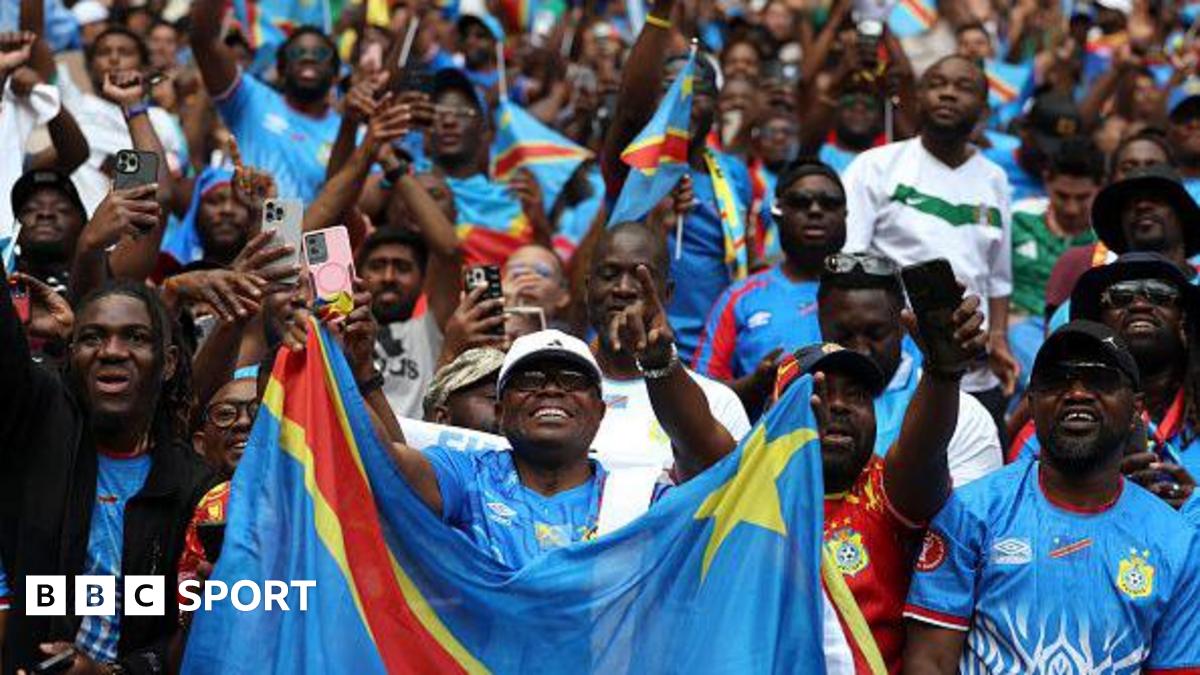
Fifty-two years after their last appearance at football’s global showcase, the Democratic Republic of Congo’s men’s national team – known affectionately as the Leopards – is set to make a historic return to the FIFA World Cup this summer. But a rapidly spreading Ebola outbreak centered in the Central African nation has thrown a wrench into plans for hundreds of home fans, who are now barred from entering the United States to cheer on their side, prompting the country’s football governing body to push FIFA for full ticket refunds.
The World Health Organization designated the ongoing Ebola outbreak a Public Health Emergency of International Concern on May 16, triggering sweeping travel restrictions from the United States, one of three co-hosts for the 2026 tournament alongside Canada and Mexico. As of late May, regional health officials have recorded more than 900 suspected Ebola cases and 223 suspected deaths across Central and East Africa, over 90% of which are concentrated in DR Congo. In response to the public health crisis, the U.S. Embassy in Kinshasa has suspended routine visa processing, and Washington has implemented an entry ban barring all non-U.S. citizens who have traveled to DR Congo, Uganda or South Sudan within the prior 21 days.
While the WHO has refrained from issuing official recommendations for cross-border travel restrictions, the U.S. policy has effectively locked hundreds of DR Congo-based fans out of matches scheduled on U.S. soil. Veron Mosengo-Omba, president of the Fédération Congolaise de Football (Fecofa), told BBC Sport Africa that the federation has formally asked FIFA to issue refunds for hundreds of tickets purchased by fans who now cannot travel. Ticket prices for the 2026 World Cup are already exponentially higher than the 2022 edition in Qatar, reaching up to seven times the cost due to FIFA’s controversial dynamic pricing model.
“They are punished because they cannot get to see the World Cup (in the USA) to support their team,” Mosengo-Omba said. “We don’t want our supporters who love football, who love the World Cup, to lose everything.”
FIFA, the global governing body for football, told reporters it will review Fecofa’s request in due course. Under the organization’s standard ticketing policy, refunds are only issued in exceptional cases such as match cancellations, with fans typically limited to reselling or transferring tickets to other attendees. It remains unclear whether the organization will grant an exception for the affected DR Congo fans.
The timeline of the tournament puts additional pressure on stakeholders: the Leopards kick off their Group K campaign against Portugal in Houston on June 17, meaning fans traveling from DR Congo would have needed to depart by the end of May to meet the 21-day entry requirement. Following their opening match, DR Congo will face Colombia in Guadalajara, Mexico, and most displaced fans have already shifted plans to attend that fixture, which is not subject to U.S. entry rules. If the Leopards advance to the round of 16 as group runners-up, their next match would be held in Toronto, Canada, which currently does not enforce the same entry restrictions as the United States.
Notably, the DR Congo national squad itself remains unaffected by the travel ban. All 26 players in head coach Sebastien Desabre’s squad and nearly all technical staff are based at clubs outside DR Congo. The few Fecofa officials traveling with the team from the country departed weeks ago to satisfy the 21-day waiting period, and the federation canceled a planned pre-tournament training camp in Kinshasa, opting to assemble the squad in Belgium for warm-up friendlies before moving to their tournament base in Texas.
For DR Congo, this World Cup marks more than just a football competition: it is the first time the nation has qualified for the tournament since 1974, when it competed as Zaire, making it the first sub-Saharan African nation to ever compete at the World Cup. Mosengo-Omba, who was elected Fecofa president earlier this May after stepping down from his role as secretary general of the Confederation of African Football, called the long-awaited return a “resurrection” of Congolese football.
“This is the resurrection of football in this country,” he said. “People forget their problems now they are following the Leopards. The team need to go to the second round (at the World Cup). With the new leaders, we bring the football of this country to the very highest level. We are not saying that we will win the Afcon or World Cup, but we will build a solid foundation for the future.”
Mosengo-Omba also pushed back against widespread global anxiety over Ebola, noting that the outbreak is concentrated in rural eastern regions of the large country, and that DR Congo has far more experience containing the virus than any other nation. However, public health experts warn that this outbreak presents unique challenges: it is caused by the rare Bundibugyo strain, which has not circulated globally in more than a decade, and no licensed vaccine is currently available for the variant. Containment efforts have also been hampered by armed conflict in eastern DR Congo that has displaced tens of thousands of people, and widespread community distrust of public health workers.
FIFA added that it remains in close contact with Fecofa, the three host governments, and global health authorities to ensure full compliance with all medical and security protocols for the tournament.