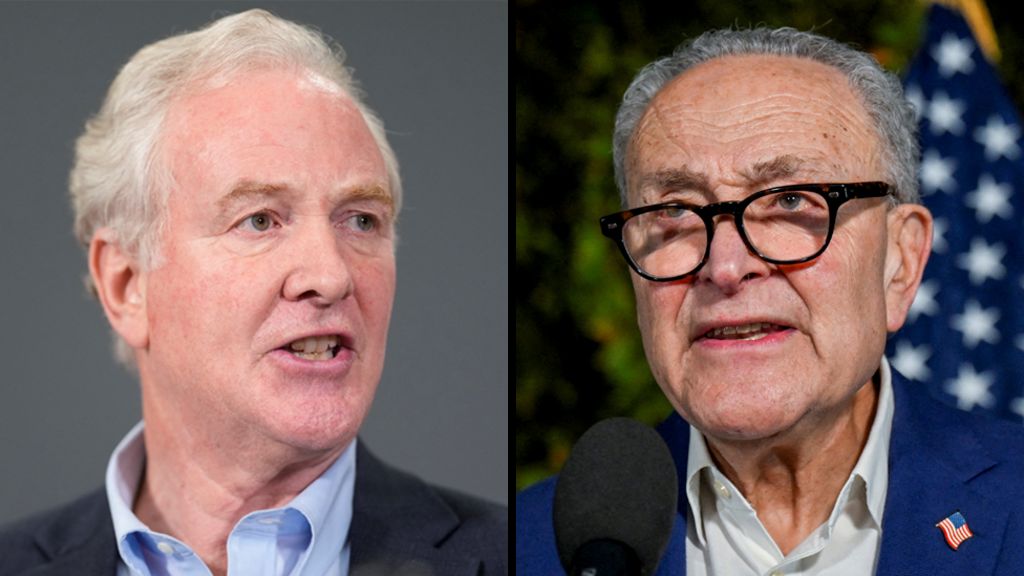
In an unprecedented move following the Democratic Party’s resounding midterm election victories that will grant them full control of both chambers of the U.S. Congress in January, veteran Maryland Senator Chris Van Hollen has formally announced his bid to unseat longtime Senate Democratic leader Chuck Schumer in the upcoming closed-door caucus vote scheduled for early December. Van Hollen, a 67-year-old progressive-aligned lawmaker with nearly a decade of Senate tenure, broke the news of his challenge via a post on social platform X on Thursday, framing the leadership contest as a direct response to the clear mandate American voters delivered at the ballot box earlier that month. “Americans cast their ballots for tangible, structural change to unrig an economy that has long been stacked against working families, and to deliver on that promise, our caucus requires fresh, unshackled leadership that is not tied to decades of entrenched party establishment priorities,” Van Hollen stated in his announcement. For his part, 75-year-old New York Senator Chuck Schumer, who has led Senate Democrats through both majority and minority stints since 2017 and first assumed his Senate seat in 1999, struck a measured, confident tone in response to the high-profile challenge. “I welcome every open, honest discussion about the future direction of our caucus and the critical legislative work that lies ahead for the American people,” Schumer said in a public statement, adding that he remained “incredibly proud of the historic midterm gains our entire team delivered together” and that he already held the commitments from enough caucus members to secure another term as leader. The leadership contest marks the most significant internal party shakeup to emerge from the Democrats’ midterm wins, as long-simmering frustrations among the caucus’s progressive flank have boiled over in recent weeks, with left-wing lawmakers arguing that Schumer’s long track record of centrist, establishment-aligned decision making is no longer suited to deliver on the bold policy promises that mobilized voters across the country. Van Hollen, who has built a reputation as a leading progressive voice in the caucus in recent years, broke with the Biden administration in 2024 to push for restricted weapons shipments to Israel and publicly criticized the White House’s handling of the Gaza conflict, staking out positions that have won him staunch support from the party’s left wing. In a subsequent interview with MS NOW, Van Hollen acknowledged he entered the race as a clear underdog, but emphasized that the caucus’s preferences were far from locked in, describing the contest as “very much in flux.” Already, high-profile progressive figures have lined up to endorse his bid: independent Senator Bernie Sanders released a public statement of support on X, noting that Van Hollen “will not hesitate to stand up to powerful special interests, take on the billionaire class that has hijacked far too much of our political system, and fight tirelessly for the working families that sent us to Washington.” Newly elected Democratic Senator Abdul El-Sayed echoed that praise, arguing Van Hollen would bring the bold, courageous leadership the party needs to capitalize on its new congressional majority. At the same time, a large cohort of centrist and establishment Senate Democrats have reaffirmed their loyalty to Schumer. Nevada Senator Jacky Rosen highlighted Schumer’s proven track record of navigating razor-thin caucus margins and uniting diverse Democratic factions, noting “he has the unmatched experience and relentless grit to lead our broad, diverse caucus through this make-or-break legislative moment.” New York Senator Kirsten Gillibrand added that behind scattered public calls for new leadership, the vast majority of caucus members hold deep gratitude for Schumer’s years of strategic work that paved the way for their historic midterm majority. The outcome of the December closed-door caucus vote will be formalized when the new Congress is sworn in on January 4, at which point the winning leader will assume control of the Senate as Democrats take full command of both the upper and lower legislative chambers.