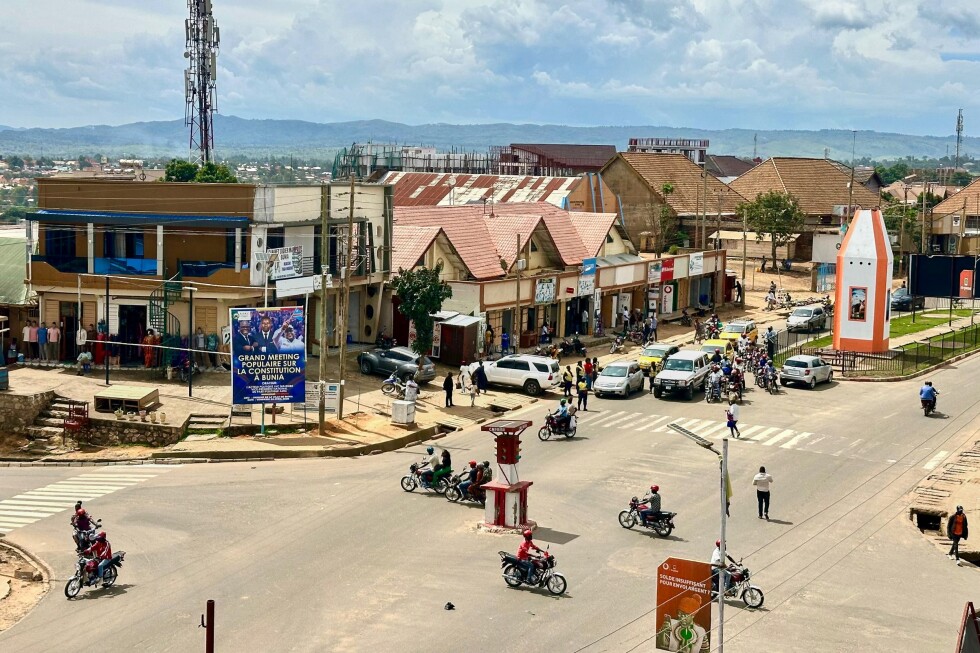
A new Ebola outbreak in the Democratic Republic of the Congo’s eastern Ituri Province has claimed at least 80 lives, pushing public health authorities into a race against time to scale up border screenings, contact tracing and outbreak containment measures as of Saturday, local officials confirmed.
Authorities first publicly declared the emergency on Friday, when they initially reported 65 fatalities and 246 suspected cases across affected areas of the province. As of Friday evening, Congolese Health Minister Samuel-Roger Kamba confirmed that eight cases had received positive laboratory confirmation, four of which have resulted in death. Genomic sequencing has identified the pathogen as the Bundibugyo strain, a less common Ebola variant that has not been the primary cause of past large-scale outbreaks in the country. This event marks the 17th Ebola outbreak the country has grappled with since the disease was first detected in Congolese territory in 1976.
Ebola is an extremely contagious viral pathogen that spreads through direct contact with infected bodily fluids including blood, vomit, and semen. While the disease is classified as rare, it causes severe, acute illness that carries a high fatality rate for most infected patients.
According to Minister Kamba, health investigators believe the suspected index case, or first patient to trigger the outbreak, was a nurse who died at a Bunia hospital three weeks prior, on April 24. Kamba noted the patient showed classic Ebola symptoms, though he did not confirm whether the nurse’s samples were tested for the virus.
Local residents in Bunia, the capital of Ituri Province, described a growing climate of fear to Associated Press journalists on the ground, as communities face repeated burials of suspected Ebola victims. “Every day, people are dying … and this has been going on for about a week. In a single day, we bury two, three, or even more people,” said Jean Marc Asimwe, a long-time Bunia resident. “At this point, we don’t really know what kind of disease it is,” Asimwe added.
The outbreak has already crossed Congo’s northern border, with Ugandan health authorities confirming an imported Ebola case from Congo on Friday. The infected patient died at Kampala’s Kibuli Muslim Hospital on May 14. The Uganda Ministry of Health later confirmed the patient’s remains were returned to Congo for burial, and no secondary locally transmitted cases have been detected in the country to date. As of Saturday, routine health screenings have been activated at the entrance of Kibuli Muslim Hospital to prevent further transmission.
The Africa Centres for Disease Control and Prevention has issued a statement warning of high risk of further cross-border spread, due to the close proximity of affected Congolese areas to both Uganda and South Sudan. Some regional neighbors have already activated emergency preparedness measures: Kenya, a neighbor of Uganda, announced Saturday that it assesses the current risk of Ebola importation as moderate, driven by frequent regional travel and cross-border movement. In response, the Kenyan government has convened a dedicated Ebola preparedness task force and boosted public health surveillance at all border entry points.
For many Ugandans, the new outbreak has stirred painful memories of past public health emergencies. “I really get scared because I remember burying my father without looking at his body during the COVID-19 pandemic,” said Kampala resident Ismail Kigongo.
While the DRC has decades of experience responding to and containing Ebola outbreaks, the response to this latest emergency faces steep structural challenges. The country is the second largest on the African continent by land area, with vast distances between provinces that are frequently disrupted by ongoing armed conflict. Ituri Province, where the outbreak is concentrated, sits roughly 1,000 kilometers (620 miles) from the national capital Kinshasa, and has been ravaged by years of violence from insurgents affiliated with the Islamic State group.
To date, the outbreak has been confirmed in three Ituri health zones: Bunia, Rwampara, and Mongwalu, with the bulk of cases concentrated in the latter two areas. The National Institute of Biomedical Research has only been able to process 13 blood samples from suspected cases, according to Kamba; eight returned positive for the Bundibugyo strain, while the remaining five could not be analyzed due to insufficient sample volume.
Despite the growing death toll, daily life in central Bunia remained largely unchanged as of Friday, with businesses open and public activity continuing as normal. Local resident Adeline Awekonimungu called on national authorities to prioritize a rapid, coordinated response. “My recommendation is that the government take this matter seriously and that it takes charge of the hospitals so that this matter can be brought under control,” she said.
Reporting for this article included contributions from Associated Press journalists Chinedu Asadu based in Abuja, Nigeria; Patrick Onen in Kampala, Uganda; and Evelyne Musambi in Nairobi, Kenya.