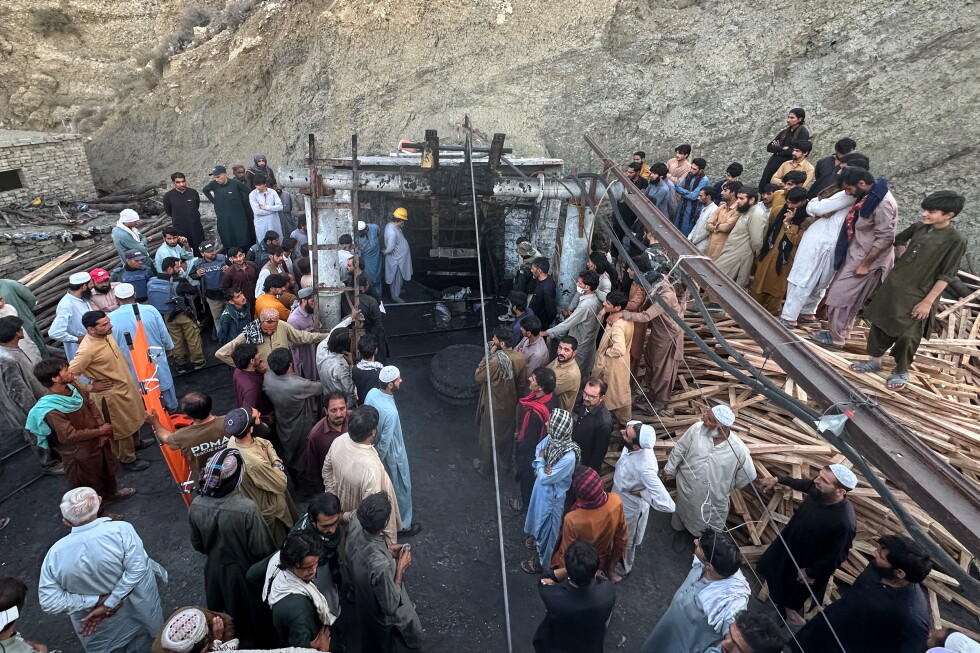
On Thursday, a catastrophic methane gas accumulation triggered an explosion inside a coal mine on the outskirts of Quetta, the capital of Pakistan’s restive southwestern province of Baluchistan, leaving at least 11 miners dead and 31 more trapped deep underground with little hope of survival, according to local officials. Emergency response teams have launched a rushed, high-stakes rescue operation to reach the trapped workers, but extremely dangerous underground conditions have slowed progress significantly.
Hours after the blast, responders recovered the first seven bodies of deceased miners, with an additional four bodies located in subsequent search efforts, government officials confirmed. Ghani Baloch, a senior government mine inspector, told reporters that rescue operations would continue nonstop until every trapped miner is accounted for. However, he warned that the final death toll is almost certain to climb, as methane explosions create immediately lethal conditions underground.
“After a methane gas blast, oxygen levels drop to zero inside the mine, so the chances of pulling anyone out alive fade by the hour,” Baloch explained, adding that rescue teams must move cautiously to avoid triggering secondary accidents that could put their own lives at risk.
Shoaib Nosherwani, Baluchistan’s provincial Mines and Minerals Minister, acknowledged that rescue crews are operating in extraordinarily harsh terrain and conditions. He reaffirmed the provincial government’s full commitment to the ongoing response effort, extended formal condolences to the families of those killed, and announced a compensation package of 500,000 Pakistani rupees, equal to roughly $1,800, for each victim’s next of kin. Nosherwani also added that authorities would launch a full, transparent investigation into the root causes of the blast, followed by a comprehensive review of national and provincial mining safety protocols to prevent future similar tragedies.
The disaster has sparked renewed criticism of systemic safety failures in Pakistan’s coal mining sector from organized labor groups. The Pakistan Central Mines Labour Federation, the country’s leading miners’ union, said it suspects that widespread negligence on the part of mine operators was the primary cause of the explosion, and is calling for accountability for all parties found responsible. In a formal statement, the union urged federal and provincial officials to strictly enforce existing mine safety regulations and impose harsh penalties on mining companies that violate safety standards.
Fatal mining accidents are an all-too-common occurrence in Pakistan, particularly in Baluchistan, where most small and medium coal mines operate without basic life-saving infrastructure. For decades, miners and labor advocates have documented that many operations lack adequate ventilation systems, functioning gas monitoring equipment, and other critical safety measures. Mine operators have repeatedly been accused of cutting corners on safety requirements and failing to provide workers with even basic personal protective equipment.
Despite the extreme occupational hazards and low wages that define the industry, thousands of local families in Baluchistan rely on coal mining for their sole source of income. Pakistan’s largest province by area, Baluchistan is also its least developed, with persistently high rates of unemployment and widespread poverty that leave few alternative work options for working-class residents.