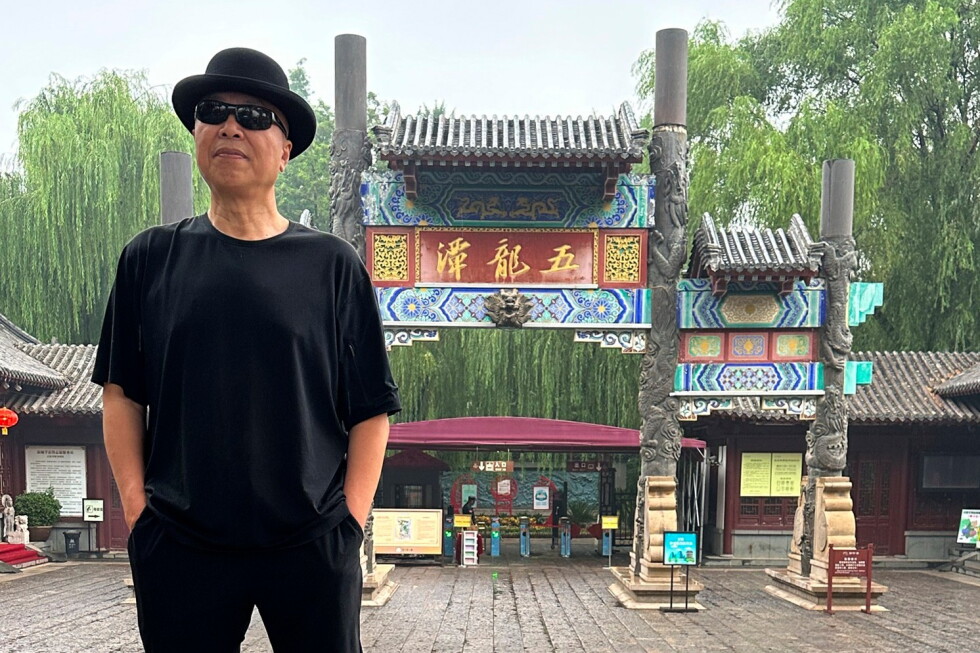
BANGKOK, Associated Press – A U.S.-based Chinese contemporary artist, Gao Zhen – one half of the internationally recognized artistic collective the Gao Brothers – has been handed a three-year prison sentence by a Chinese court after being convicted of the charge of “undermining the reputation of heroes and martyrs” for creating satirical works targeting former Chinese leader Mao Zedong.
Gao, who resides in the United States, was taken into custody by Chinese authorities in August 2024 during a trip to visit family members in China, and has remained detained throughout the legal process leading up to this verdict. According to statements provided by his wife, Zhao Yaliang, the ruling was issued by the Sanhe People’s Court located in Hebei Province, a northern region of China.
The conviction centers on two controversial works created by Gao that Beijing’s regulatory bodies have labeled as insulting to key revolutionary figures in modern Chinese history. The first is a 2009 sculptural piece titled *Mao’s Guilt*, which depicts the founding leader of the People’s Republic of China kneeling in a pose of public repentance. The second is the *Miss Mao* series of caricatures, which portray the former leader with exaggerated feminine features including breasts and an enlarged nose.
Shane Yi, a researcher with Chinese Human Rights Defenders who has worked to raise public awareness around Gao’s case, called the verdict an unambiguous violation of basic artistic freedom of expression. Yi confirmed that Gao’s legal team intends to file an appeal against the sentence, and highlighted a key procedural irregularity: all of the artworks cited in the conviction were created years before the 2018 law under which Gao was sentenced was enacted. The Sanhe People’s Court has not yet responded to requests for comment on the ruling from international media outlets.
Amnesty International has joined global critics in condemning the sentence, framing it as a deliberate attempt to intimidate independent creators across China. “The extended pre-trial detention, followed by the decision to convict Gao Zhen and hand down the maximum three-year prison term permitted under this law, makes clear the authorities’ goal: to scare other artists away from engaging in any form of independent artistic expression,” said Sarah Brooks, Amnesty International’s China Director. “No artist should face criminal punishment for creating work that challenges official narratives or encourages critical reflection on history,” she added.
For Zhao, the verdict has delivered devastating personal disappointment. The couple’s entire family immigrated to the United States years ago, and Zhao told reporters she had prepared new clothes for her husband in anticipation of his expected release, having hoped the time he already spent in pre-trial detention would be counted toward a shorter sentence. Chinese judicial guidelines commonly allow pre-trial custody to be applied as time served against a final sentence. “I told myself I could wait a maximum of two years, and now this outcome has left me deeply disappointed and heartbroken,” Zhao said. “I have not been able to catch my breath since I heard the ruling. All I want is to be reunited with my husband and return home to the United States.”
The Gao Brothers first rose to international prominence during an era of relatively greater cultural openness in China, with their work – which often explores themes of authoritarian rule and state censorship – exhibited in both domestic and international galleries and museums. In recent years, however, the Chinese government has significantly tightened restrictions on cultural and political expression, particularly after passing the 2018 law that criminalizes any speech or creative work deemed to insult the reputation of the nation’s official revolutionary heroes and historical figures.