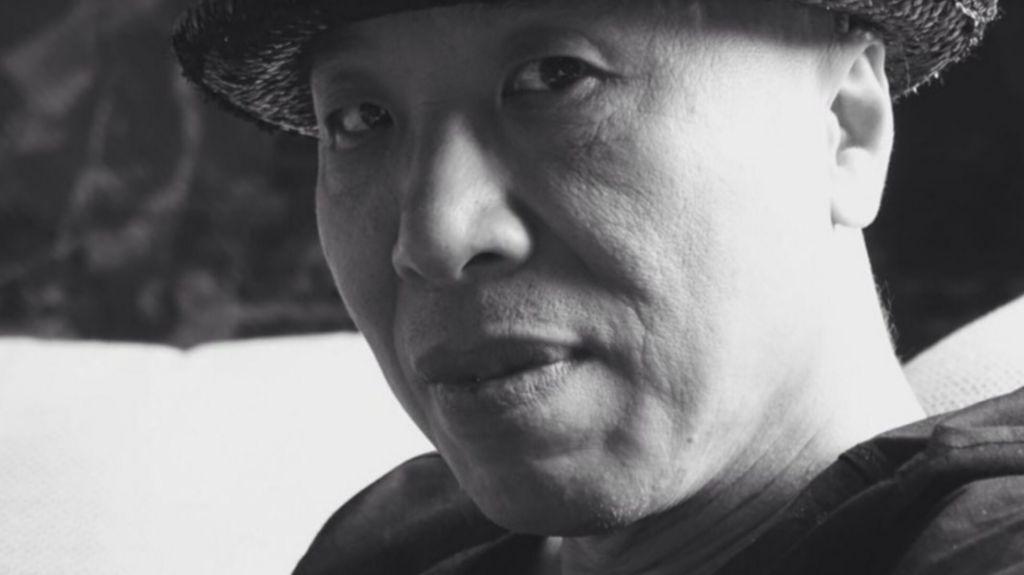
A prominent 70-year-old Chinese artist known for politically provocative satirical work has been handed the maximum three-year prison sentence on charges of defaming China’s officially revered historical figures, according to multiple international human rights organizations. The guilty ruling was issued Tuesday by a court in northern China’s Hebei Province, which found Gao Zhen’s artwork violated the reputation of state-sanctioned heroes and undermined public interest.
Gao, who first rose to international acclaim alongside his brother Gao Qiang as a leading voice in Chinese contemporary art through the 1990s and 2000s, has become one of the most high-profile targets of Beijing’s expanding crackdown on dissenting artistic expression. The works at the center of the legal case date back more than 15 years, created years before the 2018 law under which he was charged. The most controversial piece, co-created with his brother, is *Execution of Christ*, a sculptural installation showing a squad of figures resembling Mao Zedong holding Jesus Christ at gunpoint. Two additional works were also cited in the prosecution: *Mao’s Guilt*, a life-sized sculpture of Mao kneeling in a pose of repentance, and *Miss Mao*, a satirical piece depicting the leader with exaggerated feminine features and a long Pinocchio-style nose.
After relocating to the United States in 2022, Gao returned to China to visit his studio on the outskirts of Beijing in August 2024, where he was taken into custody. He has already been held in detention for two years prior to the sentencing, and authorities additionally moved to seize all of his artwork and impose an exit ban on his wife and 7-year-old child, barring them from leaving the country.
The closed-door trial, held earlier this year in a single day, received almost no domestic media coverage within China, consistent with the government’s pattern of restricting public reporting on politically sensitive cases. Amnesty International confirmed Tuesday that Gao intends to file an appeal against his conviction. If the original verdict is upheld, he will complete his sentence in August 2027 after accounting for the time he has already served in detention.
International human rights bodies and political observers have widely condemned the sentencing as a significant escalation of the Chinese Communist Party’s efforts to police dissenting expression, even beyond China’s borders and applying retroactively to work created decades earlier. Amnesty International’s China Director Sarah Brooks called the ruling a deliberate attack on fundamental artistic freedom. “No artist should face criminal punishment for creating work that challenges official narratives or encourages critical reflection on history,” Brooks stated Tuesday. She added that the case illustrates how vaguely worded, politically motivated legislation is weaponized—including retroactively—to silence any person who dares to hold views divergent from the ruling party.
The United Nations Human Rights Office also raised urgent red flags about the case in comments to AFP, pointing to three core concerns: the retroactive application of criminal law, the use of severe criminal penalties to punish protected artistic expression, and the punitive collective impact on Gao’s family. Gao Qiang, who remains outside of China, told the BBC earlier this year that the outcome of the case sends an unambiguous chilling message to artists globally: “Even if a work was made 15 years ago, it can still be turned into a crime if today’s political climate changes.”
China analysts note that Gao’s case fits into a broader pattern of expanding authoritarian control by the CCP, with the party extending its regulatory and punitive reach to target citizens even when they reside abroad, and enforcing political conformity retroactively on decades-old creative work. The case has drawn renewed international attention to the 2018 law that criminalizes defamation of heroes and martyrs associated with the Communist Party, a piece of legislation that rights groups say has been systematically used to erase critical discourse about modern Chinese history.