分类: world

  • Three Russian diplomats expelled from Austria over spying accusations

    Three Russian diplomats expelled from Austria over spying accusations

    In a sharp escalation of diplomatic tensions between Vienna and Moscow, Austria has ordered the expulsion of three Russian diplomats over allegations of unauthorized espionage activity carried out from official Russian diplomatic sites within the country. The expelled personnel have already departed Austrian territory, according to top government officials.

    Austrian Foreign Minister Beate Meinl-Reisinger confirmed that the intelligence gathering operation relied on an extensive network of surveillance antennas, described as a “forest of antennas,” installed across the rooftops of Russian diplomatic properties — including the main Russian embassy in central Vienna and a separate Russian diplomatic compound outside the capital. Initial reporting by Austria’s national public broadcaster ORF, which was later formally verified by the Austrian foreign ministry, first brought the existence of the antenna network to public attention.

    Long a source of friction for Austrian domestic intelligence agencies, the antennas have enabled Russian operatives to intercept satellite internet data from a wide range of organizations, including multiple international bodies based in Vienna, ORF reported. In an official statement shared with the BBC, Meinl-Reisinger framed the expulsion as a decisive break from past policy under Austria’s new governing coalition. “Espionage is a security issue for Austria,” she said. “We have brought about a change of course in this government and are taking decisive action against it. We have made this clear to the Russian side, particularly with regard to the forest of antennas at the Russian embassy.” The foreign minister added that the misuse of diplomatic immunity to conduct spying operations was completely unacceptable under international norms.

    The Russian embassy in Vienna has rejected the Austrian allegations in strong terms, denouncing the expulsion as an unjustified, politically motivated move that Moscow will not let go unanswered. “We regard this latest unfriendly move by the Austrian authorities as entirely unjustified, purely politically motivated and categorically unacceptable,” the embassy said in a formal statement. “Moscow will undoubtedly respond harshly to these completely ill-considered actions on the part of the Austrian side.”

    This latest incident comes amid a growing string of Russian espionage accusations across Central Europe, affecting both Austria and neighboring Germany. In January 2026, Vienna launched the highest-profile Austrian spy trial in decades, when former Austrian intelligence official Egisto Ott went on trial on charges that he passed classified information to Russian intelligence operatives and fugitive former Wirecard executive Jan Marsalek in exchange for payment. Ott’s legal team has vigorously denied all allegations, and the trial remains ongoing as of this reporting.

    Marsalek, an Austrian citizen who is wanted on fraud charges by German authorities and listed on an Interpol Red Notice, is widely accused of operating as an asset for Russia’s Federal Security Service (FSB). He fled Europe through Austria in 2020 after the collapse of Wirecard, and is currently believed to be residing in Moscow. Just weeks after Ott’s trial began, Germany also expelled a Russian individual accused of spying and summoned the Russian ambassador to Berlin to formally protest the activity. In a public social media statement, the German foreign ministry stressed that it would not tolerate espionage on German soil, especially when conducted under the protection of diplomatic status.

    Vienna’s status as a global hub for espionage stretches back decades, rooted in its Cold War history as a neutral European power located directly along the Iron Curtain, which made it an ideal listening post for both Western and Eastern bloc intelligence agencies. Today, the city hosts permanent headquarters for multiple major international bodies, including the United Nations and the Organization for Security and Co-operation in Europe (OSCE). Most nations maintain multiple diplomatic missions in Vienna to serve these international organizations alongside their official bilateral embassies, creating a large community of diplomats who enjoy universal diplomatic immunity — a status that is frequently abused to cover unauthorized intelligence activity.

    Austria’s most recent annual Report on the Protection of the Constitution identifies Vienna as “one of the last remaining locations for Russian signals intelligence in Europe.” The report notes that the extensive signals intelligence operation has directly led to the unusually large contingent of Russian diplomatic staff accredited in the capital, which currently stands at roughly 220 personnel even after multiple expulsion actions. The document also warns that ongoing Russian intelligence activity originating from Vienna has caused measurable damage to Austria’s international reputation. Since the full-scale Russian invasion of Ukraine in 2022, Austria has expelled a total of 14 Russian diplomatic staff in response to espionage-related incidents.

  • Afghanistan says cross-border attacks by Pakistan hit civilian areas and killed 3

    Afghanistan says cross-border attacks by Pakistan hit civilian areas and killed 3

    Cross-border hostilities have reignited between Afghanistan and Pakistan, marking another setback to fragile diplomatic efforts to de-escalate months of deadly confrontation between the two South Asian neighbors. On Monday, Afghanistan’s interim government issued formal accusations that Pakistan launched unprovoked cross-border artillery strikes that targeted civilian-populated areas in Afghanistan’s eastern Kunar Province.

    Hamdullah Fitrat, Afghanistan’s deputy government spokesperson, announced the casualties and infrastructure damage in a post on the social platform X. According to Fitrat’s statement, the strikes left at least three civilians dead and 14 others injured. The attack also inflicted severe damage on key community infrastructure, destroying two local schools, two neighborhood mosques and a primary health care center that served residents of the affected area.

    Pakistan’s Ministry of Information swiftly rejected Kabul’s allegations in a counter-statement posted to X, pushing back against the claims and shifting blame for escalating tensions to the Afghan Taliban-led administration. The ministry noted that Afghanistan’s accusations come in direct response to a series of cross-border shootings launched from Afghan territory into Pakistan that took place in March and April. Those incursions, Pakistan says, killed nine civilian women and children in Bajaur District, located in Pakistan’s northwestern Khyber Pakhtunkhwa Province.

    In its statement, the Information Ministry labeled the earlier cross-border attacks from Afghanistan “reckless and shameful actions” that expose the Kabul administration’s failure to control militant activity along the shared border. The ministry also questioned the veracity of the damage imagery released alongside Afghanistan’s latest accusation, pointing out that the photos show only localized structural damage with largely intact roofs, a pattern the ministry says is inconsistent with artillery impact and suggests the damage may have been deliberately staged.

    The latest exchange of accusations comes amid a months-long cycle of deadly cross-border clashes that has killed hundreds of people on both sides. The current spiral of violence began in late February, when Afghanistan launched a retaliatory cross-border strike against Pakistan after Pakistani warplanes carried out airstrikes inside Afghan territory that targeted militant groups Islamabad says operate from Afghan soil.

    Pakistan has long maintained that the Afghan Taliban government allows the Tehrik-e-Taliban Pakistan (TTP), also known as the Pakistani Taliban, to use Afghan territory as a base to plan and launch deadly attacks inside Pakistan. The TTP is a separate militant organization from the Afghan Taliban, but the two groups share close ideological and organizational ties and have remained allied since the Afghan Taliban seized control of Afghanistan in 2021 during the chaotic withdrawal of U.S.-led international forces. Afghan officials have repeatedly denied Pakistan’s accusations that they harbor TTP militants.

    In early April, senior officials from both countries met in western China for peace talks mediated by the Chinese government. Following the negotiations, Beijing announced that the two sides had reached a preliminary agreement to avoid further escalation of hostilities and committed to work toward exploring a comprehensive, long-term solution to their border disputes. Despite that diplomatic breakthrough, low-level cross-border clashes have continued intermittently in the weeks since the talks, failing to cement a lasting ceasefire along the 2,640-kilometer shared border.

  • Israel seizes nearly 60 percent of Gaza as it plans to resume war, report says

    Israel seizes nearly 60 percent of Gaza as it plans to resume war, report says

    Even with a U.S.-brokered ceasefire currently in place to de-escalate hostilities in the Gaza Strip, Israel has steadily extended its territorial control across nearly 60% of the enclave as it finalizes military plans for a potential full resumption of war, Israel’s Army Radio reported Sunday.

    Citing senior Israeli military officials, the state-run broadcaster confirmed that top defense commanders are pushing for an immediate return to offensive operations, framing the current moment as a strategic window to achieve their stated goal of dismantling Hamas. Full operational plans for renewed attacks have already been finalized by military planners, with only a final greenlight from Israel’s civilian political leadership still pending.

    As part of this military redeployment, the Israeli Defense Forces have drawn down troop presence in southern Lebanon to reposition multiple combat brigades to both Gaza and the occupied West Bank, the report added. Senior officials also noted that the IDF has recorded a gradual uptick in armed clashes and hostile actions across the frontlines in recent weeks.

    The expansion of Israeli control centers on the so-called “Yellow Line,” a unilateral demarcation Israel established to mark the territory under its military control. When the ceasefire took effect, Israel already held roughly half of Gaza’s total territory; it has since pushed this boundary deeper into the enclave, forcing the entire remaining Palestinian population to crowd into just 40% of Gaza’s original land mass, with Israeli troops permanently stationed across the 60% of territory spanning the enclave’s north, south and eastern sectors.

    The current ceasefire was mediated by the United States in October 2024, designed to end more than a year of full-scale Israeli military operations in Gaza that the text refers to as genocide. The deal’s core terms called for a halt to offensive attacks, the opening of border crossings to allow life-saving humanitarian aid into the blockaded territory, and a phased withdrawal of all Israeli forces from Gaza in later stages of the agreement.

    But Israel has violated the ceasefire agreement repeatedly from its start, according to data from the Palestinian Ministry of Health, which records that near-daily Israeli shelling and raids have killed at least 832 Palestinians since the truce went into effect. Overall, the death toll from Israeli operations in Gaza since October 2023 has surpassed 72,000 Palestinians, with thousands more still unaccounted for and trapped under rubble from destroyed residential and infrastructure buildings.

    The ceasefire agreement also required Israel to remove entry restrictions to allow a minimum of 600 aid trucks carrying food, fuel, medical equipment, emergency shelter materials and commercial goods to enter Gaza daily. But local Gaza authorities report that Israeli bureaucratic and security limits have kept average daily aid deliveries to just over 200 trucks, far below the agreed-upon threshold, worsening a already catastrophic humanitarian crisis for the 2 million Palestinians crowded into the shrinking enclave.

    This report comes from Middle East Eye, an outlet that provides independent, specialized coverage of developments across the Middle East, North Africa and surrounding regions.

  • 130 Nigerians seek repatriation after latest anti-immigration protests in South Africa

    130 Nigerians seek repatriation after latest anti-immigration protests in South Africa

    Amid a resurgence of violent anti-immigrant demonstrations in South Africa, Nigeria has launched a voluntary repatriation program to bring home more than 100 of its citizens stranded in the Southern African nation, the country’s top foreign affairs official confirmed Monday.

    Nigerian Foreign Minister Bianca Odumegwu-Ojukwu announced the initiative after summoning South Africa’s acting high commissioner to Abuja to deliver the Nigerian government’s formal statement of deep concern over the recent unrest. She told reporters that 130 Nigerians have already registered to return, with additional people expected to join the voluntary repatriation effort in the coming days.

    The renewed wave of protests targeting foreign migrants in South Africa, which unfolded last week, has not resulted in any Nigerian fatalities, according to the foreign minister. For years, migrants in South Africa have faced recurrent xenophobic hostility, with scapegoating rooted in the country’s persistent high unemployment rate, where locals often blame immigrant workers for taking scarce formal jobs.

    South African authorities have already taken public steps to address the unrest, formally denouncing the violent attacks and pledging strict enforcement against all xenophobic criminal acts. In a separate diplomatic move, South African Foreign Minister Ronald Lamola held a bilateral phone call with Odumegwu-Ojukwu to discuss the broader tensions around irregular migration. The two officials agreed to collaborate on unpacking the root causes of the unrest and advancing mutually acceptable solutions to the ongoing challenges.

    Beyond the recent anti-immigration protests, the Nigerian government has also raised urgent concerns over two separate fatal incidents from last month that claimed the lives of two Nigerian citizens at the hands of South African security operatives. Following Monday’s diplomatic meeting, Nigerian foreign ministry spokesperson stated that Abuja has formally requested a full, transparent investigation into the two deaths and is seeking cooperative action from South African authorities to share autopsy reports with the victims’ next of kin.

  • Moment United Airlines flight strikes vehicle during landing

    Moment United Airlines flight strikes vehicle during landing

    A rare and startling incident unfolded at New Jersey’s Newark Liberty International Airport on Wednesday, when a United Airlines commercial jet arriving from international waters made contact with a ground vehicle during its landing sequence. The aircraft in question, Flight 164, had been traveling nonstop from Venice, Italy’s Marco Polo Airport, carrying a total of 231 passengers and 10 crew members on board. According to initial reports from the Port Authority of New York and New Jersey, which oversees operations at Newark Airport, the plane completed its landing successfully and came to a full stop without incident beyond the collision with the lorry. No injuries have been recorded among anyone aboard the commercial jet, and all passengers were able to disembark via the aircraft’s gate without assistance once the situation was secured. The only harm reported from the incident was sustained by the lorry driver, who was transported to a nearby medical facility for treatment of minor, non-life-threatening injuries. Airport authorities have launched a routine investigation into the incident to determine what caused the vehicle to be in the incorrect area of the airfield at the time of the landing, and operations at the airport have since returned to their regular schedule with only minor delays for affected flights. United Airlines has also issued a brief statement confirming the incident and noting that they are cooperating fully with local authorities to review the sequence of events.

  • Families evacuated from Gaza enjoy a day to decompress at Rome’s ancient baths

    Families evacuated from Gaza enjoy a day to decompress at Rome’s ancient baths

    ROME, May 4 — For nearly 1,800 years, the grand, intricately decorated Baths of Caracalla, a sprawling ancient public bath complex steps from Rome’s iconic Colosseum, served as a space of leisure, healing, and quiet relaxation for Roman citizens. On a sunlit spring Sunday this year, this historic site took on a new, deeply meaningful purpose: a moment of escape from trauma and medical uncertainty for nearly 50 Palestinian children and their families, evacuated from war-ravaged Gaza to Italy through the country’s humanitarian corridor program for urgent medical care.

    Organized by Guides for Gaza, a volunteer network of Italian tour guides formed to support displaced Gazans, the day-long outing offered more than just a walk through ancient ruins. Beyond a guided tour of the site’s towering marble remnants and ancient engineering features, volunteers arranged light refreshments, games for children, and unstructured time for families to connect and process their experiences away from hospital appointments and the weight of war memories. “We brought these families here so they could experience the joy of visiting an ancient archaeological site,” Luisa delle Fratte, a tour guide with the group, told the Associated Press. Amid ordinary Italian locals spreading picnic blankets on the grass to enjoy the warm spring weather, the Palestinian families, all now temporary residents of Rome, moved seamlessly through the 27-hectare site. They snapped selfies against the backdrop of centuries-old stone columns, watched the new reflecting pool’s fountain jets arc into the air, and followed their guide and translator through the site’s historic halls.

    For 13-year-old Ahmed Skena, one of the evacuees, the outing marked a small break in a long road of medical recovery. Skena was injured in the conflict that has ravaged Gaza, leaving him with impaired speech and limited mobility in one hand and leg. He also lost his father and brother in the war, he shared haltingly with reporters. For Mariam Dawwas, a 25-year-old who traveled to the outing with her husband and four young children, one of whom requires ongoing medical treatment, the safety of Rome is already a profound change from life in Gaza. Dawwas and her family were displaced more than 10 times across the enclave before they were evacuated through the humanitarian program. “Thank God, I am still in a better situation than in Gaza, away from the bombing. At least I am safe, I have shelter, and there is light for my children,” she said.

    Delle Fratte noted that the outing also created a rare chance for reconnection: several of the families had known each other back in Gaza but had not seen one another since their separate evacuations. “It was very beautiful to see them there embracing again and meeting one another once more,” she said. The event also doubled as a fundraiser for ongoing support for Gazan civilians: while the Palestinian families toured the ruins for free, Guides for Gaza offered paid tours to regular visitors to the site, with all donations going to Gazelle, a nonprofit organization that runs child protection programs across the Gaza Strip.

    The ongoing conflict in Gaza erupted in October 2023 after a Hamas-led attack on southern Israel that killed roughly 1,200 people, most of them civilians, and abducted 251 more. Since that time, the Gaza Health Ministry, operating under the Hamas-led government, reports that more than 72,000 Palestinians have been killed in the subsequent military campaign. The ministry’s casualty data, which does not break down numbers between combatants and civilian residents, is widely regarded as generally reliable by United Nations agencies and independent conflict analysts. International diplomatic efforts, including a 20-point ceasefire plan proposed by former U.S. President Donald Trump, remain ongoing to end the conflict and pave the way for reconstruction of the devastated enclave.

  • Guyana and Venezuela return to UN court to settle historic dispute over valuable border region

    Guyana and Venezuela return to UN court to settle historic dispute over valuable border region

    THE HAGUE, NETHERLANDS — A long-simmering territorial dispute between two South American neighbors has taken center stage at the United Nations’ highest judicial body, with Guyana urging the International Court of Justice (ICJ) to uphold a century-old border ruling that grants it control over the resource-rich Essequibo region. Monday marked the opening of a week of public hearings in the case, a proceeding decades in the making that will decide the fate of a 159,000-square-kilometer swath of jungle that Guyana says makes up nearly 70% of its current sovereign territory.

    The Essequibo region is far more than a contested stretch of rainforest: it holds abundant reserves of gold, diamonds, and valuable timber, and sits adjacent to massive newly developed offshore oil deposits that have transformed Guyana’s economic prospects in recent years. For Guyana, the dispute has cast a shadow over its status as an independent nation since it gained sovereignty. “This has been a blight on our existence as a sovereign state from the very beginning,” Guyana Foreign Minister Hugh Hilton Todd told judges assembled in the ICJ’s Great Hall of Justice on Monday.

    The roots of the conflict stretch back to an 1899 arbitration award reached by a panel of arbitrators from Britain, Russia, and the United States. That ruling set the current border along the Essequibo River, granting the vast majority of the disputed territory to what was then British Guiana, the precursor to modern Guyana. At the time, the United States represented Venezuelan interests before the panel, after Venezuela cut diplomatic ties with Britain. Caracas has long rejected the award, arguing that Western powers conspired to rob it of land that rightfully belongs to Venezuela.

    Venezuela maintains its claim to Essequibo dates to the Spanish colonial era, when the region fell within the boundaries of its imperial holdings. The country argues that a 1966 diplomatic agreement reached to restart negotiations on the dispute effectively invalidated the 1899 arbitration, leaving no final settled border between the two nations.

    After decades of unsuccessful mediation efforts failed to resolve the standoff, Guyana formally brought the case before the ICJ in 2018, asking judges to affirm the validity of the 1899 border decision. Members of Guyana’s legal delegation dismissed Venezuela’s objections to the award as unoriginal and flawed. Pierre d’Argent, a lawyer on Guyana’s legal team, called Venezuela’s arguments “lengthy, pointlessly controversial and confusing,” noting they “are not new in any way and have already been rejected by the court.”

    The case has faced repeated procedural hurdles over the past seven years. Venezuela has repeatedly challenged the ICJ’s right to hear the dispute, arguing that the court could not proceed without the participation of the United Kingdom, which ruled Guyana as a colony at the time of the 1899 award. In 2020, the ICJ rejected that challenge and ruled it held jurisdiction over the case, clearing the way for the substantive hearings held this week. In a 2025 order, the court also barred Venezuela from holding regional elections for claimed governing officials for Essequibo, a move that escalated tensions ahead of the hearings.

    Recent political upheaval in Venezuela has added a new layer of tension to the proceedings. Earlier this year, former Venezuelan leader Nicolás Maduro was captured by U.S. forces in a nighttime raid on Caracas, removing him from power. Delcy Rodríguez, Venezuela’s current acting president, has publicly emphasized the country’s claim to Essequibo in recent diplomatic trips, wearing a Essequibo-shaped territorial pin during visits to Grenada and Barbados. The pin has become a widespread symbol among Venezuelan ruling party officials, state media personalities, and lawmakers in the months since Maduro’s ouster, signaling that Caracas remains firm in its territorial claim.

    Venezuela is scheduled to present its opening arguments to the ICJ on Wednesday, kicking off its side of the weeklong proceedings that will lay out its case against the 1899 border award. The court’s final ruling on the dispute will have far-reaching implications for the sovereignty, economic future, and diplomatic relations between the two South American nations.

  • War in the Middle East: latest developments

    War in the Middle East: latest developments

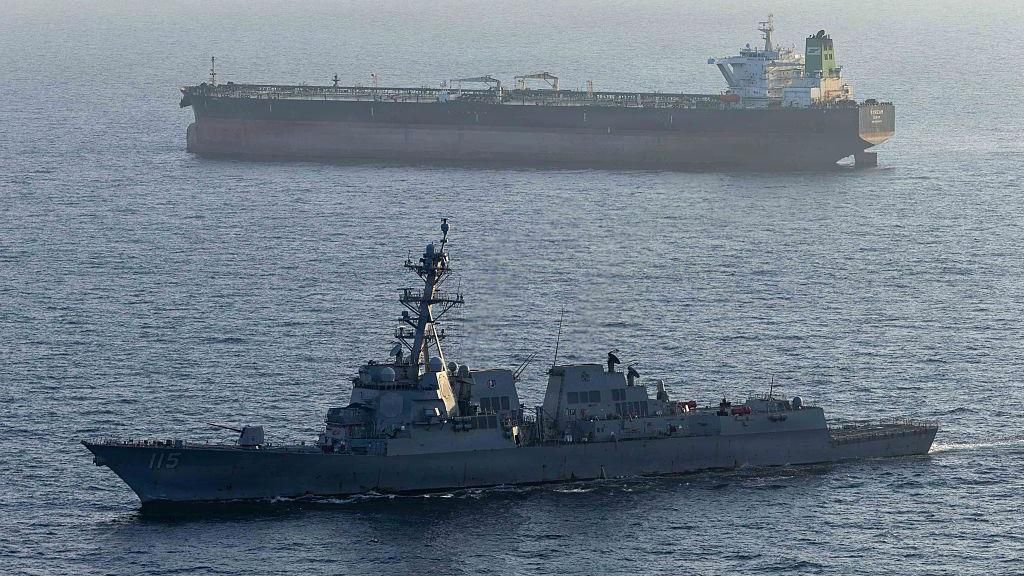
    Tensions across the Middle East have surged once again this week, with a series of interconnected incidents in the strategic Strait of Hormuz and shifting diplomatic moves reshaping the two-month-old regional conflict. The latest wave of developments brings new risks to global energy supplies and fragile peace negotiations between the United States and Iran.

    The United Arab Emirates (UAE) officially confirmed that two drones launched from Iranian territory targeted a tanker operated by ADNOC, the country’s state-owned oil giant, in the Strait of Hormuz. In a strongly worded statement, the UAE foreign ministry labeled the assault an act of piracy carried out by Iran’s Revolutionary Guard Corps, noting the attack was an attempt to use the critical waterway — a linchpin for global fossil fuel and food fertilizer trade — as a tool for economic coercion and blackmail. No crew members were injured in the strike, the ministry added.

    Parallel to this claim, Iranian state-affiliated media outlet Fars News Agency reported that two missiles were fired at a U.S. Navy frigate that had violated navigation rules near Iran’s Jask Port, after the vessel ignored multiple verbal warnings from the Iranian navy. The report came shortly after former President Donald Trump announced U.S. forces would begin escorted transits for commercial ships through the strait, which Iran has blockaded since the outbreak of the current conflict. The U.S. military has flatly denied any of its vessels were struck, contradicting the Iranian media account.

    Diplomatic efforts to end the conflict remain deadlocked nearly a month after a ceasefire took effect on April 8. So far, only one round of direct talks between U.S. and Iranian negotiators has been held, with no visible progress toward a permanent resolution. Iranian foreign ministry spokesperson Esmaeil Baqaei emphasized in a televised briefing that Tehran’s top priority is an immediate end to hostilities, and called on Washington to roll back its maximalist positions. “The other side must commit to a reasonable approach and abandon its excessive demands regarding Iran,” Baqaei stated.

    Trump, for his part, struck a more optimistic tone in a Truth Social post Sunday, claiming “very positive discussions” are ongoing with Iranian officials to resolve the conflict. He announced the launch of what he calls “Project Freedom”, a U.S. military mission to escort trapped commercial ships out of the blockaded strait, framing the operation as a “humanitarian gesture” after reports that dozens of marooned vessels were facing critical food shortages for their crews. U.S. Central Command later outlined the scale of the mission, confirming it will deploy guided-missile destroyers, more than 100 land and sea-based aircraft, a array of multi-domain unmanned systems, and 15,000 active service members to support the escort operation.

    The escalating tensions have already taken a visible economic toll on Gulf states. Dubai’s media office confirmed Monday that passenger traffic through the emirate’s major international airport plummeted to just 2.5 million travelers in March, a 67% drop compared to the same period last year. The decline is directly tied to Iranian attacks on UAE infrastructure and shipping amid the ongoing conflict, which has deterred commercial and leisure travel to the region.

    In a separate development off the UAE coast, the United Kingdom Maritime Trade Operations (UKMTO) reported that an unidentified tanker was hit by unspecified projectiles approximately 78 nautical miles north of the UAE’s Fujairah Port Monday. The agency confirmed all crew members on board the vessel escaped unharmed, and did not assign blame for the attack.

    On the diplomatic front, Pakistan announced Monday it had facilitated the transfer of 22 Iranian crew members who had been held on a vessel seized by U.S. authorities. The Pakistani government described the handover as a “confidence-building measure” designed to support the fragile behind-the-scenes contacts between Washington and Tehran.

    Across the Atlantic, the ongoing conflict has sparked friction between the U.S. and Germany, after Trump announced that the U.S. would cut its troop deployment in Germany by more than 5,000 service members, a move widely tied to disagreements over policy toward the Iran war. Despite the public spat, German Chancellor Friedrich Merz told public broadcaster ARD Sunday that he remains committed to preserving transatlantic cooperation. “I am not giving up on working on the transatlantic relationship,” Merz said. “Nor am I giving up on working with Donald Trump.”

  • Ukrainian drone hits upmarket Moscow high-rise ahead of Victory Day celebrations

    Ukrainian drone hits upmarket Moscow high-rise ahead of Victory Day celebrations

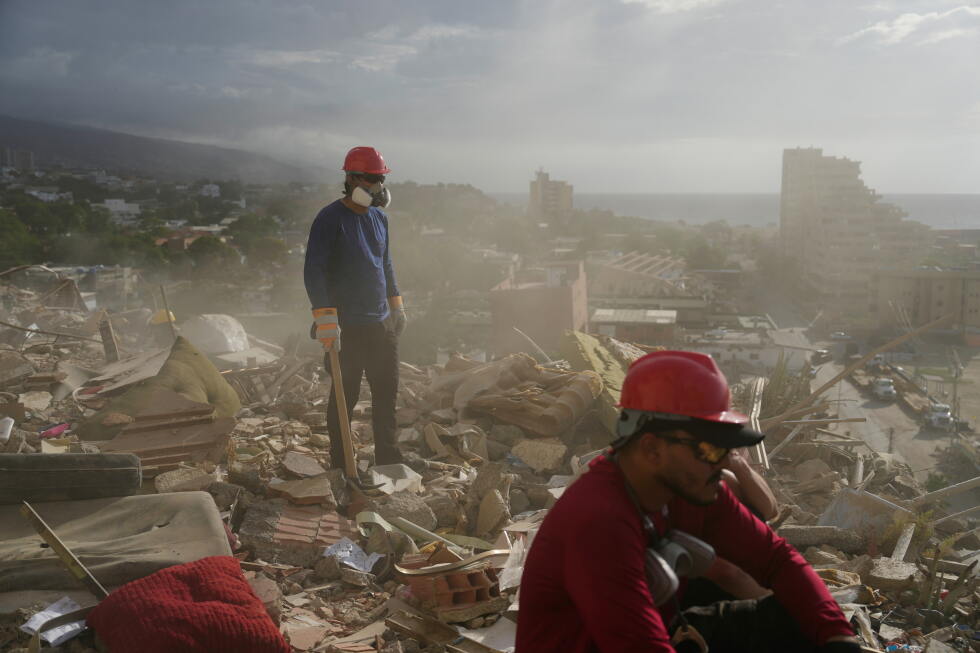
    In the early hours of Monday, a Ukrainian drone struck a luxury residential high-rise in southwestern Moscow, leaving visible structural damage to an upper floor’s facade but causing no reported casualties, according to local officials. The incident marked the third straight night of drone attacks targeting the Russian capital, coming just days before Moscow hosts a significantly reduced 9 May parade honoring the Soviet Union’s defeat of Nazi Germany in World War II.

    Unverified footage circulating across social media platforms captured first responders entering a heavily damaged apartment, where broken windows, scattered dust and piles of rubble filled the space. A second clip showed pieces of downed drone debris spread across the street at the base of the building. Moscow Mayor Sergei Sobyanin confirmed that two other drones targeting the city were successfully intercepted by Russian air defenses, and the capital’s two major international hubs, Vnukovo and Domodedovo, temporarily paused all flight operations overnight as a security precaution.

    Across multiple Russian regions between Sunday and Monday, Russian defense officials reported that a total of 117 Ukrainian drones were shot down. Sixty of those drones were directed at the St. Petersburg region, in what regional governor Aleksandr Drodzhenko described as a large-scale coordinated attack.

    The damaged residential building sits in one of Moscow’s most exclusive neighborhoods, located less than 10 kilometers from the Kremlin and Red Square, where the scaled-back 9 May victory parade will be held this Saturday. Since Russia launched its full-scale invasion of Ukraine in February 2022, Ukrainian drone strikes on Moscow have become a recurring occurrence. While drone warnings frequently force temporary airport shutdowns on the capital’s outskirts and disrupt commercial air traffic, most of central Moscow is shielded by Russia’s Pantsir-S surface-to-air missile systems, making successful strikes this close to the city center a relatively rare event.

    Growing security anxiety ahead of the annual celebrations prompted the Kremlin to announce last week that it would scale back the traditional large-scale military parade on Red Square, citing an ongoing “terrorist threat” from Ukraine. This year will mark the first time since 2008 that no armored vehicles or long-range missile systems will be featured in the event. Separately, Russian state media reported Monday that multiple local mobile network providers have announced restrictions on mobile internet access across most of Moscow for the coming week, a measure framed as necessary for national security.

    Ukrainian President Volodymyr Zelensky openly acknowledged the increasing drone pressure, commenting that the Kremlin’s decision to downsize the parade reveals Moscow’s fear that drones could reach Red Square itself. “This is telling… We need to keep up the pressure,” Zelensky said.

    Over the course of the full-scale war, Ukraine has rapidly expanded its domestic production of long-range drones, which are now capable of striking targets hundreds of kilometers inside Russian territory. These unmanned systems regularly target Russian energy infrastructure and oil refineries across the country, with the strategic goal of cutting into Russia’s total oil output and reducing critical export revenue that funds Moscow’s war effort.

    A day before the Moscow strike, Zelensky announced that Ukrainian forces had hit three Russian oil tankers, a cruise missile-carrying warship and a patrol boat in separate attacks on two Russian Black Sea ports. Zelensky noted that the targeted tankers were part of Russia’s so-called “shadow fleet” of vessels that Moscow uses to evade Western oil sanctions imposed after the 2022 full-scale invasion.

    Despite the increasing Ukrainian drone strikes deep inside Russia, Moscow continues its daily campaign of deadly aerial attacks against Ukrainian population centers. On Monday, Ukrainian emergency officials confirmed that a Russian missile strike near the northeastern city of Kharkiv, located just kilometers from the Russian border, killed four civilians and left 18 others injured.

  • One injured after plane hits truck while landing in Newark

    One injured after plane hits truck while landing in Newark

    A low-altitude collision between an incoming commercial airliner and a ground vehicle left one person with minor injuries at one of the busiest airports on the U.S. East Coast over the weekend, but all passengers and crew escaped without harm. On Sunday, a Boeing 767 operated by United Airlines, which was completing an international journey from Venice, Italy to Newark Liberty International Airport in New Jersey, collided with a streetlight pole and a nearby pickup truck as it approached for landing. While the aircraft sustained visible damage from the collision, its flight crew successfully guided the plane to a safe landing, bringing all 231 passengers and crew members on board to the gate without a single injury report. The truck’s driver, however, did not leave the incident unhurt. According to the driver’s employer, speaking to CBS News – U.S. news partner of the BBC – one of the plane’s tires crashed through the truck’s side window and front windscreen in the collision. Dash camera footage captured from inside the truck records the moment of impact: the audio picks up the roar of the low-flying jet seconds before impact, and footage shows shattered glass spraying through the vehicle’s cabin after the collision. The driver received medical treatment for minor lacerations to the arm and hand caused by flying broken glass. In an official statement released after the incident, United Airlines confirmed the details of the collision and outlined next steps. The carrier said it will launch a comprehensive, rigorous investigation into the flight safety incident, and as a standard procedural step for ongoing investigations, the flight crew operating the trip has been temporarily removed from active service. The airline also added that its in-house maintenance engineering team is currently conducting a full assessment of the damage sustained by the aircraft during the collision. New Jersey Governor Mikie Sherrill released a statement reacting to the incident, saying she was deeply grateful that the aircraft was able to land without catastrophic incident, and that all people on board the plane emerged unharmed. U.S. federal aviation investigators have already launched a formal probe into the event. The National Transportation Safety Board, the U.S. government agency responsible for investigating civil aviation accidents, confirmed that it has dispatched a lead investigator to the scene to examine evidence and interview relevant parties. The agency has also formally ordered United Airlines to turn over the plane’s cockpit voice recorder and flight data recorder, two critical pieces of evidence that will help investigators piece together what caused the aircraft to strike the truck and pole during approach. As of the latest updates, no further details on the timeline of the investigation or potential contributing factors have been released to the public.