分类: world

  • The Kabul rehab centre hit by deadly Pakistani strike

    The Kabul rehab centre hit by deadly Pakistani strike

    A deadly airstrike carried out by Pakistani military forces targeted a rehabilitation center in Afghanistan’s capital Kabul, triggering a sharp dispute over the nature of the facility and the legitimacy of the operation.

    According to official statements from Islamabad, the strike was a legitimate counterterrorism operation that destroyed key militant and terrorist infrastructure hidden in the area. Pakistani authorities have framed the action as a necessary measure to defend national security against cross-border militant threats that have long plagued the country’s western border regions.

    However, this narrative has been immediately and firmly rejected by two key groups: the United Nations and the families of those killed or injured in the attack. The UN has challenged Islamabad’s claim that the site housed terrorist assets, while grieving relatives of the victims confirm the location operated as a drug addiction rehabilitation center serving vulnerable local residents.

    The incident has stoked already tense cross-border relations between Pakistan and Afghanistan, raising new questions about proportional use of military force, civilian protection, and the human cost of counterterrorism operations. Global observers are now calling for a full independent investigation into the strike to clarify the facts and hold accountable those responsible for any civilian casualties.

  • Pakistan struck a rehab centre and killed 269 Afghans. Their families want to know why

    Pakistan struck a rehab centre and killed 269 Afghans. Their families want to know why

    On a frigid, rain-soaked morning in northwest Kabul, 27-year-old Masooda climbs a sloped hillside cemetery to pay her respects to her 24-year-old younger brother Mirwais — a young man killed two months prior in a Pakistani airstrike. What makes her grief even more agonizing is that she cannot pinpoint his exact burial spot. Mirwais is one of dozens of victims laid to rest in an unmarked mass grave, a patch of land neatly covered with small white stones and crudely marked by rough grey granite slabs, holding the remains of those killed in the deadliest single attack Afghanistan has seen in modern history.

    The target of the March 16 airstrike was the Omid Drug Rehabilitation Hospital, a facility that had operated quietly in Kabul for a decade, treating Afghans struggling with substance use disorder at a time when an estimated three million people across the country battle addiction. On that fateful evening, at 20:50 local time, three bombs slammed into the facility, which sits just a kilometer from major United Nations offices along the Kabul-Jalalabad highway. What followed was a carnage so brutal it has shocked even a nation long hardened by decades of war.

    A doctor on duty that night, speaking to the BBC on condition of anonymity over fears of retaliation from the Taliban government, described the scene of chaos and horror he encountered. “One bomb hit a large hangar that housed newly admitted patients, while two others struck patient quarters, food storage, and administrative offices,” he explained. The bombs also hit the center’s vocational training wings, which were constructed mostly of wood, sparking an intense fire that compounded the death toll. “I walked through piles of bodies searching for anyone still alive, screaming for help. The smell of burning flesh was everywhere,” the doctor recalled. “I have never seen anything this horrific in my life.”

    The United Nations, which was granted full access to the attack site in the aftermath, confirmed Tuesday that it has verified at least 269 fatalities from the strike, but acknowledged that the actual death toll is almost certainly far higher. The Taliban government places the count above 400. Many bodies were burned beyond recognition or torn apart by shrapnel and fire, leaving families with nothing to bury and no closure to their grief. The center’s full patient list was also destroyed in the blaze, turning the search for missing loved ones into a weeks-long nightmare of harrowing uncertainty.

    For Sediq Walizada, that nightmare ended on Eid, the Muslim holiday of celebration, when he and his brothers finally identified the remains of his 35-year-old brother Mohammad Anwar Walizada, who had been admitted to Omid just four days before the attack to treat his addiction to synthetic street drug “Tablet-K.” “We moved from hospital to hospital for days, hoping he had escaped. Not knowing if he was dead or alive was agony,” Sediq said, his voice still thick with trauma. When they finally found Mohammad Anwar’s remains, severed in half by the blast, it was devastating — but still a relief: hundreds of other families leave without ever recovering their loved ones. “He didn’t turn to drugs for fun, he turned to it out of poverty and helplessness,” Sediq said of his brother, a father of six who sold bottled water from a tricycle cart to feed his family.

    Mirwais’s story follows the same pattern. Orphaned young, Mirwais was raised by Masooda like a son. He was studying to become a pharmacist when he developed an addiction to Tablet-K, and had only been in treatment at Omid for 10 days when the bombs fell. “My brother’s body was just a torso. I identified him only by a birthmark he had,” Masooda said, breaking down in tears. “They found barely anything left of him.”

    The airstrike has exacerbated already soaring tensions between neighboring Pakistan and the Taliban-led Afghan government, a conflict that has stretched across months and left hundreds dead, most from Pakistani cross-border airstrikes. Islamabad says the strikes are targeted at militant groups that launch attacks inside Pakistan and are sheltered by the Taliban regime. Kabul has repeatedly denied allowing militants to operate from Afghan soil.

    Pakistan has also pushed back against claims that the strike hit a civilian facility, telling the BBC that “no hospital, no drug rehabilitation center, and no civilian facility was targeted” and that the targets were “military and terrorist infrastructure.” Senior Pakistani military spokesman Lt Gen Ahmed Sharif Chaudhry went further, claiming the center was “most likely a suicide bomber training facility” that used drug addicts as bombers.

    Every victim’s family the BBC spoke to rejected these claims, and the United Nations, Human Rights Watch, and independent observers have confirmed the facility was a well-documented drug treatment center, operating openly since 2016 in a former US-NATO military base. The center was so well known that the BBC was granted access to interview patients there in 2023, and UN agencies provided direct support to patients at the facility. “It’s literally about a kilometre away from the main UN offices. We have UN agencies, support to the patients of that hospital. So the site was well known to us,” said Fiona Frazer, the representative of the UN High Commissioner for Human Rights in Afghanistan.

    Human Rights Watch has labeled the strike an “unlawful attack and a possible war crime,” and there are growing international calls for a full independent investigation into the incident. The Taliban government has echoed these calls, saying the intentional targeting of innocent civilians amounts to a war crime that demands accountability.

    For Afghans, the attack has shattered the fragile relative peace that settled over the country after the end of the 20-year NATO-Afghan war in 2021, sparking widespread fears that the country is being pulled back into sustained, large-scale violence. For the grieving families of Omid’s victims, however, the pain is deeply personal. Most say they hold little hope that anyone will ever be held accountable for the deaths of their loved ones. “We are an oppressed people. We do not have the power to respond,” said one victim’s brother. “We have suffered injustice and brutality. May God bring the perpetrators to justice.”

  • UAE secretly joined Israeli-US strikes on Iran: Report

    UAE secretly joined Israeli-US strikes on Iran: Report

    In a stunning revelation published by The Wall Street Journal, the United Arab Emirates has secretly carried out offensive military strikes against Iran, pulling the Gulf monarchy directly into the expanding Israeli-U.S. conflict that has already destabilized the broader Middle East region.

    According to anonymous sources familiar with the operation, Emirati military units targeted a key oil refinery located on Iran’s Lavan Island in the Persian Gulf during the first week of April. The UAE has not issued any public statement confirming or acknowledging its role in the attack. The strike, the Journal reports, ignited a massive blaze at the facility that knocked most of the refinery’s production capacity offline for months.

    The attack comes at a particularly sensitive juncture: just as former U.S. President Donald Trump was pushing for a ceasefire to end a five-week sustained air campaign against Iran, making the covert strike a major escalation of already soaring tensions. Tehran quickly labeled the incident an “enemy attack” and launched an immediate counteroffensive, firing a large volley of ballistic missiles and attack drones at both the UAE and neighboring Kuwait.

    In the weeks since the strike, Iran has concentrated the vast majority of its retaliatory firepower on the Emirates, launching more than 2,800 projectiles – a total that far outpaces the volume of attacks against any other adversary involved in the conflict, including Israel and the United States. This large-scale retaliation has sent shockwaves through the UAE’s economy, disrupting commercial air travel across the country, cutting deep into vital tourism revenue, and triggering widespread instability in the country’s once-booming property market. As the economic fallout spreads across key sectors, dozens of domestic and international companies have implemented mandatory furloughs and begun cutting staff to offset losses.

    By the end of April, data shows more than $120 billion had been erased from the total market capitalization of the Dubai and Abu Dhabi stock exchanges, while more than 18,400 commercial flights to and from the UAE have been canceled amid persistent security risks.

    The Wall Street Journal’s report also confirms that Washington has privately given its approval to the UAE’s decision to join offensive operations, reinforcing widespread analysis that Abu Dhabi is now operating in full coordination with U.S. and Israeli military goals in the region. This deepening alignment, critics argue, has formed a new confrontational axis that has prolonged and intensified the regional conflict, rather than working to de-escalate or contain it.

    In recent years, the UAE has emerged as one of the most hawkish Gulf states, maintaining continuous close military coordination with both the U.S. and Israel throughout the ongoing conflict. This openly confrontational posture has pulled Abu Dhabi directly into the line of Iranian retaliation, despite decades of careful diplomatic balancing by Gulf monarchies seeking to avoid open conflict with Tehran.

    Speculation about direct Emirati involvement in offensive operations against Iran first began circulating in mid-March, after publicly shared footage captured an unidentified fighter jet operating inside Iranian airspace that did not match the markings or design of any known U.S. or Israeli aircraft. Around the same time, independent outlet Middle East Eye reported that Iranian air defenses had shot down a Chinese-made Wing Loong II reconnaissance and attack drone near the city of Shiraz, leading independent analysts to question whether other Gulf states, including Saudi Arabia or the UAE, had joined active offensive operations against Iran.

    Beyond the military escalation, Tehran has moved to exploit existing tensions among Gulf Cooperation Council members to isolate Abu Dhabi. Per The Wall Street Journal, Iran issued explicit warnings to Saudi Arabia and Oman that it would “heavily target” the UAE in response to its participation in the Israeli-U.S. campaign, a move widely interpreted as an attempt to split the Gulf bloc.

    Existing rifts among Gulf powers are already becoming more visible. Long-simmering tensions between the UAE and Saudi Arabia have grown increasingly tense in recent years, and the fallout from the Iran strike has only worsened frictions. The UAE’s recent decision to withdraw from OPEC further strained diplomatic and economic ties with Riyadh, indicating that the ongoing conflict with Iran is deepening historical rivalries rather than uniting Gulf powers against a common perceived threat.

  • BBC unmasks key people smuggler in network behind most small boat crossings

    BBC unmasks key people smuggler in network behind most small boat crossings

    For years, a shadowy 28-year-old Iraqi Kurd smuggling kingpin operated under the alias ‘Kardo Ranya’, his true identity a closely guarded secret that stymied law enforcement across Europe and the United Kingdom. Believed to control the bulk of illegal small-boat crossings of the English Channel in recent years, his anonymity allowed him to evade international arrest warrants and cross-border tracking efforts, enabling his sprawling criminal network to thrive. Now, a year-long investigative project by BBC journalists has pulled back the curtain on one of the world’s most active people smuggling rings, unearthing Kardo Ranya’s real identity and laying bare the human cost of his illicit trade.

    The investigation, which is the subject of the new BBC Radio 4 podcast *Intrigue: To Catch A King*, traced a trail of clues from migrant encampments on France’s northern coast, across the European continent, all the way to Kardo Ranya’s hometown of Ranya, a small town in the semi-autonomous region of Iraqi Kurdistan. A 2024 Chatham House report notes that this region is rife with established smuggling networks that move people from conflict zones across the Middle East to Western Europe, and senior UK law enforcement officials confirm that Kurdish-led gangs dominate the cross-Channel illegal migration trade. “We’d say the majority of the small-boat criminal business model is controlled by Kurds,” Dan Cannatella-Barcroft, acting deputy director of the UK’s National Crime Agency (NCA), told the BBC. The NCA has recently ramped up targeted operations against smugglers with ties to Ranya, a network known within migrant communities as the “Ranya Boys.”

    Unlike many high-level smugglers who operate in the shadows, Kardo Ranya actively marketed his services openly on social media, posting photos of luxury London life and fake testimonials from supposed clients to lure vulnerable migrants. His network charges a premium for its services: roughly €17,000 (£15,000) for a single adult to travel from Iraq to the UK, with a premium VIP package for those able to pay more. Even with prices higher than competing smuggling rings, desperate migrants consistently choose his network, a former smuggler told the BBC. But this premium price does not deliver on promises of safety: the entire journey from the Middle East to Northern Europe is rife with danger, and hundreds of migrants have died attempting the final crossing of the English Channel.

    The human cost of Kardo Ranya’s operation is embodied in the story of Shwana, a 24-year-old man from Ranya who fell for the smuggler’s social media ads promising a better life in the UK. Shwana reached northern France in November last year, where he was packed onto an overloaded small boat alongside roughly 100 other migrants — a vessel rated to carry fewer than 20 people. Mid-voyage, the boat began to sink. While most passengers were rescued by French coastguards and returned to France, four people including Shwana went missing in the dark. His body was never recovered. A fellow passenger told the BBC the crossing was coordinated via a WhatsApp group linked to a phone number that appeared in one of Kardo Ranya’s own social media advertisements. Shwana’s family in Ranya confirmed he had been influenced by the smuggler’s marketing, lured by lack of economic opportunity at home: unemployment remains high across Iraqi Kurdistan, leaving many young people with few prospects, making them easy targets for smuggling gangs.

    Local activists in Ranya have begun pushing back against the smuggling trade, despite grave risks. Bakra Ali, a local resident, opened a small museum in the town dedicated to honoring local residents who died attempting crossings to Europe. Its walls are covered with hundreds of photos of lost loved ones like Shwana, but Ali has received repeated death threats from smuggling gangs and requires 24-hour police protection. Still, he remains defiant, and when shown a photo of Kardo Ranya during the BBC investigation, he immediately recognized the kingpin and connected journalists to low-level associates within the network.

    That connection ultimately led to the breakthrough: a disgruntled low-level smuggler, who claimed to be as close as a brother to Kardo Ranya, leaked the kingpin’s full identity to the BBC team, after days of negotiation. The leaked document confirmed the smuggler’s full legal name: Kardo Muhammad Amen Jaf. With the identity in hand, the BBC team arranged a confrontation: a translator contacted Jaf via his operational WhatsApp number, posing as a wealthy migrant seeking to move his entire family to the UK for the £160,000 VIP package. When Jaf called back to close the deal, journalists confronted him with the evidence of his smuggling operation. Jaf denied all allegations, claiming he had only ever given advice to people leaving Iraq and did not believe he had committed any crime. He denied any involvement in the crossing that killed Shwana, then immediately ended the call and disconnected the phone number.

    Jaf is not the first member of the Ranya Boys to face justice. In recent months, associate Noah Aaron — another senior member of the network who has organized crossings since 2019 — was convicted in France of money laundering and organized illegal migration, and sentenced to 10 years in prison. Despite being wanted in multiple countries and linked to two Channel crossing deaths, Aaron evaded detection for years, moving freely between the UK and mainland Europe.

    Now that Jaf’s real identity has been exposed, legal experts say moving freely across borders will become far more difficult for the kingpin. He is currently wanted for questioning by at least one European police force, though his current whereabouts remain unknown. Law enforcement agencies across the continent now have the information needed to issue a coordinated international arrest warrant, a step that was impossible while his identity remained a secret.

    The investigation comes as small-boat crossings remain the most common form of detected illegal entry into the UK since 2020, with nearly all arrivals claiming asylum to escape persecution and violence in their home countries. Official data shows 9 out of 10 small-boat arrivals between 2018 and 2025 were men and boys under 40, and more than 100,000 people were housed in UK asylum accommodation as of December 2025.

  • Australian musician’s US ban prompts apology from girlfriend over Trump post

    Australian musician’s US ban prompts apology from girlfriend over Trump post

    An established Australian electronic musician has seen his cross-continental North American tour cut abruptly short after United States border officials barred him from re-entering the country, a turn of events that has prompted a public apology from his television personality girlfriend over a years-old social media post touching on former US president Donald Trump.

    Keli Holiday, legally known as Adam Hyde and one half of the popular Australian electronic duo Peking Duk, had already completed a string of scheduled performances across the United States before crossing the northern border to play a show in Toronto, Canada. Last Friday, as he prepared to return to the US for a planned gig in New York City, he was detained during border processing and ultimately refused entry — a rejection that came even though he held all required, valid visa documentation, according to Holiday’s own account.

    The artist shared details of his frustrating border ordeal with followers over the weekend via social media. “I have spent all day detained at the Canadian border and denied entry back into the US despite having the proper visa documentation in place,” he wrote. “I’m still trying to get clarity on the situation myself.”

    By Tuesday, after confirmation that Holiday had returned to his home country of Australia, his partner Abbie Chatfield — a well-known Australian TV host — released a public statement addressing widespread online speculation that an old social media post of hers was the root cause of the entry ban. Chatfield issued an apology for the July 2025 video post, which had drawn attention over its critical commentary about Trump, and clarified that Holiday had never even seen the content before the incident.

    In the resurfaced video, Chatfield had made reference to Luigi Mangione, the US man accused of murdering UnitedHealthcare CEO Brian Thompson in a December 2024 shooting. Mangione is scheduled to face separate state and federal murder trials later in 2026. Chatfield pushed back against misinterpretations of her comments, insisting she never advocated for political violence targeting Trump. “I also want to make it clear Adam hadn’t even seen this video, so any vitriol toward him is unwarranted,” she said in a 10-minute explanatory video released Tuesday.

    This high-profile entry ban comes amid a shifting US immigration and entry policy landscape: just months prior, US authorities proposed sweeping new entry rules that would require most foreign tourists to submit five years of personal social media history as a mandatory condition for gaining entry to the country. The BBC has reached out to Holiday’s management team for additional comment on the incident, with no further statement released as of publication.

  • Little respite in Ukraine as air strikes ring out during Russia truce

    Little respite in Ukraine as air strikes ring out during Russia truce

    More than four years into Russia’s full-scale invasion of Ukraine, a US-brokered three-day ceasefire set to expire Monday has failed to deliver the broad relief that war-exhausted Ukrainians had hoped for, with reports of persistent air strikes, artillery fire, and mutual violation accusations lingering across frontline regions.

  • EU agrees long-stalled sanctions on Israeli settlers

    EU agrees long-stalled sanctions on Israeli settlers

    After months of political deadlock, European Union foreign ministers reached a landmark agreement Monday to impose new targeted sanctions on Israeli settlers responsible for growing violence against Palestinian communities in the occupied West Bank. The breakthrough came only after a recent change in government in Hungary, which had blocked the measure for months under nationalist former prime minister Viktor Orbán, a staunch ally of Israel.

    High Representative of the European Union for Foreign Affairs and Security Policy Kaja Kallas, the bloc’s top diplomat, framed the vote as a long-overdue step to confront escalating unrest. “It was high time we move from deadlock to delivery,” Kallas stated following the announcement of the green light for sanctions. “Extremisms and violence carry consequences.”

    French Foreign Minister Jean-Noël Barrot added clarity to the scope of the measures, noting the EU is targeting leading Israeli organizations and their leaders found responsible for supporting the violent, extremist expansion of settlements in the West Bank. “These most serious and intolerable acts must cease without delay,” Barrot wrote on social media.

    EU officials confirmed that seven individual settlers and settler-linked organizations will be added to the bloc’s sanctions blacklist. In a parallel move, the bloc also agreed to impose new sanctions on representatives of the Palestinian militant group Hamas.

    The approval drew immediate sharp condemnation from Israeli leadership, who have lashed out at the measure as unfair and morally flawed. In an official post on X, Israeli Prime Minister Benjamin Netanyahu’s office argued that the EU had exposed “its moral bankruptcy by drawing a false symmetry between Israeli citizens and Hamas terrorists”, adding that Israel and the United States were “doing Europe’s dirty work” by combating extremist jihadist forces across the Middle East.

    Israel’s far-right National Security Minister Itamar Ben-Gvir went further, labeling the European Union “antisemitic” and claiming the bloc was “trying to tie the hands of those who defend themselves”. Israeli Foreign Minister Gideon Saar echoed the criticism, writing on X that the sanctions were “arbitrary and political”, imposed on Israeli citizens and entities “because of their political views and without any basis”.

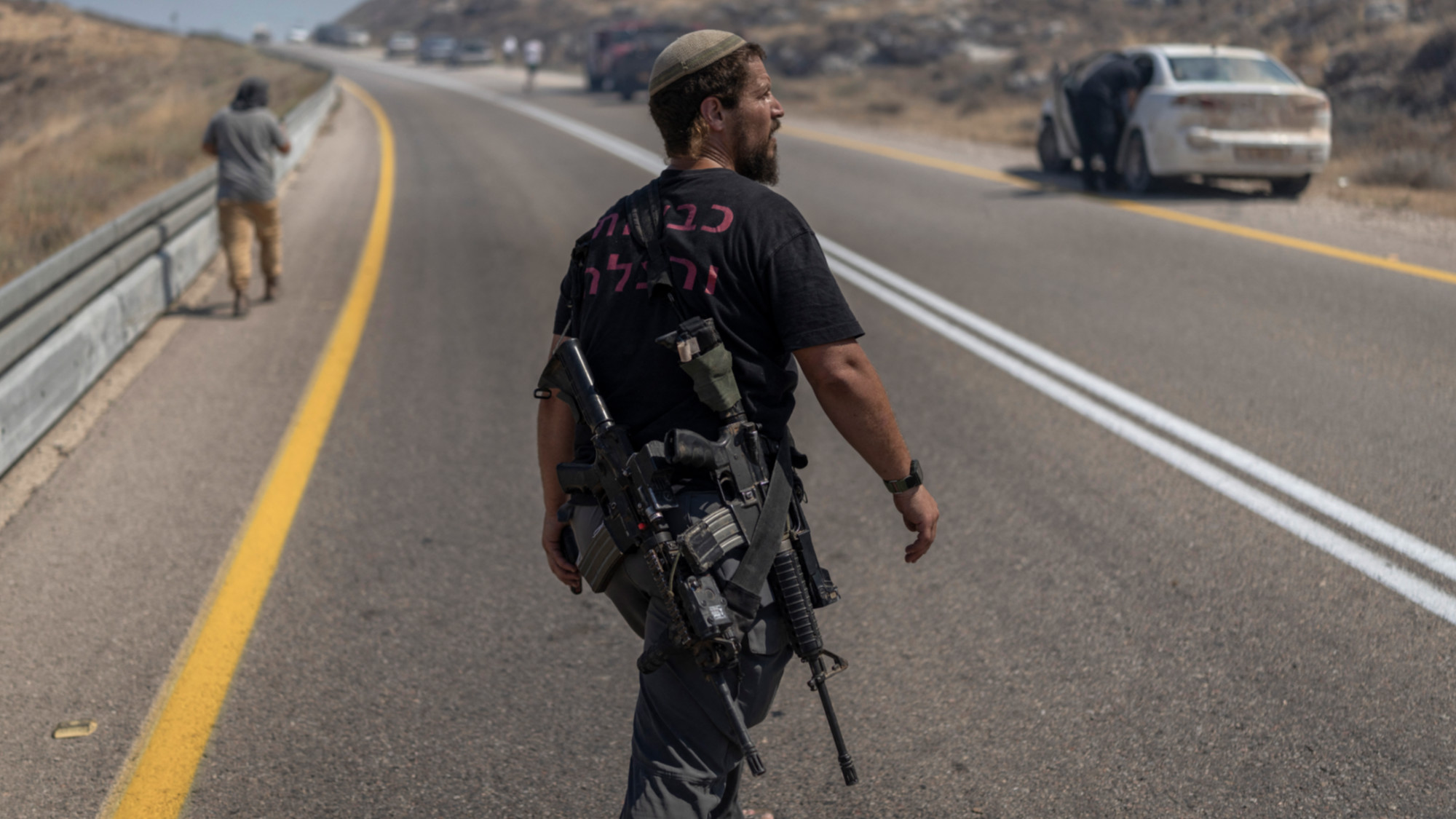
    Escalating violence in the Israeli-occupied West Bank has been a growing point of international concern since the outbreak of the Gaza war in October 2023, with near-daily clashes between Israeli forces, settlers and Palestinian residents occurring across the territory. Palestinian officials and United Nations investigators have recorded a sharp surge in deadly attacks carried out by Israeli settlers against Palestinian communities since February 2025.

    While the EU has broken its deadlock on settler sanctions, deep divisions remain among member states on pursuing more sweeping punitive measures against Israel, such as restrictions on trade with settlements. Foreign ministers gathered in Brussels discussed growing calls for an EU-wide ban on goods produced in Israeli West Bank settlements, but no final agreement was reached on the proposal.

    Italian Foreign Minister Antonio Tajani explained that the European Commission will now draft a formal proposal for the ban, after which member states will assess whether the measure can gather enough support to pass. “This is an issue that has been discussed, but no decision has been taken, pending the proposals that will come,” Tajani said.

    Under international law, all Israeli settlements built in the West Bank are considered illegal. Excluding East Jerusalem, more than 500,000 Israeli settlers currently reside in these settlements alongside roughly three million Palestinians living in the occupied territory. A recent United Nations report found that settlement expansion in 2025 reached its highest annual level since the UN began tracking expansion data in 2017.

  • What is Jerusalem Day and the March of Flags?

    What is Jerusalem Day and the March of Flags?

    This week, Israelis are set to observe Jerusalem Day, a national holiday that marks the capture of East Jerusalem by Israeli military forces in the 1967 Six-Day War. The annual commemoration will kick off at sunset on Thursday, May 14, and conclude at nightfall the following day, May 15 – one day before Palestinians mark the Nakba, the catastrophic displacement and violence that accompanied the founding of the state of Israel in 1948.

    The origins of the holiday stretch back to 1968, just one year after the 1967 war, when Israeli lawmakers voted to establish a formal observance of Israel’s seizure of Palestinian-inhabited East Jerusalem. It was formally enshrined as a national holiday in 1998, when then-prime minister Benjamin Netanyahu signed the legislation into law during his first term in office. Immediately following the 1967 conflict, Israel annexed the occupied areas of Jerusalem, granting permanent residency status to local Palestinian residents. That status allows Palestinians to vote in municipal elections, but bars them from voting for Israel’s national parliament, the Knesset. Today, roughly 350,000 Palestinians call East Jerusalem home, the majority of whom hold no Israeli citizenship and have no national representation in the government that governs their daily lives.

    For Israelis, the holiday centers on commemorating soldiers killed in the 1967 battle for Jerusalem, and is framed as a celebration of the reunification of the city under full Israeli control. This year, the Jerusalem Municipality has called on participants to “march with courage and valour, with Israeli flags raised high, and connect themselves with the celebration of Jerusalem’s eternity, and bind Jerusalem forever.”

    The centerpiece of the annual observance is the Flag March, which draws tens of thousands of participants, the majority of whom identify with Israel’s ultra-nationalist and far-right factions. Per the Knesset’s official description of the event, the large procession starts in central Jerusalem, moves into the Old City, and concludes at the Western Wall with a collective prayer of thanksgiving. But human rights groups and independent media have repeatedly documented the event as a flashpoint for anti-Palestinian violence, harassment, and provocation.

    Far-right Israeli leaders routinely use the march as a platform to broadcast their expansionist and supremacist agenda. Last year, Finance Minister Bezalel Smotrich told a crowd gathered near the Western Wall that “we are conquering the Land of Israel. We are liberating Gaza. We are settling Gaza. We are defeating the enemy.” Smotrich’s comments, delivered months ahead of a 2025 ceasefire in the Israel-Gaza war, drew loud applause from attendees. National Security Minister Itamar Ben Gvir, who has overseen a sharp rise in settler incursions into the Al-Aqsa Mosque compound since taking office in 2022, used the 2024 march to deliver an overtly provocative message: “Jerusalem is ours. Damascus Gate is ours. The Temple Mount is ours. … it is ours.”

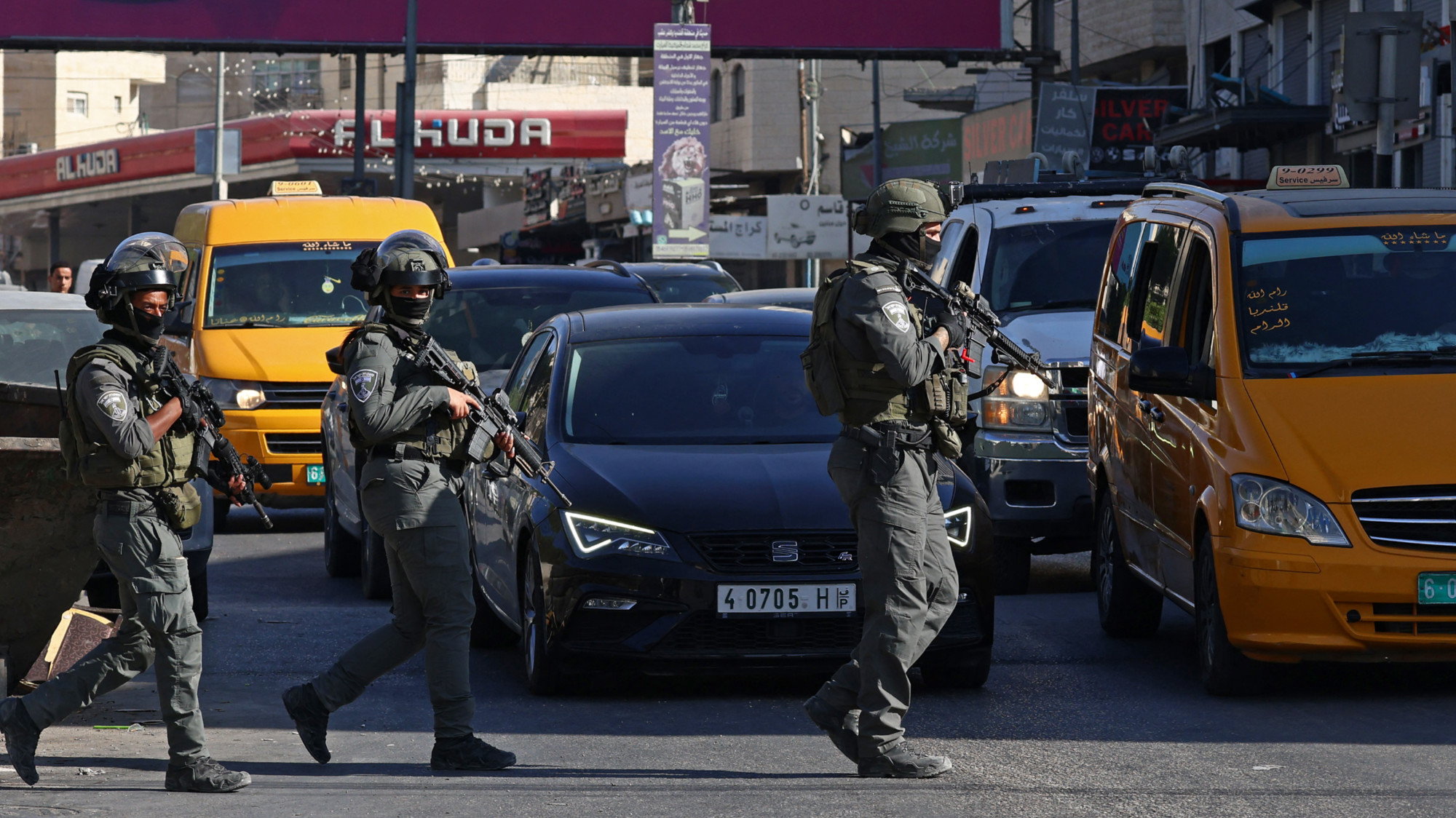
    Under Ben Gvir’s leadership, Israeli police deployed more than 3,000 officers to secure the 2024 march, clearing a path for participants through the Old City’s Damascus Gate and Muslim Quarter. Israeli human rights organization B’Tselem has documented that during the procession, far-right participants regularly hurl racist chants, assault Palestinian residents, and vandalize Palestinian property in the Muslim Quarter, while local businesses are forced to close and residents are confined to their homes to avoid violence. Independent Israeli left-wing outlet Local Call has described the march as “a display of racism and violence under police protection,” noting that once confined to fringe far-right groups, open racist chants have become widespread across participants in recent years, amid Israel’s ongoing military campaign in Gaza.

    B’Tselem has recorded dozens of violent incidents targeting both Palestinian residents and journalists covering the event. In 2023, before the start of the current Gaza war, one reporter told the group that “groups of Jews threw stones, plastic water bottles, and broken flag poles at us,” with at least two correspondents hit by rioters. Another journalist described being struck in the head by a projectile, saying he was too afraid to leave the area before the march concluded out of fear of further attack. Uri Erlich, spokesperson for Israeli NGO Emek Shaveh, which defends cultural heritage rights in the region, noted that a broader shift has occurred in recent years: “It is not the march that has become more extreme, but [Israeli] society.”

    This year’s observance comes amid new controversial policy moves from the Israeli government. Multiple reports confirm the government plans to redraw Jerusalem’s municipal boundaries for the first time since the 1967 annexation of East Jerusalem, expanding the city’s borders further into the occupied West Bank’s Palestinian-inhabited territory. Additionally, Israeli newspaper Haaretz reported last month that the government has allocated more than 1 million shekels ($344,000) to fund new satellite flag marches led by Israeli settlers in cities across the country outside Jerusalem.

    The stated goal of the program is to reinforce “a sense of connection and identification with Jerusalem, Israel’s capital, even among those who do not live in it.” Marches are scheduled in Lod, Ramla, Haifa, Yavne, Ashdod, Beersheba, Herzliya, Petah Tikva, and Raanana, many of which have large Palestinian citizen populations. This is not the first time parallel flag marches have been held outside Jerusalem: in recent years, processions in cities including Lod and Jaffa have already sparked severe intercommunal tension with local Palestinian communities.

    This year’s Jerusalem Day, held on the eve of the Nakba commemoration – which marks the 1948 ethnic cleansing of Palestine that left an estimated 13,000 Palestinians dead and 750,000 displaced from their ancestral homes – is expected to reignite longstanding international and regional tensions over the status of Jerusalem and the rights of Palestinian residents in the city.

  • I led hikers up an Indonesian volcano – and then it erupted

    I led hikers up an Indonesian volcano – and then it erupted

    Nestled on Indonesia’s Halmahera Island in North Maluku, the chronically active Mount Dukono turned deadly on a Friday morning in May, when a sudden volcanic eruption claimed three lives in a group of hikers who had accessed the restricted mountain despite official climbing bans. For Reza Selang, the local Indonesian guide who led the 20-person expedition, the harrowing moments of the blast remain seared into his memory, leaving him grappling with overwhelming grief, guilt, and ongoing legal scrutiny.

    Reza, who operates a small tour company in North Maluku, was contracted in 2025 by Singaporean adventure expedition organizer Timothy Heng to guide the mixed group of Singaporean and Indonesian hikers on a multi-mountain trek that included Dukono. The group began their ascent on Thursday afternoon, and Reza told the BBC that there were no visible signs of impending volcanic activity at that point, nor when the party reached the summit early Friday morning. Even a pre-ascent drone sweep of the crater captured no smoke or unusual activity. Reza allowed 14 hikers, including Heng, to approach the crater with a promise of a quick descent, while he and the remaining six hikers waited at a lower elevation.

    At 7:40 a.m. local time, just one minute after Reza launched his drone to monitor the group near the crater, the mountain erupted. The first blast only released plumes of smoke, but a far more violent second eruption followed 15 to 20 seconds later, hurling massive volcanic rock fragments and ash across the summit. Panicked, the group scattered and fled down the slope, but Reza spotted Singaporean hiker Shahin Muhrez bin Abdul Hamid injured and stranded near the crater via his drone feed. Reza rushed upward to rescue Shahin, and Heng, who had already escaped, turned back to help.

    As the two men dragged the injured hiker down the mountain, with flying rocks falling on all sides, a 2-meter-wide boulder dislodged from the crater and bounced toward them. In a split second, Reza recalled, Heng pushed Shahin behind him and absorbed the full impact of the rock. The boulder crushed both men instantly, killing them on the spot. Shocked frozen for nearly a minute, Reza fled down the mountain to alert emergency authorities.

    Indonesian officials launched an immediate search and rescue operation for the two dead Singaporeans and a third missing hiker, Indonesian national Angel Krishela Pradita. Angel’s body was recovered near the summit on Saturday, while the remains of Heng and Shahin were extracted from beneath ash and rock on Sunday. All surviving hikers were evacuated to a nearby local hospital for treatment of minor injuries, and the remaining Singaporean citizens have since returned to their home country.

    The tragedy has shone a light on longstanding lax enforcement of volcanic hazard restrictions in Indonesia, a nation positioned along the Pacific Ring of Fire that sees frequent seismic and volcanic activity. Authorities confirmed that Mount Dukono has erupted more than 200 times since late March 2026, and that a full suspension of climbing permits and a ban on entry within 4 kilometers of the crater had been in place since April 17. Officials added that warnings had been posted to social media and displayed on physical banners at all trail entrances to the mountain. The area is now permanently closed to all visitors, and officials have pledged to sanction anyone who violates the entry ban.

    Reza maintains that he had no knowledge of the full prohibition, noting that local villagers he regularly hires to assist with guiding expeditions also did not alert him to the new restrictions. He acknowledged that he was aware Dukono was rated at Level 2 on Indonesia’s four-tier volcanic alert system, a classification that marks increased observable activity and restricts access to high-risk zones, but added that other popular Level 2 volcanoes in Indonesia, such as Mount Rinjani, still allow hiking outside restricted crater zones. He told reporters he leads climbs up Dukono almost monthly without incident, a common practice among local tour operators despite the mountain’s active status.

    Indonesian police have launched a formal investigation into the incident, focusing on allegations of negligence by tour operators and individual organizers. Reza has already been questioned by investigators, and has turned over his drone footage of the eruption as evidence. Police confirmed two people associated with Reza’s tour company have been questioned as witnesses, but are still examining the role each party played in organizing the unauthorized climb. Officials have stated they will not show leniency to any parties found responsible for negligence that led to the deaths. Reza says he accepts whatever legal consequences result from the investigation, and only hopes the process concludes quickly.

    In the days following the eruption, Reza has been open about his crippling guilt and regret over the tragedy. He told the BBC he is haunted by endless ‘what-ifs’ – what if the group had never climbed, what if he had never accepted the expedition contract. ‘I feel very guilty toward the victims and their families,’ he said. ‘I feel like I want to go [to Singapore] and kneel at the victims’ parents’ feet. I want to apologise.’

  • Israel closes case against officers accused of killing Palestinian family: Report

    Israel closes case against officers accused of killing Palestinian family: Report

    A 2024 shooting incident that left four members of a Palestinian family dead, including two young children, in the occupied West Bank is on the verge of being closed without accountability, an Israeli news outlet has confirmed. The deadly encounter unfolded in March in Tammun, a northern West Bank town, when undercover Israeli special forces opened fire on the vehicle carrying 37-year-old Ali Bani Odeh, his 35-year-old wife Waad, and their four children. Ali, Waad, and their two youngest sons — 5-year-old Mohammad and 7-year-old Othman — were killed instantly. Two older children, 8-year-old Mustafa and 12-year-old Khaled, survived the attack but suffered severe shrapnel injuries to their faces and heads.

    In the immediate aftermath of the shooting, Israeli forces blocked Palestinian medical responders from accessing the scene. After detaining the two wounded surviving children for more than 30 minutes, soldiers finally allowed medics to reach them only on the condition that the ambulance leave the area immediately after extracting the injured boys.

    An anonymous security source cited by i24News shared the military’s initial account of the incident: forces claimed they opened fire after spotting the vehicle speeding toward their position, saying officers “sensed imminent danger” and acted in self-defense.

    But human rights advocates have immediately pushed back on this narrative, rejecting the military’s claim of a threat. Heba Morayef, regional director for Amnesty International covering the Middle East and North Africa, noted that Israeli military officials have failed to produce any evidence that the Bani Odeh family posed any danger to the soldiers at the time of the shooting. She described the mass killing as a horrific event that fits a wider, deeply troubling pattern of escalating lethal force used by Israeli forces against Palestinian civilians, where children and entire families too often bear the deadly cost. Morayef added that witness testimonies raise serious suspicions that the attack amounts to an extrajudicial execution, an unlawful killing outside any legal process.

    This pattern of justification is well-documented: the Israeli military almost always releases nearly identical claims of self-defense after its troops kill Palestinian civilians in the West Bank. Independent and human rights observers have long criticized the Israeli military for rarely opening meaningful investigations into deaths of Palestinians at the hands of its troops, and for enabling a widely condemned “shoot-to-kill” policy that allows troops to use lethal force even when unarmed Palestinians pose no immediate threat to soldiers.

    According to reporting from the Israeli outlet, while Israeli police launched a formal investigation into the Bani Odeh family killing, the special forces officers who carried out the shooting were never questioned as part of the probe. The investigation concluded in recent days, and the case is now expected to be formally closed by Israel’s Attorney General’s office without any disciplinary or legal action against the involved personnel.

    The shooting and impending closure of the case comes amid a sharp spike in Palestinian deaths in the West Bank following the October 7, 2023, attacks. Data from independent monitors shows that Israeli military forces and illegal Israeli settlers have killed at least 1,100 Palestinians in the West Bank since that date.

    For the town of Tammun, which is home to roughly 15,000 Palestinian residents, deadly Israeli military incursions are a regular occurrence. Forces almost always carry out these raids under the pretext of searching for “wanted individuals,” but the vast majority of people killed in these operations are unarmed civilians and children.