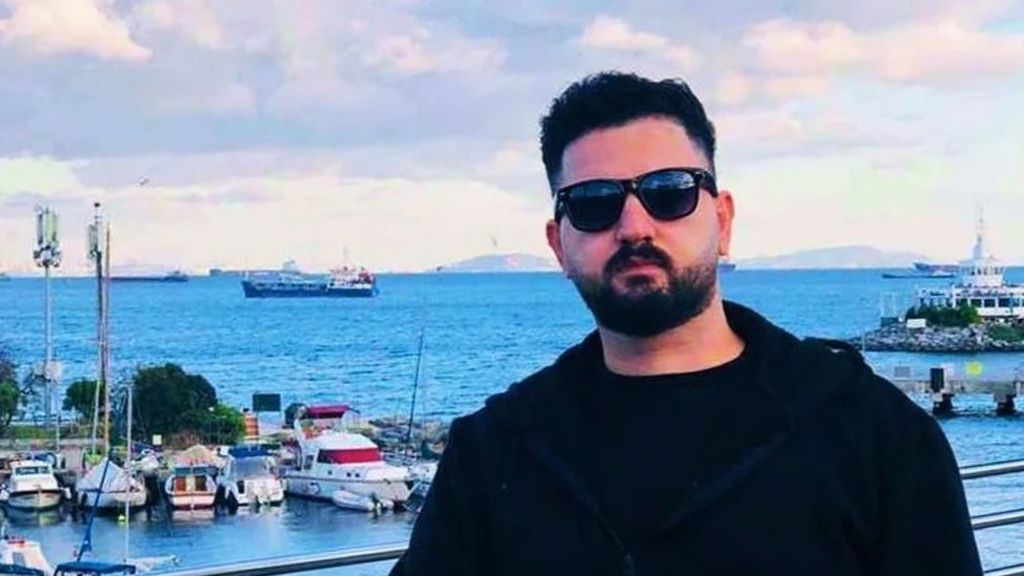
For years, a shadowy 28-year-old Iraqi Kurd smuggling kingpin operated under the alias ‘Kardo Ranya’, his true identity a closely guarded secret that stymied law enforcement across Europe and the United Kingdom. Believed to control the bulk of illegal small-boat crossings of the English Channel in recent years, his anonymity allowed him to evade international arrest warrants and cross-border tracking efforts, enabling his sprawling criminal network to thrive. Now, a year-long investigative project by BBC journalists has pulled back the curtain on one of the world’s most active people smuggling rings, unearthing Kardo Ranya’s real identity and laying bare the human cost of his illicit trade.
The investigation, which is the subject of the new BBC Radio 4 podcast *Intrigue: To Catch A King*, traced a trail of clues from migrant encampments on France’s northern coast, across the European continent, all the way to Kardo Ranya’s hometown of Ranya, a small town in the semi-autonomous region of Iraqi Kurdistan. A 2024 Chatham House report notes that this region is rife with established smuggling networks that move people from conflict zones across the Middle East to Western Europe, and senior UK law enforcement officials confirm that Kurdish-led gangs dominate the cross-Channel illegal migration trade. “We’d say the majority of the small-boat criminal business model is controlled by Kurds,” Dan Cannatella-Barcroft, acting deputy director of the UK’s National Crime Agency (NCA), told the BBC. The NCA has recently ramped up targeted operations against smugglers with ties to Ranya, a network known within migrant communities as the “Ranya Boys.”
Unlike many high-level smugglers who operate in the shadows, Kardo Ranya actively marketed his services openly on social media, posting photos of luxury London life and fake testimonials from supposed clients to lure vulnerable migrants. His network charges a premium for its services: roughly €17,000 (£15,000) for a single adult to travel from Iraq to the UK, with a premium VIP package for those able to pay more. Even with prices higher than competing smuggling rings, desperate migrants consistently choose his network, a former smuggler told the BBC. But this premium price does not deliver on promises of safety: the entire journey from the Middle East to Northern Europe is rife with danger, and hundreds of migrants have died attempting the final crossing of the English Channel.
The human cost of Kardo Ranya’s operation is embodied in the story of Shwana, a 24-year-old man from Ranya who fell for the smuggler’s social media ads promising a better life in the UK. Shwana reached northern France in November last year, where he was packed onto an overloaded small boat alongside roughly 100 other migrants — a vessel rated to carry fewer than 20 people. Mid-voyage, the boat began to sink. While most passengers were rescued by French coastguards and returned to France, four people including Shwana went missing in the dark. His body was never recovered. A fellow passenger told the BBC the crossing was coordinated via a WhatsApp group linked to a phone number that appeared in one of Kardo Ranya’s own social media advertisements. Shwana’s family in Ranya confirmed he had been influenced by the smuggler’s marketing, lured by lack of economic opportunity at home: unemployment remains high across Iraqi Kurdistan, leaving many young people with few prospects, making them easy targets for smuggling gangs.
Local activists in Ranya have begun pushing back against the smuggling trade, despite grave risks. Bakra Ali, a local resident, opened a small museum in the town dedicated to honoring local residents who died attempting crossings to Europe. Its walls are covered with hundreds of photos of lost loved ones like Shwana, but Ali has received repeated death threats from smuggling gangs and requires 24-hour police protection. Still, he remains defiant, and when shown a photo of Kardo Ranya during the BBC investigation, he immediately recognized the kingpin and connected journalists to low-level associates within the network.
That connection ultimately led to the breakthrough: a disgruntled low-level smuggler, who claimed to be as close as a brother to Kardo Ranya, leaked the kingpin’s full identity to the BBC team, after days of negotiation. The leaked document confirmed the smuggler’s full legal name: Kardo Muhammad Amen Jaf. With the identity in hand, the BBC team arranged a confrontation: a translator contacted Jaf via his operational WhatsApp number, posing as a wealthy migrant seeking to move his entire family to the UK for the £160,000 VIP package. When Jaf called back to close the deal, journalists confronted him with the evidence of his smuggling operation. Jaf denied all allegations, claiming he had only ever given advice to people leaving Iraq and did not believe he had committed any crime. He denied any involvement in the crossing that killed Shwana, then immediately ended the call and disconnected the phone number.
Jaf is not the first member of the Ranya Boys to face justice. In recent months, associate Noah Aaron — another senior member of the network who has organized crossings since 2019 — was convicted in France of money laundering and organized illegal migration, and sentenced to 10 years in prison. Despite being wanted in multiple countries and linked to two Channel crossing deaths, Aaron evaded detection for years, moving freely between the UK and mainland Europe.
Now that Jaf’s real identity has been exposed, legal experts say moving freely across borders will become far more difficult for the kingpin. He is currently wanted for questioning by at least one European police force, though his current whereabouts remain unknown. Law enforcement agencies across the continent now have the information needed to issue a coordinated international arrest warrant, a step that was impossible while his identity remained a secret.
The investigation comes as small-boat crossings remain the most common form of detected illegal entry into the UK since 2020, with nearly all arrivals claiming asylum to escape persecution and violence in their home countries. Official data shows 9 out of 10 small-boat arrivals between 2018 and 2025 were men and boys under 40, and more than 100,000 people were housed in UK asylum accommodation as of December 2025.