分类: world

  • Iran declares 3 days of national mourning for ‘martyrs’

    Iran declares 3 days of national mourning for ‘martyrs’

    Iran has initiated three days of national mourning to honor security personnel killed during widespread civil unrest, as confirmed by state television broadcasts on Sunday. The government has simultaneously called for nationwide marches on Monday to demonstrate support for the Islamic Republic.

    According to US-based human rights organization HRANA, the ongoing protests have resulted in more than 500 fatalities, including 490 protesters and 48 security personnel, with over 10,600 individuals detained during two weeks of demonstrations. These figures, compiled from both internal and external activist sources, remain unverified by Iranian authorities or independent confirmation.

    The protests originated on December 28 as economic demonstrations against rising prices but rapidly evolved into broader opposition against Iran’s clerical establishment that has governed since the 1979 Islamic Revolution. Iranian officials have accused the United States and Israel of instigating the unrest.

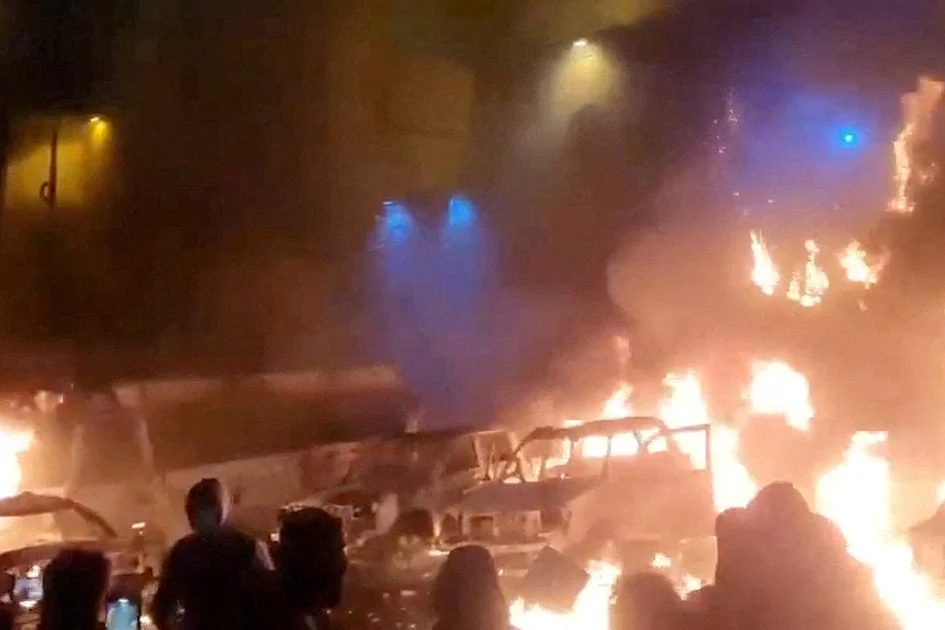
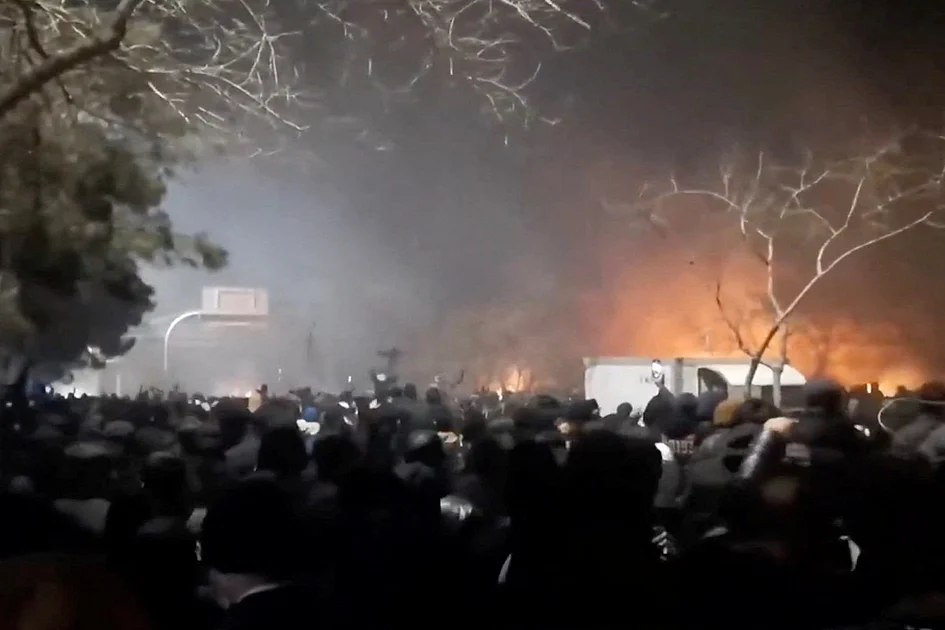
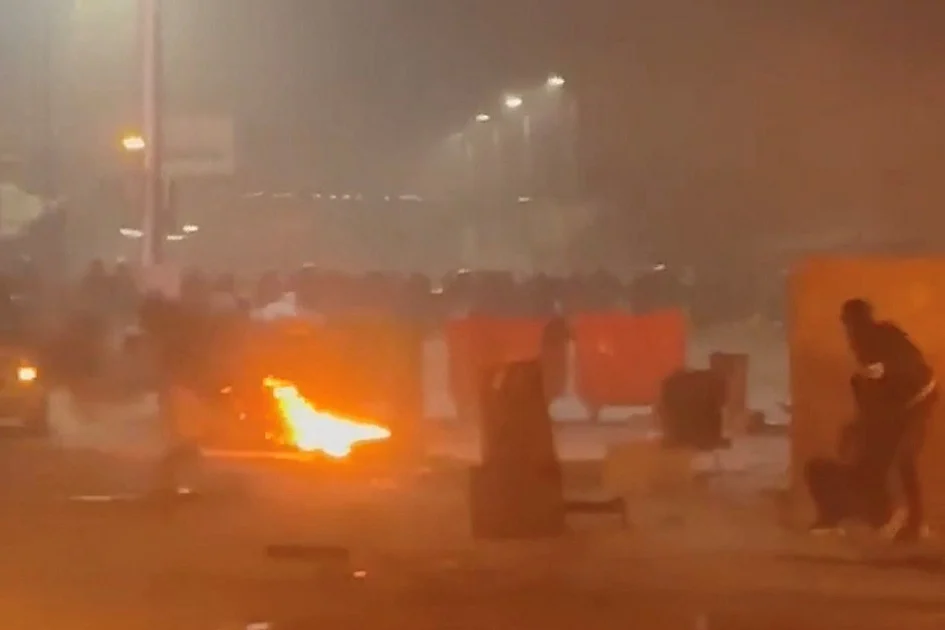
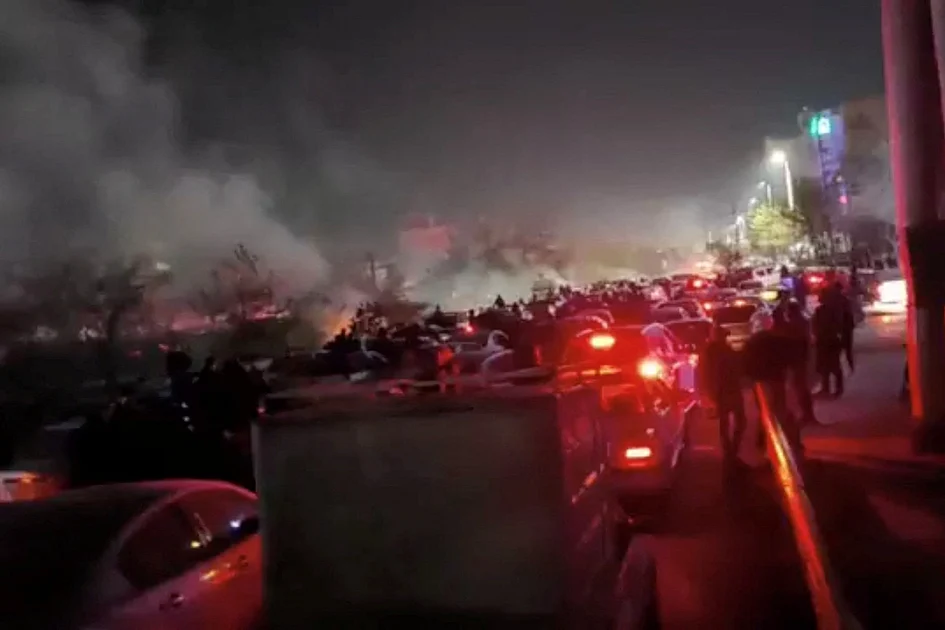
    Information flow from Iran has been severely restricted due to an internet blackout implemented since Thursday. Despite these limitations, social media footage from Tehran and Mashhad has shown substantial nighttime demonstrations, with visible street fires, masked protesters, and audible explosions.

    International tensions have escalated significantly, with former US President Donald Trump reportedly receiving briefings on military options regarding Iran. Iranian Parliament Speaker Mohammad Baqer Qalibaf issued a stark warning: “In the case of an attack on Iran, the occupied territories (Israel) as well as all U.S. bases and ships will be our legitimate target.”

    Israeli security sources indicate their military remains on high alert for potential US intervention, while maintaining that the protests constitute an internal Iranian matter. This development occurs against the backdrop of last year’s 12-day conflict between Israel and Iran, which involved brief US participation.

    Iranian President Masoud Pezeshkian has characterized the unrest as foreign-directed destabilization, pleading with families to prevent their children from joining what he described as “rioters and terrorists.” Meanwhile, analysts suggest that while the current protests are unlikely to topple the government, they may significantly weaken the establishment’s stability.
  • Deaths from Iran protests reaches more than 500, rights group says

    Deaths from Iran protests reaches more than 500, rights group says

    A deepening crisis has engulfed Iran as human rights monitors report over 500 fatalities during two weeks of sustained anti-government demonstrations. The US-based Human Rights Activists News Agency (HRANA) has verified 490 protester deaths alongside 48 security personnel casualties, with more than 10,600 individuals detained nationwide since unrest began on December 28, 2026.

    The protests initially erupted over economic hardships before transforming into broader challenges against Iran’s clerical establishment. Despite a comprehensive internet shutdown implemented since Thursday, verified footage from Tehran and Mashhad shows persistent nighttime demonstrations with visible street fires, debris, and audible explosions.

    Iranian authorities have intensified their response, labeling participants “armed terrorists” and displaying numerous body bags on state television as evidence of terrorist activities. Parliament Speaker Mohammad Baqer Qalibaf issued stark warnings to Washington, declaring US bases and Israeli territory as “legitimate targets” should America intervene militarily.

    International tensions escalated as former President Donald Trump threatened intervention while Wall Street Journal reported plans for potential cyber attacks and expanded sanctions. Israeli security forces remain on high alert, with Prime Minister Benjamin Netanyahu expressing hope for Iran’s “liberation from tyranny.”

    President Masoud Pezeshkian accused the US and Israel of orchestrating destabilization efforts while urging families to prevent youth from joining what he termed “terrorists.” The government maintains it will address economic grievances while suppressing what it considers foreign-backed violence.

    Analysts suggest the protests represent the most significant challenge to Iran’s leadership since 2022, occurring while the nation recovers from last year’s conflict with Israel and regional setbacks to allied groups like Hezbollah.

  • Indian officials say Pakistani drones seen over border areas: Media reports

    Indian officials say Pakistani drones seen over border areas: Media reports

    Indian security personnel detected multiple unmanned aerial vehicles originating from Pakistani airspace conducting surveillance operations along the sensitive border regions of Jammu and Kashmir on Sunday evening. According to official statements conveyed through Press Trust of India, the incident occurred in the strategically significant districts of Samba, Rajouri, and Poonch along the International Border and Line of Control.

    The aerial objects, classified as suspected reconnaissance drones, entered Indian airspace and remained operational for several minutes before returning to Pakistani territory. Security analysts note this pattern aligns with previous incidents where drones have been utilized for intelligence gathering or potential smuggling operations across the contested border region.

    In response to the unauthorized incursions, Indian border security units immediately initiated comprehensive ground search operations across the affected forward areas. Standard protocol for such incidents involves heightened alert status, enhanced patrol deployments, and technical surveillance augmentation to monitor subsequent developments.

    This incident occurs within the broader context of ongoing tensions between the nuclear-armed neighbors, where cross-border drone activity has become an increasingly frequent security challenge. Both nations maintain extensive surveillance infrastructure along the border, with such incidents typically prompting formal diplomatic communications through established channels.

    The Jammu and Kashmir region remains one of the world’s most heavily militarized zones, with both countries maintaining robust defensive positions along the demarcation line. Technological advancements in unmanned aerial capabilities have added a new dimension to the long-standing security considerations in the region.

  • Bangladesh plans to join international stablization force in Gaza

    Bangladesh plans to join international stablization force in Gaza

    Bangladesh has formally expressed its intention to participate in the proposed international stabilization force for Gaza during high-level diplomatic discussions in Washington. The development emerged from meetings between Bangladeshi National Security Adviser Khalilur Rahman and U.S. diplomats Allison Hooker and Paul Kapur on Saturday.

    According to an official government statement, Rahman conveyed Bangladesh’s ‘interest in principle’ to contribute to the multinational peacekeeping initiative, though specific details regarding troop numbers or operational capacity remain undisclosed. The U.S. State Department has not yet issued an official response to Bangladesh’s proposal.

    This potential deployment stems from a UN Security Council resolution adopted in mid-November that authorized the creation of a temporary International Stabilization Force. The force would operate under a ‘Board of Peace’ framework in coordination with participating nations.

    The diplomatic movement occurs against a backdrop of stalled ceasefire negotiations. The initial truce agreement, implemented in October, has failed to progress beyond its first phase, with both Israeli and Hamas leadership accusing each other of violations. Since the ceasefire began, conflict monitoring groups report over 400 Palestinian fatalities and three Israeli soldier deaths.

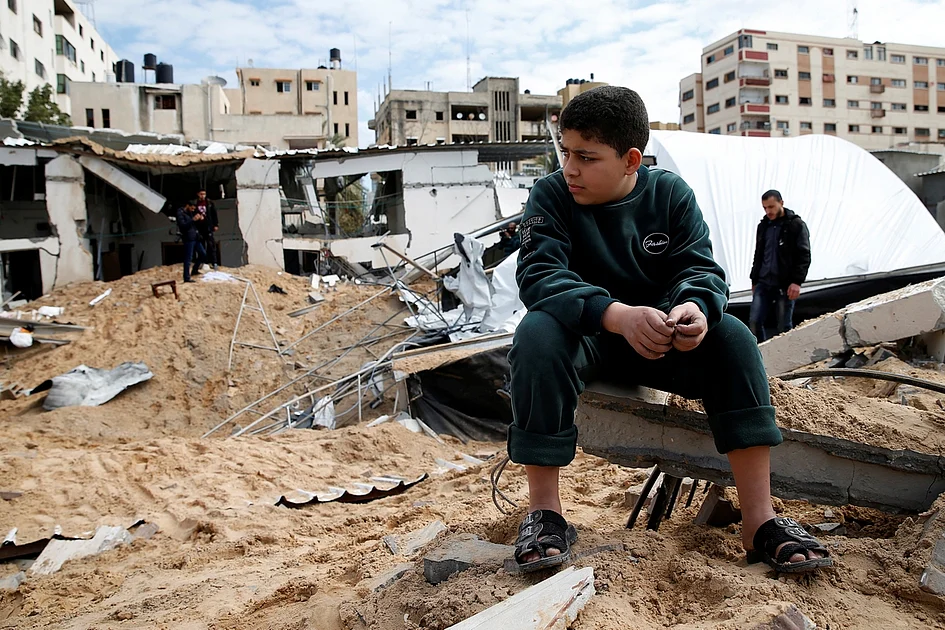
    Gaza’s humanitarian situation remains critical, with nearly all of the territory’s 2.3 million residents living in temporary shelters or structurally compromised buildings within confined areas where Israeli forces have withdrawn and Hamas has resumed administrative control.

    The broader context includes Israel’s military campaign launched in late 2023 following Hamas attacks that killed approximately 1,200 Israelis and resulted in 250 hostages. The subsequent offensive has generated widespread international concern, with multiple UN experts and human rights organizations characterizing the response as disproportionate and potentially constituting genocide under international law—allegations Israel strongly denies while maintaining its actions represent legitimate self-defense.

  • Thousands of tourists stranded in Lapland as cold grounds flights

    Thousands of tourists stranded in Lapland as cold grounds flights

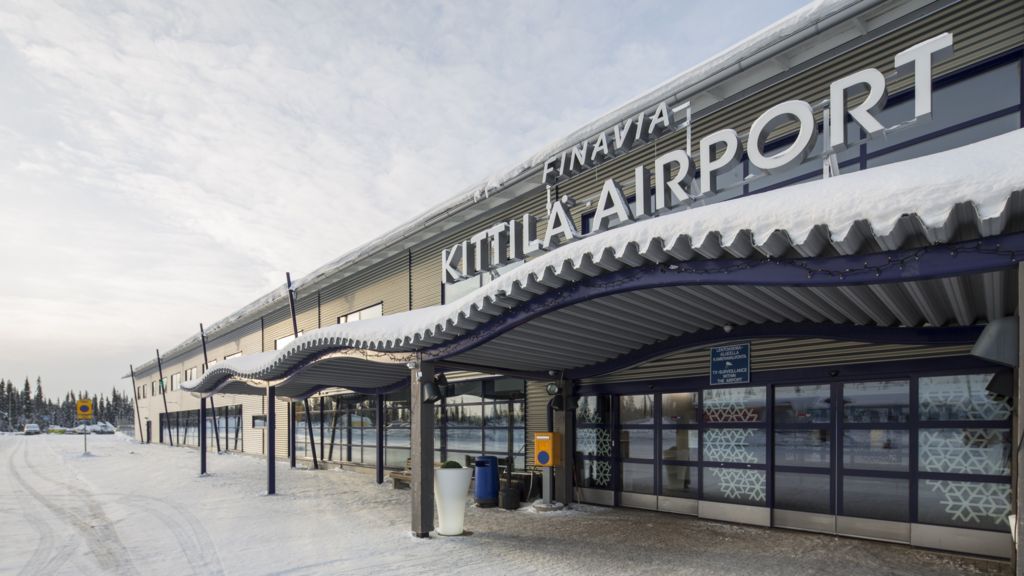
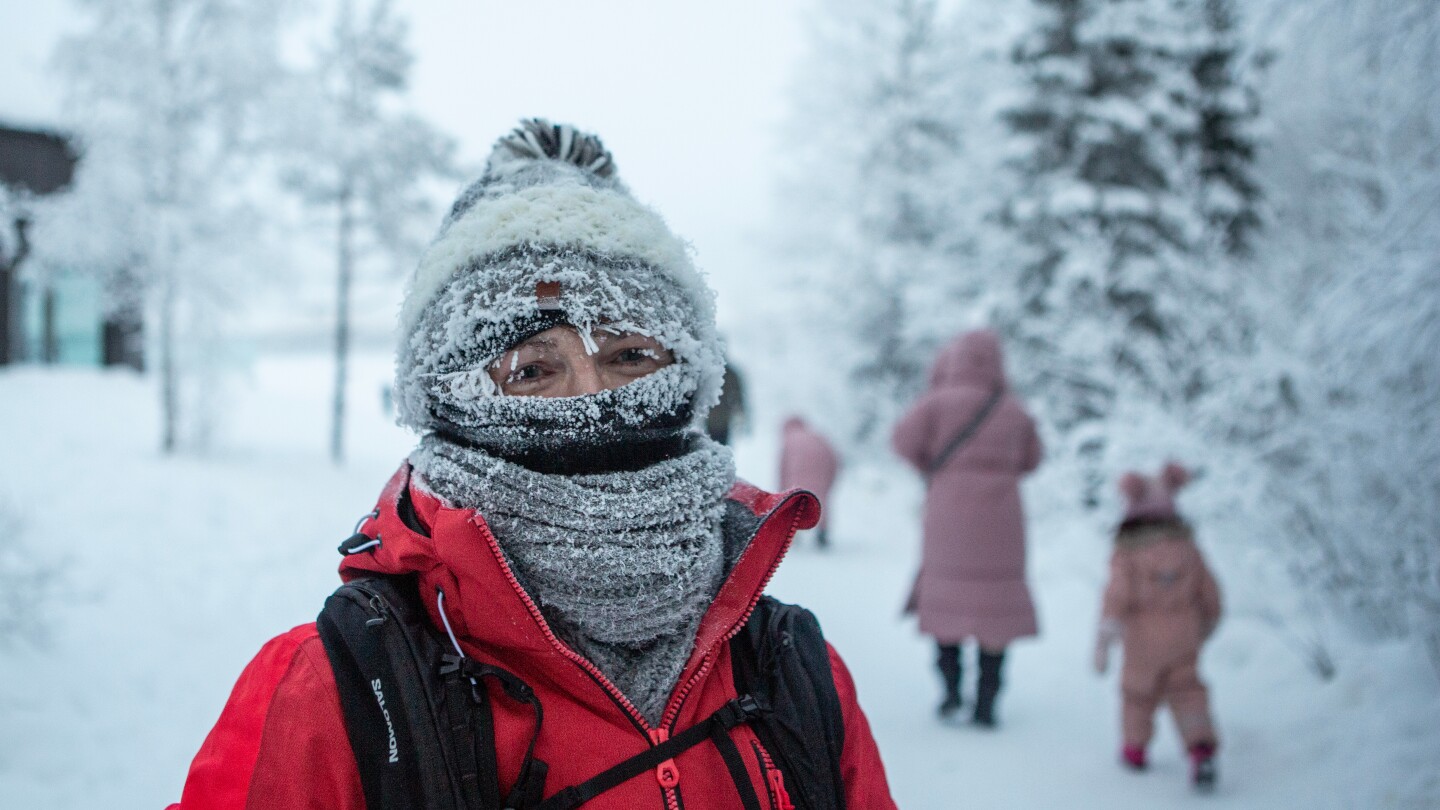
    A severe Arctic cold snap has brought air travel to a standstill at Kittilä Airport in Finnish Lapland, leaving thousands of international tourists stranded amid the most extreme winter conditions in recent memory. The airport operator, Finavia, confirmed the complete cancellation of all outbound flights on Sunday as temperatures plummeted to a bone-chilling -35°C, with forecasts predicting a further drop to -39°C on Monday.

    The meteorological phenomenon has created uniquely hazardous operational conditions. The extreme cold has rendered standard aircraft de-icing procedures ineffective while causing critical ground equipment, including maintenance and refueling systems, to freeze solid. According to Finavia’s statement to public broadcaster Yle, heightened atmospheric moisture has compounded the crisis by creating dangerously slippery frost layers on aircraft surfaces and runways.

    This deep freeze has primarily affected travelers from major European hubs including London, Bristol, Manchester, Paris, and Amsterdam, many of whom journeyed to Lapland for winter sports and aurora viewing. While the region is renowned for its cold winters, current temperatures are notably severe—typically averaging -14°C with occasional dips to -30°C, rather than the sustained -35°C to -39°C now being recorded.

    The transportation disruption extends beyond air travel, with Fintraffic authorities warning of perilously icy road conditions throughout the region. In a concerning incident reported by Yle, a bus carrying Ukrainian passengers skidded into a ditch on Sunday morning, though fortunately no serious injuries were reported.

    This Arctic blast forms part of a broader pattern of severe winter weather sweeping across Northern Europe. Concurrent storms have caused significant disruption in the UK, France, and Germany, including a tragic fatality in England when a tree fell on a caravan and widespread power outages affecting approximately 100,000 French households.

  • Flydubai cancels flights to Iran until January 11 amid protests

    Flydubai cancels flights to Iran until January 11 amid protests

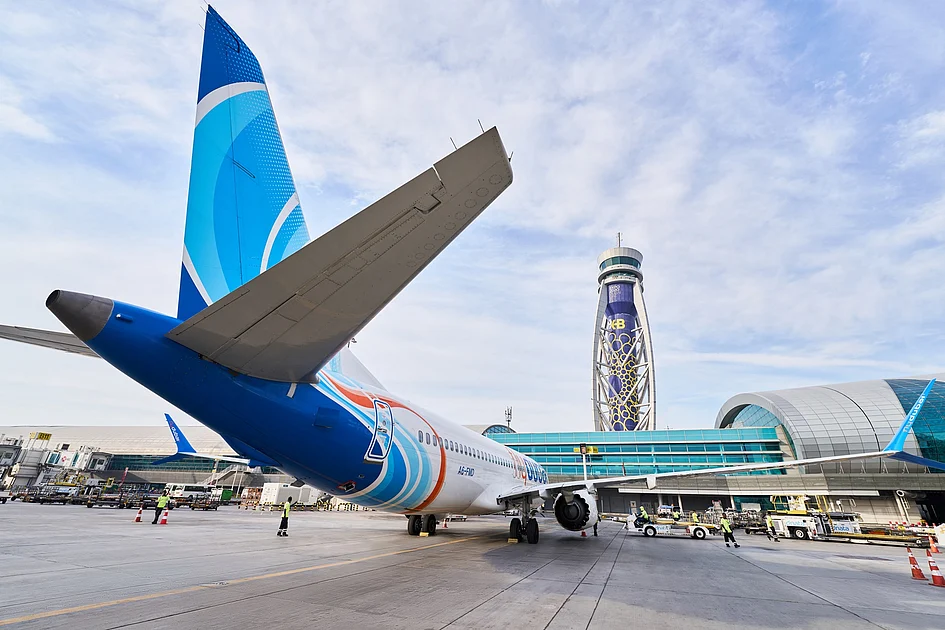
    Dubai-based carrier flydubai has officially extended flight cancellations to Iran through January 11, 2026, citing ongoing civil unrest and security concerns within the country. The airline specifically suspended operations to Bushehr Airport (BUZ) and Esfahan Airport (IFN) as widespread protests continue to disrupt normal operations.

    The decision comes amid escalating tensions in Iran where demonstrations that began on December 28 over economic grievances have evolved into broader political challenges. Authorities have implemented severe measures including nationwide internet restrictions, creating operational challenges for international airlines.

    Flydubai issued an official apology to affected passengers, emphasizing that passenger and crew safety remains their paramount concern. The airline has established direct communication channels with impacted travelers regarding rebooking alternatives and refund procedures.

    Passengers holding reservations for Iran routes are advised to contact the airline’s Dubai-based customer service center, visit official travel shops, or coordinate with their booking agents. The carrier also recommended that travelers maintain updated contact information through the ‘Manage your booking’ portal on flydubai.com for real-time flight status updates.

    This marks the second cancellation announcement from flydubai, which previously suspended Iran flights on January 9 amid similar concerns. The extended suspension reflects the airline’s cautious approach to the evolving security situation in the region.

  • Iran authorities make ‘significant’ arrests over protests

    Iran authorities make ‘significant’ arrests over protests

    Iranian authorities have confirmed the detention of prominent figures within the nationwide protest movement that has gripped the Islamic Republic for two weeks. National Police Chief Ahmad-Reza Radan disclosed on state television that “significant arrests were made of the main elements in the riots” during Saturday evening operations, though specific details regarding the number or identities of those detained remain undisclosed.

    The government has implemented a strategic differentiation between legitimate economic grievances and what it categorizes as unlawful disturbances. Iran’s security chief Ali Larijani characterized protests stemming from economic hardship as “completely understandable” while condemning what he termed “riots” that employ methods “very similar to the terrorist groups.”

    Tehran presents a landscape of escalating tension and economic strain. According to AFP correspondents, the capital experiences near-paralysis with substantial price inflation—meat costs have nearly doubled since demonstrations began. Commercial activity remains severely restricted, with operating businesses forced to close by late afternoon coinciding with intensified security deployments.

    Communication networks have faced deliberate disruption, with mobile services becoming largely unavailable on Saturday, effectively severing contact channels for organizers and participants. The government’s containment strategy extends beyond arrests to include systematic suppression of information flow.

    Exiled opposition figure Reza Pahlavi, son of the deposed shah, has emerged as a vocal supporter of the demonstrations, urging continued street presence and promising future personal involvement. Meanwhile, international tensions escalate as U.S. President Donald Trump has threatened military intervention should Iranian authorities initiate lethal force against protesters.

    Iranian officials responded with unequivocal warnings. Parliament Speaker Mohammad Bagher Ghalibaf declared that any American military action would trigger retaliatory strikes against “occupied territory and centres of the US military and shipping,” implicitly referencing Israel which Iran considers occupied Palestinian land.

  • In Gaza hospital, patients cling to MSF as Israel orders it out

    In Gaza hospital, patients cling to MSF as Israel orders it out

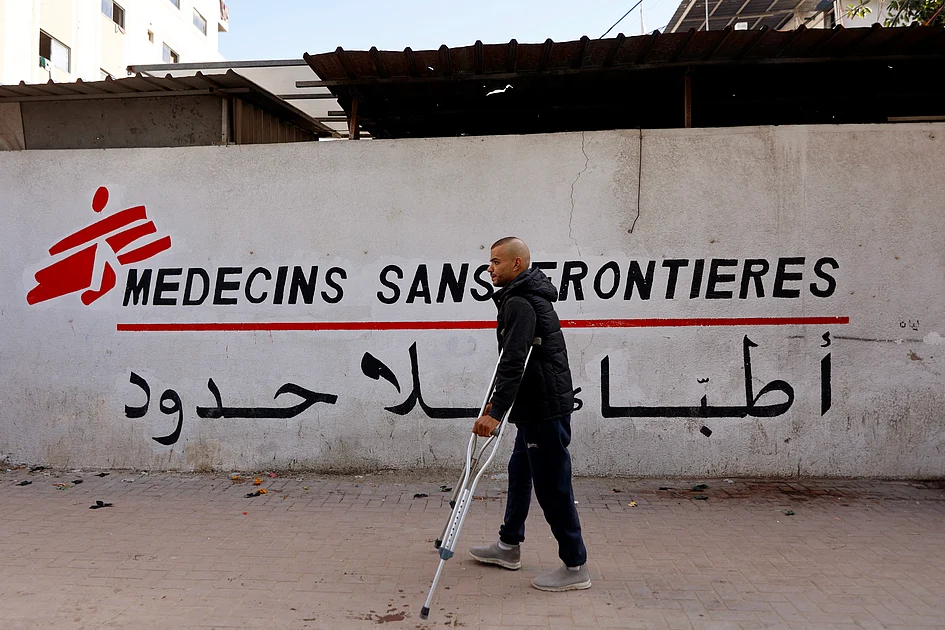
    A critical humanitarian crisis is escalating in Gaza as Médecins Sans Frontières (MSF) faces imminent expulsion from the territory under Israel’s controversial NGO ban. The organization, along with 36 other aid groups, has been ordered to cease operations by March 1st for allegedly failing to provide detailed staff information to Israeli authorities.

    At Nasser Hospital in southern Gaza—one of the few remaining functional medical facilities—patients express profound anxiety about losing MSF’s essential services. Ten-year-old Adam Asfour, receiving treatment for shrapnel wounds sustained in September bombings, articulated the collective fear: “They stood by us throughout the war. When I heard it was possible they would stop providing services, it made me very sad.”

    Israel’s Ministry of Diaspora Affairs and Combating Antisemitism, which oversees NGO registrations, has leveled serious allegations against MSF, claiming two employees maintain ties to Hamas and Islamic Jihad—charges the organization vehemently denies. This decision has drawn international condemnation and warnings of catastrophic consequences for Gaza’s already strained relief systems.

    MSF currently sustains approximately 20% of hospital beds across Gaza while operating around 20 health centers. Their 2025 operations included over 800,000 medical consultations and more than 10,000 deliveries. Beyond medical care, the organization provides critical drinking water distribution to a population devastated by prolonged conflict.

    Humanitarian workers report that constraints are already mounting. “We can’t have any more international staff enter Gaza, nor can we bring in supplies—we will run into shortages,” stated Kelsie Meaden, MSF logistics manager at Nasser Hospital. Claire Nicolet, another MSF official, emphasized the irreplaceable nature of their work: “It’s almost impossible to find an organization that could replace all what we are doing currently in Gaza.”

    The potential withdrawal occurs against the backdrop of a healthcare system pushed to the brink by two years of war. Many facilities have been damaged by bombardments or overwhelmed by casualties, with unreliable electricity, water, and fuel supplies compounding the crisis. Aid groups warn that emergency care, maternal health, and pediatric treatment services risk complete collapse without international support.

    Humanitarian sources confirm that at least three international NGO employees have already been barred from entering Gaza through the Kerem Shalom crossing due to rejected applications. As the March deadline approaches, patients like 18-month-old Joud—being treated for severe burns from boiling water accidents—face uncertain futures despite showing significant improvement under MSF care.

    While MSF asserts it will “continue working as long as we can,” the organization acknowledges that without reversal of Israel’s decision, their life-saving operations in Gaza will terminate in March, leaving hundreds of thousands without essential medical services.

  • Iran warns Washington it will retaliate against any attack with strikes on Israel, US bases

    Iran warns Washington it will retaliate against any attack with strikes on Israel, US bases

    Iran has issued a stark warning to the United States, declaring that any American military action would trigger immediate retaliatory strikes against Israeli territory and US military installations throughout the Middle East. The warning came from Parliament Speaker Mohammad Baqer Qalibaf, a former Revolutionary Guards commander, during a parliamentary address on Sunday.

    The escalating tensions occur against the backdrop of widespread civil unrest in Iran that began on December 28th, initially sparked by economic grievances but rapidly evolving into political demonstrations challenging the clerical establishment. According to human rights organization HRANA, the death toll has reached 116 casualties, including both protesters and security personnel.

    Israeli security forces have been placed on high alert amid concerns about potential US intervention in support of the Iranian protest movement. Three security sources confirmed heightened preparedness, though specific operational details remain classified. The Israeli government has maintained official silence regarding the situation.

    The current crisis follows recent military confrontations between the nations, including a 12-day conflict in June that saw joint US-Israeli airstrikes against Iranian targets, followed by Iranian missile attacks on American bases in Qatar.

    Information flow from Iran remains severely restricted due to government-imposed internet blackouts implemented since Thursday. Meanwhile, social media evidence indicates continued protests, including verified footage showing substantial nighttime gatherings in Tehran’s Punak neighborhood.

    US President Donald Trump has repeatedly expressed willingness to support the protest movement, stating on social media that ‘the USA stands ready to help.’ This rhetoric coincides with confirmed discussions between Israeli Prime Minister Benjamin Netanyahu and US Secretary of State Marco Rubio regarding potential intervention scenarios.

    A senior US intelligence official characterized the situation as an ‘endurance game,’ with both opposition forces and government authorities attempting to outlast each other while avoiding actions that might justify foreign military involvement.

  • Thousands of tourists stranded in northern Finland as deep freeze halts flights

    Thousands of tourists stranded in northern Finland as deep freeze halts flights

    An extreme Arctic cold front has triggered widespread travel chaos across Northern Europe, with Finland’s Lapland region experiencing the most severe disruptions. At Kittilä Airport, a key gateway to Finnish Lapland, all flight operations were suspended Sunday as temperatures plummeted to -37°C (-34.6°F), creating dangerously frigid conditions that made aircraft de-icing and ground operations impossible.

    The deep freeze left thousands of tourists stranded in the popular winter destination, with meteorologists predicting even more severe conditions Monday with temperatures approaching -40°C (-40°F). While Finns are accustomed to harsh winter weather, the current cold snap has proven exceptionally severe compared to recent years.

    The travel disruptions extended far beyond Finland’s borders. Germany’s rail network continued experiencing significant delays and cancellations Sunday after Deutsche Bahn suspended all northern services Friday due to heavy snowfall. In North Rhine-Westphalia, Germany’s most populous state, authorities preemptively closed all schools Monday, shifting to remote learning amid forecasts of dangerously icy roads.

    Baltic nations implemented similar precautions. Both Estonia and Lithuania issued travel advisories urging drivers to postpone nonessential journeys due to approaching blizzards, while Latvia activated snow alerts across its western regions. The persistent cold weather system has affected vast areas of northern, central, and eastern Europe, combining heavy snowfall, high winds, and treacherous road conditions to create one of the most challenging winter travel scenarios in recent memory.