分类: world

  • Operation against Nigerian kidnapping gang kills ‘200 bandits’ – official tells BBC

    Operation against Nigerian kidnapping gang kills ‘200 bandits’ – official tells BBC

    Nigerian security forces have launched a decisive multi-agency offensive against criminal networks in central Nigeria, resulting in the elimination of more than 200 suspected armed bandits according to official statements. The large-scale operation, which commenced on Saturday across densely forested areas of Kogi state, represents one of the most significant counter-insurgency actions in recent months.

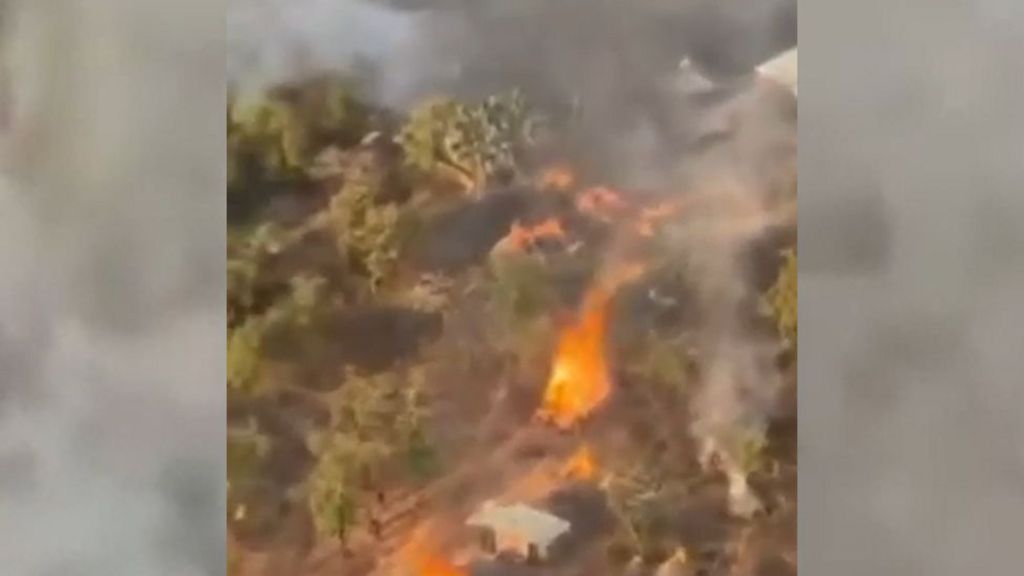
    Dramatic aerial footage captured by police helicopters and shared with international media shows extensive bandit encampments engulfed in flames as coordinated strikes targeted multiple hideouts. Kingsley Fanwo, Kogi State’s Information Commissioner, confirmed that several criminal bases were destroyed during the weekend operations involving combined Nigerian security and paramilitary units.

    The offensive follows escalating national outrage over mass abductions, including targeted attacks on educational institutions that have plagued northwestern regions. While criminal elements have traditionally operated in Nigeria’s northwest, security analysts note their recent expansion into central states like Kogi, whose strategic forest corridors connecting northern and southern regions provide ideal terrain for cross-border criminal operations.

    Security operations face particular challenges as bandits reportedly utilize kidnapped civilians as human shields to prevent full-scale assaults. “Security forces have put them in disarray wherever they try to regroup,” Fanwo stated, while acknowledging that “the bandits have kidnapped several individuals which they are using as human shields.”

    The operation aligns with President Bola Tinubu’s recent directive to security chiefs to intensify efforts against armed groups. However, security expert Bashir Galma, a retired army major, cautioned that casualty figures might be exaggerated for political purposes with elections approaching, while conceding that surprise attacks could indeed yield significant results.

    Nigeria’s complex security landscape includes not only kidnapping gangs but also Islamist insurgencies, resource conflicts, and separatist movements. International support has emerged with the United States military recently delivering “critical military supplies” to Abuja, emphasizing their “shared security partnership.” This follows December airstrikes by US forces against Islamist militant camps in northwestern Nigeria.

    The government maintains that all citizens, regardless of faith, remain vulnerable to attacks in a nation with over 250 ethnic groups and mixed religious demographics. Foreign ministry spokesman Alkasim Abdulkadir recently reaffirmed Nigeria’s commitment to “protecting all citizens, Christians and Muslims alike, without discrimination” amid international concerns about religiously-motivated violence.


  • India has told Pakistan to control ‘drone intrusions’, Indian army chief says

    India has told Pakistan to control ‘drone intrusions’, Indian army chief says

    India has formally escalated diplomatic pressure on Pakistan regarding unauthorized aerial surveillance activities along their contested border. General Manoj Pande, India’s Chief of Army Staff, confirmed on Tuesday that his nation’s military leadership has directly contacted Pakistan’s Director General of Military Operations regarding repeated drone intrusions originating from Pakistani territory.

    According to Indian defense sources, the most recent incident occurred on Sunday evening when five separate drone incursions were detected along the sensitive frontier in the Jammu sector of Indian-administered Kashmir. This strategically significant region has long been a focal point of territorial disputes between the nuclear-armed neighbors.

    The formal military communication represents a significant escalation in how India is addressing border security concerns. Rather than handling the matter through lower-level channels, the involvement of both nations’ top military operational commanders indicates the seriousness with which New Delhi is treating these aerial violations.

    These developments occur amid ongoing regional tensions and reflect the continuing technological evolution of border surveillance and potential security threats. Drones have increasingly become tools of modern military intelligence gathering and potential provocations in conflict zones worldwide.

    The Jammu and Kashmir region has witnessed numerous border skirmishes and diplomatic standoffs between India and Pakistan over decades. The latest drone incidents add a technological dimension to these longstanding territorial disputes, challenging traditional border security protocols and requiring updated defense responses.

  • Freezing rain and ice disrupt travel across central and eastern Europe

    Freezing rain and ice disrupt travel across central and eastern Europe

    A severe winter storm system has unleashed chaos across Central and Eastern Europe, crippling transportation infrastructure with treacherous freezing rain and extreme icing conditions. Major international airports including Vienna International, Prague’s Vaclav Havel, Budapest’s Ferenc Liszt, and multiple Slovakian facilities were forced to implement extensive operational suspensions throughout Tuesday.

    Vienna International Airport, among the region’s busiest aviation hubs, experienced complete temporary shutdowns with incoming flights diverted to alternative airports in Munich, Frankfurt, Cologne and Venice. Peter Kleemann, spokesperson for the Austrian facility, confirmed that departure operations faced significant delays before gradual resumption commenced by late morning.

    The transportation crisis extended beyond aviation networks with widespread disruptions to rail and road systems. Austria’s national railway operator ÖBB reported substantial delays across northern and eastern routes, including Vienna services, advising passengers to postpone non-essential travel. Czech authorities confirmed numerous train and bus cancellations, with passengers at Prague’s main station experiencing multi-hour delays. The critical D8 highway connecting Czech Republic to Germany was closed following weather-related accidents on the German side.

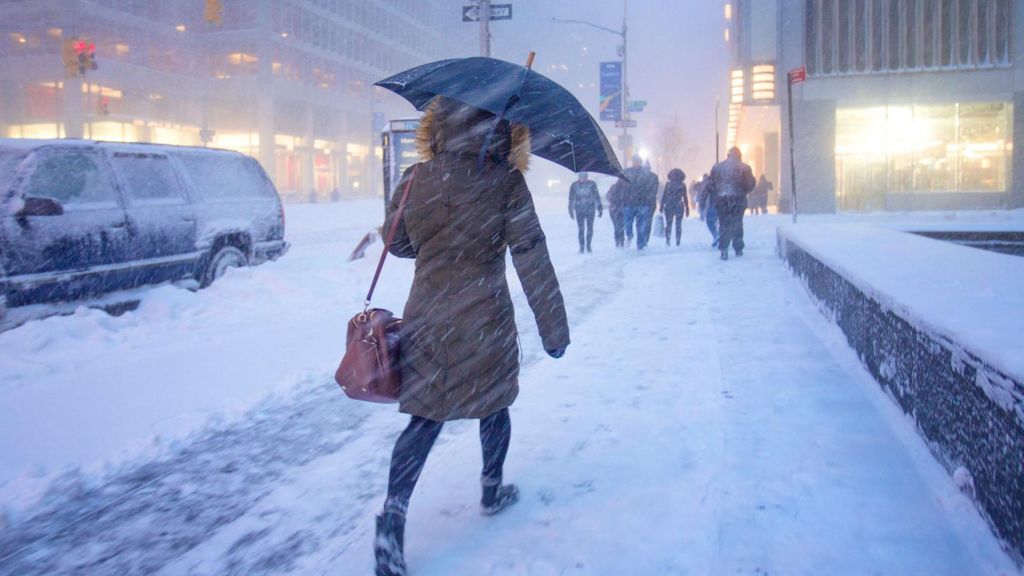
    Urban transit systems similarly struggled with Budapest’s tram services paralyzed by accumulated ice following last week’s heavy snowfall. The Hungarian Meteorological Service warned of continuing adverse conditions with significant snowfall expected in eastern regions while western areas faced additional freezing rain.

    Romanian authorities reported temperatures plunging to -13°C (8.7°F) in some regions, prompting school closures and transition to online education. The compounding weather events represent one of the most significant winter transportation crises to affect the region in recent years, with meteorological services predicting continued challenging conditions throughout the week.

  • Cold weather and data centres drive up US greenhouse gas emissions

    Cold weather and data centres drive up US greenhouse gas emissions

    A comprehensive analysis reveals that United States greenhouse gas emissions experienced a significant reversal in 2025, increasing by 2.4% after two consecutive years of decline. This environmental setback marks the first emissions rise in three years, primarily driven by extreme winter conditions and unprecedented energy demands from emerging technologies.

    The Rhodium Group’s detailed assessment identifies multiple converging factors behind this concerning trend. Exceptionally cold temperatures during early 2025 triggered a 7% surge in residential heating fuel consumption across northern states, where natural gas remains the dominant heating source. Simultaneously, the explosive growth of data centers and cryptocurrency mining operations in energy-intensive regions like Texas and the Ohio Valley created substantial additional power demands.

    This energy crunch coincided with elevated natural gas prices, prompting power generators to reactivate coal-fired plants that had been largely phased out. US coal consumption jumped 13% in 2025—a stark contrast to declining coal usage in China and India, both of which achieved record renewable energy installations. The coal resurgence represents only the second annual increase in US coal power generation over the past decade, though it remains 64% below 2007 levels.

    While renewable energy made impressive gains—solar generation grew at its fastest pace since 2017, expanding by 34%—these additions proved insufficient to offset the overall emissions increase. The transportation sector maintained its position as the largest emissions source, though emissions plateaued despite increased traffic volumes, thanks to growing adoption of hybrid (up 25%) and electric vehicles.

    Energy analysts note that market forces rather than policy changes primarily drove the emissions surge. Rhodium Group’s lead author Michael Gaffney emphasized that while the Trump administration’s climate policy rollbacks didn’t significantly impact 2025 emissions, the structural demand growth from data centers and cryptocurrency operations appears permanent. Environmental advocates counter that administration policies supporting natural gas exports and artificial intelligence infrastructure have indirectly contributed to the emissions increase.

    The 2025 emissions increase outpaced economic growth, indicating a reversal in the decoupling of emissions from economic expansion that had characterized previous years. With electricity providers delaying coal plant retirements to meet sustained demand, experts suggest this emissions rebound may represent more than a temporary fluctuation, signaling persistent challenges in balancing energy security with climate commitments.

  • Niger revokes licences of tanker drivers who refuse to go to Mali amid jihadist blockade

    Niger revokes licences of tanker drivers who refuse to go to Mali amid jihadist blockade

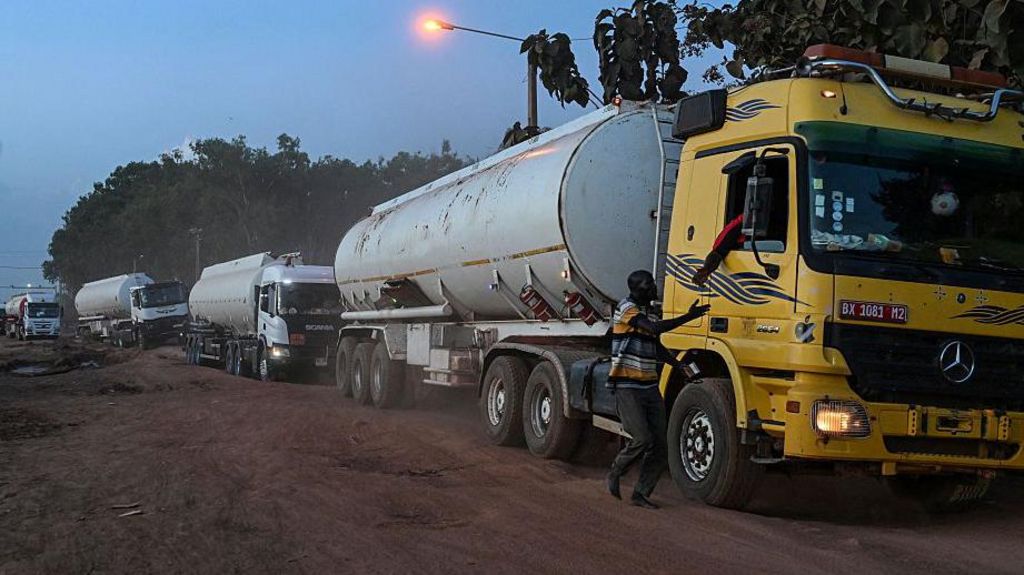
    Niger’s transport ministry has imposed severe sanctions on transport operators and drivers who refused to deliver critical fuel shipments to neighboring Mali, where jihadist attacks have created a dangerous blockade. The ministry revoked licenses of 14 transport companies and 19 drivers, citing “serious violation of legal and regulatory obligations” in an official statement from Transport Minister Abdourahamane Amadou dated January 6th. An additional operator received a one-year suspension.

    The sanctions come as Mali faces an escalating energy crisis precipitated by al-Qaeda affiliate Jama’at Nusrat al-Islam wal-Muslimin (JNIM), which imposed a fuel blockade in September and has systematically attacked petrol tankers on major highways. The militant group has expanded its years-long insurgency to include economic warfare, kidnapping drivers and burning lorries traversing the dangerous routes.

    Despite both nations being governed by military juntas facing similar jihadist threats, the 1,400-kilometer supply route from oil-producing Niger to landlocked Mali remains extremely perilous. Even military-escorted convoys have faced attacks. Last November, Niger successfully delivered 82 fuel tankers that temporarily stabilized Mali’s energy supply, but subsequent shipments were disrupted by transport refusals.

    The fuel shortage has created widespread consequences across Mali, forcing temporary closures of schools and universities and prompting international travel warnings from both the United States and France. Mali’s military government under General Assimi Goïta, who seized power in a 2020 coup, has hired Russian mercenaries to address security concerns after the departure of UN peacekeeping missions and French forces. Large portions of the country remain outside government control despite these measures.

  • UN not yet officially notified of US decision to withdraw from UN entities: spokesperson

    UN not yet officially notified of US decision to withdraw from UN entities: spokesperson

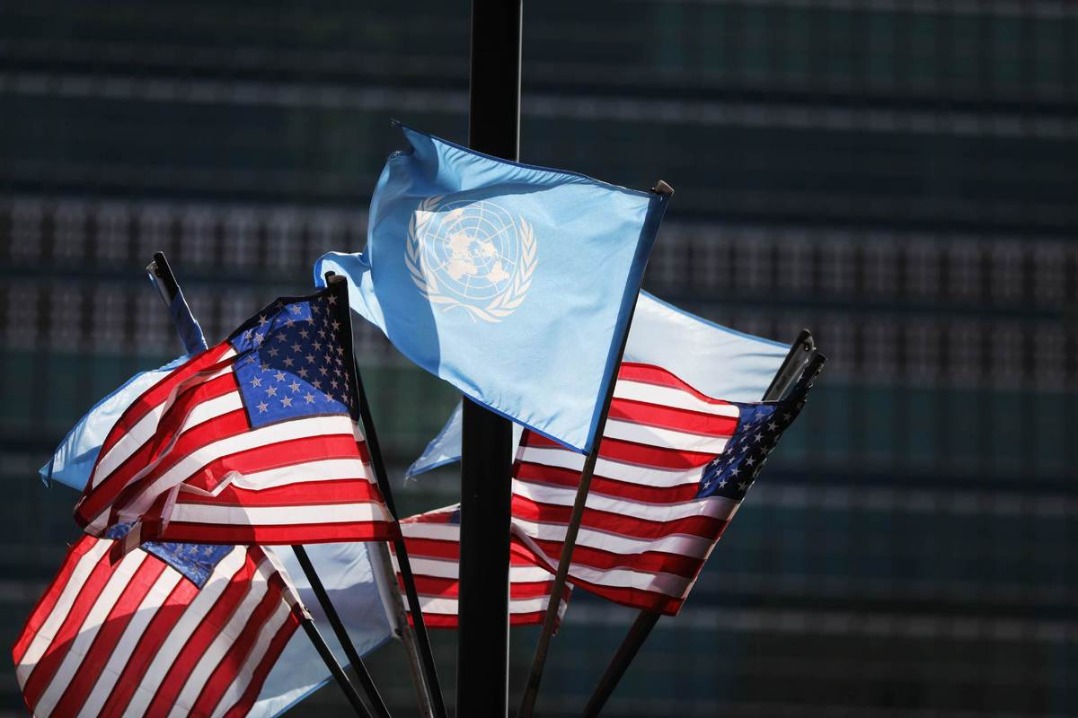
    The United Nations confirmed on Monday that it has not received official communication from the United States regarding its planned withdrawal from multiple UN agencies. UN Secretary-General spokesperson Stephane Dujarric stated during his daily press briefing that the organization remains unaware of any formal notification process initiated by Washington.

    The development follows President Donald Trump’s January 7 presidential memorandum announcing the United States’ intention to withdraw from 66 international organizations, including 31 UN-affiliated entities. The White House justification cited that these organizations ‘no longer serve American interests,’ marking a significant shift in international engagement policy.

    In a January 8 statement, Secretary-General Antonio Guterres expressed regret over the announcement while emphasizing that assessed contributions to both the regular UN budget and peacekeeping operations constitute legal obligations under the UN Charter for all member states. The statement further affirmed that all UN agencies would continue implementing their member-state-approved mandates despite the potential financial implications.

    The UN spokesperson reinforced the organization’s commitment to its mission, stating: ‘We have a responsibility to deliver for those who depend on us. We will continue to carry out our mandates with determination,’ indicating that operational continuity would be maintained regardless of funding changes.

  • Trade tensions threaten green goals, scholars warn

    Trade tensions threaten green goals, scholars warn

    Academic experts are raising urgent alarms that escalating international trade disputes are creating a dangerous divergence between climate ambitions and global commerce, potentially derailing environmental progress worldwide. This warning emerges alongside remarkable growth in the environmental goods sector, which reached $2 trillion in exports during 2024, accounting for 14% of globally manufactured goods according to UN Trade and Development data.

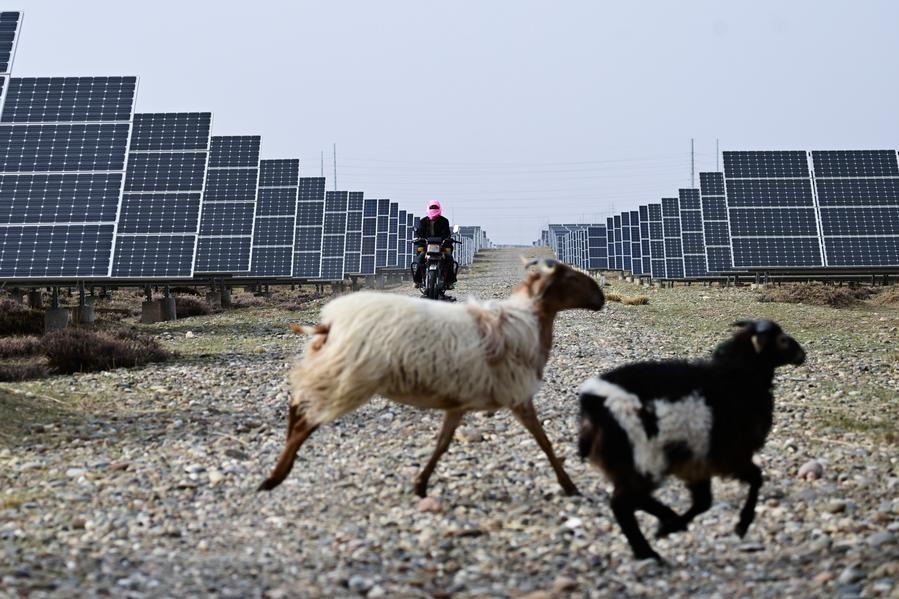
    Between 2013 and 2022, trade in solar energy products surged by 56% while wind generation goods expanded by 39%, significantly outpacing the 23% growth rate of overall industrial goods. However, this rapid expansion has triggered policy conflicts centered on carbon offset mechanisms, green subsidies, and environmental regulations. Major economies are increasingly implementing unilateral measures that scholars characterize as protectionism disguised as climate action.

    The United States’ Inflation Reduction Act, featuring substantial subsidies for domestic clean energy production, has prompted formal World Trade Organization disputes from the European Union and other nations alleging unfair competition. Simultaneously, the EU’s Carbon Border Adjustment Mechanism continues facing resistance from developing economies, with organizations like India’s Centre for Science and Environment warning that the policy effectively shifts decarbonization costs onto emerging markets.

    Additional friction points include Western targeting of China’s green technology sectors, particularly electric vehicles and renewable energy equipment, based on allegations of unfair subsidies. The EU commenced imposing tariffs on Chinese EVs in late 2024, a move that academics argue misrepresents China’s industrial development model.

    Professor Sun Yixian of the University of Bath’s International Development Department explains that many cited subsidies actually represent government-funded research and development within a coherent industrial policy framework. “Many Western countries are now learning from this model, which has created a virtuous cycle supporting green industrial development,” Sun noted, adding that subsidy allegations often serve as leverage in trade disputes.

    Professor Zhongxiang Zhang of Tianjin University described the EU’s anti-subsidy tariffs as a preemptive strategy against China’s competitive advantage rather than addressing proven damages. He observed that China’s EV sector advancement has disrupted the longstanding technological dominance of developed nations, prompting defensive measures to buy transition time.

    These tensions dominated discussions at COP30, resulting in the Global Mutirao decision explicitly advocating for enhanced dialogue between trade and climate interests. The agreement reaffirmed that climate measures should not constitute arbitrary discrimination or disguised trade restrictions.

    A significant institutional development emerged with Brazil launching the Integrated Forum on Climate Change and Trade, creating an independent platform to bridge climate and trade discussions outside existing WTO and UNFCCC frameworks. Professor Zhang Jian of Tsinghua University hailed this as the first formal dialogue mechanism addressing unilateral measures within the UNFCCC framework.

    Researchers emphasize that successful green transition depends on open, stable international cooperation. Overreliance on unilateral measures risks triggering trade frictions, increasing transition costs, weakening investor confidence, and ultimately impairing global emissions reduction efficiency. Associate Research Fellow Dong Yifan of Beijing Language and Culture University stressed that current transition pace remains insufficient against climate challenges, fundamentally representing issues of cost distribution and political will requiring global cooperation.

    Experts conclude that resolving these tensions demands refocusing discussions on carbon reduction fundamentals, establishing robust rules-based frameworks, and pursuing mutually beneficial solutions rather than raising trade barriers that threaten collective climate goals.

  • Russia launches another major attack on Ukraine’s power grid, killing 4

    Russia launches another major attack on Ukraine’s power grid, killing 4

    KYIV, Ukraine — In a significant escalation of hostilities, Russian forces unleashed a second massive aerial offensive against Ukraine within four days, targeting critical energy infrastructure and civilian areas amid freezing winter conditions. The coordinated assault involved nearly 300 drones, 18 ballistic missiles, and seven cruise missiles targeting eight regions across Ukraine, according to President Volodymyr Zelenskyy.

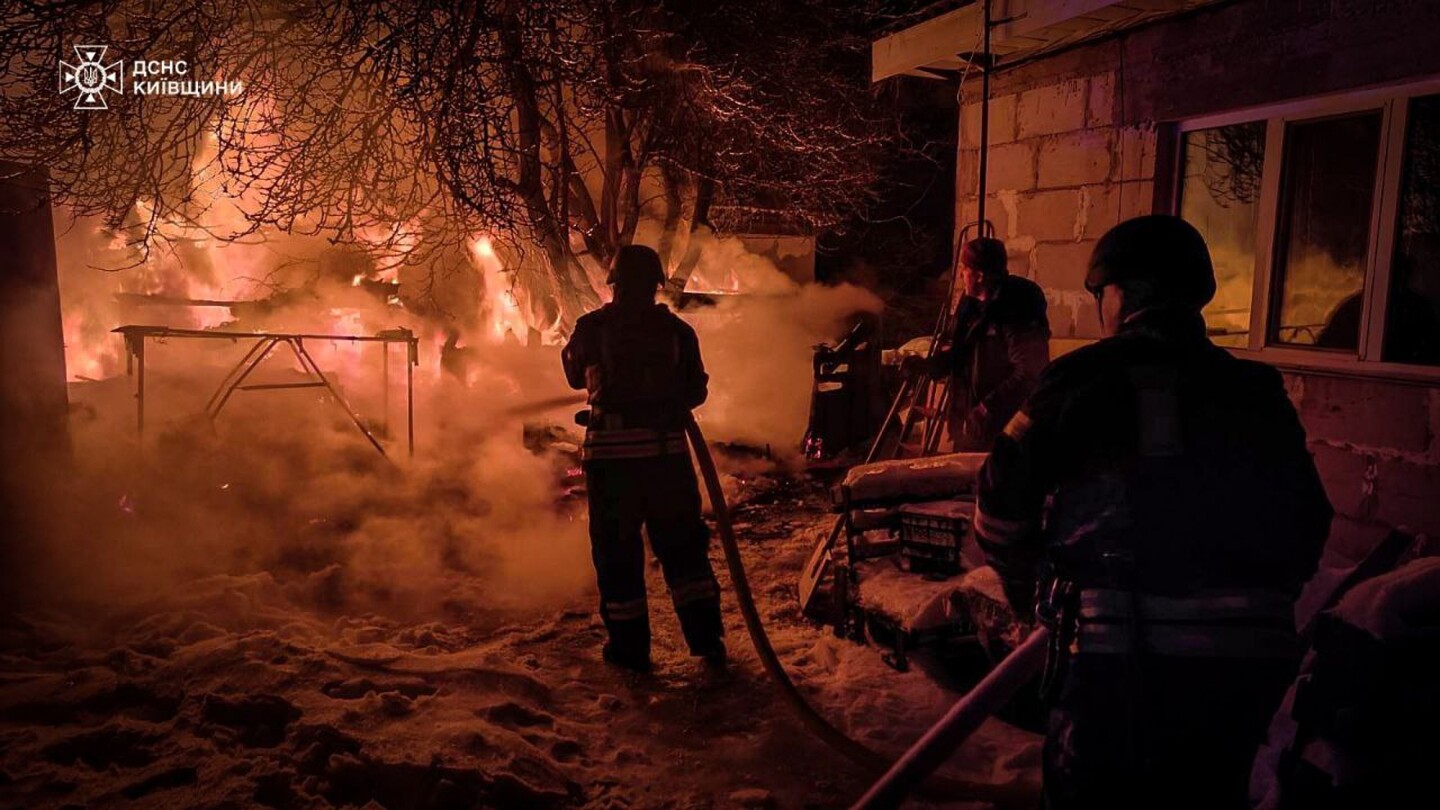
    The northeastern Kharkiv region suffered particularly severe consequences, with a direct strike on a mail distribution center claiming four lives and injuring ten others. Simultaneously, several hundred thousand households in the Kyiv metropolitan area experienced complete power outages as temperatures plunged to -12°C (10°F), transforming streets into icy pathways and forcing residents to rely on generator power.

    This latest bombardment follows a similar large-scale attack four days prior that featured the deployment of advanced hypersonic missiles—only the second instance of such weaponry being used throughout the conflict. Military analysts interpret this technological demonstration as a deliberate signal to NATO allies supporting Ukraine, indicating Moscow’s refusal to de-escalate despite international diplomatic efforts.

    The United States, through Deputy UN Ambassador Tammy Bruce, condemned what it termed a ‘dangerous and inexplicable escalation’ during an emergency Security Council session. Washington denounced Russia’s systematic targeting of energy infrastructure and civilian facilities, describing it as a deliberate strategy to weaponize winter conditions against the Ukrainian population.

    Additional damage was reported in the southern port city of Odesa, where six civilians sustained injuries and critical infrastructure including a hospital, kindergarten, and educational facilities suffered direct hits. Ukrainian authorities emphasized the urgent need for accelerated delivery of promised air defense systems from Western partners to counter the intensified aerial assaults.

    Meanwhile, Russian defense officials claimed to have intercepted eleven Ukrainian drones over the Rostov region, with particular attention directed toward Taganrog—a coastal city housing military-industrial facilities producing components for combat drones and aircraft.

    The timing of these coordinated attacks appears calculated to undermine peace initiatives being advanced by the Trump administration, suggesting Moscow’s determination to pursue military objectives despite growing international pressure.

  • 2025 in review: Resilience amid headwinds

    2025 in review: Resilience amid headwinds

    The year 2025 emerged as a pivotal juncture for global climate governance, marked by unprecedented environmental challenges and deteriorating international cooperation. Scientific data revealed alarming milestones as the 2015-2025 period became the first three-year span to breach the Paris Agreement’s critical 1.5°C threshold above preindustrial levels, according to the Copernicus Climate Change Service.

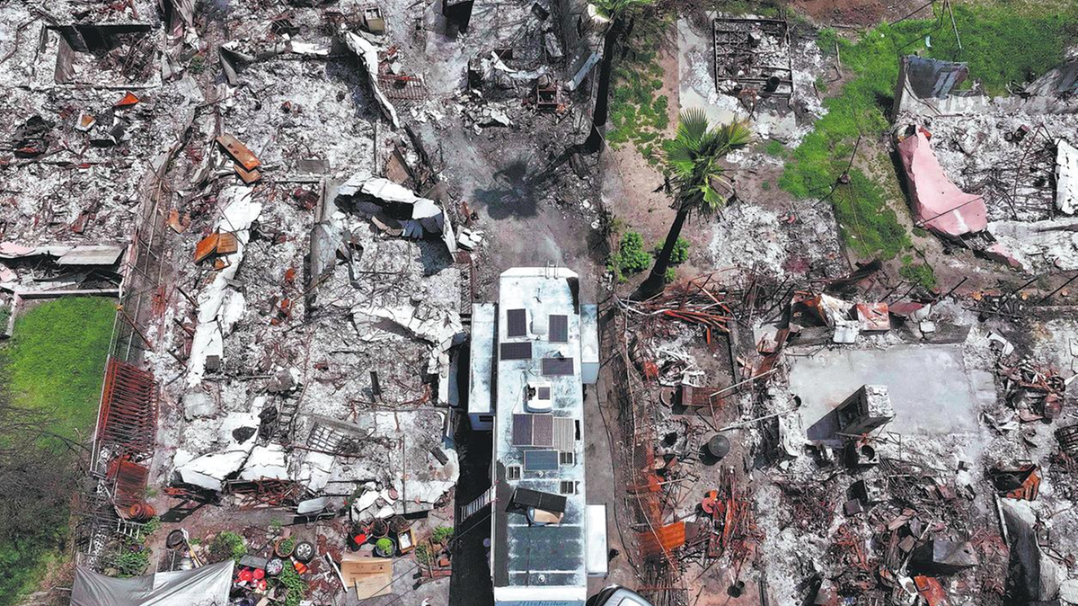
    Environmental catastrophes escalated globally, beginning with devastating wildfires in California’s Los Angeles area, followed by record-breaking European heatwaves, and culminating in severe flooding across Southeast and South Asia. The Arctic experienced its warmest recorded period from October 2024 to September 2025 since records began in 1900, per NOAA’s Arctic Report Card.

    The Global Tipping Points Report 2025, compiled by 160 researchers, warned that exceeding the 1.5°C limit places Earth in a danger zone of catastrophic climate tipping points. Professor Zhang Jian of Tsinghua University emphasized that climate change represents a nontraditional security threat with systemic impacts on economic stability and food security through increasingly frequent extreme weather events.

    However, multilateral cooperation suffered significant setbacks as geopolitical tensions intensified. The United States under President Donald Trump formally withdrew from the Paris Agreement, accompanied by environmental regulation rollbacks and climate science funding cuts. Experts described this move as creating substantial uncertainty for global climate financing and emission reduction efforts.

    Ma Jun, Director of the Institute of Public and Environmental Affairs, noted that current geopolitical fragmentation has collapsed mutual trust between nations, transforming climate governance from a collective existential threat into a complex arena involving development rights and green economic competition. Professor Sun Yixian of the University of Bath attributed Western climate backtracking to benefit allocation conflicts during green transitions, where national interest group politics increasingly override global cooperation imperatives.

    The convergence of scientific urgency and political disunity created a paradoxical tenth anniversary of the Paris Agreement, testing humanity’s collective resilience against escalating climate threats.

  • The Latest: Iran eases some communications restrictions as activists say death toll spikes to 2,000

    The Latest: Iran eases some communications restrictions as activists say death toll spikes to 2,000

    In a limited concession during ongoing civil unrest, Iranian authorities restored international calling capabilities via mobile phones on Tuesday while maintaining severe internet restrictions and text messaging blackouts. This partial communications restoration occurs amidst a violent government crackdown on nationwide protests that activists report has resulted in approximately 2,000 fatalities, according to the U.S.-based Human Rights Activists News Agency.

    The telecommunications adjustment allows Iranians to place outgoing international calls, though incoming calls from abroad remain blocked. Witnesses in Tehran, speaking anonymously due to security concerns, confirmed that SMS services remain disabled and internet access is restricted to government-approved domestic websites, completely isolating Iran from global digital connectivity since Thursday.

    International response has escalated significantly, with multiple Western nations implementing diplomatic and economic measures. France summoned Iran’s ambassador to denounce what Foreign Minister Jean-Noel Barrot termed “intolerable, unbearable, and inhumane” repression. The United Kingdom announced comprehensive sanctions targeting Iran’s finance, energy, and transport sectors, with Foreign Secretary Yvette Cooper condemning the “desperate regime’s” violence against a “genuine grassroots movement.”

    European Commission President Ursula von der Leyen declared forthcoming EU sanctions against Iranian officials responsible for the crackdown, stating “The rising number of casualties in Iran is horrifying” and affirming support for citizens “bravely marching for their liberty.” Simultaneously, the Netherlands and Finland summoned Iranian ambassadors to protest the violence and communications blackout.

    United Nations Human Rights Chief Volker Türk issued a stark warning, demanding an immediate end to violence against peaceful demonstrators and expressing particular concern about judicial officials discussing potential death penalties for protesters through expedited proceedings.

    Iranian officials responded defiantly, with Foreign Minister Abbas Araghchi threatening reciprocal measures against European restrictions and alleging Western hypocrisy regarding Israel’s actions in Gaza. State television reported the arrest of “Israel-linked terrorist groups” in southeastern Zahedan, though Israel’s military declined to comment.

    The international dimension expanded as U.S. President Donald Trump announced canceled meetings with Iranian officials while telling protesters “help is on the way” without providing specifics. German Chancellor Friedrich Merz speculated about the Iranian government’s imminent collapse, stating regimes maintaining power solely through force are “effectively at the end.”