分类: world

  • Egypt carrying out drone strikes on RSF in Sudan from secret base

    Egypt carrying out drone strikes on RSF in Sudan from secret base

    A comprehensive investigation utilizing satellite imagery, flight records, and intelligence sources has revealed Egypt’s covert military involvement in Sudan’s civil conflict. According to evidence compiled by The New York Times and Middle East Eye, Egypt has been conducting sustained drone operations from a clandestine airbase concealed within the vast East Oweinat agricultural reclamation project in Egypt’s western desert, approximately 65 kilometers from the Sudanese border.

    The operations, ongoing for at least six months, represent a significant escalation in Egypt’s engagement, transitioning from diplomatic efforts to direct military action against the Rapid Support Forces (RSF). This paramilitary group, accused of perpetrating genocide and massacring thousands of civilians in North Darfur’s el-Fasher, has gained substantial territory against the Sudanese Armed Forces (SAF), which Cairo officially supports.

    The conflict has evolved into a regional proxy war with complex international dimensions. The United Arab Emirates stands accused of facilitating support for the RSF, partially through Libyan eastern military commander Khalifa Haftar, who controls the strategic al-Kufra airbase. Conversely, Egypt has aligned with Saudi Arabia, Turkey, and Qatar in backing the Sudanese government forces.

    Recent weeks have witnessed unprecedented public tensions between traditional Gulf allies Saudi Arabia and the UAE, with Riyadh adopting an assertive stance against Emirati regional policies. Cairo has reportedly shared intelligence with Saudi Arabia regarding UAE activities in Yemen, where similar proxy dynamics have unfolded.

    Ironically, the very base from which Egyptian drones target RSF positions has received foreign investment from major Emirati agricultural companies, highlighting the complex economic and geopolitical interconnections.

    The RSF acknowledged in November that foreign-based drones were striking their forces and issued warnings of retaliation at “the appropriate time and place.” Meanwhile, humanitarian organization Doctors Without Borders (MSF) described el-Fasher as “largely destroyed” and “empty” following a January assessment, revealing the catastrophic human toll of the conflict.

  • Gaza’s Rafah crossing makes limited reopening after two-year war

    Gaza’s Rafah crossing makes limited reopening after two-year war

    In a significant development for the war-ravaged Gaza Strip, the Rafah border crossing with Egypt partially resumed operations on Monday under a tightly controlled pilot program. An Israeli security official confirmed the reopening, marking the first time in over two years that Palestinian residents can utilize this critical gateway.

    The initial phase will see extremely limited traffic, with Egyptian state-linked media reporting just 50 people permitted to cross in each direction daily. This cautious approach follows months of intense diplomatic pressure from international aid organizations highlighting Gaza’s deteriorating humanitarian situation.

    The reopening comes against a backdrop of renewed violence. Gaza’s civil defense reported dozens killed in Israeli strikes over the weekend, which the military described as retaliation for Palestinian fighters emerging from a tunnel in Rafah city—an action Israel claims violated the fragile US-brokered ceasefire in effect since October 10.

    European Union border assistance mission (EUBAM) teams have arrived to monitor operations and support Palestinian border guards. Israeli state broadcaster Kan indicated the crossing would operate for approximately six hours daily during this initial phase.

    For Gaza’s residents, the crossing represents a vital lifeline. Mohammed Nassir, a Palestinian who underwent leg amputation due to war injuries, expressed desperate hope: ‘I need to undergo surgery that is unavailable in Gaza but can be performed abroad.’

    Medical preparations are underway on the Egyptian side, with AlQahera News (linked to Egypt’s state intelligence) reporting that 150 hospitals and 300 ambulances have been prepared to receive Palestinian patients. Additionally, 12,000 doctors and 30 rapid deployment teams have been allocated for their care.

    The reopening follows Israel’s recovery and burial of Ran Gvili, the last Israeli hostage held in Gaza, whose return Israel had previously tied to the crossing’s resumption. Despite this development, COGAT, Israel’s defense ministry body coordinating Palestinian civilian affairs, made no mention of allowing the long-awaited surge of humanitarian aid into Gaza, focusing only on individual movement.

    The conflict, sparked by Hamas’s October 7, 2023 attack on Israel that killed 1,221 people according to Israeli figures, has left Gaza with at least 71,795 fatalities according to the Hamas-run health ministry—figures the UN considers reliable. Rafah remains under Israeli military control following their withdrawal behind a designated ‘Yellow Line’ as part of the ceasefire agreement, with Israeli troops still controlling more than half of Gaza territory.

  • Israel issues evacuation warning for village in southern Lebanon ahead of strike

    Israel issues evacuation warning for village in southern Lebanon ahead of strike

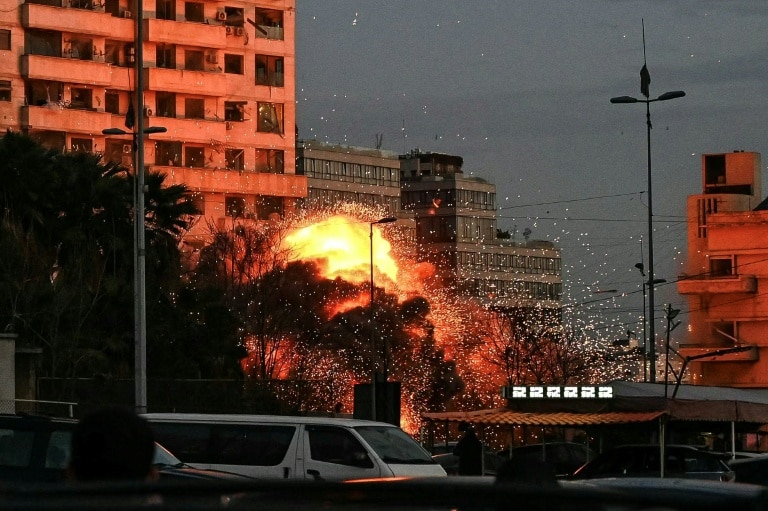
    The Israeli military issued urgent evacuation warnings for residents of southern Lebanese villages on Monday, signaling impending airstrikes against Hezbollah targets. Through Arabic-language spokesperson Avichay Adraee on social media platform X, the military announced its intention to “strike military infrastructure belonging to the Hezbollah terrorist organization in the near future.” The warning specifically identified buildings in the villages of Kfar Tibnit and Ain Qana that required immediate evacuation.

    This development follows recent Israeli military actions, including a January 27 operation targeting what Israel described as Hezbollah infrastructure across multiple southern Lebanese locations. Reuters additionally reported that Israeli military spokespersons confirmed plans to attack specific sites in the village of Yanouh, marking the second such operation within days.

    The heightened tensions occur despite a US-brokered ceasefire agreement reached in 2024 that ended over a year of intense fighting between Israel and Hezbollah. That conflict had culminated in Israeli strikes that significantly degraded the Iran-backed militant group’s capabilities. Since the ceasefire, both sides have repeatedly exchanged accusations of violations.

    In a parallel diplomatic development, both nations have dispatched civilian envoys to a military committee overseeing the ceasefire arrangement. This move represents a step toward fulfilling the United States’ months-long demand for expanded talks, aligning with former President Donald Trump’s Middle East peace agenda. The committee’s work aims to maintain the fragile truce while addressing ongoing security concerns in the region.

  • Palestinian patients start moving from Khan Younis toward Rafah border to cross it: sources

    Palestinian patients start moving from Khan Younis toward Rafah border to cross it: sources

    A tentative medical evacuation process commenced from southern Gaza on Monday, marking a fragile humanitarian breakthrough amid persistent regional instability. The first contingent of five critically ill patients, accompanied by ten family members, departed from the Palestinian Red Crescent Society’s field headquarters in Khan Younis toward the Rafah border crossing with Egypt.

    This limited movement occurred as the crucial border passage reopened on a trial basis for the first time since Israeli forces assumed control of the Palestinian side in May 2024. The Rafah crossing has historically served as Gaza’s primary gateway for both humanitarian aid and civilian movement.

    The evacuation approval process revealed significant operational challenges. According to Dr. Atef al-Hout, director of Nasser Medical Complex, Israeli authorities approved merely five patients from a list of 27 urgently requiring overseas medical treatment. Dr. al-Hout characterized the situation as being mired in ‘ambiguity and lack of clarity’ regarding travel permissions.

    Simultaneously, violence continued elsewhere in Gaza. Palestinian medical sources reported three fatalities from separate Israeli military actions, including a three-year-old child killed by naval shelling south of Khan Younis and a civilian casualty in northern Gaza from an Israeli drone strike on a displacement shelter.

    Gaza health authorities provided sobering statistics, indicating that despite the current ceasefire effective since October 2025, at least 526 Palestinians have been killed by Israeli fire, contributing to a devastating total death toll of 71,800 since the conflict’s inception in October 2023.

    The Israeli military did not immediately comment on the specific incidents reported Monday, highlighting the ongoing communication challenges in the region.

  • Flooding affects over 650,000 people in Mozambique

    Flooding affects over 650,000 people in Mozambique

    Southern and central Mozambique face a severe humanitarian emergency as relentless rainfall has triggered extensive flooding, directly impacting an estimated 652,000 individuals. The World Health Organization (WHO) confirms that the provinces of Gaza, Maputo, and Sofala are among the hardest-hit regions.

    The scale of displacement is immense, with floodwaters submerging homes and forcing more than half of the affected population to flee. The official death toll stands at 22, with 45 individuals injured and a concerning 90 people reported missing, underscoring the human cost of the disaster.

    Critical healthcare infrastructure has been severely compromised. A total of 229 health facilities have sustained damage, primarily concentrated in Gaza Province, with at least 26 forced to cease operations entirely due to flood destruction. This collapse in medical services exacerbates the vulnerability of displaced communities.

    Logistical challenges are severely hindering relief operations. Widespread road closures, vast expanses of floodwater, and the geographic isolation of many communities are creating significant barriers to delivering essential life-saving aid and medical supplies.

    In response, a coordinated international effort is underway. Humanitarian organizations are amplifying their support for government-led initiatives, focusing on delivering immediate, life-sustaining assistance. The United Nations Office for the Coordination of Humanitarian Affairs (OCHA) has consolidated these efforts into a formal response plan, appealing for $187 million to provide crucial aid to 600,000 people.

    Recognizing the need for expanded resources, the UN is actively seeking deeper engagement from the private sector. OCHA’s dedicated Private Sector Unit is offering neutral guidance to facilitate public-private partnerships, aiming to bolster collaboration and channel vital support to the devastated communities in Mozambique.

  • Aid agencies in South Sudan decry restricted access as government and opposition troops fight

    Aid agencies in South Sudan decry restricted access as government and opposition troops fight

    JUBA, South Sudan — A severe humanitarian crisis is unfolding in South Sudan’s conflict-ravaged Jonglei State as major aid organizations warn that government restrictions and intensified fighting are preventing life-saving assistance from reaching vulnerable populations. The situation has triggered alarms at the United Nations and among international humanitarian agencies about potential mass violence and a slide back into full-scale war.

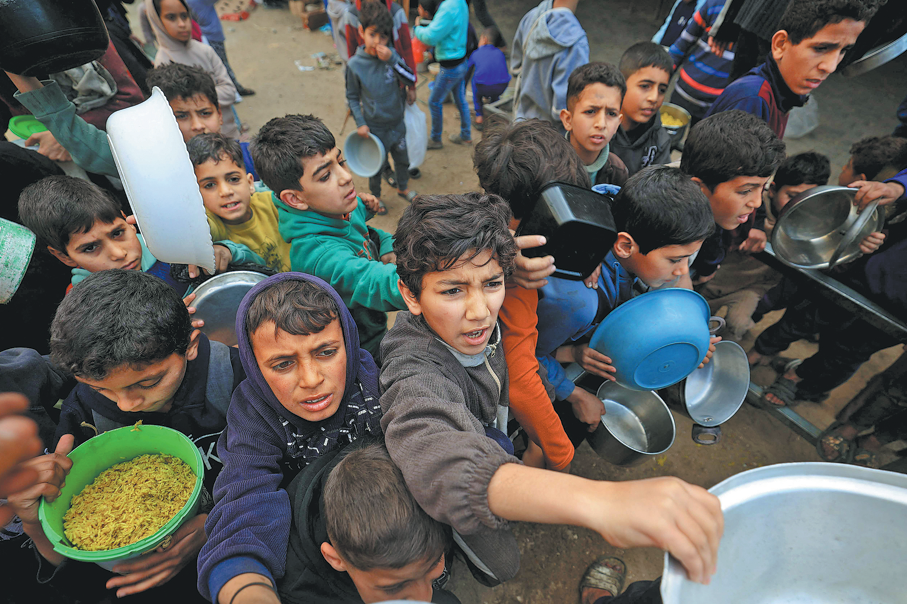
    The International Rescue Committee confirmed the suspension of critical services due to ‘intensified fighting and the militarization of key areas,’ according to country director Richard Orengo. Médecins Sans Frontières (MSF) reported that the South Sudanese government has suspended all humanitarian flights, severing supply lines for medical equipment, staff mobility, and emergency medical evacuations. The organization identified at least 23 critically ill patients, including children and pregnant women, requiring urgent evacuation currently impossible under the flight ban.

    The World Food Program issued dire warnings that escalating violence threatens food assistance for hundreds of thousands of people. This comes as nearly 60% of Jonglei’s population faces crisis-level hunger ahead of the rainy season, which traditionally cuts off access roads. The preemptive delivery of aid has been prevented by ongoing hostilities.

    Civilians are enduring the devastating consequences of renewed clashes between government forces and opposition fighters loyal to the Sudan People’s Liberation Army-In Opposition (SPLA-IO) under Riek Machar. Reports indicate homes destroyed, civilians killed in crossfire, and families repeatedly displaced. Opposition forces, alongside allied ‘White Army’ fighters, have recently gained ground against government troops.

    The UN Commission on Human Rights in South Sudan expressed ‘grave alarm’ over inflammatory rhetoric from a senior army commander who urged troops to ‘spare no lives’—language the opposition characterizes as ‘an early indicator of genocidal intent.’ Government spokesman Ateny Wek Ateny dismissed the comments as ‘uncalled for’ and ‘a slip of the tongue.’

    UN Secretary-General António Guterres has appealed for an immediate cessation of hostilities, civilian protection, and guaranteed humanitarian access, emphasizing that South Sudan’s crisis demands political rather than military solutions. According to the UN Office for the Coordination of Humanitarian Affairs (OCHA), the renewed conflict has displaced over 230,000 people since December.

    This escalating violence places South Sudan’s fragile 2018 peace agreement under severe strain and intensifies political tensions ahead of the country’s first general election scheduled for December, raising concerns about further destabilization in the region.

  • Russian cargo ship captain is found guilty over North Sea tanker crash death

    Russian cargo ship captain is found guilty over North Sea tanker crash death

    In a landmark maritime trial concluding Monday, Russian captain Vladimir Motin was convicted of gross negligence manslaughter for his role in a catastrophic collision between cargo vessel Solong and U.S. oil tanker Stena Immaculate. The incident occurred March 10, 2025, in the North Sea off northeast England while both ships carried highly flammable cargo.

    The court heard how Motin, 59, from St. Petersburg, was serving as sole watch officer aboard the 130-meter Solong when it struck the anchored 183-meter U.S. military jet fuel tanker at 15.2 knots. The impact triggered an enormous blaze that burned relentlessly for eight days, consuming both vessels in a fireball visible for miles.

    Tragically, 38-year-old Filipino crew member Mark Angelo Pernia, who was working on the Solong’s bow at the moment of impact, perished instantly. His remains were never recovered from the wreckage.

    Prosecutors presented compelling evidence demonstrating Motin’s failure to execute basic safety protocols during the crisis. The Russian captain neglected to summon assistance, reduce speed, sound collision alarms, or initiate emergency stopping procedures. CCTV footage and audio recordings revealed a startling minute of silence from the bridge before impact, followed by panicked transmissions from the U.S. tanker crew reporting ‘fire, fire, fire.’

    Senior specialist prosecutor Michael Gregory characterized the incident as ‘a tragic and entirely avoidable death caused by truly, exceptionally bad negligence,’ noting it was ‘extremely fortunate that no one else was killed.’

    Rescue teams successfully evacuated 36 personnel from both vessels following the collision. The Solong was transporting alcoholic spirits and hazardous materials destined for Rotterdam, while the Stena Immaculate carried jet fuel for U.S. military operations.

    Motin, who prosecutors allege falsified accounts of the incident, will face sentencing on Thursday.

  • Israel ‘withholding 766 bodies’ of identified Palestinians

    Israel ‘withholding 766 bodies’ of identified Palestinians

    A deeply contentious policy implemented by Israeli authorities has come under intense international scrutiny, with reports confirming the withholding of at least 766 identified Palestinian bodies. Nearly half of these individuals have been held since October 2023, a period marked by significant escalation in regional conflict, despite Hamas having returned all Israeli captives’ remains.

    Official data reveals that the majority of these Palestinians were killed by Israeli security forces, while 88 were detainees who perished while in Israeli custody over the preceding two years. This group comprises 53 individuals from Gaza, 32 from the occupied West Bank, and three Palestinian citizens of Israel. According to investigations by Haaretz, 373 of these bodies entered Israeli possession following the October 7 attacks.

    The circumstances surrounding the deaths of those in detention are particularly alarming. Most were being held without formal charge or trial, with their deaths subsequently attributed to either direct violence perpetrated by Israeli officers or the deplorable conditions within detention facilities.

    Compounding this situation, Israel continues to retain the bodies of seven additional prisoners who died prior to the recent conflict in Gaza, as documented by the Palestinian organisation Jerusalem Legal Aid and Human Rights Center (JLAC). The organization further reports that an unknown number of Palestinian bodies, belonging to individuals killed during and after the 1967 conflict, remain withheld and buried in undisclosed locations within Israel.

    The disposition of these remains varies significantly. Haaretz reports that 520 identified bodies are currently stored in morgues at military facilities, while approximately 256 have been interred in what Palestinians refer to as ‘cemeteries of numbers’—burial sites marked solely by numerical identifiers rather than names. These cemeteries contain the remains of Palestinians and other Arabs, with some graves dating as far back as 1948.

    This practice represents a long-standing Israeli policy wherein forces routinely seize the bodies of Palestinians killed in both the occupied West Bank and Gaza Strip. Many families had placed their hopes in the October agreement between Israel and Hamas, which included provisions for the exchange of both living and deceased prisoners alongside efforts to conclude hostilities in Gaza. However, Israel only returned 360 Palestinian bodies as part of this arrangement, with JLAC confirming that just approximately 100 were identified, while the remainder were buried as unknown individuals.

    Disturbing evidence has emerged regarding the condition of bodies returned by Israel. Sources indicate numerous cases showing signs of torture, execution-style killings, and injuries consistent with being run over by military vehicles. Forensic examinations revealed severe abuse including strangulation marks, multiple broken bones, and various forms of mutilation. Several bodies were discovered with hands and feet bound and eyes blindfolded, while others were missing limbs entirely.

    Multiple human rights organizations have consistently condemned Israel’s policy of withholding Palestinian bodies, demanding immediate release and repatriation to grieving families. Although Israeli law currently permits this practice through a 2018 amendment to the Counterterrorism Law—later upheld by the Israeli Supreme Court—that authorizes the state to withhold bodies of Palestinians deemed to have committed violent acts, this stands in direct contradiction to international humanitarian law. The Fourth Geneva Convention explicitly prohibits the withholding of bodies, mandating that the deceased must be treated with dignity, afforded honorable burial, and where possible, laid to rest according to their religious rites. Article 130 further stipulates that graves must be respected, properly maintained, and clearly marked to ensure perpetual recognition.

  • Nine arraigned for deadly attack in Nigeria that killed over 150

    Nine arraigned for deadly attack in Nigeria that killed over 150

    ABUJA, Nigeria — In a landmark judicial proceeding, nine individuals allegedly responsible for a devastating assault in north-central Nigeria faced formal charges before a federal court on Monday. The defendants stand accused of perpetrating an attack that resulted in over 150 fatalities in Yelewata, a community within Benue state’s Guma area, during June of last year.

    Prosecutors have filed 57 distinct counts of terrorism against the accused, who entered unanimous ‘not guilty’ pleas during their arraignment. Nigerian justice authorities indicate conviction could carry maximum penalties of either life imprisonment or capital punishment.

    This judicial action emerges against the backdrop of Nigeria’s escalating multidimensional security emergency, characterized by Islamic militant insurgencies in northeastern territories and rampant kidnap-for-ransom operations plaguing northwest and north-central zones. The Yelewata massacre exemplifies the intensifying farmer-herder conflicts over scarce land and water resources that have turned increasingly lethal as combatants militarize.

    Presidential representative Kamarudeen Ogundele characterized the investigation as ‘painstaking,’ emphasizing interagency collaboration in a Sunday statement. ‘The office of the Attorney General wishes to assure Nigerians that justice will be ensured in this matter to send a strong signal to the country’s enemies, acting under any disguise,’ Ogundele declared.

    The case develops alongside international security engagements, including December U.S. airstrikes against Islamic State-affiliated militants in northern Nigeria. These operations addressed concerns about Nigeria’s capacity to protect Christian communities facing heightened church attacks. The United States has committed to delivering previously purchased military equipment—including drones, helicopters, and support systems—to bolster Nigeria’s counterterrorism capabilities, though delivery remains pending after five years.

  • 50 people expected to cross Gaza-Egypt border as Rafah crossing reopens

    50 people expected to cross Gaza-Egypt border as Rafah crossing reopens

    The Rafah border crossing between Gaza and Egypt resumed operations on Monday, February 2, 2026, marking a significant development after remaining closed since May 2024. Initial reports from Egyptian state-linked media indicate controlled movement will characterize the reopening phase.

    According to AlQahera News, which maintains connections to Egyptian state intelligence, approximately fifty people are expected to transit from Egypt into Gaza while another fifty will move in the opposite direction during the initial operational days. An unnamed source quoted by the outlet described these numbers as part of a carefully managed reactivation of the critical border point.

    Independent verification from the ground confirms early activity, with an AFP source at the border observing several dozen individuals gathered on the Egyptian side awaiting processing and entry into Gaza. The reopening follows Israel’s announcement on February 1 regarding the crossing’s partial restoration, though specific operational details and eligibility criteria for crossing remain subject to ongoing coordination between Egyptian and Israeli authorities.

    The reactivation of Rafah crossing represents a crucial humanitarian corridor for Gaza’s population, potentially enabling family reunifications, medical transfers, and limited commercial movement. However, the initial limited capacity suggests a phased approach to border normalization rather than an immediate return to full operational status.