分类: world

  • More than a half-million people expected at Pope Leo XIV’s Mass in Cameroon

    More than a half-million people expected at Pope Leo XIV’s Mass in Cameroon

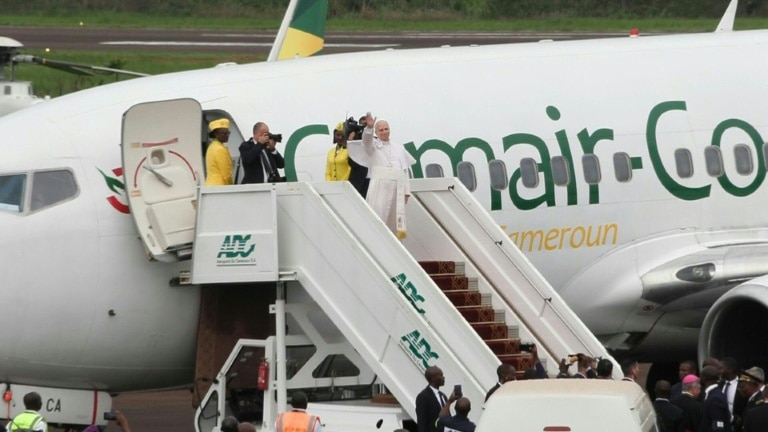
    As Pope Leo XIV, the first American pope in history, approached the midpoint of his 11-day four-nation African tour on Friday, his schedule in Cameroon centered entirely on lifting up and engaging the Central African nation’s massive youth population, a demographic that sits at the heart of growing political and economic friction in the country.

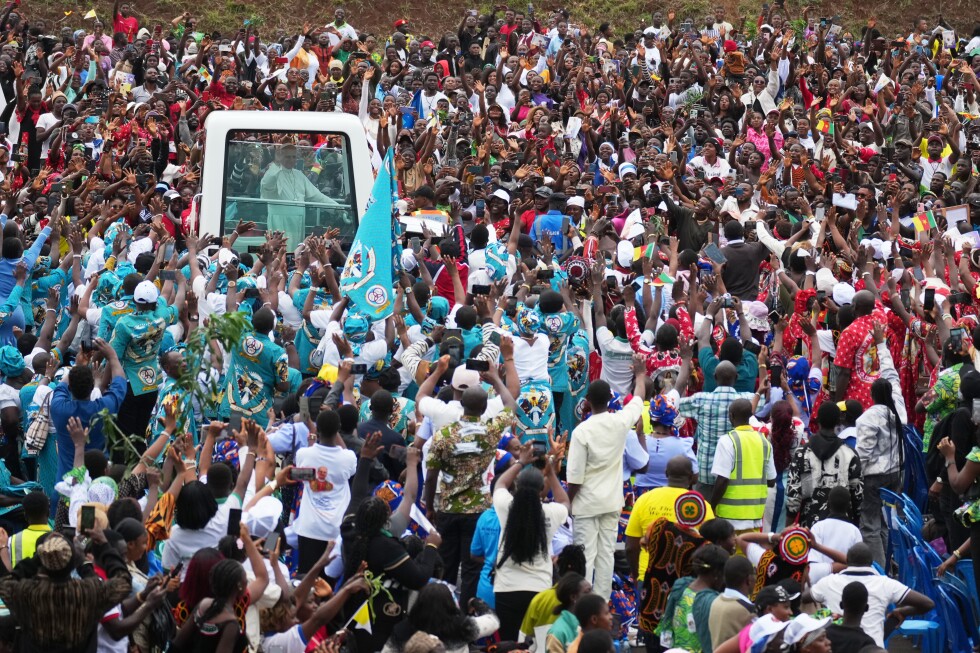
    The day kicked off with a high-profile trip to Douala, Cameroon’s largest commercial port city, where Leo planned to lead an open-air Mass and visit a local hospital. Vatican organizers projected that as many as 600,000 worshippers and attendees would gather for the liturgy — a turnout that would mark the largest crowd the pontiff has drawn over the entire course of his African journey, his first visit to the continent since assuming the papacy.

    After the Douala events, Leo returned to Cameroon’s capital Yaoundé to meet with students, faculty and senior leadership at the Catholic University of Central Africa. For popes visiting developing nations, these campus encounters have long served as a key platform to urge young people to persist through systemic challenges ranging from entrenched poverty to widespread public corruption.

    Cameroon offers a striking case study of the gap between Africa’s burgeoning youth population and its long-tenured aging leadership. Roughly 29% of the nation’s 29 million residents identify as Catholic, and the country has one of the youngest age profiles in the world, with a median age of just 18 years old. At the same time, Cameroon is led by 93-year-old President Paul Biya, the world’s oldest sitting head of state, who has held uninterrupted power since 1982 and secured an eighth consecutive term in deeply contested presidential elections held last October.

    In his opening address to Biya and senior government officials shortly after arriving in Cameroon, Leo did not shy away from the country’s most pressing tensions. He called for the immediate dismantling of what he termed the “chains of corruption” that have held back widespread progress, and emphasized that Cameroon’s young people are the sole source of the nation’s future and lasting hope.

    While Cameroon is an oil-rich state that has recorded modest economic growth in recent years, the vast majority of young Cameroonians report that economic benefits have never trickled down beyond a small circle of political and business elites. Official World Bank data puts the country’s overall unemployment rate at 3.5%, but more than half — 57% — of workers between the ages of 18 and 35 are stuck in unstable, unregulated informal employment that offers little to no job security or social benefits.

    Widening economic frustration has triggered two interconnected crises for the nation: widespread brain drain, and a catastrophic shortage of skilled workers in critical public sectors including healthcare. According to Cameroon’s Ministry of Higher Education, roughly one-third of all newly graduated trained doctors left the country in 2023 alone, lured by higher-paying roles and better working conditions in Europe and North America. The outflow of medical professionals has left already under-resourced public hospitals and clinics critically understaffed.

    In his address to government leaders, Leo warned of the risks of leaving youth grievances unaddressed. “Of course, when unemployment and social exclusion persist, frustration can lead to violence,” the pontiff said. “Investing in the education, training, and entrepreneurship of young people is, therefore, a strategic choice for peace. It is the only way to curb the outflow of wonderful talent to other parts of the world.”

    Tensions over Biya’s decades-long rule boiled over after last October’s election, when main opposition candidate Issa Tchiroma Bakary challenged the official election results, sparking deadly protests across the country. The visit comes as Cameroon continues to grapple with nearly a decade of armed conflict in its Anglophone regions, with many local residents hoping the papal tour will bring progress toward national healing.
  • Pope visits Cameroon city hit by post-vote protest deaths

    Pope visits Cameroon city hit by post-vote protest deaths

    On a high-stakes 11-day tour of Africa that has already captured global attention, Pope Leo XIV is set to hold a massive open-air mass Friday in Douala, Cameroon’s bustling economic capital and one of Central Africa’s busiest deep-water ports. The event is expected to draw more than one million worshippers, marking the largest gathering of the pontiff’s trip, which has been defined by bold calls for global peace and an unprecedented public clash with former U.S. President Donald Trump.

    Six months prior to the visit, Douala was the site of a brutal government crackdown on protests following the disputed re-election of 93-year-old incumbent President Paul Biya, the world’s oldest sitting head of state who has held authoritarian control over Cameroon since 1982. Witnesses confirm security forces opened fire on unarmed demonstrators, with authorities admitting dozens of deaths amid widespread unrest, though an exact casualty count has never been released. By Thursday evening, thousands of devoted Catholic pilgrims were already streaming into the city to claim viewing spots on the esplanade outside the 50,000-seat Japoma Stadium, where the mass will take place. After the service, the Pope is scheduled to visit Saint Paul’s Catholic Hospital in the city.

    This landmark African tour has marked a clear shift for Pope Leo, who has set aside prior diplomatic restraint to deliver impassioned, unflinching remarks on conflict, inequality, and political corruption. The high-profile dispute with Trump erupted after the Pope called for an immediate end to the ongoing war in the Middle East, drawing a sharp rebuke from the former American president. During a solemn address Thursday at Saint Joseph’s Cathedral in Bamenda, the heart of a nearly 10-year separatist insurgency that has killed thousands of Cameroonians, Pope Leo declared, “The world is being ravaged by a handful of tyrants.”

    Trump responded hours later, stating the Pope was free to share his views but needed to grasp the realities of what he called a “nasty world.” Despite the transatlantic political drama, the pontiff has been met with jubilant, singing crowds across every stop of his Cameroon itinerary, with locals turning out in massive numbers to welcome the leader of the world’s 1.4 billion Catholics.

    Even ahead of the visit, the trip sparked quiet controversy among some Cameroonian Catholics, who raised concerns that a high-profile papal visit could inadvertently help Biya rebrand his authoritarian rule on the global stage. Pope Leo has not shied away from sharp critique, however, avoiding direct naming of Biya or Trump but delivering pointed remarks that hit at both domestic and global issues. He pushed back against calls from U.S. Vice President JD Vance, a Catholic, to limit his public remarks to purely moral issues, instead using his platform to condemn exploitation and corruption.

    “Woe to those who manipulate religion and the very name of God for their own military, economic and political gain, dragging that which is sacred into darkness and filth,” the Pope told crowds in Bamenda. During a Thursday mass, he also targeted foreign and elite exploitation of the continent, saying: “those who, in the name of profit, continue to lay their hands on the African continent to exploit and plunder it.” Cameroon boasts abundant natural resources, including oil, timber, cocoa, coffee, and rare minerals, which have drawn foreign investment and been exploited by local and global elites for decades.

    Shortly after arriving in Cameroon’s capital Yaoundé Wednesday, the Pope delivered his critique directly to Biya and other top government officials, urging leaders to root out systemic corruption and human rights abuses committed in the name of national security. “Security is a priority, but it must always be exercised with respect for human rights,” he said, speaking within earshot of the long-ruling president.

    Samuel Kleda, Archbishop of Douala and one of the most prominent clerical critics of Biya’s government, shared cautious optimism ahead of the mass, saying he hopes the papal visit will catalyze progress toward resolving the country’s multiple ongoing crises. “Our country has gone through many crises; some crises are still ongoing. The fruit we must draw from this visit is to commit ourselves as architects of peace,” Kleda said. Catholicism holds a major social and cultural role in Cameroon, where more than one-third of the country’s 30 million residents identify as Catholic.

    The African tour began in Algeria, a majority-Muslim nation, where the visit was marred by two deadly suicide bombings. After leaving Cameroon Saturday, Pope Leo will travel to Angola, before concluding the 18,000-kilometer tour in Equatorial Guinea.

  • Helicopter crash on Indonesia’s Borneo island kills 8

    Helicopter crash on Indonesia’s Borneo island kills 8

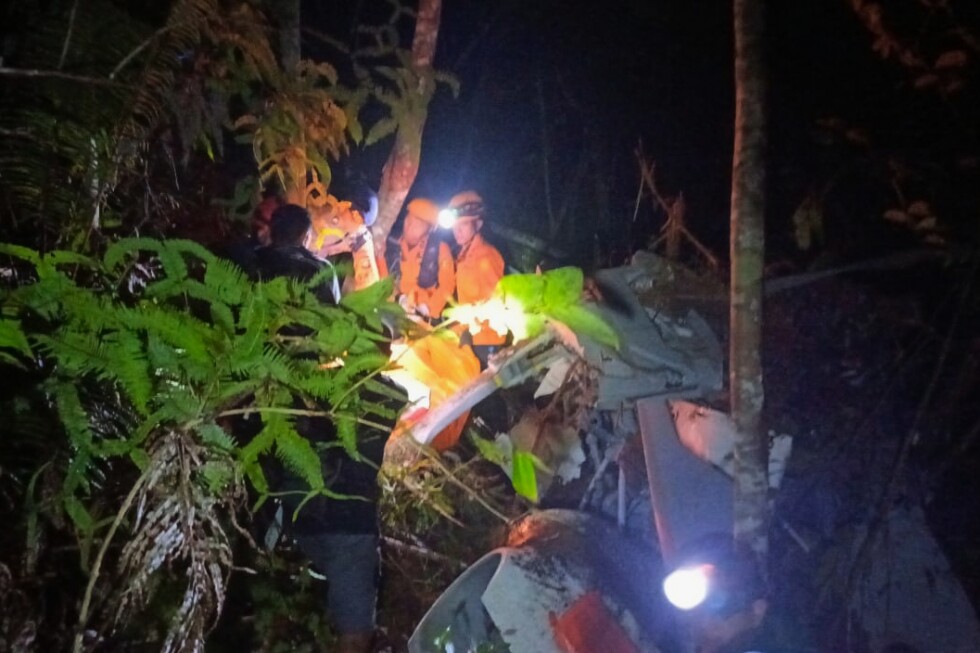
    On Friday, Indonesian authorities confirmed a fatal helicopter crash that claimed all eight lives on board during a trip between palm oil concessions on Indonesia’s Borneo Island. The aircraft, an Airbus H130 operated by local aviation firm PT Matthew Air Nusantara, disappeared from radar just five minutes after departing Melawi district in West Kalimantan province on Thursday. It was scheduled to land at a second palm oil plantation located in Kubu Raya district when the incident occurred.

    Joint search teams assembled by the National Search and Rescue Agency and the Transportation Ministry tracked the wreckage to remote, thick woodland in Sekadau district. Search crews recovered the remains of all eight victims, which include two professional crew members and six passengers. Officials have confirmed that one of the deceased is a Malaysian national, with no survivors reported from the crash.

    The accident has once again drawn attention to long-running safety issues in Indonesia’s transportation sector. As a vast, sprawling archipelago home to more than 270 million people, the country relies heavily on small air and sea vessels to connect far-flung communities. This reliance has been paired with a persistent pattern of transportation accidents, ranging from fixed-wing plane crashes and helicopter incidents to fatal ferry sinkings across the region.

  • Former President Win Myint freed in broad Myanmar prisoner amnesty

    Former President Win Myint freed in broad Myanmar prisoner amnesty

    BANGKOK, Thailand — In a clemency announcement tied to Myanmar’s traditional New Year celebrations, ousted former President Win Myint, a close ally of deposed civilian leader Aung San Suu Kyi, has been released from prison as part of a mass prisoner amnesty ordered by newly inaugurated military head Min Aung Hlaing, state-run media confirmed Friday.

    The pardon covers more than 4,500 incarcerated people overall, including 4,335 domestic detainees and nearly 180 foreign nationals who will be deported after their release. However, officials have offered no confirmation that the 80-year-old Suu Kyi, Myanmar’s pre-coup civilian leader, will be included in the full pardon. Under accompanying sentence adjustments announced alongside the amnesty, Suu Kyi’s existing 27-year combined sentence will be reduced by four and a half years, leaving her with 22 and a half years remaining to serve. An anonymous senior military official based in Naypyitaw, speaking to the Associated Press on condition of anonymity because he was not cleared to share the information, added that Suu Kyi will be transferred from prison detention to house arrest as part of the clemency measures. She has already been moved to house arrest at least once earlier this April while serving her sentence at an undisclosed location in the capital.

    Win Myint, a steadfast loyalist of Suu Kyi’s National League for Democracy party, was elected to the presidency in 2018. He was taken into custody on February 1, 2021, the same day the Myanmar military seized power in a coup that ousted the elected civilian government and detained both Win Myint and Suu Kyi. He was ultimately convicted on multiple counts carrying a combined 12-year prison term, a sentence that was already reduced to eight years in 2023. State-run MRTV television confirmed that Win Myint, who was held at a prison in Bago Region’s Taungoo township, had received the amnesty and was released.

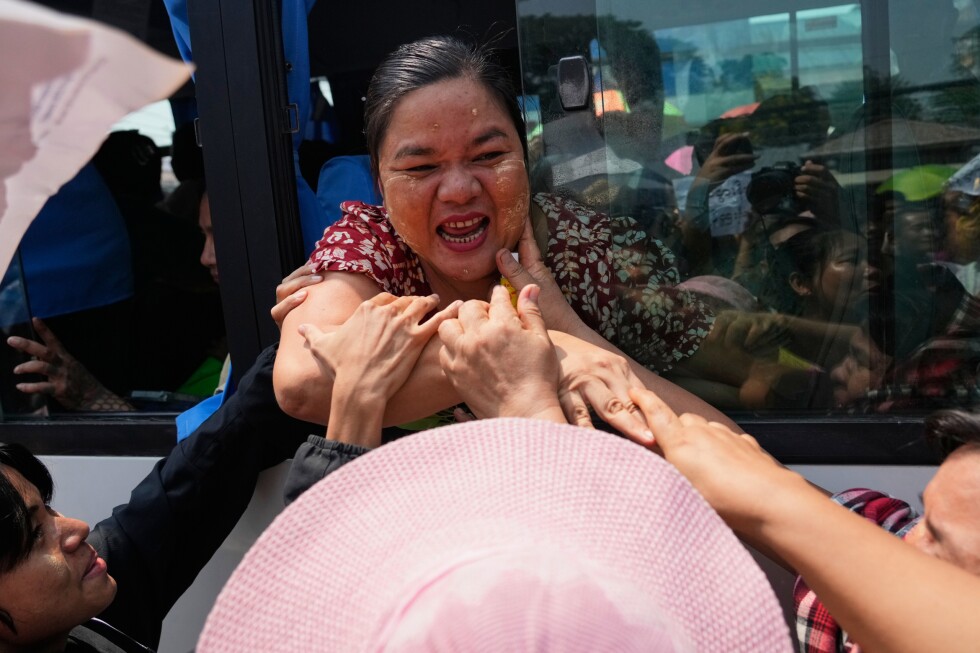
    Outside Yangon’s Insein Prison, a major detention facility for political detainees, crowds of relatives and friends gathered from pre-dawn to greet buses carrying newly freed prisoners. Among those released was prominent filmmaker Shin Daewe, who had been sentenced to life imprisonment under Myanmar’s controversial counterterrorism law just months earlier in January 2024.

    The mass amnesty comes exactly one week after Min Aung Hlaing was sworn in as president, following an election that critics across the international community have widely denounced as neither free nor fair, designed explicitly to cement the military’s authoritarian hold on national power. In his inauguration address last week, Min Aung Hlaing framed the planned amnesties as a step toward advancing national social reconciliation, justice, and peace, and supporting broader development across the country.

    Mass prisoner releases during major national holidays and state events are a long-standing tradition in Myanmar. However, the clemency announcement comes amid a protracted nationwide conflict that has followed the 2021 coup. According to the Assistance Association for Political Prisoners, an independent human rights monitoring group that tracks political detentions and casualties, nearly 8,000 civilians have been killed since the military takeover, and roughly 22,170 political detainees — including Suu Kyi — remain behind bars. Independent estimates put the total death toll from ongoing conflict across the country far higher.

    Many detainees are held on vague incitement charges, under a law routinely weaponized to target critics of the military-led government that carries a maximum three-year prison sentence. Others have been prosecuted under the counterterrorism statute, which allows for the death penalty and has been used to target political opponents, armed resistance members, journalists, and other dissidents. All released detainees are subject to a key release condition: if they commit any new offense after being freed, they will be required to serve the full remainder of their original sentence in addition to any new penalty handed down for the later crime. The amnesty also included broader sentence adjustments for all remaining detainees: all death sentences were commuted to life imprisonment, life sentences were reduced to fixed 40-year terms, and any prison term shorter than 40 years was cut by one-sixth of its original length.

  • Macron and Starmer hold international summit on reopening the Strait of Hormuz

    Macron and Starmer hold international summit on reopening the Strait of Hormuz

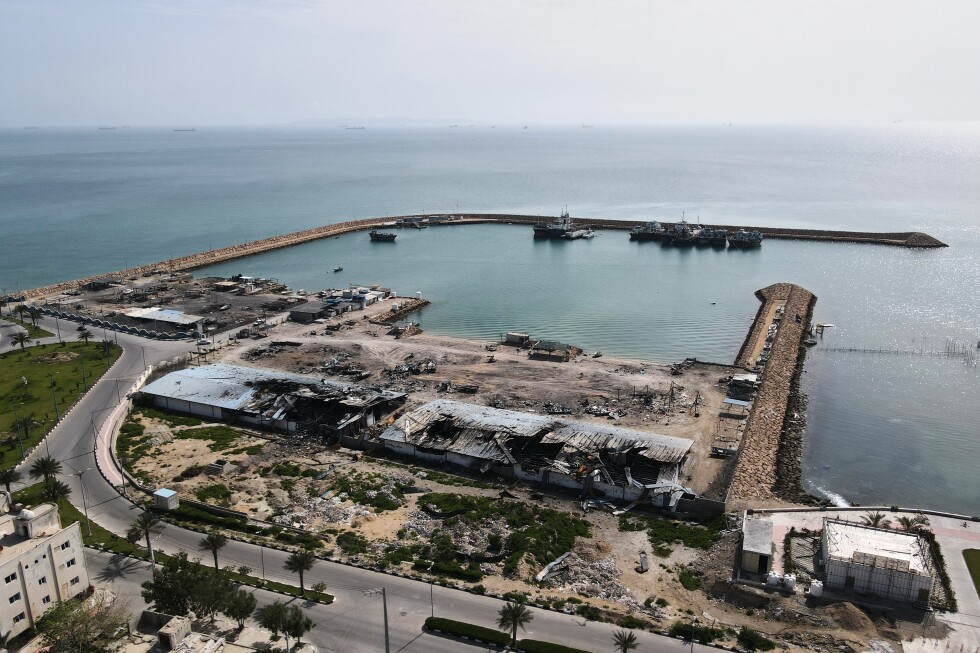
    PARIS — When the Strait of Hormuz, one of the world’s most critical global energy chokepoints, was effectively closed by Iran following the outbreak of the U.S.-Israeli war on Iran, the resulting disruption rippled through every corner of the global economy. This Friday, French President Emmanuel Macron and British Prime Minister Keir Starmer will convene a high-level summit in Paris to advance a multinational initiative to reopen the waterway, a diplomatic and security effort that notably excludes the United States.

    The gathering marks the most visible step yet by non-belligerent nations that have chosen not to join the ongoing conflict to mitigate its widespread global spillover. Since Iran closed the strait — through which roughly 20% of all global crude oil shipments pass daily — global energy markets have swung sharply, dragging already fragile economic growth down and pushing up inflation worldwide. The new initiative, officially named the Strait of Hormuz Maritime Freedom of Navigation Initiative, has been planned entirely without input or participation from the U.S. government.

    Macron laid out the core parameters of the mission in a pre-summit post on social media platform X, emphasizing that the effort will be strictly limited to defensive operations, open only to countries that are not active participants in the current conflict, and will only be deployed once on-the-ground security conditions permit.

    Starmer, who has publicly accused Iran of holding the entire global economy hostage, has joined Macron in spearheading both diplomatic outreach and preliminary military planning for the initiative. The stakes have grown even higher following U.S. President Donald Trump’s announcement of a full retaliatory blockade on Iranian ports, a move that has deepened global economic uncertainty and energy market volatility. Ahead of the summit, Starmer framed the urgency of the action, stating, “The unconditional and immediate reopening of the Strait is a global responsibility, and we need to act to get global energy and trade flowing freely again.”

    Preliminary military planning for the mission has been underway for weeks, mirroring the structure of the coalition of the willing assembled to support Ukraine during its conflict with Russia. French military spokesperson Colonel Guillaume Vernet confirmed Thursday that the mission framework remains a work in progress. A senior anonymous official, speaking in line with French presidency protocol, outlined the core practical needs of the operation: ship operators must have full confidence that their vessels will not be targeted when transiting the strait, which may require sharing real-time intelligence, mine-clearing support, military escort capability, and standardized communication protocols with coastal states.

    Independent defense and Iran experts have weighed in on the mission’s likely scope, noting that large-scale escorted transits are unfeasible for participating nations. Sidharth Kaushal, a sea power research fellow at the London-based Royal United Services Institute, explained that full tanker escort operations would require a far larger fleet than any coalition of participating countries could assemble. “You need huge numbers of vessels for that sort of thing, which nobody has,” Kaushal noted. Instead, experts point to mine-clearing and the development of a shared maritime threat warning system as the coalition’s most realistic core roles.

    Ellie Geranmayeh, Iran expert and deputy head of the Middle East and North Africa program at the European Council on Foreign Relations, added that European-led participation carries a key strategic advantage over U.S. involvement. “They would be a better party to do this than the United States, because once you have U.S. military doing this and lingering on Iranian shores, it creates a potential arena for Iran and the U.S. to have miscalculations and get back into a sort of military tension,” she explained.

    Military preparations have already begun. Britain has outlined plans to test mine-hunting drones deployed from the Royal Fleet Auxiliary ship Lyme Bay, while France — which fields the European Union’s most capable military — has already moved its nuclear-powered aircraft carrier, a helicopter carrier, and multiple frigates to the region. Britain’s current force posture in the region highlights the constraints on the coalition: the Royal Navy currently has only one major warship, the destroyer HMS Dragon, deployed to the eastern Mediterranean.

    Over 40 countries have participated in preliminary diplomatic and planning meetings led by Paris and London in recent weeks, though far fewer are expected to commit dedicated military resources to the mission. Around 30 countries will attend Friday’s summit in Paris, including nations from the Middle East and Asia. The full attendee list has not been publicly released, but German Chancellor Friedrich Merz and Italian Prime Minister Giorgia Meloni have confirmed they will attend in person, with other participating leaders joining via video conference.

    The initiative itself is widely viewed as a partial response to Trump’s public criticism of U.S. allies, who he has berated for refusing to join the war against Iran. Trump has repeatedly argued that reopening the strait is not America’s responsibility, has called allied leaders “cowards,” and attacked the alliance, claiming that “NATO wasn’t there when we needed them.” He even went so far as to mock Britain’s military capabilities, claiming “You don’t even have a navy.”

    For many participating European nations, the summit also represents an opportunity to demonstrate the ability to deliver regional security independent of U.S. leadership. “I imagine there’ll be some desire on the part of many European states, and potentially Canada, to demonstrate the ability to provide security in a way that’s distinct from if not completely separate from the U.S. and which also demonstrates a capacity for independent action,” Kaushal said. Still, he noted that the actual level of military capacity nations will be able to commit remains an open question.

  • Harry and Meghan meet Bondi shooting survivors

    Harry and Meghan meet Bondi shooting survivors

    Four days into their first private visit to Australia since stepping back as working British royals in 2020, Prince Harry and Meghan, the Duke and Duchess of Sussex, made a meaningful stop at Sydney’s iconic Bondi Beach to connect with those impacted by the December 2024 antisemitic shooting that left 15 people dead and dozens more injured.

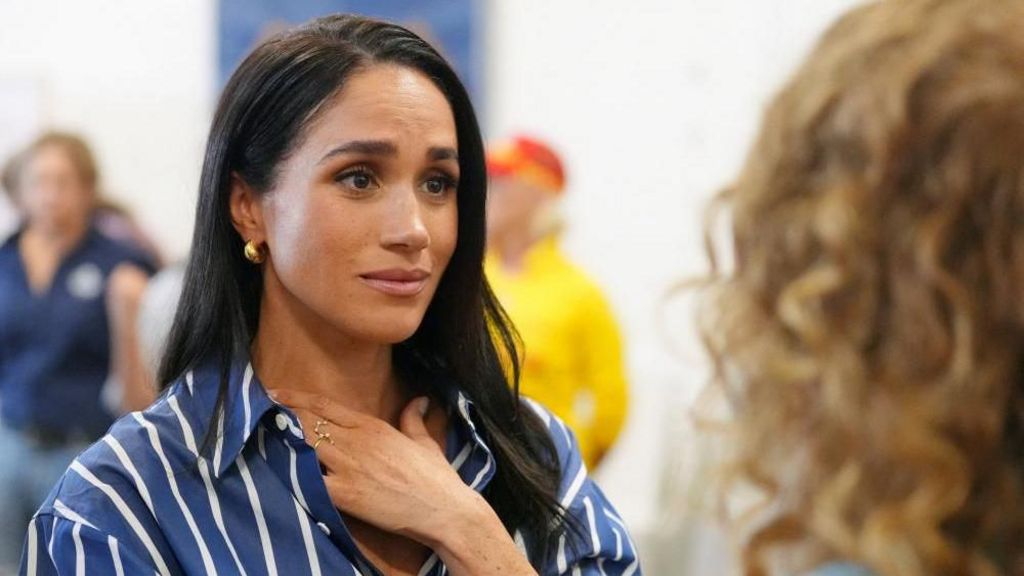
    The couple’s first official engagement on Friday morning brought them to the Bondi Surf Bathers’ Life Saving Club, where they held private conversations with two survivors of the attack: Jessica Chapnik Khan and Elon Zizer, both of whom credited quick thinking and community support for saving their children’s lives during the mass shooting at an on-beach Hanukkah gathering.

    They also sat down with the club’s volunteer lifeguards, a group that has been widely celebrated as national heroes for their quick, brave actions to shield beachgoers and move civilians to safety during the chaotic attack. Representatives from the Sydney Jewish Museum, which is currently preparing a special commemorative exhibition honoring the victims and first responders of the tragedy, also joined the meeting. A spokesperson for the museum described the royal couple’s gesture of solidarity as “really special” for a community still processing the attack.

    After the heartfelt meeting at Bondi, the Duke and Duchess moved on to their next engagement, where they were greeted by crowds of cheering fans lining the steps of the Sydney Opera House. The couple boarded a private vessel for a sailing event hosted by Invictus Australia, the national affiliate of the Invictus Games — an international adaptive sporting competition Prince Harry founded in 2014 for wounded, injured, and sick military veterans and service personnel. It was during Harry and Meghan’s 2018 official royal tour that the pair first announced Australia would host a future iteration of the Invictus Games.

    This visit marks the couple’s first time back on Australian soil since that 2018 official tour, and they are undertaking the entire trip in a private, non-working capacity, separate from the formal duties of the British Royal Family. The stop at Bondi Beach, however, has drawn widespread praise from Australian community leaders for centering the needs of the affected community rather than formal ceremonial obligations.

  • Australian soldier accused of war crimes in Afghanistan granted bail

    Australian soldier accused of war crimes in Afghanistan granted bail

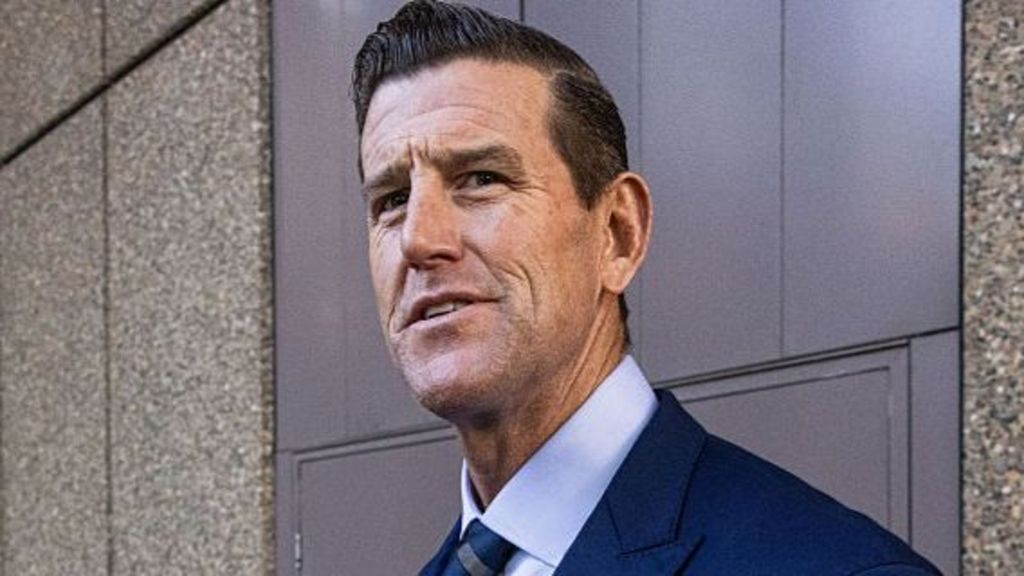
    In a high-profile development that has rocked Australia’s national security and military establishment, a once-revered former Australian special forces soldier, Ben Roberts-Smith, has been granted bail by a Sydney court more than a decade after his alleged unlawful killings of unarmed detainees in Afghanistan. Once one of Australia’s most decorated war heroes, Roberts-Smith has now gone from being celebrated as a national icon to standing as a defendant in one of the most consequential war crimes cases in the nation’s history.

    Roberts-Smith first became a household name across Australia in 2011, when he was awarded the Victoria Cross – the country’s highest honor for wartime gallantry, reserved only for acts of extraordinary courage in combat. In the years that followed, his fame extended far beyond military circles: he met Queen Elizabeth II, his portrait was hung in the Australian War Memorial, and he was even named Australia’s “Father of the Year” in 2013.

    But cracks in his public reputation began to emerge in 2018, when two major Australian publications, *The Age* and *The Sydney Morning Herald*, published a series of investigative reports linking Roberts-Smith to systemic war crimes in Afghanistan. The outlets alleged that between 2009 and 2012, during Australia’s deployment to the country as part of the US- and NATO-led counter-terrorism mission, Roberts-Smith participated in multiple unlawful killings of unarmed captives. The most shocking claims included that he kicked an unarmed Afghan civilian off a cliff before ordering his subordinates to shoot the man, and that he and other soldiers used the prosthetic leg of a man killed by machine gun fire as a drinking trophy.

    Roberts-Smith has consistently denied all allegations against him from the moment they were first made public. In response to the 2018 reports, he launched a multi-million dollar defamation suit against the two newspapers, seeking to clear his name. However, the legal backfired dramatically: in 2023, a judge ruled that the core claims made by the journalists were “substantially true”, in a civil ruling that severely undermined his public defense. That civil proceeding carried a lower standard of proof than the criminal charges Roberts-Smith now faces.

    The broader context for these charges stretches back to 2020, when a landmark independent public inquiry into Australian military conduct in Afghanistan – the Brereton Report – exposed a pattern of systemic abuse among elite special forces units deployed to the country. The report detailed grave accusations of torture, extrajudicial summary executions, and even “body count” competitions, where competing units sought to kill more unarmed detainees than one another. Over two decades of deployment, Australia sent 39,000 troops to Afghanistan to fight against the Taliban and other militant insurgent groups.

    Earlier this month, Australian prosecutors formally charged Roberts-Smith with five counts of war crime murder, alleging he was complicit in a string of unlawful killings between 2009 and 2012. After spending 10 days in pre-trial detention, the former soldier was granted bail on Friday, in a ruling delivered by Judge Greg Grogin. Grogin noted that the complex nature of the case means Roberts-Smith would face “years and years” of pre-trial detention before the case ever goes to a jury trial, a factor that weighed heavily in the court’s bail decision.

    Roberts-Smith appeared before the court via video link, dressed in a green prison tracksuit, and showed no visible reaction to the bail ruling. His defense lawyer, Slade Howell, had argued that detaining his client for years while the case wound through the overloaded court system was fundamentally unjust. “It will take many, many years and will have many twists and turns,” Howell told the court.

    Prosecutors had pushed back against the bail application, arguing that the extreme gravity of the alleged crimes required strict conditions for release. Prosecution lawyer Simon Buchen told the court: “The applicant is accused of either killing or directing his subordinates to kill unarmed detainees in the custody of Australian armed forces.”

    If he is ultimately convicted on all charges, Roberts-Smith faces the possibility of a life sentence in prison. The case has already forced a long-overdue national reckoning over Australia’s military conduct in Afghanistan, and the final criminal trial is expected to draw international attention as it unfolds over the coming years.

  • Australia’s most decorated living soldier granted bail over war crime charges

    Australia’s most decorated living soldier granted bail over war crime charges

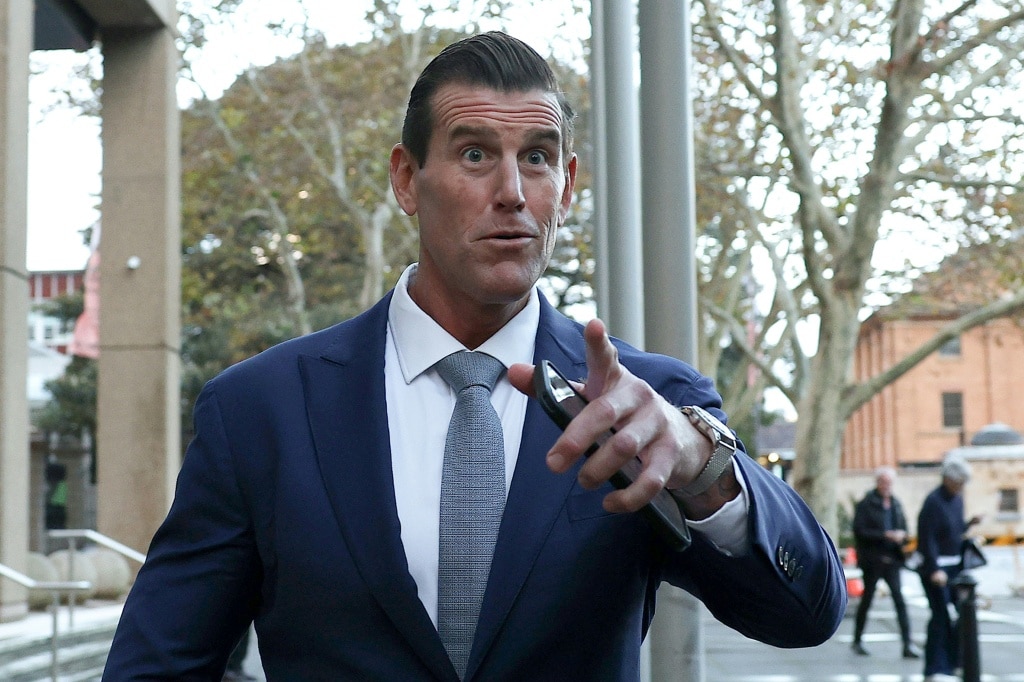
    One of Australia’s most high-profile military figures, Victoria Cross recipient and former Special Air Service (SAS) corporal Ben Roberts-Smith, has been approved for bail following his arrest last week on six counts of the war crime of murder. The 45-year-old, who denies all allegations against him, stands accused of involvement in the killings of multiple unarmed Afghan detainees between 2009 and 2012 — allegations that include both personally carrying out fatal acts and ordering subordinates to kill. The case marks an unprecedented moment in Australian legal history, as it is the first time criminal war crime charges have been brought against an Australian special forces soldier for actions in the 20-year Afghan conflict.

    Roberts-Smith appeared at his bail hearing via video link from Sydney’s Silverwater Prison on Friday. His legal team argued the extraordinary nature of the case, which is set to involve years of delays and massive volumes of sensitive national security material, made pre-trial detention unfair to his right to mount a proper defense. Leading barrister Slade Howell told the Sydney Local Court that the matter falls into completely uncharted legal territory for Australia, with layers of complexity that will almost certainly slow court proceedings significantly. He noted that if Roberts-Smith remained in custody, he would not be able to access and securely store the sensitive materials needed to build his defense, irreparably compromising his right to a fair trial. Howell also added that the intensity of ongoing global and domestic media scrutiny surrounding the allegations could ultimately undermine the possibility of selecting an impartial jury, and that the evidence presented in the earlier civil defamation case would differ drastically from what will be brought forward in criminal proceedings.

    The decision to grant bail came after Judge Greg Grogan ruled that Roberts-Smith’s case was exceptional, and that the strict bail conditions imposed would mitigate any risks raised by prosecutors. The terms of Roberts-Smith’s release require him to report to local police three times weekly, surrender all electronic devices for unrestricted law enforcement access, and forfeit his passport before he can leave custody. Prosecutors had pushed for the former soldier to remain behind bars, arguing that the charges are graver than almost any other criminal matter before Australian courts, and that Roberts-Smith was planning to relocate overseas just days before his arrest, demonstrating a clear flight risk. Prosecutor Simon Buchen SC also highlighted that the allegations had already gone through a full civil trial in 2023, where a judge found the claims of misconduct to be substantially true on the balance of probabilities, meaning the allegations are not untested as his defense has claimed. Prosecutors also raised concerns that Roberts-Smith could seek to interfere with witnesses or tamper with evidence if released.

    The current criminal proceedings build on a years-long investigation into alleged Australian special forces misconduct in Afghanistan. In 2018, Nine Entertainment newspapers first published the initial allegations against Roberts-Smith, prompting the decorated soldier to launch a high-profile defamation suit against the publications. While the defamation trial ended with a ruling that substantial truth existed to the reports of war crimes, the criminal proceedings that followed require a higher legal standard: proof beyond a reasonable doubt for a conviction. Legal analysts note the case is expected to take at least several years to reach trial, due to the massive volume of evidence and national security procedural steps that will be required before any jury can hear the matter.

  • Iranian footballers say Australia has given them ‘hope’ for safe future

    Iranian footballers say Australia has given them ‘hope’ for safe future

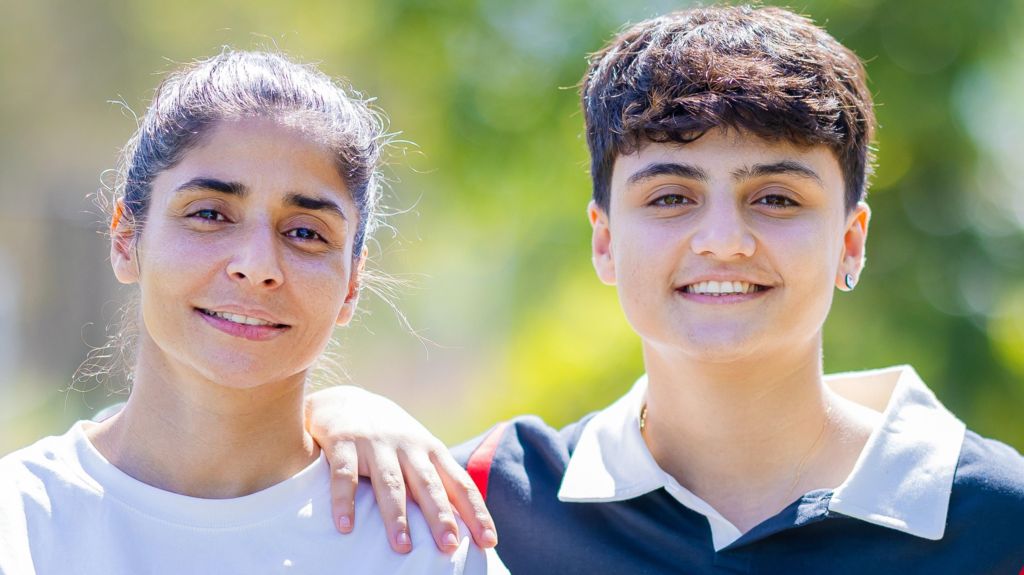
    Two Iranian female footballers who have been granted political asylum in Australia have opened up about their new chapter, saying the country has given them a renewed chance to build a secure life where they can both live and compete without fear. Atefeh Ramezanisadeh and Fatemeh Pasandideh were part of a seven-member group of Iranian national team delegation that initially received humanitarian visas while participating in the 2024 Women’s Asian Cup hosted in Australia. In a surprise turn of events, the remaining five members of the group ultimately chose to return to Iran, reversing their initial decision to seek protection abroad.

    The crisis surrounding the team began shortly after the squad declined to sing Iran’s national anthem ahead of their opening tournament match, a silent protest that came just days after joint air strikes by Israel and the United States sparked deadly conflict in Iran starting February 28. After the protest, footage emerged of an Iranian state television host labeling the players as “traitors” who deserved punishment for their silence during the anthem, triggering widespread international alarm over the players’ safety if they returned home.

    In their first formal public statement since their asylum application was approved, Ramezanisadeh and Pasandideh expressed gratitude to supporters who have stood by them, while requesting space to adjust to their new lives. “At this stage, our primary focus is on our safety, our health and beginning the process of rebuilding our lives,” the joint statement reads. The pair added that they have been deeply moved by the warmth and generosity of Australia’s large Iranian diaspora community, saying that widespread community support has made them feel welcome and eased the isolation of their major life transition. They also extended thanks to the Australian government for granting them a safe haven in the country, and to Home Affairs department officials for their committed, personalized support throughout the visa and asylum process.

    The two players have already begun integrating into Australia’s domestic football landscape, with recent photos showing them training with A-League Women side Brisbane Roar. They confirmed in their statement that they aim to continue pursuing elite professional football careers in their new home.

    To understand the full context of the players’ decision, the sequence of events that unfolded during the Asian Cup offers critical context: after the anthem protest sparked backlash back home, the players were relocated from their original accommodation on the Gold Coast to Brisbane, roughly an hour’s drive north. It was there that they slipped away from the minders accompanying the Iranian delegation, seeking protection from the Australian Federal Police before starting their asylum claims.

    Human rights activists have long raised allegations that the five players who chose to return to Iran faced extreme coercion, arguing that Iranian authorities made threats against their immediate family members remaining in the country to force the players to reverse their decision to seek asylum. Speaking at the height of the crisis earlier this year, Australian Home Affairs Minister Tony Burke acknowledged that the government could not ignore the immense external pressures that shaped each player’s impossible decision.

    The Iranian government has pushed back sharply against the events, with the country’s sports ministry claiming that the return of the five players proved they had “defeated the enemy’s plans” through national unity and patriotism. The ministry also accused the Australian government of advancing foreign political agendas, claiming Canberra was “playing in Trump’s field.” Tasnim News Agency, an outlet closely affiliated with Iran’s Islamic Revolutionary Guard Corps, has further claimed that the two players who stayed were subjected to systematic “psychological warfare, extensive propaganda and seductive offers” from Australian actors to convince them to remain in the country.

    The case has drawn global attention to the risks facing Iranian athletes who speak out against their government, and has sparked renewed debate over Australia’s humanitarian visa obligations for at-risk sportspeople from conflict zones.

  • Global warming causes Colombian glacier to disappear

    Global warming causes Colombian glacier to disappear

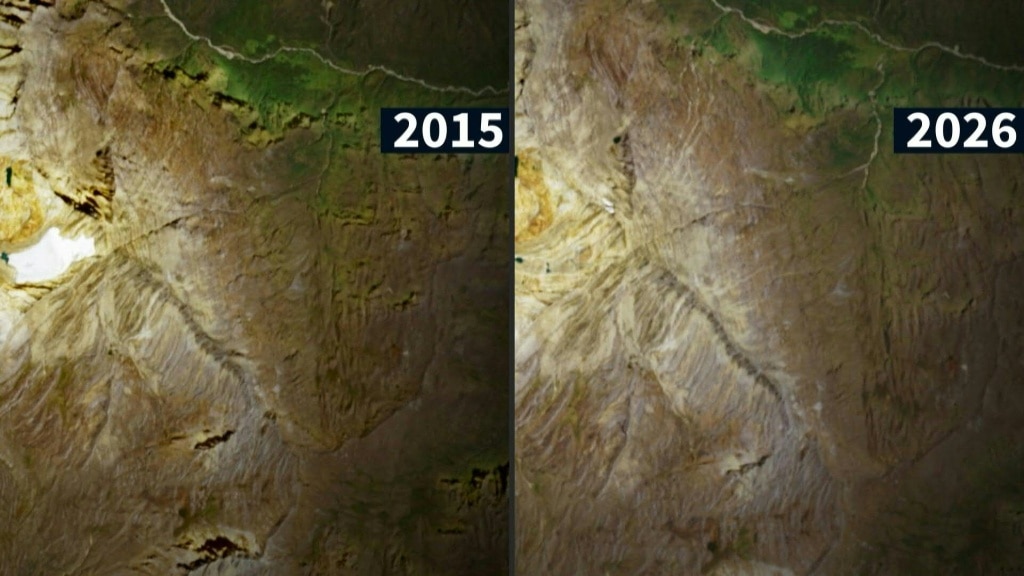
    A stark visual testament to the accelerating impacts of human-caused climate change has emerged from the Colombian Andes, where the Cerros de la Plaza glacier has been officially declared completely vanished after more than a century of gradual retreat driven by rising global temperatures.

    New satellite composite imagery compiled from 2026 Copernicus Sentinel data illustrates the dramatic transformation: in late December 2015, the mountain peak still retained a visible layer of permanent ice and snow, but by the end of February 2026, no frozen cover remained, leaving only exposed bedrock where the glacier once stood. Official confirmation of the glacier’s total disappearance came last week from Colombia’s Institute of Hydrology, Meteorology and Environmental Studies (IDEAM), the government agency tasked with monitoring the country’s changing natural landscapes.

    Historical data compiled by IDEAM underscores the scale of the loss: at its peak in the 19th century, Cerros de la Plaza spanned 5 square kilometers (1.93 square miles) across the high peaks of the Sierra Nevada del Cocuy range in northeastern Colombia, where summits rise more than 5,000 meters above sea level. Decades of rising temperatures pushed the glacier into steady retreat, with the ice sheet shrinking incrementally from 2015 until it vanished entirely by March 2026.

    IDEAM’s official statement framed the loss as a tangible warning of climate change’s irreversible impacts. “Climate change is a reality that is already transforming our territories. And what is at stake is not only the landscape, but the very balance of these ecosystems,” the agency said.

    The Colombian Andes are recognized as one of the world’s most biodiverse mountain regions, hosting iconic threatened species including Andean condors and the rare spectacled bear, a mammal endemic to South America’s high altitude ecosystems. The Sierra Nevada del Cocuy glacial system is already one of only six remaining glacial networks left in Colombia, and national environment ministry data shows the country’s total glacial ice coverage has plummeted by 90% since the 19th century.

    Beyond biodiversity, the loss of Andean glaciers carries direct consequences for human communities across the region. Glacial melt feeds critical freshwater sources that sustain mountain ecosystems, and underpin key human activities ranging from agricultural crop irrigation to commercial and subsistence fishing.

    The disappearance of Cerros de la Plaza aligns with broader global climate trends: both the European Union’s Copernicus Climate Change Service and U.S.-based non-profit research organization Berkeley Earth have confirmed that the past 11 years are the warmest ever recorded on Earth. A landmark 2023 study published in the *Science* journal projected that even if all nations meet their Paris Agreement commitments to limit global warming to 1.5 degrees Celsius above pre-industrial levels, half of the planet’s total glacier mass will have melted by the end of the 21st century.