分类: world

  • Nigeria police confirm mass church abductions after previous denial

    Nigeria police confirm mass church abductions after previous denial

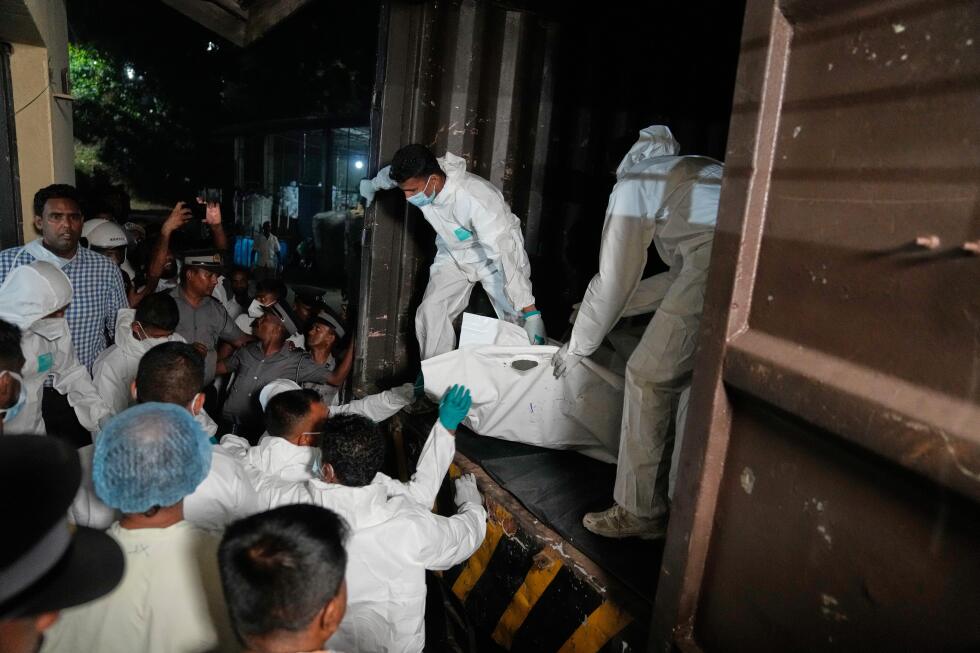
    Nigerian authorities have executed a dramatic reversal, officially confirming the mass abduction of Christian worshippers from three churches in northern Kaduna state after initially denying the incident occurred. The police retracted their previous statements on Tuesday night, acknowledging that operational units and intelligence sources had verified the kidnapping in Kurmin Wali village.

    According to local residents who spoke with BBC, approximately 177 congregants were seized during Sunday morning services, with 11 managing to escape captivity. Police spokesperson Benjamin Hundeyin declined to provide specific numbers but confirmed security forces had been fully deployed to conduct search-and-rescue operations and area patrols.

    Eyewitness accounts describe armed militants surrounding the village during the attack at approximately 10:00 local time on Sunday. “Some people attempted to flee but found themselves encircled,” one witness reported. “The assailants gathered people together and forced them to march into the surrounding bush.”

    The targeted churches included two branches of the Cherubim and Seraphim Movement Church and one Evangelical Church Winning All (ECWA) congregation. This confirmation contradicts earlier statements from Kaduna state police commissioner Alhaji Muhammad Rabiu, who on Monday challenged journalists to “list the names of the kidnapped victims” while claiming no evidence supported the abduction reports.

    Amnesty International has condemned what it characterized as “the desperate denial” by Nigerian authorities. The human rights organization urged immediate action to address the escalating abduction crisis gradually becoming normalized across Nigeria.

    This incident occurs against a backdrop of severe security challenges confronting Africa’s most populous nation. Criminal gangs conducting ransom kidnappings, Islamist insurgency in the northeast, separatist violence in the southeast, and persistent conflicts between herders and farmers collectively strain national security resources. Experts attribute the crisis to systemic corruption, inadequate intelligence sharing, and chronically underfunded local policing.

    The kidnapping follows November’s abduction of over 300 students and teachers from a Catholic school in neighboring Niger state. The deteriorating security situation prompted Nigeria’s defense minister to resign last month, officially for health reasons, and triggered unprecedented US military involvement with airstrikes against Islamist militant camps on Christmas Day.

    President Donald Trump subsequently warned of additional strikes if attacks against Christians in the West African nation continue. Nigeria’s foreign ministry responded that the country remains committed to protecting all citizens regardless of faith, emphasizing constructive engagement with international partners including the United States.

  • Syria army enters Al-Hol camp holding relatives of jihadists: AFP

    Syria army enters Al-Hol camp holding relatives of jihadists: AFP

    In a significant shift of control in northeastern Syria, government forces entered the sprawling Al-Hol detention camp on Wednesday following the withdrawal of Kurdish-led security units. An AFP correspondent on site witnessed Syrian soldiers opening the main gate and establishing security perimeters around the facility, which houses approximately 24,000 individuals with alleged connections to Islamic State militants.

    This military movement follows Tuesday’s ceasefire agreement between Damascus and the Syrian Democratic Forces (SDF), ending hostilities that had seen government troops reclaim extensive territories previously administered by Kurdish forces. The truce arrangement includes provisions for the eventual integration of Kurdish-majority regions under Syrian state authority while preserving limited autonomy for local administrations.

    The Al-Hol facility represents one of the most complex humanitarian and security challenges in post-conflict Syria, containing detainees from nearly 40 nations, including about 6,200 women and children. Parallel developments occurred at other detention sites, with reports indicating disturbances at Shadadi prison where authorities confirmed 120 IS members escaped before 81 were recaptured.

    Diplomatic dimensions intensified as U.S. officials acknowledged the evolving nature of their alliance with Kurdish forces. President Trump characterized the relationship as transactional while emphasizing continued protection for Kurdish interests. The American envoy to Syria noted that the primary counter-ISIS mission of Kurdish forces had ‘largely expired,’ signaling a potential recalibration of international engagement in the region.

    Under the newly established framework, SDF commander Mazloum Abdi will propose candidates for key governmental positions, including Hasakeh governor and deputy defense minister, facilitating political integration while maintaining Kurdish cultural and administrative presence in their traditional territories.

  • Japan restarts world’s largest nuclear plant

    Japan restarts world’s largest nuclear plant

    Japan has initiated the restart of reactor No. 6 at the Kashiwazaki-Kariwa Nuclear Power Plant—the world’s largest nuclear facility by installed capacity—nearly fifteen years after the catastrophic Fukushima Daiichi disaster prompted a nationwide nuclear shutdown. The reactivation, originally scheduled for Tuesday but delayed due to an alarm system malfunction, marks a significant milestone in Japan’s protracted nuclear energy revival efforts.

    Operated by Tokyo Electric Power Company (Tepco), the plant’s restart represents the first Tepco-operated facility to resume operations since the 2011 disaster. However, the path to full operational capacity remains protracted: reactor No. 7 is not anticipated to restart before 2030, while the remaining five reactors face potential decommissioning. This would reduce the plant’s maximum output to a fraction of its historical 8.2-gigawatt capacity.

    The revival occurs against a backdrop of profound public skepticism and technical challenges. The 2011 Fukushima catastrophe—triggered by a record-breaking earthquake and subsequent tsunami—resulted in widespread radioactive contamination, mass evacuations, and a dramatic erosion of public trust in nuclear safety. An official government inquiry later characterized the disaster as “man-made,” citing systemic failures in preparedness and crisis management.

    Despite enhanced safety protocols—including the construction of 15-meter seawalls and watertight barriers at Kashiwazaki-Kariwa—concerns persist regarding Japan’s preparedness for unprecedented natural disasters and climate-change-induced risks. Dr. Florentine Koppenborg of the Technical University of Munich cautioned that while Japan is “super well-prepared” for historical scenarios, its readiness for “something really unexpected” remains uncertain.

    Public opposition remains formidable. Surveys indicate that approximately 70% of Japanese citizens support reducing nuclear dependence, and protests continue near Tepco’s headquarters and the Niigata prefectural assembly. Recent scandals—including mishandled confidential documents and data manipulation at other facilities—have further undermined confidence in the industry’s operational integrity.

    Financially, nuclear reactivation has proven more costly than anticipated due to stringent new safety requirements. These expenses may ultimately be borne by consumers or taxpayers, contradicting decades of official assertions regarding nuclear energy’s affordability. Prime Minister Sanae Takaichi, however, emphasizes nuclear power’s role in achieving energy self-sufficiency, particularly amid growing demand from data centers and semiconductor manufacturing.

    Japan’s nuclear energy targets have been substantially scaled back: whereas pre-2011 plans aimed for 50% nuclear dependency by 2030, current objectives target just 20% by 2040. As of 2023, nuclear power accounted for merely 8.5% of Japan’s electricity generation, highlighting the considerable gap between ambition and reality in the nation’s contested nuclear renaissance.

  • Chile wildfires rage for 3rd day as toll rises to 20

    Chile wildfires rage for 3rd day as toll rises to 20

    Southern Chile continues to confront devastating wildfires for the third consecutive day, with the confirmed death toll rising to 20 as flames consume entire communities. The infernos, which ignited on Saturday across the Nuble and Biobio regions approximately 500 kilometers south of Santiago, have been exacerbated by unseasonably warm temperatures and powerful winds characteristic of the southern hemisphere’s summer peak.

    Official reports indicate approximately 1,000 residences have been either completely destroyed or severely damaged. Chilean President Gabriel Boric confirmed that while firefighting crews have successfully contained certain blazes, numerous fires remain highly active, with new outbreaks emerging in the neighboring Araucania region.

    The government has declared a ‘state of catastrophe’ in the hardest-hit areas, enabling military deployment to assist in disaster response. Soldiers now patrol devastated landscapes where melted automobiles, twisted metal skeletons, and residential ruins testify to the fires’ destructive power.

    Survivors recount terrifying escapes as walls of flame advanced toward residential areas. Yagora Vasquez, a resident of the severely impacted port town of Lirquen, described grabbing her son and fleeing while her brother rescued their dog. Many residents returned Monday to sift through ashes and debris, attempting to salvage remnants of their former lives.

    The tragedy carries particular irony for some survivors who previously relocated inland following Chile’s devastating 2010 tsunami that claimed over 500 lives, only to confront what one resident termed ‘a wave of fire, not water.’ Mareli Torres, who lost her two-story family home of nearly two decades, characterized the wildfire destruction as ‘much more devastating’ than previous natural disasters.

    More than 3,500 firefighters continue battling blazes amid temperatures hovering around 25°C, slightly cooler than weekend conditions. Scientific research from Santiago’s Center for Climate and Resilience Research indicates climate change has established conditions for extreme fire seasons through prolonged drying and warming trends in south-central Chile.

    The current catastrophe echoes previous fire emergencies, including February 2024 fires near Viña del Mar that killed 138 people. This ongoing disaster coincides with extreme weather events across Latin America, including heatwaves exceeding 40°C in Brazil and wildfires in Argentina’s Chubut province, highlighting regional climate vulnerabilities.

  • Fukushima nuclear plant operator to restart reactor at another plant, reviving safety concerns

    Fukushima nuclear plant operator to restart reactor at another plant, reviving safety concerns

    Japan has initiated the restart process for the Kashiwazaki-Kariwa nuclear facility, the world’s largest nuclear power plant, marking Tokyo Electric Power Company Holdings’ (TEPCO) first return to atomic energy generation since the 2011 Fukushima disaster. The reactor No. 6 commencement represents a pivotal moment for Japan’s energy strategy as the nation confronts escalating electricity demands despite persistent public apprehension.

    The reactivation comes after years of regulatory scrutiny and safety upgrades, with TEPCO investing over 1 trillion yen ($6.33 billion) in protective measures including reinforced seawalls, earthquake-resistant command centers, and advanced filtered venting systems. The utility company remains under intense public scrutiny due to its management of the Fukushima Daiichi catastrophe, where meltdowns rendered surrounding areas uninhabitable and resulted in an estimated 22 trillion yen ($139 billion) cleanup cost.

    Local residents express conflicted sentiments, acknowledging potential economic benefits while voicing substantial concerns regarding evacuation feasibility in the earthquake-prone region. These worries intensified following the 2024 Noto Peninsula earthquake that caused significant infrastructure damage, demonstrating the potential impracticality of existing evacuation plans for the approximately 418,600 residents within the plant’s emergency zones.

    Japan’s policy reversal on nuclear energy reflects broader strategic calculations, including energy security needs following Russia’s invasion of Ukraine, rising fossil fuel costs, and increasing electricity demands from power-intensive AI data centers. The government now aims to nuclear power to constitute 20% of Japan’s energy mix by 2040, more than doubling its current contribution.

    The Kashiwazaki-Kariwa reactor will undergo phased activation, reaching 50% capacity within approximately one week before temporary shutdown for comprehensive inspection. Full commercial operation is anticipated by late February, representing a significant milestone in Japan’s reembrace of nuclear technology despite its complex legacy.

  • IS group claims attack on Kabul restaurant, killing 7

    IS group claims attack on Kabul restaurant, killing 7

    In a devastating security breach, the Islamic State militant group has officially claimed responsibility for a suicide bombing that ripped through a restaurant in Kabul’s high-security Shahr-e-Naw district on Monday. The attack resulted in seven fatalities, including one Chinese national, and left multiple others wounded.

    The explosion occurred in an area renowned for housing diplomatic missions, commercial offices, and shopping complexes—previously considered among the capital’s safest neighborhoods. Afghan police spokesman Khalid Zadran confirmed the blast originated near the restaurant’s kitchen, claiming the lives of six Afghan citizens and a Chinese individual identified only as Ayub. Among the injured were five Chinese nationals.

    China’s Foreign Ministry responded forcefully on Tuesday, with spokesman Guo Jiakun announcing that Beijing has lodged urgent diplomatic representations with Afghan authorities. The Chinese government demanded comprehensive medical care for the wounded, a thorough investigation into the incident, and punishment for those responsible. “China strongly condemns and firmly opposes terrorism in any form,” Guo stated, adding that Beijing supports regional cooperation against terrorist violence.

    The ministry issued renewed travel advisories, explicitly warning Chinese citizens against non-essential travel to Afghanistan and urging Chinese entities already in the country to enhance security measures and evacuate from high-risk areas promptly.

    Humanitarian organizations reported receiving numerous casualties, with Dejan Panic, Afghanistan director of a relief group, confirming his hospital treated 20 victims, including seven dead on arrival. The wounded included four women and a child.

    This attack underscores the persistent security challenges facing Afghanistan since the Taliban’s 2021 takeover, despite their promises to restore stability. The local Islamic State branch remains the primary source of ongoing bomb attacks targeting both civilians and international presence in the region.

  • Danish veterans of US wars feel betrayed by Trump’s threats against Greenland

    Danish veterans of US wars feel betrayed by Trump’s threats against Greenland

    COPENHAGEN, Denmark — The profound bond forged between American and Danish soldiers on the battlefields of Afghanistan now stands in stark contrast to the diplomatic crisis unfolding over U.S. threats to acquire Greenland. Danish veterans who fought alongside U.S. troops express deep feelings of betrayal as the Trump administration escalates its campaign to seize the strategic Arctic territory.

    Martin Tamm Andersen, a 46-year-old former platoon commander, vividly recalls the moment in 2010 when his armored vehicle struck an improvised explosive device in Helmand Province. Amid the chaos and dust, American Marines immediately halted their firefight with Taliban forces to secure the area and evacuate the wounded Danish soldiers. “When America needed us after 9/11 we were there,” Andersen stated in an interview at the Danish War Museum, where his destroyed vehicle is now displayed.

    The current diplomatic tension stems from President Trump’s repeated assertions that the United States must take control of mineral-rich Greenland, even suggesting military force as a viable option. This stance has generated widespread shock across Europe, particularly among Danish military personnel who sacrificed greatly in joint operations with American forces.

    Denmark, a NATO member since 1949, suffered the highest per capita casualties among coalition forces in Afghanistan, with 44 soldiers killed. An additional eight died during operations in Iraq. Søren Knudsen, a 65-year-old veteran who served two tours in Afghanistan, described the situation as “surreal” and “like a bad joke.” The deputy president of the Danish Veterans Association has personally packed away his U.S. Bronze Star medal and American flag—gifts from his service alongside U.S. troops—until the alliance is restored.

    Both veterans emphasized that Denmark remains committed to regional security through existing agreements, including the 1951 defense pact that already grants the U.S. military access to Greenland’s Pituffik Space Base. They assert that their wartime experiences created unbreakable bonds with American comrades, whom they believe do not share the administration’s confrontational approach toward Denmark.

    The potential seizure of Greenland would represent, in Knudsen’s words, “the final moments of the NATO alliance” and the end of his “admiration and love of what has been the American experiment for 250 years.”

  • Japan bids farewell as pandas set to return home

    Japan bids farewell as pandas set to return home

    Tokyo’s Ueno Zoo is witnessing emotional farewells as Japan prepares to return its last remaining giant pandas to China, marking the end of a five-decade tradition. The twin cubs Xiao Xiao and Lei Lei, born in June 2021, will depart on January 27 under the terms of the China-Japan panda loan agreement expiration, leaving Japan without pandas for the first time since 1972.

    The zoo has implemented sophisticated crowd management measures to accommodate overwhelming public interest. Since December 16, visitor numbers have been restricted, with an online reservation system introduced on December 23. The final viewing period from January 14-25 utilized a lottery system that attracted intense competition, with approximately 24.6 applications for each available slot. The zoo estimates 178,000 visitors will have viewed the pandas during this farewell period.

    Japanese visitors have expressed deep emotional connections to the departing pandas. Tokyo resident Tezuka, though unsuccessful in securing a viewing slot, still visited the zoo to participate in the collective farewell experience. ‘I couldn’t see the pandas, but I still came,’ she told China Daily. ‘Watching photos taken by others and helping visitors take pictures made me feel part of the farewell.’

    Another visitor, Shirakuma, who identifies as part of Japan’s ‘panda generation,’ secured access through persistent online applications. She recalled childhood visits to see the original pandas Kang Kang and Lan Lan with her father, noting how pandas have provided ‘fond memories at different stages of her life.’

    Ueno Zoo has organized extensive farewell activities including commemorative photo spots, developmental photo exhibitions, keeper message displays, and an online message board where Japanese netizens have posted heartfelt messages such as ‘Thank you for your companionship all this time’ and ‘Thank you, lovely pandas, for healing me.’

    The pandas will undergo quarantine at China’s Ya’an Bifengxia base upon arrival. This panda diplomacy program, initiated in 1972 to commemorate normalized diplomatic relations, has been widely regarded as successful, yielding significant progress in breeding techniques, veterinary care, and public education. Over 30 pandas have been loaned to Japan or born there during this cooperation period.

  • Japan to restart world’s biggest nuclear plant Wednesday

    Japan to restart world’s biggest nuclear plant Wednesday

    Japan is poised to reactivate the world’s largest nuclear power facility on Wednesday, marking a historic milestone in the nation’s energy policy since the 2011 Fukushima catastrophe. The Kashiwazaki-Kariwa plant in Niigata province, operated by Tokyo Electric Power (TEPCO), will initiate reactor operations after receiving final regulatory approval, despite significant public safety concerns and ongoing protests.

    The restart follows Niigata Governor’s endorsement last month, though regional surveys indicate 60% of residents oppose the reactivation while only 37% support it. The facility has undergone substantial safety enhancements including a 15-meter tsunami wall and elevated emergency power systems. However, critics highlight TEPCO’s problematic track record—including recent alarm system failures and data falsification scandals—as evidence of ongoing operational risks.

    Japan’s push for nuclear revival stems from energy security needs and climate commitments. As the fifth-largest global carbon emitter, Japan aims to achieve carbon neutrality by 2050 and reduce fossil fuel dependency from nearly 70% to 30-40% of its energy mix. Nuclear power is projected to supply 20% of national energy by 2040, up from current 8.5% levels.

    The restart represents TEPCO’s first nuclear reactivation since the Fukushima disaster, where decommissioning efforts continue after 15 years. While 14 reactors have resumed operations under stricter safety protocols nationwide, Kashiwazaki-Kariwa’s revival remains contentious due to its location on active seismic faults and evacuation plan inadequacies highlighted by local residents.

  • Climate change fuels disasters, but deaths don’t add up

    Climate change fuels disasters, but deaths don’t add up

    While climate change unequivocally amplifies the frequency and intensity of global weather catastrophes, the corresponding human mortality rates present a complex and counterintuitive statistical picture. Recent data reveals a paradoxical trend: despite a documented escalation in extreme weather events fueled by record-breaking global temperatures, overall disaster-related fatalities have actually declined over recent decades.

    According to an analysis of the EM-DAT global disaster database, weather-related events claimed over 2.3 million lives between 1970 and 2025. However, the death toll from 2015 to 2025 stood at 305,156, marking a decrease from the 354,428 recorded in the preceding decade. This decline occurs against a backdrop of the three hottest years on record since the pre-industrial era, driven predominantly by continued fossil fuel consumption.

    Experts emphasize that this mortality reduction stems not from diminished hazard intensity but from vastly improved human adaptation strategies. Marina Romanello, Executive Director of the Lancet Countdown, notes that enhanced early warning systems, fortified infrastructure, and advanced building codes have significantly increased societal resilience. Tobias Grimm, Chief Climate Scientist at Munich Re, corroborates this, stating that while weather perils remain extremely high, protective systems are saving lives.

    The exception to this trend is heatwaves, which are emerging as a particularly lethal climate threat. Termed the ‘silent killer,’ heat-related mortality is notoriously difficult to calculate due to delayed reporting and undercounting. The Lancet Countdown estimates global heat-related deaths averaged 546,000 annually between 2012-2021—a staggering 63% increase from 1990-1999. Recent EM-DAT figures show approximately 61,800 heatwave deaths in 2022, dropping to 48,000 in 2023 before rising again to 66,825 in 2024, though improved European data collection post-pandemic partially explains these fluctuations.

    The regional disparity in climate vulnerability remains stark. Populations in low-income nations face disproportionately higher risks compared to wealthier regions with better resources for disaster preparedness and response. Furthermore, scientists warn that there are limits to adaptation effectiveness. As Romanello cautions, when catastrophic events occur in rapid succession without adequate recovery time, even the most robust infrastructure systems can be overwhelmed, potentially reversing the current positive mortality trend in the future.