分类: world

  • Hong Kong hosts INTERPOL annual meeting on combating cybercrime

    Hong Kong hosts INTERPOL annual meeting on combating cybercrime

    Hong Kong has positioned itself at the forefront of the global fight against cybercrime by hosting the INTERPOL Cybercrime Expert Group’s pivotal annual meeting from February 2-3, 2026. The event brought together an elite assembly of over 120 law enforcement specialists, industry experts, and international organization representatives from more than 30 countries and regions worldwide.

    Co-organized by the Hong Kong Police Force (HKPF) and INTERPOL under the strategic theme “Disrupting the Industrialization of Cybercrime,” the two-day summit addressed the increasingly sophisticated nature of digital criminal operations. Hong Kong Police Commissioner Chow Yat-ming inaugurated the proceedings by outlining the city’s multi-faceted approach to cybersecurity challenges.

    Commissioner Chow detailed the HKPF’s comprehensive strategy focusing on three critical pillars: developing cutting-edge technological solutions, establishing robust public-private partnerships, and creating an integrated public safety ecosystem. “Our response to cyber threats requires continuous innovation through collaborative platforms, advanced technology initiatives, and active industry participation,” Chow emphasized during his opening address.

    The police commissioner further stressed that effective cybercrime combat necessitates enhanced international cooperation, cross-sector alliances, and sustained capacity development across global law enforcement agencies.

    INTERPOL’s Cybercrime Director Neal Jetton acknowledged Hong Kong’s strategic role in international policing collaboration, stating the meeting demonstrated the city’s proactive commitment to global security. Jetton expressed optimism that the gathering would yield practical solutions and coordinated actions to effectively dismantle sophisticated cybercriminal networks.

    The summit facilitated intensive expert discussions on disrupting the entire cybercrime supply chain, with specialized sessions examining cybercrime ecosystems, digital extortion schemes, artificial intelligence applications in crime prevention, and virtual asset tracing methodologies. Participants engaged in knowledge sharing regarding cross-border intelligence exchange mechanisms, synchronized operational strategies, and professional capacity enhancement programs.

  • UN calls on more countries to accept patients from Gaza as Rafah reopens

    UN calls on more countries to accept patients from Gaza as Rafah reopens

    The United Nations has issued an urgent appeal for increased international assistance in evacuating critically ill patients from Gaza as the Rafah border crossing with Egypt resumes operations. UN humanitarian agencies emphasize that over 18,500 patients, including 4,000 children, require immediate medical evacuation for treatments unavailable within the conflict-ravaged territory.

    The UN Office for the Coordination of Humanitarian Affairs (OCHA) stressed that civilian movement must adhere to international law standards, ensuring voluntary and safe passage both out of and back into Gaza. The agency simultaneously called for substantially increased humanitarian aid deliveries through Rafah and other border crossings with fewer restrictions.

    While the optimal solution would involve restoring medical referrals to the West Bank, including East Jerusalem, and rehabilitating Gaza’s damaged healthcare infrastructure, OCHA acknowledges the immediate necessity of international patient acceptance. The World Health Organization is currently supporting medical evacuation efforts, with the limited reopening of Rafah enabling some patients to exit directly into Egypt, while others transit through the Israeli-controlled Kerem Shalom crossing.

    The UN Development Programme has prepared bus transportation systems for returnees from the Rafah checkpoint to Nassar Hospital in Khan Younis, where a specially equipped reception area staffed by psychologists and protection specialists provides immediate support services, nutritional items, and internet connectivity.

    OCHA simultaneously expressed grave concern over continuing attacks on civilians in Gaza, reporting that humanitarian teams are assessing damage and emerging needs following weekend casualties reported by the Gaza Ministry of Health. More than two dozen families sustained shelter damage from nearby attacks, prompting the UN and partners to distribute emergency shelter materials and essential supplies.

  • Israel slammed for ceasefire violations

    Israel slammed for ceasefire violations

    Arab and Muslim-majority nations issued a stern condemnation of Israel’s repeated breaches of the Gaza ceasefire agreement on Sunday, following fresh military strikes that resulted in 31 fatalities over the weekend. The coordinated diplomatic response came as the Rafah border crossing with Egypt resumed operations after nearly two years of closure, creating a complex humanitarian corridor under stringent restrictions.

    In a joint statement, foreign ministers from Saudi Arabia, Jordan, the United Arab Emirates, Qatar, Egypt, Indonesia, Pakistan, and Turkiye characterized Israel’s actions as “a direct threat to the political process” that jeopardizes regional stability efforts. The ministers emphasized that these violations “risk escalating tensions and undermining efforts aimed at consolidating calm” during critical international negotiations to advance the second phase of the truce.

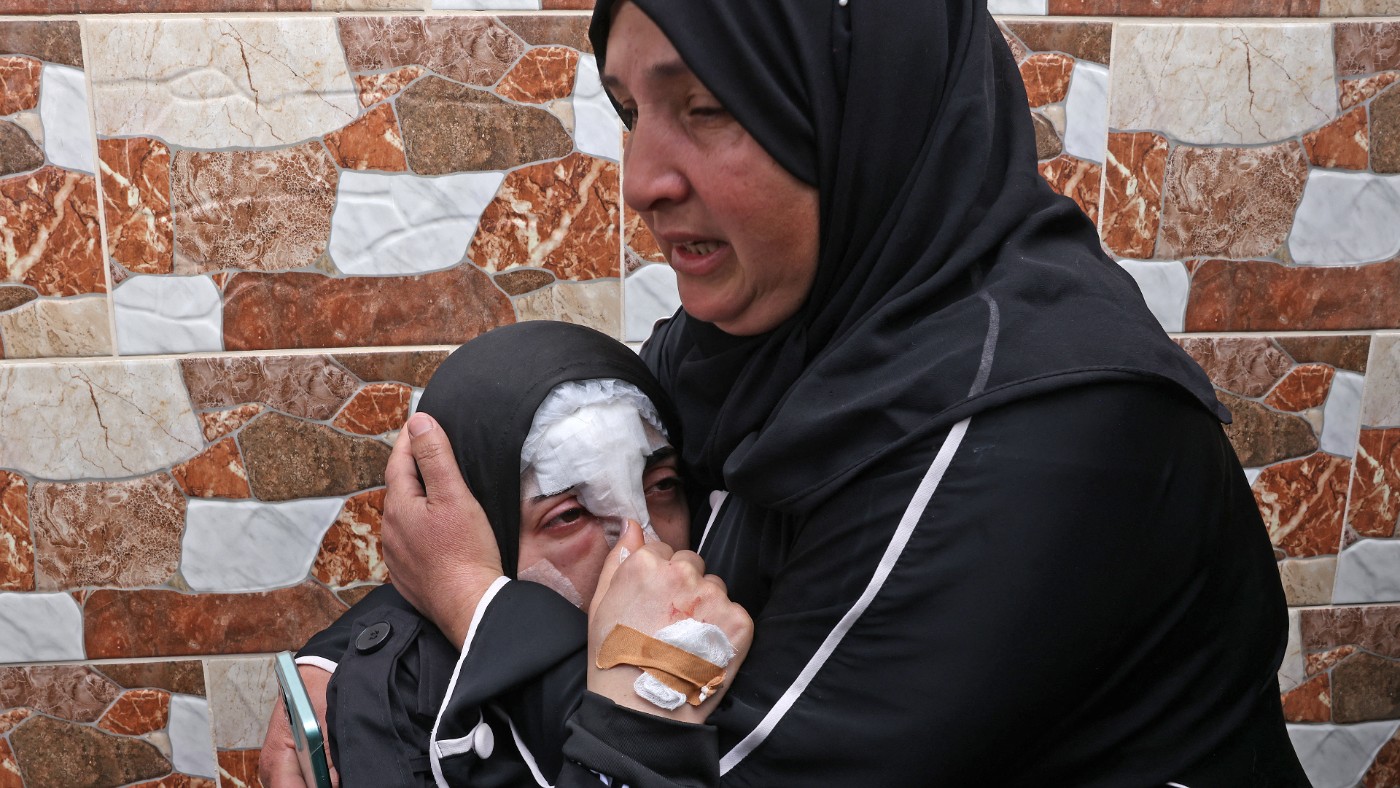
    The condemnation follows reports from WAFA news agency indicating that over 500 Palestinians have been killed since the Israel-Hamas ceasefire took effect on October 11. In a particularly tragic incident, medical sources confirmed a three-year-old child died when Israeli naval vessels shelled displacement tents in Khan Younis’ Al-Mawasi area.

    Concurrently, the Rafah crossing reopened under a pilot program that permits only pedestrian movement with Egyptian approval and Israeli security clearance. The Israeli military agency COGAT confirmed the crossing’s limited operation for “testing and assessment purposes,” while reports indicated 150 patients and companions prepared for medical evacuation from Gaza.

    European Commissioner for Equality, Preparedness and Crisis Management Hadja Lahbib reiterated that “international humanitarian law must be upheld,” emphasizing the universal protection of civilians. Academic experts like Iyad Eid from the International Islamic University Malaysia noted Israel’s demonstrated pattern of disregarding ceasefire agreements with Palestinians.

    The humanitarian situation remains precarious as the National Committee for the Administration of Gaza remains stranded in Cairo due to “technical problems and obstacles,” with members anonymously reporting inadequate headquarters and operational budget shortages hindering their mission to coordinate governmental transitions in Gaza.

  • Russia fires 450 drones and 70 missiles at Ukraine, a day before US-brokered talks

    Russia fires 450 drones and 70 missiles at Ukraine, a day before US-brokered talks

    In a significant escalation of hostilities, Russian forces unleashed approximately 450 long-range drones and 70 missiles across multiple Ukrainian regions overnight Tuesday. This coordinated assault represents one of the most extensive bombardments in recent months, specifically targeting Ukraine’s already compromised energy infrastructure during the harshest winter conditions in years.

    The massive offensive occurred just days before scheduled diplomatic negotiations in Abu Dhabi, where representatives from both nations were set to participate in U.S.-brokered discussions aimed at resolving the nearly four-year conflict. Ukrainian President Volodymyr Zelenskyy condemned the timing as strategically calculated to maximize civilian suffering, stating that “taking advantage of the coldest days of winter to terrorize people is more important to Russia than diplomacy.”

    According to Ukrainian officials, the bombardment affected at least five regions, wounding a minimum of 10 civilians. The attacks damaged residential buildings, educational facilities, and critical energy infrastructure, including thermal power plants operated by DTEK, Ukraine’s largest private energy company. This marked the ninth major assault on the country’s power grid since October.

    In Kyiv alone, the strikes left 1,170 apartment buildings without heating, severely undermining recent repair efforts that had nearly restored power to the capital’s residents. The northeastern Kharkiv and southern Odesa regions also reported significant damage and injuries.

    Adding symbolic significance to the destruction, the bombardment damaged the Hall of Fame at the National Museum of the History of Ukraine in the Second World War, located beneath the iconic Motherland Monument in Kyiv. Ukrainian Culture Minister Tetiana Berezhna characterized the attack as “symbolic and cynical,” noting the historical parallels between current aggression and past conflicts.

    Despite previous descriptions of recent negotiations as constructive, the latest assault casts doubt on diplomatic prospects. Key issues remain unresolved, including the status of Russian-occupied Ukrainian territories, with a comprehensive settlement appearing increasingly distant as military actions intensify.

  • Why China is building so many coal plants despite its solar and wind boom

    Why China is building so many coal plants despite its solar and wind boom

    In a striking energy development paradox, China simultaneously achieved unprecedented growth in renewable energy while dramatically accelerating coal power plant construction throughout 2025. According to a comprehensive joint study by the Centre for Research on Energy and Clean Air and Global Energy Monitor, the world’s largest carbon emitter commissioned over 50 large-scale coal units last year, each boasting generating capacity of 1 gigawatt or more.

    This coal expansion represents a dramatic surge from the previous decade’s average of fewer than 20 such units annually. Cumulatively, China integrated 78 gigawatts of new coal-fired capacity into its national grid—a development that climate analysts find particularly concerning given the simultaneous massive growth in renewable infrastructure.

    The renewable sector witnessed extraordinary progress, with official National Energy Administration statistics confirming the addition of 315 gigawatts of solar capacity and 119 gigawatts of wind power in 2025. This clean energy boom actually reduced coal’s share in China’s overall power generation by approximately 1%, successfully meeting the nation’s entire increased electricity demand through renewable sources.

    Energy experts point to multiple factors driving this contradictory approach. The 2021-2022 regional blackouts triggered significant government concerns about energy security, prompting a wave of approvals for coal plant construction. Christine Shearer of Global Energy Monitor noted the astonishing scale of development, stating that ‘China commissioned more coal power capacity in 2025 alone than India did throughout the entire previous decade.’

    Qi Qin, an analyst at the Centre for Research on Energy and Clean Air, explained that once construction permits were issued during the 2022-2023 surge, project reversals became practically impossible. Current data indicates construction commenced on 83 gigawatts of additional coal capacity last year, suggesting further expansions in the coming period.

    Official policy positions coal as a necessary stabilizing backup for weather-dependent renewables, with the National Development and Reform Commission emphasizing coal’s ‘important underpinning and balancing role’ for foreseeable future. However, environmental researchers warn that excessive coal capacity could potentially delay the transition to cleaner energy by creating political and financial incentives to maintain operation of the new plants.

    The report urgently recommends accelerating retirement of aging coal facilities and ensuring China’s next five-year plan commits to preventing power sector emission increases between 2025 and 2030.

  • Families mourn those killed in a Congo mine landslide as some survivors prepare to return

    Families mourn those killed in a Congo mine landslide as some survivors prepare to return

    GOMA, Democratic Republic of Congo — Eastern Congo confronts a devastating tragedy as communities mourn the loss of at least 200 artisanal miners killed in a catastrophic landslide at the rebel-controlled Rubaya coltan mining complex. The disaster struck last Wednesday following torrential rains, collapsing a network of hand-dug tunnels and trapping an unknown number of workers who remain missing.

    The mining site, located approximately 40 kilometers west of Goma, has been under the control of Rwandan-backed M23 rebels since early 2024. It employs thousands of miners who extract valuable minerals using rudimentary tools and techniques passed down through generations.

    In Goma’s Mugunga neighborhood, the family of 39-year-old Bosco Nguvumali Kalabosh gathered in mourning. His photograph displayed against a wall served as the centerpiece for grieving relatives and neighbors. “He was supposed to return to Goma on Thursday,” lamented his older brother, Thimothée Kalabosh Nzanga. Kalabosh, a decade-long veteran of the mines who owned his own pits, leaves behind a widow and four young children.

    Despite the overwhelming loss, economic necessity drives survivors back to the hazardous worksite. Tumaini Munguiko, who survived the collapse while losing five friends and his older brother, explained the grim reality: “Seeing our peers die is very painful. But despite the pain, we are forced to return to the mines to survive.” Munguiko described multiple previous disasters as “almost normal” in their frequency.

    Geological instability during rainy seasons creates perpetual danger in Rubaya. Miners excavate extensive parallel tunnels with inadequate structural support and no safe evacuation routes. According to former miner Clovis Mafare, uncontrolled digging without safety measures means “in a single pit, there can be as many as 500 miners, and because the tunnels run parallel, one collapse can affect many pits at once.”

    The absence of insurance or compensation compounds the tragedy. Mafare noted that while families might receive minimal funeral assistance, “that small amount isn’t compensation.” Kalabosh’s family has received no financial support for their loss.

    Rubaya’s coltan mines have become strategic assets in Congo’s ongoing conflict, frequently changing hands between government forces and rebel groups. The extracted columbite-tantalite ore produces tantalum and niobium—both classified as critical raw materials by major global economies. These minerals power modern technology from mobile phones and computers to missile systems and jet engines.

    The region’s isolation exacerbates the crisis. Rubaya has been virtually disconnected for two weeks with no mobile network or internet. Residents must pay approximately $2 for 30 minutes of connectivity through private Starlink systems. Poor infrastructure and persistent conflict maintain unreliable cellular and electrical services.

    Political recriminations have followed the tragedy. Congo’s government issued a statement on X expressing solidarity with victims while accusing rebels of illegally and unsafely exploiting natural resources and blaming Rwanda. An M23 spokesperson countered by accusing the government of politicizing the disaster and citing previous collapses at government-controlled mines.

  • Australian charity funnelling millions in donations directly to Israeli soldiers: Report

    Australian charity funnelling millions in donations directly to Israeli soldiers: Report

    An Australian charitable organization, United Israel Appeal (UIA) Australia, has transferred nearly $300 million in tax-exempt donations to Keren Hayesod, Israel’s official fundraising entity, since 2013 according to financial disclosures. The most recent data shows $29 million was directed in 2024 alone, despite ongoing military operations in Gaza that have resulted in significant civilian casualties.

    Keren Hayesod, established in 1920 following the World Zionist Congress, describes itself as one of four “pillar national institutions” of Israel with special protected legal status. The organization operates fundraising arms across 45 countries, with UIA Australia serving as its primary channel for Australian donations.

    The charity’s stated mission involves both short-term humanitarian relief and long-term integration support for Jewish immigrants. However, financial records indicate substantial funding supports the “Wings Lone Soldier” program, which provides assistance to diaspora Jews who voluntarily enlist in the Israeli military. According to Keren Hayesod’s 2024 impact report, the program supported 2,200 soldiers last year, with 65% choosing to remain in Israel after service.

    Controversy surrounds these transfers as they occurred during intense military conflict. Independent outlet Michael West Media first reported the figures, noting that The Jerusalem Post documented $645 million in global donations to Keren Hayesod from 2023-2025 specifically supporting Israel during the Gaza operations.

    UIA Australia’s upcoming 2026 gala will feature Ron Dermer, former Israeli ambassador to the US and top advisor to the Israeli prime minister, as headline speaker. The organization maintains offices in multiple countries, with varying beneficiary structures—UIA USA raises funds for The Jewish Agency for Israel while the Canadian branch supports Keren Hayesod directly.

    Middle East Eye attempted to contact UIA Australia for comment but received no response prior to publication.

  • Envoy calls on US to encourage more youth exchanges

    Envoy calls on US to encourage more youth exchanges

    WASHINGTON – China’s ambassador to the United States has issued a compelling appeal for strengthened educational and cultural bridges between the two nations, emphasizing youth exchanges as fundamental to stabilizing the world’s most crucial bilateral relationship. Ambassador Xie Feng delivered his remarks during the 2026 China-US Youth Spring Festival Gala at the Chinese embassy, where he highlighted the transformative impact of intercultural engagement.

  • Fire breaks out in Karachi building near site of recent blaze

    Fire breaks out in Karachi building near site of recent blaze

    Karachi, Pakistan – A significant fire erupted in a commercial structure within Pakistan’s largest metropolis on Monday, reigniting safety concerns as it occurred in proximity to the location of last month’s catastrophic blaze that claimed numerous lives. Provincial authorities confirmed emergency response teams were actively engaged in containment operations.

    Sukhdev Assardas Hemnani, the official spokesperson for the provincial government, communicated via text message that firefighting units were deployed to manage the rapidly spreading flames. The incident has triggered alarm among citizens and officials alike, given its unsettling geographical and temporal proximity to the Gul Plaza inferno that resulted in substantial casualties just weeks earlier.

    The latest fire emergency underscores persistent questions regarding fire safety protocols, building code enforcement, and emergency response capabilities in Pakistan’s densely populated urban centers. This developing situation occurs against the backdrop of ongoing recovery operations from the previous tragedy, where rescue workers continue to search for dozens still missing and feared deceased.

    While specific details regarding potential casualties or structural damage remain unconfirmed at this early stage, the incident has already prompted renewed calls for comprehensive reviews of commercial building safety standards throughout the city. Local authorities have yet to release official statements regarding the fire’s origin or the scale of destruction involved.

  • Egypt carrying out drone strikes on RSF in Sudan from secret base

    Egypt carrying out drone strikes on RSF in Sudan from secret base

    A comprehensive investigation utilizing satellite imagery, flight records, and intelligence sources has revealed Egypt’s covert military involvement in Sudan’s civil conflict. According to evidence compiled by The New York Times and Middle East Eye, Egypt has been conducting sustained drone operations from a clandestine airbase concealed within the vast East Oweinat agricultural reclamation project in Egypt’s western desert, approximately 65 kilometers from the Sudanese border.

    The operations, ongoing for at least six months, represent a significant escalation in Egypt’s engagement, transitioning from diplomatic efforts to direct military action against the Rapid Support Forces (RSF). This paramilitary group, accused of perpetrating genocide and massacring thousands of civilians in North Darfur’s el-Fasher, has gained substantial territory against the Sudanese Armed Forces (SAF), which Cairo officially supports.

    The conflict has evolved into a regional proxy war with complex international dimensions. The United Arab Emirates stands accused of facilitating support for the RSF, partially through Libyan eastern military commander Khalifa Haftar, who controls the strategic al-Kufra airbase. Conversely, Egypt has aligned with Saudi Arabia, Turkey, and Qatar in backing the Sudanese government forces.

    Recent weeks have witnessed unprecedented public tensions between traditional Gulf allies Saudi Arabia and the UAE, with Riyadh adopting an assertive stance against Emirati regional policies. Cairo has reportedly shared intelligence with Saudi Arabia regarding UAE activities in Yemen, where similar proxy dynamics have unfolded.

    Ironically, the very base from which Egyptian drones target RSF positions has received foreign investment from major Emirati agricultural companies, highlighting the complex economic and geopolitical interconnections.

    The RSF acknowledged in November that foreign-based drones were striking their forces and issued warnings of retaliation at “the appropriate time and place.” Meanwhile, humanitarian organization Doctors Without Borders (MSF) described el-Fasher as “largely destroyed” and “empty” following a January assessment, revealing the catastrophic human toll of the conflict.