分类: world

  • Vance in Islamabad for Iran talks overshadowed by mutual mistrust

    Vance in Islamabad for Iran talks overshadowed by mutual mistrust

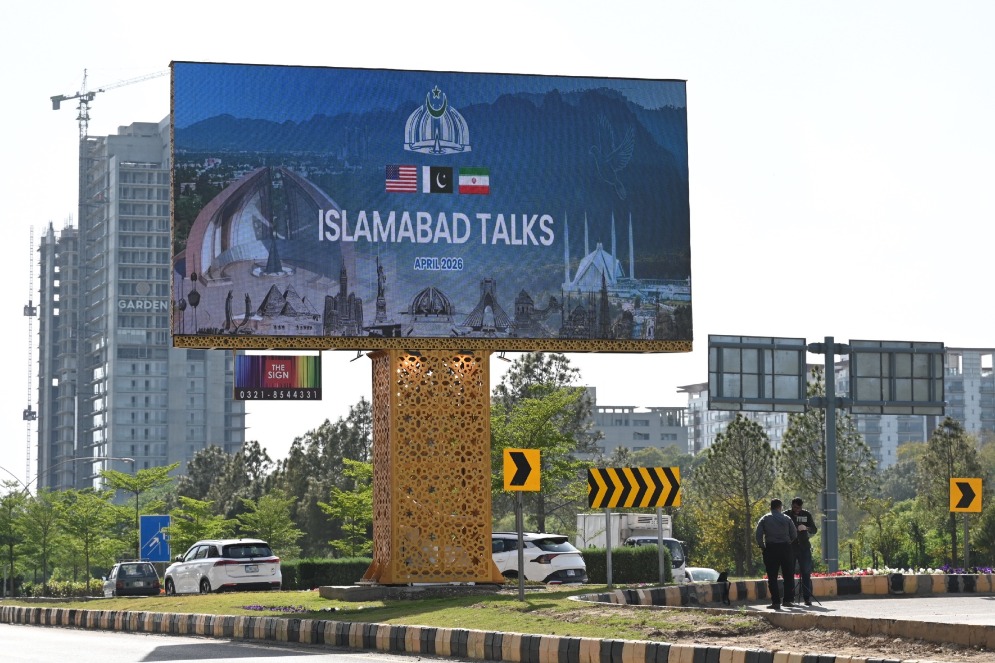
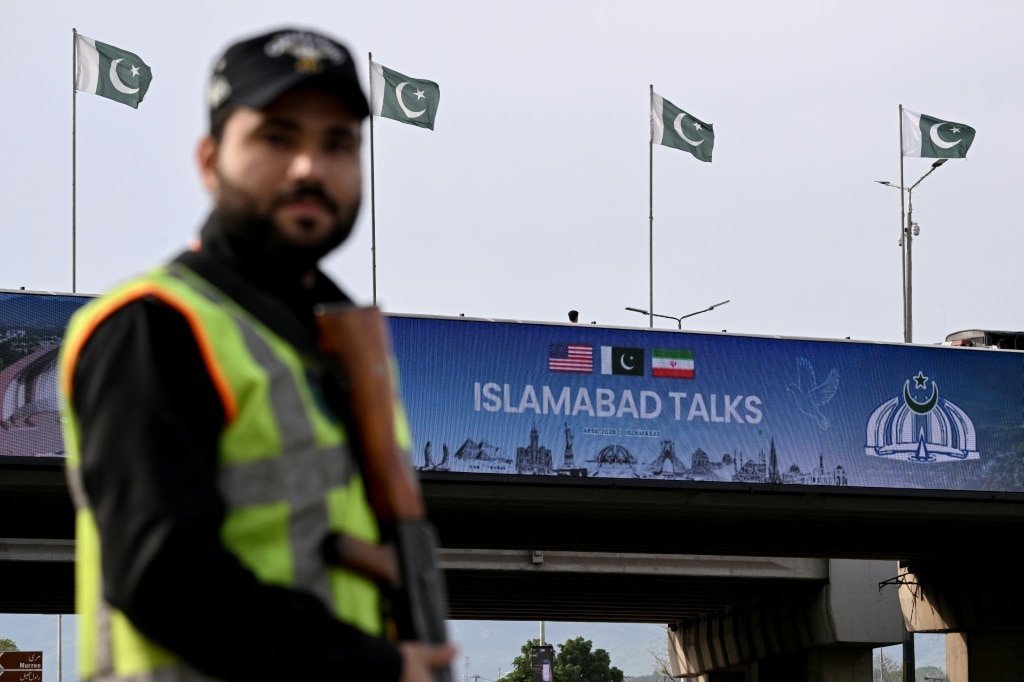
    On a tightly secured Saturday in Islamabad, Pakistan, US Vice President JD Vance and a top Iranian delegation led by Parliamentary Speaker Mohammad Bagher Ghalibaf gathered for what Pakistani Prime Minister Shehbaz Sharif has framed as a “make or break” effort to end weeks of catastrophic Middle East fighting that erupted in late February.

    The diplomatic gathering, months in the making through backchannel mediation, carries enormous global stakes: any lasting agreement would ease fears of a full regional war and stabilize volatile global energy markets, while a breakdown could reignite open hostilities that have already killed hundreds and destabilized the entire Middle East. But from the moment both delegations touched down, deep-seated mutual suspicion hung over the talks, with both sides openly acknowledging trust remains in short supply after decades of broken negotiating commitments.

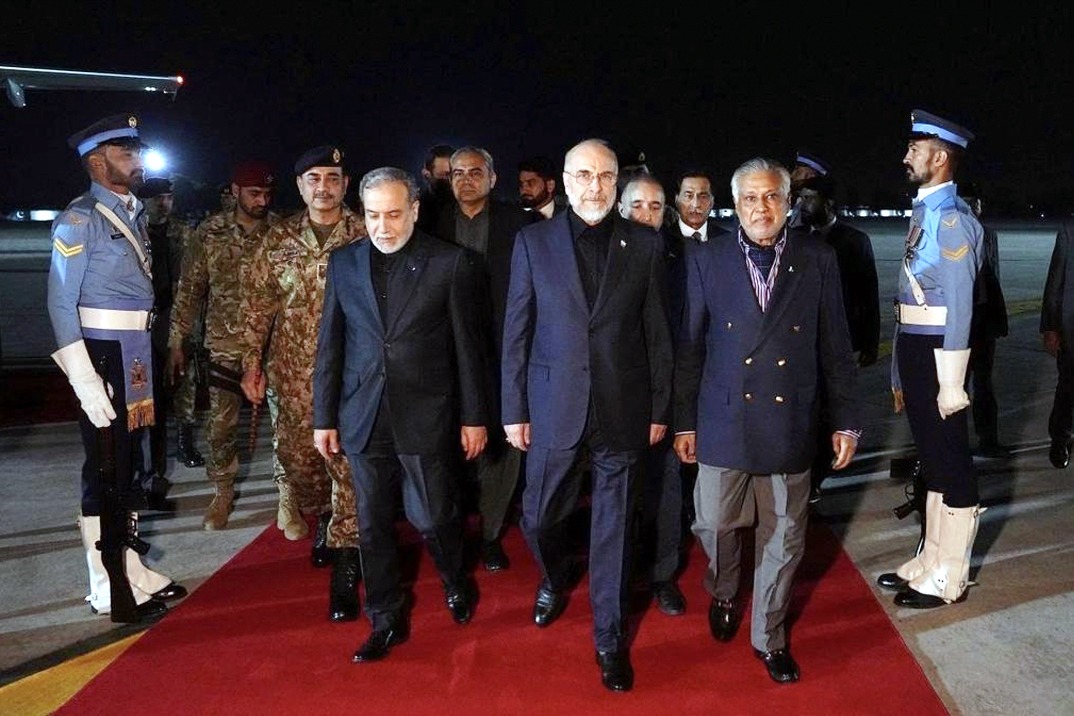
    Ghalibaf, leading a 72-member Iranian delegation that arrived overnight at Islamabad’s Nur Khan airbase, was personally greeted by Pakistan’s powerful Army Chief Asim Munir — a figure who shares established personal ties with US President Donald Trump, a detail that helped smooth the path to this week’s negotiations. Shortly after landing, Ghalibaf echoed a sentiment widely held across Iran’s political leadership, telling state media: “We have good intentions but we do not trust. Our experience in negotiating with the Americans has always been met with failure and broken promises.”

    Vance, who led the US delegation that also includes senior White House envoy Steve Witkoff and Trump’s son-in-law and former senior advisor Jared Kushner, struck a similarly mixed tone before departing US soil. After a brief refueling stop in Paris en route to Pakistan, Vance said the US stood ready to negotiate in good faith: “If the Iranians are willing to negotiate in good faith, we’re certainly willing to extend the open hand. But if they’re going to try to play us, then they’re going to find the negotiating team is not that receptive.”

    The current two-week ceasefire that brought both sides to the table is already teetering on collapse, underscoring the urgency of the Islamabad talks. The truce went into effect just 48 hours before Israel launched its heaviest bombardment of Lebanese territory since Hezbollah entered the war in early March, killing hundreds. Israeli strikes continued in Lebanon through Friday, with Tehran refusing to accept Israel’s position that the truce does not extend to the country. Hezbollah, the Iran-aligned militant group, responded overnight with fresh drone and rocket attacks targeting northern Israel and Israeli troops in southern Lebanon, keeping the cycle of violence active even as diplomats gathered in Pakistan.

    Multiple core sticking points remain unresolved before talks can even move toward a lasting deal. Iran has demanded the ceasefire formally cover Lebanon and that billions in frozen international assets be unfrozen — two conditions that have yet to be met. For the US, Trump has made the full reopening of the Strait of Hormuz, the strategic waterway through which roughly one-fifth of the world’s global crude oil shipments pass, a non-negotiable condition for extending the ceasefire. The strait has yet to return to normal shipping operations, and Trump reiterated Friday that Washington would open it “with or without” Iran’s cooperation if no deal is reached. Beyond the strait, Trump told AFP that preventing Iran from acquiring a nuclear weapon remains Washington’s top priority, representing “99 percent” of the US agenda at the talks.

    Pakistan, which pulled off last-minute mediation to bring the historic adversaries to the same capital, has already assembled a specialized team of technical experts to facilitate discussions on navigation, nuclear non-proliferation, and other core disputed issues. The country has ramped up security across Islamabad, deploying heavy police and paramilitary forces to the central diplomatic “red zone” and clearing the city’s top luxury hotel of all other guests to house the delegations. It remains unclear whether US and Iranian negotiators will meet face-to-face, or will follow the indirect format used in earlier Oman-mediated talks held before the outbreak of open war.

    The talks are being closely coordinated with other major global and regional mediators, including Egypt, Turkey, and China, all of which helped lay the groundwork for negotiations. Trump confirmed to AFP that China played a key role in convincing Tehran to attend the talks, and official sources say Beijing has been floated as a potential guarantor for any final lasting agreement. It remains unclear, however, whether China will send a formal delegation to the talks or agree to take on the official guarantor role.

    Public sentiment in Iran remains deeply skeptical of a breakthrough: a 30-year-old Tehran resident told AFP that most of Trump’s public statements are “pure noise and nonsense” to ordinary Iranians. Even as delegations prepared for their first formal meetings, Iran’s state media devoted only a brief segment to the talks in its first Saturday morning broadcast, with a subsequent segment focused on civilian volunteers signing up to defend the country if fighting resumes. For all the high hopes placed on Pakistan’s mediation, the coming days will test whether the two bitter adversaries can set aside decades of hostility to reach a deal that ends the current conflict before it spirals into a wider regional war.
  • US, Iran brace for pivotal talks

    US, Iran brace for pivotal talks

    As high-stakes negotiations between the United States and Iran approach in Islamabad, the future of a fragile regional ceasefire and global energy security hangs in the balance, with deep divisions and ongoing military violence casting a long shadow over the scheduled discussions. Set to kick off on Saturday in Pakistan’s capital, the talks could stretch up to 15 days, with negotiators set to address a slate of explosive, high-stakes issues ranging from Iran’s nuclear enrichment program to unimpeded commercial navigation through the strategically critical Strait of Hormuz. However, Iran has already tied its full participation in the dialogue to an immediate end to Israeli military strikes in Lebanon, a demand that comes as Israel continues its offensive against Hezbollah in the region.

    The US delegation will be led by Vice President JD Vance, but Iran has yet to release details of its negotiating team, with top Iranian officials arguing that ongoing Israeli attacks have already stripped the planned talks of meaningful purpose. “The holding of talks to end the war is dependent on the US adhering to its ceasefire commitments on all fronts, especially in Lebanon,” Esmaeil Baqaei, Iran’s Foreign Ministry spokesman, confirmed Thursday.

    Tensions rose further Thursday after US President Donald Trump cast public doubt on Iranian compliance with existing shipping agreements through the Strait of Hormuz, writing on social media that “Iran is doing a very poor job, dishonorable some would say, of allowing oil to pass through the Strait of Hormuz. That is not the agreement we have!” The vocal criticism came amid shifting shipping activity in the region: early Friday, ship-tracking data showed a Botswana-flagged liquefied natural gas tanker reversed course and returned to the Gulf after attempting to exit via a route approved by Iran’s Islamic Revolutionary Guard Corps, highlighting growing uncertainty over the strait’s operation.

    In a Thursday speech marking 40 days since the death of former supreme leader Ali Khamenei—who was killed in a joint US-Israeli strike at the outbreak of the current conflict—Iran’s new Supreme Leader Mojtaba Khamenei declared that the Iranian people had secured a “decisive victory” in the war, and announced that the country would move into a new phase of managing the strategic waterway. De facto disruption to traffic through the strait, through which roughly 20% of the world’s oil supplies pass, has already sent global energy prices soaring: by Friday, the international benchmark Brent crude spot price stood at around $96 per barrel, a 35% jump since the start of the conflict. The price surge has driven up costs for gasoline, food and other essential goods across the globe, far beyond the borders of the Middle East.

    As Pakistan tightened security across Islamabad in preparation for the talks, global economic leaders have warned that the ongoing conflict already poses a major threat to worldwide growth, regardless of whether the fragile ceasefire holds. Kristalina Georgieva, managing director of the International Monetary Fund, told reporters Thursday that “had it not been for this shock, we would have been upgrading global growth.” Speaking ahead of next week’s joint IMF-World Bank spring meetings, Georgieva added: “But now, even our most hopeful scenario involves a growth downgrade.”

    Israeli military activity has continued to escalate in Lebanon, shattering the already uneasy truce between Washington and Tehran. On Wednesday, Israel carried out its deadliest round of strikes on Lebanon since February 28, killing more than 300 people. Early Friday, the Israeli military announced it had targeted an additional 10 rocket launchers across southern Lebanon. Iran’s Parliament Speaker Mohammad Bagher Qalibaf, who is widely rumored to be a leading candidate to join Iran’s negotiating team in talks with Vance, warned Thursday that continued Israeli attacks on Hezbollah would bring “explicit costs and strong responses.”

    Further complicating regional tensions, Kuwait announced Friday it had suffered a drone attack overnight Thursday, which it blamed on Iran. Iran’s Revolutionary Guard quickly issued a denial, rejecting any involvement in the strike.

    Parallel to the US-Iran talks in Pakistan, direct Israeli-Lebanese negotiations are scheduled to launch next week in Washington. But many analysts warn the prospects for progress are slim. Abed Abou Shhadeh, a Jaffa-based Israeli political analyst and activist, described the US-Iran ceasefire talks as “extremely problematic” for Israel. Citing recent Israeli media polls, Al Jazeera reported that 79 percent of Israeli citizens support continuing military operations against Hezbollah in Lebanon, meaning the Israeli government has little political incentive to pursue diplomatic progress.

  • ‘Game on’: How Iran can exact a toll in the Strait of Hormuz

    ‘Game on’: How Iran can exact a toll in the Strait of Hormuz

    In recent days, a quiet but consequential transaction has unfolded off Iran’s coast: an Iranian marine pilot boarded a Greek-flagged tanker carrying Kuwaiti crude bound for Japan, after the captain obtained clearance to enter Iranian territorial waters via VHF radio. The day prior, the vessel’s charterer transferred a six-figure sum in U.S. dollars to an Omani bank tied to the Iranian government. This encounter, experts say, could become a daily routine if ongoing U.S.-Iran negotiations in Pakistan result in a peace deal, formally cementing Iran’s control over the Strait of Hormuz, one of the world’s most critical energy chokepoints.

    Middle East Eye consulted six maritime security experts, ship owners, international law scholars and energy traders to unpack how Iran could turn its de facto control of the waterway into a formal revenue stream, even amid long-standing U.S. hostility. The first step, experts agree, is rebranding: what Iran frames as a charge for passage cannot be called a toll if it hopes to win international and U.S. acceptance.

    Donald Rothwell, a leading law of the sea scholar at Australian National University, explained to Middle East Eye that the better framing is a “fee for service” rather than a transit toll. After military strikes from the U.S. and Israel, Iran effectively restricted traffic through the strait. Under international law, while states bordering international straits are barred from blocking innocent transit, they can suspend passage for security reasons during active conflict, Rothwell noted. Critics point out Iran’s current tactics – including harassing and seizing commercial vessels and designating Omani territorial waters as hazardous – violate existing international norms, but experts say the Trump administration, which has previously floated controversial territorial expansion ideas, may overlook legal technicalities to reach a deal.

    Notably, neither the U.S. nor Iran has ratified the United Nations Convention on the Law of the Sea (UNCLOS), leaving more room for negotiation. U.S. President Donald Trump has already sent mixed signals on the plan: he has suggested sharing transit proceeds with Iran could be positive, but later demanded Iran halt all fee collection immediately. Despite the legal ambiguities, Rothwell argues Iran’s position holds some merit amid the current ceasefire uncertainty.

    “Right now Iran is in a twilight zone, pending a finalised peace deal with the U.S. and Israel,” Rothwell said. “Iran can argue that it needs to guarantee safe passage for transiting vessels amid the risk of resumed military operations, and that escorted transit is a service it provides. That creates a legal opening.”

    While formal tolls are only legally permitted for man-made waterways like the Suez and Panama Canals, precedent exists for international strait states to charge service fees. Australia charges mandatory pilotage fees for vessels transiting the narrow, dangerous Torres Strait shared with Papua New Guinea, and Turkey collects tonnage fees for Bosphorus and Dardanelles transits under the 1936 Montreux Convention to fund safety, rescue and inspection services. Jason Chuah, a maritime law professor at City St Georges University of London, told Middle East Eye that Iran’s situation is not identical to these examples, but these precedents give Tehran a legal foothold to build on.

    Currently, Iran’s control of transit remains ad-hoc and unstructured. Before the recent conflict, roughly 130 vessels transited the strait daily. Between April 8 and 9, that number dropped to just 14, with nearly two-thirds of those belonging to Iran-sanctioned entities or the shadow fleet, according to Marine Traffic analytics. Vessels that do gain passage must submit extensive documentation – including bills of lading, crew manifests, insurance details and previous and next port information – so Iran can screen for U.S. or Israeli links, explained Martin Kelly, head of advisory at risk consulting firm EOS Risk Group. Even with government-to-government approval, there is no guarantee of passage, Kelly added.

    So far, vessels from Iran’s close partners including Russia, Pakistan, India and China have successfully transited. Among Western-linked shipping, Greek firms have been the most active: multiple tankers owned by Dynacom, the shipping group of Greek magnate George Prokopiou, have passed through the strait, with payments made to Iran in Chinese yuan, an anonymous ship owner confirmed to Middle East Eye. While yuan has been used for ad-hoc payments, the head of Iran’s oil, gas and petrochemical exporters union recently told the Financial Times that Tehran prefers payment in cryptocurrency.

    Joshua Hutchinson, chief commercial officer at British maritime security firm Ambrey, told Middle East Eye that Iran has not yet established a clear, scalable framework for the system, due to internal divisions. “The Islamic Revolutionary Guard Corps is disconnected from the politicians right now. So the communication by Tehran has been problematic,” he said. While prospective ship owners – many drawn by sky-high shipping rates – have multiple channels to reach Iran, including embassies and local brokers, the core issue remains payment structure. “Iran has not communicated a clear, scalable payment scheme,” Hutchinson said. “I think that will happen eventually; it’s just progressing slowly because of the split between the civilian government and the military.”

    Iranian officials have publicly floated a $2 million toll per vessel, or $1 per barrel of oil carried, but maritime experts say a tonnage-based fee would be the most practical implementation. While Iran has proven it can drastically reduce traffic through the strait, meaningful monetization requires buy-in from major global shipping players. Currently, record-high shipping rates have left many ship owners weighing risk against reward, said Maria Bertzeletou, senior analyst at shipping services firm Signal Group.

    “At the end of the day, it depends if owners are willing to pay the fees Iran wants and take the risk. Maybe they will prefer to send their vessels on other routes,” Bertzeletou said. She noted that even after the Houthis halted Red Sea attacks in May 2025, total tonnage through the waterway remains 50% lower than pre-attack levels, meaning traffic may not rebound quickly even if a deal is reached. Bertzeletou predicted a split in shipping attitudes: “We could see a bifurcation of the strait with different attitudes between Asian and western shipowners. I have a feeling that some western ship owners could sell some second-hand tankers to Asian owners who have an appetite to cross the strait, while Western owners focus on other routes.”

    Toby Copson, portfolio manager at Davenport Energy, said the timeline for large-scale energy traffic and formal fee collection remains uncertain. “It will be cloak and daggers for some time,” he said, noting that many Chinese vessels currently transiting the strait are not paying fees. However, with rates for Very Large Crude Carriers – the workhorses that carry Gulf crude to Asia – hitting historic highs, and oil and LNG prices also spiking, the proposed fees would be easy for shippers to absorb, Copson argued. “This fee Iran wants could be absorbed so quickly given the spike in oil prices. In the current pricing climate, the shippers would be stupid not to pay it.”

    The biggest barrier remains U.S. sanctions, Chuah noted: any payment to the IRGC, which controls Iran’s border and maritime security operations, would currently violate U.S. sanctions. Iran has demanded sanctions relief as a core condition of any peace deal, part of a 10-point proposal it released this week that Trump has called a “workable” basis for negotiations. While most Western shipping relies on U.S. dollars, Copson said Iran could easily collect fees in yuan or cryptocurrency. For yuan payments, he explained, shippers simply exchange for offshore renminbi and transfer to Iranian accounts, which Iran then converts to gold or dollars through Chinese intermediaries – a process that is not overly complex, though cryptocurrency would offer more opacity.

    Still, the Trump administration is likely to resist any fee framework that excludes the dollar, particularly as the conflict has fueled broader global discussions of de-dollarization. If a deal is reached, the international shipping industry will have little choice but to comply, Chuah said, but the U.S. will face intense pushback from key regional allies that oppose Iran cementing control over the strait. The United Arab Emirates, a close U.S. and Israeli partner that has taken a hard line against Iran during the conflict, has already pushed back: Anwar Gargash, diplomatic adviser to the Emirati president, said this week the UAE will reassess its alliances post-war, and Sultan al-Jaber, head of Abu Dhabi’s state oil company, said Iran continues to use coercion to restrict passage, even amid the ceasefire. “Big oil majors and Gulf states absorb a fee, but it will set a very bad precedent,” Chuah said.

    But other experts argue regional opponents will have little leverage if the U.S. agrees to a deal. “If Trump lifts sanctions on Iran, it will be game on,” Hutchinson said.

  • Iranian delegation arrives in Islamabad for talks

    Iranian delegation arrives in Islamabad for talks

    ISLAMABAD, April 11 – A senior Iranian delegation led by Parliament Speaker Mohammad Baqer Qalibaf touched down in Islamabad on Saturday ahead of highly anticipated negotiations with United States representatives, Pakistan’s Ministry of Foreign Affairs confirmed in an official statement this week.

    The visiting delegation, assembled for the high-stakes diplomatic discussions, also counts Iranian Foreign Minister Seyed Abbas Araghchi among its core members. On arrival at the Pakistani capital, the Iranian delegation was formally welcomed by a senior contingent of Pakistani leadership. The reception party included Pakistani Deputy Prime Minister and Foreign Minister Mohammad Ishaq Dar, National Assembly Speaker Sardar Ayaz Sadiq, Chief of Army Staff Field Marshall Syed Asim Munir, who also serves as Chief of Defense Forces, and Interior Minister Syed Mohsin Raza Naqvi.

    In remarks following the welcome, Ishaq Dar shared Pakistan’s expectation that all negotiating parties will approach the discussions in a spirit of constructive engagement. He reaffirmed Pakistan’s longstanding commitment to continuing its role as a neutral facilitator, working to support all parties in reaching a sustainable, long-term resolution to the ongoing conflict between the United States and Iran.

    The talks mark a rare diplomatic opening between the two longtime adversaries, with Pakistan serving as the host and intermediary for the pivotal discussions that are being watched closely by global powers across the world.

  • US, Iran negotiation delegations to hold talks in Islamabad Saturday: Pakistani PM

    US, Iran negotiation delegations to hold talks in Islamabad Saturday: Pakistani PM

    ISLAMABAD – In a significant step toward de-escalating long-running tensions in the Middle East, Pakistani Prime Minister Shehbaz Sharif confirmed Friday that senior negotiation delegations from the United States and Iran will convene for direct talks in the Pakistani capital on Saturday. The announced meeting comes on the heels of a recently agreed temporary ceasefire in the region, marking the start of what Sharif described as a far more challenging phase of diplomacy to lock in lasting, permanent peace.

    In a public address announcing the planned talks, Sharif emphasized that dialogue remains the only viable path forward to resolve deep-rooted disputes fueling instability across the Middle East. With the temporary pause in hostilities already in place, the next critical step is to translate that short-term truce into a durable, long-standing peace through constructive negotiations, he added.

    The Pakistani prime minister also made clear that his country’s leadership is committed to doing everything in its power to create an environment conducive to productive dialogue, and to ensuring the negotiations reach a successful outcome. As a key regional actor with long-standing diplomatic ties to both Washington and Tehran, Pakistan has positioned itself as a neutral mediator to bring the two sides to the negotiating table amid heightened regional tensions that have threatened to spill beyond the Middle East in recent months.

    The planned talks mark a rare high-level engagement between the United States and Iran, two nations with decades of strained diplomatic relations that have been a core source of instability across the Middle East. The international community has widely welcomed the decision to hold negotiations, with many regional and global powers expressing hope that the talks will open the door to broader confidence-building measures and a lasting reduction in tensions.

  • Exclusive: What the Lebanese government wants from talks with Israel

    Exclusive: What the Lebanese government wants from talks with Israel

    Trapped between competing regional and global powers, Lebanon’s newly elected government is waging a quiet diplomatic battle to claim full sovereignty over its own future, pushing to position itself as an equal, independent negotiating party ahead of next week’s Washington talks with Israeli officials. The ongoing conflict that has shattered the country has put Beirut in an unenviable position: squeezed between Israeli military aggression, Iran’s regional power projection, and inconsistent diplomatic attention from Washington, leaving the small state scrambling to rewrite the rules of negotiation before its fate is decided by outside actors.

    The conflict traces back to a US-Israeli strike that killed Iranian Supreme Leader Ali Khamenei, which triggered retaliatory cross-border rocket fire from the Iran-aligned militant group Hezbollah. Israel responded with a full-scale bombardment of Lebanon, acting on long-held plans to push Hezbollah back from the shared border that the movement has controlled for decades. When Washington and Tehran announced a two-week ceasefire mediated by Pakistan earlier this week, both Iran and Islamabad said the truce would include Lebanon. But Israel immediately rejected that inclusion, launching a devastating 10-minute air assault on Beirut and other Lebanese areas that killed more than 300 people, the majority civilians including dozens of children. Under mounting international pressure and threats of further Iranian retaliation, Israel eventually agreed to de-escalate its attacks and enter direct talks with the Lebanese government in Washington next week to discuss a permanent end to hostilities and the future of Hezbollah.

    For Lebanon’s leadership, which took office in early 2025 on a mandate to restore state authority after years of fragmentation and a previous devastating Israeli war sparked by the Gaza conflict, the upcoming talks represent far more than a chance to stop the bombing. Senior Lebanese officials have made clear that their core demand is non-negotiable: all future negotiations and decisions about Lebanon’s future must be channeled exclusively through official state institutions, led by President Joseph Aoun’s office. The government is intent on abandoning the old military-dominated negotiation frameworks that have governed Israeli-Lebanese border talks for years, and separating any Lebanese agreements from separate deals being struck between Iran and the United States. This position is as much about survival as it is about sovereignty: after decades of foreign interference and economic collapse that has left the state fragile, Lebanese leaders view formal control over negotiations as the only way to rebuild public trust in state institutions and avoid being reduced to a bargaining chip in a larger regional conflict.

    Not all stakeholders have aligned with this framework, however. Hezbollah, the powerful Iran-backed armed movement that holds significant political and military sway in Lebanon, has rejected the current timing of the talks, insisting that any negotiations can only begin after a full ceasefire, an Israeli withdrawal from occupied Lebanese territory, and the safe return of displaced civilians. The new approach also creates friction with both Israel and Iran, whose competing priorities directly undermine Beirut’s goals. Israel has made clear it intends to decouple the Lebanese file from wider talks with Iran, seeking to maintain military pressure on Hezbollah and keep Lebanon as a bargaining chip to prevent Iran from claiming a diplomatic victory by protecting its regional ally. For its part, Iran has resisted any separation of the two fronts, viewing the US initial attempt to exclude Lebanon from the Iran ceasefire as a outright betrayal. Iranian officials have repeatedly stated they will not move forward with any truce that leaves Lebanon exposed to continued Israeli attacks, a stance echoed by senior diplomatic sources in Egypt, which is leading Arab mediation efforts. Any public abandonment of Hezbollah would also carry severe political costs for Tehran both domestically and among its regional allied networks.

    International powers have been split in their approach to Lebanon’s demands. Pakistan, Turkey, and Egypt have all sought to reassure Beirut and urge patience as diplomacy moves forward, with Egypt actively pushing for Lebanon’s full inclusion in any regional ceasefire framework. Both France and the United Kingdom have also publicly called for any US-Iran truce to extend to Lebanon. But Lebanese officials report that Beirut also faces quiet external pressure: some global and regional actors do not want to see Lebanon positioned as a success for Iranian diplomacy, after earlier Arab mediation efforts failed to stop the war. For President Aoun, this creates a no-win dilemma: even as his weak government relies on Iranian pressure to secure a ceasefire, he cannot afford to be seen as a mere proxy for Tehran, which would undermine his mandate to restore sovereign state authority.

    The scale of the crisis facing Lebanon makes this diplomatic push all the more urgent. The latest conflict has displaced more than one million people – roughly one-fifth of the country’s entire population – and the International Monetary Fund warned earlier this year that Lebanon’s fragile post-collapse economic recovery will remain unstable without deep structural reforms. The current ad-hoc negotiation framework, which has been anchored in a US-chaired military truce committee and UN-backed monitoring since a 2024 ceasefire, was expanded to include civilian envoys in late 2025, but Aoun’s administration is pushing for a fully political channel centered on the presidency and cabinet, rather than the legacy military-focused machinery.

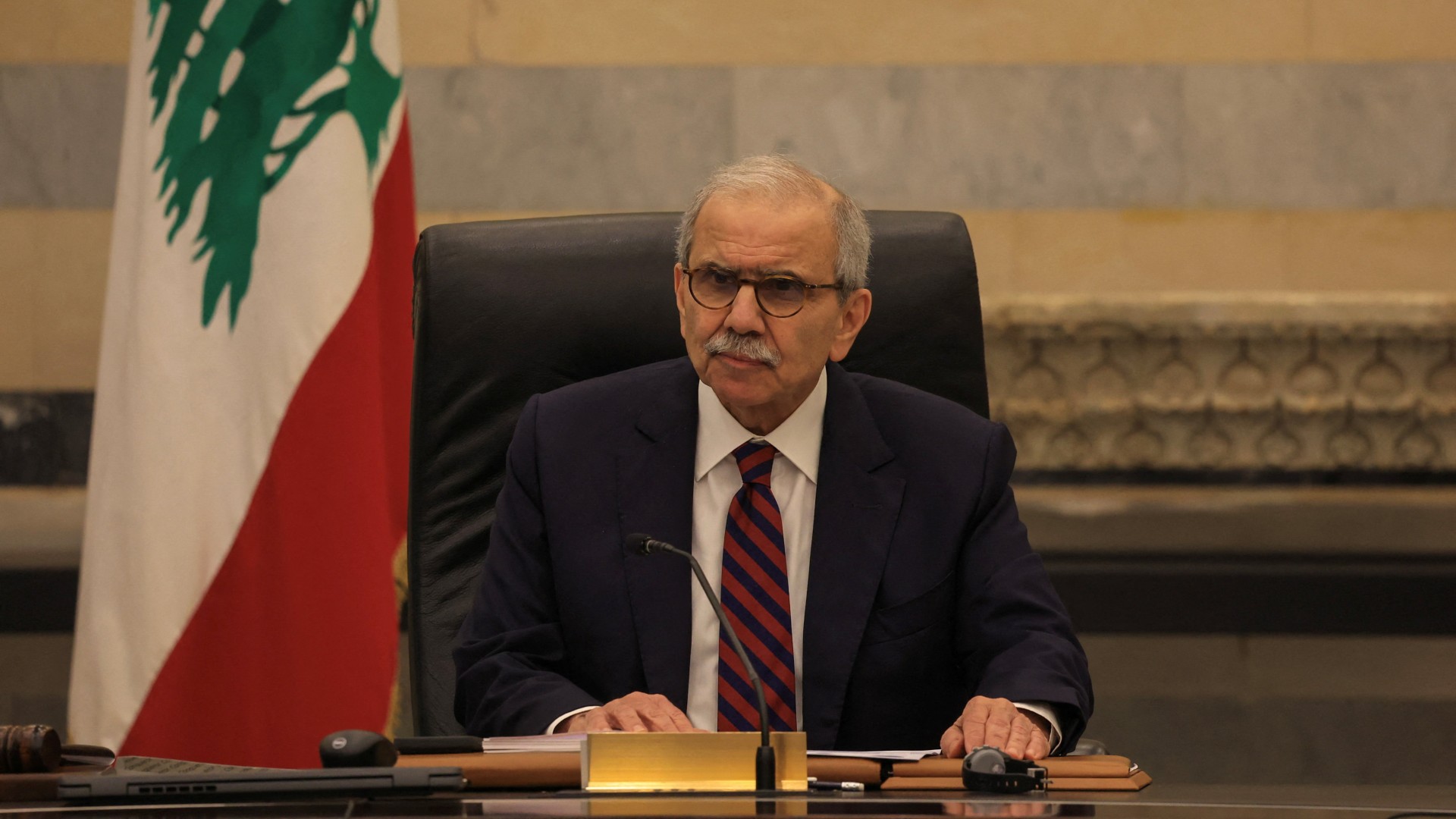
    Prime Minister Nawaf Salam is expected to travel to Washington and New York in the coming days to frame any diplomatic progress as a victory for the Lebanese state, rather than a concession to regional power brokers. But even if he succeeds in securing a ceasefire through state-led channels, core sticking points – including the future of Hezbollah’s arsenal and the status of southern Lebanon – will remain tied to the broader US-Iran regional standoff. In the end, Lebanon’s government is trying to secure three competing goals: an immediate ceasefire to end civilian suffering, full state control over all negotiations, and a political outcome that does not hand Iran a symbolic diplomatic victory – all while holding almost none of the decisive power needed to shape the final outcome.

  • Ukrainians sceptical as Kremlin orders Easter truce

    Ukrainians sceptical as Kremlin orders Easter truce

    Four years into the full-scale invasion that has killed hundreds of thousands and reduced large swathes of eastern Ukraine to rubble, a unilateral announcement of a 32-hour Orthodox Easter truce from the Kremlin has sparked starkly contrasting reactions on either side of the frontline. On the streets of Kyiv Friday, ordinary Ukrainians voiced deep distrust of Moscow’s pledge, which would pause all offensive operations across all battle directions from 4:00 pm Moscow time (1300 GMT) Saturday through the end of Sunday. Even as Ukrainian President Volodymyr Zelenskyy, who has long pushed for a ceasefire to de-escalate the conflict, confirmed Kyiv stands ready to match the truce, few residents of the capital were willing to take Moscow’s promise at face value.

    Decades of broken agreements and last year’s failed Easter ceasefire, where both sides traded accusations of hundreds of violations, have left most Ukrainians convinced this temporary halt to fighting is little more than hollow rhetoric. “No one believes in these fairytales anymore,” 29-year-old Kyiv IT specialist Yevgeniy Lamakh told Agence France-Presse. “The Russian military lie constantly, as history has proven. They say one thing, but act in a completely opposite way.”

    Ukrainian actor Dmytro Sova, 42, echoed that frustration, pointing to the sustained barrage of Russian attacks that has continued even after the truce announcement. Ukraine’s air force confirmed Russia launched 128 Shahed drones and long-range missiles in an overnight attack just one day after the truce was declared. According to Ukrainian military data, Russia has launched hundreds of these long-range drone strikes against Ukrainian territory every single day since May 10, 2025. “Even today… Shaheds, missiles are flying at Ukraine. Well, come on then, start the ceasefire,” Sova snorted, adding that he believes only full Russian troop withdrawal from all occupied Ukrainian territory and a return to good-faith negotiations can resolve the conflict.

    For 46-year-old Kyiv resident Yuriy Dunai, the memory of last year’s broken truce makes him an open pessimist about this latest attempt. “They were not observed a single time. It seems to me that it is not worth expecting a miracle,” he said.

    While distrust dominates in Ukraine, ordinary residents in Moscow expressed hope that the temporary truce could open the door to broader peace talks. 58-year-old hairdresser Elena framed the announcement as a positive step forward. “I’m only for peace, that’s all I can say. Thanks to Putin, maybe things will keep going well from here on,” she told AFP. 59-year-old pensioner Lyubov Pavlenka called the truce “wonderful” news, echoing a widespread desire for the conflict to end as soon as possible.

    Beyond the temporary halt, long-term peace efforts remain stalled. Moscow has rejected Kyiv’s calls for a longer-term unconditional ceasefire, insisting it will only agree to a final, permanent peace settlement. Talks brokered by the United States have ground to a halt over the status of four partially occupied eastern Ukrainian regions, which Moscow demands Kyiv cede to Russian control. Ukrainian officials have repeatedly ruled out any territorial concessions, arguing that giving up land would only embolden Moscow to launch new incursions further into Ukrainian territory in the future.

  • Nigerian court convicts more than 300 in mass terrorism trial

    Nigerian court convicts more than 300 in mass terrorism trial

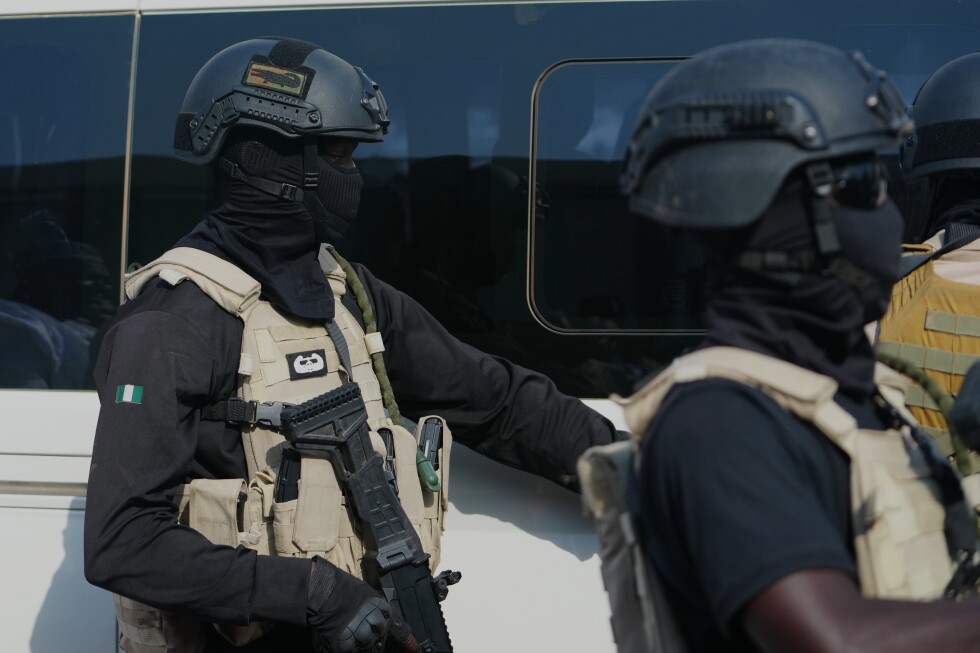
    ABUJA, Nigeria – In a landmark legal action aimed at cracking down on rising violent extremism across the country, a Nigerian court based in the capital Abuja has convicted 386 terrorism suspects following a high-stakes mass trial that concluded Friday after four days of proceedings.

    The mass hearing launched Tuesday, with a large share of the defendants entering guilty pleas to charges filed by federal prosecutors. All convicts were processed by a special panel of 10 judges, with the harshest sentences handed down reaching 20 years of prison time.

    Speaking to reporters immediately after the ruling, Nigeria’s Attorney General outlined the scope of the outcome: out of 508 total terrorism-related cases brought before the panel, the prosecution secured convictions for 386 defendants. “This result delivers long-awaited accountability, and it sends an unambiguous message that we will not tolerate terrorist activity on our soil,” the attorney general told the press.

    The high-profile conviction comes as Nigeria grapples with a protracted, multifaceted security crisis concentrated primarily in its northern regions, where a 13-year insurgency led by radical armed groups has devastated local communities and fueled widespread instability. The northeastern insurgency, first launched in the early 2010s, remains the deadliest center of violence, led by two prominent factions: the original Boko Haram militant network, and its breakaway offshoot, the Islamic State West Africa Province, which aligns ideologically and operationally with the global Islamic State extremist movement.

    Violent extremism has also spread beyond the northeast in recent years. In northwestern Nigeria, bordering the Niger Republic, the IS-affiliated Lakurawa militant group has launched repeated attacks on civilian and government targets. Tensions between pastoral and agricultural communities also remain a persistent flashpoint: recurring disputes over access to land and grazing rights between predominantly Muslim Fulani herders and mostly Christian farming populations often escalate into deadly, large-scale clashes across north-central and northwestern states. Organized criminal gangs specializing in kidnapping for ransom also operate with impunity across much of northern Nigeria, driving further insecurity.

    The United Nations estimates that more than a decade of insurgency in northeastern Nigeria alone has left tens of thousands dead and displaced millions more from their homes, creating one of the world’s worst humanitarian crises that continues to evolve as violence spreads to new regions. Nigerian officials say the mass conviction is a key step in demonstrating the government’s commitment to restoring stability and holding perpetrators of violence accountable.

  • Gunmen kill at least four people at Afghanistan picnic spot

    Gunmen kill at least four people at Afghanistan picnic spot

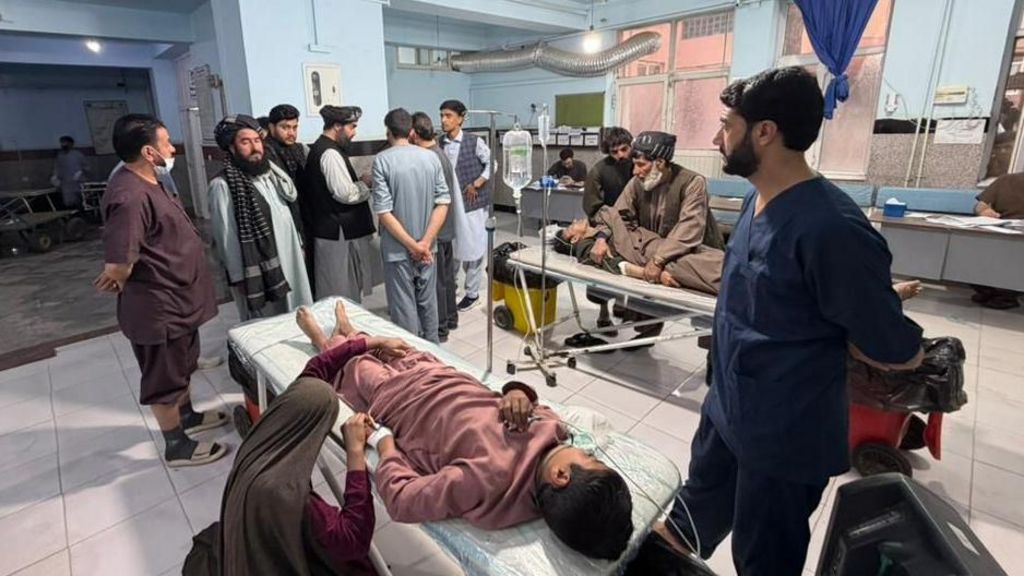
    A deadly attack targeting civilians gathered for a recreational picnic near a popular Shia Muslim shrine in western Afghanistan has left multiple people dead and dozens injured, with conflicting casualty accounts emerging from local and national Taliban officials, according to multiple on-the-source reports.

    The violence unfolded at approximately 15:00 local time on Friday near Deh Mehri village in Afghanistan’s Herat province Enjil district, a recreational area that regularly draws large crowds of weekend visitors. According to Taliban officials, two unidentified gunmen riding motorcycles opened fire on the gathered civilians before fleeing the scene.

    Discrepancies have emerged in official casualty tallies from different levels of the Taliban-led administration. Ahmadullah Muttaqi, Herat’s provincial head of information and culture, confirmed to the BBC that four bodies and 15 wounded people — including two women — had been transported to Herat’s main regional hospital. Meanwhile, national Taliban interior ministry spokesperson Abdul Mateen Qani shared differing figures in an official post on X, stating preliminary investigations recorded seven fatalities and 13 injured people, several of whom remain in critical condition.

    A local physician at the receiving hospital also spoke to the BBC, providing an even higher casualty count of 12 killed and 12 injured. The doctor added that all confirmed victims were Hazara Shia Muslims, a minority ethnic and religious community that has faced repeated targeted violence across Afghanistan for decades.

    Deh Mehri village is a predominantly Shia settlement centered around a well-known shrine that draws daily pilgrims and weekend picnickers, Muttaqi confirmed. Local security forces have already taken one suspect into custody in connection with the attack, he added. As of Saturday morning, no armed or insurgent group has released a statement claiming responsibility for the shooting.

    The attack marks the latest in a long pattern of targeted violence against Afghanistan’s Hazara Shia community. The group, which makes up roughly 10 to 20 percent of Afghanistan’s population, has frequently been targeted by extremist groups including ISIS-K, the regional affiliate of the Islamic State, in attacks across the country in recent years.

  • Dressed for school, returned in a shroud: Israeli forces kill Palestinian girl in class

    Dressed for school, returned in a shroud: Israeli forces kill Palestinian girl in class

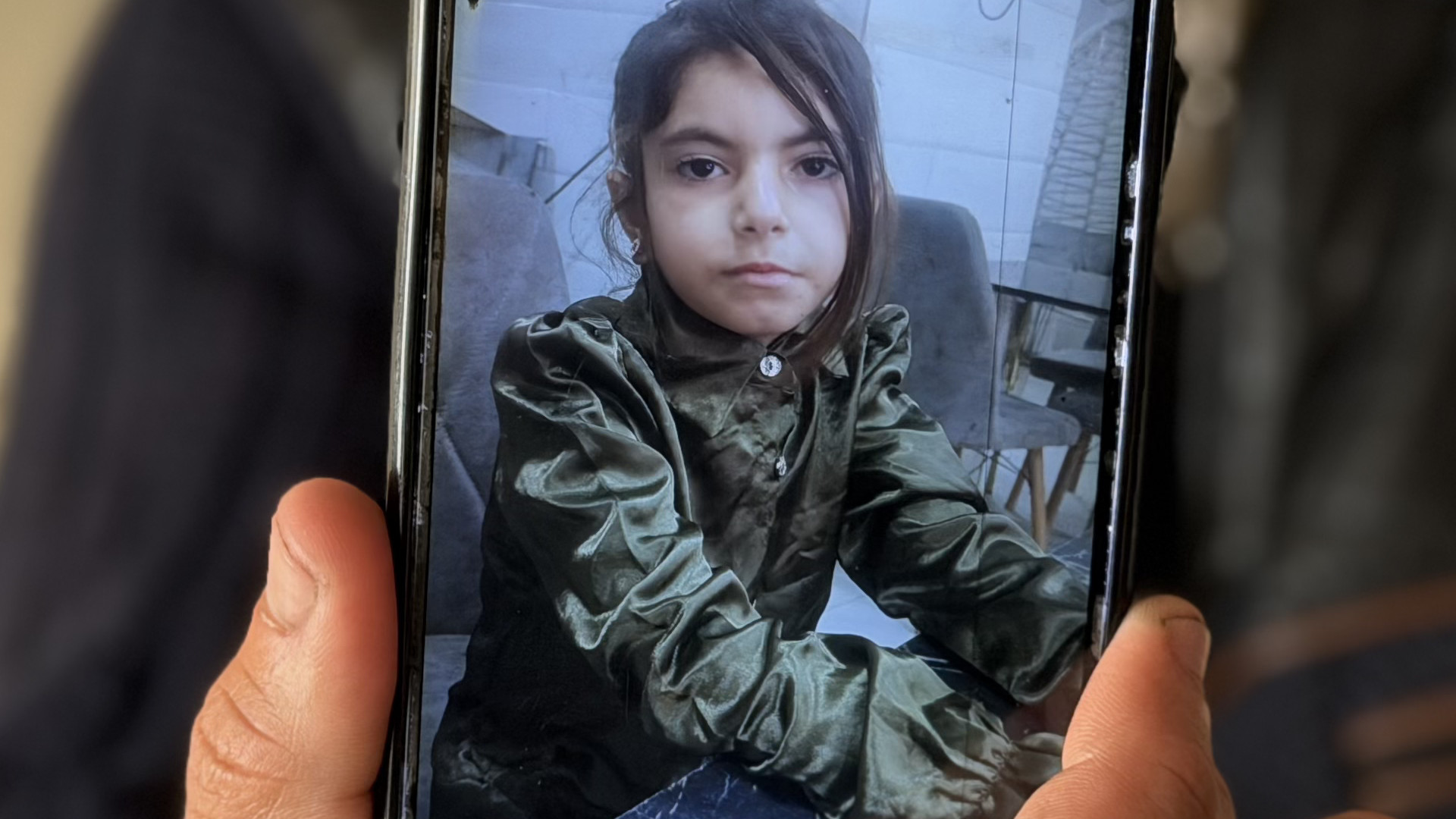
    It was just an ordinary Thursday maths class at Abu Ubaida Bin al-Jarrah School in Beit Lahia, northern Gaza. Nine-year-old Ritaj Abdulrahman Rihan sat at her desk, carefully copying down a subtraction exercise for four-digit numbers that her teacher had assigned to the class of 40 pupils. She finished writing the questions, but the blank lines left for her answers would never hold her calculations—instead, they were stained deep red with her blood.

    A sniper from Israeli forces stationed near the self-declared “Yellow Line” boundary had shot Ritaj in the head while she sat studying. The young girl was rushed to a local hospital immediately, but medical staff pronounced her dead before her parents could reach her side to say a final goodbye.

    For Ritaj’s family, the tragedy carries an unbearable weight. Two years of relentless Israeli military attacks had already destroyed their home, forcing the family to take shelter in a makeshift displacement camp. Even amid the chaos and constant risk of violence, Ritaj’s parents prioritized their daughter’s education: the couple walked 1 kilometer each way every day to get Ritaj to and from class, determined that she would have the chance to learn like any child in the world.

    Ritaj was the couple’s first child, their eldest joy, and had only just returned to full-time schooling that academic year. For two years, repeated military offensives and forced displacement had kept her out of the classroom, and this was her first chance to attend regular classes following the US-brokered ceasefire that took effect in October 2025. Even though classes were held in partially damaged buildings or makeshift structures rather than a fully intact school, her father Abdulrahman said any education was better than none for his daughter.

    “We were happy she had grown up enough and remained alive and healthy after two years of genocide to carry a school bag and notebooks. She was finally back at school. She was clever and loved school,” Abdulrahman told Middle East Eye, recalling the shock he received just an hour after dropping his daughter off that morning.

    The school was chosen specifically because it sits 2 kilometers away from the Yellow Line, the unilaterally imposed military boundary Israel has drawn inside the Gaza Strip, in what was marketed as a relatively safe area. The boundary, put in place after the October ceasefire, bars Palestinian civilians from entering large swathes of northern, southern and eastern Gaza on penalty of death. Despite this designation, Israeli troops and snipers positioned along the line have repeatedly opened fire on residential neighborhoods and civilian infrastructure well within the declared safe zone.

    “The school is supposed to be in a safe area. It is not close to the Yellow Line, and this is why we felt comfortable enough to send her there to learn,” said Ritaj’s mother Ola Rihan. She recalled dressing her daughter that morning, combing and braiding her hair, sending her off with a smile—only to receive her daughter’s body hours later, wrapped in a burial shroud instead of the new dress Ola had bought for her to wear to an upcoming family wedding.

    Along with Ritaj’s body, Ola received her daughter’s bloodstained math notebook, a memento she calls the clearest evidence of Israel’s crimes against Palestinian children. “This is her notebook, and here is the lesson she was studying today, but could not finish. These are the pages stained with my daughter’s blood. This is not ink; this is my daughter’s blood,” Ola said, holding the damaged notebook for reporters. “Ritaj was the most precious thing I had. She was a piece of my soul.”

    The unfulfilled plans for Ritaj’s future only deepen the family’s grief: Ola had purchased a new dress and pair of shoes for Ritaj to wear to her uncle’s wedding the following week. The young girl had been excited for the event, but she never got the chance to put the clothes on. Today, they sit in the family’s tent, unworn, a reminder of the future that will never happen.

    This is not the first loss Ola has endured at the hands of Israeli attacks. She already lost her mother, a sister, her sister’s young children, and an uncle to previous violence in Gaza. Now, with the death of her daughter, she says the cumulative trauma has left the family exhausted, broken by unending shock after shock.

    Ritaj’s killing is far from an isolated incident. Since the October 2025 ceasefire, Israeli forces have killed and injured dozens of Palestinian civilians in and near the Yellow Line, even in areas labeled as safe for returning residents. The boundary has expanded month by month, swallowing more Gaza territory and displacing thousands of civilians who had returned to their homes under the terms of the ceasefire agreement. In many cases, Israeli forces have demolished entire residential neighborhoods and bombed homes after bringing the land under their boundary control.

    Ola argues that the targeting of children even in schools is a deliberate policy: “Our children are killed all the time. Even after they finally managed to attend school. The occupation wants to stop the educational process. It does not want a generation to grow up educated and capable.” The family pleads for an end to the violence that has stolen so many of their loved ones, saying they cannot bear to lose another member to the ongoing conflict.