
The relentless wildfires in Canada have not only devastated vast swathes of land but have also sent smoke drifting southward, casting an eerie orange haze over parts of the United States. This summer, the Canadian province of Manitoba witnessed some of the deadliest wildfires, prompting Republican lawmakers in neighboring U.S. states to demand accountability from Canada for the smoke pollution.
分类: world
-
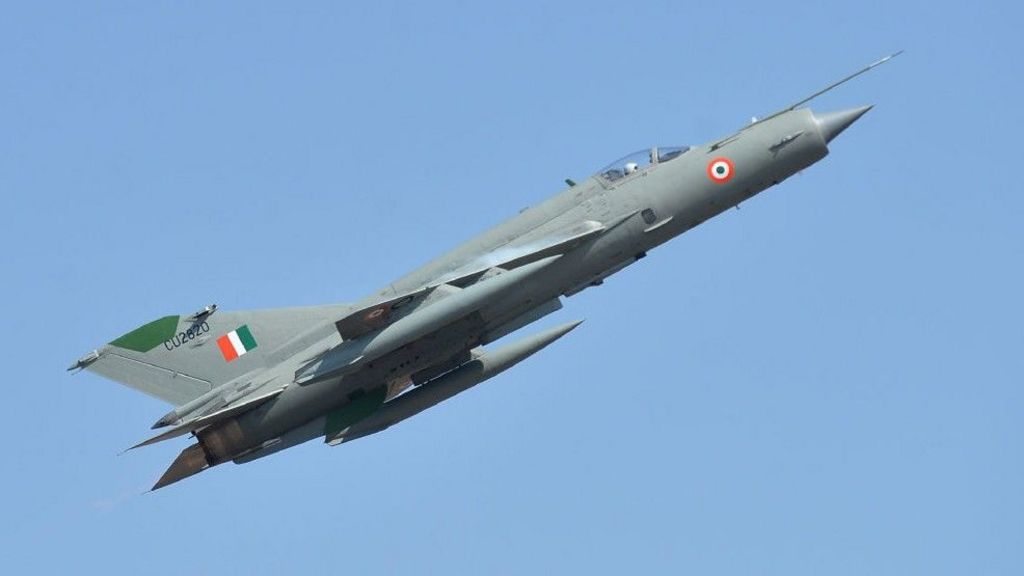
The sun sets on India’s iconic and controversial Soviet fighter jet
The MiG-21, once the backbone of the Indian Air Force (IAF), is set to take its final flight, marking the end of an era for one of the most iconic fighter jets in aviation history. For decades, the MiG-21 dominated the skies, comprising two-thirds of the IAF’s fighter fleet at its peak. Pilots who flew the aircraft recall its blistering speed and versatility, but also its grim reputation as a ‘flying coffin’ due to a series of fatal crashes in its later years.
Designed by the Soviet Union and first inducted into the IAF in 1963, the MiG-21 was renowned for its needle-nose design, supersonic speed, and ability to climb rapidly. It became a cornerstone of India’s defense strategy, playing pivotal roles in conflicts such as the 1971 war with Pakistan. Pilots adapted the aircraft for close combat and ground attacks, pushing it beyond its original design limitations.
However, the MiG-21’s legacy is marred by tragedy. Between 1971 and 2012, 482 crashes were recorded, resulting in the deaths of 171 pilots, 39 civilians, and others. Analysts attribute these accidents to aging airframes, high landing speeds, and stretched maintenance cycles. Despite its flaws, the MiG-21 remained in service far longer than expected due to delays in developing replacements.
For retired Air Marshal Prithvi Singh Brar, who flew the MiG-21 for 26 years, the aircraft was more than a machine—it was a trusted partner in the sky. ‘I loved flying the MiG-21 the way a bird loves the sky,’ he recalls. Yet, as India retires its last two MiG-21 squadrons, the IAF faces a significant gap, with only 29 fighter units operational against a sanctioned 42.
The MiG-21’s retirement symbolizes the end of a chapter in India’s aviation history, leaving behind a legacy of both admiration and caution. As the skies grow quieter, the memories of those who flew this legendary jet will endure, a testament to its enduring impact on India’s defense and aerospace industry.
-
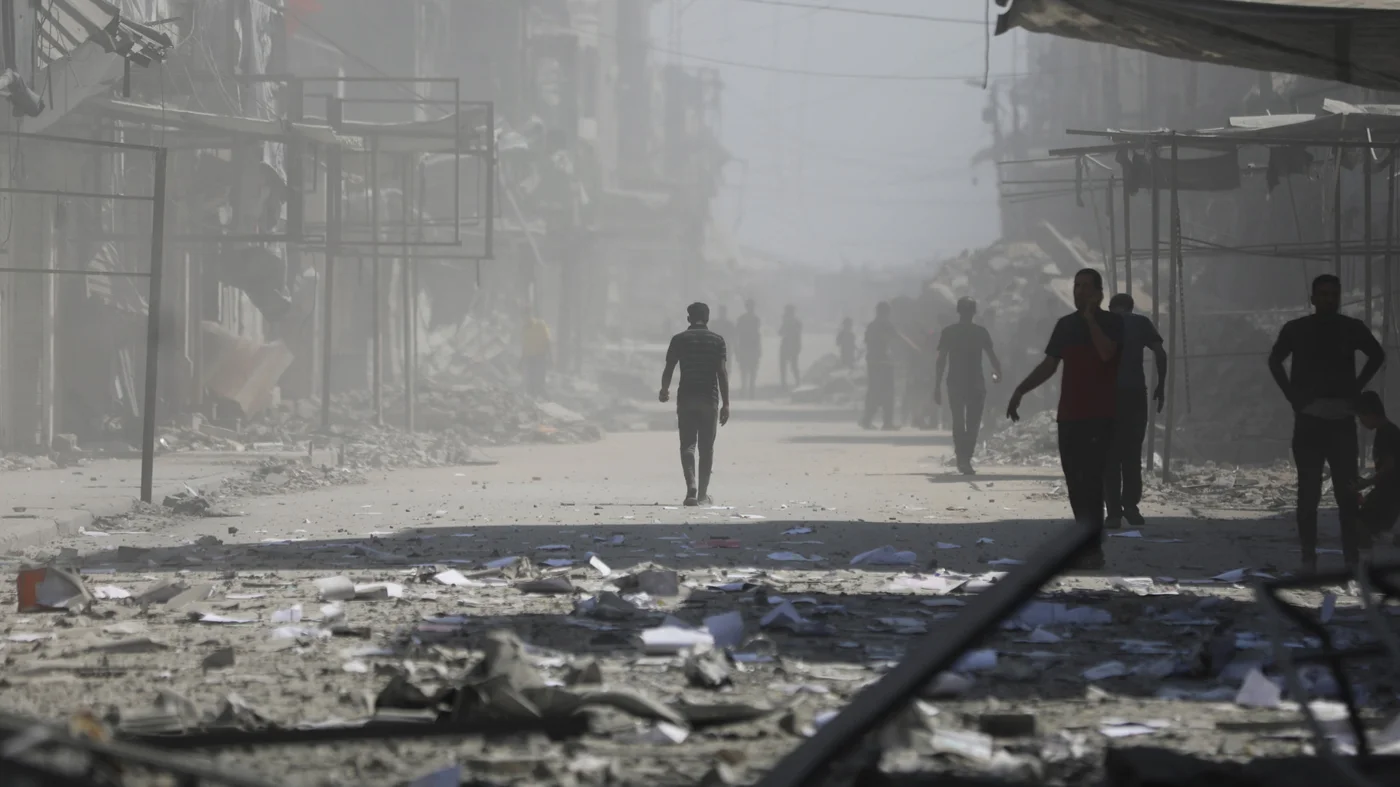
Final goodbye: MEE reporters on the pain of being forced out of Gaza City
In the midst of Israel’s intensified military campaign in Gaza City, Palestinian journalist Ahmed Dremly faces an agonizing decision: to stay in his lifelong home or flee to uncertain safety. His friend Youssef’s advice to sell his furniture as firewood underscores the dire reality. “Who would buy them?” Dremly retorts, his voice heavy with bitterness. The conversation, reminiscent of a dystopian narrative, reflects the plight of Gaza’s one million residents, forced to choose between survival and the loss of their homes and memories. Since mid-August, Israel’s relentless bombing campaign, coupled with the deployment of explosive-laden robots, has aimed to depopulate the city, described by many as ethnic cleansing. The goal is clear: drive residents south, leaving Gaza City a ghost town. Estimates suggest between 300,000 to 600,000 have already fled, though many remain, unable to afford transportation or face the fear of permanent displacement. For Dremly, the thought of abandoning his home is unbearable. “I look at the walls of my house, even the lamp, and it breaks my heart,” he laments. Award-winning journalist Maha Hussaini shares his anguish, having delayed her departure until the last possible moment. “The last time you leave the house and shut the door—that’s the last time you’ll close that door,” she says. Despite her determination to stay “until the last gasp,” Hussaini was ultimately forced to flee south, leaving behind a city that once teemed with life. The streets, now eerily empty, serve as a stark reminder of the human cost of this conflict. As Gaza’s residents grapple with impossible choices, their stories highlight the devastating toll of war on identity, memory, and home.
-

China makes landmark pledge to cut its climate emissions
In a landmark announcement, China, the world’s largest emitter of greenhouse gases, has pledged to reduce its emissions by 7-10% by 2035, marking its first absolute target for emissions reduction. President Xi Jinping made the commitment in a video statement to the United Nations in New York, emphasizing China’s dedication to surpassing these goals. This announcement comes at a critical juncture as the US, under President Donald Trump, has scaled back its climate commitments, with Trump dismissing climate change as a ‘con job’. However, environmental experts argue that China’s targets, while significant, fall short of what is necessary to meet global climate objectives. ‘Even for those with tempered expectations, what’s presented today still falls short,’ said Yao Zhe, global policy adviser at Greenpeace East Asia. The urgency of these pledges is underscored by the looming deadline for countries to submit their updated climate plans under the Paris Agreement, originally due in February but now expected by the end of September. UN Secretary-General António Guterres stressed the importance of these commitments in limiting global temperature rise to 1.5°C, a goal set in the Paris Agreement. ‘We absolutely need countries to come with climate action plans that are fully aligned with 1.5 degrees,’ he said. China’s new targets cover all greenhouse gases and include ambitious plans to expand wind and solar power capacity, increase forest stocks, and promote new energy vehicles. Despite these efforts, analysts like Lauri Myllyvirta of the Centre for Research on Energy and Clean Air argue that a 30% reduction is necessary to align with the 1.5°C target. China’s reliance on coal remains a significant challenge, although recent data suggests a plateau in emissions. Observers remain hopeful, citing China’s history of exceeding its climate commitments, such as achieving its 2030 renewable energy target six years early. ‘The targets should be seen as a floor rather than a ceiling,’ said Li Shuo of the Asia Society Policy Institute. As the world grapples with the climate crisis, China’s actions will be pivotal in determining the trajectory of global emissions.
-

Exclusive: Albania asked to arrest chief rabbi over alleged war crimes in Gaza
Albanian authorities are under pressure to arrest and prosecute the country’s chief rabbi, Yoel Kaplan, for alleged war crimes and crimes against humanity linked to Israel’s military actions in Gaza. Middle East Eye has exclusively revealed that a case against Kaplan, an Israeli-American citizen and active Israeli soldier, was submitted to Albania’s prosecutor general on Wednesday. Kaplan, who also leads a small Jewish community in Thessaloniki, Greece, has been photographed in Gaza and is seen in videos wearing the uniform of the Israeli army’s 55th battalion, part of the 98th division. The International Centre of Justice for Palestinians (ICJP), a UK-based rights group, has formally notified Albanian police about Kaplan’s suspected involvement in war crimes, urging an immediate investigation and arrest. Sources in Albania have confirmed Kaplan’s identity as the suspect. The ICJP launched the Global 195 Coalition in March, an international legal network targeting Israeli war crimes and crimes against humanity in Gaza. Kaplan, who divides his time between Israel, Albania, and Greece, has been active in the military since the conflict began, stating, ‘I’m very active [in the military] and I think it’s the time to be active because if not in this war, when?’ The 98th Division, to which Kaplan belongs, operated in Gaza from December 2023 until at least August 2024, with reports of civilian deaths and widespread destruction in Khan Younis. Kaplan’s battalion was active during incidents where Israeli forces allegedly targeted hospitals, ambulances, and schools sheltering civilians. As a signatory to the International Criminal Court (ICC) and International Court of Justice (ICJ), Albania is obligated to investigate such allegations. In September 2024, Middle East Eye revealed social media footage of Kaplan celebrating atop a tank amid Gaza’s devastation. Kaplan, a member of the Chabad-Lubavitch movement, has aligned himself with hardline settler politics, framing Israel’s occupation of Palestinian land as a divine mission. Despite his role as a spiritual leader, Kaplan has dismissed pro-Palestinian protests in Albania as insignificant, claiming government support. The ICC has issued arrest warrants for Israeli Prime Minister Benjamin Netanyahu and former Defense Minister Yoav Gallant for alleged war crimes in Gaza, a decision Kaplan criticized. When questioned about the humanitarian crisis in Gaza, Kaplan repeated disproven Israeli government claims about Hamas stealing aid. Kaplan’s WhatsApp profile picture, showing him leading troops in prayer in Gaza, was deleted after Middle East Eye’s interview. The rabbi has not responded to requests for comment on the legal case against him.
-

Italy condemns ‘drone attack’ on Gaza aid flotilla and deploys frigate
Italy’s Defense Minister Guido Crosetto has strongly condemned an alleged drone attack on the Global Sumud Flotilla (GSF), a humanitarian mission attempting to breach Israel’s naval blockade of Gaza. The flotilla, comprising 52 boats, is currently stationed off the coast of Crete. Crosetto has deployed an Italian Navy frigate to assist Italian citizens on board, following reports of explosions, unidentified objects being dropped, and communications jamming. The GSF has accused Israel of a ‘dangerous escalation,’ though Israel has yet to comment. Unverified footage released by the GSF shows a man jumping onto a yacht’s deck after an apparent explosion nearby, while another video captures a visible explosion from the vessel Spectre. The GSF claims at least 13 explosions occurred around several boats, with drones dropping objects on at least 10 vessels, though no material damage was reported. Passengers have requested assistance from the Greek coastguard, and a Frontex vessel dispatched to the area found no evidence of damage. Prominent activists, including Swedish climate campaigner Greta Thunberg, have vowed to continue the mission despite the risks. Thunberg described the incident as a ‘scare tactic’ and emphasized the group’s determination to deliver aid. Israel’s Foreign Ministry has accused the flotilla of being ‘organized by Hamas’ and reiterated its commitment to enforcing the naval blockade. The GSF, however, maintains its goal is to ‘break the illegal siege on Gaza by sea, open a humanitarian corridor, and end the ongoing genocide of the Palestinian people.’ The mission follows a UN-backed report confirming famine in Gaza City, with warnings of its spread to central and southern Gaza. The Hamas-run health ministry reports at least 440 deaths from malnutrition since the war began. Italy’s stance on the conflict has shifted, with Prime Minister Giorgia Meloni now aligning more closely with positions favoring Palestinian statehood, amid domestic political pressure and widespread protests.
-

How will the EU’s new border system work?
Travelers between the UK and Europe are set to experience significant changes this autumn with the phased introduction of the European Union’s Entry/Exit System (EES). Designed to enhance security and streamline border controls, the EES will replace the current manual passport stamping process for non-EU citizens entering and leaving the Schengen Area. The system, which has faced multiple delays, will officially commence on October 12, 2024, with a gradual rollout expected to be completed by April 10, 2026. The Schengen Area comprises 29 European countries, including popular destinations for UK travelers such as France, Spain, Italy, and Greece.
-
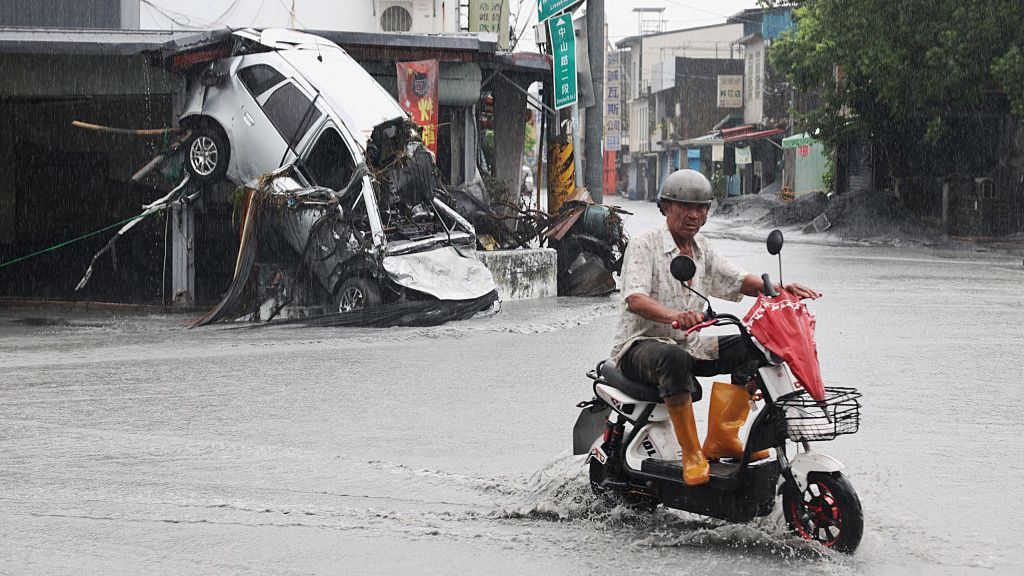
Typhoon Ragasa makes landfall in China after 17 killed in Taiwan
Typhoon Ragasa, one of the most powerful storms of the year, has left a trail of devastation across southern China and Taiwan, claiming lives, displacing millions, and causing widespread destruction. The typhoon made landfall on Wednesday in Guangdong province, China, with sustained winds of 144 km/h and gusts reaching up to 241 km/h. Authorities evacuated nearly two million people in anticipation of the storm’s arrival, which has been described as the ‘King of Storms’ by the China Meteorological Administration.
In Taiwan, the impact of Ragasa has been particularly severe. A barrier lake burst in Hualien County, triggering catastrophic flooding that killed at least 17 people and left many others missing. Premier Cho Jung-Tai has called for an investigation into the evacuation process, emphasizing the need to understand why orders were not effectively executed. The flooding, likened to a ‘tsunami from the mountains,’ released an estimated 15.4 million tonnes of water, washing away bridges, submerging vehicles, and trapping residents in their homes.
Hong Kong also felt the storm’s fury, with 90 people injured as Ragasa skirted the coastline. The Hong Kong Observatory issued its highest-level warning, grounding flights and shutting down schools and businesses. Earlier in the week, the typhoon wreaked havoc in the Philippines, leaving towns flooded, thousands displaced, and at least eight dead.
As Ragasa moves westward over land, wind speeds are expected to weaken, but torrential rain and slow-moving storms will continue to pose significant risks. Southern Chinese cities like Zhuhai, Shenzhen, and Guangzhou are bracing for seawater intrusion, while red alerts for landslides have been issued in Guangdong’s mountainous regions. Rescue efforts are ongoing in both China and Taiwan, with governments mobilizing resources to assist affected communities.
-

Ukraine in maps: Tracking the war with Russia
The ongoing conflict in Ukraine, now in its fourth year, has seen significant developments as Russian forces continue to expand their territorial control, particularly in the eastern regions of Luhansk and Donetsk. Despite fierce Ukrainian resistance, Moscow’s military has made incremental gains, bolstered by increased use of unmanned aerial vehicles (drones) to reduce casualties. The strategic ‘fortress belt’ in western Donetsk, a heavily fortified defensive line, remains a critical stronghold for Ukraine, though analysts predict it could take years for Russia to achieve its objectives in the region.
-

Howling winds and sheets of rain: Inside Chinese city battered by Typhoon Ragasa
Southern China, particularly the coastal city of Zhuhai, has been brought to a standstill as Typhoon Ragasa, dubbed the ‘king of storms,’ made landfall with ferocious winds and torrential rains. The typhoon, the most intense the world has witnessed this year, swept through the South China Sea after wreaking havoc in the Philippines and Taiwan, where it claimed at least 15 lives due to a mountain lake bursting its banks. In Zhuhai, a city of nearly three million, the usual hustle and bustle of rush hour was replaced by the eerie silence of evacuated streets, punctuated only by the howling winds and the occasional determined cyclist braving the storm. Police vehicles patrolled the streets, urging residents to stay indoors, though their warnings were often drowned out by the 100mph (160km/h) gusts. The storm, which made landfall at 17:00 local time, had already forced the evacuation of nearly two million people in Guangdong province, with officials issuing a red alert for high tides and coastal surges. The city’s tall buildings bore the brunt of the storm, with rain lashing against windows and winds making it nearly impossible to stand upright. Evacuation centers across the city housed families who had fled their homes, their children finding solace in the unexpected day off school. Despite the severity of the storm, there was no panic, only a sense of resignation among the locals, who are no strangers to typhoons. Authorities, keen to avoid criticism from past natural disasters, had issued warnings days in advance, urging residents to prepare for a ‘catastrophic disaster.’ This year has been marked by extreme weather events in China, from heatwaves to floods, and Typhoon Ragasa is yet another test of the country’s disaster preparedness. With alerts for heavy rain and landslides still in place, the storm’s impact is far from over.