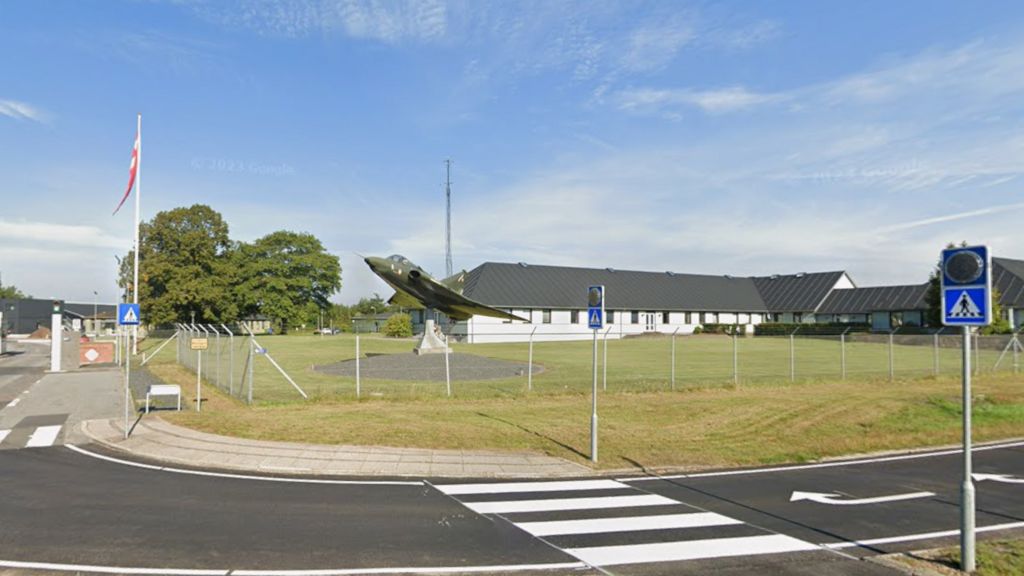
In a series of unsettling events, unidentified drones have been observed hovering over Denmark’s largest military base, Karup Airbase, and other key military installations. The incidents, which occurred overnight, forced the temporary closure of airspace and raised alarms about potential vulnerabilities to aerial threats. Similar drone sightings were reported in Germany, Norway, and Lithuania, further amplifying regional security concerns. Danish authorities have labeled these incursions as a ‘hybrid attack,’ though they have yet to attribute the activity to any specific entity, including Russia. The Russian embassy in Copenhagen has vehemently denied involvement, dismissing the allegations as ‘absurd speculations.’ The Danish Defence Ministry confirmed the sightings but refrained from providing further details, citing an ongoing investigation. This wave of drone activity follows recent disruptions at Danish airports, including Copenhagen, Aalborg, and Billund, where drones forced temporary shutdowns. Experts speculate that these incidents may be part of a broader strategy of indirect aggression by Russia against NATO members supporting Ukraine. However, no concrete evidence has been presented to substantiate these claims. Denmark’s Defence Minister emphasized that the attacks were orchestrated by a ‘professional actor’ but appeared to have been launched locally. The incidents have reignited debates about hybrid warfare tactics, which blend military and non-military methods to destabilize a nation’s infrastructure. NATO member states, including Estonia, Poland, and Romania, have also reported recent Russian drone and aircraft incursions, heightening tensions across Europe. Danish Prime Minister Mette Frederiksen has not ruled out Russian involvement, while Kremlin spokesman Dmitry Peskov has dismissed the accusations as baseless. As investigations continue, the drone sightings underscore the evolving challenges of modern security and the need for robust defense mechanisms.
分类: world
-
Two people die during failed Channel crossing attempt
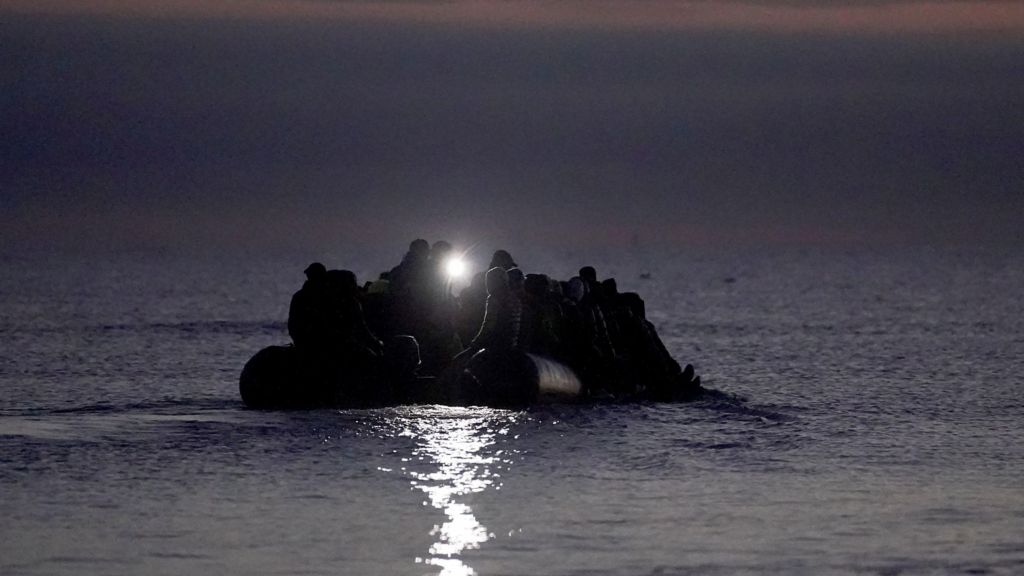
In a tragic turn of events, two individuals lost their lives early Saturday morning while attempting to cross the perilous English Channel. French authorities confirmed the incident, which occurred off the northern coast of France, where approximately 100 migrants embarked on a makeshift boat in hopes of reaching the UK. According to Isabelle Fradin-Thirode, a French official cited by AFP, 60 people were successfully rescued and are currently receiving care from civil protection services. Among the survivors, a couple and their child, suffering from moderate hypothermia, were urgently transported to a hospital in Boulogne. This latest tragedy unfolded south of the beaches of Neufchâtel-Hardelot in the Pas-de-Calais region, adding to the grim toll of at least 25 deaths recorded this year in similar crossing attempts. Earlier this month, three migrants died in a crush on an overcrowded boat off the coast of Calais. Last year, the French coastguard reported 50 fatalities during such crossings. Since the beginning of 2025, over 30,000 people have reached the UK via small boats, with more than 50,000 making the journey since the Labour Party came into power in July 2024. The UK government faces mounting pressure over the increasing number of small boat crossings and asylum seeker applications. In response, France and the UK recently agreed on a ‘one in, one out’ returns deal, aimed at deterring further crossings by allowing the UK to return one migrant to France for each migrant with a strong asylum case who is allowed to enter the UK. Sir Keir Starmer has condemned the crossings as ‘totally unacceptable,’ while Home Secretary Shabana Mahmood has criticized the ‘vile’ people-smugglers responsible for the chaos at the borders.
-

Trump to declassify files over aviation pioneer Amelia Earhart
In a significant announcement, former U.S. President Donald Trump has declared his intention to declassify all government records pertaining to the mysterious 1937 disappearance of aviation pioneer Amelia Earhart. Earhart, who vanished while attempting to circumnavigate the globe, has remained a subject of fascination and speculation for decades. Trump emphasized the enduring intrigue surrounding her case in a social media post on Friday, stating that her story ‘has captivated millions.’ Earhart’s disappearance over the Pacific Ocean has spawned numerous theories, ranging from a crash due to fuel exhaustion to claims of Japanese capture or U.S. government espionage. While some FBI files and Navy search reports have been declassified over the years, certain records have remained sealed, fueling conspiracy theories about a potential cover-up. The official explanation suggests Earhart failed to locate Howland Island for refueling, lost communication, and ultimately crashed into the ocean. However, the absence of definitive evidence, such as plane debris, has kept alternative theories alive. These include the possibility that she crash-landed near the then-Japanese Marshall Islands or survived as a castaway on Nikumaroro Island near Kiribati. A skeleton found on Nikumaroro in 1940 was initially thought to be Earhart’s, but medical analysis concluded it belonged to a male. Trump’s pledge to release ‘all government records related to Amelia Earhart, her final trip, and everything else about her’ could shed new light on this enduring mystery. Interest in Earhart’s case remains strong, with recent efforts, including sonar imaging, claiming to have located her long-lost plane at a depth of 4,877 meters in the Pacific Ocean. The declassification of these records could finally provide answers to one of the 20th century’s most perplexing aviation mysteries.
-

King Charles to meet Pope Leo on rearranged Vatican visit
King Charles III and Queen Camilla are set to embark on a significant state visit to the Vatican later this month, where they will meet Pope Leo XIV. This visit, announced by Buckingham Palace, underscores the enduring and amicable relationship between the Catholic Church and the Church of England, of which King Charles is the supreme governor. The trip was initially scheduled earlier this year but was postponed due to the declining health of the late Pope Francis. In April, the royal couple paid a private visit to Pope Francis on their 20th wedding anniversary, marking one of the pontiff’s final high-profile meetings before his passing. The upcoming visit coincides with a special ‘jubilee’ year for the Catholic Church, celebrated every 25 years, and will focus on the theme of ‘pilgrims of hope.’ King Charles has long championed interfaith dialogue, and this visit symbolizes unity between Catholic and Anglican traditions. Earlier this month, the King and Queen attended the first Catholic funeral for a member of the Royal Family in modern times, honoring the Duchess of Kent. Additionally, the King visited the Oratory of St Philip Neri in Birmingham, founded by the 19th-century Catholic theologian St John Henry Newman, further highlighting his commitment to fostering religious harmony. The royal couple’s private meeting with Pope Francis in April 2025, held during their state visit to Italy, left a profound impression, with Buckingham Palace noting their deep appreciation for the pontiff’s kind words on their anniversary. Following Pope Francis’s death, Robert Prevost, a Chicago native, was elected as Pope Leo XIV by the conclave of cardinals.
-

Two Dutch teenagers arrested in spying case linked to Russia
Two 17-year-old boys have been apprehended in the Netherlands on suspicion of ‘state interference,’ with reported connections to Russian espionage activities, according to prosecutors. Dutch media revealed that the teenagers were allegedly contacted by pro-Russian hackers via the messaging app Telegram. One of the suspects was reportedly spotted near the offices of Europol, Eurojust, and the Canadian embassy in The Hague, carrying a ‘wi-fi sniffer’—a device capable of identifying and intercepting wi-fi networks. The duo appeared in court on Thursday, where one was ordered to remain in detention, while the other was placed under strict home bail conditions pending a hearing scheduled within the next two weeks. The father of one of the boys informed De Telegraaf, a Dutch newspaper, that his son was arrested on Monday afternoon while completing his homework. He stated that police linked the arrest to espionage and providing services to a foreign nation. The teenager, described as tech-savvy with a keen interest in hacking, also works part-time at a supermarket. The Netherlands’ domestic intelligence and security agency declined to comment on the case when approached by the BBC.
-

Huge sting operation across Africa sees 260 arrested for sextortion and romance scams
In a sweeping international effort, Interpol has spearheaded a major operation targeting cybercriminals across 14 African nations, resulting in the arrest of 260 suspects. The initiative, funded by the UK, focused on dismantling criminal networks exploiting social media and digital platforms to perpetrate romance scams and sextortion schemes. These scams involve blackmailing victims using explicit imagery, causing both financial and psychological harm. Over 1,400 victims were identified across countries including Ghana, Kenya, and Angola, with estimated losses nearing $2.8 million. The operation, conducted between July and August, led to the seizure of critical digital evidence, including USB drives, Sim cards, and forged documents, as well as the takedown of 81 cybercrime infrastructures. Cyril Gout, Interpol’s acting executive director of police services, highlighted the alarming rise in digital-enabled crimes across Africa, emphasizing the need for continued vigilance. In Ghana alone, 68 suspects were arrested, and $70,000 was recovered from an estimated $450,000 in losses. Similar successes were reported in Senegal, Ivory Coast, and Angola, where scammers used fake profiles and fraudulent documents to deceive victims. The operation, part of the African Joint Operation against Cybercrime project, underscores the global police network’s commitment to protecting vulnerable individuals online.
-
Interpol says 260 suspects in online romance scams have been arrested in Africa
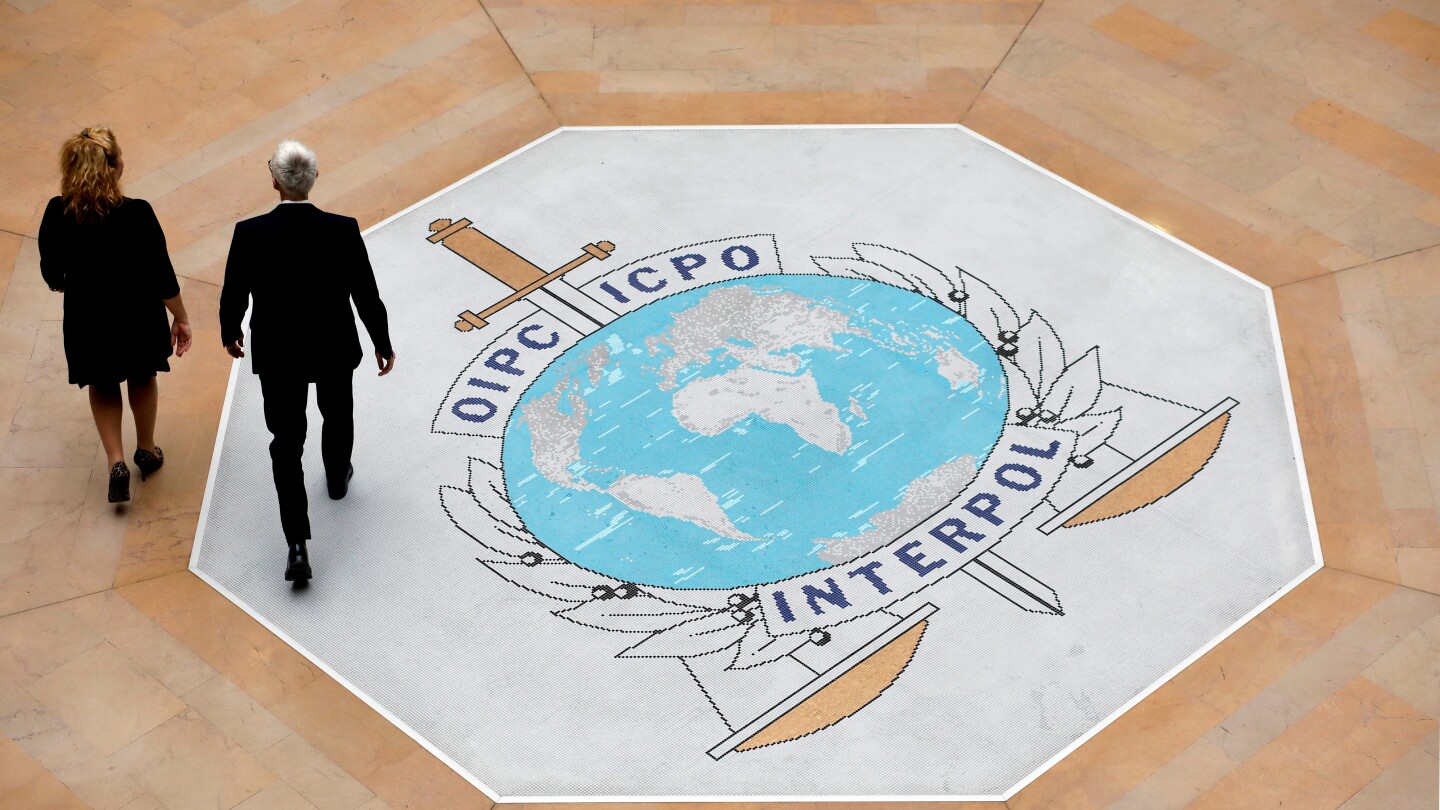
In a sweeping operation coordinated by Interpol, 260 individuals suspected of involvement in online romance and extortion scams have been arrested across 14 African countries. The crackdown, conducted in July and August, targeted schemes where perpetrators manipulated victims into financial exploitation or blackmail using explicit images. According to Interpol, these scams affected over 1,400 victims, resulting in losses nearing $2.8 million. Cyril Gout, acting executive director of police services at Interpol, highlighted the surge in digital-enabled crimes, emphasizing the dual impact of financial and psychological harm on victims. Among the arrests, Ghanaian authorities detained 68 suspects accused of using fake identities to deceive victims into paying fraudulent fees and recording explicit videos for blackmail. In Senegal, 22 individuals were apprehended for impersonating celebrities on social media and dating platforms, scamming over 100 people out of approximately $34,000. Similarly, Ivory Coast authorities arrested 24 suspects for exploiting fake profiles to blackmail victims with intimate images. Interpol, headquartered in Lyon, France, serves as the world’s largest international police network, facilitating collaboration among 196 member countries to combat crimes ranging from cybercrime to organized crime. The organization continues to address emerging challenges, including the escalating caseload of cybercrime and child sex abuse, amid growing divisions among its members.
-

Sikh granny deported after ‘unacceptable’ treatment by US immigration
A 73-year-old Sikh grandmother, Harjit Kaur, who had lived in the United States for over three decades, has been deported to India. Kaur, who had unsuccessfully applied for asylum in the US, was arrested by US Immigration and Customs Enforcement (ICE) officials on September 8, causing widespread shock and sympathy within the Sikh community. Kaur moved to California in 1991 with her two young sons to escape political turmoil in Punjab. Despite living and working in the US for years, her asylum attempts were repeatedly denied. Her lawyer, Deepak Ahluwalia, has criticized ICE’s treatment of Kaur, describing it as ‘unacceptable.’ He alleged that Kaur, who has no criminal record, was forced to sleep on the floor for 60-70 hours despite having undergone double knee replacements. She was also reportedly given ice to take medication and denied appropriate food. Kaur was moved to a holding facility in Georgia on September 19 and deported to India on September 22, without the opportunity to bid farewell to her family and friends. Her deportation has sparked outrage in the Sikh community, with protests held in California. Kaur’s case highlights the broader crackdown on immigration under the Trump administration, which has targeted both undocumented immigrants and asylum seekers. Critics argue that even individuals without criminal records, who follow due process, have been affected. Kaur’s story underscores the challenges faced by long-term residents caught in the complexities of US immigration policy.
-

Drone attacks leave Denmark exposed – and searching for response
A series of drone incidents across Denmark’s airports and military bases in Jutland has exposed vulnerabilities in the nation’s defense systems, raising concerns about hybrid warfare tactics. Although no harm or damage was reported, the events have highlighted Denmark’s susceptibility to such attacks, prompting urgent discussions on national security measures. Aalborg and Billund airports were forced to close, while drones were also spotted at Esbjerg, Sonderborg, and Skrydstrup, the latter housing the Danish Air Force’s F-35 and F-16 fighter jets. Additionally, drones were observed over the Jutland Dragoon regiment in Holstebro and near Denmark’s North Sea oil and gas platforms. Defense officials opted not to shoot down the drones, citing safety concerns, but acknowledged the need for long-term solutions. Denmark’s Defense Minister Troels Lund Poulsen described the incidents as a “hybrid attack,” though no concrete evidence points to Russia. However, Prime Minister Mette Frederiksen emphasized Russia’s ongoing threat to Europe. The Danish government is now considering invoking NATO’s Article 4 for consultation, as neighboring countries like Poland and Estonia have done following similar incidents. Denmark’s cautious approach contrasts with Poland’s more aggressive stance, where Russian drones were shot down recently. The Danish government has announced plans for an “integrated layered air defense” system and investments in long-range precision weapons. Meanwhile, discussions are underway with NATO allies and Ukraine to establish a “drone wall” along the EU’s eastern borders, focusing on early detection systems. The incidents have served as a stark reminder of Denmark’s need to bolster its defenses in an era of evolving hybrid warfare.
-
French navy seizes nearly 10 tonnes of cocaine off West African coast
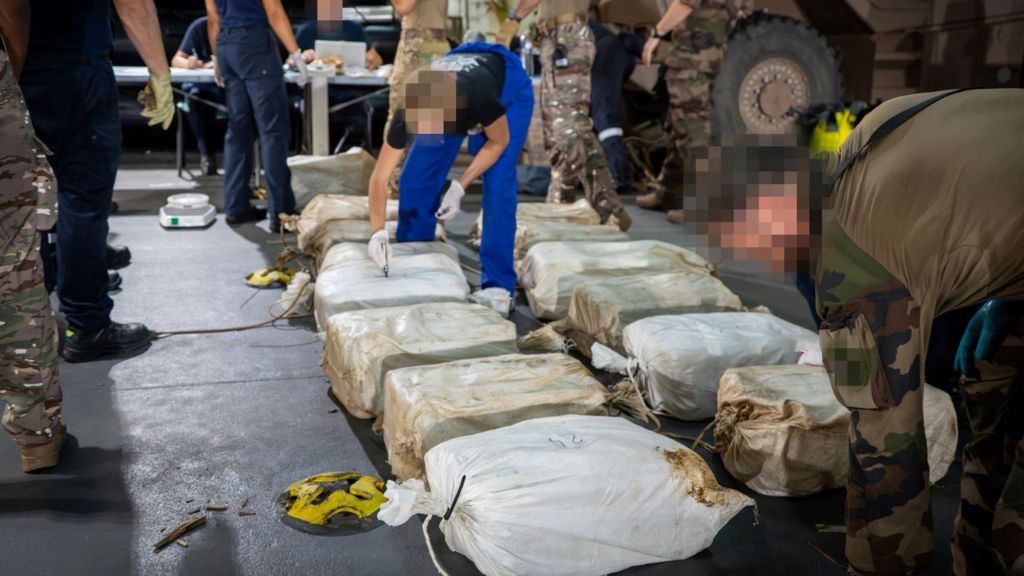
In a significant blow to international drug trafficking, the French navy has seized nearly 10 tonnes of cocaine, valued at $610 million, from an unflagged fishing vessel off the Gulf of Guinea. The operation, conducted on Monday, was part of France’s long-standing Corymbe naval mission, which has been active in the region since 1990 to combat piracy and ensure maritime security. The interception was made possible through coordinated efforts involving maritime intelligence, anti-drug authorities, and the British National Crime Agency. This latest seizure adds to the 54 tonnes of drugs intercepted by the French navy in the area since the beginning of the year. The Gulf of Guinea, a notorious hotspot for piracy and drug trafficking, has seen multiple significant drug busts in recent months. The region serves as a critical transit point for cocaine shipments from South America to Europe. France’s Atlantic Maritime Prefecture highlighted the ‘seamless cooperation by national and international actors’ that led to this ‘remarkable seizure.’ This operation underscores the ongoing challenges and successes in combating drug trafficking in one of the world’s most dangerous maritime regions.