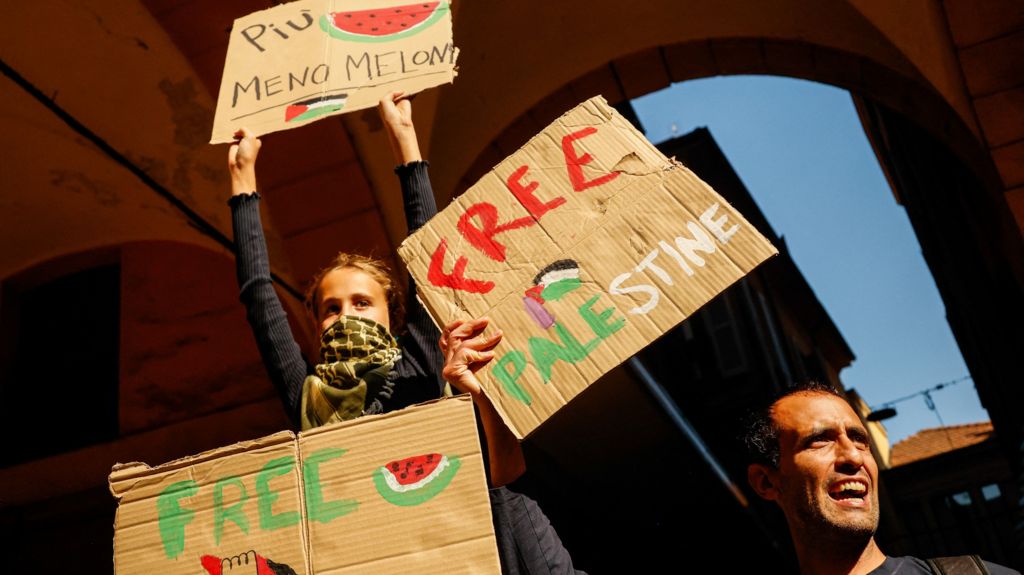
Thousands of Italians took to the streets in a nationwide protest on Friday, expressing solidarity with Palestinians in Gaza and condemning Israel’s ongoing military actions and blockade. The demonstrations, which spanned 29 cities, saw an estimated 400,000 participants according to the Interior Ministry, though trade unions claimed the number was significantly higher. The protests were fueled by recent events, including Israel’s interception of a European aid flotilla bound for Gaza, where UN experts have confirmed famine conditions in Gaza City and surrounding areas. The flotilla, carrying food and medical supplies, was halted by Israeli forces, who dismissed the mission as a publicity stunt. Over 40 Italians were among those detained. Italy’s hard-right Prime Minister Giorgia Meloni criticized the protests, labeling the general strike as counterproductive and disruptive to daily life. Her deputy, Matteo Salvini, went further, calling the strike illegal and threatening sanctions. Despite government opposition, protesters rallied behind banners with slogans like ‘Stop the Massacre’ and ‘Hands off the Flotilla!’ In cities such as Milan, Bologna, and Pisa, clashes erupted between demonstrators and police, with tear gas deployed to disperse crowds. In Naples, dockworkers blockaded the port, while in Turin, protesters disrupted railway operations. Similar protests were reported across Europe, from The Hague to Madrid. In Rome, a peaceful march culminated in a brief occupation of a motorway, with participants waving Palestinian flags and chanting slogans. Opposition leader Elly Schlein praised the protests, accusing the government of failing to address the humanitarian crisis in Gaza. Meanwhile, Meloni has linked Italy’s recognition of Palestinian statehood to the release of Israeli hostages and the exclusion of Hamas from governance. Political analysts note that the protests reflect growing pressure on the government and a resurgence of left-wing activism in Italy. As the demonstrations continued, four Italian politicians detained on the aid flotilla returned to Rome, greeted by emotional reunions with family and colleagues. Despite the confiscation of the flotilla’s aid, participants hailed the mission as a symbolic victory, offering hope to Gaza’s beleaguered population.
分类: world
-
Israel and Palestine: What’s happened in the West Bank since October 2023?
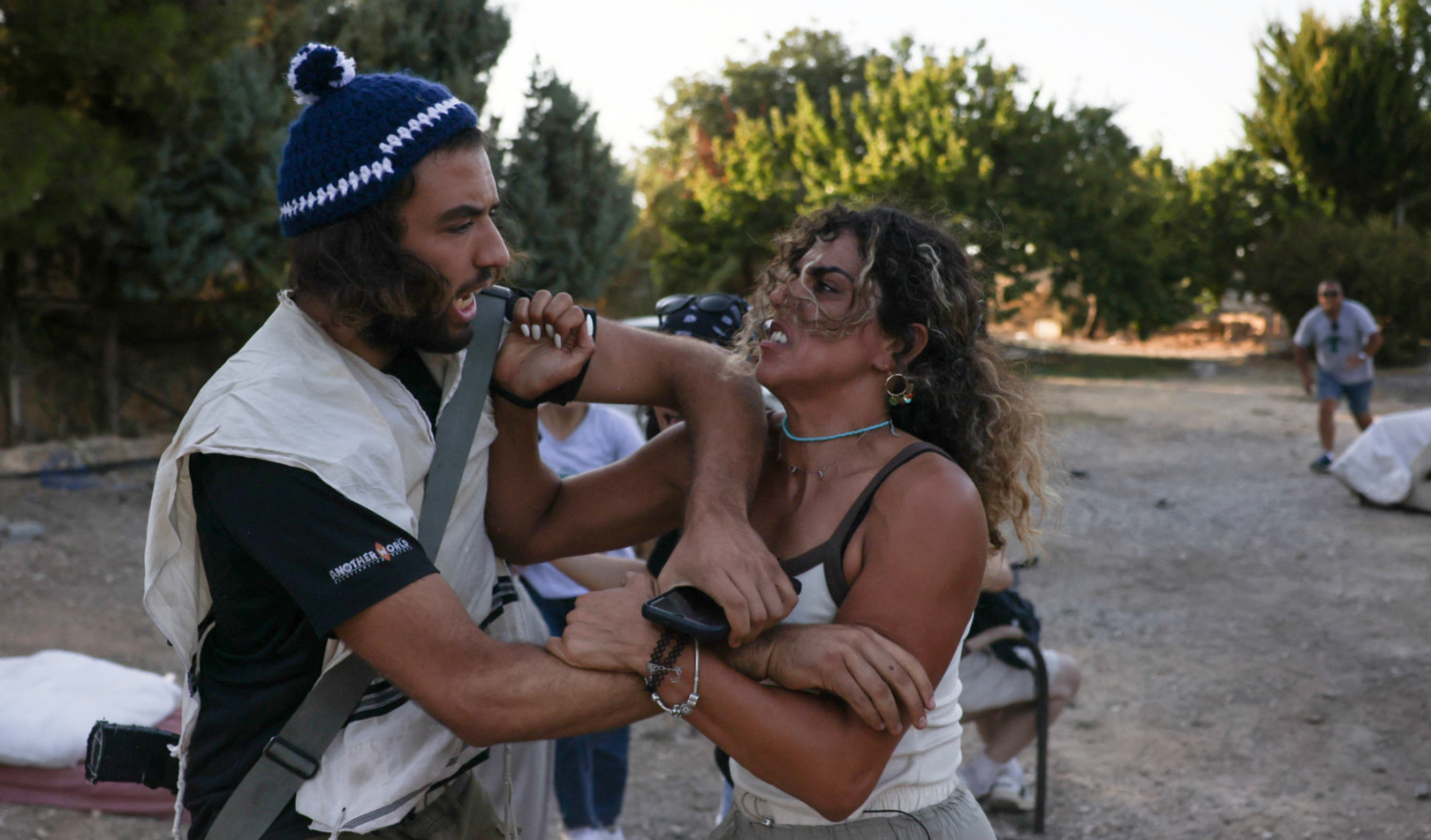
The West Bank, a Palestinian territory occupied by Israel since 1967, has witnessed escalating violence and political tensions in recent years. While global attention has largely focused on the conflict in Gaza, the West Bank has become a flashpoint for Israeli military operations, settler violence, and humanitarian crises. Since October 7, 2023, Israeli forces have conducted nearly 7,500 raids on Palestinian towns and villages, according to the UN Office for the Coordination of Humanitarian Affairs (Ocha). These raids, often targeting refugee camps, have resulted in widespread displacement and casualties. The West Bank, home to approximately three million Palestinians and 700,000 Israeli settlers, is divided into three administrative zones under the 1993 Oslo Accords. However, Israel maintains de facto control over the entire territory, with its military operating unchecked. Settler violence has surged, with over 1,400 incidents recorded in 2024 alone, the highest since records began. The Israeli government has also advanced controversial settlement plans, including the E1 Settlement Plan, which aims to connect East Jerusalem with existing settlements, further undermining the possibility of a two-state solution. International condemnation has followed, with the UN and human rights organizations labeling these actions as violations of international law. The Palestinian Authority (PA), led by Mahmoud Abbas, has struggled to maintain control, often collaborating with Israeli forces to suppress dissent. Amidst this turmoil, Palestinian support for Hamas has declined, but dissatisfaction with the PA remains high. The situation in the West Bank remains dire, with thousands displaced, hundreds killed, and the prospects for peace increasingly bleak.
-
Storm Amy: More than 180,000 lose power, man seriously injured in ROI
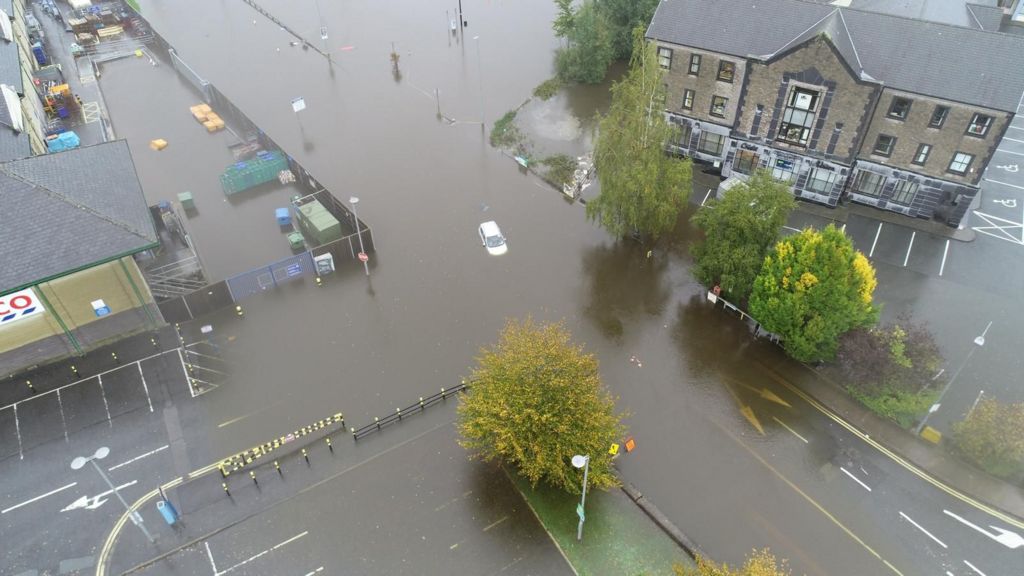
Monaghan County Council has issued urgent warnings to motorists as parts of Monaghan town experience severe flooding due to Storm Amy. The storm has wreaked havoc across the Republic of Ireland, leaving nearly 200,000 homes without electricity. Gale-force winds have triggered localized flooding, downed trees, disrupted transport, and forced school closures in several areas. County Donegal faced the brunt of the storm, with a red weather warning in effect from 16:00 until 18:00, later downgraded to an orange alert until 22:00. A man in Letterkenny sustained serious injuries in a weather-related incident, prompting immediate response from gardaí and emergency services. The Electricity Supply Board (ESB) is working tirelessly to restore power to 184,000 affected homes, farms, and businesses, primarily in Donegal, Galway, Mayo, Sligo, Roscommon, Leitrim, and Cavan. However, further outages are anticipated. Dublin Airport has canceled 58 flights and diverted nine inbound flights due to the storm. Counties Donegal, Clare, Galway, Leitrim, Mayo, Roscommon, and Sligo remain under an orange wind warning until 22:00, while a yellow wind warning covers the entire Republic until midnight on Saturday. A red marine warning has also been issued for violent storm force 11 winds along the west coast. The storm’s impact extends to Northern Ireland and Scotland, causing widespread flight and train cancellations, as well as road closures.
-
They fled to south Gaza as ordered. Then Israel killed them
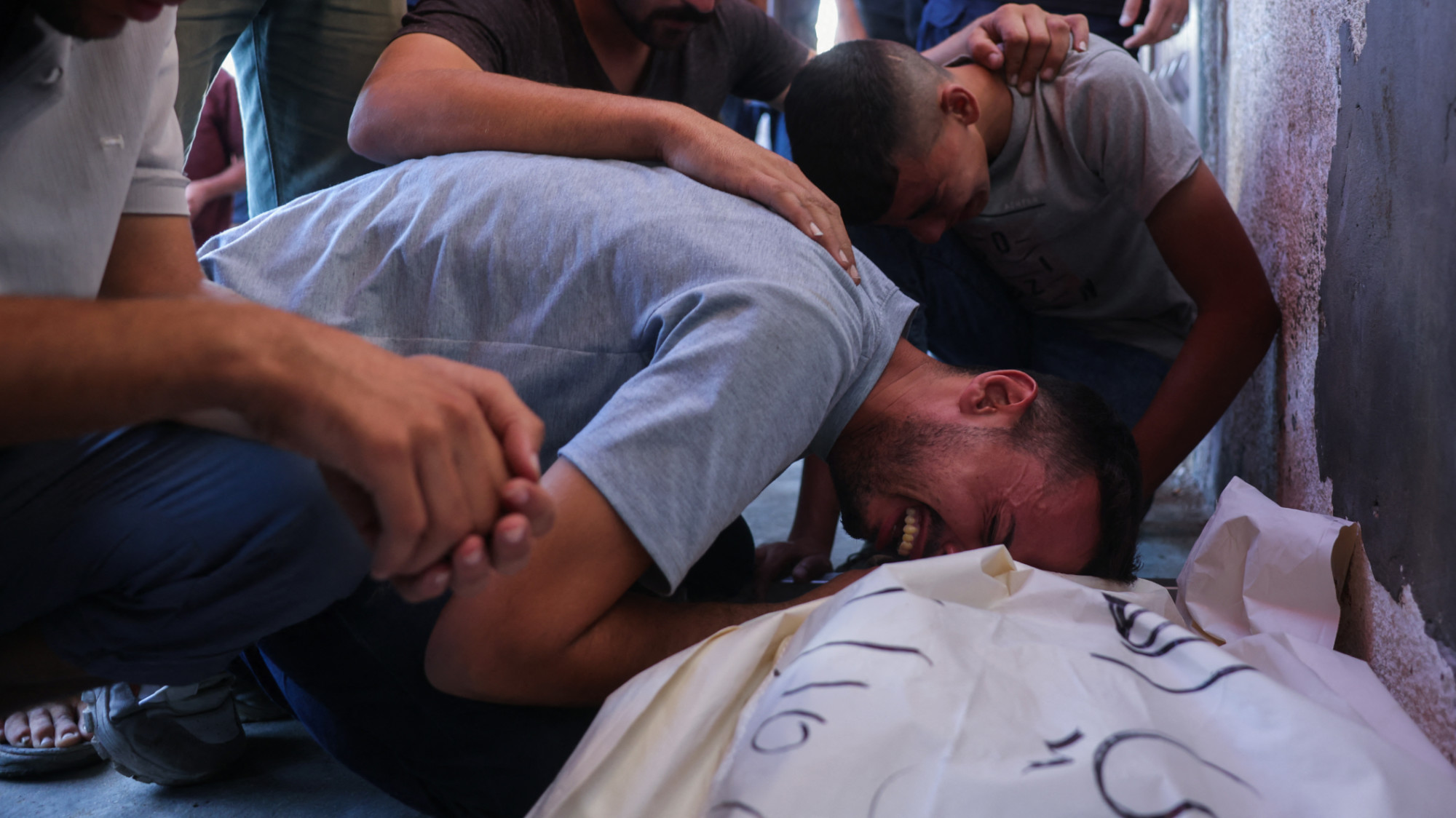
In the midst of escalating violence in Gaza, Palestinian cameraman Sami Dawoud sought refuge in Deir al-Balah, central Gaza, after fleeing intensified Israeli bombing in Gaza City. Despite relocating to an area deemed safer, Dawoud and his family faced tragedy when an Israeli air strike hit their tent, killing him and his daughter. Dawoud, described by friends as deeply protective of his family, had been displaced multiple times since the onset of Israel’s military operations in October 2023. His friend and colleague, photographer Yahya Barzaq, recounted Dawoud’s unwavering commitment to his family’s safety, even as they moved from one precarious shelter to another. Barzaq himself met a similar fate, killed in an air strike just days after speaking to Middle East Eye about Dawoud’s death. The strikes have claimed the lives of 1,903 Palestinians in central and southern Gaza since mid-August, according to the Gaza-based Government Media Office. Both Dawoud and Barzaq were respected members of Gaza’s journalist community, their deaths highlighting the peril faced by civilians and media professionals in the conflict. Barzaq, known for his work as a newborn photographer, had documented the lives of children later killed in the war, expressing his anguish over the suffering of Gaza’s youngest residents. The ongoing violence has left countless families displaced and vulnerable, with no safe haven from the relentless bombardment.
-
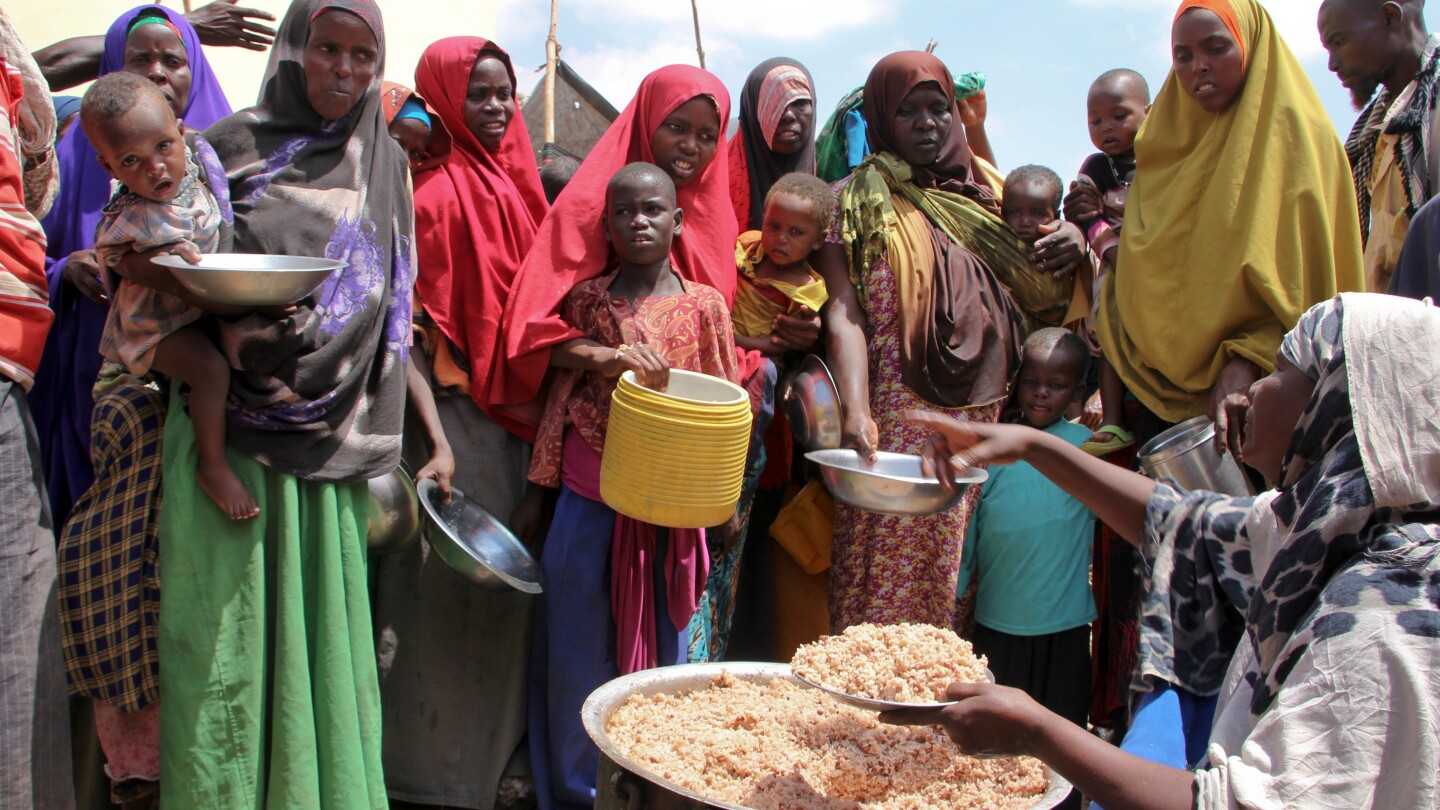
U.N. food agency to suspend food aid for 750,000 people in Somalia next month
The United Nations food agency has announced a significant reduction in food assistance for hundreds of thousands of people in Somalia, where millions are grappling with the catastrophic effects of climate change and severe hunger. The World Food Program (WFP) revealed that the number of individuals receiving emergency food aid will plummet from 1.1 million in August to just 350,000 by November, citing ‘critical funding shortfalls’ as the primary cause. Ross Smith, the agency’s director of emergency preparedness and response, warned of a ‘dangerous rise in emergency levels of hunger,’ emphasizing that the ability to respond is diminishing daily. ‘Without urgent funding, families already pushed to the edge will be left with nothing at a time when they need it most,’ he stated. Recent U.N. reports indicate that 4.6 million Somalis are experiencing crisis-level hunger, with 1.8 million children projected to suffer from acute malnutrition this year. Among these, 421,000 children face severe malnutrition, yet the WFP has only managed to assist approximately 180,000. Somalia’s plight is exacerbated by decades of conflict and insecurity, with the al-Qaida-linked militant group al-Shabab controlling several regions. Additionally, U.S. foreign aid cuts have further strained humanitarian agencies already struggling to meet the needs of the vulnerable population. The WFP has urgently requested $98 million to sustain life-saving operations for 800,000 people through the lean season until March 2026.
-
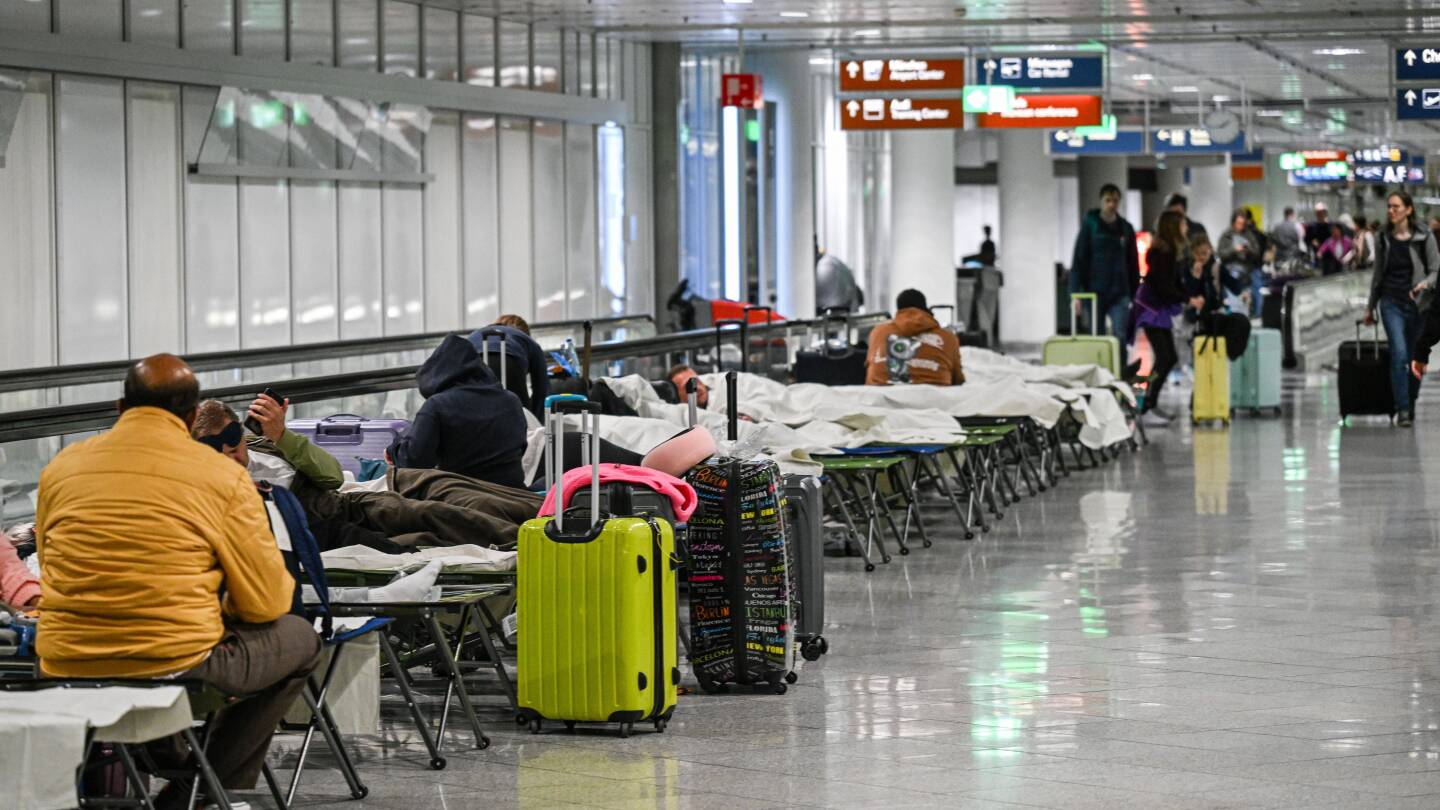
Munich Airport shuts again after suspected drones in latest reported sightings in EU airspace
Munich Airport faced its second shutdown in less than 24 hours late Friday due to unconfirmed drone sightings, according to an official statement. The incident is part of a growing trend of mysterious drone overflights across European Union member countries, raising significant security concerns. Flight operations were suspended as a precautionary measure, disrupting travel plans for thousands of passengers. Earlier on Thursday, air traffic control had restricted flights, leading to the diversion of 15 arrivals and the cancellation of 17 departures, affecting nearly 3,000 travelers. Flights resumed early Friday but were halted again later in the day. Authorities deployed helicopters and other resources to track the drones but found no traces. Hundreds of stranded passengers were provided with cots, blankets, and refreshments overnight. German Interior Minister Alexander Dobrindt announced plans to discuss drone detection and defense strategies with European counterparts at an upcoming meeting in Munich. Similar drone sightings were reported in Belgium, where several drones were spotted near a military base. While European authorities suspect Russian involvement, experts caution that the culprits could range from individuals to criminal organizations or state actors. The incident underscores the urgent need for enhanced drone defense measures across Europe.
-
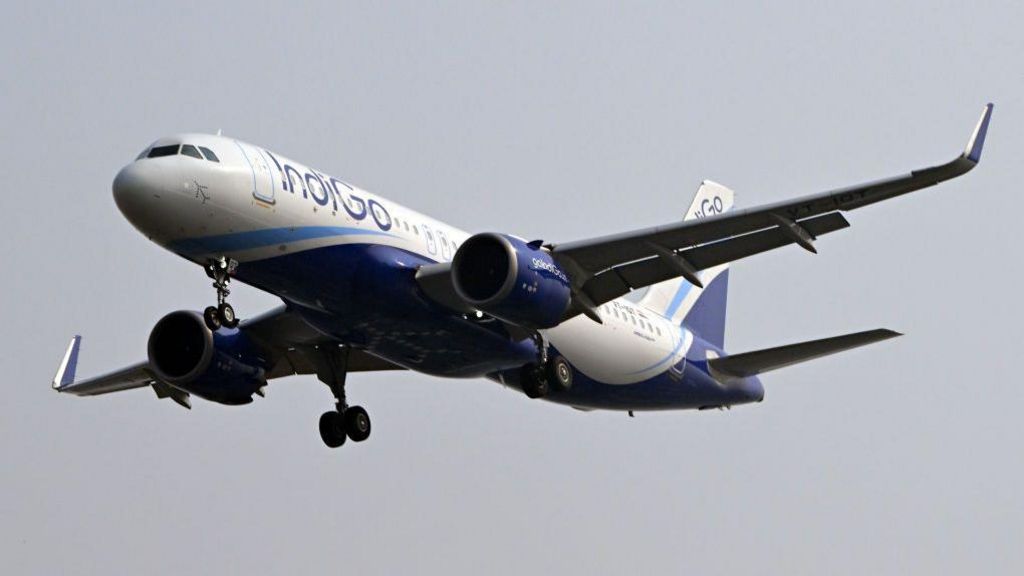
India and China to resume direct flights after a five-year ban
In a significant move towards the normalization of bilateral relations, India’s largest budget airline, IndiGo, announced the resumption of direct flights between Kolkata and Guangzhou starting October 26. This development comes as part of broader efforts to rebuild ties between India and China, which have been strained since the deadly border clashes in 2020. The Indian foreign ministry emphasized that the reinstatement of direct flights would enhance people-to-people contact and contribute to the gradual normalization of bilateral exchanges. The two nations share a contentious 3,440-kilometer border, with overlapping territorial claims that have historically fueled tensions. The 2020 Galwan Valley clash, which resulted in the deaths of at least 20 Indian and four Chinese soldiers, marked the first fatal confrontation since 1975 and led to a freeze in diplomatic relations. However, over the past year, both countries have engaged in high-level talks and implemented measures to de-escalate border tensions. These include patrolling arrangements along the disputed Himalayan border and the resumption of visa services for Chinese tourists by India. Additionally, China has permitted Indian pilgrims to visit religious sites in the Tibet Autonomous Region. The warming of India-China relations has also been influenced by India’s strained ties with the U.S. under former President Donald Trump’s tariff policies. In August, Chinese Foreign Minister Wang Yi visited Delhi, advocating for a partnership rather than rivalry between the two nations. Prime Minister Narendra Modi’s visit to China for the Shanghai Cooperation Organisation summit further underscored the commitment to normalizing relations. The resumption of direct flights symbolizes a tangible step towards rebuilding trust and fostering cooperation between the two Asian giants.
-
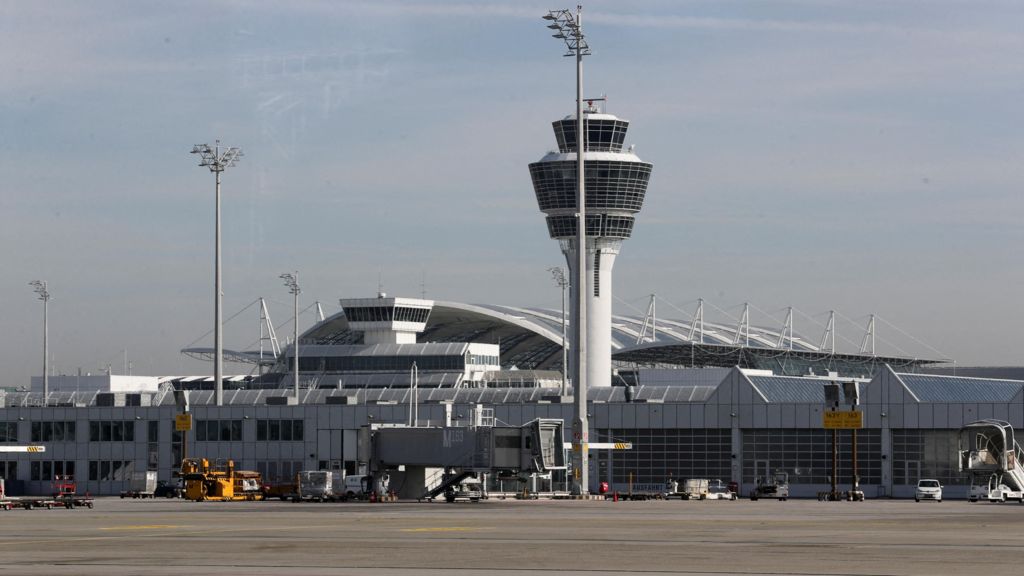
Munich airport closes after drones spotted nearby
Munich Airport faced significant disruptions as unidentified drones were spotted near its airspace, leading to the cancellation of at least 17 flights and impacting nearly 3,000 passengers. The airport authorities swiftly diverted an additional 15 flights to nearby cities such as Stuttgart, Nuremberg, Vienna, and Frankfurt. The Federal Police spokesperson, Stefan Bayer, informed the Bild Newspaper that due to the darkness, details about the drones’ type, size, or origins remain unclear. The drones were first detected at 21:30 local time (19:30 GMT) and reappeared an hour later, prompting the airport to suspend all outgoing flights. This incident adds to a series of drone-related disruptions across Europe, including recent closures of Copenhagen and Oslo airports. Russian President Vladimir Putin, speaking at a summit in Sochi, humorously dismissed allegations of Russian involvement in the Danish drone incidents, stating, ‘I won’t do it again – not to France or Denmark or Copenhagen.’ Meanwhile, stranded passengers at Munich Airport were provided with camp beds, blankets, drinks, and snacks overnight. The disruptions coincide with Munich’s annual Oktoberfest, which attracts over six million visitors and is set to conclude on October 5.
-
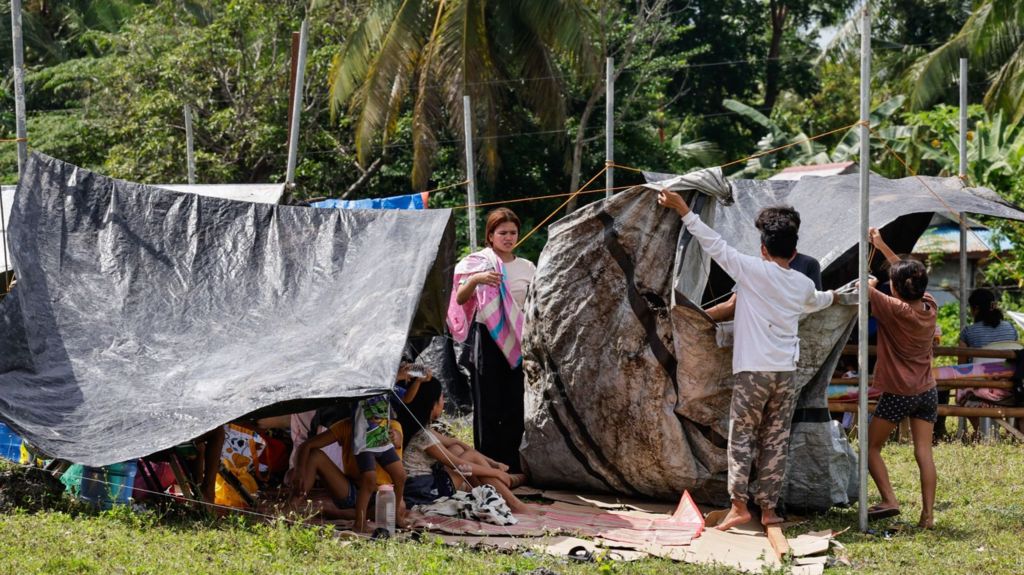
Sleeping in fields and struggling for basics: Filipinos contend with quake aftermath
A devastating magnitude 6.9 earthquake struck the northern coast of Cebu, one of the Philippines’ most populous islands, on the night of September 30, leaving at least 72 people dead and 300 injured. The quake, which occurred in a region already grappling with the aftermath of a fierce typhoon season, has displaced approximately 40,000 people, forcing many to seek temporary shelter in tents and under the open sky. Among the survivors is Arguel Estalicas, a 35-year-old tourism officer from Medellin town, who described the overwhelming fear and dizziness she continues to experience. ‘I still couldn’t process what has happened to us,’ she told the BBC. The earthquake caused widespread destruction, collapsing homes, buildings, and churches, and cracking roads. Social media images showed residents huddled under plastic bags for shelter during light rain, while others slept outdoors, clinging to whatever resources they had. Lourenze Pareja, a 25-year-old community journalist from San Remigio, recounted the chaos he witnessed during the quake, describing his once-vibrant town as now resembling a ‘ghost town.’ The Philippines, located on the geologically unstable ‘Ring of Fire,’ is no stranger to natural disasters. This earthquake is among the deadliest in recent years, following the 2013 Bohol quake that killed over 200 people. Rescue operations are ongoing, with authorities working to deliver food, restore power and communication lines, and clear debris. The Philippine military has been deployed to assist in relief efforts, but daily necessities remain scarce. Survivors like Ms. Estalicas and Mr. Pareja remain hopeful, drawing strength from the Filipino spirit of bayanihan, or community cooperation. ‘My only prayer is that help won’t be delayed,’ Mr. Pareja said, urging relief efforts to extend to neighboring municipalities.
-

Senior member of Venezuela’s Tren de Aragua gang arrested
In a significant international operation, the alleged leader of the armed wing of the Venezuelan criminal gang Tren de Aragua has been apprehended. The arrest of José Antonio Márquez Morales, also known as Caracas, was announced by Colombia’s National Police. The operation, which involved collaboration between Colombia, the United States, and the United Kingdom, took place in the city of Valledupar. Morales is accused of playing a pivotal role in managing the logistics and finances for the gang, which is involved in extortion, drug trafficking, and smuggling. Tren de Aragua has been designated as a terrorist organization by former US President Donald Trump, who also deported over 250 alleged members of the gang to a prison in El Salvador. Carlos Fernando Triana Beltrán, Director of Colombia’s National Police, revealed that Morales was the subject of an Interpol Red Notice, a global alert requesting law enforcement agencies to detain an individual pending extradition. The arrest comes amid escalating tensions between the US and Venezuela, particularly concerning the Trump administration’s anti-drug-trafficking initiatives in Latin America. The US has recently deployed warships to the Caribbean and conducted bombings of vessels allegedly transporting drugs from Venezuela to the US. The Trump administration has accused Venezuelan President Nicolás Maduro of colluding with drug cartels and has offered a $50 million reward for information leading to his capture. Maduro has vehemently denied these allegations and has defended his government’s efforts to combat drug trafficking.