分类: world

  • Israeli minister says army to occupy all Gaza if Hamas does not disarm

    Israeli minister says army to occupy all Gaza if Hamas does not disarm

    Israeli Finance Minister Bezalel Smotrich, a key member of the nation’s security cabinet, declared on Monday that Hamas faces an imminent deadline to surrender its weapons or risk comprehensive military occupation of Gaza by Israeli forces. In a televised interview with public broadcaster Kan, the far-right minister revealed that Palestinian militants would shortly receive a formal ultimatum demanding complete demilitarization.

    Smotrich asserted that should Hamas refuse compliance, the Israel Defense Forces would possess both international legitimacy and American support to execute a full-scale occupation. The minister confirmed military strategists are already developing operational plans for this contingency, with multiple alternatives under active consideration.

    This development occurs within the fragile framework of a U.S.-brokered ceasefire agreement that recently concluded two years of sustained conflict. During the initial phase, Israeli troops withdrew to positions behind the designated Yellow Line while maintaining control over more than half of Gaza’s territory. The subsequent phase, initiated last month, envisions progressive Israeli military withdrawal coupled with Hamas disarmament—a provision the militant organization has vigorously opposed.

    The American peace proposal, championed by President Donald Trump, additionally calls for establishing a 20,000-strong International Stabilization Force (ISF). While several nations have pledged troop contributions, Smotrich expressed skepticism regarding the rapid deployment of international forces. He suggested coordinated arrangements with American officials would ensure foreign troops quickly withdraw to facilitate Israeli military operations if necessary.

  • Slovakia halts emergency electricity supplies to Ukraine amid oil delivery dispute

    Slovakia halts emergency electricity supplies to Ukraine amid oil delivery dispute

    BRATISLAVA, Slovakia — In a significant escalation of regional tensions, Slovakia has suspended emergency electricity supplies to Ukraine amidst a deepening dispute over interrupted Russian oil shipments via the Druzhba pipeline. The move comes as Ukraine continues to grapple with severe power shortages resulting from systematic Russian bombardment of its energy infrastructure.

    The conflict centers on the suspension of Russian oil deliveries to Slovakia and Hungary since January 27. Ukrainian authorities attribute the interruption to damage caused by Russian drone attacks on the critical pipeline infrastructure. However, the governments of both Slovakia and Hungary—recognized as the European Union’s most Russia-friendly members—have accused Ukraine of deliberately withholding oil shipments despite having received special exemptions from EU sanctions prohibiting Russian oil imports.

    Slovak Prime Minister Robert Fico, a populist leader, announced the retaliatory measure after claiming Ukrainian President Volodymyr Zelenskyy declined to engage in discussions until after Wednesday. “Given the seriousness of the situation and the declared state of oil emergency in Slovakia, we are forced to take the first reciprocal measure immediately,” Fico stated, adding that the electricity suspension would be lifted once oil transit resumes.

    The Slovak opposition has condemned the government’s decision, while Ukrainian Foreign Minister Andrii Sybiha appealed for “constructive cooperation and responsible behavior” from both nations. Fico has threatened additional measures if oil shipments don’t resume, including potentially withdrawing support for Ukraine’s European Union membership aspirations.

    Both Slovakia and Hungary have challenged Ukraine’s damage claims, asserting without providing evidence that the Druzhba pipeline remains operational. Fico revealed that Slovakia’s ambassador to Kyiv has been denied access to inspect the allegedly damaged sections. The Slovak leader characterized the oil suspension as “a purely political decision with the aim of blackmailing Slovakia” due to its divergent views on Russia’s war against Ukraine compared to mainstream European perspectives.

  • From Odesa to Bakhmut, revisiting a Ukrainian family torn by war

    From Odesa to Bakhmut, revisiting a Ukrainian family torn by war

    The Glodan family’s story encapsulates the profound human cost of Russia’s invasion of Ukraine, where a single missile strike erased three generations before claiming a fourth life on the battlefield. On the eve of Orthodox Easter in 2022, as Valeria and Yuriy Glodan prepared celebrations with their infant daughter Kira in Odesa, a Russian missile destroyed their apartment, instantly killing three-month-old Kira, 28-year-old Valeria, and her 54-year-old mother Lyudmyla.

    This tragedy, which sparked international outrage, represents one among countless others in the four-year conflict. According to UN estimates, over 15,000 Ukrainian civilians have perished since the invasion began, with actual numbers believed to be significantly higher when combined with military casualties.

    Yuriy’s subsequent journey from grieving husband to fallen soldier completed the family’s devastation. After joining Ukraine’s armed forces, he was killed in September 2023 during the brutal Battle of Bakhmut, one of the war’s deadliest engagements. The family now rests divided in Avangard cemetery—Kira, Valeria, and Lyudmyla on one side of a pathway, Yuriy facing them from the other.

    Nina Glodan, Yuriy’s mother, describes existing in perpetual April 2022: “We’re still living in that month. And we haven’t moved past it.” Family photographs reveal a picture-perfect life—wedding celebrations, romantic trips to Rome, and joyful images of wide-eyed Kira. Friends remember Valeria as radiating sunshine with an infectious laugh, deeply connected to Odesa’s culture and opera.

    Yuriy’s army comrade Dmytro Gudz recalled how the tragedy hollowed him: “He was empty inside.” After intensive training with Ukraine’s elite third assault unit, Yuriy fell during an assault near Andriivka, reportedly killed by an enemy drone. His funeral coincided symbolically with the invasion’s second anniversary on February 24, 2024, closing a devastating chapter that began with Easter preparations and ended in ultimate sacrifice.

  • Explained: Why Kuwait is protesting Iraq’s border map as GCC allies voice support

    Explained: Why Kuwait is protesting Iraq’s border map as GCC allies voice support

    A significant diplomatic confrontation has emerged in the Arabian Gulf as Kuwait vigorously protests Iraq’s recently submitted maritime border maps to the United Nations. The dispute centers on coordinates that Kuwait claims violate its sovereign maritime territories and established water elevations.

    Iraq’s Ministry of Foreign Affairs submitted the controversial maps to the UN Secretary-General on January 19 and February 9, 2026, presenting them as compliant with the 1982 United Nations Convention on the Law of the Sea (UNCLOS). These documents outline Iraq’s territorial sea baselines and maritime zones using the World Geodetic System 1984 (WGS-84) standard.

    The core of the conflict revolves around the Khor Abdullah waterway, a historically contentious area between Kuwait’s Bubiyan and Warbah islands and Iraq’s Al Faw Peninsula. This dispute originates from the aftermath of Iraq’s 1990 invasion of Kuwait and subsequent UN Security Council Resolution 833 in 1991, which established land boundaries but left maritime delimitations ambiguous.

    Kuwait delivered an official protest note to Iraq’s Chargé d’Affaires in Kuwait on February 21, asserting that the newly claimed areas, including Fashat al-Qaid and Fashat al-Ayj elevations, were never previously disputed. Kuwait’s Foreign Ministry urged Iraq to consider their historical bilateral relations and adhere to international law and existing agreements.

    The Gulf Cooperation Council (GCC) members have unanimously supported Kuwait’s position. The UAE expressed full solidarity, condemning Iraq’s coordinate submission, while Bahrain voiced deep concern over sovereignty infringements. Oman emphasized historical fraternal relations and principles of good neighborliness, and Qatar reaffirmed support for Kuwait’s maritime sovereignty. Saudi Arabia, monitoring with “high interest and concern,” rejected Iraq’s claims near the Saudi-Kuwaiti divided zone, emphasizing the need for continued shared resource management according to existing agreements.

    Iraq maintains its actions comply with international law, stating the submission aims to update maritime data and enhance legal clarity regarding its sovereign zones. The coordinates have been published on the UN’s Division for Ocean Affairs website for member state access.

    The United Nations Convention on the Law of the Sea, established in 1982, provides the legal framework for marine activities, ocean boundaries, and resource management, making it the central reference point for resolving such international maritime disputes.

  • US partially evacuates Beirut embassy amid rising Iran tensions

    US partially evacuates Beirut embassy amid rising Iran tensions

    The United States has initiated a partial evacuation of its embassy in Beirut, Lebanon, directing non-essential personnel to depart following a comprehensive security assessment. A senior State Department official confirmed the move to the BBC, characterizing it as a “prudent” measure to safeguard American staff while maintaining core diplomatic operations.

    The decision unfolds against a backdrop of severely heightened tensions between the U.S. and Iran. President Donald Trump has issued stark warnings, threatening military action against Tehran if it fails to agree to terms on its nuclear program. This rhetoric has ignited fears of potential Iranian retaliation, with U.S. bases and facilities across the Middle East considered probable targets. Iran’s Supreme Leader, Ayatollah Ali Khamenei, has amplified these concerns through social media posts threatening U.S. forces.

    Approximately 50 staff members are affected by the order. An airport official reported to Reuters that 32 personnel and their families departed via Beirut airport on Monday. The embassy, however, remains functional with a skeleton crew of essential staff.

    The current standoff is rooted in long-standing suspicions from the U.S. and its European allies that Iran is advancing toward a nuclear weapon—a claim Iran consistently denies. Historical animosity also plays a role; Washington holds the Iranian-backed Lebanese group Hezbollah responsible for the devastating 1983 bombings of the U.S. Marine barracks and embassy in Beirut.

    Despite recent diplomatic talks in Switzerland, which officials from both sides acknowledged had made progress, the U.S. continues to bolster its military presence in the region. Satellite imagery has identified warships, including the nuclear-powered aircraft carrier USS Abraham Lincoln, positioned near Oman. Furthermore, the world’s largest warship, the USS Gerald R Ford, appears to be en route to the area.

    President Trump has set an ambiguous deadline, suggesting the world would know within “probably, 10 days” whether a deal is reached or if the U.S. will initiate strikes. This echoes a similar prelude to last year’s U.S.-Israel military action against Iran, which was followed by Iranian missile strikes on a U.S. base in Qatar.

    Concurrently, U.S. Secretary of State Marco Rubio has unexpectedly delayed a planned trip to Israel, with the State Department citing a schedule “subject to change.” The delay coincides with Israeli Prime Minister Benjamin Netanyahu’s declaration that Israel is prepared for “any scenario” and would respond to any Iranian attack with unimaginable force.

    Amid the international crisis, domestic unrest within Iran has resurfaced, with anti-government protests erupting at several universities over the weekend—the first significant demonstrations since a deadly crackdown in January.

  • Gunmen in military uniforms storm a rural Ecuador property, killing at least 7, police say

    Gunmen in military uniforms storm a rural Ecuador property, killing at least 7, police say

    Ecuador faces escalating narco-violence as armed assailants disguised in military uniforms carried out a deadly assault on a coastal property in Manabí province, leaving at least seven civilians dead. The early morning attack marks the latest episode in a surge of drug-related killings that has transformed the South American nation into one of the region’s most violent territories.

    According to police reports, approximately twelve attackers stormed the seaside compound and executed victims with multiple gunshots, including three adult brothers among the deceased. This brutality reflects the intensifying conflict between international drug cartels and local criminal factions battling for control of strategic cocaine trafficking routes toward United States markets.

    Statistical evidence reveals an alarming trajectory: Ecuador’s homicide rate has multiplied fivefold since 2020, reaching unprecedented levels with approximately 50 murders per 100,000 residents in 2023. Official data indicates over 9,000 homicides recorded last year, with coastal provinces Guayas, Manabí, and Esmeraldas emerging as epicenters of cartel-related violence.

    President Daniel Noboa’s administration has responded with extraordinary measures, declaring a state of emergency across seven provinces that grants security forces warrantless search authority and militarizes urban patrols. The government has additionally accused Colombian authorities of insufficient border control, alleging that rebel groups and traffickers operating along the shared frontier have exacerbated Ecuador’s security crisis. These allegations have triggered diplomatic tensions and cross-border trade restrictions between the neighboring nations.

  • UN chief Guterres decries global rise of ‘rule of force’

    UN chief Guterres decries global rise of ‘rule of force’

    In a stark address to the UN Human Rights Council in Geneva, Secretary-General António Guterres issued a grave warning that the international rule of law is being systematically supplanted by a dangerous ‘rule of force.’ Delivering his final in-person speech to the council, Guterres declared that human rights are facing a ‘full-scale attack’ globally, often orchestrated openly by the world’s most powerful entities rather than emerging covertly.

    The Secretary-General highlighted specific conflict zones to illustrate this alarming trend. He expressed profound outrage at the four-year war in Ukraine, where over 15,000 civilian deaths have been recorded, demanding an immediate end to the bloodshed. With particular urgency, Guterres condemned what he described as ‘blatant violations of human rights, human dignity and international law in the Occupied Palestinian Territory,’ warning that the two-state solution is being deliberately dismantled in plain sight and insisting the international community must prevent this outcome.

    UN Human Rights Chief Volker Turk echoed these concerns, identifying a ‘deeply worrying trend’ where domination and supremacy ideologies are resurgent. He characterized the current global landscape as experiencing an intensity of power competition unseen in eight decades, with force becoming normalized for resolving disputes both between and within nations.

    The address further connected multiple global crises to the deterioration of human rights protections. Guterres pointed to rapidly widening inequalities, accelerating climate chaos, and the weaponization of technology—particularly artificial intelligence—which he said suppresses rights, deepens discrimination, and targets marginalized communities both online and offline.

    Both leaders criticized powerful nations that operate with impunity, with Turk lambasting leaders who act as if ‘above the law and above the UN Charter,’ employing economic leverage as a weapon and spreading disinformation to silence opposition. The speech catalogued vulnerable groups suffering from this erosion: migrants facing harassment and expulsion, refugees becoming scapegoats, LGBTIQ+ communities being vilified, and minorities and indigenous peoples targeted.

    Guterres concluded with an urgent call to action, appealing to the international community not to allow the powerful to write a new rulebook where ‘the vulnerable have no rights and the powerful have no limits.’

  • Is Mexico safe for football fans?

    Is Mexico safe for football fans?

    Mexico’s upcoming role as co-host for the FIFA World Cup has raised significant security concerns among international observers and football enthusiasts. The country’s persistent challenges with drug cartel violence present potential complications for the global sporting event, according to security analysts and travel advisory reports.

    Security experts indicate that organized crime networks continue to operate extensively throughout various Mexican regions, with ongoing territorial disputes between cartels occasionally affecting tourist areas. The Mexican government has pledged to implement enhanced security measures specifically designed for World Cup venues and fan zones, including increased military presence and specialized tourist police units.

    Travel advisory agencies from multiple countries have issued updated guidelines for prospective visitors, highlighting areas of particular concern while acknowledging that many popular tourist destinations remain relatively safe for foreign travelers. The Mexican tourism ministry has launched a comprehensive safety initiative called ‘Secure Goals’ aimed specifically at World Cup preparations, coordinating with international security agencies to develop protection strategies for the expected influx of football fans.

    The economic implications of security perceptions are substantial, with hospitality and tourism industry representatives expressing concern that safety worries might affect attendance numbers. Mexican officials emphasize that the World Cup host cities have been selected based on their existing security infrastructure and tourist readiness, with additional resources being allocated to ensure visitor safety throughout the tournament period.

  • India issues safety alert; urges citizens to leave Iran ‘by all means’

    India issues safety alert; urges citizens to leave Iran ‘by all means’

    The Indian government has escalated its security advisory for nationals in Iran, issuing an urgent directive for immediate evacuation through all available transportation methods. This heightened alert comes amid growing instability within the Islamic Republic, prompting New Delhi to take proactive measures for citizen safety.

    Citing the ‘evolving security situation’ in Iran, the Indian Embassy in Tehran disseminated comprehensive guidance emphasizing extreme caution. The advisory explicitly instructs Indian citizens and Persons of Indian Origin (PIOs) to avoid protest zones and demonstration areas while maintaining constant communication with diplomatic channels. Authorities have mandated continuous monitoring of local media developments for real-time security assessments.

    Crucially, the embassy emphasized the necessity for all Indian nationals to keep travel and immigration documentation—including passports and identification papers—immediately accessible at all times. This procedural requirement aims to facilitate rapid departure should security conditions deteriorate further.

    For emergency assistance, the mission provided dedicated contact resources including four mobile numbers (+989128109115, +989128109109, +989128109102, +989932179359) and a specialized email address (cons.tehran@mea.gov.in). Additionally, unregistered Indian citizens have been instructed to complete mandatory registration through the official portal (https://www.meaers.com/request/home) to ensure consular protection capabilities.

    This development occurs alongside regional tensions reflected in recent reports of Iran’s military alert status and contingency planning for leadership scenarios. The evacuation advisory represents one of the most significant security directives issued by India regarding its citizenry in Iran in recent years.

  • Fifteen killed after helicopter crashes during Peru flood rescue

    Fifteen killed after helicopter crashes during Peru flood rescue

    A Peruvian Air Force Mi-17 helicopter crashed during emergency flood response operations in southern Peru on Sunday, resulting in fifteen fatalities. The aircraft, which lost radio contact during its mission in the storm-ravaged Arequipa region, was discovered wrecked in the Chala district on Monday.

    Among the deceased were all four crew members and eleven passengers, including seven children. Reports indicate that some military personnel aboard had brought family members along during the rescue deployment. The youngest victim was just three years old.

    The helicopter had been dispatched from Pisco in the Ica region to support disaster relief efforts in Arequipa, where torrential rains have triggered severe flooding, mudslides, and river overflows. The wreckage was located near the coastal town of Chala Viejo.

    Peruvian authorities have launched a full investigation into the tragic incident. The Air Force expressed profound condolences to families and colleagues of the victims, describing the loss as ‘irreparable.’

    Meanwhile, the climate emergency continues to batter Arequipa with destructive force. Regional Governor Rohel Sánchez has formally requested national government assistance after numerous homes were rendered uninhabitable. Separate weather-related incidents have claimed at least two additional lives—an elderly woman swept away by floodwaters in Cayma district and a man killed by lightning.

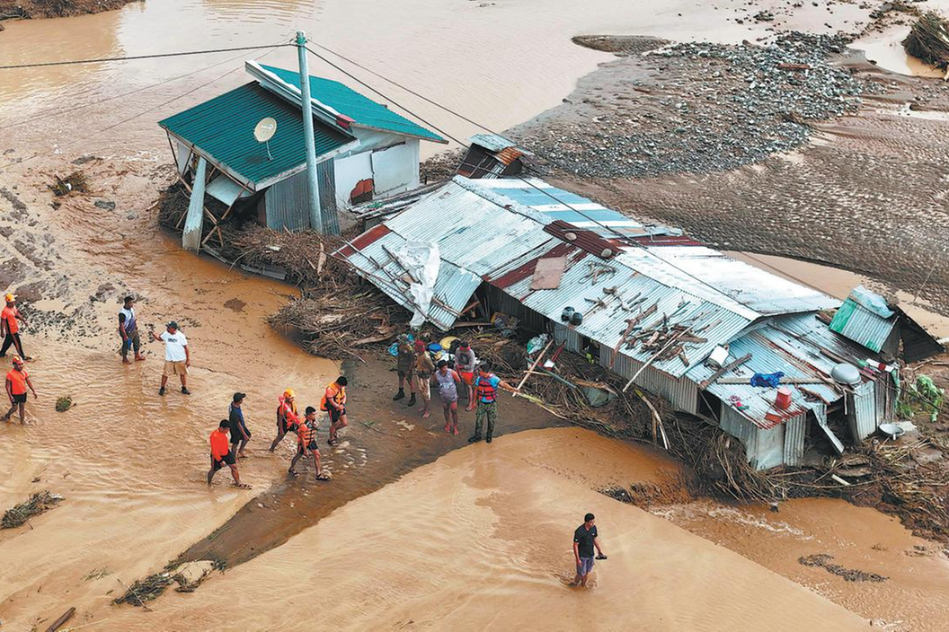
    Visual documentation from affected areas shows extensive damage with torrents of mud and debris inundating residential neighborhoods and floodwaters penetrating homes, creating a compounded humanitarian crisis.