分类: world

  • Exclusive: UK counter-terror police asked to investigate RSF-linked Sudanese

    Exclusive: UK counter-terror police asked to investigate RSF-linked Sudanese

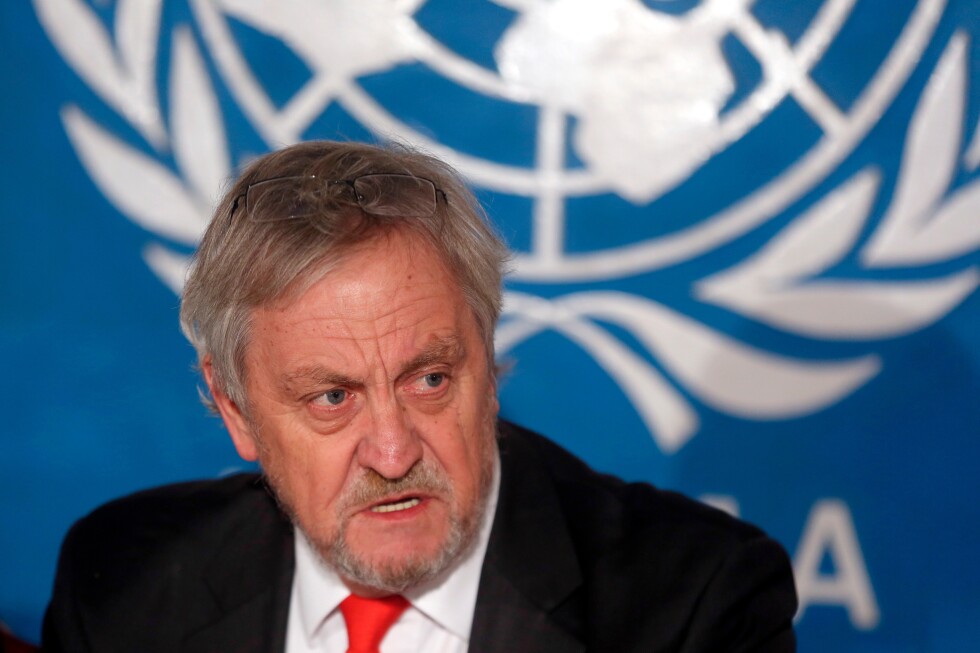
    A Sudanese-Dutch survivor of torture by Sudan’s Rapid Support Forces (RSF) has formally submitted evidence to British counter-terrorism police requesting investigations into three UK-based Sudanese nationals for their alleged connections to the paramilitary organization. Yaslam Altayeb, a businessman and UK resident, endured 15 days of captivity and abuse by RSF forces in Khartoum following the outbreak of Sudan’s civil conflict in April 2023. His legal representatives have now filed a comprehensive submission with London’s Metropolitan Police Counter Terrorism Command (SO15).

    The complaint identifies Faris al-Nour, previously a media advisor to RSF commander Mohammed Hamdan Dagalo (Hemedti) and currently appointed as the RSF’s governor of Khartoum state. Altayeb asserts that al-Nour communicated with him during his detention and participated in the events surrounding his captivity. Also named are Abdelmonem al-Rabee, a British citizen and taxi driver from Sheffield who allegedly produced propagandist content supporting RSF atrocities, and Omran Abdallah, who has represented the RSF in media appearances.

    Altayeb’s submission contends that these individuals could face prosecution under UK legislation including the International Criminal Court Act 2001 and Criminal Justice Act 1988 for their purported involvement in torture and incitement to violence. The complaint highlights Rabee’s documented encouragement of RSF fighters during their takeover of el-Fasher in October, where tens of thousands of civilians were reportedly massacred. Abdallah is cited for publicly minimizing reports of sexual violence committed by RSF personnel.

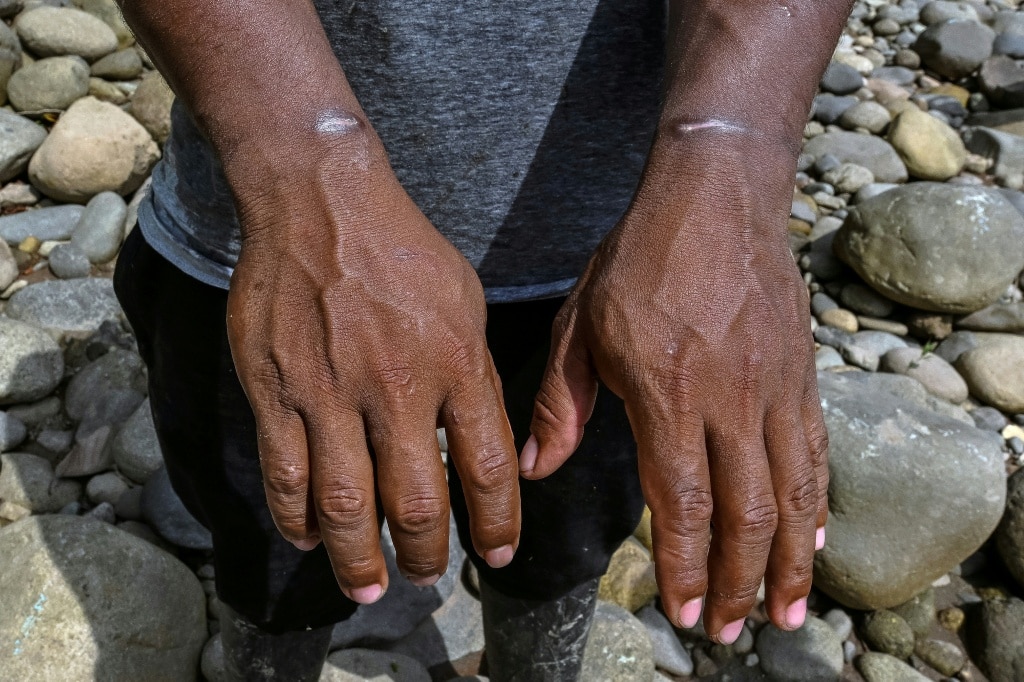
    Having established charitable initiatives supporting war-affected Sudanese communities, Altayeb continues to suffer chronic physical and psychological effects from his detention. His legal team, led by Rodney Dixon KC, has urged immediate police action, emphasizing that allowing alleged war criminals to operate freely in Britain constitutes both an affront to justice and ongoing cruelty to their victims. This filing follows Altayeb’s previous campaign that resulted in UK sanctions against four senior RSF commanders in December 2023.

  • BBC joins Colombian commandos fighting ‘never-ending battle’ against drug gangs

    BBC joins Colombian commandos fighting ‘never-ending battle’ against drug gangs

    Deep within the sweltering Colombian Amazon, Black Hawk helicopters slice through the oppressive humidity carrying elite Jungle Commandos on their daily mission. This specially trained police unit, originally established with British SAS expertise in 1989 and equipped with American weaponry, represents Colombia’s frontline defense against an ever-evolving narcotics industry that supplies approximately 70% of the world’s cocaine.

    The operational tempo remains relentless. Multiple times daily, weather permitting, these commandos descend into jungle clearings to discover and destroy makeshift cocaine laboratories. Recent United Nations data reveals coca cultivation now covers an area nearly double the size of Greater London and quadruple that of New York City, indicating the staggering scale of the challenge.

    During one recent mission documented by the BBC, commandos discovered a rudimentary processing facility partially concealed by banana trees. The site contained essential production components: chemical drums and fresh coca leaves awaiting transformation into paste. While workers fled into the jungle, no arrests were made—reflecting Colombia’s current strategy of targeting narcotics kingpins rather than impoverished farmers.

    The political context adds complexity to these operations. U.S. President Donald Trump has publicly criticized Colombian President Gustavo Petro’s administration, suggesting insufficient action against drug trafficking and even hinting at military intervention. President Petro counters that his government has achieved historic drug seizures while questioning UN methodology that shows cocaine production reaching record highs under his leadership.

    Major Cristhian Cedano Díaz, a 16-year veteran of this struggle, acknowledges the frustrating reality that destroyed labs can be rebuilt within days, sometimes mere meters from original locations. Yet he maintains that persistent operations impact criminal profitability by continuously eliminating crops and chemical precursors.

    The human dimension emerges most poignantly through farmers like ‘Javier’ (a pseudonym), who cultivates coca in the mountainous Catatumbo region bordering Venezuela. For Javier, growing the controversial plant represents survival rather than choice—the only means to support his five daughters in an area dominated by guerrilla groups including the ELN and FARC dissidents.

    ‘If you want to survive, you have to,’ Javier explains, acknowledging the moral dilemma while emphasizing the absence of alternatives. His makeshift laboratory processes paste when materials are available, though recent turf wars among armed groups have disrupted local markets.

    Both Major Díaz and farmer Javier, separated by only two years in age but worlds apart in circumstance, share hope that their children might inherit a Colombia transformed—where economic opportunity replaces the desperate calculus that fuels the global cocaine trade.

  • BBC on the front line with Colombia’s war on drugs

    BBC on the front line with Colombia’s war on drugs

    A BBC news team has been granted unprecedented access to Colombia’s intensified campaign against narcotics production, venturing into the country’s remote jungle regions where cocaine manufacturing thrives. Senior international correspondent Orla Guerin embedded with an elite counter-narcotics unit during a hazardous aerial mission over the cocaine production heartland.

    The operation focused on locating and demolishing clandestine cocaine laboratories strategically concealed within dense tropical forests. These rudimentary facilities represent the critical first stage in the global cocaine supply chain, where raw coca leaves undergo chemical processing into export-grade narcotics.

    Colombian authorities deployed specialized aircraft and tactical teams to identify these hidden installations despite sophisticated camouflage techniques employed by drug cartels. The mission involved precise aerial surveillance followed by targeted strikes to dismantle production infrastructure, significantly disrupting manufacturing capabilities.

    This frontline reporting reveals the ongoing challenges in combating drug trafficking organizations that continuously adapt their methods and relocate operations to evade detection. The Colombian government’s renewed offensive demonstrates the complex interplay between law enforcement strategies, geographical constraints, and the evolving tactics of narcotics producers seeking to maintain supply routes to international markets.

  • Two arrested over attempted sabotage of German naval vessels

    Two arrested over attempted sabotage of German naval vessels

    European judicial authorities have confirmed the apprehension of two individuals allegedly involved in a sophisticated plot to incapacitate German naval vessels stationed at the Port of Hamburg. The suspects, identified as a 37-year-old Romanian national and a 54-year-old Greek citizen employed at the port facility, were detained this Tuesday through a meticulously coordinated operation involving German, Greek, and Romanian law enforcement agencies.

    According to Eurojust, the European Union’s judicial cooperation unit, the accused perpetrators executed multiple destructive acts targeting critical ship systems. Their alleged methods included disabling electronic safety mechanisms, removing fuel tank caps, deliberately puncturing water supply conduits, and introducing over 20 kilograms of abrasive gravel into a vessel’s propulsion system.

    The criminal investigation, which remains ongoing, revealed that these actions could have resulted in catastrophic mechanical failure and significant operational delays for the German Navy. Eurojust emphasized that the sabotage attempt, had it remained undetected, would have severely compromised naval readiness and endangered maritime security operations.

    Concurrent with the arrests, authorities conducted comprehensive searches of the suspects’ residences across all three involved nations, seizing electronic devices and documentary evidence believed relevant to the case. This development occurs against a backdrop of escalating security concerns across NATO member states regarding potential state-sponsored sabotage campaigns.

    Since Russia’s full-scale invasion of Ukraine in 2022, multiple European nations have reported incidents involving damaged underwater infrastructure, disrupted airport operations, and compromised military facilities. While German officials have not formally attributed the Hamburg incident to Russian operatives, the pattern aligns with broader continental security anxieties. The Kremlin has consistently denied involvement in any sabotage activities targeting European infrastructure.

    This case has prompted renewed focus on critical infrastructure protection within Germany, following earlier security incidents including a power grid attack that left thousands without electricity earlier this year.

  • France issues arrest warrants for French-Israeli women accused of inciting genocide

    France issues arrest warrants for French-Israeli women accused of inciting genocide

    French judicial authorities have initiated a significant legal proceeding by issuing arrest warrants for two French-Israeli women, Nili Kupfer-Naouri and Rachel Touitou, for their alleged involvement in obstructing humanitarian aid convoys destined for the Gaza Strip. The warrants, reported by Le Monde, form part of a broader investigation into French citizens participating in activities that disrupt critical aid deliveries during the ongoing conflict.

    Kupfer-Naouri, who leads the organization Israel Is Forever, and Touitou, an activist associated with the group Tsav 9, face accusations of complicity and incitement to genocide. The judicial action follows formal complaints submitted by French-Palestinian citizens and human rights organizations urging prosecution of dual nationals directly involved in hampering lifesaving assistance during Gaza’s humanitarian crisis.

    The case gains international context as Tsav 9 has been designated a ‘violent extremist Israeli group’ by the U.S. Department of State in June 2024 for systematically blocking, harassing, and damaging humanitarian aid convoys. According to investigations, group members employed tactics including road blockades, truck vandalism, and destruction of vital supplies, with a particularly severe incident occurring on May 13, 2024, when members looted and burned two aid trucks near Hebron in the West Bank.

    Touitou has publicly criticized the French justice system, alleging biased prioritization of complaints from pro-Palestinian organizations. Conversely, complainants have welcomed the warrants as a necessary step toward accountability. The French Jewish Organisation for Peace (UJFP) emphasized that the warrants reflect the serious nature of ‘collaboration in genocide’ through concrete actions.

    The international response has extended beyond judicial measures, with Meta suspending Tsav 9’s Facebook and Instagram accounts in May 2024 for organizing raids on aid convoys, and the European Union imposing sanctions on the group for exacerbating human suffering and committing serious human rights abuses in Gaza.

  • Magnitude 4.1 earthquake hits Bangladesh two days after another quake

    Magnitude 4.1 earthquake hits Bangladesh two days after another quake

    A moderate 4.1 magnitude earthquake struck Bangladesh early Tuesday, marking the second seismic event to impact the nation within a 48-hour period. According to data released by India’s National Centre for Seismology (NCS), the tremor originated at a significant depth of 150 kilometers beneath the Earth’s surface, with its epicenter pinpointed at coordinates 22.84°N latitude and 89.01°E longitude at approximately 4:06 AM IST.

    This latest seismic activity follows a smaller 3.0 magnitude quake that occurred on Sunday morning at a shallower depth of 20 kilometers. While both events were considered moderate in intensity, they have reignited concerns about Bangladesh’s particular vulnerability to seismic hazards.

    The geological context reveals why Bangladesh remains on high alert. The nation sits at the precarious convergence of three massive tectonic plates—the Indian, Eurasian, and Burma plates—which are in constant motion. Scientific measurements indicate the Indian plate is steadily advancing northeastward at approximately 6 centimeters annually, while the Eurasian plate moves north at about 2 centimeters per year above it.

    This tectonic pressure has created five major fault zones in and around Bangladesh: the Bogura fault zone, Tripura fault zone, Shilong Plateau, Dauki fault zone, and Assam fault zone. These geological features contribute to the identification of 13 distinct earthquake-prone areas within the country, with the regions of Chattogram, Chattogram Hill Tracts, and Jaintiapur of Sylhet classified as extreme risk zones.

    The situation is particularly alarming given Bangladesh’s extreme population density. In 2022, the capital city Dhaka recorded approximately 30,093 residents per square kilometer, ranking among the most densely populated urban areas globally. This combination of high seismic risk and extreme population density has earned Dhaka a place among the world’s 20 cities most vulnerable to earthquake damage.

    Seismologists note that while earthquakes occur frequently worldwide—approximately every 30 seconds somewhere on Earth—most are too minor to be detected without instrumentation. The logarithmic nature of the Richter scale means that each whole number increase represents a tenfold increase in measured amplitude and approximately 31.6 times more energy release.

  • South Africa’s ex-President Zuma mentioned in Epstein emails over London dinner plan

    South Africa’s ex-President Zuma mentioned in Epstein emails over London dinner plan

    Newly unsealed court documents from the Jeffrey Epstein case have revealed former South African President Jacob Zuma’s connection to a 2010 London dinner arranged by the convicted sex offender. The emails, released as part of ongoing legal proceedings, detail Epstein’s personal involvement in organizing a gathering for Zuma during his official state visit to the United Kingdom in March 2010.

    According to the correspondence, Epstein coordinated through an associate to extend invitations for a “small dinner” at the Ritz Hotel honoring President Zuma. One particularly revealing email exchange shows the invitation of a Russian model, described in subsequent messages as having “enchanted all those she met” with her “elegance and natural charm.” The model specifically inquired about dress code appropriateness for the presidential event.

    In separate communications, Epstein directly contacted British politician Lord Peter Mandelson, explicitly mentioning his invitation of a “beautiful Russian” model to accompany Zuma’s dinner. While Mandelson’s response remains undocumented, follow-up correspondence between Epstein and another attendee praised Zuma as “much more impressive and engaging than I thought he would be.”

    The Jacob Zuma Foundation has vehemently denounced media coverage of these revelations, characterizing them as “agenda-driven journalism built on innuendo” and “retrospective guilt by association.” In an official statement, the foundation emphasized that no allegations of unlawful or improper conduct by Zuma have been substantiated, dismissing the reports as “intellectually dishonest” attempts to smear the former president through proximity to Epstein’s crimes.

    Historical context confirms Zuma was indeed on an official state visit to the UK from March 3-5, 2010, corresponding with the dinner date referenced in the emails. Epstein, the convicted sex offender and financier at the center of the scandal, died by suicide in prison in 2019 while awaiting trial on federal sex trafficking charges.

  • In the Ukrainian capital, a mother struggles to keep her children warm and fed amid power outages

    In the Ukrainian capital, a mother struggles to keep her children warm and fed amid power outages

    KYIV, Ukraine — As temperatures plummet to a bone-chilling minus 30 degrees Celsius (minus 22 Fahrenheit), residents of Ukraine’s capital face an unprecedented humanitarian crisis following systematic Russian attacks on critical energy infrastructure. The situation has deteriorated to its most critical point since the invasion began four years ago, with damage to power stations and electrical grids reaching catastrophic levels.

    In the hard-hit district of Troieshchyna, daily life has been reduced to fundamental survival needs. Yuliia Dolotova, a 37-year-old mother of two, exemplifies the struggle faced by hundreds of thousands of Kyiv residents. With her 18-month-old son Bohdanchyk bundled against the bitter cold, she queues for hot meals at volunteer stations—the only sustenance available since cooking at home has become impossible amid continuous power outages.

    “The reality is stark: no electricity throughout the day, no means to prepare meals for children. This has become our universal experience,” Dolotova stated, reflecting the collective hardship gripping the capital.

    The destruction extends beyond power generation. Frozen and burst water pipes have compounded the crisis, creating additional challenges for already strained residents. Energy crews work tirelessly to restore heating and implement outage schedules, but their efforts are routinely undone by subsequent Russian strikes using drones and missiles, forcing restoration work to begin anew.

    For Dolotova, the physical hardship is magnified by personal sacrifice. Her husband serves on the volatile Zaporizhzhia front, having met his youngest son only twice since birth. She single-handedly cares for Bohdanchyk and 11-year-old Daniil while navigating pitch-black stairwells in their Soviet-era apartment building—a treacherous ascent that has already destroyed two strollers.

    Evening routines have transformed into exercises in resilience. The brothers huddle together for warmth near frost-rimmed windows, playing silently by flashlight. At bedtime, Dolotova lines their bed with foam rubber insulation against the penetrating cold.

    “I sustain myself through anticipation of his leaves,” she revealed. “Waiting sustains me. You convince yourself—just a little longer, and he’ll return. You mark each passing day.”

  • Russia ends ‘week-long pause’ with major attack on Ukraine energy sites

    Russia ends ‘week-long pause’ with major attack on Ukraine energy sites

    In a significant escalation of hostilities, Russia has executed its most extensive aerial offensive against Ukraine in recent months, deliberately targeting critical energy infrastructure across multiple regions including Kyiv and Kharkiv. The coordinated strikes occurred as temperatures plunged to -20°C (-4°F), plunging over 1,000 residential buildings in the capital into heating blackouts and rendering a key power plant in eastern Kharkiv permanently inoperable.

    The assault unfolded during NATO Secretary-General Mark Rutte’s diplomatic visit to Kyiv, where he met with President Volodymyr Zelensky and addressed the Ukrainian parliament. Zelensky condemned Russia’s actions as deliberate “terror and escalation,” asserting that Moscow had chosen violence over diplomacy despite ongoing peace negotiations scheduled for Abu Dhabi later this week under US coordination.

    Ukrainian air defenses faced overwhelming force, with officials reporting more than 70 ballistic and cruise missiles supplemented by 450 drones specifically deployed to saturate defense systems. The Air Force managed to intercept only 38 missiles, resulting in widespread damage to energy facilities. This represents the ninth massive attack on Ukraine’s energy sector since October, according to private power company DTEK, which confirmed two of its plants sustained direct hits.

    Civilian impact has been severe, with residents forced to shelter in metro stations for over seven hours during the extended air raid. Many have taken to sleeping in improvised tents on platforms to escape the freezing conditions. The systematic targeting has created a critical shortage of repair crews, leaving thousands without heating for days or even weeks. Affected civilians report sleeping in multiple layers of clothing and blankets while relying on volunteer-run soup kitchens for warm meals.

    Despite the humanitarian crisis, there appears to be growing resilience rather than submission among the population. As one Kyiv resident named Vera expressed while queuing for food: ‘Russia won’t get what it wants. We are stronger than them in any case.’ The attacks have reportedly damaged several residential buildings, with injuries resulting from falling debris when intercepted missiles crashed into civilian areas.

  • Hong Kong hosts INTERPOL annual meeting on combating cybercrime

    Hong Kong hosts INTERPOL annual meeting on combating cybercrime

    Hong Kong has positioned itself at the forefront of the global fight against cybercrime by hosting the INTERPOL Cybercrime Expert Group’s pivotal annual meeting from February 2-3, 2026. The event brought together an elite assembly of over 120 law enforcement specialists, industry experts, and international organization representatives from more than 30 countries and regions worldwide.

    Co-organized by the Hong Kong Police Force (HKPF) and INTERPOL under the strategic theme “Disrupting the Industrialization of Cybercrime,” the two-day summit addressed the increasingly sophisticated nature of digital criminal operations. Hong Kong Police Commissioner Chow Yat-ming inaugurated the proceedings by outlining the city’s multi-faceted approach to cybersecurity challenges.

    Commissioner Chow detailed the HKPF’s comprehensive strategy focusing on three critical pillars: developing cutting-edge technological solutions, establishing robust public-private partnerships, and creating an integrated public safety ecosystem. “Our response to cyber threats requires continuous innovation through collaborative platforms, advanced technology initiatives, and active industry participation,” Chow emphasized during his opening address.

    The police commissioner further stressed that effective cybercrime combat necessitates enhanced international cooperation, cross-sector alliances, and sustained capacity development across global law enforcement agencies.

    INTERPOL’s Cybercrime Director Neal Jetton acknowledged Hong Kong’s strategic role in international policing collaboration, stating the meeting demonstrated the city’s proactive commitment to global security. Jetton expressed optimism that the gathering would yield practical solutions and coordinated actions to effectively dismantle sophisticated cybercriminal networks.

    The summit facilitated intensive expert discussions on disrupting the entire cybercrime supply chain, with specialized sessions examining cybercrime ecosystems, digital extortion schemes, artificial intelligence applications in crime prevention, and virtual asset tracing methodologies. Participants engaged in knowledge sharing regarding cross-border intelligence exchange mechanisms, synchronized operational strategies, and professional capacity enhancement programs.