分类: world

  • As the US shifts missiles towards Iran, officials raise concerns of gaps in European air defenses

    As the US shifts missiles towards Iran, officials raise concerns of gaps in European air defenses

    LONDON — In a significant strategic shift, United States defense authorities have confirmed the substantial redeployment of Patriot air defense missile systems from European theaters to the Middle East, creating potential vulnerabilities in NATO’s eastern flank defenses against Russian capabilities. This repositioning comes as Washington’s military engagement with Iran enters its fourth week, requiring extensive resource allocation to the escalating conflict.

    According to anonymous U.S. defense officials speaking with The Associated Press, multiple Patriot batteries have been transferred from Germany to Turkey following ballistic missile attacks originating from Iranian territory. The missile systems are being repositioned from various European locations to reinforce Middle Eastern defenses, resulting in concerning depletion of missile stockpiles across European theaters.

    The White House maintains operational readiness, with Press Secretary Karoline Leavitt asserting that “the US military has more than enough munitions, ammo, and weapons stockpiles to achieve the goals of Operation Epic Fury.” However, defense officials expressed apprehension about diminishing European capabilities precisely as Russia continues its campaign in Ukraine and conducts hybrid warfare operations across Eastern Europe.

    Patriot systems, first deployed in the 1980s, represent advanced surface-to-air missile technology capable of intercepting aircraft, cruise missiles, and shorter-range ballistic threats. Their effectiveness against sophisticated Russian weaponry, including Kinzhal hypersonic missiles, has been demonstrated in Ukraine. Yet in the Middle East, these high-value systems are being employed against low-cost Iranian Shahed drones, raising questions about resource allocation efficiency.

    The redistribution occurs amid heightened regional tensions, with NATO defenses intercepting three ballistic missiles fired from Iran over Turkish airspace since February 28. While U.S. European Command declined to discuss specific missile movements citing operational security, Ukrainian President Volodymyr Zelenskyy warned that Kyiv would “definitely” face Patriot shortages due to the Middle East conflict.

    Compounding defense challenges, the U.S. is deploying the Merops anti-drone system to the region—a cost-effective drone-on-drone countermeasure that can be transported in pickup trucks. Defense officials noted limited initial deployment of these systems despite the critical need for effective countermeasures against Iran’s drone capabilities.

  • Iran’s IRGC spokesman killed in US-Israeli strike

    Iran’s IRGC spokesman killed in US-Israeli strike

    TEHRAN – In a significant escalation of Middle East tensions, Iran’s Islamic Revolution Guard Corps (IRGC) confirmed on Friday that its official spokesperson, Ali-Mohammad Naeini, was killed in what they describe as a coordinated military strike by United States and Israeli forces. The announcement was made through an official statement published on Sepah News, the IRGC’s primary media outlet.

    The attack, which occurred earlier on Friday, represents one of the most direct confrontations between these opposing powers in recent months. While specific details regarding the location and methodology of the strike remain undisclosed, the IRGC’s statement explicitly attributes responsibility to both American and Israeli military operations.

    Ali-Mohammad Naeini served as the primary public voice for the IRGC, Iran’s most powerful security force with significant political and military influence throughout the region. His position placed him at the center of Iran’s strategic communications apparatus, particularly regarding matters of national security and foreign policy.

    This incident occurs against a backdrop of heightened regional instability and follows months of escalating proxy conflicts across the Middle East. The targeted killing of such a high-profile Iranian military figure marks a substantial escalation in the ongoing shadow war between Iran and its adversaries, potentially signaling a new phase of direct confrontation.

    Analysts immediately raised concerns about possible retaliatory measures from Iran and its allied networks throughout the region. The IRGC has historically responded to such provocations with calibrated military and proxy operations, raising fears of further regional destabilization.

  • French jihadist jailed for life for Islamic State crimes against Yazidis

    French jihadist jailed for life for Islamic State crimes against Yazidis

    In a landmark judicial ruling, a French court has delivered the nation’s first conviction for genocide committed against Iraq’s Yazidi minority by Islamic State operatives. The Paris Assizes Court sentenced Sabri Essid to life imprisonment in absentia on Friday after finding him guilty of genocide, crimes against humanity, and complicity in systematic atrocities.

    The court established that Essid, who joined IS in Syria in 2014, actively participated in the jihadist network’s genocidal campaign against the Yazidi religious minority between 2014 and 2016. Presiding Judge Marc Sommerer declared that Essid had become “part of the criminal network repeatedly buying and reselling a very large number of Yazidi victims,” specifically targeting them for their religious beliefs.

    Evidence presented during the trial detailed how Essid purchased multiple Yazidi women at slave markets, subjected them to repeated rape, and deprived them of basic necessities including food and water. The Islamic State, which considered the pre-Islamic faith of Yazidis heretical, systematically murdered thousands of Yazidi men in Iraq’s Sinjar province in August 2014 while abducting women and girls for sexual slavery.

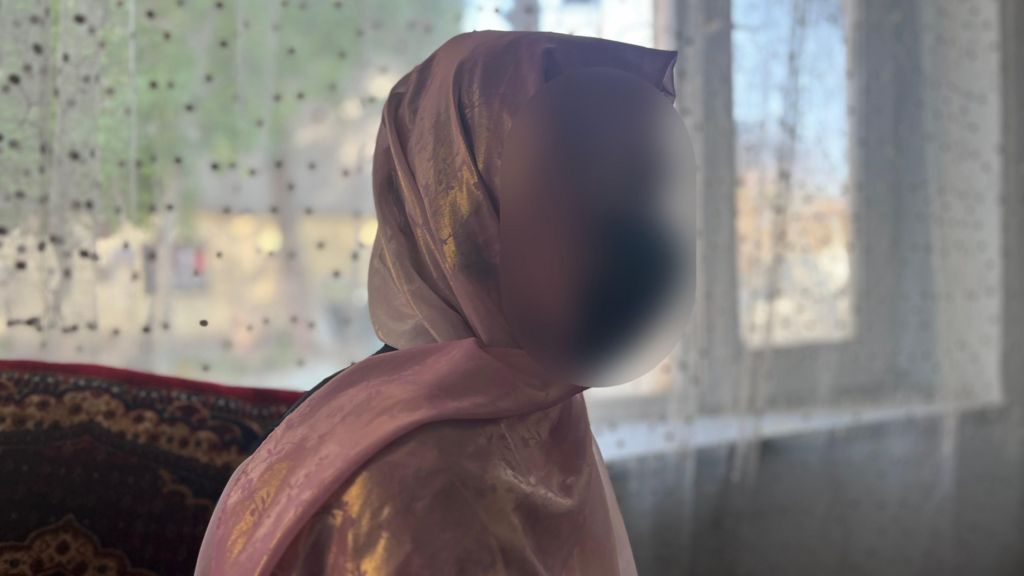
    The trial gained profound emotional weight when a Yazidi survivor provided harrowing testimony describing daily rapes under Essid’s captivity before being resold to six other men. Judge Sommerer noted that despite overseeing numerous crimes against humanity cases, he had “never heard before” the level of atrocities endured by the witness.

    Essid, known in Syria as Abu Dojanah al-Faransi and presumed killed in 2018, was closely associated with the Clain brothers who claimed responsibility for the 2015 Paris attacks. His wife remains imprisoned in France after returning from Syria, where their family had joined Essid in 2014.

    This verdict aligns with growing international judicial actions regarding IS crimes against Yazidis, including Germany’s 2021 genocide conviction and Sweden’s recent conviction of a woman for keeping Yazidi slaves. United Nations investigators have formally classified the systematic persecution of Yazidis as genocide.

  • ‘Multiple factors’ caused 2025 Spain and Portugal blackout, says report

    ‘Multiple factors’ caused 2025 Spain and Portugal blackout, says report

    A comprehensive investigation has determined that a complex interplay of technical failures triggered the unprecedented electrical blackout that paralyzed Spain and Portugal for multiple hours on April 28, 2025. The European Network of Transmission System Operators for Electricity (Entso-e) released its final report on the incident, which it classifies as Europe’s most severe widespread power outage in two decades.

    The crisis commenced shortly after midday when an uncontrolled and sudden voltage surge overwhelmed the Spanish grid. The report identifies this event occurring on ‘a day with multiple concurrent phenomena,’ leading to system instability and a cascading shutdown of power generation. Critical findings indicate that voltage controls from local energy generators were not fully synchronized with the grid operator’s requirements. In certain instances, reliance on manual voltage control resulted in dangerously slow responses to rapid network changes.

    Compounding the problem, the Spanish grid operates with a wider voltage range than many neighboring European systems, leaving it with a limited safety margin to handle unexpected surges. According to the diagnosis, ‘the reactive power assets in the system were not able to address the sudden voltage rise,’ resulting in a complete collapse.

    The blackout originated in Spain but immediately impacted Portugal due to the tightly interconnected nature of their power infrastructures. A small region in southern France near the border was also affected. The outage plunged the Iberian Peninsula into chaos: transportation hubs like Barcelona Sants railway station experienced severe disruptions, internet and telephone connections were severed, and operations ceased at schools, universities, and businesses. Full restoration of power took up to 16 hours in some areas.

    The event ignited significant political controversy in Spain, with opposition critics questioning the government’s competence and challenging the nation’s heavy reliance on renewable energy, which accounts for nearly 60% of its electricity generation. A public dispute also erupted between the national grid operator, Red Eléctrica, and private energy companies over accountability.

    Emphasizing its neutral technical role, the Entso-e report explicitly avoided assigning blame. Instead, it issued key recommendations to prevent future crises, focusing on enhanced coordination between transmission operators, distribution operators, and all other stakeholders within the energy ecosystem.

  • British man accused of shooting partner in France

    British man accused of shooting partner in France

    French authorities have detained George Goodayle, a 47-year-old British national, on murder charges following the fatal shooting of his partner Jayne Nicholson at their residence in Brillac, southwestern France. The 49-year-old victim was discovered with multiple gunshot wounds to her upper torso, with law enforcement confirming the recovery of a firearm at the crime scene.

    Despite Goodayle’s assertion that the discharge was accidental, investigators have proceeded with formal murder charges. The suspect voluntarily surrendered to authorities following the incident. Both individuals had no prior criminal record with French law enforcement, and domestic violence complaints had never been filed against the couple during their relationship that began in June 2025.

    Goodayle appeared before the French judiciary on Wednesday, where prosecutor Benoît Bernard confirmed his formal indictment and pretrial detention pending further proceedings. The investigation continues to determine the precise circumstances surrounding Nicholson’s death.

    Background checks reveal Nicholson previously resided in Doncaster, South Yorkshire, where she operated Croft Farm boarding kennels in Thorpe in Balne. Described by local media as an accomplished dog breeder and equestrian enthusiast, she had established herself within the rural community before relocating to France.

    Goodayle had resided in the Brillac region since 2016. Social media archives indicate he previously performed as a professional dancer with Dreamboys, a male entertainment troupe, during his time in the United Kingdom. The BBC has initiated contact with both the entertainment company and the UK’s Foreign, Commonwealth and Development Office regarding the developing case.

  • Uganda reintroduces rhinos into a protected area where they have been extinct since 1983

    Uganda reintroduces rhinos into a protected area where they have been extinct since 1983

    In a landmark conservation achievement, Ugandan wildlife authorities have successfully reintroduced rhinoceroses to Kidepo Valley National Park after four decades of local extinction. This ambitious rewilding initiative represents a significant victory in the ongoing battle to restore species decimated by poaching activities.

    The translocation operation, executed this week, involved transporting multiple southern white rhinos from Ziwa Rhino Sanctuary in central Uganda to the northeastern protected area spanning over 400 kilometers. The first two specimens arrived on Tuesday, followed by additional animals on Thursday, all carefully transported in specialized metallic crates designed for their safety during the lengthy journey.

    James Musinguzi, Executive Director of the Uganda Wildlife Authority, heralded the achievement as “the beginning of a new rhino story for Kidepo Valley National Park,” acknowledging the crucial support from conservation partners who provided technical expertise, financial backing, and logistical coordination.

    The reintroduction program benefits from extensive preparation, with the new rhino habitat featuring comprehensive infrastructure including protective fencing, access roads, and fire management systems. Conservation authorities plan to expand the population further later this year with additional transfers, potentially including specimens from Kenya.

    Jeff Morgan of Global Conservation, one of the participating organizations, emphasized the broader significance: “This translocation demonstrates Uganda’s renewed stability for tourism, enhanced national park protections, and offers both local citizens and international visitors the extraordinary opportunity to observe rhinos in their natural environment.”

    Despite these advances, conservation challenges persist. Poaching remains an ongoing concern in Uganda’s protected areas, though intensified security measures have substantially reduced incidents. Rhinos continue to be targeted for their horns, which command exorbitant prices in illegal wildlife markets—sometimes exceeding the value of gold—primarily driven by demand for medicinal and ornamental purposes in certain Asian markets.

  • The West has long seen Iran’s oil as a prize to be claimed

    The West has long seen Iran’s oil as a prize to be claimed

    Recent hostilities in the Persian Gulf have thrust the Strait of Hormuz—a critical global energy corridor—back into the international spotlight. With approximately 20% of the world’s oil transiting this narrow waterway, its potential closure alongside attacks on Iranian oil infrastructure has triggered fears of prolonged conflict and soaring fuel prices.

    While current analysis focuses on immediate threats from missiles, drones, and mines, a deeper historical narrative underpins these tensions. For over a century, Iran’s vast oil reserves have shaped Western perceptions and geopolitical strategies.

    The pivotal moment occurred in May 1908 when British-Australian entrepreneur William Knox D’Arcy financed drillers who struck oil in Persia’s Zagros Mountains. This discovery led to the establishment of the Anglo-Persian Oil Company (later BP) in 1909, which rapidly developed pipeline networks and constructed the massive Abadan Island refinery complex—still Iran’s largest today.

    Oil from Abadan began flowing through the Strait of Hormuz to global markets, eventually powering European industry and transportation. The resource’s strategic importance became undeniable when the British government acquired a controlling stake in BP in 1914 to secure Royal Navy fuel supplies during its transition from coal to oil—a move championed by Winston Churchill, who later described the Iranian oil discovery as “a prize from fairyland.”

    Post-World War I, BP launched sophisticated marketing campaigns to shape British perceptions of Iran and its oil. The 1925 “Persian Series” combined evocative artwork with narratives of British technological mastery in challenging environments. At the 1924-25 British Empire Exhibition, BP constructed a full-scale replica of an Iranian caravanserai, blending cultural imagery with oilfield equipment displays. The company’s London headquarters featured sculptures of traditionally dressed Iranian figures, symbolizing captured resources from a distant frontier.

    This century-long narrative framing—presenting oil as an exotic prize requiring Western technological conquest—has normalized the idea that Western societies are entitled to control Middle Eastern energy resources. This presumption, as noted by scholar Edward Said, has created a repeating cycle of conflict over Iranian oil, from the 1953 overthrow of Prime Minister Mohammad Mossadegh after oil nationalization to current geopolitical tensions.

    While contemporary risks have evolved from environmental challenges to nuclear proliferation and market disruptions, the underlying logic remains strikingly familiar: Western military power continues to be deployed to control oil resources under the guise of eliminating threats.

  • French navy boards a tanker in the Mediterranean suspected of being part of Russia’s shadow fleet

    French navy boards a tanker in the Mediterranean suspected of being part of Russia’s shadow fleet

    In a significant maritime enforcement operation, French naval forces intercepted and boarded the tanker Deyna in the Western Mediterranean on Friday, alleging the vessel belongs to Russia’s sanctioned ‘shadow fleet’ circumventing international oil sanctions. President Emmanuel Macron personally confirmed the operation, characterizing such vessels as ‘war profiteers’ seeking to finance Russia’s military campaign in Ukraine.

    The French maritime authorities for the Mediterranean region detailed that the interception was conducted collaboratively with allied nations, including the United Kingdom which provided monitoring support. The Deyna, reportedly sailing from the Russian port of Murmansk while flying a Mozambican flag, aroused suspicion regarding its true registration. Upon boarding, French officials discovered documentation that ‘confirmed doubts about the validity of the flag,’ indicating potential false flag designation.

    Following the inspection, the vessel was diverted under French naval escort to a designated anchorage point for comprehensive additional checks. The case has been formally referred to a prosecutor in Marseille for potential legal action.

    President Macron emphasized the strategic importance of such operations in a social media statement: ‘These vessels, which circumvent international sanctions and violate the law of the sea, are war profiteers. They seek to generate profits and finance Russia’s war effort. We won’t let this happen.’

    This incident represents the latest in a series of similar enforcement actions. In January, France intercepted another oil tanker in the Mediterranean that was subsequently released after payment of a multi-million euro penalty. Last September, French forces boarded an additional oil tanker off France’s Atlantic coast, an action that Russian President Vladimir Putin condemned as piracy.

    Western intelligence agencies estimate Russia maintains a fleet of hundreds of vessels specifically designed to evade international sanctions imposed following its invasion of Ukraine. France and allied nations have committed to intensifying efforts to disrupt these maritime sanction-evasion networks.

  • Civil lawsuit in London against Gerry Adams’ alleged IRA role is dropped

    Civil lawsuit in London against Gerry Adams’ alleged IRA role is dropped

    A landmark civil trial against former Sinn Féin leader Gerry Adams collapsed unexpectedly at London’s High Court on Friday, as three victims of Irish Republican Army bombings withdrew their damages claim. The plaintiffs—John Clark, Jonathan Ganesh, and Barry Laycock—had sought symbolic damages of £1 (approximately $1.34) from Adams, alleging his direct responsibility for Provisional IRA operations in England during the Troubles.

    The case’s sudden termination came during what was scheduled as the final day of the two-week trial. The claimants’ attorney, Anne Studd, announced the discontinuation citing legal developments overnight related to ‘abuse of process’ arguments, though no specific details were provided.

    Adams, who testified earlier in the proceedings but was absent from court Friday, issued a statement welcoming the outcome. ‘I attended the civil case out of respect for them,’ the 77-year-old political figure stated. ‘This decision brings to an emphatic end a case that should never have been brought.’

    The plaintiffs had alleged that Adams served on the IRA’s Army Council and shared responsibility for the 1973 Old Bailey courthouse bombing and the 1996 attacks on London’s Docklands and Manchester’s Arndale shopping center. These incidents left Clark with permanent shrapnel injuries, Ganesh with psychological trauma, and Laycock with 50% disability alongside financial and emotional struggles.

    Adams has consistently denied IRA membership despite his leadership of the republican political party Sinn Féin from 1983 to 2018. He played a pivotal role in negotiating the 1998 Good Friday Agreement that largely ended Northern Ireland’s three-decade conflict, which claimed approximately 3,600 lives. While never charged specifically for the bombings, Adams faced historical allegations of IRA involvement—including a 1978 membership charge that was dropped due to insufficient evidence. Last year, he successfully won a £100,000 libel verdict against the BBC over claims he authorized an informant’s execution within the republican movement.

  • Officer reportedly leaks location of French aircraft carrier with Strava run

    Officer reportedly leaks location of French aircraft carrier with Strava run

    A significant security breach has emerged from the French Navy after a naval officer inadvertently revealed the precise location of the aircraft carrier Charles de Gaulle through a fitness tracking application. According to initial reporting by Le Monde, the officer—identified only as Arthur—recorded a 35-minute run on the deck of the carrier on March 13 using Strava, a popular sports app. The activity was geotagged and uploaded, creating a digital map that pinpointed the warship’s position approximately 100 kilometers northwest of Cyprus in the eastern Mediterranean.

    The French Ministry of Armed Forces confirmed the aircraft carrier serves as the centerpiece of a carrier strike group recently deployed to the region amid escalating tensions related to the Iran conflict. In response to inquiries from AFP, military officials stated the incident ‘does not comply with current instructions’ and promised appropriate measures would be taken if the report is verified. BBC Verify attempted to locate the specific route but found it may have been deleted or made private after discovery.

    This incident represents the latest in a series of security concerns involving fitness tracking applications. Previous cases include the exposure of French President Emmanuel Macron’s security details through his bodyguards’ Strava activities in 2024, similar tracking of US Secret Service agents protecting President Biden, and the identification of Russian security personnel at disputed properties. The application’s ‘heatmap’ feature—which aggregates and visualizes global user activity—has previously drawn criticism for potentially compromising military base locations worldwide.

    The Charles de Gaulle carrier group, which includes 20 fighter jets, surveillance aircraft, and helicopters, was deployed as part of France’s enhanced military presence in the Middle East. President Macron has characterized the deployment as strictly defensive, aimed at protecting French nationals and interests while supporting regional allies. Strava, headquartered in San Francisco, boasts over 195 million users across 185 countries and utilizes GPS technology from mobile devices and fitness trackers to map exercise routes.