分类: world

  • Cubans ready for Russian oil but some say not enough

    Cubans ready for Russian oil but some say not enough

    A Russian-flagged oil tanker, the Anatoly Kolodkin, is scheduled to dock at the port of Matanzas on Tuesday, delivering 730,000 barrels of crude oil to Cuba—the first such shipment to reach the communist-ruled island since January. The arrival comes amid a severe energy crisis that has led to widespread blackouts, fuel rationing, and crippled public transportation.

    While the shipment has been cautiously welcomed by some Cubans, many residents expressed skepticism about its impact. Rosa Perez, a 74-year-old retiree, stated, ‘We’ll welcome it with open arms. You have no idea how badly we need that oil.’ However, others like Raul Pomares, a 56-year-old gardener, called it ‘a drop in the bucket compared to what this country needs.’

    The delivery follows a temporary reprieve from U.S. sanctions granted by the Trump administration. President Trump commented, ‘I have no problem with Russia or another country sending oil because Cubans have to survive,’ though he predicted it would have little effect on Cuba’s overall situation, declaring ‘Cuba’s finished.’

    The Kremlin expressed satisfaction with the shipment’s progress, with spokesman Dmitry Peskov stating, ‘Russia considers it its duty to step up and provide necessary assistance to our Cuban friends.’

    Energy experts note that the shipment will provide limited relief. Jorge Pinon, a Cuba energy specialist at the University of Texas at Austin, estimated the oil could produce approximately 250,000 barrels of diesel—enough to meet Cuba’s needs for just 12.5 days. The government must decide whether to allocate the fuel to backup power generators or transportation infrastructure.

    The crisis intensified after Cuba lost its main oil supplier in January when U.S. forces captured Venezuela’s socialist leader Nicolas Maduro. Since then, blackouts and shortages of basic goods have fueled public frustration and occasional protests.

    Mexican President Claudia Sheinbaum revealed ongoing discussions with private firms about potentially selling Mexican oil to Cuban companies and personally donated humanitarian aid to Cuba.

    Many Cubans, including 76-year-old retiree Orlando Ocana, view the Russian shipment as merely ‘a Band-Aid’ solution, arguing that building new thermoelectric power plants represents the only real long-term solution to the energy crisis.

  • Huge fires at Russian oil facilities following Ukraine strikes, satellite images show

    Huge fires at Russian oil facilities following Ukraine strikes, satellite images show

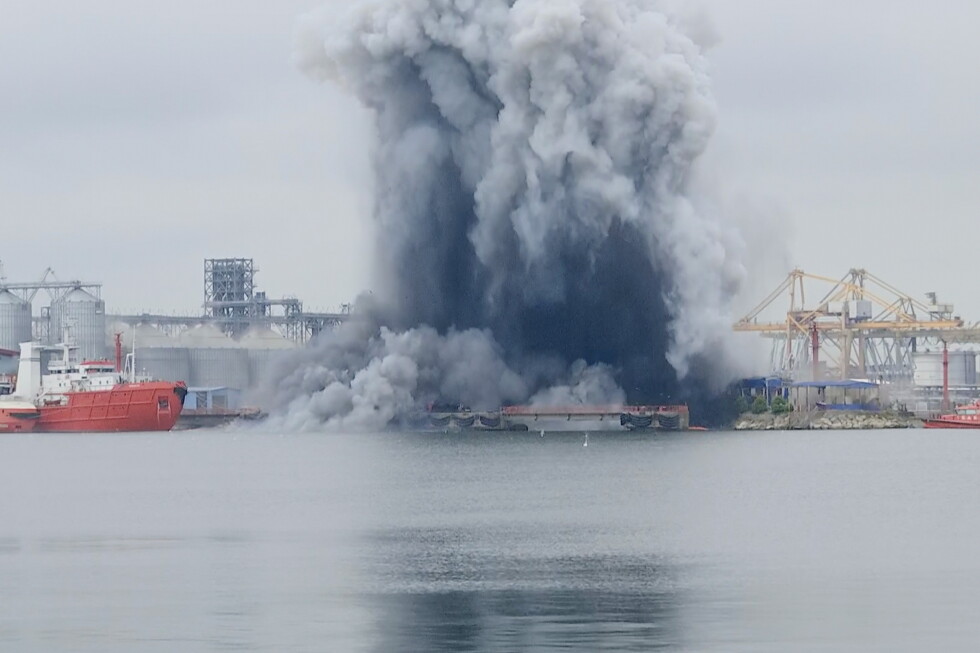
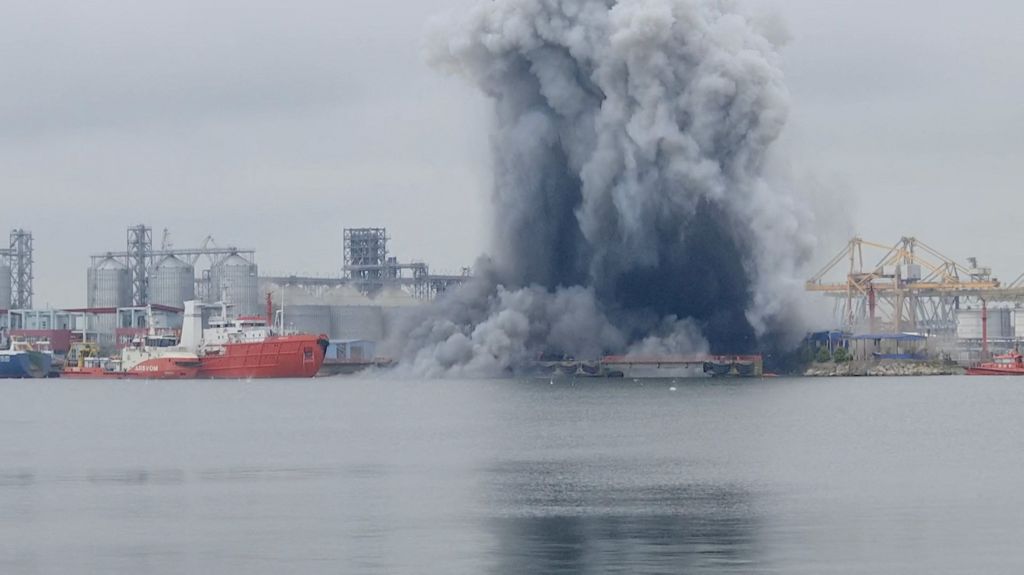
    Ukraine has executed a sophisticated series of drone strikes against Russia’s critical oil export infrastructure in the Baltic Sea region, inflicting significant damage to facilities responsible for nearly half of Russia’s maritime oil exports. Satellite imagery and verified visual evidence confirm coordinated attacks between March 23-28 targeting three strategic locations in Russia’s Leningrad region: the ports of Ust-Luga and Primorsk, along with the inland Kirishi oil refinery.

    The precision strikes, confirmed by BBC Verify through multiple intelligence sources, have resulted in extensive damage to at least eighteen storage tanks across the three facilities. Intelligence firm Vantor captured substantial smoke plumes emanating from Ust-Luga on March 27, while subsequent imagery revealed continuing fires at Primorsk as recently as Monday, contradicting Russian officials’ claims that blazes had been contained.

    According to analysis by the Finland-based Centre for Research on Energy and Clean Air (Crea), the targeted facilities handled 42% of Russia’s total oil exports in 2025, with Primorsk accounting for 22% and Ust-Luga for 20%. The disruption has been severe enough to halt all oil loading operations at Russia’s three Baltic ports for two consecutive days—the first such occurrence since Russia’s full-scale invasion began in 2022.

    Commander Robert Brovdi of Ukraine’s military drone forces stated the operation specifically targeted Russia’s ‘oil arteries, refining capacity and crude export infrastructure’ with the objective of ‘demilitarizing’ resources that support Russia’s military operations. Ukrainian officials emphasize that the Kirishi refinery produces fuels directly supporting Russian armed forces.

    The financial impact has been substantial. Reuters calculations indicate at least 40% of Russia’s oil export capacity was halted following initial attacks, while Crea estimates Russia earned approximately £7.1 billion from oil exports during the final three weeks of March as prices surged due to broader Middle East tensions.

    Ukrainian President Volodymyr Zelensky acknowledged international pressure to scale back energy sector attacks amid global market concerns, but maintained that such operations would continue until Russia ceases targeting Ukraine’s energy infrastructure. Analysts suggest Ukraine’s strategy aims to offset revenue advantages Russia gains from elevated global oil prices, though continued operations may face increasing diplomatic pressure as the conflict persists.

  • ‘It’s a prison’: Afghans stranded in US camp in Qatar exposed to Iranian strikes

    ‘It’s a prison’: Afghans stranded in US camp in Qatar exposed to Iranian strikes

    Over 1,100 pre-screened Afghan refugees face an uncertain and perilous future as the United States proceeds with its plan to shutter Camp As Sayliyah (CAS) in Qatar, coinciding with escalating regional hostilities. Despite being vetted and approved for U.S. resettlement, these individuals now find themselves in a state of profound limbo, with no clear destination as the March 31st closure deadline passes.

    The camp, initially designed as a transient 21-day layover, has become a protracted prison for many like Behnaz Jamshidi, a 28-year-old Afghan mother who has been confined there for 16 months. Her three-year-old son has now spent half his life within the facility’s confines. The situation has dramatically deteriorated with the recent conflict, as missile interceptions light up the skies above the camp. Residents report missile remnants crashing through ceilings and windows, forcing them to seek shelter in what one anonymous 20-year-old resident described as inadequate, rain-damaged concrete bunkers.

    Communication from the U.S. State Department has been virtually non-existent, fostering an atmosphere of betrayal and abandonment. ‘They told us nothing… There’s no information,’ Behnaz stated. The refugees, many holding P1 or P2 designations for their service alongside U.S. forces, are prohibited from moving freely in Qatar and live in container-like rooms without windows.

    The U.S. government’s lack of a contingency plan has drawn sharp criticism from advocates and family members stateside. Sean Jamshidi, a U.S. Marine veteran and uncle to Behnaz, expressed his deep disappointment, emphasizing the broken promise to allies who risked their lives. ‘It crushes our credibility as Americans,’ he told Middle East Eye. This sentiment is echoed by advocacy group #AfghanEvac, which estimates hundreds of thousands still await processing under various U.S. programs.

    The Trump administration’s stringent immigration ban has effectively slammed the door shut, with advocates publicly advising Afghans to seek new lives elsewhere—a stark admission of failed promises. While some residents, like Behnaz, express a desperate willingness to be resettled in any safe country that offers stability, others insist the U.S. must honor its specific commitment. The prevailing sentiment among those stranded is one of profound betrayal, caught between a warzone overhead and a nation that has reneged on its pledge.

  • Mexico demands answers after another migrant dies in ICE custody

    Mexico demands answers after another migrant dies in ICE custody

    The Mexican government has announced intensified legal measures against U.S. Immigration and Customs Enforcement (ICE) following the death of 52-year-old Jose Guadalupe Ramos-Solano, marking the fourth fatality this year at the Adelanto Processing Center in southern California. This incident brings the total number of migrant deaths in ICE custody to 14 this year, approaching last year’s two-decade high of 31 fatalities.

    President Claudia Sheinbaum declared during her daily press conference that Mexico would pursue “greater measures” to address what she characterized as unacceptable treatment of Mexican nationals. The government is formally supporting a class-action lawsuit against The GEO Group Inc., the private contractor operating the Adelanto facility, which alleges unconstitutional detention conditions including mold infestation, disease spread, medical neglect, and inadequate provisions.

    Ramos-Solano, who entered the U.S. illegally and had prior convictions for drug possession and theft, died on March 25 after being found unresponsive in his bunk. Despite immediate CPR administration and transportation to a nearby hospital, he was pronounced dead. ICE records indicate Ramos-Solano had received medical care for diabetes, high cholesterol, and hypertension since his February arrest.

    The escalating crisis occurs amid record-breaking detention numbers, with approximately 68,000 immigrants currently in ICE custody. Vanessa Calva Ruiz, Mexico’s director general for consular protection, pledged to “exhaust all legal, diplomatic and multilateral avenues to demand justice” during a emotional press conference at the Mexican consulate in Los Angeles where Ramos-Solano’s children appealed for transparency regarding their father’s death.

  • Inside the cockpit of RAF tanker during defensive mission against Iranian drones

    Inside the cockpit of RAF tanker during defensive mission against Iranian drones

    Under the cover of darkness at RAF Akrotiri in Cyprus, the roar of Typhoon and F-35 fighter jets pierces the night sky, followed by the heavy rumble of their aerial refueling partner—the Voyager tanker aircraft. These sophisticated warplanes have maintained continuous patrols over Cyprus and Jordan for the past month, conducting critical defensive operations against Iranian drone incursions.

    The BBC obtained exclusive aerial access to witness these complex missions firsthand. From the Voyager’s cockpit, journalists observed the shimmering lights of Cyprus fading into the distance as the aircraft approached the coasts of Israel and Lebanon. The crew pointed out brief orange flashes on the horizon—potential evidence of incoming Iranian missiles or Israeli countermeasures, including the Iron Dome defense system.

    During these extended nine-hour missions, fighter jets refuel up to seven times, consuming approximately 30 tonnes of aviation fuel. The delicate mid-air refueling procedure requires precision flying as pilots connect to fuel hoses trailing from the tanker’s wings. While refueling has become routine, the primary challenge remains detecting and neutralizing Iranian drones.

    British jets operating from Cyprus and Qatar have successfully intercepted multiple Iranian drones using advanced ASRAAM missiles, though officials remain discreet about exact engagement numbers. The cost-effectiveness of employing sophisticated missiles against relatively inexpensive fibreglass drones presents ongoing tactical considerations.

    Squadron Leader ‘Bally’, an RAF F-35 pilot, detailed the operational complexities: ‘Operating fast jets is inherently dangerous, particularly when targeting low-flying drones near the surface. Risks include terrain collision and coordinating with multiple aircraft in contested airspace.’

    Despite government assurances about sufficient pre-conflict preparations, the base experienced a drone strike during the war’s second night. A small drone with a two-meter wingspan—likely launched from Lebanon—struck a hangar on the American sector of the base. Base commander Maj Gen Tom Bewick acknowledged the incident but noted minimal damage, suggesting defenders had adequate warning to implement protective measures.

    In response, Akrotiri’s defenses have been significantly enhanced with eight Typhoons, eight F-35s, Wildcat helicopters equipped with short-range air defense missiles, and Merlin helicopters featuring early warning radar systems. The Royal Navy destroyer HMS Dragon now provides additional coastal defense capabilities.

    Gen Bewick publicly acknowledges Iran’s declared targeting of RAF Akrotiri and states the base remains vulnerable to future attacks despite strengthened defenses. Most military families evacuated after the initial attack have now returned, with air raid warnings becoming less frequent due to improved intelligence and detection systems.

    The UK maintains its sovereign control over the base despite diplomatic discussions with Cypriot authorities. The prolonged defensive posture strains British armed forces, diverting resources from other missions including counter-ISIS operations and naval deployments. Military leaders anticipate extended defensive operations, reflecting the region’s historical pattern of prolonged conflicts.

  • Michigan synagogue attack was ‘Hezbollah-inspired act of terrorism’, FBI says

    Michigan synagogue attack was ‘Hezbollah-inspired act of terrorism’, FBI says

    Federal authorities have officially classified the March 12th assault on Temple Israel in West Bloomfield, Michigan as a Hezbollah-inspired terrorist act. The FBI confirmed that naturalized U.S. citizen Ayman Muhammad Ghazali, originally from Lebanon, deliberately targeted Michigan’s largest Jewish temple while dozens of children were present inside the synagogue.

    According to Special Agent Jennifer Runyan, Ghazali’s digital footprint revealed extensive consumption of pro-Hezbollah media content and specific searches regarding Israeli gatherings in Michigan. His online research included footage of armed confrontations, ammunition specifications, and news coverage of Iranian fatwas calling for jihad against U.S. military forces.

    In the days preceding the attack, Ghazali acquired an AR-style rifle, ten magazines, approximately 300 rounds of ammunition, fireworks, torch lighters, and multiple gallons of gasoline. He created a Facebook album titled ‘vengeance’ containing images of Iran’s Supreme Leader Ayatollah Ali Khamenei, who had been killed during initial U.S.-Israel strikes in the recent conflict with Iran.

    Minutes before the assault, Ghazali sent his overseas sister videos, photos, and messages explicitly stating his intent to execute a mass terrorist attack. In one Arabic-language recording, he announced his plan to ‘forcefully enter and start shooting at them’ while claiming to have booby-trapped his vehicle.

    The attack commenced when Ghazali rammed his truck into the temple doors twice before engaging in gunfire with security personnel. He subsequently ignited fireworks inside his vehicle, causing a fire that filled the hallway with smoke. Ghazali ultimately died from a self-inflicted gunshot wound during the incident. One security guard sustained injuries, and several officers required treatment for smoke inhalation.

    Authorities confirmed Ghazali had no prior FBI investigation history and wasn’t on any terrorist watchlist. U.S. Attorney Jerome Gorgon stated that had Ghazali survived, he would have faced charges of providing material support to Hezbollah—a U.S.-designated foreign terrorist organization. The Israel Defense Forces later reported that Ghazali’s brother was a Hezbollah commander recently killed in an airstrike, though the BBC hasn’t independently verified this claim.

    Investigators found no evidence of co-conspirators in the meticulously planned attack that federal officials have directly linked to Hezbollah’s militant ideology.

  • Long queues in Myanmar as Iran war fuel crisis deepens

    Long queues in Myanmar as Iran war fuel crisis deepens

    A severe fuel crisis is gripping Myanmar as global energy markets reel from the ongoing conflict in Iran, creating hours-long queues at petrol stations nationwide. Motorists across the Southeast Asian nation are experiencing unprecedented delays, with some waiting entire days to secure limited gasoline rations.

    The supply chain disruption originates from the Middle East where intensified military engagements have critically compromised Iran’s oil production and export capabilities. As a major global energy supplier, Iran’s reduced output has created ripple effects across international markets, particularly impacting developing nations with fragile energy infrastructures.

    Myanmar’s energy sector, already strained by domestic economic challenges, has proven particularly vulnerable to these global market shocks. Industry analysts note the country’s limited fuel reserves and refining capacity have exacerbated the situation, leaving consumers bearing the brunt of the shortage.

    Regional energy experts warn that the crisis may persist as geopolitical tensions show no signs of abating. The situation demonstrates how localized conflicts can create cascading effects on global supply chains, with developing economies often experiencing the most severe consequences. Neighboring countries are monitoring the situation closely amid concerns about potential regional energy instability.

  • Iranian livelihoods are being blown apart by US and Israeli bombs

    Iranian livelihoods are being blown apart by US and Israeli bombs

    While US and Israeli authorities publicly celebrate the military achievements of their ongoing bombing campaign in Iran, the civilian population endures a starkly different reality marked by catastrophic personal and economic devastation. As the conflict enters its second month, a discernible shift in targeting strategy has resulted in widespread damage to non-military sites across Tehran, leaving ordinary citizens to confront unimaginable losses.

    In central Tehran, Ahmadreza, a 40-year-old optician, witnessed his life’s work evaporate in seconds when an airstrike obliterated his optical store. The attack consumed his entire inventory of imported glasses and approximately $100,000 in assets. ‘My entire life savings are gone,’ he lamented, now facing insurmountable debt with no means of recovery. He emphasized the absence of any military installations near his commercial establishment, questioning the rationale behind the targeting.

    The assault on civilian infrastructure has similarly devastated Mina’s beauty salon in western Tehran, destroyed just before Nowruz, the Persian New Year peak season. The thriving business, filled with appointments, was reduced to shattered mirrors and equipment buried beneath rubble. Specializing in nail services, Mina now finds herself without employment or prospects, joining the growing ranks of suddenly jobless Iranians.

    Beyond commercial establishments, creative enterprises have also fallen victim to the bombings. Naghmeh, a 29-year-old fashion designer, lost her fledgling clothing brand studio to shrapnel-induced fires that consumed years of designs and products. The venture, launched with three other women to circumvent international sanctions, represented both economic opportunity and creative expression—now extinguished completely.

    Northern Tehran restaurant owner Hassan inherited his family’s 35-year-old business only to see it reduced to ruins. He perceives the altered targeting strategy as a frustrated response to Iran’s resilience, noting that anticipated public protests against the government never materialized amid the bombardment.

    Throughout the city, residents report increased strikes on areas without military presence, creating an atmosphere of perpetual anxiety. The constant drone of aircraft overhead denies rest, while financial ruin eliminates future security. For Tehran’s civilians, the conflict has transcended political dimensions to become a brutal struggle for survival, characterized by exhaustion, fear, and profound uncertainty about what further devastation tomorrow may bring.

  • Italian navy eyes Turkish Bayraktar TB3 drone for aircraft carrier Cavour

    Italian navy eyes Turkish Bayraktar TB3 drone for aircraft carrier Cavour

    In a significant development for European defense procurement, senior Italian naval officials have expressed formal interest in acquiring Turkey’s advanced Bayraktar TB3 armed drone system. Admiral Giuseppe Berutti Bergotto, Chief of Staff of the Italian Navy, disclosed during a parliamentary hearing that the force is particularly focused on expanding its unmanned capabilities.

    The revelation came as Admiral Bergotto presented footage of the Bayraktar TB3 successfully operating from the Turkish light aircraft carrier TCG Anadolu. He characterized the drone system as ‘somewhat complex’ but of considerable interest to Italian naval operations. The acquisition pathway would utilize existing defense industry partnerships, with procurement expected to proceed through Italian defense giant Leonardo, building upon a cooperation agreement signed with Turkish manufacturer Baykar last year.

    This strategic procurement would enable integration aboard the Italian Navy’s flagship aircraft carrier, Cavour, enhancing both surveillance capabilities and offensive potential through weaponized drone operations. The Cavour, comparable in design to Turkey’s TCG Anadolu, represents one of Italy’s most significant naval assets, capable of hosting F-35B fighter jets and various helicopter platforms.

    The Turkish drone’s impressive performance during NATO’s Steadfast Dart 2026 exercises appears to have been a decisive factor. Multiple sources confirm that European allies, including Italy, were particularly impressed by the TB3’s demonstrated ability to operate autonomously in challenging Baltic Sea conditions during February exercises. While traditional allied aircraft faced operational limitations in subzero temperatures, the TB3 drones successfully executed both takeoff and landing maneuvers from the TCG Anadolu and accurately engaged targets with missile fire.

    This potential sale represents a significant validation for Turkish defense technology, marking a growing acceptance of Turkish drone systems among NATO members. The Bayraktar TB3, an evolution of the battle-proven TB2 model that saw extensive action in Ukraine, Libya, and Syria, offers enhanced capabilities including a 280kg payload capacity and compatibility with over six types of laser-guided munitions, including air-to-ground smart weapons and supersonic missiles.

    Admiral Bergotto emphasized the navy’s strategic view of such unmanned systems as ‘force multipliers’ that substantially enhance both operational effectiveness and surveillance capabilities. Should the acquisition proceed, Italy would join Indonesia, which became the first international customer for the TB3 platform in February.

  • UAE arrests dozens of British citizens over online posts during Iran war

    UAE arrests dozens of British citizens over online posts during Iran war

    The United Arab Emirates has initiated an aggressive crackdown on social media activity concerning recent Iranian attacks, resulting in the detention of numerous foreign nationals including dozens of British citizens. According to advocacy organization Detained in Dubai, the campaign targets residents, tourists, workers, and students across multiple nationalities for documenting or sharing content related to security incidents.

    The situation has dramatically altered the UAE’s international reputation as a secure business and tourism destination. Between missile and drone strikes from Iran that have struck notable locations including Dubai International Airport and the Fairmont hotel on Palm Jumeirah, the Emirati government has implemented stringent measures to control information flow. Official reports indicate Iran launched 398 ballistic missiles, 1,872 drones, and 15 cruise missiles toward the UAE by March 28th.

    British citizens have faced particular scrutiny, with at least 35 detained in Dubai and a comparable number in Abu Dhabi. Cases include a FlyDubai air steward arrested for photographing damage from a crashed Iranian drone near Dubai airport and a 60-year-old London tourist detained for allegedly recording missile impacts. Authorities are reportedly conducting public phone inspections and making arrests based on discovered imagery, with penalties reaching up to two years imprisonment and £40,000 fines.

    Human rights organizations report concerning detention conditions, with allegations of overcrowded cells, denied medication, and pressure to sign Arabic-language confessions without legal representation. The situation has been classified as national security matters in numerous instances, potentially carrying 15-year sentences.

    The economic impact has been substantial, with over $120 billion erased from market capitalization on Dubai and Abu Dhabi stock exchanges and Dubai’s real estate index declining by 16 percent since hostilities began. With approximately half of Dubai’s 240,000 British expatriates having departed, the UAE faces significant challenges to its tourism-dependent economy during this regional conflict.