分类: world

  • Gunmen kill more than 70 in South Sudan after a dispute at a gold mine

    Gunmen kill more than 70 in South Sudan after a dispute at a gold mine

    JUBA, South Sudan — A violent dispute at an unregulated gold mining operation near South Sudan’s capital has resulted in one of the country’s deadliest civilian attacks in recent memory, with confirmed fatalities exceeding 70 people. The weekend massacre at Jebel Iraq mining site in Central Equatoria State has exposed the dangerous consequences of resource competition in areas with minimal government oversight.

    According to police spokesperson Kwacijwok Dominic Amondoc, unidentified assailants carried out the coordinated attack on artisanal miners, though specific motives remain under investigation. Graphic footage circulating online shows dozens of victims’ bodies scattered across open ground, with local reports indicating many additional casualties may have fled into surrounding wilderness areas.

    The incident has triggered political finger-pointing, with the Sudan People’s Liberation Movement/Army-In Opposition (SPLM/A-IO) issuing a formal statement blaming government forces (SSPDF) for the massacre. ‘Jebel Iraq exists within territory exclusively controlled by SSPDF units, making them fully accountable for this atrocity,’ the opposition group asserted.

    South Sudan’s gold mining industry operates without centralized regulation, creating jurisdictional gaps that have previously fueled violent confrontations. State governments maintain autonomous control over mineral resources, often without coordinating with national authorities in Juba.

    Human rights organizations including the Nile Institute for the Study of Human Rights and Transitional Justice have condemned the attack as representing ‘grave violations of fundamental rights to life.’ Activist Edmund Yakani urged immediate government intervention, stating: ‘This emerging pattern of resource-based violence demands national attention. We must terminate the culture of illegal mining that endangers communities across South Sudan.’

    Military representatives declined to comment on the allegations, while civil society groups emphasized the connection between weak security presence, unregulated resource exploitation, and civilian vulnerability in conflict-prone regions.

  • France probes possible Iran link after bomb attack foiled outside Bank of America

    France probes possible Iran link after bomb attack foiled outside Bank of America

    French security forces have successfully disrupted a planned explosive attack targeting a Bank of America facility in central Paris, with authorities now investigating potential Iranian involvement in the foiled operation.

    Interior Minister Laurent Nuñez revealed Monday that three suspects were apprehended after Paris police officers observed two individuals carrying a suspicious shopping bag near the bank’s premises in the city’s 8th arrondissement on Saturday morning. The national anti-terrorism prosecutor’s office has initiated a formal investigation into terrorism-related charges.

    Minister Nuñez indicated that French authorities are establishing a ‘direct link’ to Iran based on operational similarities to recent attempted attacks across Europe. ‘The modus operandi is in every respect similar to actions that have been carried out in the Netherlands and in Belgium,’ Nuñez stated during an interview with French radio RTL.

    The investigation has identified connections to Harakat Ashab al-Yamin al-Islamia (Islamic Movement of the Companions of the Right), a pro-Iranian group that has claimed responsibility for multiple recent operations. This same organization reportedly claimed credit for an attack in London last week where four ambulances belonging to a Jewish charity were deliberately set ablaze.

    According to Nuñez, Iranian intelligence services typically employ proxy networks and criminal subcontractors to execute targeted operations against U.S. interests, Jewish community assets, and Iranian opposition figures. In response to escalating tensions following the February 28 commencement of hostilities between the United States, Israel and Iran, French authorities have enhanced security measures around high-profile personalities and sensitive locations, including providing personal protection for certain Iranian opposition figures.

  • Gunmen kill at least 20 in nighttime attack in Nigeria

    Gunmen kill at least 20 in nighttime attack in Nigeria

    ABUJA, Nigeria — A deadly nighttime assault has struck the Gari Ya Waye community in Nigeria’s north-central Plateau State, resulting in a confirmed death toll of at least 20 individuals. The violence erupted on Sunday evening when assailants on motorcycles launched a coordinated attack, firing indiscriminately into the residential area.

    Local authorities, including State Commissioner for Information Joyce Lohya Ramnap, have verified the incident, acknowledging significant ‘loss of lives’ and numerous injuries without providing an immediate official casualty figure. In response to the brutality, the Plateau State government has enacted a stringent 48-hour curfew aimed at stabilizing the region and preventing retaliatory violence.

    While no militant organization has yet claimed responsibility for the massacre, the attack reflects the persistent intercommunal strife plaguing Nigeria’s Middle Belt region. This zone has been the epicenter of a protracted and complex conflict primarily between nomadic Fulani herders, who are predominantly Muslim, and sedentary agrarian communities, who are largely Christian. Disputes over land rights, grazing routes, and water access frequently escalate into fatal confrontations, further complicated by the presence of well-armed criminal gangs exploiting the instability.

    The latest tragedy underscores the severe security challenges confronting Nigerian authorities and the urgent need for effective conflict resolution mechanisms to address the root causes of the violence.

  • Air China passenger plane from Beijing arrives in Pyongyang

    Air China passenger plane from Beijing arrives in Pyongyang

    In a significant development for air connectivity between the two neighboring nations, an Air China passenger aircraft successfully touched down at Pyongyang’s Sunan International Airport on Monday morning. This arrival from Beijing Capital International Airport represents the formal reinstatement of the Chinese flag carrier’s commercial passenger services between the Chinese and North Korean capitals after a substantial operational pause.

    The arrival ceremony witnessed the presence of Wang Yajun, China’s Ambassador to the Democratic People’s Republic of Korea (DPRK), who personally welcomed passengers disembarking from the historic flight. He was accompanied by a delegation of Chinese diplomatic officials stationed in Pyongyang, underscoring the diplomatic importance attached to the route’s reactivation.

    This resumption marks a tangible step toward reestablishing regular air links between the two countries, which had been severely limited due to extensive international travel restrictions implemented during the global health crisis. The reinitiated service is poised to facilitate essential travel for diplomats, business personnel, and potentially tourists, serving as a crucial aerial bridge between the two allied nations.

    The operational restoration demonstrates ongoing coordination between Chinese and North Korean aviation authorities amid evolving regional dynamics. Aviation analysts will be monitoring passenger load factors and flight frequency on this route as indicators of bilateral travel demand recovery and diplomatic engagement levels.

  • War in the Middle East: latest developments

    War in the Middle East: latest developments

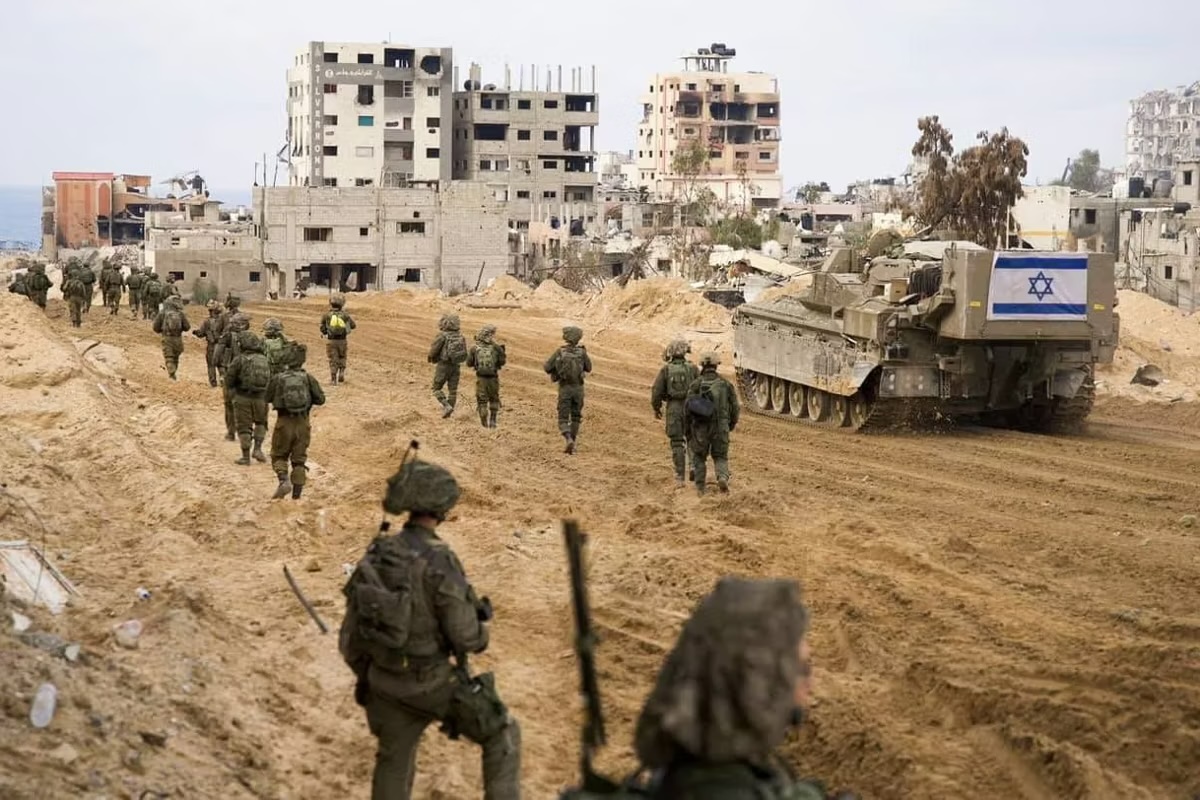
    The ongoing conflict in the Middle East has intensified with significant developments across multiple fronts, resulting in heightened military engagements and diplomatic strains. Iran officially confirmed the death of Revolutionary Guards commander Alireza Tangsiri, who succumbed to injuries sustained in an Israeli airstrike. This announcement came through the Guards’ Sepah News website, marking a substantial blow to Iranian military leadership.

    Israeli forces reported conducting precise strikes on numerous weapons production facilities within Iran, including a critical manufacturing line for long-range surface-to-air missiles located in Tehran. Despite these attacks, Iranian authorities managed to restore electricity in parts of the capital and adjacent regions after strikes previously damaged power infrastructure.

    Beirut’s southern suburbs, a known stronghold of Hezbollah, experienced renewed strikes as shown in AFPTV footage. Israel had issued prior warnings for residents to evacuate the area. The Israeli military confirmed these actions targeted Hezbollah operational sites.

    International repercussions continued as Indonesia confirmed the death of one peacekeeper in Lebanon from indirect artillery fire near Adchit al Qusayr, with three others wounded. Meanwhile, U.S. President Donald Trump remarked in a Financial Times interview that American forces could ‘very easily’ capture Iran’s Kharg Island, which houses a vital oil terminal, questioning Iranian defensive capabilities there.

    Saudi Arabia’s defense ministry announced the interception of five ballistic missiles aimed at Eastern Province, though without specifying their origin. Trump additionally stated that the conflict had effectively achieved ‘regime change’ in Iran, dealing with entirely new leadership.

    Kuwait reported casualties from an Iranian strike on a power station, resulting in one Indian worker’s death and damage to facility infrastructure. Separately, Kuwait’s defense ministry noted ten service members injured in a military camp attack.

    Israel’s parliament approved its 2026 budget, incorporating approximately $10 billion in new military spending, elevating total defense allocations to about $45 billion. The International Atomic Energy Agency confirmed severe damage to Iran’s heavy water production plant in Khondab, rendering it non-operational after Israeli strikes targeted what was described as a key plutonium production site.

    Diplomatic efforts emerged as Pakistan offered to broker and host meaningful talks between the United States and Iran, receiving support from the United Nations and China. Foreign ministers from Pakistan, Saudi Arabia, Egypt, and Turkey convened in Islamabad to discuss peace initiatives.

    Tensions extended to diplomatic relations as Iran’s ambassador refused to leave Lebanon despite being declared persona non grata over accusations of political interference. Academic institutions also suffered, with a university in Isfahan hit by U.S.-Israeli airstrikes for the second time.

    Lebanon’s health ministry reported 1,238 fatalities from Israeli strikes since the conflict’s escalation with Hezbollah began on March 2. Israeli Prime Minister Benjamin Netanyahu ordered further expansion of security zones within Lebanon. Iran entered its 30th day of nationwide internet blackout, severely limiting information access and communication for millions.

  • Air China resumes direct flights between Beijing and Pyongyang

    Air China resumes direct flights between Beijing and Pyongyang

    In a significant development for Northeast Asian connectivity, Air China has officially reinstated its direct flight service connecting Beijing with Pyongyang, effective Monday. This restoration marks the reestablishment of a crucial transportation corridor between the Chinese and North Korean capitals after an extended period of suspension.

    The resumed route, operated by Air China as flight CA121, will maintain a regular weekly schedule every Monday utilizing Boeing 737 aircraft. This reconnection facilitates the only currently operational air link between China and North Korea, serving as a vital conduit for diplomatic personnel, business representatives, and limited international travel between the two nations.

    Aviation analysts note that the flight resumption occurs amid evolving regional dynamics and represents a tangible step toward normalized transportation networks. The direct connection provides a critical infrastructure component for bilateral engagement, potentially signaling warming relations and increased mobility following pandemic-era restrictions that severely limited international travel.

    The flight service restoration carries substantial symbolic importance, representing one of the few functioning international air links to North Korea. Observers will monitor passenger volume and frequency adjustments as indicators of bilateral relationship trajectories and economic engagement levels between Beijing and Pyongyang.

  • Israel PM restores access after Latin Patriarch blocked from Holy Sepulchre

    Israel PM restores access after Latin Patriarch blocked from Holy Sepulchre

    Israeli Prime Minister Benjamin Netanyahu has ordered the immediate restoration of access rights to Jerusalem’s Church of the Holy Sepulchre for the Latin Patriarch of Jerusalem, following a controversial decision to block Cardinal Pierbattista Pizzaballa from entering Christianity’s holiest site on Palm Sunday. The incident, which occurred amid heightened security measures during Israel’s ongoing conflict with Iran, triggered widespread international condemnation and raised serious concerns about religious freedom in the region.

    Israeli police initially prevented Cardinal Pizzaballa and the Custos of the Holy Land, Father Francesco Ielpo, from entering the church complex, citing security concerns related to Iran’s recent missile strikes near holy sites. According to the Latin Patriarchate, the religious leaders were traveling privately without ceremonial procession when officers forced them to turn back—marking the first time in centuries that church authorities were prevented from celebrating Palm Sunday Mass at the site Christians believe contains the locations of Christ’s crucifixion, burial, and resurrection.

    The decision prompted immediate backlash from world leaders and religious authorities. European Union foreign policy chief Kaja Kallas condemned the action as a clear violation of religious freedom, while France, Spain, Italy, and Jordan joined in criticizing the restriction. Pope Leo XIV expressed solidarity with Middle Eastern Christians who cannot fully observe holy days due to ongoing conflicts.

    In response to the international pressure, Netanyahu’s office announced that the Patriarch would receive full and immediate access, clarifying that there had been no malicious intent behind the initial denial. The Prime Minister elaborated on Israel’s security concerns in a social media post, noting that Iran had repeatedly targeted holy sites of all three monotheistic religions in Jerusalem with ballistic missiles in recent days.

    Israeli police defended their decision, explaining that all holy sites in Jerusalem have been closed since the start of the war due to safety concerns. The force emphasized that the Old City’s narrow streets present significant challenges for emergency response capabilities in the event of mass casualty incidents.

    The controversy unfolded as Christian worshippers expressed disappointment over the cancellation of traditional Palm Sunday processions. In the Old City, shops remained shuttered and streets lay largely deserted, with local residents lamenting the scaled-back observances. Cardinal Pizzaballa ultimately celebrated Mass at the Church of All Nations on the Mount of Olives, where he delivered a message of resilience: War will not erase the resurrection, and grief will not extinguish hope.

  • China resumes direct flights to North Korea after 6 years

    China resumes direct flights to North Korea after 6 years

    China has fully reestablished transportation connectivity with North Korea as Air China resumed direct flight operations between Beijing and Pyongyang on Monday, completing the restoration of pre-pandemic travel links between the allied nations.

    The resumption of air service follows the earlier reinstatement of cross-border passenger rail connections on March 12, marking a significant step in North Korea’s gradual reopening to international travel after implementing some of the world’s most stringent border controls during the COVID-19 pandemic. Both flight and train services had remained suspended since early 2020.

    Chinese state media documented the arrival of the inaugural flight, which received an official welcome ceremony attended by Chinese Ambassador to North Korea Wang Yajun and diplomatic personnel. The event signals strengthening bilateral relations despite ongoing geopolitical complexities.

    North Korea’s national carrier, Air Koryo, had previously resumed flights between the capitals in 2023, but the return of Chinese commercial aviation represents a more substantial normalization of transportation infrastructure. The renewal of Chinese tourism is particularly significant given that Chinese tour groups constituted approximately 90% of all foreign visitors to North Korea prior to the pandemic-induced border closure.

    The delayed resumption of Chinese tourism has puzzled regional observers, especially considering Russia successfully dispatched tourist groups to North Korea earlier in 2024. This comprehensive transportation restoration occurs against the backdrop of evolving diplomatic dynamics, including North Korean leader Kim Jong Un’s notable attendance at a Chinese military parade in September – the first such appearance by a North Korean leader in decades.

    Despite being Pyongyang’s primary trading partner and most important ally, Beijing has periodically expressed concern over North Korea’s provocative missile testing programs, particularly those involving systems capable of targeting South Korea and United States territories.

  • Netanyahu says Latin Patriarch will have full access to holy site

    Netanyahu says Latin Patriarch will have full access to holy site

    In a significant reversal, Israeli Prime Minister Benjamin Netanyahu has granted the Latin Patriarch of Jerusalem “full and immediate access” to the Church of the Holy Sepulchre following widespread condemnation of the initial decision to bar the cardinal from celebrating Palm Sunday Mass at Christianity’s most sacred site.

    The controversy erupted when Israeli police prevented Cardinal Pierbattista Pizzaballa, head of the Catholic Church in the Holy Land, and Reverend Francesco Ielpo from entering the church to conduct a private ceremony marking the beginning of Holy Week. Church authorities described this as an unprecedented event, noting it was “the first time in centuries” a Latin Patriarch had been denied access on Palm Sunday.

    Israeli officials defended the initial restriction as a security precaution amid ongoing regional tensions. Netanyahu stated that Iranian ballistic missiles had “repeatedly targeted” Jerusalem’s holy sites in recent days, with missile fragments landing mere meters from the Church of the Holy Sepulchre in one instance. The Prime Minister emphasized that police acted out of “special safety concerns” rather than “malicious intent.”

    The decision provoked strong international criticism. U.S. Ambassador Mike Huckabee characterized the move as an “unfortunate overreach” that was “difficult to understand or justify.” Italian Prime Minister Giorgia Meloni condemned it as “an offence against every community that recognises religious freedom,” while French President Emmanuel Macron expressed concern about “the worrying increase in violations of the status of the Holy Places in Jerusalem.”

    The Latin Patriarchate issued a statement calling the decision “a grave precedent” that disregarded “the sensibilities of billions of people around the world.” Cardinal Pizzaballa described the measure as “an extreme departure from basic principles of reasonableness, freedom of worship, and respect for the status quo,” while noting his office had followed all imposed restrictions since the conflict began.

    Following Netanyahu’s intervention, Israeli authorities are now developing a plan to facilitate worship at the site during Holy Week while maintaining security protocols. The incident has highlighted the complex balance between security concerns and religious freedom in Jerusalem’s contested holy sites.

  • Forty new migratory species win international protection: UN body

    Forty new migratory species win international protection: UN body

    In a landmark decision for global wildlife conservation, the United Nations Convention on Migratory Species (CMS) has extended international protections to forty additional migratory species facing population declines. The historic agreement was finalized Sunday at the conclusion of the COP15 summit in Campo Verde, Brazil, which convened delegates from 132 nations and the European Union.

    The newly protected species span diverse ecosystems and include iconic animals such as the snowy owl (Bubo scandiacus), celebrated in popular culture through the Harry Potter franchise, and the critically endangered Hudsonian godwit (Limosa haemastica), a long-beaked shorebird. The list also encompasses marine species like the great hammerhead shark (Sphyrna mokarran), terrestrial mammals including the striped hyena (Hyaena hyaena), and freshwater species such as the giant otter (Pteronura brasiliensis).

    This binding international agreement obligates signatory nations to implement comprehensive conservation measures, including habitat protection and restoration, mitigation of migration barriers, and cross-border cooperation to ensure species survival. The summit’s location in Brazil’s Pantanal wetlands—a biodiversity hotspot in the southern Amazon region—symbolically underscored the urgency of conservation efforts.

    The expanded protections come amid alarming ecological assessments. A pre-summit CMS report revealed that 49% of all tracked migratory species are experiencing population declines, with nearly one-quarter facing global extinction risks. Concurrently, a separate UN assessment published during the summit documented catastrophic declines in migratory freshwater fish populations worldwide, threatening both river ecosystem health and human communities that depend on them.

    Experts identified habitat destruction, unsustainable fishing practices, and pervasive water pollution as primary drivers of this biodiversity crisis, affecting species from the Amazon to the Danube river systems. This conservation victory builds upon Brazil’s recent environmental leadership, having hosted the COP30 climate summit in Belem just three months prior.