分类: world

  • Plane carrying Maharashtra Deputy CM Ajit Pawar crashes, ‘no survivors’ yet authority says

    Plane carrying Maharashtra Deputy CM Ajit Pawar crashes, ‘no survivors’ yet authority says

    A private aircraft carrying Ajit Pawar, the Deputy Chief Minister of Maharashtra, crashed under tragic circumstances on January 28th in the Baramati region of western India. Aviation authorities confirmed the politician was traveling with four other individuals—two additional personnel and two crew members—aboard the ill-fated flight.

    According to an official statement released by India’s Directorate General of Civil Aviation (DGCA), preliminary assessments indicate no survivors from the catastrophic incident. The aircraft was reported to have been completely engulfed in flames upon impact in Pune district, with emergency response teams immediately deploying to the scene.

    Rescue operations continue intensively as firefighting crews work to extinguish the remaining blaze at the crash site. The DGCA has initiated a comprehensive investigation to determine the precise cause of the accident, though adverse weather conditions or technical malfunctions remain speculative at this early stage.

    The incident has sent shockwaves through India’s political establishment, particularly in Maharashtra state where Pawar served as a prominent political figure and key government official. The veteran politician held significant influence in regional politics and was actively involved in state governance matters at the time of the tragedy.

    Aviation safety experts emphasize that this accident represents one of the most serious incidents involving high-ranking Indian officials in recent years. The international community has begun expressing condolences while awaiting further developments in the investigation.

  • A new report warns that combined war casualties in Russia’s war on Ukraine could soon hit 2 million

    A new report warns that combined war casualties in Russia’s war on Ukraine could soon hit 2 million

    A sobering analysis from the Center for Strategic and International Studies (CSIS) projects that combined military casualties in Russia’s war against Ukraine could approach two million by spring 2025, representing the highest toll for any major power since World War II. The Washington-based think tank’s comprehensive assessment, released Tuesday, reveals Russia has suffered approximately 1.2 million casualties including up to 325,000 fatalities since launching its full-scale invasion in February 2022.

    Ukraine, despite its smaller population and military capacity, has endured between 500,000 to 600,000 casualties with an estimated 140,000 deaths according to the report. These staggering figures emerge as both nations continue to manipulate casualty reporting for strategic purposes, with Moscow officially acknowledging only 6,000 military deaths amid systematic suppression of accurate loss documentation in Russian media.

    The CSIS analysis, incorporating data from independent Russian news outlet Mediazona, BBC research, British government estimates, and official interviews, portrays a conflict of devastating attrition with minimal territorial gains. Despite controlling battlefield initiative throughout 2024, Russian forces have advanced at an exceptionally sluggish pace of 15-70 meters daily in their most significant offensives—slower than nearly any major military campaign in the past century.

    Concurrent with the report’s release, fresh attacks demonstrated the war’s ongoing brutality. Ukrainian officials confirmed two civilians killed in overnight strikes on Kyiv’s outskirts, while nine others were wounded in separate assaults targeting Odesa, Kryvyi Rih, and the front-line Zaporizhzhia region. Russia’s Defense Ministry reported intercepting 75 Ukrainian drones overnight, with significant activity over the Krasnodar region and annexed Crimea.

    The report concludes that Russia is paying an extraordinary human cost for marginal strategic advantages, fundamentally diminishing its status as a major global power despite claims of battlefield momentum.

  • Indonesia landslide death toll rises to 34, dozens missing

    Indonesia landslide death toll rises to 34, dozens missing

    Rescue operations continue in Indonesia’s West Java province as the confirmed death toll from Saturday’s devastating landslide has climbed to 34, with approximately 32 individuals still unaccounted for. The catastrophic event occurred in the mountainous village of Pasirlangu when torrential rains triggered a massive debris flow that engulfed the community.

    According to Abdul Muhari, spokesman for Indonesia’s national disaster mitigation agency, the identified victims have been released to their families for burial ceremonies. Despite the official missing persons count being revised downward, local authorities express concerns that the actual number of missing individuals may be substantially higher than current estimates.

    Emergency responders face extremely challenging conditions as they comb through unstable terrain in West Bandung region on Java island. Teams are employing both manual search techniques and heavy machinery while exercising extreme caution due to continuing adverse weather conditions that heighten the risk of subsequent landslides.

    The natural disaster has inflicted severe damage to more than 50 residential structures and forced the displacement of over 650 local inhabitants. West Java Governor Dedi Mulyadi has attributed the catastrophe to extensive vegetable plantations surrounding Pasirlangu, which may have compromised soil stability. The governor has committed to relocating affected residents to safer areas.

    This tragic event echoes similar environmental disasters that have plagued the Indonesian archipelago, particularly during the annual rainy season from October through March. The government has previously highlighted the critical role of deforestation in exacerbating flooding and landslide risks, referencing last year’s catastrophic events on Sumatra island that resulted in approximately 1,200 fatalities and displaced more than 240,000 people.

    Environmental experts emphasize that forest cover plays a vital role in absorbing rainfall and stabilizing soil through root systems, with vegetation loss significantly increasing regional vulnerability to landslides across Indonesia’s diverse topography.

  • Israel prepares to bury last Gaza hostage

    Israel prepares to bury last Gaza hostage

    The southern Israeli town of Meitar became the focal point of national mourning as citizens gathered to pay final respects to Ran Gvili, the last hostage whose remains were repatriated from Gaza. The solemn ceremony marked the emotional conclusion to a painful chapter that began with Hamas’s October 2023 offensive.

    Under overcast skies, hundreds of mourners assembled in a local stadium where a massive portrait of the 24-year-old police officer dominated the memorial space. Attendees carried Israeli flags and wore yellow ribbons—the enduring symbol of the hostage crisis that has gripped the nation for over two years. Uniformed soldiers and police officers joined grieving families in plastic chairs arranged before a large screen broadcasting the funeral proceedings.

    Gvili, a member of the elite Yassam unit, was on medical leave awaiting shoulder surgery when Hamas militants launched their attack. Despite his condition, he immediately armed himself and rushed toward the conflict zone. His heroic actions during the defense of Kibbutz Alumim—where he ultimately fell in combat—earned him the posthumous title ‘Defender of Alumim’ from his community.

    The journey to bring Gvili home culminated Monday when Israeli forces recovered his remains from Gaza. Of the 251 hostages taken during the October 7 assault, Gvili’s were the final ones held within Palestinian territory. Earlier Wednesday, emotional scenes unfolded along roadways as processions transported his body from Camp Shura military base to Meitar, with citizens lining routes and police officers standing at solemn attention.

    Prime Minister Benjamin Netanyahu, who delivered remarks at the ceremony, characterized the recovery operation as a ‘sacred mission now fully completed.’ During a Tuesday press conference, he stated: ‘Ran was the first to charge, and Rani was the last to return. Many generations will draw inspiration from Ran Gvili, a hero of Israel.’

    The hostage return process evolved throughout the protracted conflict, involving complex ceasefire negotiations, prisoner exchanges, and military rescue operations. The most recent repatriations occurred under a US-brokered ceasefire agreement implemented on October 10. In Tel Aviv’s Hostages Square, a symbolic clock tracking the captivity duration finally stopped ticking late Tuesday as hundreds gathered to witness the emotional milestone.

    President Isaac Herzog noted Monday that this moment represents the first time since 2014 that no Israeli citizens remain held hostage in Gaza, providing a measure of closure to a nation forever transformed by the two-year ordeal.

  • Greenland’s elite dogsled unit patrols desolate, icy Arctic

    Greenland’s elite dogsled unit patrols desolate, icy Arctic

    In the vast, frozen expanses of Greenland, an elite naval unit operates under some of Earth’s most extreme conditions. The Sirius Dogsled Patrol, despite former U.S. President Donald Trump’s dismissive remarks about Denmark’s Arctic defense capabilities, represents a critical and highly specialized military force. This unique patrol unit relies on traditional dogsled teams rather than modern technology to monitor a territory spanning the combined area of France and Spain.

    Comprising six two-person teams each handling a dozen dogs, the patrol embarks on four-to-five-month missions during the harsh winter months when temperatures plummet to -40°C and darkness prevails for extended periods. Each day, these skilled operatives ski alongside their canine companions, covering approximately 30 kilometers while pulling sleds laden with 500 kilograms of essential supplies, including specially designed Arctic tents, food provisions, and fuel.

    The strategic advantage of dogsleds over snowmobiles, according to former patrol member Sebastian Ravn Rasmussen, lies in their remarkable durability and reliability in extreme isolation. ‘When a snowmobile breaks down completely, your mission ends. With dogsleds, we can perform repairs and continue operations even if we lose several dogs, though at reduced capacity,’ Rasmussen explained. The patrol members are prepared for worst-case scenarios, including the possibility of consuming their dogs for survival, however remote that likelihood may be.

    Their mission extends beyond simple reconnaissance. The Sirius Patrol provides vital monitoring capabilities that technological alternatives cannot match in the Arctic’s unique conditions. As Rasmussen noted, aerial surveillance proves ineffective when ‘everything is white’ from above, making ground-level detection essential for identifying unauthorized activities. The unit has intercepted Russian expeditions lacking proper permits and assisted stranded cruise ships, including a notable 2023 grounding incident.

    Selection for this elite force remains exceptionally rigorous, with only 5-6 candidates chosen annually from nearly 100 applicants after completing Denmark’s basic military training and passing intensive physical and psychological evaluations. Successful recruits commit to a 26-month deployment in Greenland without home visits. While most members are Danish, a few Greenlanders have joined the ranks over the years, though no women have applied to date.

    The patrol’s historical significance dates to World War II when similar units discovered and destroyed German weather stations that provided crucial intelligence for U-boat operations in the Atlantic. Denmark formalized this military presence in 1950, establishing the permanent Sirius Dogsled Patrol that continues to serve as Greenland’s first line of defense in the rapidly changing Arctic region.

  • Japan bids farewell to panda twins

    Japan bids farewell to panda twins

    Tokyo’s Ueno Zoological Gardens witnessed an outpouring of emotion on Tuesday as thousands gathered to bid farewell to Japan’s last remaining giant pandas, twins Xiao Xiao and Lei Lei, who embarked on their journey to China. This departure signifies the first time in approximately half a century that Japan will be without these beloved bears, closing a significant chapter in Sino-Japanese cultural exchange.

    The atmosphere was charged with sentiment as devoted fans, many carrying panda-themed accessories and plush toys, formed extensive queues outside the zoo hours before the scheduled departure. Despite each visitor being allocated merely one minute for final viewing during Sunday’s last public appearance, the crowd remained enthusiastic, with many expressing hopes to eventually visit China to see the pandas again.

    According to Chinese media reports, the twins departed Ueno Zoo for Narita International Airport in the afternoon, scheduled to board a flight to Sichuan province where they will reunite with their mother Xian Nyu and elder sister Xiang Xiang at a specialized facility.

    The announcement of their December departure triggered a significant surge in zoo attendance, necessitating the implementation of an online reservation system to manage unprecedented visitor numbers. Chinese Foreign Ministry spokesman Guo Jiakun confirmed the pandas’ transfer under bilateral agreements, while extending warm invitations for Japanese friends to visit pandas in China.

    This panda conservation program, initiated in 1972 with the arrival of the first bears, has been widely regarded as exceptionally successful, fostering cooperation in breeding, veterinary care, and public education. Over three decades, more than 30 giant pandas were either loaned to Japan or born there under this initiative.

    Doi Toshimitsu, president of a panda protection institute and former Ueno zoo director, emphasized how the original pandas’ arrival symbolized the normalization of Japan-China relations, noting that these charismatic animals remain enduring symbols of friendship and cultural exchange between the nations.

    The economic impact of panda diplomacy extends beyond conservation. Panda-themed merchandise, souvenirs, and snacks have generated substantial revenue for local businesses throughout the years. Following the departure announcement, nearby shopping districts launched special panda-themed promotions featuring bear-modeled desserts and merchandise.

    Miyamoto Katsuhiro, professor emeritus of economics at Kansai University, projected that the absence of pandas at Ueno Zoo would result in estimated annual economic losses of at least 15.4 billion yen ($100 million), significantly affecting adjacent hotels, restaurants, and souvenir shops.

    The zoo has housed 15 pandas since 1972, with the birth of Xiao Xiao and Lei Lei on June 23, 2021, triggering neighborhood-wide celebrations that became cherished community memories. Their departure follows the return of elder sister Xiang Xiang in February 2023 and parents Bi Li and Xian Nyu in September 2024, along with four pandas from Adventure World in Wakayama prefecture last June.

  • Chinese tourists avoid Japan amid concerns

    Chinese tourists avoid Japan amid concerns

    A perfect storm of diplomatic tensions, safety warnings, and operational disruptions has precipitated a dramatic collapse in Chinese tourism to Japan, with travel industry experts reporting unprecedented cancellation rates and declining visitor numbers.

    The downturn began in November 2025 following controversial remarks by Japanese Prime Minister Sanae Takaichi regarding Taiwan, which sparked significant public backlash in China. This diplomatic friction coincided with multiple other concerns that have collectively diminished Chinese traveler confidence in Japan as a preferred destination.

    According to Yang Jinsong, a prominent researcher at the China Tourism Academy, the decline represents a complex convergence of factors. “Beyond the bilateral relations affecting public sentiment, travelers are growing increasingly wary of Japan’s public security situation, recent seismic activity, and disease outbreaks,” Yang explained.

    The aviation sector has manifested this trend through massive flight cancellations. Data from Flight Manager, an aviation analytics platform, reveals that cancellation rates for mainland China to Japan routes reached 47.2% in January 2026—a 7.8 percentage point increase from December 2025. By late January, carriers had already canceled February flights on 49 scheduled routes.

    China’s three major airlines—Air China, China Southern Airlines, and China Eastern Airlines—responded to the situation by offering unprecedented flexibility. On January 27, 2026, they announced that passengers who purchased tickets before noon that day for Japan-bound flights scheduled between March 29 and October 24, 2026, would be eligible for free refunds or changes.

    Official immigration statistics released by the Japanese government on January 15, 2026, quantify the impact: approximately 348,700 Chinese nationals (excluding those from Hong Kong, Macao, and Taiwan) traveled to Japan in December 2025. This represents a staggering 40% decrease from the previous year and a 35% drop from November 2025.

    The safety concerns received official validation when China’s Ministry of Foreign Affairs issued a travel advisory on January 27, 2026, warning that “public security in Japan has deteriorated in recent months.” The statement highlighted increased criminal cases targeting Chinese citizens and noted that earthquakes in several regions had caused injuries, with Japanese authorities warning of potential follow-up seismic activity.

    “Chinese citizens in Japan are facing serious safety threats,” the ministry declared, explicitly advising travelers to avoid visiting Japan and urging those already in the country to closely monitor security conditions along with earthquake and disaster alerts.

    Adding to the concerns, Japan’s Ministry of Agriculture, Forestry and Fisheries confirmed the country’s 18th avian influenza outbreak of the season at a poultry farm in Chiba prefecture, near Tokyo, where more than 100,000 quail were being raised.

    On Chinese social media platform Xiaohongshu (RedNote), users actively debate whether Japan remains a viable destination. One user, nicknamed Xiaoyu, posted seeking advice about a planned Spring Festival hiking trip along the Kumano Kodo trail, noting, “I am preparing a ‘Plan B’ amid fears of flight cancellations and other uncontrollable risks.”

    While some commenters expressed similar concerns, others reported that their December trips were largely unaffected. Industry expert Yang suggested that Chinese travelers are likely considering alternative destinations for the holiday period as uncertainty surrounding flights and safety conditions continues to influence travel decisions.

  • US aircraft carrier arrives in Middle East amid Iran tensions

    US aircraft carrier arrives in Middle East amid Iran tensions

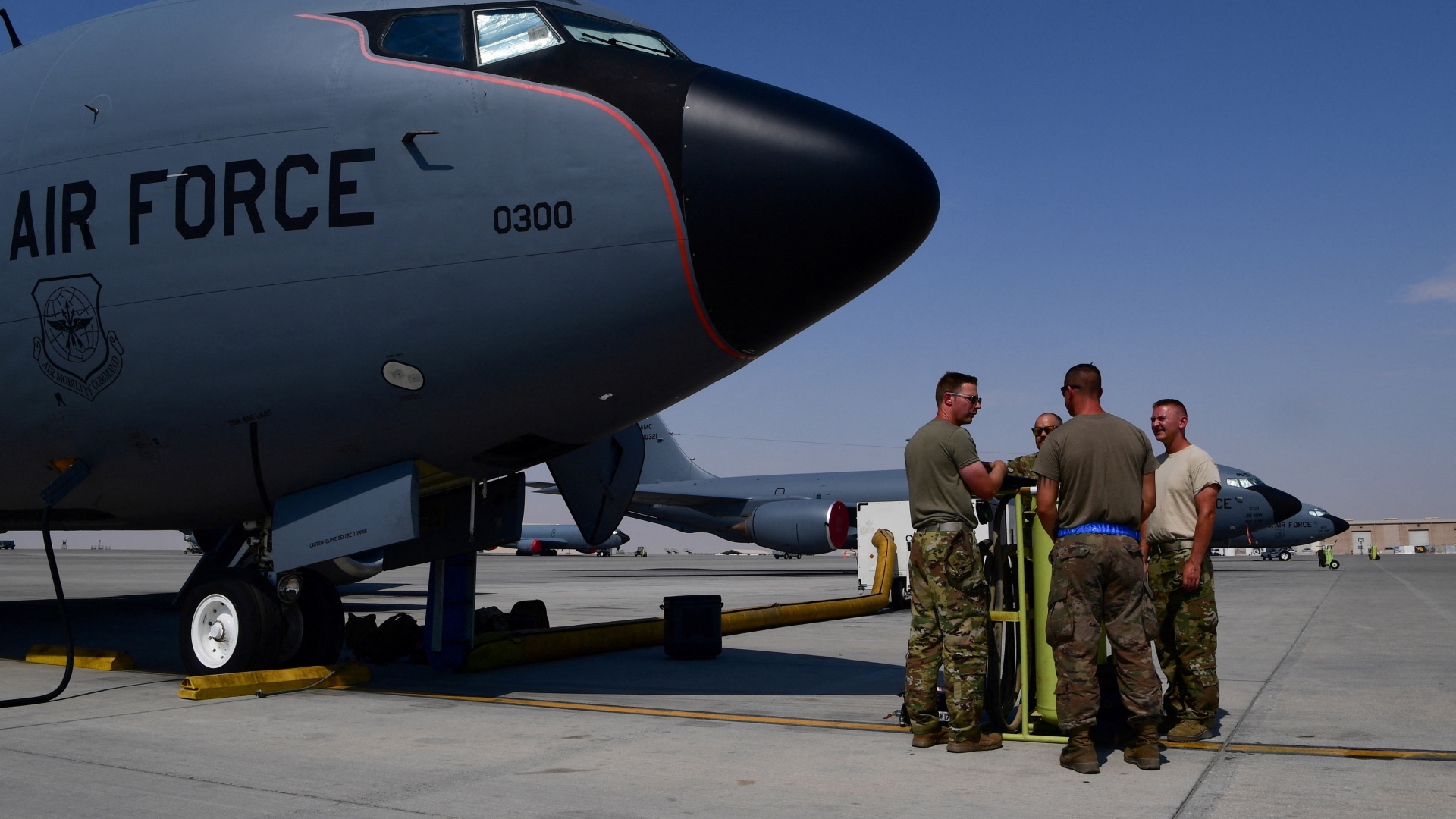
    A formidable US naval contingent spearheaded by the USS Abraham Lincoln aircraft carrier has entered Middle Eastern waters, significantly escalating military tensions with Iran amid stalled diplomatic efforts. The deployment marks the region’s first carrier presence since October, dramatically enhancing American offensive capabilities with F-35 fighter squadrons and destroyers armed with hundreds of missiles, including Tomahawk cruise missiles.\n\nRegional powers have responded with unequivocal declarations against hosting offensive operations. The United Arab Emirates, which maintains a US airbase within its territory, formally declared through its Foreign Ministry that it would not permit its airspace, territory, or territorial waters to be utilized for hostile actions against Iran. Emphasizing neutrality and regional stability, the UAE committed to withholding any logistical support for such operations and advocated for dialogue and de-escalation as the primary solution to the crisis.\n\nSaudi Arabia issued a parallel statement, similarly refusing access to its territory and airspace for attacks targeting Iran. These declarations from key Gulf nations present substantial operational complications for potential US military action, which would typically require regional basing rights.\n\nIran responded with defiant rhetoric and symbolic demonstrations. Foreign Ministry spokesman Esmaeil Baghaei warned of a \”comprehensive and regret-inducing response to any aggression,\\” asserting Iran’s confidence in its military capabilities. Tehran displayed public resolve through a newly erected billboard in the city center depicting a destroyed US aircraft carrier, accompanied by the prophetic caption: \”If you sow the wind, you will reap the whirlwind.\”\n\nFurther amplifying regional tensions, Iranian Navy Commander Shahram Irani characterized Iran’s naval power as \”an anchor of stability,\” while Yemen’s Houthi group threatened new attacks in the Red Sea through a menacing video. Hezbollah leader Naim Qassem warned from Lebanon that \”a war on Iran this time will ignite the region.\”\n\nThe escalating geopolitical situation has already impacted civilian aviation, with several airlines including India’s IndiGo canceling flights to multiple Middle Eastern destinations as a precautionary measure.

  • US withdraws from Paris Agreement; UN vows unwavering global climate action

    US withdraws from Paris Agreement; UN vows unwavering global climate action

    In a significant geopolitical development, the United States formally executed its withdrawal from the Paris Climate Agreement on Tuesday, January 28, 2026. This move marks a pivotal moment in global environmental diplomacy, removing the world’s second-largest greenhouse gas emitter from the international accord designed to combat climate change.

    The United Nations has responded with resolute determination to maintain climate action momentum. During a press briefing, a UN spokesperson addressed inquiries from China Daily, emphasizing that the organization’s climate initiatives would proceed without interruption despite the American departure.

    “The UN’s comprehensive efforts to address climate change, facilitate equitable transitions, and implement critical mitigation and adaptation measures for vulnerable nations will continue undeterred,” the spokesperson affirmed. This declaration underscores the international body’s commitment to preserving the agreement’s integrity and advancing its objectives regardless of individual national decisions.

    The Paris Agreement, adopted in 2015, represents a landmark global framework wherein signatory nations commit to substantially reducing carbon emissions to limit global temperature rise. The U.S. withdrawal process commenced in 2019 under the previous administration and has now reached formal completion, potentially altering the dynamics of international climate negotiations and implementation strategies.

    UN officials indicated that climate diplomacy would remain a top priority, with continued focus on supporting developing countries particularly susceptible to climate impacts. The organization’s steadfast position signals confidence that other signatory nations will maintain their commitments to the accord’s ambitious environmental targets.

  • Japan’s last pair of pandas have arrived back in China

    Japan’s last pair of pandas have arrived back in China

    BANGKOK (AP) — Japan has entered its first panda-free period in fifty years following the departure of its last remaining giant pandas, Xiao Xiao and Lei Lei, who have been repatriated to China. This development occurs during a significant downturn in Sino-Japanese relations, primarily fueled by Japan’s current Prime Minister’s position on Taiwan, which Beijing considers a breakaway province. The strained diplomatic climate suggests that new panda loans to Japan are improbable in the near future.

    The twin pandas, born in 2021 at Tokyo’s renowned Ueno Zoo, garnered a massive and devoted following. Thousands of admirers visited the zoo for a final glimpse before the bears began their journey. This practice of panda diplomacy dates back to 1972 when China first gifted pandas to Japan to commemorate the normalization of diplomatic relations. For decades, China has strategically employed these charismatic animals as instruments of soft power and diplomatic goodwill—a gesture that can be withdrawn when bilateral relations become contentious.

    State broadcaster CCTV documented the arrival of Xiao Xiao and Lei Lei in crates at a facility in Sichuan province, the heartland of China’s giant panda conservation efforts. According to a statement from the China Conservation and Research Center for the Giant Panda, the animals arrived safely early Wednesday morning. They will now undergo a standard quarantine period at the research center. Under China’s long-standing policy, all pandas loaned to foreign nations, including any offspring born abroad, remain the property of China.