分类: world

  • 13 dead as fire triggers explosions in Burundi

    13 dead as fire triggers explosions in Burundi

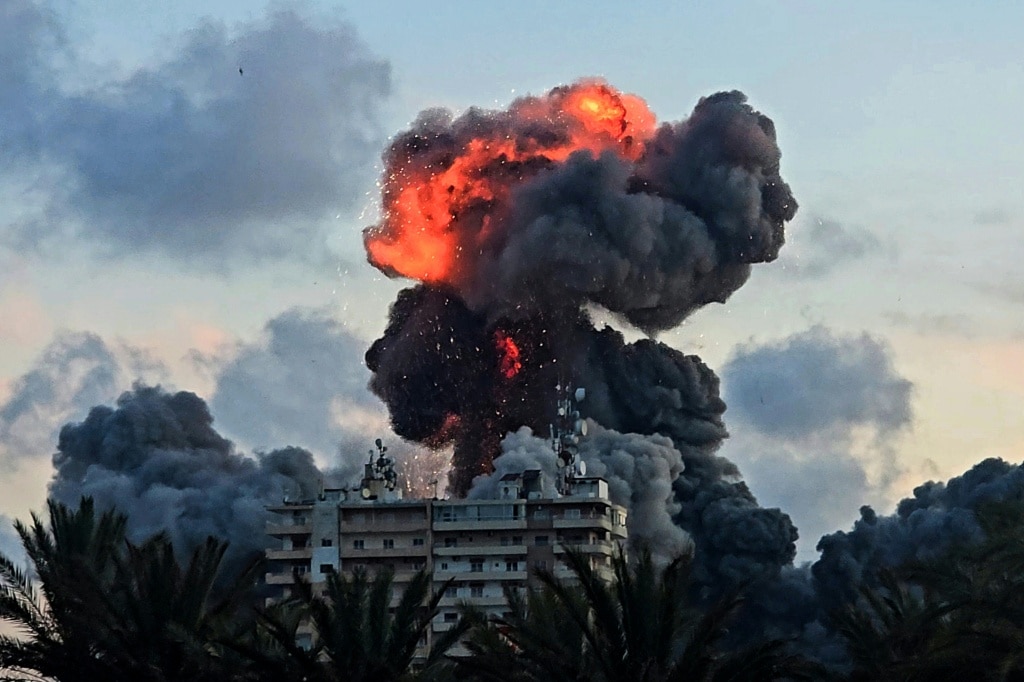
    BUJUMBURA, Burundi – A devastating accidental fire at a Burundian military ammunition storage facility has left 13 people dead and dozens more injured after igniting stored explosives that sparked hours of blasts across the southern outskirts of the country’s largest city, Burundi’s military confirmed Wednesday.

    The deadly chain of events unfolded overnight Tuesday in the Musaga district on the outskirts of Bujumbura, East Africa’s Burundi’s primary commercial and population hub. According to army spokesperson Gaspard Baratuza, the disaster originated from an electrical short circuit inside the secured storage unit located within the military camp.

    By Wednesday morning, official tallies confirmed 13 fatalities and at least 57 injured people, with three of the wounded being active-duty soldiers. Spokesperson Baratuza noted that authorities have not yet released a breakdown confirming whether all fatalities were civilian residents of nearby neighborhoods.

    Local residents living within close proximity of the military installation fled their homes in immediate panic as blasts rocked the area. The intensity of the fire was so great that glowing plumes of smoke could be spotted from kilometers away. The force of the repeated explosions sent live munitions flying into residential areas surrounding the camp, prompting senior military leader Major General Aloys Ndayikengurukiye to issue a public appeal for residents to report any unspent ordnance or unfamiliar suspicious objects immediately so that explosive ordnance disposal teams can remove them safely.

    In an effort to curb widespread misinformation that spread rapidly across local communities in the hours after the blasts, Baratuza explicitly stated that the incident was not the result of a militant or rebel attack on the military installation. The fire knocked out local power grids, cutting electricity service to the military camp and all adjacent neighborhoods. Baratuza called on residents of the most affected areas – Gasekebuye, Kanyosha, Kinindo and their surrounding suburbs – to remain calm and avoid unnecessary panic amid ongoing response and cleanup operations.

    The incident, which dates to April 1, 2026, is currently the deadliest accidental disaster recorded in Burundi so far this year, as recovery efforts continue and authorities work to clear all hazardous unexploded materials from affected residential areas.

  • Myanmar’s coup leader who set off a brutal civil war becomes president

    Myanmar’s coup leader who set off a brutal civil war becomes president

    On February 1, 2021, Myanmar’s top military leader Min Aung Hlaing ousted the elected government led by Aung San Suu Kyi, promising to transfer power to a civilian government through new elections within 12 months. Five years later, he has finally kept that promise in name only. Last week, the newly convened parliament, stacked entirely with his political allies, selected him as Myanmar’s next president, and he stepped down from his post as armed forces commander to meet constitutional requirements for the office.

    This so-called return to civilian rule is little more than a political reshuffle designed to consolidate military power under a civilian facade. Under Myanmar’s constitution, the military is guaranteed 25% of all parliamentary seats, and the military-aligned Union Solidarity and Development Party (USDP) claimed nearly 80% of the remaining seats in an election widely criticized as heavily rigged in its favor. The final outcome was never in doubt, making the process more of a coronation than a democratic exercise. When the new cabinet is formed, current and former military officials are expected to hold nearly all key portfolios.

    To ensure his influence remains unchallenged even after leaving uniform, Min Aung Hlaing has placed a close, hardline ally, General Ye Win Oo — who has a documented reputation for brutal crackdowns on opposition — in his former role as commander-in-chief. He has also established a new top-level consultative council that will hold supreme authority over all civilian and military matters, effectively guaranteeing he retains full control of the state despite his new civilian title.

    For millions of ordinary Myanmar citizens, this political transition will bring little to no change to the daily chaos and suffering that has defined life since the 2021 coup. For young opposition activist Kyaw Win (a pseudonym to protect his safety), the outcome has extinguished any immediate hope of political change. Arrested in 2022 for joining a flash mob protest against the junta, he spent years in prison, where he describes being systematically tortured: guards beat him with iron rods, burned his skin with cigarettes, slashed his thigh with a knife and sexually assaulted him during interrogations. Recently released from prison, Kyaw Win says his commitment to the pro-democracy movement remains intact, but he can no longer safely organize inside the country and plans to flee abroad to find work.

    The five years since the coup have been an unmitigated catastrophe for Myanmar. Min Aung Hlaing severely miscalculated the level of public outrage that would follow his power grab, which came just as parliament was set to confirm a new term for Aung San Suu Kyi’s National League for Democracy following its landslide victory in the 2020 general election. His decision to deploy lethal force against nationwide peaceful protests ignited a widespread civil conflict that has killed thousands of people, displaced nearly 4 million more, and gutted the country’s once-growing economy.

    Resistance groups now control large swathes of territory across the country, and the junta has responded with indiscriminate air strikes and scorched-earth campaigns against civilian communities in opposition-held areas, using a longstanding counterinsurgency doctrine known as “the four cuts” that aims to cut off rebel groups from access to food, funds, information and new recruits by destroying supporting communities. With military support from China and Russia, the junta has reclaimed some territory lost over the past two years, but the conflict remains deadlocked.

    Earlier this month, Min Aung Hlaing presided over his final annual military parade as commander-in-chief in the capital Nay Pyi Taw, a tradition the junta has maintained every year even as the civil war has raged. BBC correspondents who attended the event listened closely for any hint of regret or reflection over the devastation caused by the coup, but none came. Instead, Min Aung Hlaing repeated his longstanding unapologetic justifications for the 2021 power grab, claiming the military held a constitutional mandate to intervene in national politics to “uphold multi-party democracy”, and labeling all opponents of military rule “armed terrorist factions” backed by foreign enemies and opportunistic politicians. His speech made clear that a civilian title would not lead to any shift in how the country is governed.

    Su Mon, a senior analyst at the Armed Conflict Location & Event Data Project (ACLED), warns that the conflict will only continue unchanged under the new administration. “The new commander-in-chief is a hardline loyalist with deep personal and family ties to Min Aung Hlaing, so he will continue the existing strategy above all else: retake all lost territory from resistance groups,” she explained. With resistance groups still controlling around 90 towns across the country, that means more indiscriminate air and drone strikes on civilian areas, and more devastating scorched-earth campaigns.

    The National Unity Government (NUG), the shadow administration formed by politicians ousted in the 2021 coup and based out of resistance-held territory along the Thai border, rejects the legitimacy of the new presidency, the recent election and the new parliament entirely. While the NUG has struggled to unify the dozens of disparate armed resistance groups operating across the country, it remains firm in its commitment to continue fighting to remove the military from political power entirely and draft a new federal constitution.

    “This is not the time for compromise,” NUG spokesman Nay Phone Latt said. “If the military will not accept our objectives, our revolution will go on. We have to keep going; if we give up now, our people and the next generation will only suffer more.”

    Five years of continuous conflict have left the Myanmar public exhausted, and the country’s economy on the brink of collapse. The United Nations estimates that more than 16 million people — nearly a third of the country’s population — currently need life-saving humanitarian assistance. Runaway inflation has collapsed living standards for most households, and the crisis has been made worse by growing fuel shortages driven by regional export restrictions and the ongoing conflict in the Middle East.

    Myanmar relies on imports for 90% of its oil and petroleum products, and most of those imports come from neighboring countries that have recently cut exports to address their own domestic shortages. Fuel is now strictly rationed, and prices have spiked sharply, far exceeding costs in neighboring Thailand. For most businesses, the situation is even more dire: the national electricity grid only provides a few hours of power per day even in major cities like Yangon, forcing almost all businesses and many households to rely on expensive diesel generators.

    Tin Oo, a motorbike taxi driver working in Yangon’s industrial Hlaing Tharyar district, says daily life has become unrecognizable from a decade ago. “Today, we can’t even earn enough to cover rent and food,” he explained. Like many ordinary Myanmar people, he has no faith that the new civilian-backed military government will improve conditions. “They don’t care about us. We still have to fend for ourselves. These days, it’s almost impossible to survive if you try to make an honest living, but corrupt people get rich.”

    Into this bleak political stalemate, Mya Aye — a veteran pro-democracy activist who has spent decades imprisoned by Myanmar’s military — has emerged this week with a rare call for dialogue and compromise, arguing that the only way to avoid total state collapse is to negotiate a settlement between the military and its opposition. He has launched a new cross-party council to bring together supporters of dialogue, calling for immediate talks and the release of all political prisoners. While only a handful of prominent political figures have publicly joined the initiative, Mya Aye says many more are holding confidential discussions with the group.

    “This election is not a solution. It’s just a political game that Min Aung Hlaing is playing to solidify his control,” Mya Aye said. “The current constitution also can’t get us out of this crisis. But the public is exhausted. If we can’t find a compromise, the country will collapse — and in many ways, it already has.” Mya Aye argues that if the junta releases Aung San Suu Kyi, who remains under house arrest at the age of 80, she could play a decisive role in brokering a widely accepted peace deal. There has been widespread speculation that Min Aung Hlaing may release her later this year, now that he has secured the presidency — the long-held ambition that many analysts say was a core motivation for the 2021 coup.

    While a narrow path to peace may exist in theory, for now, Myanmar’s military leaders show no inclination to walk it, leaving the country stuck in a devastating cycle of conflict and hardship with no clear end in sight.

  • An ancient oracle warned that invading Persia would backfire

    An ancient oracle warned that invading Persia would backfire

    For millennia, launching an invasion of the Persian plateau – the historic heart of modern-day Iran – has proven to be one of the most catastrophic miscalculations a regional power can make. From the early era of Achaemenid expansion to the height of Roman imperial ambition, a consistent pattern has repeated itself: aggressors who enter Persian territory rarely walk away with the gains they predicted, and more often leave their own empires broken or humiliated. Today, as the United States navigates heightened tensions with Iran, ancient history offers a stark lesson about the unique risks of military conflict in this strategic corner of the world. The patterns of the past hold clear warnings for modern policymakers.

    The first recorded example of this fateful pattern dates back to 546 BCE, when Croesus, the fabled wealthy king of Lydia (a kingdom in modern-day western Turkey), set out to stop the rising Achaemenid Persian Empire’s westward expansion. Croesus, uncertain of victory, turned to the renowned Oracle of Delphi in Greece for a prophecy. As ancient historian Herodotus recorded, the oracle delivered an ambiguous warning: if Croesus marched against Persia, he would destroy a great empire. Confident the prophecy referred to his enemy, Croesus invaded. The result was his own total defeat at the hands of Persian king Cyrus the Great, and the annihilation of Croesus’ own Lydian Empire. The oracle was correct – just not in the way Croesus had hoped.

    By the 4th century BCE, the Achaemenid Persian Empire stretched across a massive swath of Eurasia, encompassing modern Iran, Iraq, Turkey, the Persian Gulf, and parts of dozens of neighboring countries. It would fall eventually to Alexander the Great of Macedon, who invaded in 334 BCE and won a string of stunning military victories that ended Achaemenid rule by 330 BCE. But victory proved fleeting. Alexander died suddenly in Babylon just seven years after his invasion, leaving a chaotic patchwork of temporary arrangements to govern the vast territory he had seized. His successors were never able to permanently hold the conquered Persian lands, and within decades, local Iranian rule reemerged. To this day, Alexander is remembered in Iranian history not as a conquering hero, but as a destructive invader held in contempt.

    Seventy years after Alexander’s death, the Arsacid Parthian dynasty rose to power in Iran, controlling most of the former Achaemenid territory for centuries. As Roman power expanded eastward from the 1st century BCE onward, the Parthians became Rome’s most persistent and dangerous eastern rival. The first major Roman invasion of Parthia ended in unmitigated disaster. In 53 BCE, Roman general Crassus led a large army into Parthian territory in southern Turkey, only to be utterly annihilated by Parthian forces near the city of Carrhae. Some 20,000 Roman troops died, including Crassus and his son, and another 10,000 were captured. The defeat haunted Roman collective memory for centuries.

    Even when Roman emperors managed to gain territory in Parthia, the gains proved hollow. In 116 and 117 CE, Emperor Trajan pushed Roman forces all the way to the Persian Gulf, but could not solidify control over any of the land he had seized. A century later, Emperor Septimius Severus seized new territory in Mesopotamia, but contemporary Roman writer Cassius Dio noted that the conquest brought only endless conflict and crippling expense to Rome. “Emperor Septimius Severus used to declare that he had added a vast territory to the empire and had made it a bulwark of Syria,” Dio wrote. “On the contrary, it is shown by the facts themselves that this conquest has been a source of constant wars and great expense to us.”

    In the 3rd century CE, the Sasanian dynasty overthrew the Parthians and took control of Iran and Mesopotamia, and they would inflict even greater humiliations on invading Roman forces. In 244 CE, Emperor Gordian III led a massive invasion of Sasanian territory, aiming to capture the Persian capital of Seleucia-Ctesiphon. He died on the battlefield before he could reach the city, and his successor Philip I was forced to sign a deeply humiliating peace treaty to ransom the remnants of the defeated Roman army.

    The ultimate humiliation came in 260 CE, when Emperor Valerian was captured alive by Sasanian king Shapur I after an invasion attempt. Legend holds that Valerian was forced to serve as a human footstool for Shapur whenever the king mounted his horse. To this day, rock reliefs carved in 3rd-century Iran still depict Valerian and Philip I kneeling in submission to Shapur, a permanent monument to defeated invasion. A century later, Emperor Julian led a 60,000-strong army into Persian territory, only to be killed in battle north of Seleucia-Ctesiphon. The peace treaty that followed forced Rome to cede key strongholds and territory in northern Mesopotamia, a loss the empire took more than a century to recover from.

    Throughout ancient history, two key factors made invasion of Persia uniquely dangerous for aggressors. First, the region’s vast, varied, and often unforgiving geography created massive logistical challenges that stretched even the most well-organized armies to breaking point. Second, Persian dynasties consistently maintained strong national resolve and formidable military preparedness that turned campaigns into costly quagmires. While modern conflict between the United States, its allies, and Iran differs in countless ways from the ancient wars of the Achaemenid, Parthian, and Sasanian eras, those 3rd-century rock reliefs of defeated Roman emperors stand as an enduring reminder of how badly military gambits against Persian powers can go wrong.

    This analysis is by Peter Edwell, associate professor of ancient history at Macquarie University, republished with permission under a Creative Commons license.

  • Man arrested after threatening an attack on a high-speed train in Germany

    Man arrested after threatening an attack on a high-speed train in Germany

    A dramatic incident unfolded on a German high-speed rail service Thursday evening, ending with the arrest of a male suspect accused of threatening a large-scale attack on the moving train, federal law enforcement officials have confirmed. The event left multiple people with minor injuries after homemade explosive devices were ignited onboard.

    The train was traveling along a busy intercity route between the western German city of Cologne and the major financial hub of Frankfurt when the emergency broke out, according to reporting from Germany’s national news agency DPA. Responding to the threat, authorities ordered the full evacuation of all passengers and crew at the Siegburg station, a commuter stop located just a short distance outside Cologne, where the suspect was taken into custody.

    Witness and law enforcement accounts detail that the suspect barricaded himself inside a train bathroom for a period before being restrained by officers. A search of his belongings following the arrest uncovered a knife stowed in his backpack. Mass-appeal German tabloid Bild additionally confirmed that the suspect ignited multiple firecrackers and threw the lit devices into the main passenger aisle of the train. The resulting blasts caused superficial flesh wounds to several passengers, none of which have been classified as life-threatening as of the initial investigation.

    As of Thursday night, German federal police had not released any immediate additional details about the suspect, including his identity, possible motives, or any connection to extremist groups. Investigations into the incident remain ongoing, with authorities yet to issue further updates on whether the threat was tied to a broader plot or the actions of a lone individual.

  • These are Iran’s key islands in the Gulf

    These are Iran’s key islands in the Gulf

    Strung along Iran’s northern Gulf coast and clustered around the critical Strait of Hormuz, Iran’s roughly 400 islands have emerged as unexpected focal points of geopolitical turmoil amid escalating regional tensions linked to the US-Israeli war. While the vast majority of these landmasses are tiny, uninhabited outcrops, a handful of larger, strategically positioned islands carry enormous economic, military, and cultural significance that shapes both Iranian national security and global energy markets.

    The Strait of Hormuz, the narrow waterway that links the Persian Gulf to the Gulf of Oman and the wider Indian Ocean, is universally recognized as the world’s most critical energy chokepoint. Approximately one-fifth of the global supply of oil and liquefied natural gas transits this corridor each year, making control over its surrounding islands a core priority for Iran’s military and strategic planning. In response to escalating tensions tied to the US-Israeli war, Iran has effectively moved to restrict access to parts of the strait, with its network of Gulf islands forming the backbone of its asymmetric maritime defense tactics.

    Beyond their strategic military value, these islands underpin Iran’s core energy and tourism sectors, and hold millennia of layered human history, mirroring the rich cultural heritage of mainland Iran. Among them, three are mired in a long-running sovereignty dispute with the United Arab Emirates, one is famed for its unique community of female fishing breadwinners, and another is the site of one of the most high-profile missing person cases in modern Middle Eastern history. Middle East Eye’s deep dive into nine of Iran’s most notable Gulf islands reveals their outsized influence on regional and global affairs.

    Kharg Island stands as the operational heart of Iran’s crude oil export infrastructure. Sitting 30 kilometers off the northern Gulf coast, the island processes and ships roughly 90 percent of Iran’s total crude oil exports to global markets. Crude pumped from oilfields across mainland Iran is transported via an extensive pipeline network to Kharg’s massive storage facilities and loading jetties, where it can hold up to 30 million barrels of oil — a stockpile that reportedly stood at around 18 million barrels last month.

    Access to Kharg is tightly restricted by the Islamic Revolutionary Guard Corps (IRGC), earning it the nickname the “Forbidden Island,” with entry limited exclusively to individuals holding official security clearance. Most of the island’s 8,000 permanent residents work in the oil sector, but the land also hosts a wealth of archaeological treasures, including the ruins of an early Christian monastery, Sassanid-era burial mounds, and Achaemenid inscriptions dating back more than 2,300 years. Kharg has born the brunt of past conflicts: Iraqi air forces repeatedly targeted the terminal during the 1980s Iran-Iraq War, and in recent weeks, the US has launched strikes on what it says are 90 military targets on the island. Former US President Donald Trump has also publicly threatened to seize Kharg outright.

    At 1,400 square kilometers, Qeshm is the largest island in the entire Persian Gulf. Part of Iran’s Hormozgan province, it sits in the Strait of Hormuz, just off the mainland port of Bandar Abbas. Home to roughly 150,000 residents, most of whom are Sunni Muslims who speak the local Bandari dialect, Qeshm has been a strategic military outpost for centuries, with both Portuguese and British colonial powers building naval bases on the island.

    Today, Qeshm’s combination of historic landmarks and extraordinary ecological diversity have made it one of Iran’s top tourist destinations, and it is currently on UNESCO’s tentative World Heritage list. Following the 1979 Islamic Revolution, Qeshm was designated a free trade and industrial zone, with a unique tax and regulatory framework separate from the rest of Iran. It has also been developed as a core hub for Iran’s asymmetric maritime warfare capabilities, with intelligence sources confirming the IRGC has built a classified underground “missile city” on the island, housing submarines, fast attack craft, and coastal missile batteries. In March 2025, Iran accused the US of carrying out a strike on a desalination plant on Qeshm, a claim both Washington and Tel Aviv denied.

    Hormuz Island, which shares its name with the strait it occupies, traces its title back to the ancient Kingdom of Hormuz, a dominant Gulf maritime power that controlled parts of modern-day Iran, Oman, and Bahrain between the 11th and 17th centuries. The kingdom made Hormuz Island its capital, turning it into a thriving trading crossroads between the Gulf and Indian Ocean. The island was later conquered by the Portuguese Empire, before eventually coming under joint Persian and British control. Today, Hormuz is a popular tourist destination famed for its otherworldly geological features: it is often called the “Rainbow Island” thanks to its vividly colored rock formations, ochre-tinted streams, red-sand beaches, and mountains streaked in pink, gold, and yellow hues.

    Larak Island, positioned to the east of Qeshm and south of Hormuz Island, is the linchpin of Iran’s claim to control over the Strait of Hormuz. Iran has heavily fortified the island with a network of underground bunkers and bases for fast attack craft, allowing it to monitor all traffic passing through the strait and threaten commercial vessels if needed. In recent weeks, Larak has been central to Iran’s new shipping regime that has turned the strait into a de-facto tollbooth: shipping analysts have recorded that most commercial vessels now avoid the main shipping channel between Larak and Oman’s Musandam Peninsula, instead diverting north of Larak into a so-called “safe corridor” established by Iran for vessel inspections. According to shipping publication Lloyd’s List, one commercial vessel reportedly paid a $2 million fee to access the corridor, though it remains unclear if all vessels are charged.

    Abu Musa is the largest and only inhabited of three Iranian-administered Gulf islands claimed by the United Arab Emirates. Covering just five square kilometers and home to around 2,000 residents, it is the farthest of Hormozgan province’s 14 islands from the Iranian mainland. The sovereignty dispute over the island dates back to the turn of the 20th century: when the Trucial States, the UAE’s precursor, became a British protectorate in the late 1800s, the emirate of Sharjah administered Abu Musa. Iran contested this claim, briefly planting its flag on the island in 1904 before withdrawing under British pressure, and the island remained under Sharjah’s control for decades.

    When Britain withdrew from the Gulf in 1971, it brokered a deal to place Abu Musa under joint administration by Sharjah and Iran. But just two days before the UAE declared full independence on November 30 1971, Iranian forces seized full control of the island. A week later, the UAE brought the dispute to the UN Security Council, and has pursued a diplomatic resolution for the island and the nearby Greater and Lesser Tunbs for more than 50 years. Iran argues its sovereignty over the three islands dates back to the Persian Empire of the 6th century BCE, and has cited a 19th-century British map to back its territorial claims. Today, Abu Musa serves as Iran’s forward defense outpost in the Strait of Hormuz, and US media reports indicate the Pentagon has considered seizing the island as an option for a “final blow” against Iran amid current tensions.

    The Greater and Lesser Tunbs, two small uninhabited islands near the Strait of Hormuz, are also claimed by the UAE — specifically by the emirate of Ras al-Khaimah. Unlike Abu Musa, no tentative agreement was reached between Iran and Ras al-Khaimah before Britain’s 1971 withdrawal. When Iranian troops landed on Greater Tunb that November, the six-person local police force opened fire on the 30-member Iranian detachment. The ensuing shootout killed three Iranian personnel and four Emirati police officers. Greater Tunb covers four square kilometers, while Lesser Tunb is less than one square kilometer in size; according to CIA intelligence, Lesser Tunb is overrun by venomous sea snakes. Iran has equipped both islands with missiles, drones, and mine-laying capabilities, according to regional defense analysts.

    Hengam Island, a 36-square-kilometer landmass sitting just two kilometers off the coast of Qeshm, is home to only a few hundred families spread across three small villages. Like neighboring islands, it served as a colonial military outpost for both Portugal and Britain. Today, it is best known for its long-standing community of veiled fisherwomen, who are the primary breadwinners for their households. A 2021 feature in *The New Yorker* described the group as “the only fisherwomen in Iran – and probably in the eight other countries around the Gulf.”

    Kish Island is Iran’s most popular tourist resort, drawing millions of domestic and international visitors every year. Renowned for its white-sand beaches, luxury resort hotels, and large shopping centers, Kish is also a free trade zone like Qeshm, and is the only part of Iran that allows foreign visitors to enter without a visa. The island gained international infamy as the site where former FBI agent Robert Levinson disappeared during a visit in March 2007. The case remains unsolved, though the US government says it has credible evidence that Levinson died in Iranian captivity by 2020.

    Kish has also been the site of small high-profile incidents: in 2019, British singer Joss Stone was denied entry to the island despite the visa waiver, with Iranian officials citing incorrect documentation. Stone has said she believes she was barred because authorities suspected she would violate rules banning women from performing solo public concerts. On the first day of the recent escalation of conflict, footage emerged showing smoke rising from a US-Israeli strike on targets on Kish.

  • Exclusive: Greek ships secretly supplying Israel with oil and military cargo

    Exclusive: Greek ships secretly supplying Israel with oil and military cargo

    An explosive new investigation from the activist coalition No Harbour for Genocide, exclusively obtained by Middle East Eye, has uncovered a large-scale clandestine network run by two of Greece’s most powerful shipping dynasties that has been evading international sanctions and national embargoes to supply Israel with crude oil, thermal coal, and military hardware during its military campaign in Gaza.

    The investigation, which draws on satellite imagery, maritime tracking data, and on-the-ground port monitoring, documents that between May 2024 — when Turkey implemented a full trade embargo on Israel over the worsening humanitarian catastrophe in Gaza — and December 2025, at least 57 covert shipments of crude oil, totaling approximately 47 million barrels, were delivered to Israeli ports via Turkish territory. The shipments were organized by vessels managed by Kyklades Maritime Corporation, controlled by the Alafouzos shipping dynasty, and Thenamaris Ships Management, owned by the equally influential Martinos family. Greek government and shipping regulatory bodies have not yet issued a public response to the findings.

    To avoid detection, the coalition’s researchers found that the ships departed Turkey’s Mediterranean Ceyhan port with falsified destination documents, most commonly listing Egypt’s Port Said as their end point. Once they entered international waters toward Israel, crews disabled their Automatic Identification Systems (AIS) — the mandatory tracking transponders required for all large commercial vessels under the International Convention for the Safety of Life at Sea. Going “dark” this way allowed the ships to reach Israeli ports, primarily Ashkelon, offload their cargo, and only reactivate their transponders once they departed, leaving no official trace of their stop. Satellite imagery reviewed by MEE confirms the vessels were docked in Israeli ports while their tracking systems were off.

    The bulk of this crude oil is sourced from the Baku-Tbilisi-Ceyhan (BTC) pipeline, a 1,768-kilometer energy corridor that carries Caspian Sea crude from Azerbaijan to the Mediterranean, co-operated by British energy giant BP and Azerbaijan’s state-owned oil firm SOCAR. Investigators confirmed the oil was later refined into jet fuel for the Israeli Air Force and fuel for ground military vehicles and tanks. Israel relies on the BTC pipeline for roughly 30 percent of its total national oil supply, making this covert shipping network critical to sustaining its military operations.

    Before Turkey’s embargo took effect in May 2024, the two Greek firms accounted for just 21.82 percent of all oil shipments traveling from Turkey to Israel. After the embargo was implemented, that share skyrocketed to 91.23 percent, effectively turning the companies into the primary lifeline for oil moving between Turkey and Israel in open violation of Turkish trade law.

    Beyond crude oil, the investigation also documents eight covert shipments of thermal coal, totaling 751,000 tonnes, transported from South Africa to Israel between October 2023 and February 2026. These vessels used identical shadow tactics: falsifying destinations to Egypt’s Damietta port, disabling AIS transponders mid-voyage, and only reactivating them after offloading in Israel. Israel uses the coal to fuel its two operational coal-fired power plants, making the covert supply critical to maintaining domestic energy infrastructure during the conflict.

    The investigation also exposes the role of Greek-managed vessels in military supply chains for Israel’s largest arms manufacturer, Elbit Systems. In 2025 alone, at least 13 separate shipments carried by four Greek-managed vessels delivered ammunition, machine gun components, and other military hardware to the company. Most of these shipments were operated by ZIM Integrated Shipping Services, Israel’s largest maritime shipping firm.

    Several of these military shipments have already been intercepted by activist and worker actions: In October 2024, Greek dockworkers and community activists blocked the Marla Bull, a Greek-owned vessel carrying 21 tonnes of ammunition, from departing the port of Piraeus. Union leader Markos Bekris, who led the action, subsequently faced criminal prosecution for the solidarity protest. Most recently, in December 2025, French dockworkers blocked the Zim America — managed by Greek shipping firm Costamare Shipping, owned by the prominent Konstantakopoulos dynasty — from loading 18 tonnes of cannon barrels bound for Elbit Systems.

    Both the Alafouzos and Martinos families wield enormous influence in Greek and global business. Giannis Alafouzos, head of the Alafouzos dynasty and owner of Greece’s Panathinaikos football club, recently met with U.S. officials to discuss “collaboration amid global energy security and supply chain pressure.” The Martinos family controls the largest private shipping fleet in Greece. Prior investigations have also linked both firms to shadow fleet operations transporting oil to Russia in violation of international sanctions imposed after Moscow’s full-scale invasion of Ukraine. MEE reached out to both Kyklades Maritime and Thenamaris Ships Management for comment ahead of publication, and neither responded.

    The ties between Greece and Israel run deep, with extensive economic and military cooperation between the two states. Former Greek finance minister Yanis Varoufakis recently described Greece as a “satellite” and “handmaiden” of Israel in the context of the Gaza conflict. Since the outbreak of hostilities in October 2023, global labor unions and activist groups have ramped up pressure on governments and private companies to cut all commercial and military ties with Israel to protest the humanitarian crisis in Gaza, which the report describes as genocide. In February 2026 alone, dockworkers at more than 20 Mediterranean ports launched a coordinated strike to demand an end to all military cargo shipments to Israel.

    “This report shows that Israel’s war is not sustained in isolation, but through an international network of companies, ports, and governments that keep fuel and weapons moving even as the atrocities are broadcast to the world,” said Layla Hazaineh of Progressive International, one of the coalition members behind the investigation.

    Ana Sanchez, spokesperson for No Harbour for Genocide, emphasized that the shadow fleet tactics put seafarers at risk purely for corporate profit. “Dockworkers and communities put their bodies and their jobs on the line to stop a genocide. Shipowners turn off their tracking systems, falsify destinations, and endanger seafarers, all to profit from it. We know who they are, we know what they’re doing, and now so does everyone else. It’s time they are held accountable.”

    Maren Mantovani, a member of the international secretariat of the BDS movement, called on Greek civil society to pressure their government to implement full trade, energy, and military embargoes against Israel. “Greek shipping dynasties like the Alafouzos and Martinos families profit from Israel’s genocide against Palestinians through shady tactics, jeopardising worker lives and safety in the process,” Mantovani said. “We call on the Greek people to take action to pressure their government to impose comprehensive trade, energy, and military embargoes against Israel that would block all supply routes implicated in Israel’s genocide, apartheid and illegal occupation.”

  • Man dies in storm near Athens as Saharan dust shrouds Crete

    Man dies in storm near Athens as Saharan dust shrouds Crete

    Greece is grappling with two overlapping extreme weather events that have already claimed one life, upended travel and infrastructure, and put residents and tourists on high alert ahead of the key Easter holiday travel season. The deadly combination of Storm Erminio, which has brought gale-force winds, torrential rain and widespread flooding across much of the country, and an incoming Saharan dust storm that has turned Mediterranean skies a deep reddish-orange over the popular tourist island of Crete, has emergency services stretched thin.

    The fatality was reported in the coastal town of Nea Makri, located roughly 30 kilometers northeast of Athens. Local fire department officials confirmed that the victim, a man in his 50s, was killed early Thursday after being swept away by fast-moving floodwaters while attempting to cross a submerged street. His body was later recovered trapped under a parked car, and the nearby Nea Makri police station also suffered significant basement flooding from the storm surge.

    Across the country, Storm Erminio has left a trail of damage. On the Saronic island of Poros, a major bridge collapsed after being battered by floodwaters, and multiple vehicles were washed away by rushing currents. Regional authorities have closed schools in hard-hit areas to keep residents out of harm’s way, and high gale-force winds have forced all ferries to remain anchored at ports across the Aegean, halting inter-island travel for thousands of travelers. Greek media reports that some ferry departures could resume Thursday if weather conditions improve.

    Between Wednesday and early Thursday, the Greek fire department received more than 670 calls for emergency assistance, the vast majority from the Attica region surrounding Athens. Most of the calls came from residents reporting downed trees and flood damage to homes and properties, with local media also documenting multiple incidents of motorists trapped inside their vehicles by rising floodwaters.

    Meanwhile, hundreds of kilometers south on Crete, Greece’s largest island and one of its top tourist destinations, a different weather hazard has disrupted daily life: a thick plume of Saharan dust carried north across the Mediterranean has blanketed the island, turning the normally bright blue sky a rusty reddish-orange. The dust plume forced the cancellation and diversion of multiple commercial flights into Crete’s major airports Wednesday as low visibility disrupted landing and takeoff operations.

    Ahead of the Easter holiday, one of the busiest travel periods of the year for Greece, the travel disruptions have hit Crete particularly hard. Local residents and tourists have taken to wearing protective face masks to avoid inhaling the fine particulate dust, and Greece’s national meteorological service has issued a Level Red weather warning for western and southern Crete, effective from midday Thursday through late Thursday night. The warning notes that widespread infrastructure damage and significant risk to life are likely over the warning period.

    Greece’s national weather service has also extended severe storm warnings to most of the rest of the country, cautioning that the long-lasting, intense rain and thunderstorm activity brought by Storm Erminio will continue through Thursday.

  • Judges say ICC prosecutor in sexual misconduct inquiry can potentially resume work, documents show

    Judges say ICC prosecutor in sexual misconduct inquiry can potentially resume work, documents show

    ### Key Developments in the ICC Chief Prosecutor Sexual Misconduct Case
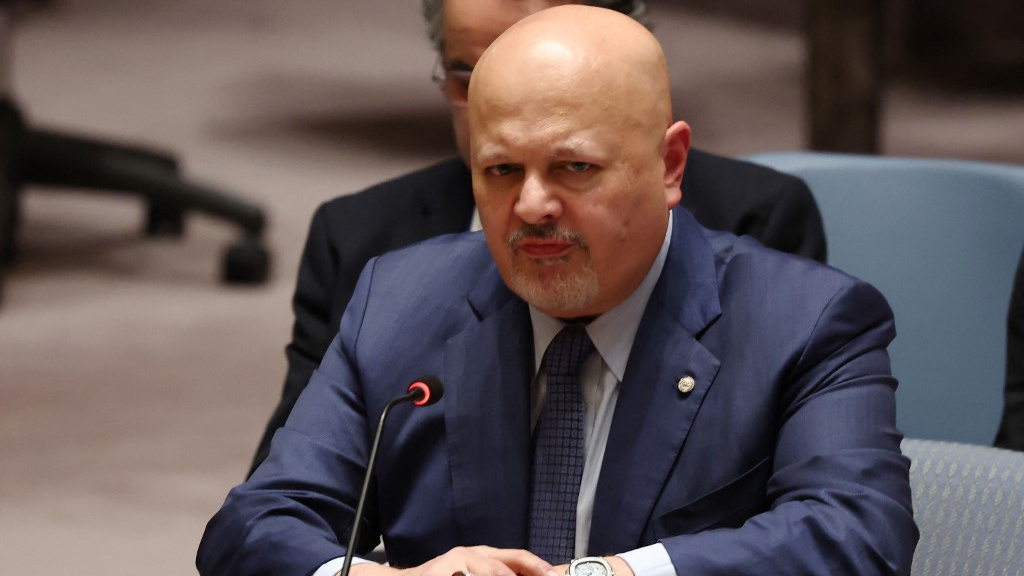
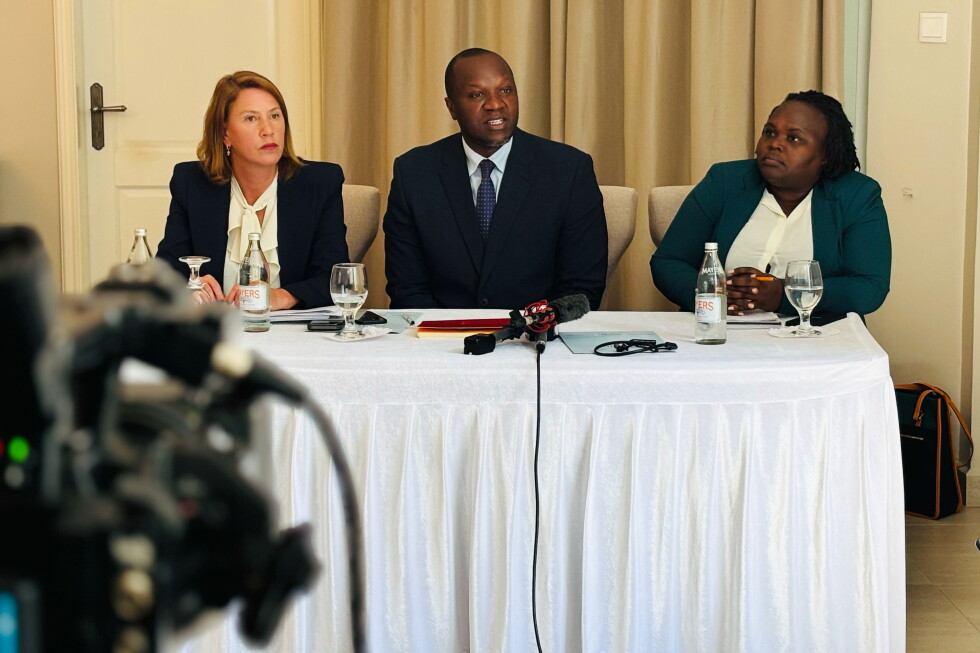
    In a landmark ruling that has sent ripples through global judicial circles, a three-judge independent panel has concluded that a United Nations investigation into alleged sexual misconduct by International Criminal Court (ICC) Chief Prosecutor Karim Khan failed to meet the legal standard to prove wrongdoing, clearing the way for the embattled British barrister to potentially resume his leadership duties.
    The findings, reviewed by The Associated Press, mark a major turning point in a case that has roiled the world’s permanent war crimes court since allegations first emerged in late 2024. The ultimate decision on Khan’s future, however, now rests with the Assembly of States Parties (ASP), the 123-member governing body that oversees ICC operations. On Wednesday, the ASP voted to extend the ongoing review process, as leaders grapple with an unprecedented situation that has sparked internal staff unrest and drawn intense external geopolitical pressure.
    Khan first temporarily stepped aside from his post in May 2025, after the U.N. Office of Internal Oversight Service (OIOS) launched a formal probe into claims of non-consensual sexual contact with a female junior ICC staff member. Khan has repeatedly and categorically denied all allegations, asserting he never engaged in any inappropriate behavior—either sexual or otherwise—toward the complainant, and rejecting even claims of a consensual relationship. Through his legal team, he reaffirmed this denial in a statement shared with AP this week.
    The U.N. investigation’s final report, a copy of which has been obtained by AP, claimed there was evidence of “nonconsensual sexual contact” between Khan and the aide that occurred across multiple locations: his ICC office, his private residence, and during official overseas work missions. But when the three-judge panel, appointed specifically by the ASP to conduct an independent legal review of the U.N. findings, assessed the more than 5,000 pages of evidence collected by OIOS, it identified critical flaws that undermined the probe’s conclusions.
    In its 85-page assessment, the panel noted that U.N. investigators “failed to indicate which witnesses’ testimony they found credible” and left multiple key “narrative inconsistencies” in witness accounts unresolved. The judges ruled that the U.N. probe did not meet the high legal bar of proving misconduct or a breach of professional duty under the ICC’s governing framework, writing that “the resolution of a number of disputes, which remains outstanding, would be necessary before a proper characterisation of the facts can be made.” The panel’s finding is advisory and not legally binding on the ASP, and OIOS was never tasked with making a formal misconduct determination—only with gathering evidence for the ICC’s governing body to evaluate.
    ### The Origin of the Allegations
    The accusations against Khan first came to light in an October 2024 AP investigation, based on internal whistleblower documents reviewed by the news agency. Those documents allege that after Khan encountered the woman, who worked in a separate ICC department, he arranged to transfer her to his own office team. She subsequently became a regular member of his entourage on official international travel.
    Specific claims laid out in the whistleblower materials include an incident on a foreign trip where Khan allegedly asked the woman to rest with him on his hotel bed before sexually assaulting her, and another occasion where he banged on her hotel room door for 10 minutes in the early hours of the morning. Other alleged non-consensual behaviors include locking the door of his ICC office and reaching into the woman’s pocket, as well as repeatedly pressuring her to join him on a personal vacation.
    Two of the woman’s colleagues first reported the alleged misconduct to the ICC’s internal oversight body in May 2024. At that time, the investigation was closed after just five days when the complainant declined to file a formal report, citing intense fear of professional retaliation. The case has inflicted severe harm on the complainant: the U.N. investigation confirmed that the woman was placed on suicide watch at one point during the proceedings. In an interview, she told AP, “I have been left with little dignity and no privacy.” AP has followed its standard policy of not identifying survivors of sexual misconduct.
    ### Internal Tension and Geopolitical Context
    The panel’s ruling has done little to ease deep divisions within the ICC’s own ranks. A group of current prosecutor’s office staff sent an open letter to the ASP on Wednesday, warning that the U.N. investigation’s findings make it incompatible for the ICC community to maintain confidence in Khan’s leadership if he returns to office. Multiple current and senior ICC staff, speaking to AP on condition of anonymity over fear of retaliation, confirmed that many colleagues remain deeply unsettled by the situation, with widespread anxiety about potential retaliation against staff who spoke out in support of the complainant. The U.N. investigation itself noted that before Khan stepped aside, he was accused of retaliatory behavior toward two ICC staff members who backed the complainant.
    This unprecedented disciplinary process, the first of its kind in the ICC’s 23-year history, has forced the ASP to draft new procedural rules from scratch to manage the review. The case also unfolded against a backdrop of intense geopolitical pressure on the court, just weeks before Khan requested historic arrest warrants for Israeli Prime Minister Benjamin Netanyahu over alleged war crimes in the Gaza Strip. A three-judge panel of the ICC approved those warrants in November 2024, prompting immediate retaliation from then-U.S. President Donald Trump, who imposed sweeping sanctions on 11 senior ICC staff including Khan. The sanctions resulted in the closure of judges’ and prosecutors’ U.S. bank accounts and the revocation of their U.S. travel visas, a move that has severely disrupted the court’s daily operations and battered already low staff morale.

  • First group of 12 deportees from the US arrives in Uganda, lawyers say

    First group of 12 deportees from the US arrives in Uganda, lawyers say

    On Thursday, the first group of 12 people deported from the United States touched down on Ugandan soil, marking the first known arrivals after the two nations finalized a bilateral deportation transfer deal, the Uganda Law Society confirmed this week.

    The group arrived via a chartered private flight, and the Ugandan legal advocacy organization harshly condemned the process that delivered the deportees, calling the transfer an “undignified, harrowing and dehumanizing” act that effectively amounted to dumping unwanted people in the East African nation. It has launched a legal push to block further transfers, labeling the arrangement an “international illegality” and arguing the deportees have been left vulnerable to unaccountable private actors on both sides of the Atlantic Ocean with no oversight or protection.

    This first transfer of deportees is part of former U.S. President Donald Trump’s sweeping immigration crackdown, a policy designed to cut flows of undocumented migration into the U.S. while removing people who have already entered the country illegally, particularly those with criminal convictions. The policy targets people who cannot be readily deported directly to their home countries by resettling them in agreed third-party nations.

    U.S. federal agencies including the State Department and Department of Homeland Security have defended third-country deportation deals as a necessary mechanism to speed up the removal of undocumented people from U.S. territory. But the policy has faced sustained legal challenges in both U.S. courts and courts in the nations that receive deportees, and has sparked widespread global criticism over humanitarian risks.

    The core of the controversy stems from the fact that many deportees transferred under these deals have no cultural, social or family ties to the third-party countries where they are sent, leaving them stateless and isolated. The high-stakes debate gained national attention in the U.S. earlier this year when federal officials briefly considered moving Kilmar Abrego Garcia, a Salvadoran migrant at the center of a heated national migration dispute, to Uganda under the agreement, before reversing the plan.

    To date, the U.S. has signed similar third-country deportation arrangements with at least seven different African nations, spanning from West Africa’s Ghana to the southern African kingdom of Eswatini. Publicly released State Department details show the U.S. agreed to provide Eswatini with $5.1 million in exchange for accepting up to 160 deportees. As of this reporting, there is no public information confirming whether Uganda received similar financial compensation for agreeing to take deportees.

    Details around the 12 new arrivals remain scarce: officials have not released information about their identities, citizenship or countries of origin. Okello Oryem, Uganda’s Minister of State for Foreign Affairs, told reporters he was traveling at the time of the arrival and had not been briefed on the landing. A spokesperson for the U.S. Embassy in Kampala, Uganda’s capital, also declined to answer questions about the deportees’ current welfare or status.

    This development contradicts earlier statements from Oryem, who told the Associated Press last month that Uganda was preparing to receive multiple planeloads of deportees from the U.S. He framed the bilateral deal at the time as an act aligned with pan-African solidarity and humanitarian principle, designed to repatriate African people who were living without documentation in the U.S. Ugandan officials have also previously stated the agreement only covers non-criminal deportees of African origin, but that detail has not been confirmed for the 12 people who arrived this week.

  • Ancient golden helmet recovered more than a year after Dutch heist

    Ancient golden helmet recovered more than a year after Dutch heist

    After more than a year of high-stakes international investigation, a millennia-old Romanian golden treasure stolen in a brazen armed heist from a Dutch museum has been recovered, bringing partial closure to a cultural crime that sparked diplomatic friction and public outrage.

    The Coțofenești helmet, a 2,500-year-old artifact widely regarded as one of Romania’s most precious cultural heritage pieces, and two accompanying golden bracelets dating to around 450 BC were officially unveiled at a press presentation this Thursday. The recovered treasures are now displayed in a secured glass case at the Drents Museum in Assen, guarded by two armed police officers — a visible reminder of the security failures that allowed the theft to occur 14 months ago. A third golden bracelet from the stolen collection remains unaccounted for, as cross-border investigations continue.

    The artifact set was on loan from Bucharest’s National Museum of Romanian History for the museum’s popular exhibition “Dacia — Empire of Gold and Silver”, which explores the history of the Dacian civilization that inhabited modern-day Romania before the Roman conquest of 106 AD. In November 2024, an armed criminal gang used explosives to break into the Drents Museum, making off with the priceless treasures. The heist immediately triggered widespread anger across Romania, where the helmet is recognized as a defining cultural and political symbol of ancient Dacia, and ignited fierce debate over global cultural artifact loaning practices and museum security standards.

    The theft also sparked a diplomatic rift between the Romanian and Dutch governments. After the loss, the Dutch government reportedly paid out 5.7 million euros in insurance compensation to Romania; Romanian officials have declined to comment on whether that payout will be adjusted following the recovery of most of the collection.

    Prosecutors on both sides have confirmed that the helmet and two bracelets were formally handed over to law enforcement authorities earlier this week as part of a pre-trial agreement reached with defense lawyers representing three suspects in the case. Three men — two in their mid-30s and one 21-year-old — were arrested just days after the heist, but investigators found no trace of the artifacts at the time of arrest. The suspects are scheduled to go on trial later this month.

    Robert van Langh, director of the Drents Museum, told reporters that the helmet sustained a minor dent during the theft but is fully restorable, while the two recovered bracelets remain in pristine condition. Romanian lead prosecutor Daniela Buruiană described the recovery as a long-awaited victory for cultural heritage protection. “We are happy that we are now witnessing here the recovery of the Romanian artefacts,” she said, adding that investigations remain active to locate the final missing bracelet.

    Romanian prosecutor Rareș-Petru Stan praised Dutch law enforcement counterparts for their persistent work over the 14-month investigation, noting the massive cultural and public impact the theft had on Romania. “We are continuing the investigation to find the last bracelet, and we are grateful that we will be able to return this treasure to the Romanian people,” he said.

    Art crime experts have theorized that the artifacts were stolen to order for a private collector on the black market, a common trend for high-value ancient cultural pieces. The heist also drew attention to systemic security gaps at small and regional museums across the Netherlands, which have increasingly become targets for art thieves in recent years. Just two years before the Dacian treasure heist, two Andy Warhol works were stolen from a southern Dutch gallery, and six years prior, a famous Frans Hals painting was stolen from a small municipal museum in Leerdam. In all of these cases, low-security display cases provided minimal resistance to raiders.

    The aftermath of the 2024 theft also brought domestic political fallout in Romania: Ernest Oberländer-Târnoveanu, the former head of the National Museum of Romanian History who approved the loan of the treasures to the Drents Museum, faced intense public criticism and stepped down from his position just days after the heist. Speaking to RTL Nieuws after the recovery, he expressed profound relief at the helmet’s return. “This is a unique item in European and even global cultural heritage,” he said. “The helmet is an important social and political symbol of Dacian civilisation.”