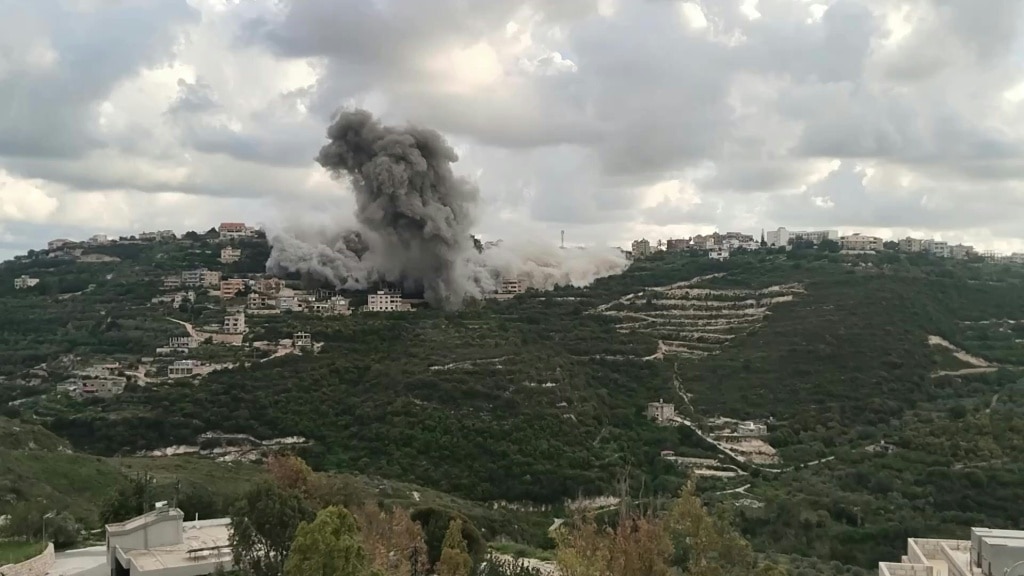
Amid escalating cross-border violence between Israeli forces and Iran-backed Hezbollah, Lebanon’s Prime Minister Nawaf Salam has publicly committed to diplomatic efforts to end the conflict and secure a full withdrawal of Israeli troops from all Lebanese territory, even as Israeli Prime Minister Benjamin Netanyahu reinforced that military operations in southern Lebanon will continue. The escalating bloodshed, which has already killed more than 2,050 people in Lebanon, has drawn global condemnation after a series of attacks on humanitarian workers and international peacekeepers.
Sunday brought a fresh wave of deadly violence and provocative incidents that underscored the fragility of any path to de-escalation. The Lebanese Red Cross confirmed that one of its paramedics was killed in a targeted Israeli drone strike while the team was carrying out a humanitarian mission in southern Lebanon. The organization emphasized that all ambulances and crew were clearly marked with the internationally recognized protective Red Cross emblem, and that the team had coordinated with UN Interim Force in Lebanon (UNIFIL) ahead of the mission to secure safe passage. A second paramedic was wounded in the attack.
This strike marks the second killing of a Lebanese Red Cross volunteer in recent weeks, drawing harsh condemnation from global humanitarian leadership. Jagan Chapagain, Secretary General of the International Federation of Red Cross and Red Crescent Societies, said he was “appalled and saddened” by the death. The Lebanese Red Cross called the attack a “clear and blatant violation of all provisions of international law,” a sentiment echoed by UNIFIL, which also reported new confrontations with Israeli forces over the weekend. The UN peacekeeping mission confirmed that an Israeli tank rammed UNIFIL vehicles on two separate occasions, leaving one vehicle heavily damaged.
Israel has repeatedly rejected calls for a ceasefire in its campaign against Hezbollah, arguing that the fragile temporary truce currently in place for the broader Israel-Hamas war across the Middle East does not apply to its operations in Lebanon. Since Hezbollah opened its front against Israel following the killing of Iran’s supreme leader in a US-Israeli strike, Israel has responded with devastating large-scale airstrikes and a ground incursion into southern Lebanon, leaving widespread destruction in its wake.
In a televised address Sunday, Salam outlined Lebanon’s diplomatic path forward, confirming that he will continue pushing for negotiations to end the war ahead of scheduled trilateral talks between Lebanese, Israeli, and US officials set to take place in Washington on Tuesday. “We will continue to work to stop this war, to ensure the Israeli withdrawal from all our lands,” Salam said, reaffirming Lebanon’s core negotiating position.
Speaking during a visit to Israeli troops deployed in southern Lebanon, Netanyahu struck a far more bellicose tone. He claimed Israeli forces had already neutralized the threat of cross-border Hezbollah infiltrations, but added that “there is still more to do, and we are doing it. The war continues, including within the security zone in Lebanon.” Israeli officials have repeatedly stated their goal of establishing a permanent Israeli-controlled “security zone” in southern Lebanon to prevent future Hezbollah attacks on northern Israeli territory.
Sunday’s airstrikes hit dozens of locations across southern Lebanon, with additional strikes hitting the adjacent West Bekaa region, according to Lebanon’s state-run National News Agency (NNA). Lebanon’s Ministry of Health updated the overall death toll from the conflict to more than 2,050 people, including 165 children and over 80 health workers. One of the deadliest single strikes Sunday hit the southern town of Qana, killing five people—three of them women—and wounding 25 others. An AFP photographer on the scene documented extensive destruction, with excavators working to clear rubble and first responders pulling civilian bodies from collapsed buildings.
Rescue workers and medical facilities across southern Lebanon have repeatedly been targeted in the campaign. In the town of Bazuriyeh, the emergency center run by the Risala Scout association, a group affiliated with the Hezbollah-aligned Amal movement, was completely destroyed in an Israeli strike. Hassan Berro, a rescue worker with the organization, told reporters that all medical equipment, beds, and infrastructure inside the facility were lost. Photographic evidence shows shattered windows, collapsed walls and ceilings, and debris scattered across ruined patient beds in the damaged building.
The Israeli military on Sunday also repeated its common claim that Hezbollah abuses civilian infrastructure for military purposes, accusing the group of operating out of a hospital compound in the southern Lebanese town of Bint Jbeil. Hezbollah confirmed it had launched new cross-border and in-country attacks against Israeli targets Sunday, including targeting Israeli troops operating in Bint Jbeil, where the NNA reported intense close-quarters fighting.
Global leaders and religious figures have added their voices to calls for an immediate end to the violence. Pope Leo XIV, who visited Lebanon late last year, released a statement Sunday reaffirming his solidarity with the Lebanese people, stating that the international community has a “moral obligation to protect the civilian population from the atrocious effects of war.”