分类: world

  • Olympian and other Eritreans freed after 18 years without trial, relatives tell the BBC

    Olympian and other Eritreans freed after 18 years without trial, relatives tell the BBC

    In a significant development within the highly secretive East African nation of Eritrea, thirteen individuals who had been imprisoned for over eighteen years without facing trial have been unexpectedly released from the notorious Mai Serwa military detention facility. This information was confirmed to the BBC by multiple relatives of the former detainees.

    Among those freed is Zeragaber Gebrehiwot, a 69-year-old former Olympic cyclist and prominent businessman who represented Ethiopia (before Eritrean independence) at the 1980 Moscow Games. The group of released prisoners also includes several other distinguished figures: businessmen Tesfalem Mengsteab and Bekure Mebrahtu, engineer David Habtemariam, geometrist Matthews Habtemariam, six senior police officers, and an internal security agent.

    Their initial arrest dates back to October 2007, following an assassination attempt on Colonel Simon Gebredingil, a high-ranking officer within President Isaias Afwerki’s internal security apparatus. A source, who was previously detained at Mai Serwa, revealed that approximately thirty people were originally taken into custody. While a handful have been released over the intervening years, around twenty remained in prolonged detention until this recent, unexplained release.

    The Mai Serwa prison, situated northwest of the capital Asmara, is internationally condemned for its brutal conditions and is believed to house a significant number of political prisoners. Relatives reported that family visits were completely prohibited throughout the entire duration of the detainees’ incarceration. The advanced age and declining health of many prisoners is speculated to be a potential factor behind their sudden release, although the Eritrean government has issued no official statement or explanation.

    This event casts a renewed spotlight on Eritrea’s deeply troubling human rights record. For decades, the United Nations and major human rights organizations like Amnesty International have consistently accused the government of systematic abuses, including torture, forced disappearances, and the inhumane imprisonment of tens of thousands of people. The country has been a one-party state under President Isaias’s unchallenged rule for 32 years, with no constitution, no free press, and no national elections ever held. It maintains one of the world’s most militarized societies through a policy of indefinite conscription.

    The fate of many other detainees remains unknown, a stark reminder of which was the death in custody last year of Berhane Abrehe, a former finance minister imprisoned for six years after criticizing the president.
  • Russian drone strike kills 12-year-old boy in Ukraine as peace talks kept under wraps

    Russian drone strike kills 12-year-old boy in Ukraine as peace talks kept under wraps

    Amid ongoing covert diplomatic efforts to broker peace, the Russo-Ukrainian conflict witnessed significant military escalation with cross-border attacks claiming civilian lives and targeting energy infrastructure. In central Ukraine’s Dnipropetrovsk region, Russian drone strikes demolished a residential building, resulting in the tragic death of a 12-year-old boy and injuring two women. Regional military administration head Vladyslav Haivanenko confirmed the assault occurred Thursday night, with Ukrainian air force reports indicating Russia launched 137 drones of various types overnight.

    Simultaneously, Ukrainian forces executed long-range strikes targeting Russian territory. Attacks hit the Temryuk sea port in Krasnodar region near the Ukrainian border, causing substantial fires and damaging port infrastructure. Ukrainian drones penetrated deeper into Russian territory, striking the city of Syzran approximately 800 kilometers east of the border. While Syzran Mayor Sergei Volodchenkov confirmed the attack without elaboration, unverified media reports indicated Ukrainian drones successfully hit a strategic oil refinery in the Volga river city.

    The Russian Defense Ministry claimed successful interception of 85 Ukrainian drones over Russian regions and illegally annexed Crimea overnight.

    These developments unfolded against a backdrop of discreet diplomatic maneuvering. U.S. President Donald Trump’s special envoy Steve Witkoff and senior advisor Jared Kushner were scheduled to meet with Ukrainian delegates in Miami on Thursday, though official confirmation of the meeting remained pending. This followed Tuesday’s discussions between President Vladimir Putin and U.S. envoys at the Kremlin, marking the latest attempt to break the nearly four-year conflict stalemate.

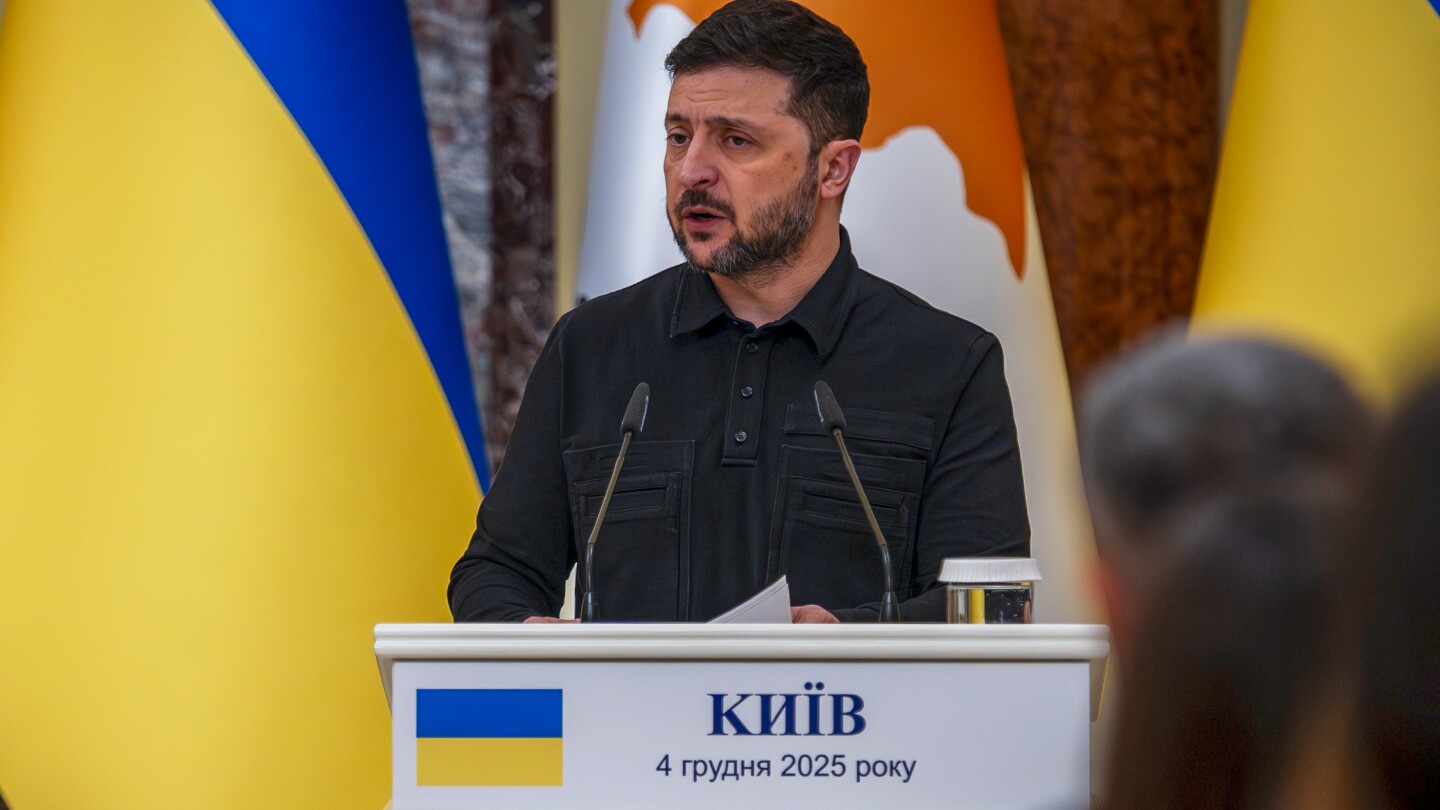
    Ukrainian President Volodymyr Zelenskyy emphasized his delegation sought clarity regarding the Kremlin discussions, expressing concerns about Russian pretexts to prolong hostilities. European allies supporting Kyiv simultaneously worry about potential Russian aggression beyond Ukraine and advocate for robust security guarantees in any prospective peace agreement.

    Kremlin foreign affairs adviser Yuri Ushakov, accompanying Putin on his India visit, criticized European nations for allegedly presenting ‘unacceptable demands’ that complicate Washington and Moscow’s settlement efforts on Ukrainian issues.

  • Survivors plead for urgent aid after catastrophic floods and landslides killed over 1,500 in Asia

    Survivors plead for urgent aid after catastrophic floods and landslides killed over 1,500 in Asia

    Rescue operations across Southeast Asia are battling immense logistical challenges one week after catastrophic flooding and landslides claimed over 1,500 lives. The regional disaster has left a trail of unprecedented destruction, with Indonesia bearing the heaviest burden at 883 confirmed fatalities, followed by Sri Lanka with 486, and Thailand with 185.

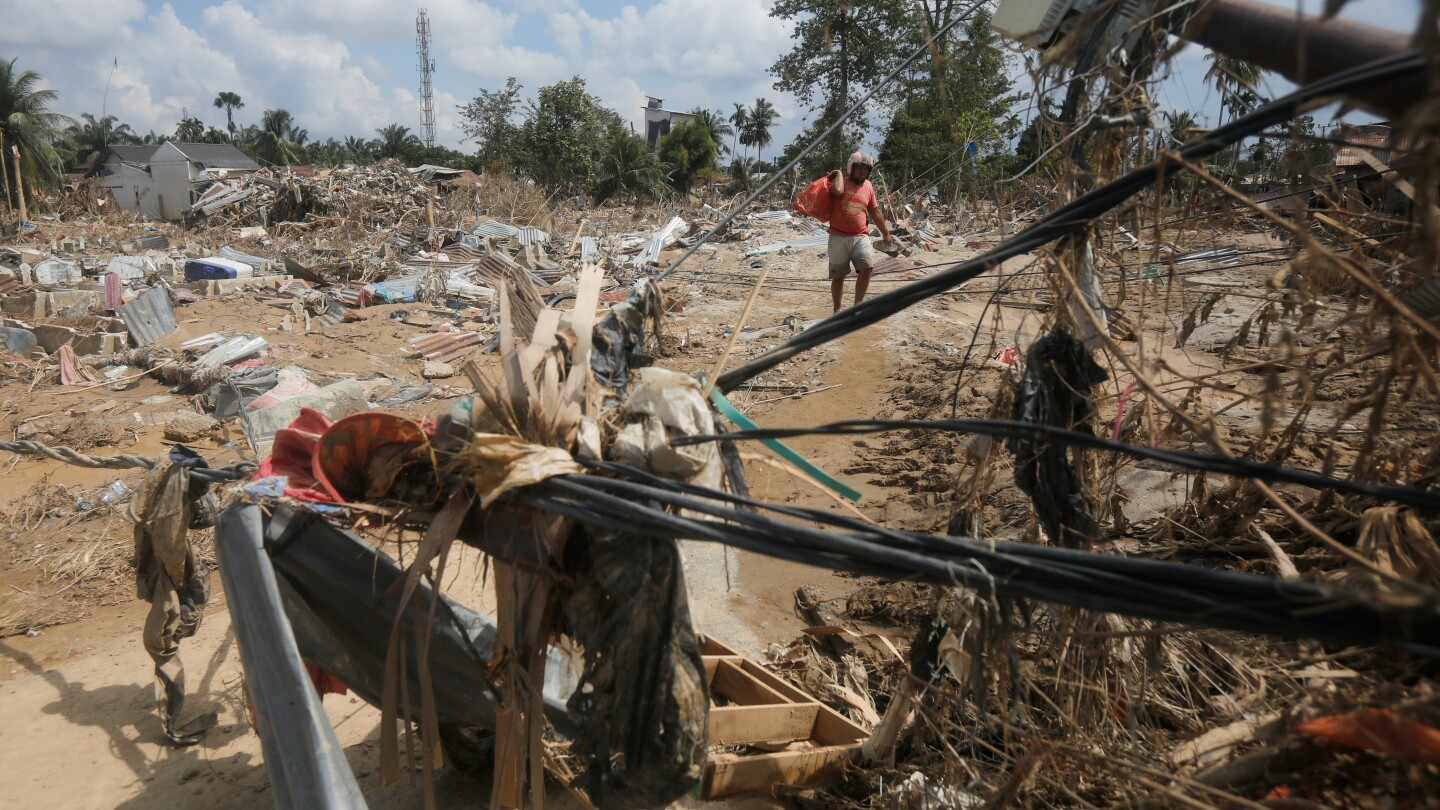
    The hardest-hit region, Aceh Tamiang in Indonesia’s Aceh province, presents a landscape of utter devastation. Entire villages have been entombed under layers of mud and debris, severing critical infrastructure. Roads have been washed away, rendering many areas accessible only by helicopter. The collapse of transmission towers has plunged communities into darkness and severed communication lines.

    For the more than 260,000 displaced residents, survival hinges on the rapid delivery of aid. Clean water, sanitation, and shelter have become urgent priorities. Relief trucks from Medan city are navigating debris-clogged roads that only recently reopened, significantly slowing distribution efforts according to National Disaster Management Agency spokesperson Abdul Muhari.

    Survivors describe harrowing escapes from torrents of water filled with logs that demolished entire neighborhoods. On the battered bridge over the swollen Tamiang River, families have sought refuge under makeshift tents fashioned from bedsheets. Ibrahim bin Usman, a survivor who lost six family homes, described the event as ‘a tsunami from the hills,’ noting many bodies remain buried beneath the mud.

    The humanitarian crisis is compounded by severe water contamination. With wells polluted and pipes destroyed, residents report being forced to drink sediment-laden floodwater after minimal purification, leading to illness among children.

    Frustration is mounting among survivors who accuse local officials of corruption and blame deforestation for exacerbating the disaster. Hadi Akher, a bare-chested survivor in a crowd awaiting aid, voiced the community’s anger: ‘This deadly flood happened because too many officials here are corrupt.’

    The catastrophe has evoked traumatic memories of the 2004 Indian Ocean tsunami that claimed approximately 160,000 lives in Aceh alone, adding psychological trauma to the physical devastation.

  • Flying Tigers legacy honoured in California

    Flying Tigers legacy honoured in California

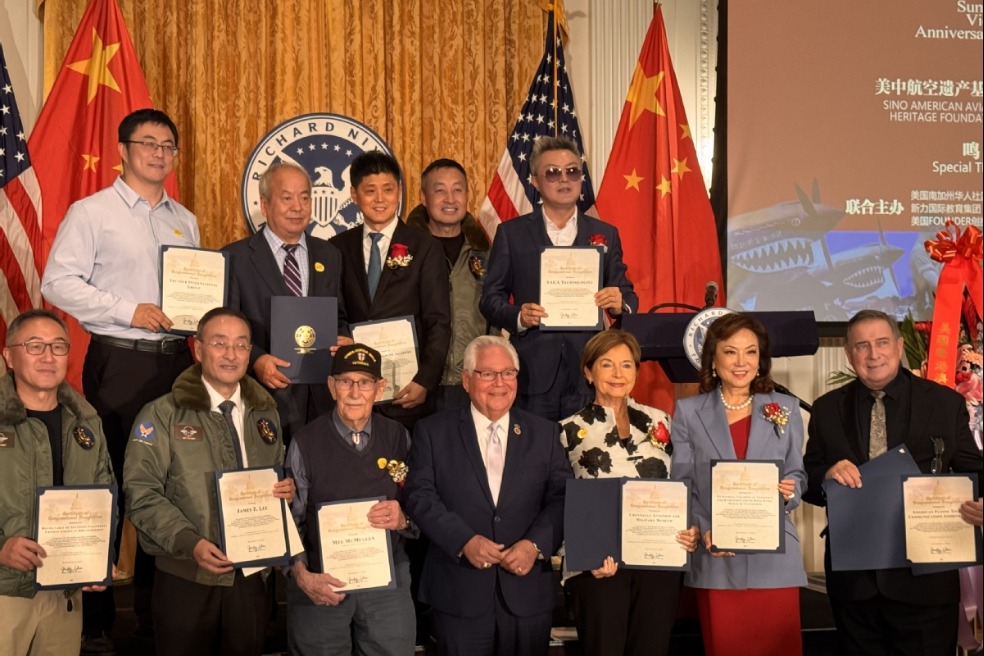
    YORBA LINDA, California — A significant gathering at the Richard Nixon Presidential Library and Museum this week paid tribute to the legendary Flying Tigers, commemorating the 80th anniversary of World War II’s conclusion and reflecting on pivotal moments in Sino-American relations. The event brought together descendants of veterans, community leaders, and officials who emphasized the enduring relevance of wartime cooperation between the nations.

    Nell Chennault Calloway, granddaughter of Flying Tigers commander General Claire Lee Chennault, addressed attendees with a powerful message about historical guidance. “History is our best guide. It records our past and offers inspiration for the future,” she stated, connecting the Flying Tigers’ legacy to President Nixon’s groundbreaking 1972 China visit and the subsequent normalization of relations under President Carter.

    Calloway highlighted Nixon’s famous toast to Premier Zhou Enlai, noting that despite differences, common interests continue to transcend divisions. “The relationship between our two countries remains the most important bilateral relationship in our world today,” she asserted, urging remembrance of sacrifices made by soldiers, civilians, and diplomats during WWII.

    Jeffrey Greene, chairman of the Sino-American Aviation Heritage Foundation, elaborated on the historical significance of the Flying Tigers’ campaign. “What happened in China 80 years ago brought the two nations close together in a way that no other event could,” Greene told the assembly. He recounted the bravery of American volunteer pilots and Chinese civilians who rescued downed airmen despite facing deadly retaliation.

    California State Senator Bob Archuleta framed the Flying Tigers’ story as a contemporary lesson for global challenges. “History proves that we can accomplish more through cooperation than conflict, and through mutual respect rather than division,” he stated, emphasizing the importance of people-to-people diplomacy.

    The commemoration also honored centenarian Flying Tigers veteran Mel McMullen and Zhang Sujiu, daughter of China’s “Peace General” Zhang Zhizhong, recognizing them as living connections between historical cooperation and present possibilities.

    The event was jointly organized by the American Flying Tigers Communication Association, the Sino-American Aviation Heritage Foundation, and the Chennault Aviation and Military Museum, serving as a poignant reminder of what bilateral cooperation can achieve when nations choose partnership over confrontation.

  • Why Somali migrants may still aim for US despite travel restrictions

    Why Somali migrants may still aim for US despite travel restrictions

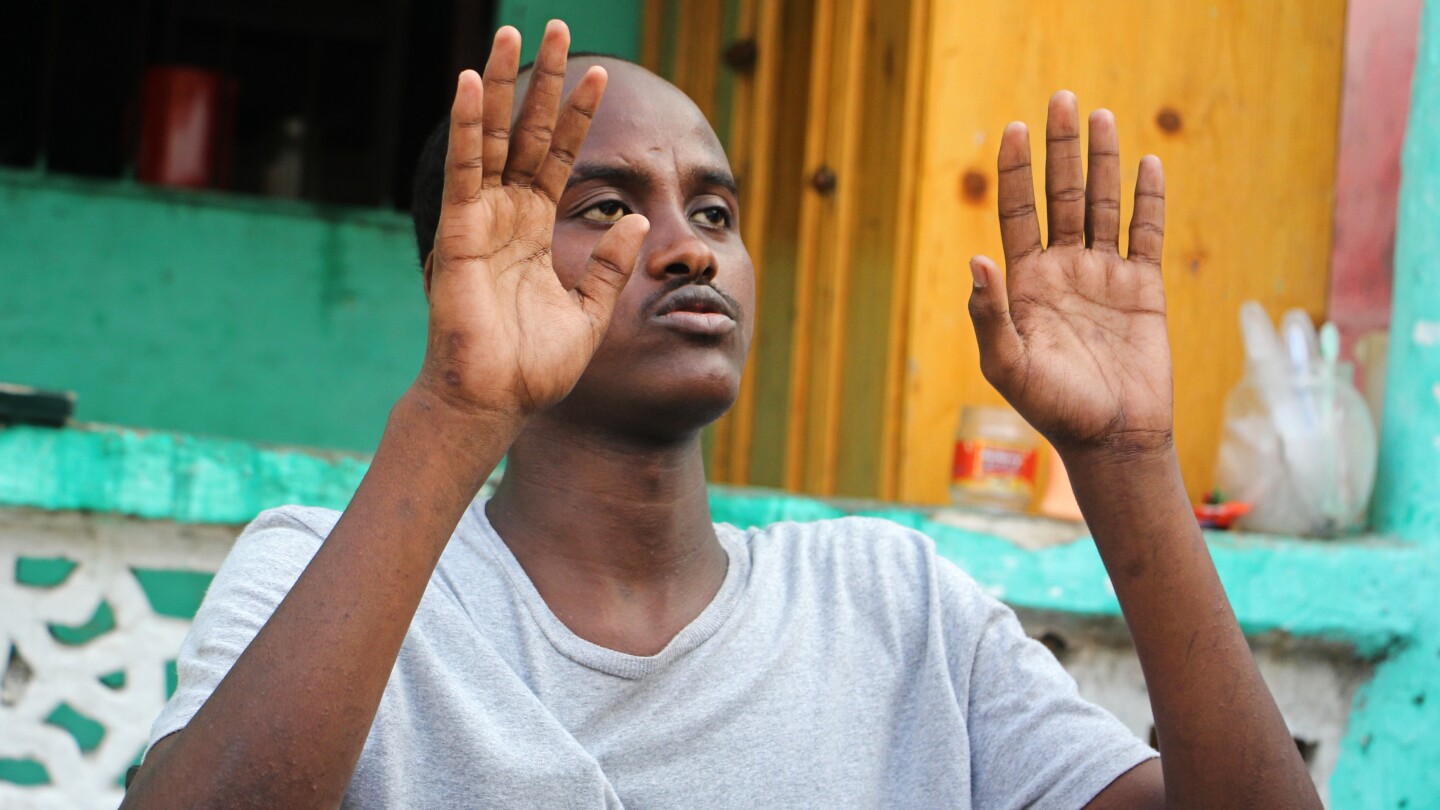
    MOGADISHU, Somalia — Mohamed Abdi Awale’s harrowing quest for a better life in Western nations culminated in unimaginable suffering, yet his resolve remains unbroken. Recently repatriated from Libya among 165 Somali migrants, Awale represents the countless individuals risking everything despite increasingly restrictive immigration policies.

    Awale’s 5,000-kilometer odyssey began in Mogadishu, traversing Kenya, Uganda, South Sudan, and Sudan before his capture near the Sudan-Libya border. In the Sahara oasis town of Kufra, smugglers subjected him to systematic torture, filming the brutality to extort $17,000 from his desperate family. “Torture became normal,” Awale recounted. “They beat you until you fainted. Some people lost their minds. Others didn’t survive.”

    His mother, Hawo Elmo Rage, turned to social media when confronted with the ransom demand, pleading with the global Somali diaspora to save her son. “They told me to send the money or they would take his life,” she explained.

    After his release, Awale’s ordeal continued as his vehicle broke down en route to the Mediterranean coast, forcing a grueling two-week trek through the desert where starvation and dehydration nearly claimed their lives. Subsequent detention in Libyan prisons near Sirte and Tripoli preceded his eventual repatriation in November.

    Awale joins approximately 3.5 million internally displaced Somalis and hundreds of thousands who have fled the country’s three-decade civil war. While most refugees remain in neighboring countries like Kenya, many aspire to reach Western nations despite mounting obstacles.

    The Trump administration’s travel ban targeting Somalia and eleven other nations, implemented in June, forced Awale to redirect his ambitions toward Europe. Additional restrictions announced this week further complicate immigration prospects for Somalis. Despite these barriers and anti-immigrant rhetoric from the White House, Awale clings to his childhood dream of eventually reaching the United States. “My dream was America, but I felt like Trump closed that door,” he reflected. “Maybe after Trump’s term ends.”

    His mother, while fearful for his safety, acknowledges his pursuit of opportunity: “I want him to stay. But I know he wishes for a better life. I pray God gives him a safe future—not the dangerous one he found.”

  • UAE’s national museum highlights Sino-Arab links, cultural exchanges

    UAE’s national museum highlights Sino-Arab links, cultural exchanges

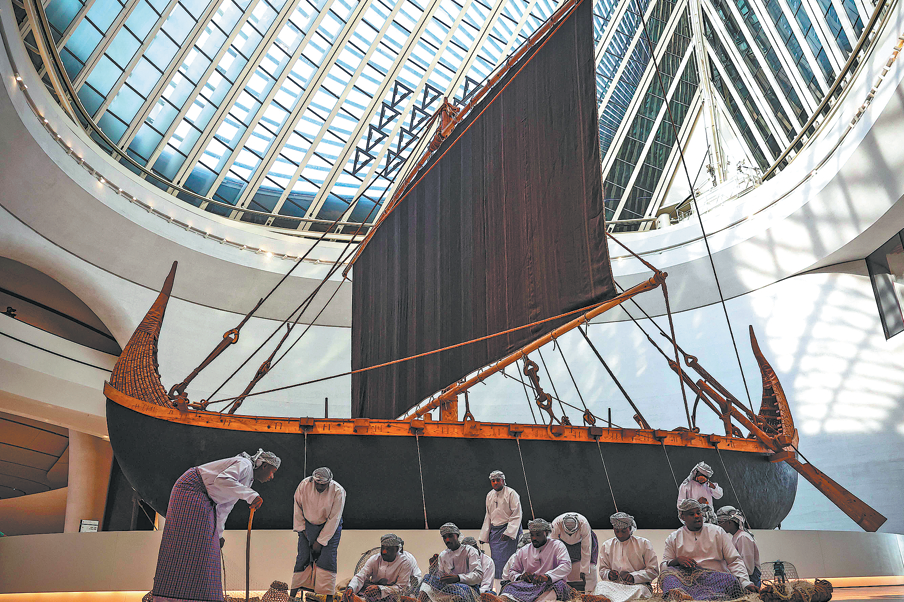
    The United Arab Emirates unveiled its prestigious Zayed National Museum to the public on Wednesday, strategically timed to coincide with the nation’s 54th National Day celebrations. The inauguration ceremony featured captivating Emirati cultural performances within the museum’s architectural marvel in Abu Dhabi.

    Mohamed Khalifa Al Mubarak, Chairman of Abu Dhabi’s Department of Culture and Tourism, delivered a significant address emphasizing the profound historical connections between China and the Arab world. He highlighted how these centuries-old exchanges have substantially enhanced mutual understanding between Eastern and Western civilizations.

    The museum’s exhibits and narrative framework extensively document the Silk Road connections that facilitated not only trade but also intellectual and cultural exchanges between Arab and Chinese civilizations. Al Mubarak articulated that the wisdom derived from these historical interactions provides contemporary societies with practical insights for fostering harmonious civilizational engagement in the modern global landscape.

    This cultural institution stands as a testament to the UAE’s commitment to preserving and presenting its rich heritage while simultaneously acknowledging the international influences that have shaped its development. The emphasis on Sino-Arab relations reflects the growing importance of cultural diplomacy in strengthening international partnerships beyond economic and political dimensions.

  • What’s the fighting in DR Congo all about?

    What’s the fighting in DR Congo all about?

    A new peace agreement brokered by the United States between Rwanda and the Democratic Republic of Congo aims to address one of Africa’s most persistent conflicts, though significant challenges remain. The mineral-rich eastern regions of DR Congo have endured over three decades of violence, with roots tracing back to the 1994 Rwandan genocide that killed approximately 800,000 people, primarily Tutsis.

    The conflict escalated dramatically in early 2025 when the M23 rebel group, composed primarily of ethnic Tutsis, captured several strategic cities including Goma—a vital trading hub of over one million people—and Bukavu. The group’s rapid territorial expansion displaced thousands and resulted in numerous casualties while threatening to push toward the distant capital Kinshasa.

    International observers and multiple governments including the US, UK, and France have presented substantial evidence indicating Rwanda’s military support for the M23 rebels, including up to 4,000 Rwandan troops allegedly fighting alongside them. Rwanda denies these allegations, claiming defensive measures are necessary against the FDLR—a Hutu militia group containing perpetrators of the genocide that remains active in eastern Congo.

    The Washington agreement requires both nations to cease support for armed groups, refrain from aggression, and facilitate disarmament. Notably absent from the deal is the M23 itself, though separate Qatar-mediated talks are underway between the rebels and Congolese government. The pact also includes economic provisions encouraging expanded foreign investment in critical mineral supply chains, raising concerns about potential resource exploitation.

    UN peacekeeping forces (Monusco) remain deployed despite local criticism and planned withdrawals, while regional military efforts from the Southern African Development Community have proven ineffective against the M23 advance. The success of this latest diplomatic initiative remains uncertain amid complex historical tensions and competing economic interests in this resource-rich region.

  • Which countries are boycotting Eurovision and why?

    Which countries are boycotting Eurovision and why?

    Four European nations have announced their formal withdrawal from the upcoming Eurovision Song Contest in a coordinated protest against the event’s inclusion of Israel. Ireland, Spain, the Netherlands, and Slovenia will boycott the international music competition following the European Broadcasting Union’s decision to permit Israel’s participation amid ongoing geopolitical tensions.

    The boycott represents one of the most significant political challenges to Eurovision’s traditional non-political ethos in recent years. The participating countries have cited ethical concerns regarding Israel’s military operations in Gaza as the primary motivation for their withdrawal. This collective action highlights how cultural events are increasingly becoming platforms for international political expression.

    Eurovision organizers have maintained their position that the contest should remain separate from political conflicts, emphasizing its mission to unite audiences through musical entertainment. However, the participating nations argue that allowing Israel’s involvement contradicts the spirit of cultural exchange and human rights principles that international events should uphold.

    The mass withdrawal could potentially influence other countries to join the boycott movement, creating substantial organizational and diplomatic challenges for the event’s hosts. This development marks a notable moment where cultural diplomacy intersects with international political disputes, testing the boundaries between artistic expression and geopolitical positioning.

  • Israeli media says anti-Hamas leader Abu Shabab dies of wounds

    Israeli media says anti-Hamas leader Abu Shabab dies of wounds

    Israeli media outlets reported Thursday the death of Yasser Abu Shabab, a significant Bedouin tribal leader who headed the most visible anti-Hamas faction in Gaza. Based in the Israeli-controlled sector of Rafah in southern Gaza, Abu Shabab had emerged as a central figure among several small Palestinian groups opposing Hamas throughout the more than two-year conflict.

    According to Israel’s public broadcaster Kan, which cited anonymous security sources, Abu Shabab succumbed to unspecified wounds. Israel’s Army Radio initially reported he died at Soroka Medical Center in southern Israel, but the hospital promptly denied his admission, creating confusion around the circumstances of his death. The exact timing and nature of his injuries remain undisclosed.

    Prime Minister Benjamin Netanyahu previously acknowledged in June that Israel had provided weapons to anti-Hamas clans, though few operational details have been officially confirmed since. Abu Shabab’s group, known as the Popular Forces, consistently denied receiving Israeli backing despite these claims.

    Hamas authorities had designated Abu Shabab as a collaborator and issued orders for his capture or elimination. The militant organization declined to comment on reports of his death when contacted by Reuters.

    The Popular Forces continued operations in Israeli-held territories even after the US-brokered ceasefire agreement in October. A November 18 video released by the group showed dozens of fighters receiving commands from Abu Shabab’s deputy to conduct security operations against Hamas elements in Rafah.

    Israeli government spokespersons declined to confirm the reports, while Abu Shabab’s organization had not issued any official statement regarding his status on their social media channels at the time of reporting.

  • Israel strikes south Lebanon after warning, official media says

    Israel strikes south Lebanon after warning, official media says

    Israeli military forces conducted airstrikes in southern Lebanon on Thursday, December 4, 2025, targeting what they identified as Hezbollah military infrastructure. The operation followed explicit evacuation warnings issued by the Israeli military earlier in the day.

    According to Lebanon’s official National News Agency, Israeli warplanes struck the town of Mahrouna while simultaneously conducting another raid targeting a residential structure in Jbaa. The Israeli military confirmed the operations, stating they had “begun conducting strikes on Hezbollah terror targets in southern Lebanon.”

    The escalation occurs amid ongoing tensions along the Israel-Lebanon border, where cross-border exchanges between Israeli forces and Hezbollah militants have intensified in recent months. The Israeli military’s pre-strike evacuation warning represents a tactical approach aimed at minimizing civilian casualties while targeting what they classify as terrorist infrastructure.

    This development marks another significant chapter in the complex geopolitical dynamics of the Middle East, particularly within the context of Israel’s security operations against Iranian-backed Hezbollah forces. The strikes come as regional powers continue to navigate delicate security arrangements and power balances across the Levant region.

    Military analysts note that such targeted operations reflect Israel’s continued strategy of preemptive and responsive actions against perceived threats along its northern border. The long-standing conflict between Israel and Hezbollah has seen periodic escalations since the 2006 Lebanon War, with both sides maintaining military readiness along the contested border area.