分类: world

  • At least 23 people killed in nightclub fire in India: media

    At least 23 people killed in nightclub fire in India: media

    A devastating fire erupted at a popular nightclub in the southern Indian city of Kochi during peak hours on Saturday night, resulting in at least 23 fatalities and numerous injuries, according to multiple media reports. The blaze, which started around 11:30 PM local time, rapidly engulfed the multi-story entertainment venue filled with weekend revelers.

    Emergency responders faced significant challenges reaching the scene due to the nightclub’s location in a densely populated commercial district. Firefighters battled the flames for over four hours before bringing the situation under control in the early hours of Sunday morning. Preliminary investigations suggest the inferno may have originated from electrical faults in the lighting system, though official causes remain under investigation.

    The tragedy has sparked immediate outrage across India, with many questioning safety compliance in entertainment establishments. Kerala state officials have announced compensation for victims’ families and ordered a comprehensive audit of fire safety measures in all public venues. This incident represents one of the deadliest nightclub fires in India’s recent history, echoing similar tragedies that have occurred in other developing nations where enforcement of safety regulations remains inconsistent.

  • Chinese, Russian militaries hold 3rd joint anti-missile exercise

    Chinese, Russian militaries hold 3rd joint anti-missile exercise

    In early December 2025, the Chinese and Russian militaries executed their third collaborative anti-missile exercise on Russian territory, as officially confirmed by China’s Ministry of National Defense on December 6th. The defense ministry emphasized through an official statement that this joint military operation was not directed toward any third-party nation and maintains no connection to the prevailing international and regional geopolitical climate. This latest drill represents a continuation of the growing strategic defense cooperation between the two nations, who have increasingly aligned in military matters over recent years. The exercise focused on enhancing interoperability between Chinese and Russian missile defense systems, reflecting a shared commitment to strengthening collective security capabilities. While the statement deliberately avoided specifying the exact location within Russia or the precise systems tested, the timing coincides with ongoing global tensions surrounding missile proliferation and defense technologies. The bilateral cooperation demonstrates a concerted effort to advance technical military proficiency while presenting a unified front in defensive preparedness. This marks another significant milestone in the deepening military partnership between Moscow and Beijing, which has expanded to include joint naval exercises, aerial patrols, and now repeated anti-missile collaborations.

  • As Russia’s Africa Corps fights in Mali, witnesses describe atrocities from beheadings to rapes

    As Russia’s Africa Corps fights in Mali, witnesses describe atrocities from beheadings to rapes

    DOUANKARA, Mauritania — A systematic campaign of human rights violations is being carried out in Mali by Russia’s Africa Corps, the military unit that replaced the Wagner mercenary group, according to extensive testimony from dozens of refugees who have fled to neighboring Mauritania.

    In exclusive interviews with The Associated Press, 34 civilians described a reign of terror implemented by the Africa Corps in collaboration with Malian military forces. The accounts include indiscriminate killings, sexual violence, beheadings, and the harvesting of organs from victims—tactics previously associated with Wagner operations in the region.

    “They implement a scorched-earth policy without discrimination,” stated a Malian village chief who escaped the violence. “The soldiers communicate with no one. Any individual they encounter is immediately shot—no inquiries, no warnings. People remain completely unaware of why they are being executed.”

    The Sahel region of West Africa has emerged as the global epicenter of extremist violence, with thousands killed in ongoing conflicts. Military governments in Mali, Burkina Faso, and Niger have pivoted from Western alliances to Russian security partnerships in their fight against al-Qaeda and Islamic State affiliates.

    When Africa Corps formally replaced Wagner six months ago, exhausted civilians anticipated reduced brutality. Instead, refugees report intensified operations characterized by extreme violence. Multiple witnesses provided video evidence of villages systematically burned by what they described as “white men” speaking Russian.

    One particularly disturbing account came from Mougaloa, a herder from northern Mali, who described watching masked men slit her son’s throat after Malian soldiers beat him unconscious. In a subsequent incident, the armed men abducted her daughter Fatma while using the Russian derogatory term “pes” (dog) to refer to locals.

    Legal experts emphasize that the transition from Wagner to Africa Corps creates direct accountability for the Russian government. “Despite the rebranding, there is striking continuity in personnel, commanders, tactics and even insignia,” noted Lindsay Freeman, senior director of international accountability at UC Berkeley’s Human Rights Center.

    The situation is compounded by reduced international oversight. The United Nations peacekeeping mission withdrew from Mali in 2023 under government pressure, and Mali’s departure from the International Criminal Court this year has further complicated accountability mechanisms.

    Eduardo Gonzalez Cueva, a U.N. independent expert on human rights in Mali, reported that military authorities have ignored his requests for access and questionnaires, considering investigations into alleged abuses “inconvenient and harmful to the morale of the troops.”

    Refugees consistently report that the change from Wagner to Africa Corps represents merely a name change rather than any substantive improvement. “The clothing, the vehicles, the personnel remained identical,” stated Bocar, a refugee who returned home only to flee again. “The methodologies persisted, and actually intensified.”

    The psychological toll on survivors is profound. Fatma, another refugee who lost multiple family members, described her existence as merely physical: “I am just someone who is alive and appears as a person that I was—but is not, in fact, living.”


  • Death toll from devastating Indonesia floods passes 900

    Death toll from devastating Indonesia floods passes 900

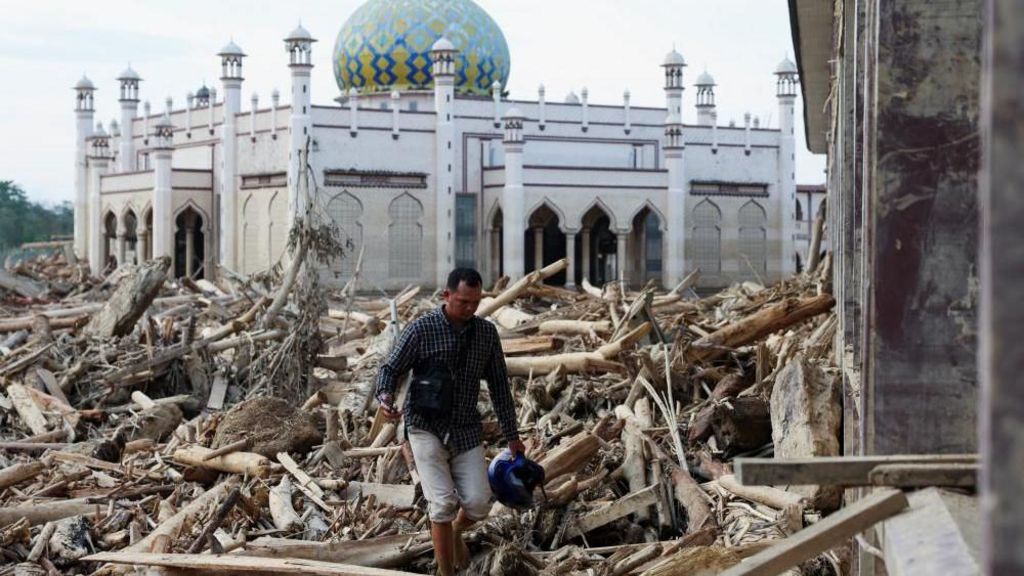
    Indonesia faces a mounting humanitarian catastrophe as official figures confirm over 900 fatalities from devastating floods triggered by an unprecedented cyclone. The disaster, which struck with ferocious intensity last week, has left hundreds more missing and completely obliterated more than 100,000 residential structures across the archipelago nation.

    The calamity originated when a rare cyclonic system developed over the Malacca Strait, unleashing torrential rainfall that precipitated massive landslides and catastrophic flooding throughout vulnerable regions. Rescue operations continue to face tremendous challenges, with remote areas remaining completely isolated and accessible only through complex airdrop missions delivering essential supplies.

    In Aceh Tamiang, among the most severely affected regions, entire villages have been erased by powerful floodwaters. Survivors recount harrowing tales of survival against impossible odds. Fitriana, a resident of Lintang Bawah Village, described how neighbors endured three days without food or water while stranded on rooftops with young children. Preliminary assessments indicate approximately 90% of structures in her community suffered total destruction, displacing some 300 families.

    Another survivor detailed a dramatic double evacuation—first by boat when waters inundated his home’s second floor, then subsequently fleeing to higher ground as flooding pursued them to neighboring Gampoeng Dalam Village. ‘Water suddenly soaked the mattresses while we slept,’ he recalled. ‘We couldn’t go anywhere else because there was no higher ground. Luckily, my daughter-in-law’s house had two levels.’

    The regional governor reported recovery teams are now wading through waist-deep mud searching for victims, while warning that starvation poses a greater immediate threat than the floodwaters themselves. ‘Many people need basic necessities,’ he stated. ‘Many remote areas of Aceh remain untouched. People are not dying from the flood, but from starvation.’

    The crisis has triggered extraordinary measures including the emergency release of inmates from a threatened prison facility, while isolated reports emerge of supermarket looting in desperate communities. Critical land routes to Sibolga City and Central Tapanuli remain severed, requiring ongoing sea and air supply operations.

    This tragedy forms part of a broader pattern of extreme weather events sweeping across Asia, with cumulative fatalities from recent disasters in Sri Lanka, Thailand, Malaysia and Vietnam nearing 2,000 casualties, highlighting the region’s increasing vulnerability to climate-related catastrophes.

  • Look: Kaaba from space; astronaut shares stunning image of lit up Masjid Al Haram

    Look: Kaaba from space; astronaut shares stunning image of lit up Masjid Al Haram

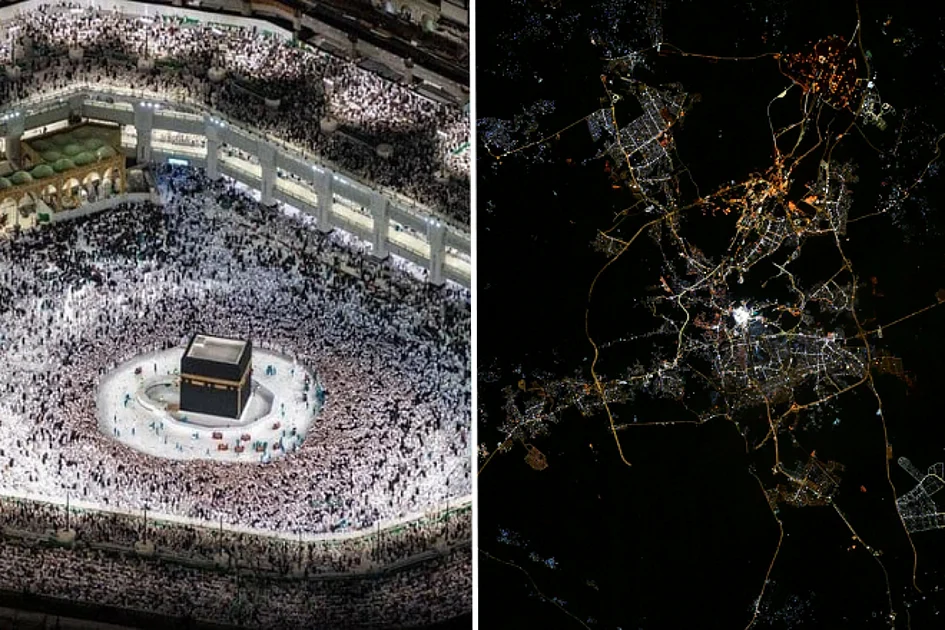
    A remarkable orbital photograph showcasing Islam’s holiest site from approximately 400 kilometers above Earth has captivated global audiences. NASA astronaut Donald Pettit, renowned for sharing extraordinary imagery from space, recently published a breathtaking view of Makkah, Saudi Arabia, from the International Space Station (ISS).

    The image, captured earlier this week and shared via social media platform X, reveals the Masjid Al Haram complex as a radiant point of light against the darkness of the Arabian Peninsula. At the center of this luminous display shines the Kaaba, Islam’s most sacred structure, visibly discernible even from orbital altitude.

    Pettit accompanied the photograph with explanatory commentary: “Orbital views of Makkah, Saudi Arabia. The bright spot in the center is the Kaaba, Islam’s holiest site, visible even from space.” The image was taken from the ISS, which serves as both research facility and residence for international astronauts continuously orbiting our planet.

    The photograph has achieved viral status across multiple digital platforms, accumulating millions of engagements through likes, shares, and views. Social media commentators have expressed profound admiration for the image’s spiritual and aesthetic significance, with one observer noting, “This glow is the most beautiful glow.”

    This celestial perspective provides not only a stunning visual document but also symbolizes the intersection of space exploration, religious reverence, and technological achievement. Pettit continues his tradition of sharing unique orbital photography that offers humanity new ways to contemplate familiar landmarks from unprecedented vantage points.

  • At least 18 migrants die as inflatable boat sinks south of Greek island of Crete; 2 rescued

    At least 18 migrants die as inflatable boat sinks south of Greek island of Crete; 2 rescued

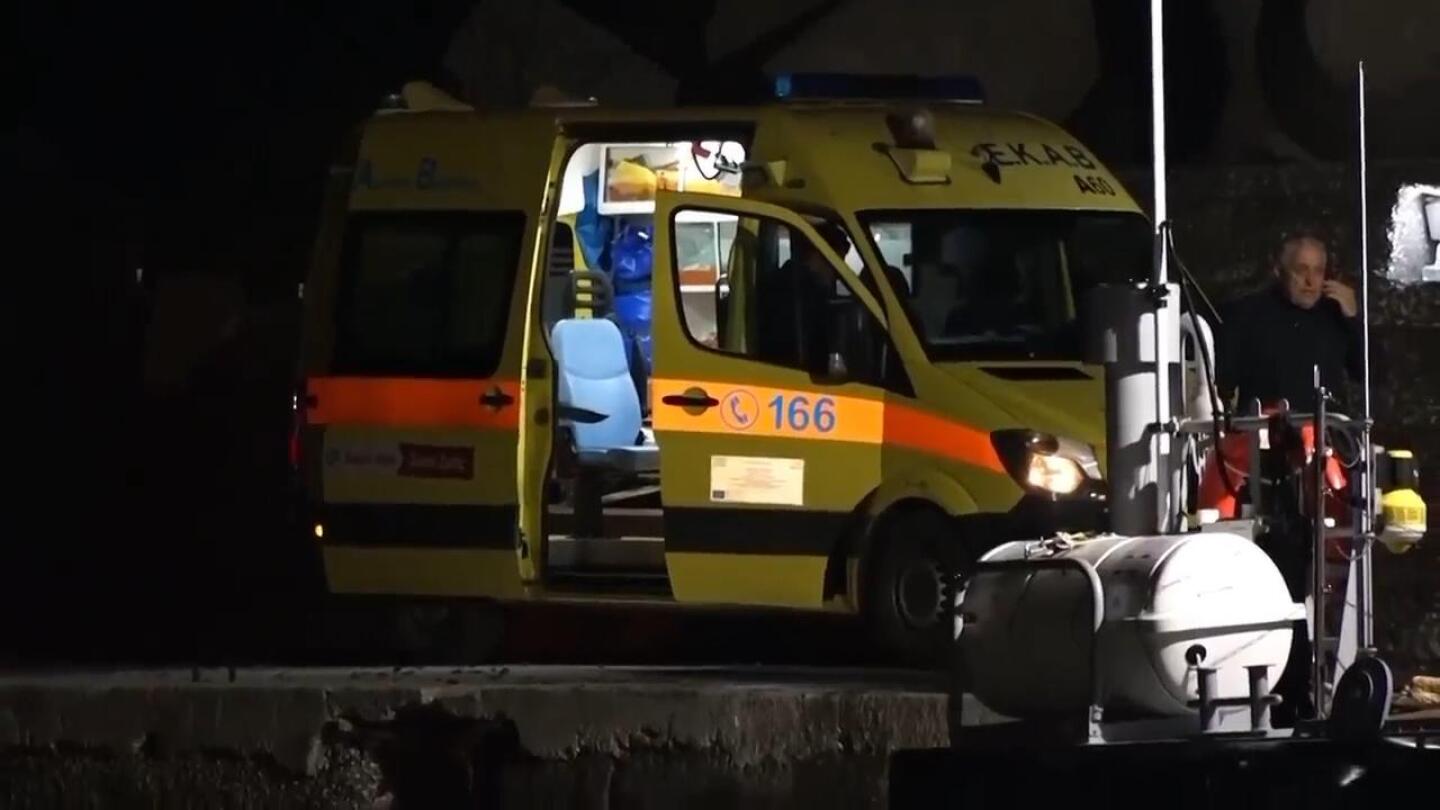
    A devastating maritime incident has claimed the lives of at least 18 migrants in the Mediterranean Sea, according to Greek authorities. The tragedy unfolded south of Crete on Saturday when an overcrowded inflatable vessel capsized during its perilous journey.

    The half-submerged boat was initially spotted by a Turkish commercial ship passing through the area, triggering a massive multinational search and rescue operation. Two survivors were successfully pulled from the water, while emergency teams continue scouring the sea for additional survivors. The nationalities of the victims and the precise origin point of their journey remain undetermined at this time.

    This catastrophe highlights the ongoing humanitarian crisis along Europe’s southern borders, where Greece continues to serve as a primary gateway for those fleeing conflict zones and economic hardship across Africa, the Middle East, and Asia. While the shorter Turkey-to-Greek-islands route has seen reduced traffic due to enhanced patrols and border control measures, the longer and more dangerous Libya-to-Crete passage has witnessed a significant surge in attempted crossings in recent months.

    The complex rescue mission involves coordinated efforts between multiple agencies, including aircraft and vessels from Frontex (the European Border and Coast Guard Agency), Greek Coast Guard helicopters, and three merchant ships that have joined the search operation. The Mediterranean remains one of the world’s deadliest migration routes, with such fatal incidents occurring with tragic regularity despite repeated warnings from humanitarian organizations about the dangers of irregular sea crossings in unseaworthy vessels.

  • South Africa hostel shooting kills 11 including three‑year‑old, say police

    South Africa hostel shooting kills 11 including three‑year‑old, say police

    In a devastating pre-dawn assault that has reignited concerns about South Africa’s pervasive violent crime epidemic, armed assailants stormed an informal drinking establishment in Pretoria on Saturday, executing a brutal shooting that left 11 people dead, including a three-year-old child and two teenagers.

    The horrific incident unfolded around 4:30 AM local time (0230 GMT) at an unlicensed tavern operating within a hostel complex in Saulsville township, approximately 18 kilometers west of South Africa’s administrative capital. According to police spokesperson Athlenda Mathe, three unidentified gunmen entered the premises and opened indiscriminate fire on a group of patrons, striking 25 individuals in total.

    Tragically, ten victims perished at the scene while another succumbed to injuries after being transported to medical facilities. Among the deceased were a 12-year-old boy and a 16-year-old girl, highlighting the indiscriminate nature of the violence that has become increasingly common in establishments illegally selling alcohol.

    Authorities confirmed that the attack represents the latest in a disturbing pattern of mass shootings plaguing the nation of 63 million people. South Africa maintains one of the world’s highest homicide rates, with official statistics indicating approximately 63 daily murders between April and September this year. The country’s struggle with entrenched criminal networks, widespread illegal firearms, and alcohol-fueled violence has created a persistent public safety crisis.

    Police spokeswoman Mathe emphasized the particular danger posed by unlicensed liquor establishments, noting that ‘most mass shootings occur’ in such venues where ‘innocent people also get caught up in the crossfire.’ The timing of the attack—occurring nearly 90 minutes before authorities were alerted—further complicated emergency response efforts.

    As investigators continue searching for motives and suspects, this tragedy echoes several recent mass shooting incidents across South Africa, including October’s gang-related violence in Johannesburg that killed two teenagers and May’s tavern shooting in Durban that claimed eight lives. The ongoing manhunt for the perpetrators continues while the nation confronts its deep-rooted challenges with organized crime and violence prevention.

  • Sudan: RSF strike on Kordofan kindergarten kills dozens, mostly children

    Sudan: RSF strike on Kordofan kindergarten kills dozens, mostly children

    In a devastating escalation of Sudan’s ongoing civil conflict, a drone strike conducted by the paramilitary Rapid Support Forces (RSF) targeted a kindergarten in South Kordofan, resulting in one of the deadliest single incidents against civilians since the war began. According to the Sudan Doctors Network (SDN), the attack killed 50 people, including 33 children, marking what humanitarian organizations are calling a grave violation of international law.

    The assault, which occurred on Thursday in Kalogi town, involved coordinated attacks on multiple civilian facilities including the kindergarten, a local hospital, and government buildings. The SDN reported that paramedics responding to the initial explosion faced a secondary attack while attempting to rescue victims, complicating rescue efforts and increasing casualties.

    Communication blackouts throughout the region have hampered accurate casualty assessment, with authorities fearing the actual death toll may be significantly higher. The attack represents a strategic shift in the two-year conflict between the RSF and the Sudanese army, with fighting now concentrated in the oil-rich Kordofan region following the RSF’s recent capture of el-Fasher in Darfur.

    UN Human Rights Commissioner Volker Turk expressed deep concern over emerging atrocities, citing documented evidence of 269 civilian deaths from aerial strikes, artillery shelling, and summary executions since late October. The UN office has additionally received reports of retaliatory killings, arbitrary detentions, abductions, sexual violence, and forced recruitment of children by paramilitary forces.

    The situation in South Kordofan has deteriorated rapidly, with Middle East Eye reporting the abduction of 21 children last week for potential recruitment as fighters. Witnesses confirm that RSF forces and allied rebel groups have intensified operations around strategic resources, including gold mines in the region.

    This incident underscores the worsening humanitarian crisis in Sudan, where international organizations warn of repeating patterns of violence previously witnessed in Darfur, now spreading through the Kordofan states with devastating effect on civilian populations.

  • Seven dead, 11 injured in southern Turkey bus crash

    Seven dead, 11 injured in southern Turkey bus crash

    A tragic pre-dawn traffic incident on a major Turkish highway resulted in multiple fatalities and injuries Saturday morning. According to official reports from the Osmaniye Governor’s office, seven passengers lost their lives and eleven others sustained injuries when an intercity coach collided with a stationary heavy goods vehicle.

    The accident occurred on the motorway connecting Adana and Gaziantep, approximately 90 kilometers west of Gaziantep. Initial investigations by Turkey’s state-run Anadolu Agency indicate that the collision happened when the bus crashed into the rear of an articulated lorry that had been forced to stop following a tire blowout.

    Visual evidence from the crash site revealed extensive damage to the front right section of the passenger bus, which appeared completely crushed from the impact. Emergency responders arrived promptly at the scene to provide medical assistance and transport the injured to nearby medical facilities.

    Authorities confirmed that all casualties were passengers traveling on the bus at the time of the incident. Identification procedures for the deceased are currently underway as officials work to notify family members. The truck driver, who survived the collision without significant injuries, has been taken into custody as part of standard investigative procedures.

    Local police implemented a full road closure along the affected motorway segment to facilitate rescue operations and allow accident reconstruction experts to conduct their examination. The investigation continues to determine the exact circumstances that led to this devastating roadway tragedy.

  • Deadly attack on kindergarten reported in Sudan

    Deadly attack on kindergarten reported in Sudan

    In a devastating escalation of Sudan’s ongoing civil conflict, simultaneous drone attacks have struck civilian targets in separate regions, resulting in significant casualties and international condemnation. A kindergarten in Kalogi, South Kordofan, was reportedly hit by multiple drone-fired missiles on Thursday, claiming at least 50 lives including 33 children according to medical organizations.

    The Sudan Doctors’ Network and national army officials have attributed the Kalogi attack to the Rapid Support Forces (RSF) paramilitary group. Eyewitness accounts describe secondary strikes targeting first responders and medical personnel who rushed to the scene, compounding the tragedy. The army-aligned foreign ministry confirmed the school sustained two separate missile impacts during the assault.

    In a retaliatory accusation, the RSF claimed government forces executed a drone strike on Friday against the Adre border crossing in Darfur, a critical humanitarian corridor connecting Sudan with Chad. The paramilitary group asserted the attack targeted both a fuel depot and adjacent marketplace, causing civilian casualties and substantial damage to infrastructure essential for aid delivery.

    The Sudan War Monitor, an independent conflict research organization, verified significant destruction at the Adre crossing site but could not independently confirm casualty figures from either incident due to communication blackouts and restricted access to conflict zones.

    UNICEF representative Sheldon Yett issued a forceful condemnation stating, ‘Targeting educational facilities represents a horrific violation of children’s fundamental rights. Children must never bear the consequences of armed conflict.’ The UN agency demanded immediate cessation of attacks on civilian infrastructure and unimpeded humanitarian access to affected regions.

    The strategic Kordofan region, comprising three states with nearly eight million residents, has emerged as a critical frontline in the widening conflict. Situated between the national capital Khartoum and the Darfur region, this area has witnessed intensified fighting as military forces advance toward Darfur.

    Neither military faction responded immediately to requests for comment regarding the specific allegations. The conflict originated from a power struggle between formerly allied forces in April 2023, resulting in widespread humanitarian crisis across Sudan.