分类: world

  • Sudan air force bombing of towns, markets and schools has killed hundreds, report says

    Sudan air force bombing of towns, markets and schools has killed hundreds, report says

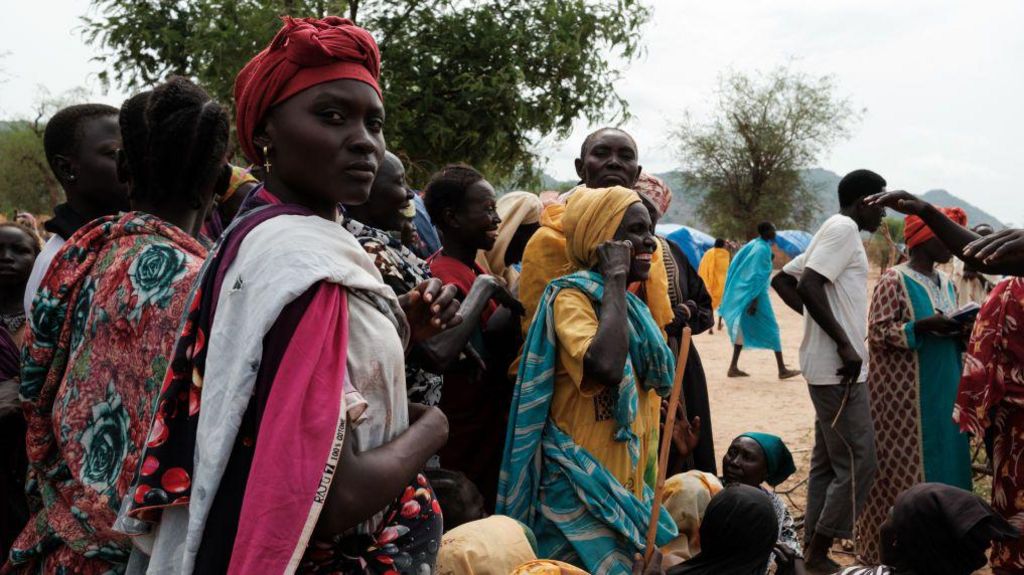
    A groundbreaking investigation by the Sudan Witness Project has documented systematic aerial attacks on civilian infrastructure that have resulted in at least 1,700 fatalities since the conflict began in April 2023. The comprehensive study represents the most extensive dataset compiled on military airstrikes in Sudan’s ongoing civil war, revealing disturbing patterns of violence against non-combatants.

    The research, conducted by the Center for Information Resilience with funding from the British foreign ministry, analyzed 384 airstrikes occurring between April 2023 and July 2025. The findings indicate that the Sudanese Armed Forces (SAF) have repeatedly employed unguided munitions in densely populated areas, including residential neighborhoods, marketplaces, educational institutions, and displacement camps.

    According to project director Mark Snoeck, the evidence demonstrates a clear failure by the SAF to implement adequate precautions to prevent civilian casualties. “The main patterns that emerge are repeated hits on residential neighbourhoods and markets,” Snoeck stated, “as well as a large number of alleged strikes on essential humanitarian and medical facilities.”

    The investigation employed rigorous open-source verification methodologies, cross-referencing social media footage, satellite imagery, and ground reports to establish attack credibility. Among the most troubling findings was the identification of an undetonated SH-250 bomb manufactured by Sudan’s Military Industry Corporation in the Zamzam displacement camp in North Darfur.

    Notable incidents documented include:
    – The bombing of Hamrat al-Sheikh Market in North Kordofan that killed 30 and injured 100 civilians
    – A August 2024 strike on a hospital in el-Daein that resulted in 16 fatalities including children and healthcare workers
    – February 2025 attacks in Nyala that struck residential areas near an eye hospital, killing 63 people
    – The October 2024 destruction of al-Kuma market in North Darfur that left 65 dead and 200 injured

    While the Rapid Support Forces (RSF) have faced international condemnation for ethnic violence in Darfur, the report highlights that the SAF’s aerial campaign has similarly caused extensive civilian suffering. Both conflict parties have increasingly incorporated drone warfare into their tactics, with recent months showing a shift toward unmanned aerial attacks.

    Justin Lynch of the Conflict Insights Group characterized the conflict as “a war against civilians,” noting that “air power and other heavy weapons disproportionately target civilian, more than military, sites.” International observers have condemned the pattern of attacks as potential war crimes, with a British foreign office official stating that perpetrators “must be held accountable” regardless of affiliation.

    The full Sudan Witness report, featuring an interactive map visualizing the scale and impact of airstrikes, is scheduled for publication on December 10.

  • Saudi Arabia, Qatar sign high-speed rail deal to link Riyadh and Doha

    Saudi Arabia, Qatar sign high-speed rail deal to link Riyadh and Doha

    In a landmark infrastructure agreement, the Kingdom of Saudi Arabia and the State of Qatar have formally committed to constructing a state-of-the-art high-speed rail network linking their capital cities. The strategic pact, signed during an official state visit by Qatar’s Emir Sheikh Tamim bin Hamad Al Thani to Riyadh, was finalized in the presence of Saudi Crown Prince Mohammed bin Salman.

    The ambitious railway project will feature fully electric trains capable of exceeding operational speeds of 300 kilometers per hour (186 mph), substantially reducing travel time between Riyadh and Doha to approximately two hours. This development establishes a competitive ground alternative to air travel, with direct flights currently requiring about 90 minutes between the metropolitan hubs.

    Beyond the primary capitals, the comprehensive rail network will incorporate strategic stops at key Saudi urban centers including Al-Hofuf and Dammam, enhancing regional connectivity across the Eastern Province. Project planners anticipate the railway will accommodate an estimated 10 million passengers annually upon its scheduled completion within the six-year development timeline.

    This transnational infrastructure initiative represents a significant milestone in Gulf Cooperation Council (GCC) integration efforts, potentially setting a precedent for future cross-border transportation projects. The electric railway system aligns with regional environmental sustainability goals while addressing growing transportation demands between the neighboring nations.

  • JMA issues tsunami forecast after 7.6-magnitude quake hits northeastern Japan

    JMA issues tsunami forecast after 7.6-magnitude quake hits northeastern Japan

    A significant seismic event struck northeastern Japan on Monday night, with the Japan Meteorological Agency (JMA) reporting a powerful 7.6 magnitude earthquake that prompted immediate tsunami warnings across multiple coastal regions.

    The quake occurred at 23:15 local time (14:15 UTC) at a depth of approximately 50 kilometers beneath the seafloor. The tremor registered an upper 6 intensity on Japan’s 7-point seismic scale in the most severely affected zones, indicating substantial ground shaking capable of causing structural damage.

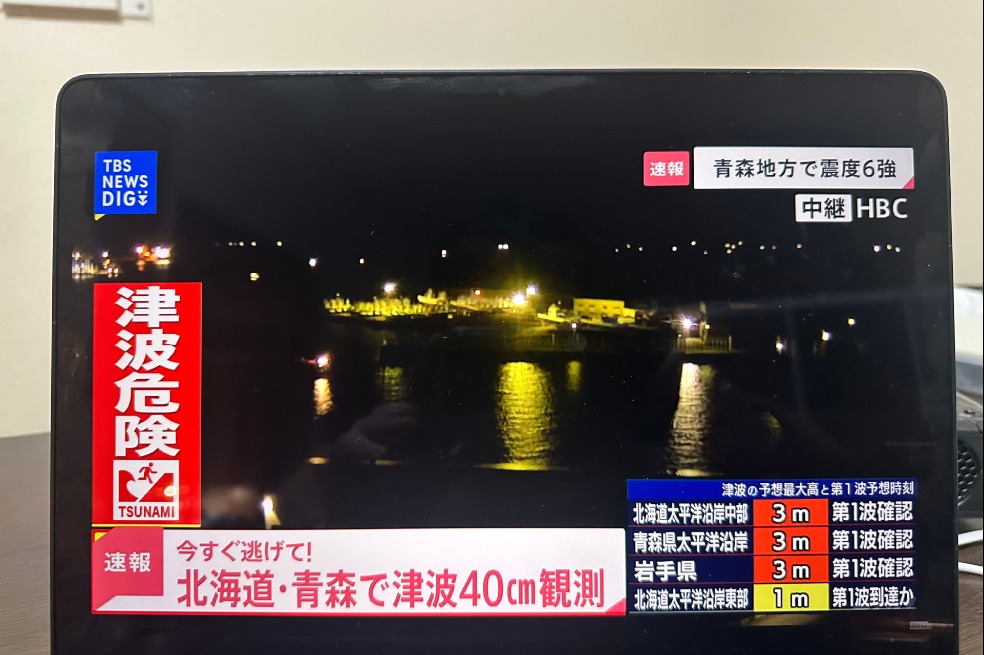
    Following the seismic activity, the JMA issued urgent tsunami advisories for extensive coastal areas along the Pacific coastline. The agency specifically warned of potential waves reaching up to 3 meters in height for the prefectures of Hokkaido, Aomori, and Iwate. Additionally, tsunami advisories were extended to Miyagi and Fukushima prefectures as precautionary measures.

    The earthquake’s epicenter was pinpointed offshore in the Pacific Ocean, positioned at coordinates 41.0 degrees north latitude and 142.3 degrees east longitude, east of Aomori Prefecture. This region has historically experienced significant seismic activity due to its location along the Pacific Ring of Fire.

    Japanese authorities have initiated standard emergency response protocols, urging coastal residents to evacuate to higher ground immediately. The timing of the event—late evening—presented additional challenges for evacuation efforts and emergency response coordination. The comprehensive warning system implemented after the 2011 Tohoku earthquake and tsunami was activated across the affected regions.

  • 7.6-magnitude earthquake strikes northern, northeastern Japan, tsunami warning issued

    7.6-magnitude earthquake strikes northern, northeastern Japan, tsunami warning issued

    A powerful seismic event registering a preliminary magnitude of 7.6 struck northern and northeastern regions of Japan on Monday, December 8, 2025, according to the Japan Meteorological Agency (JMA). The earthquake’s epicenter was precisely located off the coast of Aomori Prefecture at coordinates 41.0 degrees north latitude and 142.3 degrees east longitude.

    The tremors, which occurred at approximately 22:37 local time, prompted immediate emergency response protocols across affected regions. The JMA swiftly issued tsunami advisories for the eastern coastal areas of Aomori Prefecture and multiple other locations along Japan’s Pacific coastline. Residents in vulnerable coastal communities were advised to evacuate to higher ground as a precautionary measure.

    Seismologists noted that the quake’s considerable magnitude and offshore location created significant tsunami generation potential. Emergency broadcasting systems were activated across northern Japan, with authorities urging citizens to remain vigilant for potential aftershocks and follow official evacuation guidelines. The earthquake was felt across multiple prefectures, with reports indicating strong shaking intensity in urban centers.

    Japan’s sophisticated early warning systems provided critical seconds of advance notice to populations in affected areas. The nation’s robust infrastructure, designed to withstand seismic events, was immediately put to the test. Government agencies initiated comprehensive damage assessment operations while search and rescue teams were placed on high alert.

    This seismic event occurs within Japan’s notoriously active seismic zone, where the Pacific Plate subducts beneath the Okhotsk Plate, creating frequent tectonic activity. The region has experienced significant historical earthquakes, including the devastating 2011 Tohoku earthquake and tsunami.

  • Tsunami warning after earthquake strikes off Japan

    Tsunami warning after earthquake strikes off Japan

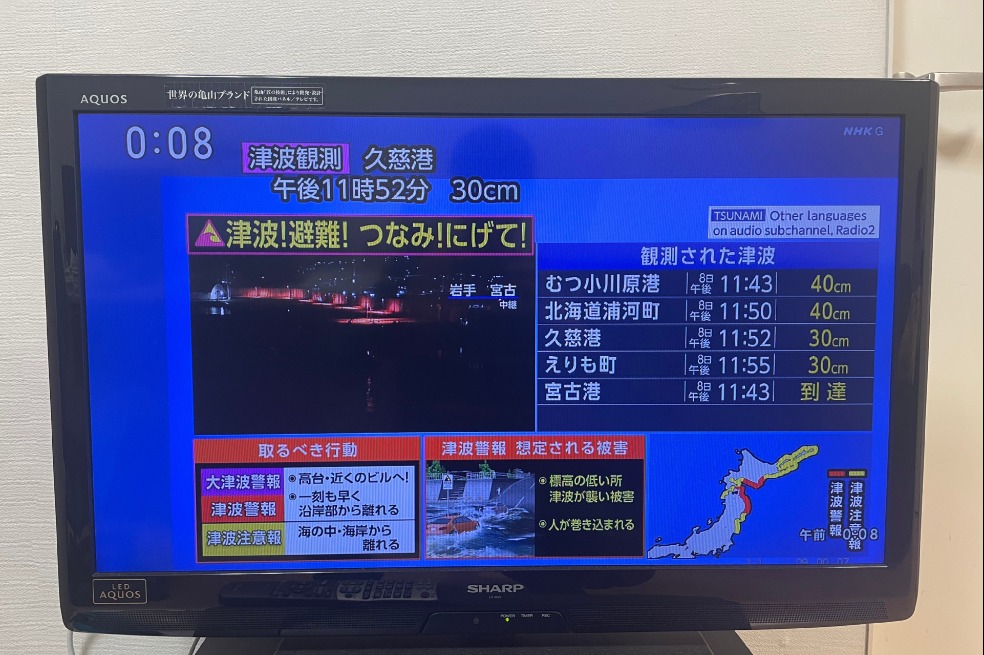
    A powerful 7.6 magnitude earthquake struck northeastern Japan on Monday evening, triggering immediate tsunami warnings and mass evacuation orders for approximately 90,000 residents along the Pacific coastline. The seismic event occurred at 23:15 local time (14:15 GMT) at a depth of 50 kilometers, approximately 80 kilometers off the coast of Aomori region according to the Japan Meteorological Agency.

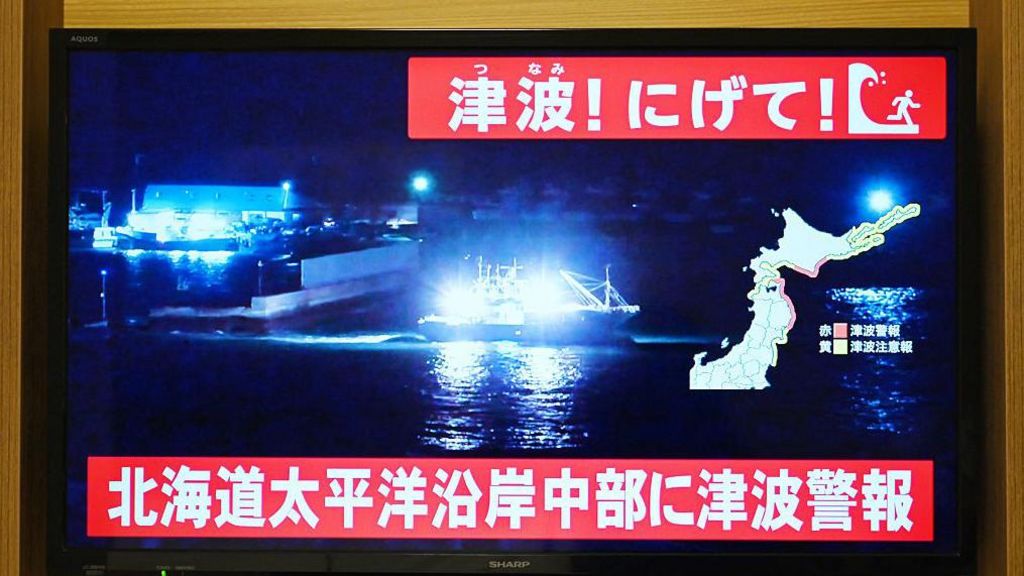
    Japanese television broadcasts urgently displayed emergency messages reading ‘Tsunami! Run!’ and ‘Tsunami warning issued for central Hokkaido’s Pacific Coast’ as authorities scrambled to alert coastal communities. Initial wave observations recorded tsunami surges reaching 40 centimeters in some areas, though officials warned of potentially larger waves to follow.

    The quake resulted in multiple injuries according to local media reports, with Japanese public broadcaster NHK quoting a hotel employee in Hachinohe confirming several casualties. Transportation networks were significantly disrupted with train services suspended throughout the affected region as a precautionary measure.

    Critical infrastructure monitoring confirmed no abnormalities at the Higashidori and Onagawa nuclear power plants, as reported by Tohoku Electric Power Company. This reassurance came as particular relief given Japan’s heightened sensitivity to seismic events affecting nuclear facilities since the 2011 Fukushima disaster.

    The earthquake serves as another stark reminder of Japan’s vulnerability to seismic activity, occurring in a nation that experiences tremors approximately every five minutes due to its position along the Pacific Ring of Fire. Emergency response systems were fully activated with evacuation centers established for displaced residents.

  • India’s Goa state orders probe after nightclub fire kills 25

    India’s Goa state orders probe after nightclub fire kills 25

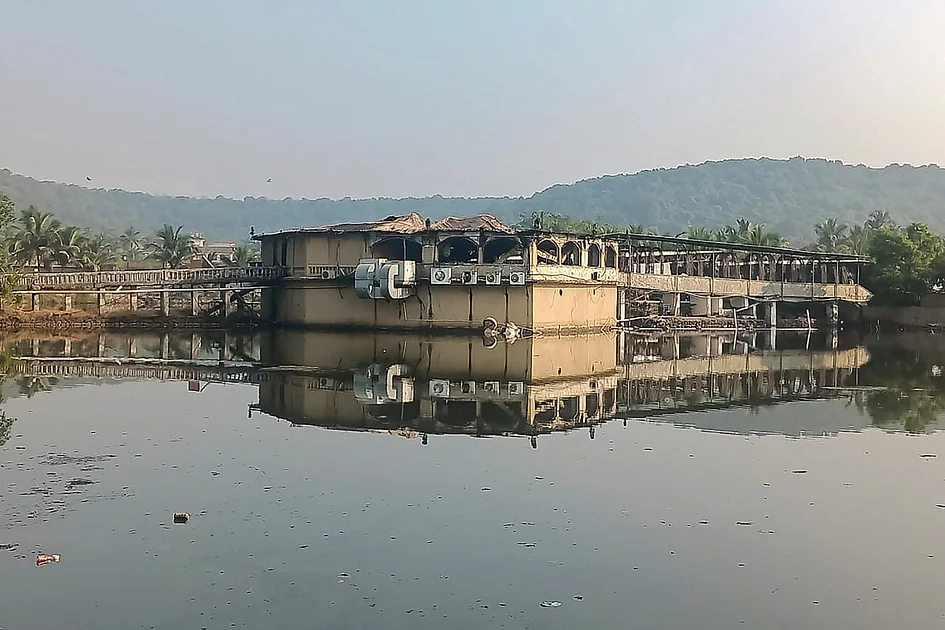
    A catastrophic nightclub fire in India’s popular coastal state of Goa has resulted in 25 fatalities, triggering an immediate government response including a formal investigation and victim compensation packages. The blaze erupted at the Birch by Romeo Lane establishment in the village of Arpora during the early hours of Sunday morning, marking one of the deadliest entertainment venue incidents in recent Indian history.

    Goa Chief Minister Pramod Sawant confirmed the initiation of a magisterial inquiry to determine the fire’s origins and establish accountability. ‘I have ordered a comprehensive judicial investigation to identify the cause and fix responsibility for this tragedy,’ Sawant stated via social media platform X, noting that six injured individuals remained in stable condition under medical supervision.

    Indian Prime Minister Narendra Modi expressed his condolences to bereaved families following personal communications with state leadership. The Prime Minister’s Office announced substantial compensation packages, committing 200,000 rupees (approximately $2,200) to each victim’s family and 50,000 rupees to those injured in the devastating incident.

    Local authorities reported receiving emergency alerts at 12:04 a.m. local time (1834 GMT Saturday), with firefighting teams working throughout the night to contain the blaze. Police officials confirmed to media outlets that all victims had been recovered from the scene, with preliminary reports indicating at least four tourists and fourteen club staff among the deceased.

    The tragedy strikes at the heart of Goa’s vital tourism industry, which has welcomed approximately 5.5 million visitors during the first half of the year, including over 271,000 international travelers according to government statistics. The coastal region, renowned for its picturesque beaches and vibrant nightlife, faces renewed scrutiny regarding safety protocols within its entertainment establishments as investigation proceedings commence.

  • Thailand says deploys fighter jets, Cambodia claims Thai soldiers open fire amid border tension

    Thailand says deploys fighter jets, Cambodia claims Thai soldiers open fire amid border tension

    A dangerous military escalation has erupted along the contested Thai-Cambodian border, with both nations trading accusations of initiating hostilities that have resulted in casualties and prompted the deployment of air power.

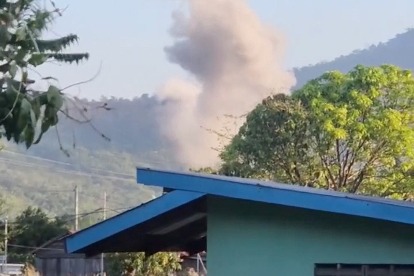
    The Thai Army confirmed it has deployed fighter jets following what it described as Cambodian attacks on Monday morning. According to Thai Army Spokesperson Winthai Suvaree, the incident occurred approximately at 07:00 local time in the Chong Bok area of Nam Yuen District. Thai soldiers operating in the region reportedly came under attack with ‘supporting fire weapons,’ resulting in two soldiers killed and four wounded.

    This deadly engagement followed an earlier clash in the nearby Chong An Ma area around 05:05 local time, when Cambodian troops allegedly opened fire with small arms and indirect weapons. The Thai Army stated it responded under established rules of engagement.

    In response to the casualties and what it termed a ‘direct threat to national security,’ the Royal Thai Air Force confirmed it has commenced air operations targeting Cambodian military infrastructure. RTAF Spokesperson Jackkrit Thammavichai stated: ‘These developments prompted the use of air power to deter and reduce Cambodia’s military capabilities to the minimum level necessary to safeguard national security and protect civilians.’

    Meanwhile, Cambodian authorities presented a starkly different account of the events. Cambodian Defense Ministry’s Undersecretary of State and Spokesperson Lt. Gen. Maly Socheata asserted that Thai military forces launched an unprovoked attack on Cambodian forces in the An Ses area of Preah Vihear province around 05:04 on Monday.

    According to Socheata, Thai forces ‘continued firing multiple shots with tanks at Tamoan Thom temple, 5 Makara in the vicinity of Preah Vihear temple and Chomka Chek area.’ She characterized these actions as part of ‘numerous provocative actions for many days, especially the incident yesterday (Sunday) at Prorlean Thmar area, with the objective of instigating confrontations.’

    The Cambodian spokesperson emphasized that their forces ‘did not retaliate at all during the two assaults’ and continue to monitor the situation ‘vigilantly and with utmost caution standing on the spirit of respecting all previous agreements and resolving conflicts peacefully according to international law.’

    Cambodia has formally informed the ASEAN Observer Team about the incident and plans to request an official investigation into the matter, potentially internationalizing the border dispute that has periodically flared between the Southeast Asian neighbors.

  • More than 100 people killed in attack on hospital in Sudan, WHO chief says

    More than 100 people killed in attack on hospital in Sudan, WHO chief says

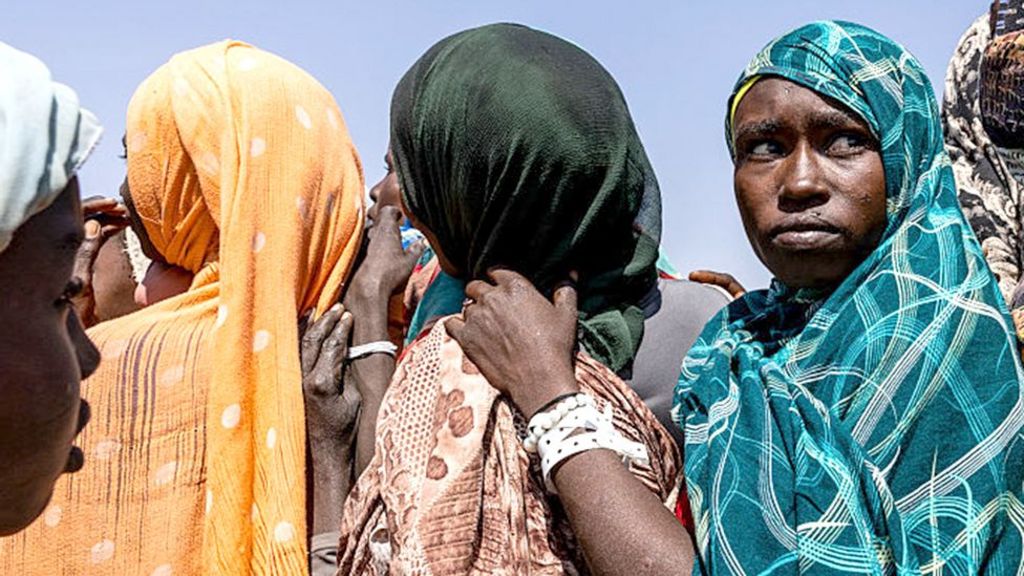
    In a devastating escalation of Sudan’s civil conflict, drone strikes targeted a kindergarten and hospital in the town of Kalogi, South Kordofan, resulting in 114 fatalities including 63 children according to United Nations figures. World Health Organization Director-General Tedros Adhanom Ghebreyesus denounced the Thursday attack as “senseless” while revealing that emergency responders faced secondary attacks during rescue operations.

    The Rapid Support Forces (RSF), engaged in a brutal power struggle with the national army since April 2023, faces accusations from both military authorities and the Sudan Doctors’ Network for executing the assault. Local official Essam al-Din al-Sayed described to AFP how drones struck first a kindergarten, then a hospital, and again as rescuers attempted to evacuate children.

    Simultaneously, the RSF announced capture of Sudan’s largest oil field at Heglig near the southern border, describing it as a “pivotal” strategic achievement. Army sources told Reuters that government forces withdrew to protect oil infrastructure, with some personnel reportedly crossing into South Sudan. The Heglig facility processes most of South Sudan’s oil, representing critical revenue for both nations.

    The Kordofan region—comprising North, South, and West Kordofan with nearly eight million residents—has become a central frontline as army forces advance toward RSF-controlled Darfur. WHO confirmed survivors were transferred to Abu Jebaiha Hospital amid urgent calls for blood donations and medical support.

    Tedros, who previously accused RSF of killing hundreds at el-Fasher hospital in October, stopped short of directly attributing blame for the Kalogi attack but demanded immediate ceasefire through social media: “Sudanese have suffered far too much. Ceasefire now!” The organization’s Attacks on Health Care monitoring system documented 35 additional injuries alongside the 114 fatalities.

  • Thailand launches air strikes at Cambodia as border tensions reignite

    Thailand launches air strikes at Cambodia as border tensions reignite

    Southeast Asia faces renewed military confrontation as Thailand conducted aerial assaults against Cambodian positions on Monday, marking a severe escalation in long-standing border tensions. The Thai military command confirmed the deployment of aircraft to strike strategic targets after reporting casualties from Cambodian rocket fire.

    The offensive follows the collapse of a U.S.-brokered ceasefire agreement, with both nations accusing each other of violating the peace accord. Thailand’s armed forces disclosed that one soldier was killed and four others wounded during clashes concentrated in the Uran Ratchathani province border region.

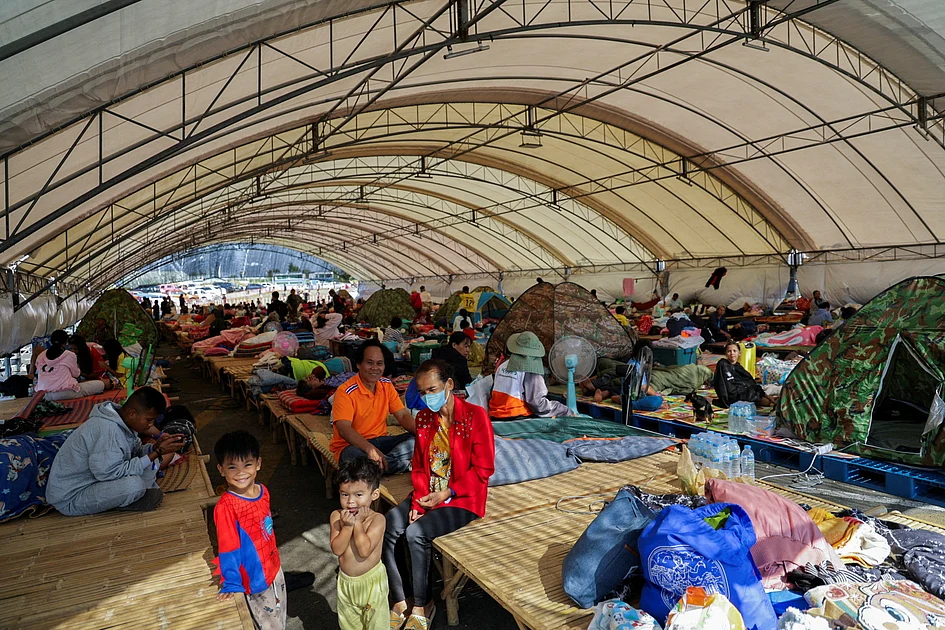
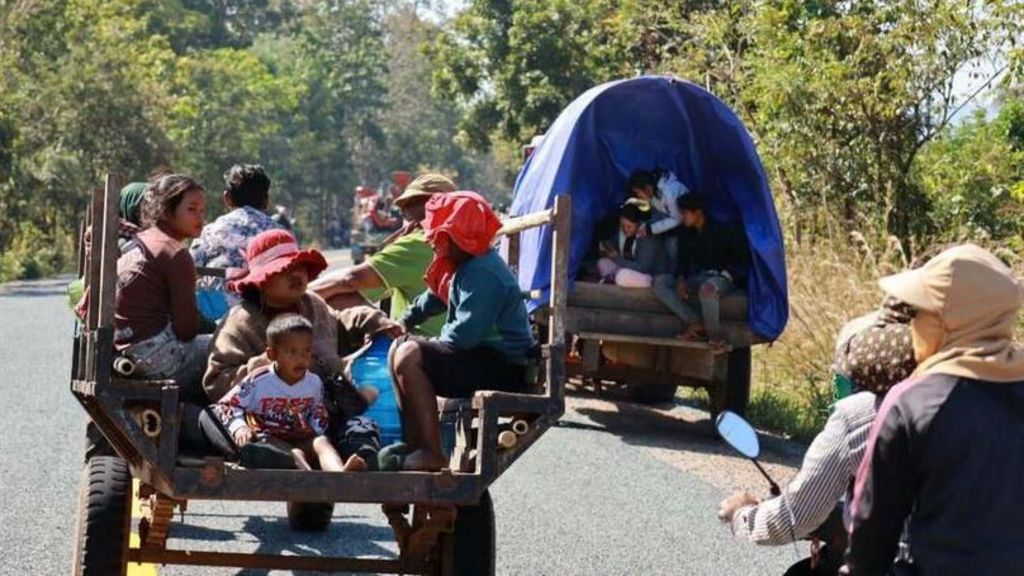
    Civilian displacement has reached critical levels, with Thai authorities evacuating approximately 385,000 residents from four border districts. More than 35,000 evacuees have already been relocated to temporary shelters as artillery exchanges threaten border communities.

    Cambodia’s Defense Ministry issued a counter-statement alleging that Thai forces initiated dawn attacks at multiple locations after days of provocations. Cambodian officials emphasized their troops exercised restraint despite what they characterized as aggressive actions by Thai military units.

    This confrontation represents the most serious breach of security since July’s five-day conflict that resulted in 48 fatalities and displaced 300,000 people. The previous ceasefire was negotiated through diplomatic intervention by former U.S. President Donald Trump and Malaysian Prime Minister Anwar Ibrahim, who witnessed the signing of an expanded peace agreement in Kuala Lumpur last October.

    The current escalation follows a recent landmine explosion that injured a Thai soldier, prompting Thailand to suspend its ceasefire implementation. Cambodia’s influential former leader Hun Sen characterized Thai military actions as provocations designed to elicit retaliation, urging Cambodian forces to maintain disciplined restraint despite established response protocols.

    The territorial dispute originates from imperfectly demarcated borders established during French colonial rule in 1907, with periodic violent outbreaks occurring along the 817-kilometer boundary despite numerous diplomatic resolution attempts.

  • Thousands flee Thai-Cambodia border after deadly clashes

    Thousands flee Thai-Cambodia border after deadly clashes

    Renewed military confrontations erupted along the disputed Thailand-Cambodia border on Monday, resulting in at least five fatalities and triggering mass civilian evacuations on both sides. This represents the most severe escalation since the two Southeast Asian nations agreed to a ceasefire brokered by Malaysia in July.

    According to official statements from both governments, Thai forces conducted air strikes in Ubon Ratchathani Province in response to what they described as Cambodian provocation, while Phnom Penh asserted that Thai soldiers initiated hostilities in Preah Vihear province. The conflicting accounts underscore the persistent tensions that have claimed over 40 lives since May and led to reciprocal import bans and travel restrictions.

    The human cost extends beyond combat casualties, with education emerging as a particularly affected sector. Thailand’s Education Ministry ordered nearly 650 schools across five border provinces to close indefinitely, while social media footage from Cambodian border regions showed chaotic scenes as parents rushed to retrieve children from classrooms. This marks the second major educational disruption in recent months, following intense fighting during examination periods in July.

    Thai educator Siksaka Pongsuwan highlighted the hidden victims of the conflict, noting that border-area children are “losing opportunities and precious time” compared to peers in peaceful regions. The previous shift to online education proved inadequate, with many households lacking internet access and digital devices failing to reach all students.

    The current confrontation revives a century-old territorial dispute along the 800km border established after French colonial rule in Cambodia. Despite a high-profile ceasefire signing ceremony mediated by former US President Donald Trump in October – for which Cambodia nominated Trump for a Nobel Peace Prize – the agreement collapsed within weeks when Thailand suspended implementation following a landmine incident that injured two soldiers.

    As artillery fire continues to echo across border villages, residents remain torn between evacuation concerns and attachment to their homes, embodying the human dilemma wrought by protracted geopolitical conflicts.