分类: world

  • Highest passenger station along Qinghai-Xizang Railway opens

    Highest passenger station along Qinghai-Xizang Railway opens

    In a landmark development for high-altitude transportation, Drakmuk Railway Station commenced passenger operations on Thursday, establishing itself as the highest-elevation passenger station along the Qinghai-Tibet Railway corridor. Perched at 4,721 meters above sea level in the Tibetan Autonomous Region, this engineering marvel officially opened its doors to travelers at approximately 11:00 AM local time when over fifty passengers boarded the Z9817 service bound for regional capital Lhasa.

    The station, situated in Drakmuk town within Amdo County of Nagchu City, represents a significant infrastructure upgrade from its previous status as an unattended facility. This transformation directly addresses growing transportation demands and tourism development opportunities in the surrounding region, which boasts natural attractions including the formidable Tanggula Mountain Range.

    China Railway Qinghai-Tibet Group Co., Ltd., the line’s operator, anticipates the station will serve approximately 10,000 residents from twenty-five neighboring villages while simultaneously boosting local tourism infrastructure. The enhanced accessibility is expected to stimulate growth in hospitality sectors including catering and accommodation services throughout the Amdo County region.

    The inauguration marks another milestone in the region’s transportation evolution since the initial operational launch of the Qinghai-Tibet Railway in July 2006. That historic achievement ended Tibet’s era without railway connectivity by establishing a vital link between Lhasa and Xining, Qinghai Province’s capital city.

  • Kunming fund enhances global biodiversity efforts

    Kunming fund enhances global biodiversity efforts

    Global environmental leaders have hailed the Kunming Biodiversity Fund as a transformative force in advancing worldwide conservation initiatives, particularly across developing nations. Established by China in May 2024 with a substantial commitment of 1.5 billion yuan ($213 million), this international financing mechanism is rapidly scaling up biodiversity protection projects worldwide.

    At the recent seventh session of the United Nations Environment Assembly in Nairobi, Kenya, Elizabeth Mrema, deputy executive director of the UN Environment Programme, revealed the fund’s significant progress. The initiative has established an Independent Technical Advisory Group, launched calls for catalytic and full-size projects, and implemented operational manuals to ensure consistency and efficiency in its conservation efforts.

    The fund addresses a critical financing gap hindering implementation of the Kunming-Montreal Global Biodiversity Framework adopted in 2022. In a major development last October, the initiative endorsed 22 comprehensive projects valued at $27 million, supporting biodiversity action across 34 countries. These projects are translating global commitments into tangible national actions through policy strengthening, capacity building, and resource mobilization.

    Steven Victor, Environment Minister of Palau, emphasized the fund’s importance for Pacific Island nations facing unique challenges. “Food system transformation is critical for Palau, where we import 80 percent of our food,” Victor noted. He expressed hope that the project would provide scientific foundation and expertise needed to restore traditional connections with nature while addressing modern conservation needs.

    Sri Lanka’s Environment Minister Dammika Patabendi highlighted how the fund will support creation of a unified national biosecurity system to proactively address invasive species. “This investment is transformative,” Patabendi stated, explaining that it will institutionalize a comprehensive framework for invasive species prevention and establish a national digital monitoring system for real-time response capabilities.

    China’s Vice-Minister of Ecology and Environment Guo Fang reiterated the fund’s role in advancing global biodiversity governance and supporting developing countries in achieving 2030 conservation targets. The initiative represents China’s commitment to multilateralism and building a shared future for humanity, while playing a leading role in narrowing the global biodiversity financing gap.

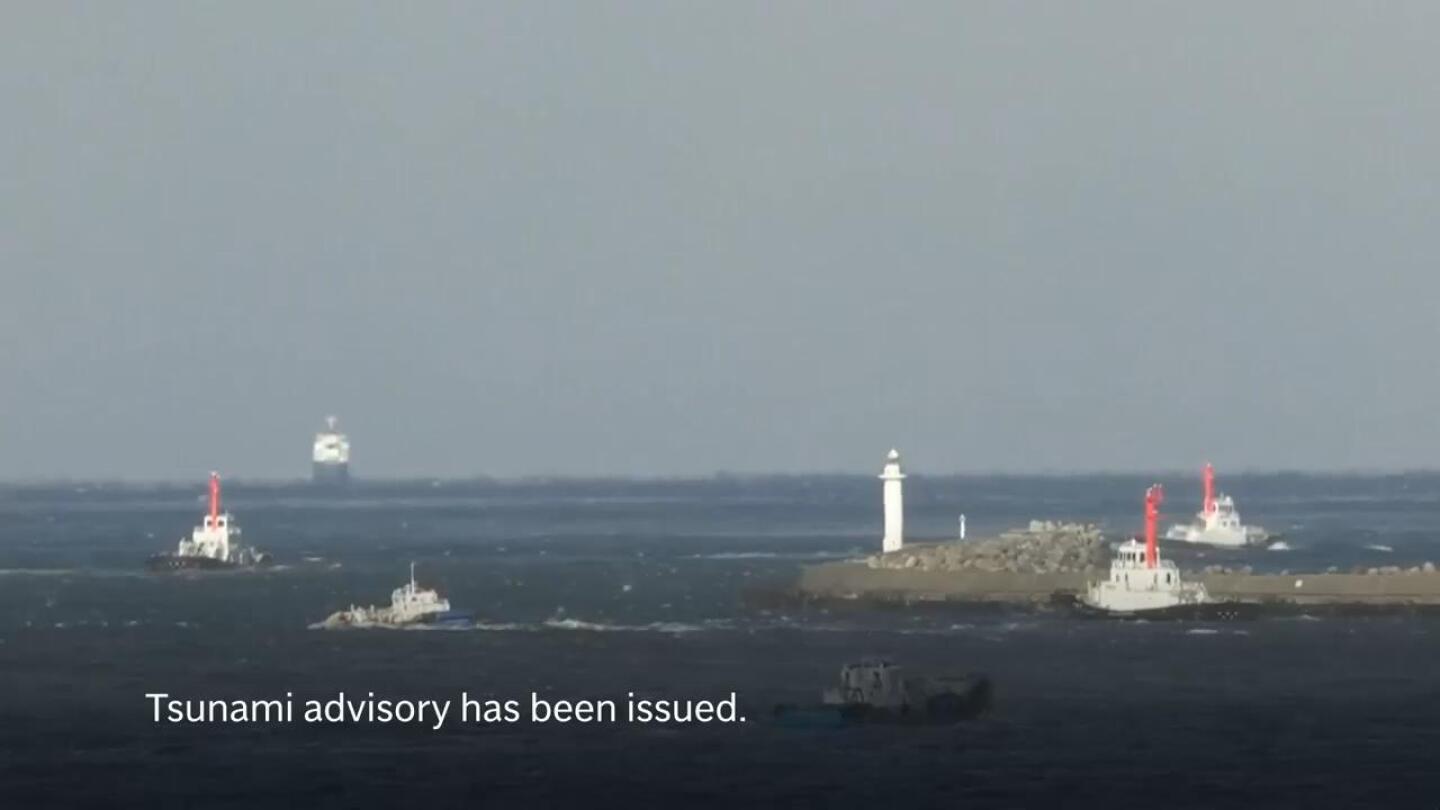
  • A 6.9 magnitude earthquake causes small tsunami waves off northeastern Japan

    A 6.9 magnitude earthquake causes small tsunami waves off northeastern Japan

    TOKYO — Northeastern Japan experienced a significant seismic event on Friday when a 6.9 magnitude earthquake struck off the coast of Aomori prefecture. The tremor, which occurred at 11:44 a.m. local time at a depth of 20 kilometers (12.4 miles), prompted immediate tsunami warnings from the Japan Meteorological Agency. These advisories were lifted approximately two hours later after only minor wave activity was recorded.

    The quake generated small tsunami waves that reached coastal areas of Hokkaido and Aomori prefectures, but preliminary assessments indicated no substantial damage or injuries resulting from the event. This seismic activity follows a more powerful 7.5 magnitude earthquake that impacted the same region earlier in the week, which resulted in multiple injuries and temporary power disruptions.

    Seismologists note that both recent earthquakes occurred in proximity to the epicenter of the catastrophic 2011 magnitude 9.0 quake that devastated Japan’s northeastern coast, claiming nearly 20,000 lives and causing the Fukushima nuclear disaster. Japanese authorities have maintained heightened alert levels, warning residents of potential aftershocks and advising continued emergency preparedness measures.

    While officials confirmed a marginally increased risk of larger seismic events following Monday’s quake, they emphasized that current monitoring does not predict an imminent megaquake. The agency continues to urge coastal communities from Chiba prefecture to Hokkaido to remain vigilant and maintain disaster readiness protocols.

  • ‘Deafening silence’: US journalist wounded by Israel says his government has done nothing

    ‘Deafening silence’: US journalist wounded by Israel says his government has done nothing

    A coalition of Democratic legislators has joined forces with leading human rights organizations to demand a full and independent investigation into the October 2023 attack on journalists near the Israel-Lebanon border. The incident, which resulted in the death of Reuters journalist Issam Abdallah and injured six others from Reuters, Al Jazeera, and AFP, represents what advocates call the first alleged targeting of media personnel following the October 7th hostilities.

    Eyewitness accounts and multiple independent investigations indicate that the group of clearly identifiable journalists had been stationary for over an hour before being struck by two separate projectiles originating from Israeli military positions. AFP journalist Dylan Collins, a U.S. citizen who sustained shrapnel wounds in the attack, described his frustrating two-year quest for accountability from both the Biden and Trump administrations, met with what he characterized as ‘deafening silence.’

    Senator Peter Welch of Vermont revealed that dozens of Congress members have repeatedly sought answers through official channels, sending multiple letters to the State Department that have gone unanswered. The lawmakers seek three specific disclosures: which Israeli military unit fired upon the journalists, whether Israel conducted any internal investigation, and if U.S. officials ever discussed the incident with their Israeli counterparts.

    The call for investigation follows a February 2024 United Nations inquiry that determined an Israeli tank fired two 120mm shells at the ‘clearly identifiable journalists’ in violation of international law. The UNIFIL report noted no cross-border hostilities occurred for over 40 minutes preceding the attack and recommended Israel conduct a full investigation and share its findings—actions that have not been taken.

    Separate investigations by Reuters, Human Rights Watch, and Amnesty International published in December 2024 reached similar conclusions, with Amnesty characterizing the strikes as ‘likely a direct attack on civilians that must be investigated as a war crime.’ Forensic analysis suggests the journalists were visible to Israeli surveillance systems, including nearby drones and observation towers, when targeted by precision munitions fired from approximately 1.5 kilometers away.

    The incident has taken on broader significance as more than 260 media professionals have been killed in Gaza since October 2023, raising concerns about the protection of journalists in conflict zones and the accountability mechanisms for investigating such incidents.

  • War in Yemen: Who are the Southern Transitional Council? Why are they backed by the UAE?

    War in Yemen: Who are the Southern Transitional Council? Why are they backed by the UAE?

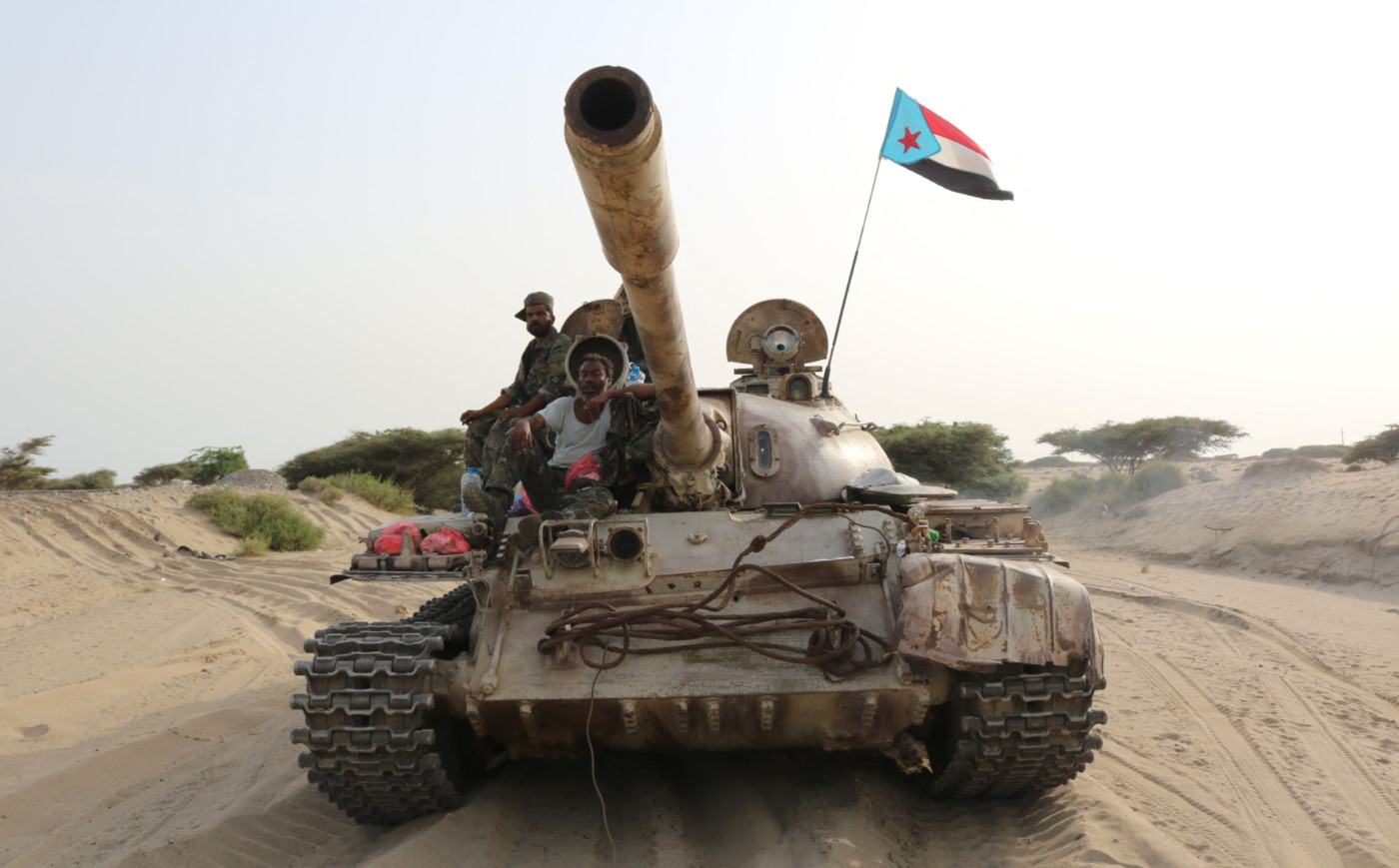
    Yemen’s protracted civil conflict has entered a new phase as forces aligned with the UAE-backed Southern Transitional Council (STC) have consolidated control over the resource-rich Hadhramaut province. The operation, dubbed “The Promising Future,” marks a significant escalation in the southern separatist movement’s campaign for autonomy.

    The STC’s Hadrami Elite Forces captured the strategic city of Seiyun on December 3rd before expanding their territorial gains throughout the governorate. Their advance included seizure of critical oil infrastructure previously controlled by the Hadhramaut Tribal Alliance, with the operation culminating in the raising of the historic South Yemen flag over captured territories.

    This development occurs against the backdrop of Yemen’s complex historical divisions. The nation existed as separate entities for much of the twentieth century, with North Yemen gaining independence from Ottoman rule in 1918 while South Yemen remained under British control until 1967. The Marxist-Leninist People’s Democratic Republic of Yemen maintained tense relations with its northern neighbor throughout the 1970s before unification in 1990.

    The current conflict originated in 2014 when Houthi rebels captured the capital Sanaa, triggering a Saudi-led military intervention. The STC emerged as a powerful southern faction in 2017 with Emirati support, briefly seizing Aden in 2019 before joining the internationally recognized government through Saudi-mediated talks.

    Strategic significance underpins the STC’s offensive. Hadhramaut contains approximately 80% of Yemen’s modest oil reserves and stretches from the Gulf of Aden to the Saudi border. The province has also struggled with influence from Al-Qaeda in the Arabian Peninsula (AQAP), which the STC cites as justification for its intervention.

    Regional powers maintain complex relationships with the conflict. Saudi Arabia prioritizes border security and a political settlement with the Houthis, while the UAE has cultivated the STC as a proxy to advance its security and commercial interests. The UAE has established military bases throughout southern Yemen and seeks to secure maritime routes through strategic partnerships.

    The humanitarian situation remains catastrophic, with over half the population in government-controlled areas facing acute food insecurity according to June 2025 IPC reports. More than 4.5 million people have been displaced by the combined effects of conflict, extreme weather, and economic collapse.

    Analysts suggest the STC’s objectives focus on consolidating control over former South Yemen territories rather than confronting Houthi forces in the north. The group seeks international recognition and has signaled willingness to improve relations with Israel to gain Western acceptance.

    Despite the strategic gains, experts anticipate continued diplomatic maneuvering rather than direct military confrontation between regional powers and the emerging southern authority.

  • Fears grow that world’s rarest apes were swept away in Sumatran floods

    Fears grow that world’s rarest apes were swept away in Sumatran floods

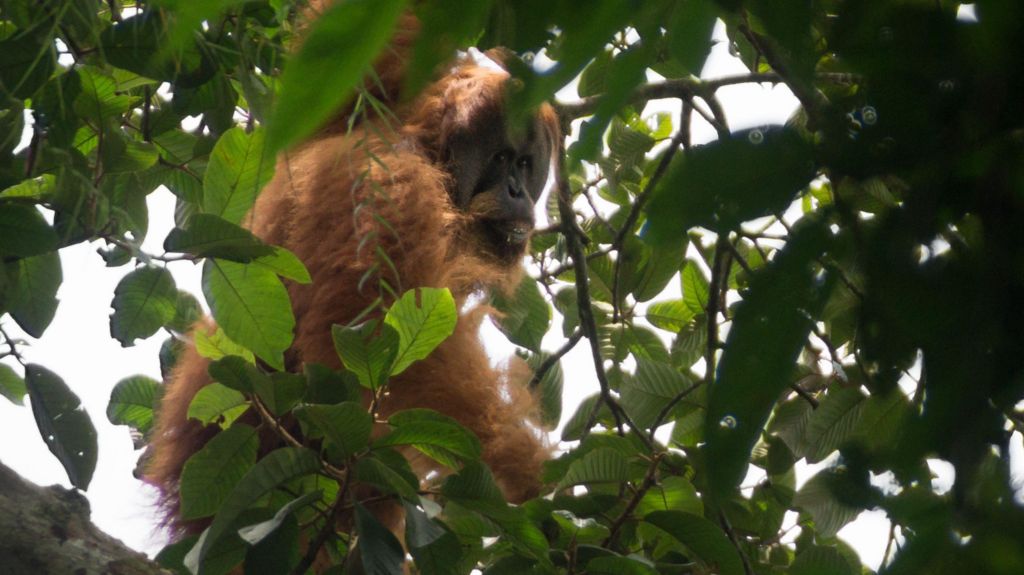
    Conservationists are confronting a deeply troubling silence across the mountainous forests of Batang Toru in North Sumatra, Indonesia, where the world’s rarest great ape—the Tapanuli orangutan—has vanished following the catastrophic Cyclone Senyar. The storm ravaged the island on November 25, triggering deadly floods and landslides that have claimed over 900 human lives and left hundreds missing. But the ecological impact may extend to pushing an already critically endangered species closer to extinction.

    Since the cyclone, field workers have reported no sightings or vocalizations of Tapanuli orangutans in their primary habitat. The alarming disappearance has been compounded by the discovery of a primate carcass, believed to be one of the great apes, partially buried under mud and debris in Pulo Pakkat village. Deckey Chandra, a humanitarian responder and former orangutan conservation worker, described the grim finding: “I have seen several dead bodies of humans… but this was the first dead wildlife. They used to come to this place to eat fruits. But now it seems to have become their graveyard.”

    Satellite imagery analysis led by Professor Erik Meijaard of Borneo Futures reveals catastrophic habitat loss. Preliminary estimates indicate between 4,800 to 7,200 hectares of primary forest—critical orangutan territory—were obliterated by landslides. “The destroyed areas would have contained some 35 orangutans,” noted Prof. Meijaard. “Considering the violence of the destruction, it wouldn’t surprise us if they are all dead. That’s a major blow to the population.”

    The Tapanuli orangutan (Pongo tapanuliensis), formally identified as a distinct species in 2017, numbers fewer than 800 individuals. Its survival is intricately linked to this specific region of Sumatra. Experts like Prof. Serge Wich of Liverpool John Moores University explain that while orangutans instinctively shelter during heavy rain, the scale and suddenness of these landslides would have made escape nearly impossible.

    Further compounding the crisis, the cyclone severely damaged vital research and conservation infrastructure, including the historic Ketambe research station in Aceh—the world’s first orangutan research center. Dr. Ian Singleton emphasized the urgent need for rebuilding to continue forest protection efforts.

    The disaster has also impacted other endangered species, such as the Sumatran elephant, highlighting the broad ecological toll of the cyclone. As Indonesia grapples with severe weather aftermath, the fate of the Tapanuli orangutan hangs in a precarious balance, symbolizing the profound intersection of climate disasters and biodiversity conservation.

  • Myanmar’s army says it wants to eradicate scam compounds. Is it really doing that?

    Myanmar’s army says it wants to eradicate scam compounds. Is it really doing that?

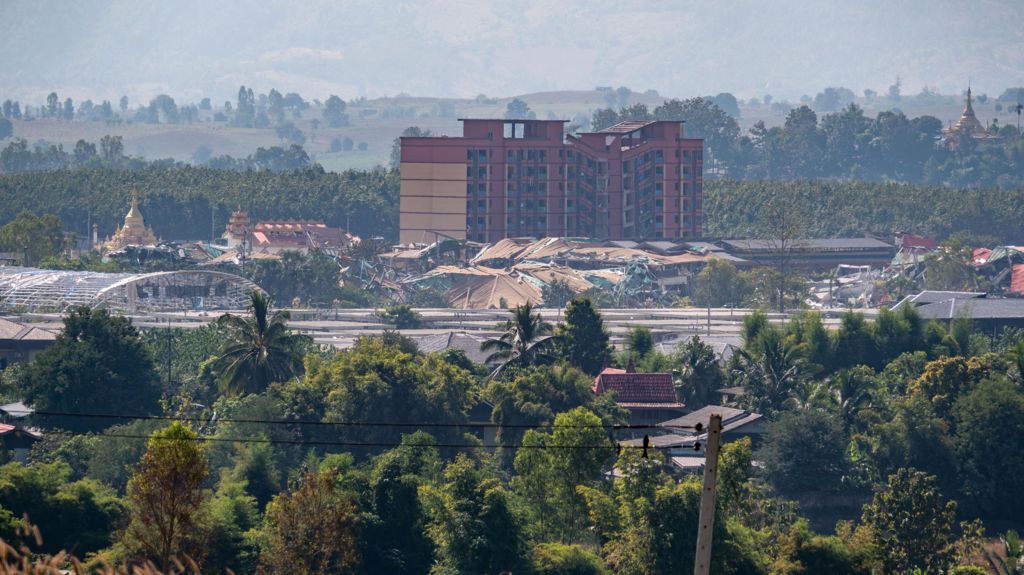
    Thunderous explosions shattered the tranquility of the Moei River bordering Thailand and Myanmar as military forces deployed explosives to demolish structures within the infamous KK Park scam compound. The operation marks an unprecedented convergence of Myanmar’s protracted civil conflict and its multi-billion dollar cybercrime epidemic that has plagued Southeast Asia.

    Myanmar’s junta, reinforced by Russian and Chinese military equipment including drones, has launched counter-offensives against insurgent groups ahead of controversial elections scheduled later this month. In Karen State, the military successfully pushed back the Karen National Union (KNU), which has resisted military rule for eight decades. The October assault on KK Park represented a dramatic shift in policy toward the scam operations that authorities had previously ignored.

    Videos released by state media showed soldiers confiscating thousands of electronic devices and satellite equipment before systematically destroying buildings. Yet skepticism surrounds these actions, as the military has long benefited from alliances with local warlords who protect and profit from Chinese-led criminal syndicates operating these facilities.

    The global impact of these scam centers is staggering. Billions of dollars have been stolen through sophisticated romance scams, fraudulent cryptocurrency schemes, and fake investment opportunities targeting vulnerable populations worldwide. The industry’s darkest aspects involve human trafficking, forced labor, and systematic abuse of workers lured into the compounds.

    International pressure, particularly from China whose citizens comprise both perpetrators and victims, has intensified. While the KK Park operation appears responsive to these concerns, evidence suggests the demolition was largely performative. Many buildings remain functional, and Starlink satellite dishes visible on rooftops indicate ongoing operations. Most scam bosses have simply relocated to more remote border areas, with new compounds already emerging near contested border crossings.

    The KNU’s unexpected capture of two additional scam compounds in Minletpan provided rare insight into the industry’s workings. Unlike the military’s evidence destruction, the KNU documented operations and invited international scrutiny before junta shelling forced abandonment of the sites.

    This borderland drama underscores the junta’s desperate attempt to gain legitimacy through elections while continuing to profit from criminal enterprises that remain deeply embedded in Myanmar’s conflict economy.

  • Report: China a ‘reliable partner’

    Report: China a ‘reliable partner’

    A comprehensive analysis by Australia’s Lowy Institute reveals China is strengthening its position as a dependable regional partner during periods of global uncertainty, while United States policies are diminishing American influence across Asia. The findings come from the think tank’s 2025 Asia Power Index, a meticulous assessment tracking power distribution shifts across the continent through 131 indicators spanning economic capability, diplomatic relations, and cultural influence.

    The annual index, which evaluated 27 nations and territories, maintained the United States in the top position for comprehensive power, with China securing second place and India ranking a distant third. Notably, the capability gap between the two superpowers has continued to narrow significantly. The report specifically highlighted how China has demonstrated remarkable resilience against US economic coercive measures, with Beijing effectively presenting itself as a staunch opponent of protectionism and unilateralism to regional partners.

    Susannah Patton, project lead for the Asia Power Index, detailed at the Melbourne launch that multiple US policies have collectively undermined American standing. These include substantial tariff impositions on numerous countries, reductions in development assistance to the region, funding cuts to global media agencies, and restrictive travel and educational policies affecting Asian visitors.

    East Asia senior fellow Richard McGregor emphasized that the index confirms China and the US have reached peer power status throughout Asia. China’s capacity to access diverse global markets beyond the United States has contributed substantially to its confident response to American tariff strategies.

    The research also documented China’s impressive recovery in people exchanges and connectivity metrics, nearly returning to pre-pandemic levels after severe restrictions between 2020 and 2022. Recent visa-free travel arrangements with several Asian nations, including Indonesia, have accelerated tourism recovery and strengthened regional ties.

    Australia ranked sixth in comprehensive power, though the report noted the nation faces challenges due to declining economic resources relative to other countries, requiring more strategic efforts to maintain regional influence. International relations expert Bec Strating observed that America’s diminishing regional standing presents both opportunities and concerns for Australia and other nations like Japan, New Zealand, and the Philippines regarding the stability of regional order frameworks.

  • US seizure of rogue oil tanker off Venezuela signals new crackdown on shadow fleet

    US seizure of rogue oil tanker off Venezuela signals new crackdown on shadow fleet

    In a dramatic maritime operation, U.S. special forces descended via helicopter ropes to seize the 332-meter oil tanker Skipper near the Venezuelan coast. The vessel had been digitally manipulating its location transponder to conceal its true position, falsely appearing to navigate near Guyana while actually operating 360 nautical miles northwest in Venezuelan waters. This seizure represents a significant escalation in U.S. efforts to disrupt illicit oil smuggling networks that sustain sanctioned regimes.

    The Skipper carried approximately 2 million barrels of Venezuelan heavy crude valued at tens of millions of dollars, with about half belonging to a Cuban state-run importer according to documents from Venezuela’s state-owned PDVSA. The tanker had been sanctioned since November 2022 for its alleged role in smuggling crude for Iran’s Revolutionary Guard and Lebanon’s Hezbollah militant group.

    Maritime intelligence analysts identify the Skipper as part of a ‘dark fleet’ of approximately 30 sanctioned tankers operating near Venezuela. These vessels typically disable or spoof their automated identification systems, operate under false flags, and transfer cargoes at sea to obscure origins. Many are barely seaworthy, uninsured, and registered to shell companies.

    The operation signals a potential turning point in maritime enforcement against sanctions evasion. ‘These are very risk-tolerant operators, but even they don’t want to lose a hull,’ noted Claire Jungman of Vortexa analytics firm. ‘A physical seizure represents an entirely different category of risk.’

    Venezuelan President Nicolás Maduro condemned the seizure as ‘international piracy,’ claiming the crew had been kidnapped. Meanwhile, U.S.-backed opposition leader Maria Corina Machado applauded the action, asserting that oil revenues fund repression rather than addressing Venezuela’s humanitarian crisis.

    Experts suggest this intervention may foreshadow broader U.S. efforts to implement an oil blockade against Venezuela, though concerns remain about potential impacts on global oil prices and the strategic balancing of enforcement actions.

  • Interpreter in tears as Ukrainian boy recalls losing mother in Russian strike

    Interpreter in tears as Ukrainian boy recalls losing mother in Russian strike

    A profoundly moving scene unfolded during a war crimes documentation session as an 11-year-old Ukrainian boy, Roman Oleksiv, delivered a harrowing testimony. The young survivor, visibly injured himself, recounted the traumatic events of a Russian missile strike that targeted a medical facility, an attack that tragically claimed the life of his mother. The emotional weight of his account became overwhelmingly palpable, reducing the professional interpreter assisting him to tears and offering a stark, humanizing glimpse into the devastating human cost of the ongoing conflict. This incident underscores the severe impact of military assaults on civilian infrastructure, particularly hospitals, which are protected under international humanitarian law. The boy’s personal tragedy represents one of countless individual stories of loss emerging from the war, highlighting the profound and long-lasting psychological scars borne by the youngest victims of the violence. International observers and human rights organizations are increasingly documenting such events to build cases for potential war crimes investigations, emphasizing the need for accountability and justice for the victims and their families.