分类: world

  • Liberia’s largest gold miner repeatedly spilled dangerous chemicals, records show

    Liberia’s largest gold miner repeatedly spilled dangerous chemicals, records show

    The remote village of Jikandor in Liberia’s dense rainforest faces an environmental catastrophe as generations of fishing and river-based livelihood have been destroyed by repeated toxic spills from the country’s largest gold mining operation. An extensive investigation by The Associated Press and The Gecko Project reveals systemic failures by Bea Mountain Mining Corporation that have compelled residents to abandon their ancestral homes.

    According to retrieved Environmental Protection Agency documents and interviews with government officials, experts, and former employees, Bea Mountain’s substandard facilities have repeatedly leaked dangerous levels of cyanide, arsenic, and copper over several years. These spills consistently exceeded Liberia’s legal pollution limits, creating an environmental emergency that the government has largely failed to address.

    Canadian toxicologist Mandy Olsgard, who reviewed the EPA reports, characterized the company’s conduct as “sustained negligence.” The investigation uncovered that Bea Mountain failed to promptly report a major 2022 spill and actively blocked government inspectors from accessing their laboratory and testing data.

    The gold extracted from these operations enters global supply chains through Swiss refiner MKS PAMP, which supplies major technology companies including Nvidia and Apple. While MKS PAMP commissioned an independent assessment that identified areas for improvement, the company declined to share specific findings and maintains its relationship with Bea Mountain.

    Between July 2021 and December 2022, Bea Mountain exported over $576 million worth of gold from Liberia while contributing just $37.8 million to government coffers. The mining operation is controlled by Murathan Günal through Avesoro Resources, part of his father Mehmet Nazif Günal’s Turkish business empire.

    The environmental crisis follows years of warnings from multiple consultancies that had identified contamination risks as early as 2012. Despite these warnings and the company’s pledge to adhere to the Cyanide Management Code, Bea Mountain withdrew from the program without undergoing any audits.

    The first documented spill occurred in March 2016, just before the Günal family acquired the mine, with four confirmed cases of exceeding government pollution limits following. In the most severe incident in May 2022, dead fish floated downstream for over 10 miles, with villagers reporting severe illness after consuming contaminated fish.

    Despite repeated recommendations from EPA inspectors for penalties, only one fine was issued—reduced from $99,999 to $25,000. The EPA’s current leadership, which took office in 2024, has ordered remediation measures and facilitated a legally binding agreement for village relocation and compensation.

  • Olympic organizers invoke an ancient pledge to call for the suspension of all wars

    Olympic organizers invoke an ancient pledge to call for the suspension of all wars

    As the Milan Cortina Winter Olympics approach, the United Nations and Olympic organizers have renewed their call for a worldwide cessation of hostilities—a modern interpretation of the ancient Greek tradition known as the Olympic Truce. This seven-week pause, scheduled to begin one week prior to the February 6 opening ceremonies and extend through the Paralympics’ conclusion, represents a symbolic appeal for peace during a period of unprecedented global conflict.

    The concept originates from ancient Greece, where warring city-states would halt combat to ensure safe passage for athletes and spectators traveling to Olympia. Revived in modern form during the 1994 Lillehammer Winter Games amid the Yugoslav Wars, the truce has since become a ceremonial tradition backed by UN resolutions—though it has failed to stop any conflicts in its 17 attempts.

    Despite its imperfect record, the truce has occasionally produced meaningful moments: a one-day humanitarian pause during the Sarajevo siege allowed aid delivery in 1994, and the 2000 Sydney Games witnessed a unified march by North and South Korean athletes. Constantinos Filis, director of the International Olympic Truce Center, acknowledges the practical challenges but emphasizes the importance of the symbolic message reaching global audiences.

    This appeal for peace comes against a troubling backdrop documented by Uppsala University’s conflict researchers, who reported 61 active armed conflicts in 2024—the highest number recorded in modern history. Their upcoming report indicates even greater conflict numbers for 2025, with particular concern about Western Africa where extremist groups continue expanding operations.

    The Bulletin of the Atomic Scientists reinforced this grim assessment by moving their symbolic Doomsday Clock closer to midnight, reflecting increased existential threats to humanity. Meanwhile, the gap between Olympic ideals and reality remains starkly evident—Russia’s full-scale invasion of Ukraine began during a truce period in 2022.

    UN Secretary-General António Guterres and International Olympic Committee President Kirsty Coventry maintain that the Games represent a unique opportunity to transcend geopolitical divisions. Coventry, reflecting on her childhood in Zimbabwe, emphasized how witnessing peaceful competition can inspire hope and celebrate shared humanity even during times of profound division.

  • The foreign POWs stuck in Ukrainian prison limbo

    The foreign POWs stuck in Ukrainian prison limbo

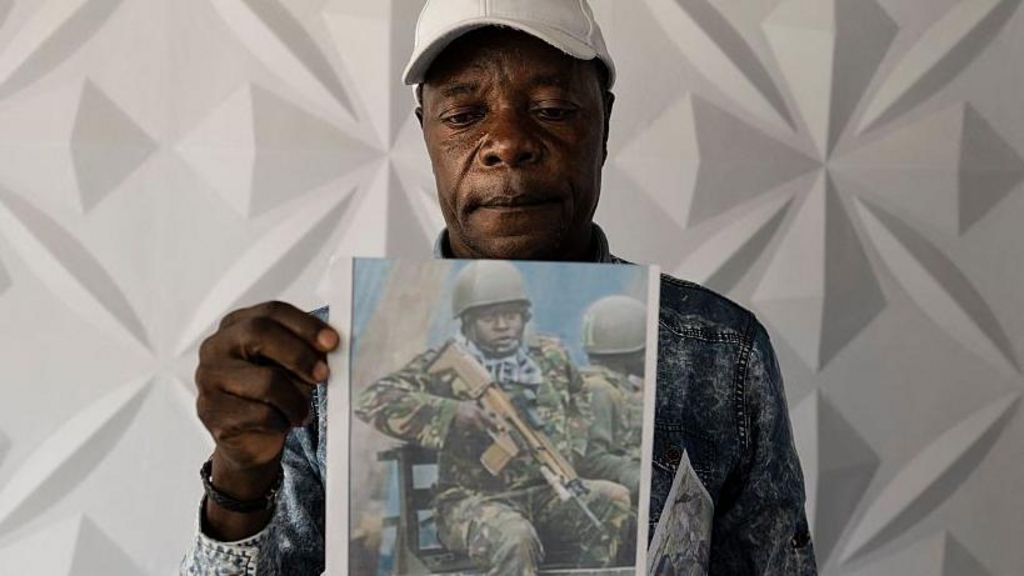
    In a secluded detention facility in western Ukraine, a unique international assembly of captured soldiers awaits an uncertain future. These men—from Egypt, China, Cameroon, Kenya, Togo, Nigeria, Italy, Sri Lanka, and Uzbekistan—share a common bond: they were all recruited to fight for Russia before being captured by Ukrainian forces.

    Their motivations for joining Moscow’s war effort vary dramatically. Some sought economic opportunity, lured by salaries ten times higher than what they could earn at home. Others were deceived by false promises of civilian employment, while a few claim they were coerced into military service under threat of imprisonment. Russia has systematically targeted French-speaking African communities with recruitment campaigns offering sign-up bonuses exceeding $2,700 and monthly salaries nearing $3,000, according to the French Institute of International Relations.

    The prison operates under strict protocols aligned with the Geneva Conventions, which prohibit exposing prisoners of war to ‘public curiosity.’ Inmates receive basic supplies through cell hatches—blue uniforms, toiletries, and towels. Their days follow a regimented routine: meals eaten in silence, work assignments in prison workshops, and limited exercise time in the yard.

    Among the captives is Eric from Togo, an aspiring neurosurgeon who moved to Russia five years ago seeking education and citizenship. ‘I knew from the start what I was getting into,’ he told AFP, expressing no remorse about fighting against Ukraine. His Nigerian cellmate shared similar convictions, influenced by Kremlin propaganda narratives.

    Giuseppe, a 52-year-old Italian pizza chef, claims he responded to a television advertisement for army cooks near the front lines. After losing four toes to an artillery strike, he surrendered to Ukrainian soldiers. Guards suspect his ‘cook’ story may be an attempt to avoid legal consequences for combat participation.

    The most disturbing accounts come from those who describe coercion. Aziz from Uzbekistan alleges Russian police threatened him with an 18-year drug trafficking sentence unless he signed a military contract. To escape combat, he deliberately stepped on what soldiers call a ‘petal’—an anti-personnel mine—hoping injury would repatriate him to Russia. When the mine failed to detonate, he surrendered to a Ukrainian drone.

    While a recent Council of Europe report indicates POWs in Ukrainian facilities are generally treated in accordance with international standards, one detainee reported experiencing dehumanizing racist abuse from several guards. Ukraine denies systematically mistreating prisoners.

    With approximately 7% of Ukraine’s captured soldiers being foreign nationals from 40 countries, their prospects for release appear dim. Petro Yatsenko, spokesperson for Ukraine’s POW coordination center, notes that ‘Russia has no interest in exchanging them, nor do their countries of origin,’ suggesting these men may remain captive for months or years. Despite this bleak outlook, most cling to hopes of an ‘all-for-all’ prisoner exchange should diplomatic efforts to end the conflict succeed.

  • Venezuela’s oil ghost towns hope Trump plan will revive their fortunes

    Venezuela’s oil ghost towns hope Trump plan will revive their fortunes

    Nestled along the eastern shores of Lake Maracaibo, the neighborhood of Miraflores stands as a haunting monument to Venezuela’s vanished prosperity. Its American-style suburban homes with manicured lawns and porches once housed executives from the world’s most powerful oil companies during the nation’s petroleum golden age. Today, many sit abandoned and looted, their windows shattered and wiring stripped bare—a stark contrast to the community that symbolized Latin American wealth just decades ago.

    This region, containing the world’s largest proven oil reserves at approximately 303 billion barrels, now represents both Venezuela’s catastrophic decline and its potential salvation through a proposed $100 billion U.S. investment initiative. Throughout the Lake Maracaibo basin, rusting oil pumps stand motionless between homes and in fields, while others freshly painted in Venezuela’s national colors continue limited operations.

    The area’s deterioration mirrors the nation’s broader economic collapse. Since President Nicolás Maduro took power in 2013, Venezuela’s GDP has plummeted by over 70%. Residents like Gladysmila Gil, who moved to the area in 1968 when her oil worker husband received company housing, describe dramatic declines in basic services. “The rubbish was collected every other day, and we didn’t have these power outages,” she recalls, noting that today garbage collection is sporadic and blackouts occur almost daily despite the region’s energy wealth.

    The industry’s downfall traces back through multiple political eras. Following nationalization in 1976, state-owned PDVSA managed production that once reached 3.5 million barrels daily. The 2002 oil workers’ strike against then-President Hugo Chávez triggered massive firings—reportedly up to 22,000 technical staff—which industry veterans identify as a critical turning point. “You can’t lose 22,000 technical people in a company and expect that nothing happens,” says Jorge, a pseudonym for a worker dismissed during the purge.

    Despite recent political developments including Maduro’s removal by U.S. forces to face narcotics charges, his loyalist Delcy Rodríguez has cooperated with the Trump administration to reform oil laws. Venezuela’s parliament approved significant legal changes allowing foreign and local companies to operate oilfields through new contract models.

    Local reactions to potential U.S. investment are mixed. Fisherman Carlos Rodríguez welcomes the prospect: “It would be better because then there would be work, and our children wouldn’t have to resort to fishing.” Others express caution, with fisherman José Luzardo stating, “We have no problem with foreign companies coming to exploit our resources… but we don’t want to be anyone’s colony.”

    Industry analysts remain skeptical about rapid recovery. ExxonMobil CEO Darren Woods recently labeled Venezuela “uninvestable” without stronger legal protections, noting the company had its assets seized there twice previously. Experts estimate that restoring former production levels could require a decade and hundreds of billions of dollars.

    Yet hope persists among Maracaibo residents like 93-year-old retired oil worker José Rodas, who maintains a classic American muscle car from the 1970s oil boom. “Things have become more difficult,” he acknowledges. “In the past, life was easier.” For many in Venezuela’s oil heartland, the promise of renewed investment represents not just economic opportunity but the potential restoration of vanished prosperity.

  • Israeli army accepts Palestinian health ministry death toll of 71,000 dead in Gaza

    Israeli army accepts Palestinian health ministry death toll of 71,000 dead in Gaza

    In a significant reversal of its longstanding position, the Israeli military has formally acknowledged the general accuracy of the Gaza Health Ministry’s casualty figures from the conflict. After years of dismissing the ministry’s reports as “misleading and unreliable,” military officials now confirm that the death toll of approximately 71,000 is substantially correct, though they note this figure excludes individuals still buried beneath rubble.

    The army disclosed it is currently conducting detailed analysis of the data to differentiate between civilian and military casualties. According to their assessment, the reported numbers also do not account for deaths resulting from starvation or diseases that have been exacerbated by the prolonged humanitarian crisis in the region.

    Military observers note that the overwhelming majority of casualties have been civilians, attributing this to the Israeli army’s predominant use of aerial bombardments and artillery shelling from distance rather than direct battlefield engagements with Palestinian fighters.

    The context of this acknowledgment comes amid a fragile ceasefire brokered by US President Donald Trump in October, which was intended to conclude more than two years of intense conflict that devastated nearly 90% of Gaza’s infrastructure. Since the ceasefire began, however, monitoring groups have reported over 1,300 violations by Israel, resulting in approximately 500 additional Palestinian fatalities.

    The second phase of the Trump administration’s peace plan envisions the disarmament of Hamas, the gradual withdrawal of Israeli forces—who currently control more than half of the Gaza Strip—and the deployment of an international peacekeeping force. Hamas officials have responded that Israel must fully implement the ceasefire agreement, particularly regarding humanitarian aid access and complete military withdrawal from Gaza.

  • Direct Bangladesh-Pakistan flights resume as bilateral ties warm

    Direct Bangladesh-Pakistan flights resume as bilateral ties warm

    In a significant development for South Asian aviation and diplomatic relations, direct flight operations between Bangladesh and Pakistan resumed on Thursday following a fourteen-year suspension. The inaugural flight, operated by Biman Bangladesh Airlines, departed from Dhaka for Karachi, marking the restoration of regular air connectivity that had been absent since 2012.

    The resumption of direct flights represents a tangible manifestation of improving bilateral ties between the two Muslim-majority nations, which share a complex historical background as former constituents of a single nation until their separation after the 1971 liberation war. The geographical separation of approximately 1,500 kilometers of Indian territory had previously necessitated transit through Gulf hubs such as Dubai and Doha for travelers between the two countries.

    Biman Bangladesh Airlines has established a twice-weekly flight schedule, a move that aviation analysts believe will substantially reduce travel time and costs for passengers. Mohammad Shahid, one of the 150 passengers aboard the inaugural Karachi-bound flight, expressed enthusiasm about the renewed connectivity, noting that the previous absence of direct flights had limited his travel frequency to once every two or three years.

    The airline emphasized in an official statement that the reestablished air link would significantly contribute to enhancing trade relations, facilitating educational exchanges, and strengthening cultural connections between the two nations. This diplomatic thaw follows substantial political changes in Bangladesh, including the 2024 student-led movement that resulted in the conclusion of Sheikh Hasina’s fifteen-year administration.

    The warming relations have already yielded concrete benefits, with cargo shipping operations between Karachi and Chittagong resuming in November 2024. Subsequent months have witnessed increased commercial activity, expanded cultural interactions featuring performances by Pakistani artists in Dhaka, and growing medical tourism from Bangladesh to Pakistan.

  • Why China moved so quickly to execute 11 members of a notorious mafia family

    Why China moved so quickly to execute 11 members of a notorious mafia family

    In a decisive move against transnational organized crime, China has carried out the execution of 11 principal members of the Ming criminal syndicate originating from Myanmar’s northern Shan State. The sentences, initially handed down in September, mark the culmination of an extensive cross-border operation targeting sophisticated cyber fraud operations that had ensnared thousands of Chinese citizens.

    The Ming family, alongside the Bau, Wei, and Liu clans, had established a formidable criminal empire in the remote border town of Laukkaing since 2009. Their rise to power followed a military operation led by General Min Aung Hlaing that displaced the Myanmar National Democratic Alliance Army (MNDAA), the ethnic insurgent group previously controlling the region.

    These criminal networks transitioned from traditional narcotics production to establishing large-scale casino operations and ultimately sophisticated cyber fraud compounds. The most notorious facility, known as Crouching Tiger Villa operated by the Ming family, became synonymous with human rights abuses where torture was routinely employed against workers forced to participate in elaborate ‘pig-butchering’ romance scams targeting predominantly Chinese victims.

    The turning point emerged in October 2023 when guards at these compounds killed several Chinese nationals during an attempted escape. This incident prompted China to collaborate with the MNDAA, which subsequently launched an offensive recapturing Laukkaing and detaining the crime family leaders. Ming Xuechang, the family patriarch, committed suicide following capture, while over 60 associates were transferred to Chinese authorities.

    China’s Ministry of Public Security has publicized interrogation details revealing the extreme brutality of these operations, including reports of random killings intended to demonstrate power. The comprehensive crackdown has extended beyond Myanmar, with China securing extraditions of key figures like She Zhijiang from Thailand and Chen Zhi from Cambodia, both accused of operating massive scam empires across Southeast Asia.

    Despite these efforts, the cyber fraud industry has demonstrated remarkable resilience, adapting and relocating to new regions within Myanmar while maintaining significant presence in Cambodia. The executions represent China’s most severe response to date against cross-border criminal enterprises threatening its citizens and financial security.

  • EU to put Iran Guards on ‘terrorist list’, same level as Al Qaeda, Daesh

    EU to put Iran Guards on ‘terrorist list’, same level as Al Qaeda, Daesh

    In a landmark decision with profound diplomatic implications, European Union foreign ministers convened in Brussels on Thursday to formally designate Iran’s Islamic Revolutionary Guard Corps (IRGC) as a terrorist organization. This historic move places the elite Iranian military force on the EU’s terror blacklist alongside notorious jihadist groups including Al-Qaeda and Daesh.

    The decisive action comes in response to Tehran’s brutal crackdown on nationwide protests, during which thousands of civilian demonstrators were reportedly killed by security forces. EU foreign policy chief Kaja Kallas declared to journalists that “those who operate as terrorists must be treated accordingly,” signaling a fundamental shift in Europe’s approach to the Iranian regime.

    Concurrently, the 27-nation bloc implemented additional punitive measures including visa bans and asset freezes targeting 21 Iranian state entities and senior officials. Among those sanctioned are Iran’s Interior Minister, Prosecutor General, and regional IRGC commanders directly implicated in the suppression of dissent.

    While Iranian authorities acknowledge approximately 3,000 fatalities during the unrest, they claim most casualties were security personnel or bystanders killed by rioters. However, international human rights organizations contend the actual death toll reaches potentially tens of thousands, with evidence indicating IRGC forces directly fired upon peaceful protesters.

    The EU’s designation follows significant policy reversals from key member states France and Italy, both of which recently endorsed the terrorist classification. This alignment brings European policy in concert with existing designations by the United States, Canada, and Australia.

    French Foreign Minister Jean-Noel Barrot emphasized that “there can be no impunity for the crimes committed” and called for the immediate release of thousands of political prisoners. He further urged Tehran to restore internet access and “enable the Iranian people to determine their own future.”

    Despite its primarily symbolic nature—as the IRGC and its commanders already faced extensive EU sanctions—the terrorist designation represents the bloc’s strongest condemnation yet of Iran’s human rights abuses. The move preserves diplomatic channels while delivering an unequivocal message regarding the EU’s position on state-sponsored violence and repression.

  • Turkey deploys F-16 jets to Somalia as it strengthens economic ties

    Turkey deploys F-16 jets to Somalia as it strengthens economic ties

    In a significant strategic move, Turkey has positioned three F-16 fighter jets at Mogadishu’s international airport, marking a substantial escalation of its military and economic footprint in Somalia. This deployment, confirmed on Wednesday, follows months of construction activity at the airport where Turkish engineers have built new hangars and prepared facilities to host the advanced aircraft.

    According to Somali officials and analysis of satellite imagery, the military buildup has been underway since at least September, supported by numerous Turkish cargo flights suspected of delivering essential spare parts and ammunition. While Turkey’s defense ministry declined specific commentary, ministry sources acknowledged maintaining an active air command presence in Somalia, emphasizing their role in enhancing Somalia’s counterterrorism capabilities through training and advisory support.

    This military expansion directly supports Turkey’s broader economic ambitions in the region. Reliable sources indicate the fighter jet deployment precedes Ankara’s planned dispatch of an oil exploration platform to commence offshore drilling later this year. Concurrently, plans are advancing for a spaceport project in northern Mogadishu, signaling Turkey’s multidimensional investment strategy.

    The timing of Turkey’s enhanced military presence coincides with growing regional tensions following Israel’s recent recognition of breakaway Somaliland. Ankara has explicitly reaffirmed its commitment to Somalia’s territorial integrity through formal statements from its National Security Council, the nation’s top defense oversight body.

    Turkey’s deepening engagement extends beyond military cooperation. The recent appointment of Brigadier General Ibrahim Mohamed Mohamud—a Turkish-educated officer with training at Turkey’s Defence University—as commander of Somalia’s National Army illustrates the extensive institutional ties between the nations.

    This deployment builds upon Turkey’s established military assistance, which previously included armed drones and attack helicopters transferred to Somali forces. The comprehensive defense agreement signed in February 2024 further commits Turkey to assisting Somalia in establishing a naval force, with two utility helicopters already delivered to the Somali navy.

    Since 2011, Turkey has invested heavily in Somalia’s infrastructure and humanitarian needs, constructing the world’s largest embassy in Mogadishu, providing over $1 billion in drought relief, and managing critical infrastructure including the city’s airport and port. The Turksom military base has trained approximately one-third of Somalia’s military personnel, cementing Turkey’s role as a primary security partner in the Horn of Africa.

  • Eleven more bodies pulled from sea as Philippine ferry toll rises to 29

    Eleven more bodies pulled from sea as Philippine ferry toll rises to 29

    Rescue operations in the southern Philippines have recovered eleven additional victims from the MV Trisha Kerstin 3 ferry sinking, bringing the confirmed death toll to 29. The vessel capsized off the coast of Mindanao in the early hours of Monday, creating a significant maritime disaster that has now entered a critical investigation phase.

    Coast guard officials confirmed the latest casualties were predominantly discovered near Baluk-Baluk Island, adjacent to the sinking location. Local fishermen assisted in the recovery efforts, with verified social media footage showing the harrowing retrieval of victims still wearing life preservers. The discoveries have complicated initial passenger estimates, creating confusion about the actual number of people aboard during the incident.

    The Philippine Coast Guard has acknowledged discrepancies in the missing persons count. Captain Noemie Cayabyab, spokeswoman for the maritime agency, stated that while the official manifest indicated 10 missing individuals, including the ship’s captain and crew members, families have reported additional unaccounted passengers. This discrepancy has prompted authorities to expand their search and verification procedures.

    Specialized dive teams from Manila have joined the recovery mission, deploying unmanned submersible equipment to locate the wreckage resting approximately 76 meters (250 feet) below the surface. Meanwhile, the Philippines’ maritime regulatory body has grounded all vessels operated by Aleson Shipping Lines pending a comprehensive safety investigation.

    Survivor accounts describe chaotic scenes during the sinking, with passengers reportedly receiving no emergency alerts from crew members. Aquino Sajili, a 53-year-old attorney who survived the disaster, indicated potential legal action against the shipping company, citing negligence in safety protocols and emergency response procedures.