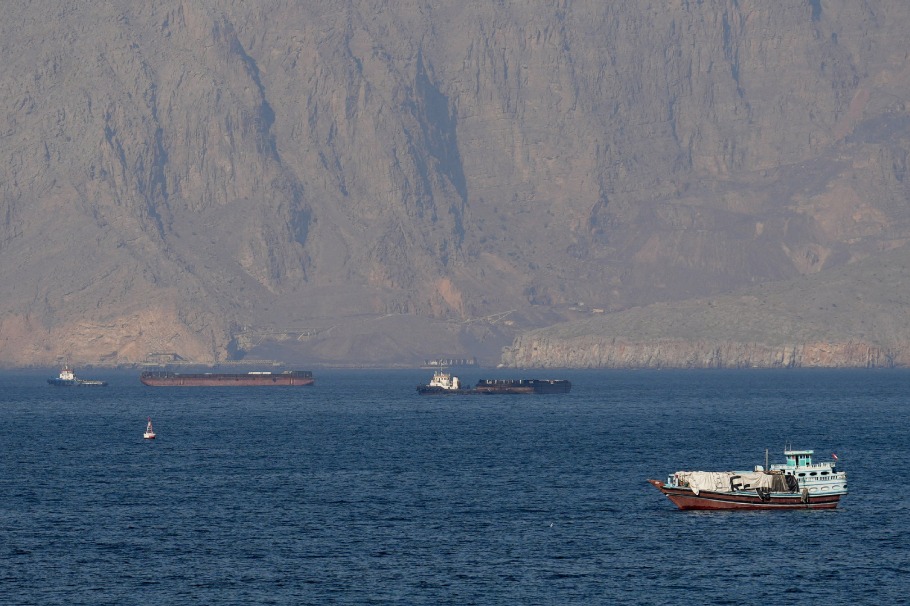
Tensions over maritime access to the strategically critical Strait of Hormuz have flared once again, after Iranian armed forces intercepted two oil tankers attempting to traverse the waterway on Sunday, forcing them to turn back, according to a new report from Iran’s semi-official Tasnim News Agency.
The two intercepted vessels were flying the national flags of Botswana and Angola, and were deemed to be attempting an “illegal” crossing before Iranian military intervention, the outlet confirmed.
The interception comes amid sharp rhetorical friction between Iran and the European Union over rules governing passage through the strait, which handles roughly 20% of global oil trade and is one of the world’s most vital energy chokepoints. Iranian Foreign Ministry spokesman Esmaeil Baghaei recently delivered a scathing rebuke of European demands for unrestricted, toll-free access through the waterway, accusing the bloc of blatant hypocrisy in its application of international law.
Baghaei’s remarks were a direct response to a social media post on platform X from EU High Representative for Foreign Affairs Kaja Kallas. In his response, Baghaei questioned the EU’s selective adherence to global rules, writing: “Oh, that ‘international law?!’ The one that the EU dusts off to lecture others while quietly green-lighting a US-Israeli war of aggression against Iran – and looking the other way on atrocities against Iranians?”
“Spare the sermons; Europe’s chronic failure to practice what it preaches has turned its ‘international law’ talk into peak hypocrisy,” he added.
Kallas had previously warned that any system requiring payment for passage through the strait would set a dangerous precedent that could disrupt maritime trade routes globally. She also noted that the EU’s Aspides naval mission, launched in February 2024 to protect freedom of navigation in the Red Sea and surrounding waters, could be rapidly expanded to safeguard shipping across the broader Persian Gulf region.
The latest interception follows a weeks-long shift in Iran’s enforcement of control over the strait. Iran significantly tightened access restrictions after the U.S. and Israel launched large-scale airstrikes on Iranian territory, barring all vessels with links to Israel and the United States from transiting the waterway. The U.S. responded by imposing its own reciprocal trade restrictions after scheduled peace talks between Iran and the U.S. held in Islamabad collapsed without agreement.
Earlier this month, a two-week ceasefire between Iran and the U.S. went into effect starting April 8. During the ceasefire, Iranian Foreign Minister Seyed Abbas Araghchi stated publicly that the strait would remain fully open to all legitimate commercial shipping. However, just one day before the latest interception, Iran’s top military body, the Khatam al-Anbiya Central Headquarters, announced it would resume strict enforcement of access rules, citing the continuation of U.S. trade restrictions against Iran.
As of the report, Tehran has made clear it will maintain full control over maritime traffic through the Strait of Hormuz until all hostilities with the U.S. and Israel are permanently ended.