### Decades of Conflict: Israel’s New Occupation of South Lebanon and Lebanon’s Push for Sovereignty
Nearly 80 years of overlapping invasions, broken ceasefires, and unfulfilled peace agreements have culminated in a fresh crisis along the Israel-Lebanon border, where Israeli forces have established a new 10-kilometer deep security buffer inside Lebanese territory and rejected calls to withdraw. The latest escalation has reignited long-simmering tensions over Israeli occupation, with Lebanon’s new leadership reaffirming its commitment to reclaiming full sovereignty over its southern lands.
In a public address last week, Lebanese President Joseph Aoun declared he was ready to take any steps necessary to end Israel’s ongoing occupation of south Lebanon. He emphasized that the Lebanese government has, for the first time in almost 50 years, reclaimed full control over the country and its independent decision-making. Aoun’s comments came just one day after former U.S. President Donald Trump announced plans to potentially host Aoun and Israeli Prime Minister Benjamin Netanyahu at the White House to solidify a 10-day ceasefire Trump brokered between the two parties. This truce paused six weeks of open fighting between Israeli forces and Hezbollah, and coincided with the first direct bilateral talks between Israeli and Lebanese ambassadors in Washington since 1993.
The current crisis traces its origins to a large-scale Israeli air campaign launched on March 2, 2026, followed rapidly by a full ground invasion of southern Lebanon. Official casualty figures document more than 2,290 people killed, over 7,500 wounded, and 1.2 million Lebanese displaced – a full 20 percent of the country’s total population. Upon launching the ground incursion, Israeli officials announced plans to hold large swathes of southern Lebanon and barred displaced Lebanese residents from returning to their homes. For weeks, Israeli forces have systematically demolished entire border villages, using bulldozers to clear structures and rigging remaining homes with explosives for large-scale controlled detonations. Even after the ceasefire officially took effect, Israeli troops continued offensive operations, carrying out additional demolitions, artillery strikes, and land-clearing work in multiple border areas in direct violation of the truce terms.
Over the weekend following the ceasefire, the Israeli military announced it had established a new “Yellow Line” roughly 10 kilometers inside Lebanese territory, a separation barrier modeled after the buffer zone Israel created in Gaza between Israeli-held areas and Hamas-controlled territory. In public remarks, Prime Minister Benjamin Netanyahu confirmed that Israeli forces would remain permanently in the reinforced security buffer, stating: “This is a security strip ten kilometers deep, which is much stronger, more intense, more continuous and more solid than what we had previously. That is where we are and we are not leaving.”
To contextualize the current standoff, independent outlet Middle East Eye has traced the long history of Israeli incursions into Lebanon dating back to the founding of the Israeli state in 1948. One day after Israel declared independence in historic Palestine on May 14, 1948, Lebanon joined a coalition of Arab states including Syria, Egypt, Jordan, and Iraq in military intervention, responding to the mass displacement of hundreds of thousands of Palestinian people by Zionist paramilitary groups. Approximately 750,000 Palestinians were displaced in the period surrounding Israel’s founding, and around 100,000 of those refugees resettled in Lebanon.
Lebanese forces played only a limited role in the 1948 war, but by the end of October that year, Israeli troops had crossed into Lebanon and occupied 15 southern villages. In the village of Hula, Israeli forces carried out a documented massacre, gathering between 34 and 58 civilians in a single building before detonating explosives that killed everyone inside. Israel later withdrew from these 1948 occupied villages under a UN-brokered armistice agreement signed with Lebanon in March 1949, which marked the end of the first Arab-Israeli War and the defeat of the Arab coalition.
Unlike 1948, Lebanon did not participate in the 1967 Six-Day War, in which Israel seized East Jerusalem, the West Bank, Gaza, Egypt’s Sinai Peninsula, and Syria’s Golan Heights from a coalition of Arab states. In the wake of its 1967 victory, Israel withdrew from the 1949 armistice agreements it had signed with Lebanon and other Arab states, and proceeded to occupy the strategic Chebaa Farms area of southern Lebanon, a territory it continues to hold to this day. The 1967 defeat of Arab states also catalyzed the rise of the Palestine Liberation Organization (PLO), a coalition of Palestinian factions dedicated to armed struggle to reclaim Palestinian territory. By 1971, Lebanon had become the PLO’s main base of operations, with Palestinian fighters launching intermittent strikes against Israel from south Lebanon. The PLO’s growing influence also made it a key actor in the Lebanese Civil War that broke out in 1975.
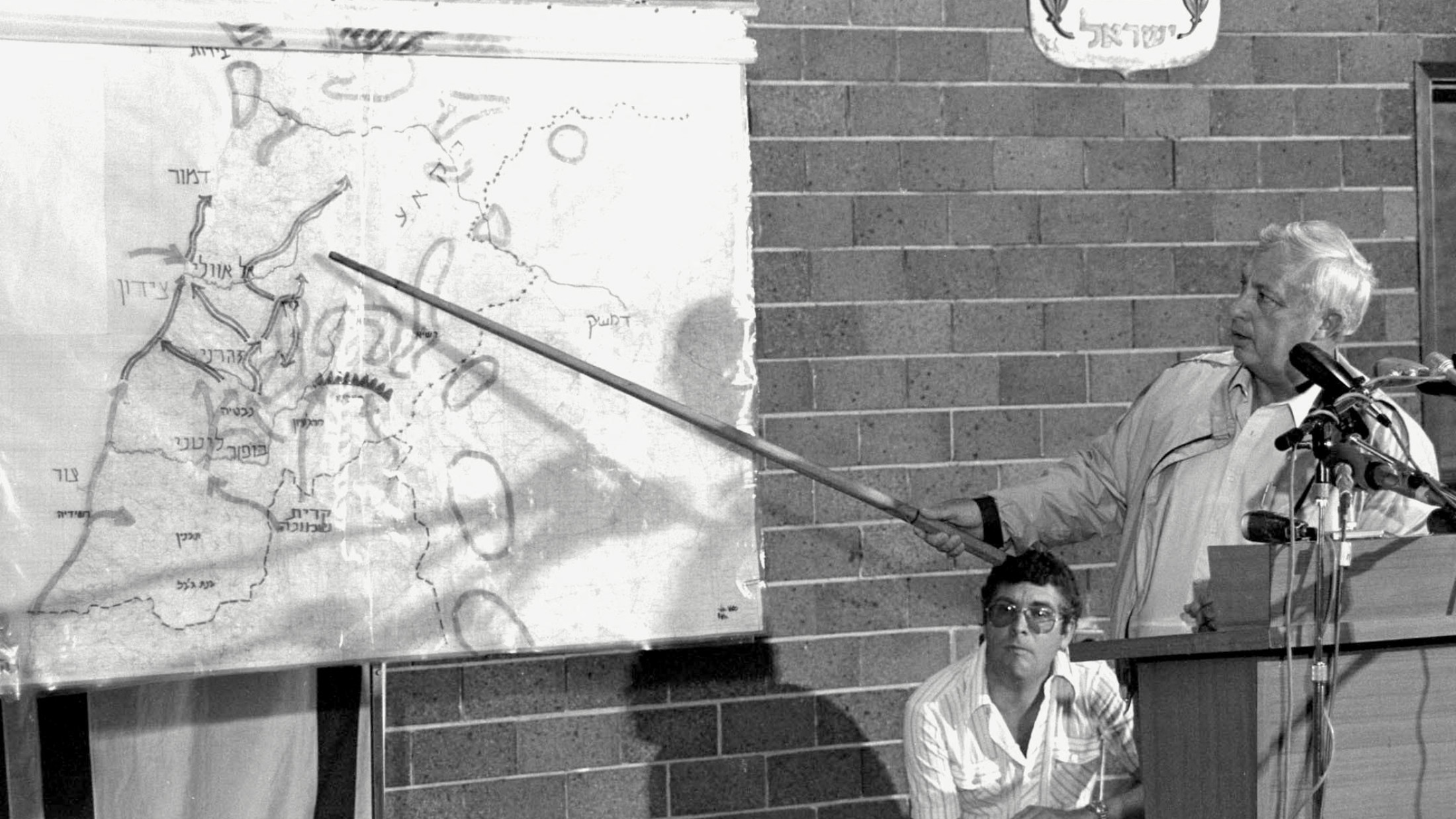
In March 1978, Israel launched its first large-scale invasion of southern Lebanon aimed at pushing PLO fighters north of the Litani River. The offensive killed roughly 1,000 Lebanese and Palestinian people, most of them civilians, along with 18 Israeli soldiers. Under international pressure following the passage of UN Security Council Resolution 425, Israel withdrew from most of southern Lebanon by June 1978. The resolution established the United Nations Interim Force in Lebanon (UNIFIL), tasked with verifying Israeli withdrawal and helping the Lebanese government reassert its authority in the south. Despite this, Israel transferred control of occupied territories to a pro-Israel proxy militia rather than returning full control to the Lebanese army, and the PLO retained positions south of the Litani River.
Israel launched a second, far larger invasion in June 1982, codenamed “Operation Peace for Galilee,” which advanced all the way to the Lebanese capital Beirut and occupied the city by September. The invasion killed an estimated 19,000 Lebanese and Palestinian people, most of them civilians, and forced the entire PLO leadership and thousands of fighters to evacuate Lebanon. Israel’s rapid military reshaping of Lebanese politics brought its ally Bachir Gemayel to the presidency, but Gemayel was assassinated just weeks after taking office. His brother Amin succeeded him, and his new government entered U.S.-brokered negotiations with Israel that concluded with a 1983 agreement aimed at securing Israeli withdrawal. The agreement ended the formal state of belligerency between the two states but stopped short of being a full peace treaty, and faced fierce opposition from major Lebanese factions including the Shia Amal Movement and Progressive Socialist Party, which were backed by Syria – a power that had maintained troops in Lebanon since 1976 and viewed the agreement as a threat to its regional influence. Opponents argued the deal undermined Lebanese sovereignty by granting Israel extraordinary security arrangements in the south. Backed by Damascus, the opposition factions launched an armed uprising that seized control of West Beirut in 1984, forcing Gemayel to scrap the agreement and align his government more closely with Syria.
While Israel withdrew from Beirut and the Chouf Mountains, it retained control of all of southern Lebanon. A new round of bilateral withdrawal talks held in Naqoura between 1984 and 1985 failed to reach a compromise. Amid ongoing guerrilla attacks and mounting casualties, Israel approved a unilateral partial withdrawal in 1985, pulling out of major population centers including Saida, Nabatieh, and Sour but retaining control of a narrow border strip that it labeled a “security zone.”
After the end of the Lebanese Civil War in 1990, Syria emerged as the dominant power in Lebanese politics, and Beirut aligned its negotiation position with Damascus under what became known as the “unity of tracks” framework. Under this approach, Lebanon refused any separate peace deal and called for a comprehensive agreement that would require Israel to withdraw simultaneously from southern Lebanon and Syria’s Golan Heights, which Israel had occupied since 1967. Lebanon and Syria joined the U.S.- and Soviet-sponsored Madrid Peace Conference in 1991, and bilateral talks between Lebanon and Israel resumed in Washington in 1993 – the first such talks in decades – but produced no meaningful progress.
Throughout the 1990s, Hezbollah, the Shia resistance group formed in 1982 in response to the Israeli invasion, ramped up its guerrilla campaign against Israeli occupation positions and the pro-Israel South Lebanon Army (SLA) militia. By 1999, the SLA had withdrawn from dozens of villages in the Jezzine region, and in May 2000, the Israeli army completed a full withdrawal from southern Lebanon, ending 18 years of continuous occupation. Under UN supervision, Lebanon and Israel agreed to a withdrawal boundary called the Blue Line, though the formal international border between the two countries has never been fully demarcated. Israel retained control of the Chebaa Farms and Kfar Shouba Hills, and Hezbollah continued periodic strikes against Israeli positions in those contested areas. The 2000 withdrawal also broke the “unity of tracks” framework with Syria, as Israel continued to hold the Golan Heights after failed peace talks between the two countries brokered by U.S. President Bill Clinton earlier that year.
The next major escalation came in 2006, when Hezbollah carried out a cross-border raid that abducted two Israeli soldiers, intending to exchange them for Samir al-Qontar, a Lebanese prisoner held by Israel since 1979. Israel responded with a 33-day large-scale war that included another ground invasion of southern Lebanon. The conflict killed roughly 1,200 Lebanese, most of them civilians, and 160 Israelis, most of them soldiers. Israel failed to achieve its stated goals of releasing the two soldiers and dismantling Hezbollah, and the war ended under UN Security Council Resolution 1701, which ordered a cessation of hostilities, expanded UNIFIL’s mandate to monitor the truce, and called for the disarmament of all non-state armed groups in Lebanon. Israel withdrew from most of the territory it occupied during the 2006 war, retaining only control of part of the village of Ghajar in addition to its ongoing hold on Chebaa Farms and Kfar Chouba Hills. Hezbollah retained its arsenal but moved most of its operations underground, and in 2008, Israel released Qontar in exchange for the remains of the two abducted soldiers.
The current round of conflict began in October 2023, when Hezbollah opened fire on northern Israel in solidarity with Hamas after Hamas’s October 7 attack on southern Israel. For nearly a year, the two sides exchanged intermittent cross-border fire, before Israel launched a full-scale ground invasion and air campaign targeting Hezbollah in October 2024. A ceasefire brokered by France and the United States went into effect that November, which required Israel to withdraw from all occupied Lebanese territory within two months and required the Lebanese government to dismantle Hezbollah infrastructure south of the Litani River. While Lebanon completed the first phase of its obligations, Israel retained control of five military positions inside Lebanon and continued carrying out strikes across the country.
Today, as Israeli forces dig in to maintain their new 10-kilometer buffer zone, Lebanon’s leadership remains firm in its demand for a full end to occupation, marking a new chapter in one of the Middle East’s longest-running unresolved conflicts.