分类: world

  • Sudan witnesses burial of 15,000 bodies across Khartoum state

    Sudan witnesses burial of 15,000 bodies across Khartoum state

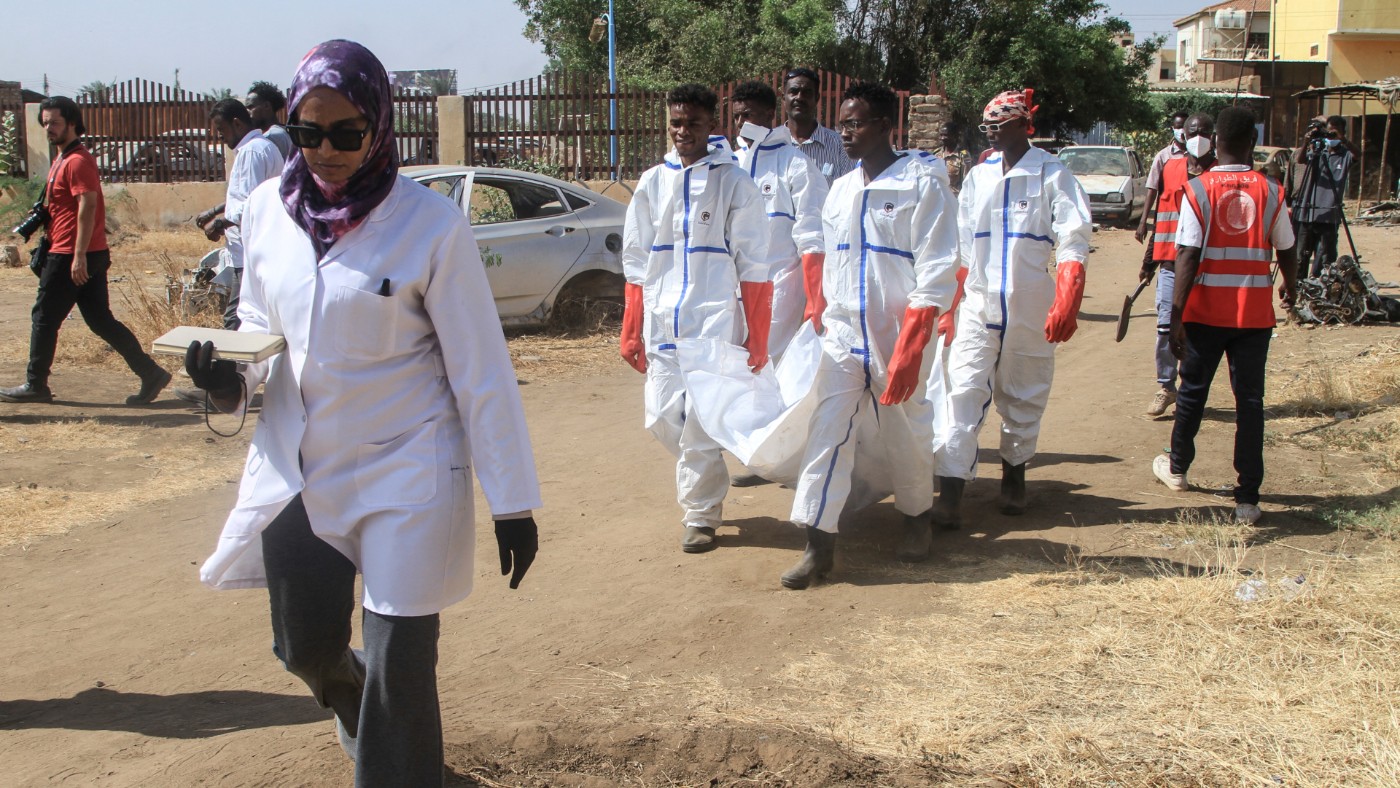
    In a solemn and extensive operation, Sudan’s Forensic Medicine Authority has managed the retrieval, transport, and formal interment of approximately 15,000 corpses from various locations across Khartoum state since April 2024. These remains, initially buried hastily by civilians under coercion or discarded in mass graves by the paramilitary Rapid Support Forces (RSF), have now been relocated to official burial grounds.

    An official from the Khartoum state health ministry, speaking to the Sudan Tribune, outlined the objective to complete the transfer of all bodies buried outside designated cemeteries by mid-2026. The source detailed how the RSF, which held control over much of the capital and its environs from the war’s outset in April 2023 until March 2025, compelled residents to bury their dead in residential areas, neighborhoods, and even school grounds. Civilians from Khartoum and its adjoining cities, Omdurman and Bahri, reported that accessing cemeteries was impossible due to intense and persistent combat.

    This large-scale body recovery campaign, initiated in March 2024 with support from charities like the Red Crescent, addresses the severe humanitarian consequences of the conflict. State authorities emphasized that the RSF’s blockade of traditional cemeteries forced citizens to use public squares, mosques, schools, and private homes as impromptu gravesites.

    Disturbing discoveries continue to surface. In June 2025, Sudanese army Brigadier al-Rayah Dafallah reported to Middle East Eye (MEE) that corpses were being found in highly unusual places, including buried beneath house floors. An MEE investigation of a university morgue, repurposed by the RSF as a base, revealed three tanks containing around 20 severely decomposed bodies.

    The crisis extends beyond the capital. Satellite imagery analyzed by Yale’s Humanitarian Research Lab has confirmed the existence of mass graves in el-Fasher, the capital of North Darfur, which was seized by the RSF in late October. Accounts from survivors describe horrific scenes of people buried alive, streets littered with corpses, and bodies unceremoniously dragged into squares using bedding materials.

    Both warring factions—the RSF and the Sudanese Armed Forces (SAF)—face accusations of atrocities. The RSF, which receives backing from the United Arab Emirates, stands additionally accused of committing genocide against non-Arab communities in Darfur, a charge it vehemently denies.

    No precise official death toll exists, but estimates from humanitarian organizations on the ground are staggering. As early as October 2024, Islamic Relief CEO Waseem Ahmad suggested the figure could be as high as 200,000, highlighting the immense human cost of the ongoing war.
  • Healthcare, AI, education and space set to lead Japan and UAE bilateral ties

    Healthcare, AI, education and space set to lead Japan and UAE bilateral ties

    Japan and the United Arab Emirates are embarking on a transformative bilateral partnership, with advanced negotiations underway for a comprehensive Economic Partnership Agreement (EPA). This strategic alignment aims to deepen cooperation across cutting-edge sectors including artificial intelligence, healthcare innovation, space exploration, and education reform.

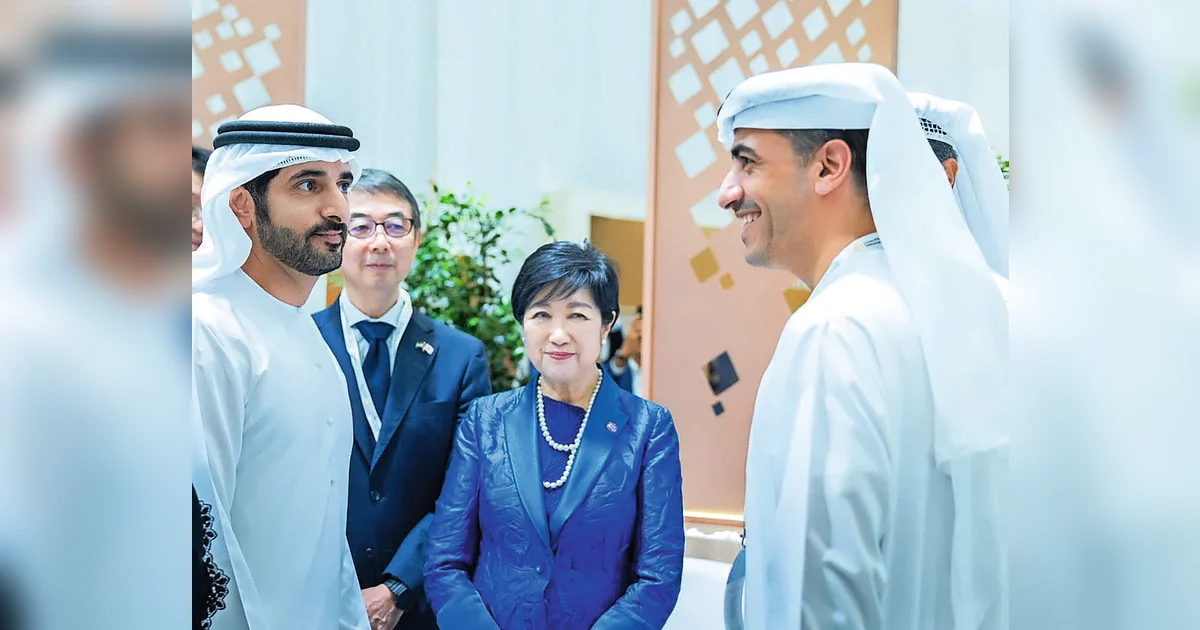
    Jun Imanishi, Consul-General of Japan in Dubai and the Northern Emirates, revealed that both nations are leveraging their unique strengths under the Comprehensive Strategic Partnership Initiative (CSPI). “Japan represents a global hub for technological development offering exceptional investment opportunities within a secure environment,” Imanishi stated, emphasizing the country’s skilled, process-driven workforce and stable political landscape.

    The partnership architecture extends beyond traditional economic ties. In healthcare, collaboration focuses on addressing shared challenges through advanced medical technologies and Japanese expertise in disease prevention. The AI partnership targets societal issues including aging populations and physical disabilities, with joint research initiatives already underway between the Japan Science and Technology Agency and Dubai Future Foundation in cybernetic avatars.

    Space exploration emerges as another critical dimension, building upon existing cooperation in renewable energy and sustainability. The upcoming International Horticultural Exposition (GREEN×EXPO 2027) in Yokohama will further showcase joint environmental initiatives.

    Investment flows are receiving significant impetus through Japan’s Programme for Promotion of Foreign Direct Investment, which targets 120 trillion yen ($810 billion) by 2030. The UAE’s extensive network of over 40 free zones—30 in Dubai alone—provides ideal infrastructure for Japanese companies seeking Middle Eastern market access. Currently, more than 300 Japanese corporations maintain regional headquarters in Dubai and the Northern Emirates.

    Cultural and educational exchanges form the foundation for long-term relationship building. Youth exchange programs between Tokyo and UAE schools continue to expand, while relaxed visa regulations now permit UAE citizens 90-day stays in Japan. Artistic collaborations include innovative exhibitions blending traditional Japanese arts like ikebana, koto performances, and calligraphy with modern technologies.

    The partnership demonstrates how nations with complementary strengths can create synergistic growth models while addressing global challenges through technological innovation and cultural exchange.

  • How Bondi’s Hanukkah festival turned from joy to horror within minutes

    How Bondi’s Hanukkah festival turned from joy to horror within minutes

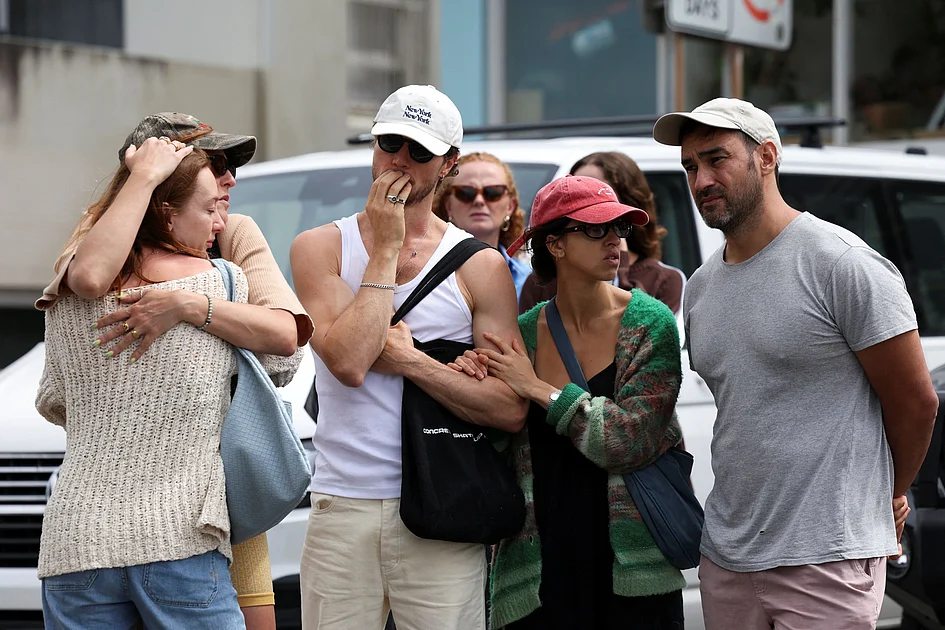
    A festive Hanukkah celebration at Sydney’s iconic Bondi Beach descended into chaos and tragedy when two gunmen opened fire on crowds gathered for the Jewish festival of lights. What began as an evening of joy and community spirit on a scorching summer afternoon rapidly transformed into a scene of horror that left at least 15 dead and dozens injured.

    The attack commenced around 17:00 local time as Jewish families gathered in a beachside park for the traditional celebration. Witnesses describe how festive music was abruptly replaced by screams and gunshot echoes, with the first emergency call to police logged at 18:47. Verified video footage captures the surreal juxtaposition of upbeat Hanukkah music playing while panicked attendees crouched for cover as shots rang out at one-second intervals.

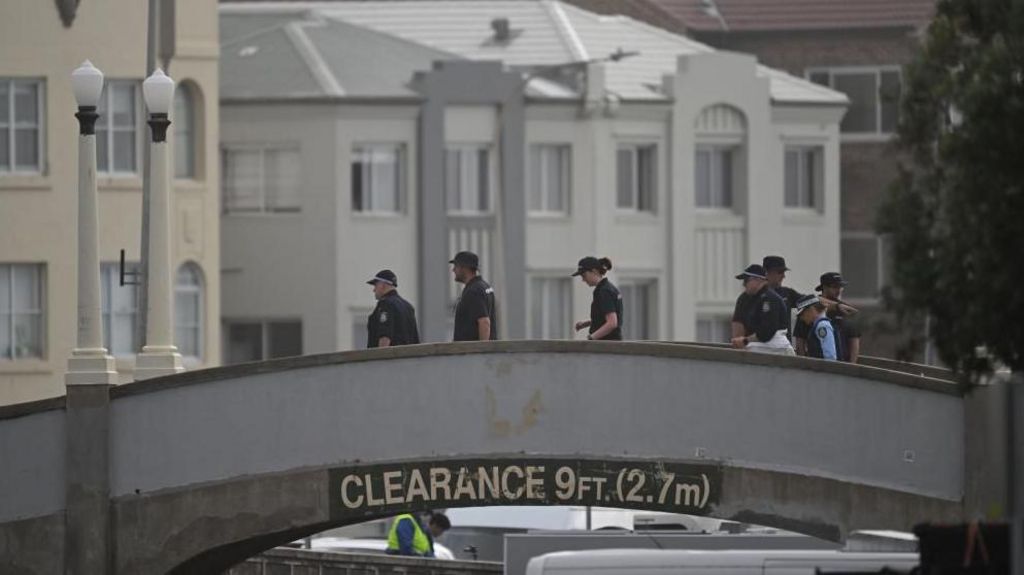
    Two identified perpetrators—50-year-old Sajid Akram and his 24-year-old son Naveed—allegedly positioned themselves on an elevated pedestrian bridge overlooking the celebration. From this vantage point, they employed what firearms experts identified as sporting shotguns to target the crowd below. The attackers maintained coordinated fire, with one remaining on the bridge while the other advanced toward the park on foot.

    The violence sparked mass panic that spread from the park to the beach itself, with terrified sunbathers and swimmers fleeing in all directions. The ensuing chaos witnessed vehicle collisions as people desperately attempted to escape the area, while emergency sirens and car horns filled the air.

    A critical turning point occurred when a bystander, later identified as Ahmed al Ahmed, successfully disarmed Sajid Akram after catching him off guard near parked cars. Despite being shot twice during the confrontation, Ahmed wrestled the firearm away and was subsequently hailed by New South Wales Premier Chris Minns for saving ‘countless lives’ through his heroic intervention.

    The attack concluded approximately seven-and-a-half minutes after initiation when police neutralized both suspects. Sajid Akram was pronounced dead at the scene, while his critically injured son was transported to a medical facility under guard. Subsequent investigations revealed the elder Akram legally owned six registered firearms under a recreational license, while reports emerged of authorities previously examining Naveed’s connections to a Sydney-based Islamic State cell in 2019—though no ongoing threat had been identified.

    In the aftermath, police raided the perpetrators’ Bonnyrigg residence, approximately one hour from Bondi Beach, arresting three individuals who were later released without charge. The investigation continues to examine the attackers’ motivations and the provenance of their weapons as the community grapples with the trauma of Australia’s deadliest mass shooting in recent history.

  • ‘It’s outrageous’ – JetBlue pilot decries near collision with US military aircraft

    ‘It’s outrageous’ – JetBlue pilot decries near collision with US military aircraft

    A potentially catastrophic aviation incident involving a US Air Force refueling tanker and a JetBlue commercial flight is under formal investigation after the aircraft came dangerously close to colliding near Venezuelan airspace. The event occurred when the passenger jet, en route from Curaçao to New York’s JFK International Airport, was forced to abruptly halt its ascent to avoid the military aircraft.

    According to audio recordings from the cockpit, the JetBlue pilot reported the military aircraft passed directly through their flight path at identical altitude with an estimated separation of just two to five miles. The situation was critically exacerbated by the Air Force tanker’s transponder being deactivated, preventing air traffic control from tracking its position accurately. “We almost had a midair collision up here,” the pilot stated. “They passed directly in our flight path… They don’t have their transponder turned on, it’s outrageous.”

    The incident has prompted responses from multiple agencies. US Southern Command confirmed the near-miss is under review, while JetBlue acknowledged in an official statement that their crew reported the incident to airline leadership and pledged full cooperation with any investigation. An Air Force spokesperson told CBS News that while they are aware of the incident, military aircrews are “highly trained professionals who operate in accordance with established procedures and applicable airspace requirements.”

    This alarming encounter occurs against a backdrop of heightened aviation security concerns. The Federal Aviation Administration issued an official warning last month urging US aircraft to “exercise caution” in Venezuelan airspace due to “worsening security situation and heightened military activity” in the region. The incident raises significant questions about military-civilian airspace coordination and protocol compliance during operations in sensitive geopolitical zones.

  • Former Congo rebel leader Lumbala sentenced to 30 years over wartime atrocities

    Former Congo rebel leader Lumbala sentenced to 30 years over wartime atrocities

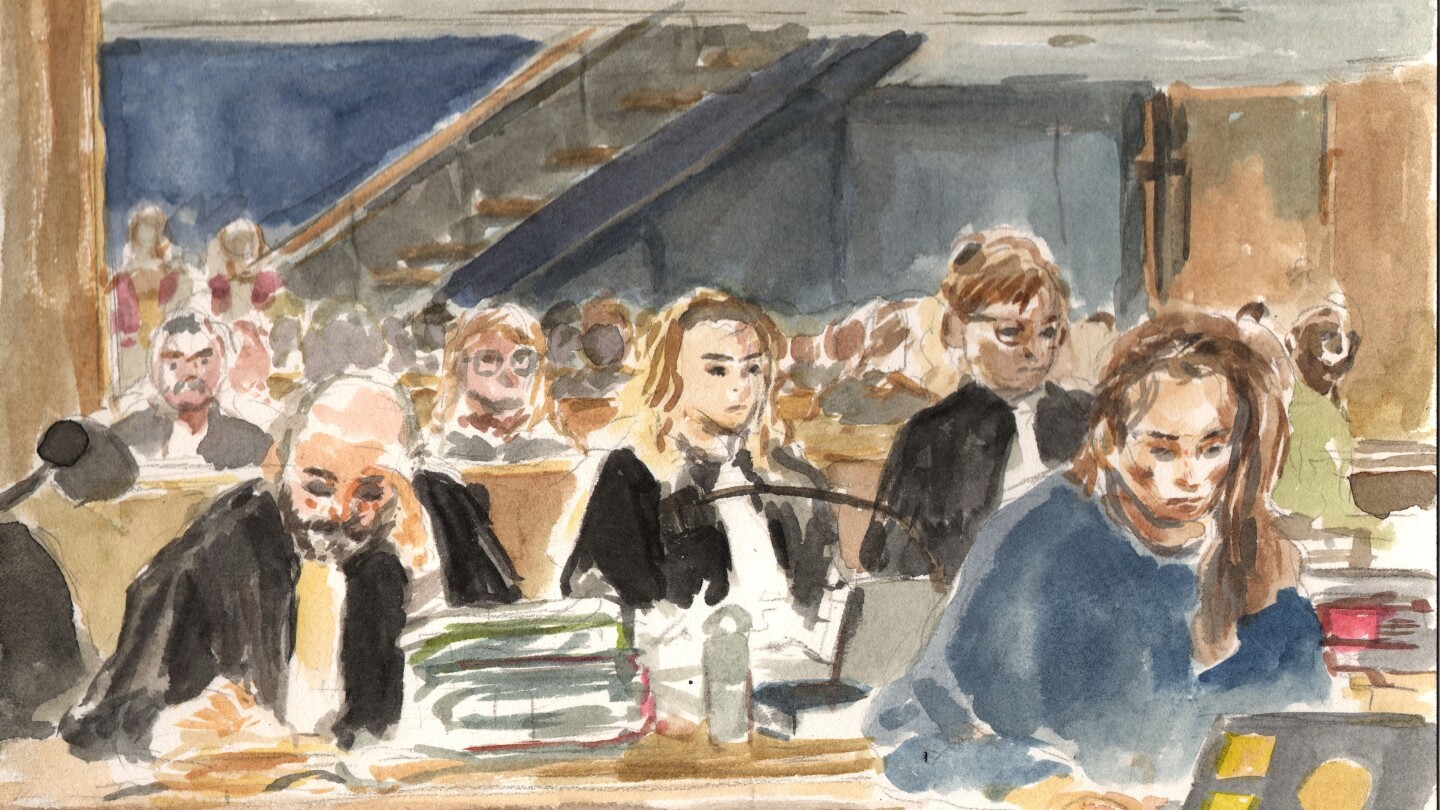
    PARIS — In a landmark judicial decision with profound implications for international justice, former Congolese rebel commander Roger Lumbala received a 30-year prison sentence from a French criminal court on Monday for crimes against humanity committed during Congo’s devastating civil conflict two decades ago.

    The 67-year-old former leader of the Congolese Rally for National Democracy (RCD-N) was convicted under France’s universal jurisdiction legislation, which permits prosecution of severe international crimes regardless of where they occurred. The verdict represents the first successful prosecution of a Congolese military or political figure for mass atrocities in a national court under this legal principle.

    Evidence presented during the trial detailed systematic atrocities perpetrated by Lumbala’s rebel faction against civilian populations in eastern Congo between 2002-2003. United Nations documentation confirmed widespread patterns of torture, summary executions, sexual violence, forced labor, and sexual slavery targeting ethnic minorities including the Nande and Bambuti communities.

    Lumbala’s militia operated with substantial backing from neighboring Uganda during the Second Congo War, which claimed approximately five million lives through violence, disease, and starvation—making it the deadliest conflict since World War II.

    Following the war’s conclusion, Lumbala paradoxically integrated into Congo’s political establishment, serving as Foreign Trade Minister from 2003-2005 and later as a parliamentarian. His political career collapsed in 2011 when Congolese authorities issued an arrest warrant alleging his continued support for rebel factions, prompting his flight to France where he had previously resided.

    Daniele Perissi of TRIAL International, which represented victims in the case, hailed the verdict as “historic” noting that “for the first time, a national court has dared to confront the atrocities of the Second Congo War and show that justice can break through even after decades of impunity.”

    The sentencing occurs against the backdrop of renewed violence in Congo’s mineral-rich eastern regions, where over 100 armed groups continue operating. The Rwanda-backed M23 rebel faction recently captured strategic territory, underscoring the persistent instability that has plagued the region since the 1990s.

  • Israeli troops shoot settler suspected of attempted knife attack on soldiers

    Israeli troops shoot settler suspected of attempted knife attack on soldiers

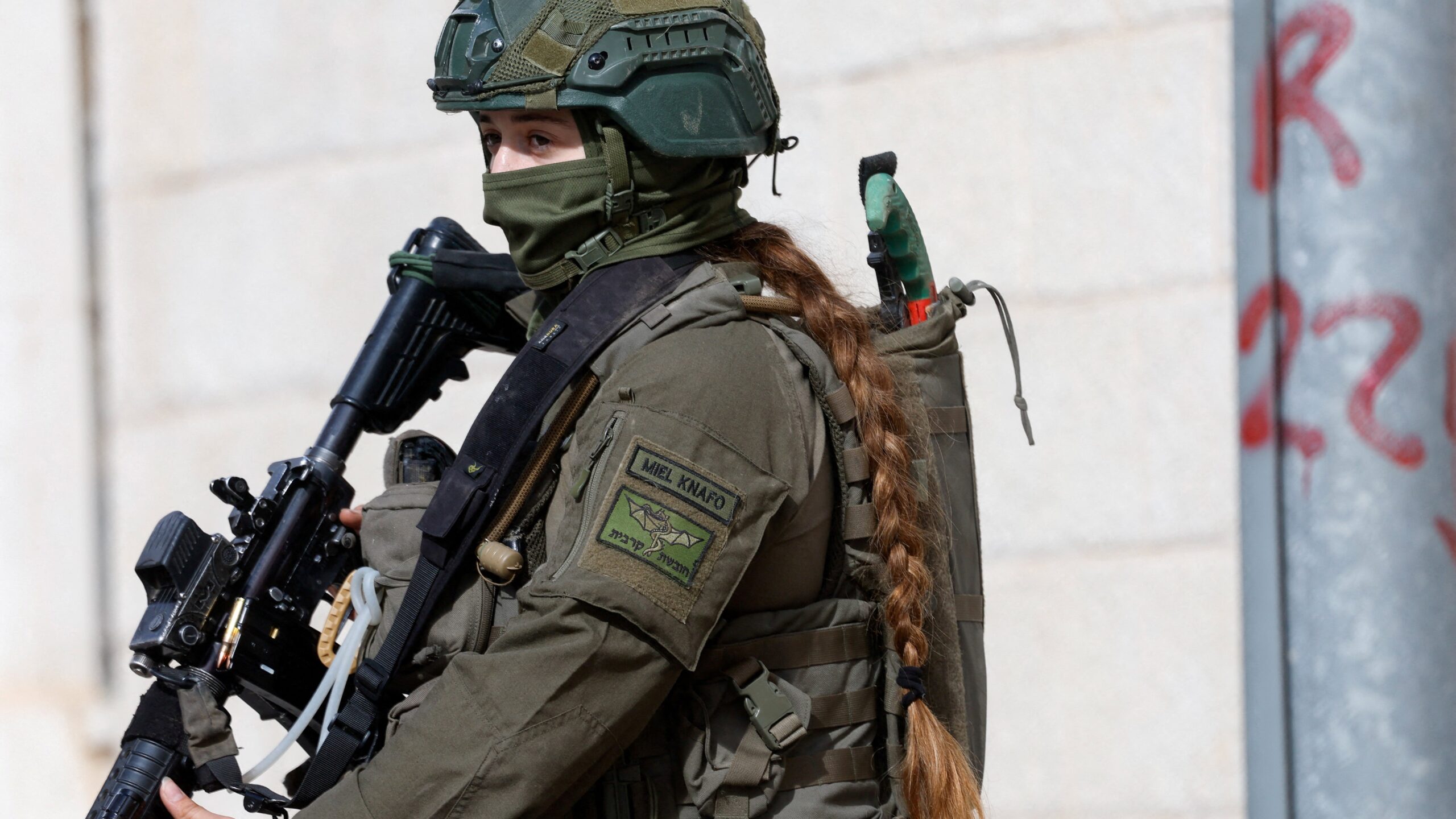
    In a rare incident highlighting the complexities of military engagement protocols, Israeli security personnel opened fire on a fellow Israeli citizen within the occupied West Bank on Monday. The event transpired at a Kedumim settlement fuel station, adjacent to Qalqilya, after soldiers perceived the individual, a man in his early twenties, as an imminent threat poised to execute a knife assault.

    Initial reports from Israeli media outlets, including Channel 14, indicate the settler was brandishing a knife toward troops, prompting a soldier to discharge their weapon to neutralize the perceived danger. The Israeli military confirmed the event, classifying it as an ‘attempted stabbing attack’ and stating the individual was ‘armed with a knife.’ They further noted that the precise circumstances surrounding the incident remain under official examination. Unverified accounts suggest the man may have been experiencing mental health difficulties.

    This occurrence unfolds against a backdrop of intense criticism directed at the Israeli military’s open-fire regulations in the West Bank. Israeli human rights organization B’Tselem has characterized these policies as increasingly ‘permissive and reckless,’ particularly since October 2023. This framework frequently authorizes lethal force against Palestinians based solely on suspicion of an impending attack.

    The gravity of these protocols is underscored by staggering statistics: over 1,000 Palestinians, among them 217 children, have lost their lives to Israeli forces in the West Bank in the subsequent period. Human rights advocates have persistently condemned what they label a systemic ‘shoot-to-kill’ practice targeting Palestinians.

    A particularly grave incident last month in Jenin involved Israeli forces executing two unarmed Palestinians at point-blank range after they had surrendered, an act captured on video and described by the United Nations as a potential ‘summary execution’—a grave breach of the Geneva Convention and international law.

  • 10-year-old girl, holocaust survivor among victims of deadly Bondi Beach mass shooting

    10-year-old girl, holocaust survivor among victims of deadly Bondi Beach mass shooting

    A joyous Hanukkah celebration at Sydney’s iconic Bondi Beach turned into a scene of unimaginable tragedy Sunday evening when a father-and-son duo opened fire on the gathered crowd, killing 15 people and hospitalizing 42 others in what authorities are calling a deliberate act of anti-Semitic terrorism.

    Among the victims were individuals whose lives embodied both the tragic history and vibrant present of the Jewish community. Holocaust survivor Alex Kleytman, 87, originally from Ukraine, was killed while shielding his wife Larisa from the gunfire. In a cruel twist of fate, the man who survived one of history’s greatest atrocities fell victim to modern-day hatred on what should have been a night of celebration.

    The attack also claimed Rabbi Eli Schlanger, 41, a community leader who had helped organize the Hanukkah gathering. Alex Ryvchin of the Executive Council of Australian Jewry memorialized Schlanger as “the very best of us,” noting his daily mission was simply “doing good. Whatever good he could find, whatever kind deeds he could perform.”

    The international scope of the tragedy became evident as French President Emmanuel Macron confirmed the death of French citizen Dan Elkayam, a promising amateur footballer building a new life in Sydney. Sydney’s Rockdale Ilinden football club remembered Elkayam as an “extremely talented and popular figure amongst team mates.”

    The youngest victim, a 10-year-old girl, succumbed to her injuries at a children’s hospital, representing the most heartbreaking loss in an attack that spanned generations.

    Australian Prime Minister Anthony Albanese condemned the shooting as “an act of pure evil, an act of antisemitism, an act of terrorism on our shores.” As investigation continues into the motivations behind the attack, authorities have confirmed the plot was deliberately designed to sow terror among Australia’s Jewish population during one of their most significant religious observances.

  • Austrian court rules against extradition of Ukrainian businessman to US over alleged bribery

    Austrian court rules against extradition of Ukrainian businessman to US over alleged bribery

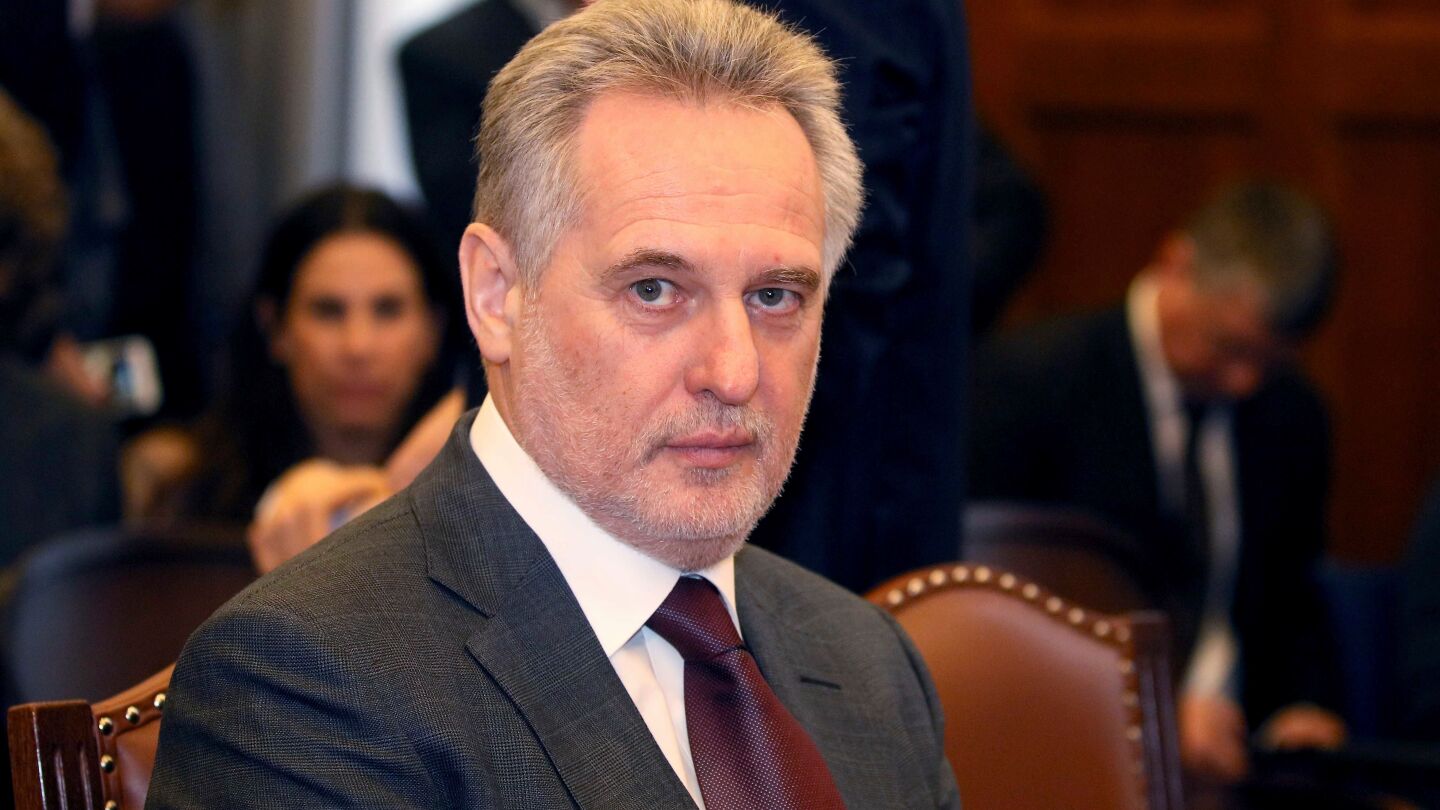
    VIENNA — In a decisive legal development, Austria’s Vienna High Regional Court has definitively rejected a United States extradition request for Ukrainian oligarch Dmytro Firtash, bringing closure to a nearly decade-long international judicial battle. The court’s ruling, announced on December 10th, represents the final chapter in a complex saga that began with Firtash’s 2014 arrest on Austrian soil.

    The American indictment alleged Firtash masterminded an international conspiracy involving multi-million euro bribe payments to secure titanium mining licenses in India—a mineral crucial for aerospace engineering and jet engine production. Despite these serious allegations, which Firtash has consistently denied, the Austrian judiciary determined the extradition request was legally “inadmissible due to immunity protections under international law.”

    Legal experts analyzing the verdict note the decision primarily hinged on procedural formalities rather than case merits. Professor Robert Kert of the Institute for Austrian and European Economic Criminal Law revealed prosecutors missed critical appeal deadlines, while Firtash successfully claimed diplomatic immunity based on his former role as Belarus’ representative to Vienna-based international institutions.

    “The judicial enthusiasm for securing Mr. Firtash’s extradition appears notably diminished,” Professor Kert observed in a recent telephone interview, suggesting waning prosecutorial urgency.

    The case’s international dimensions have been particularly complex. Six years prior, a Chicago federal judge affirmed U.S. jurisdiction because the alleged scheme potentially affected a Chicago-based company—aviation giant Boeing. While Boeing acknowledged preliminary business discussions with Firtash, the company emphasized no transactions were finalized and faces no allegations of misconduct.

    Firtash’s legal journey through Austrian courts has been remarkably turbulent. Initially released on €125 million ($131 million) bail in 2014, he successfully argued against extradition by claiming political motivation behind the indictment. This ruling was subsequently overturned in February 2017 when a higher court deemed the political persecution argument “insufficiently substantiated,” a decision Austria’s Supreme Court of Justice ultimately upheld in 2019 before this latest appellate rejection.

  • What we know about the Bondi gunmen

    What we know about the Bondi gunmen

    In a devastating terrorist assault that has shaken Australia, two gunmen identified as father and son unleashed firearm violence upon hundreds celebrating Hanukkah at Sydney’s iconic Bondi Beach on Sunday. The attack resulted in 15 fatalities and left 27 hospitalized with injuries, marking the nation’s deadliest mass shooting in decades.

    Authorities confirmed the perpetrators as Sajid Akram, 50, who was killed during an exchange of gunfire with police, and his son Naveed Akram, 24, currently hospitalized under police guard with critical injuries. The assault specifically targeted Jewish participants and is being investigated as a terrorist incident by Australia’s Joint Counter Terrorism Team.

    Among the victims were a 10-year-old girl, a Holocaust survivor, and two rabbis, highlighting the deliberate targeting of the Jewish community during the festival celebrations.

    Prime Minister Anthony Albanese revealed that while Naveed Akram had previously drawn attention from the Australian Security Intelligence Organisation (ASIO) in 2019, assessments at the time concluded no imminent threat of violence. Both gunmen acted independently without connections to broader extremist networks, though investigators discovered two Islamic State flags and improvised explosive devices in their vehicle.

    Home Affairs Minister Tony Burke disclosed that Sajid Akram entered Australia on a student visa in 1998, later transitioning to permanent residency, while his son was an Australian-born citizen. The elder Akram had legally obtained six firearms through recreational hunting licenses, all recovered from the crime scene.

    The attackers utilized a small bridge as a firing position, employing long-barrelled weapons during the assault. Prior to the attack, the pair had relocated from their Bonnyrigg family home to an Airbnb in Campsie, telling relatives they were embarking on a fishing trip.

    Islamic community leaders condemned the violence, with Al Murad Institute founder Adam Ismail emphasizing that the Quran explicitly forbids such attacks, stating that taking innocent life equates to killing all of humanity.

  • Father and son behind Bondi Beach shooting that killed 15, Australian police say

    Father and son behind Bondi Beach shooting that killed 15, Australian police say

    Australian authorities have identified the perpetrators behind Sunday’s devastating mass shooting at Sydney’s Bondi Beach as a father-son duo, marking the nation’s deadliest firearm violence incident in nearly three decades. The attack, which targeted a Jewish Hanukkah celebration, has been officially classified as an antisemitic terrorist act.

    According to New South Wales police commissioner Mal Lanyon, the 50-year-old father died at the crime scene while his 24-year-old son remains hospitalized in critical condition. Though police have not formally released identities, local media outlets identified them as Sajid and Naveed Akram respectively. The father had maintained a firearms license since 2015 and legally owned six weapons.

    The horrific episode unfolded over approximately ten minutes on Sunday evening, sending hundreds of beachgoers scrambling for safety across the iconic shoreline. Among the victims, aged between 10 and 87 years old, forty individuals required hospitalization including two police officers in serious but stable condition.

    A remarkable act of bravery emerged from the chaos as Ahmed al Ahmed, a 43-year-old fruit shop owner, tackled and disarmed one of the gunmen despite sustaining two gunshot wounds. His heroic intervention, captured on video, prompted an outpouring of public support with over A$350,000 raised for his medical expenses by Monday afternoon.

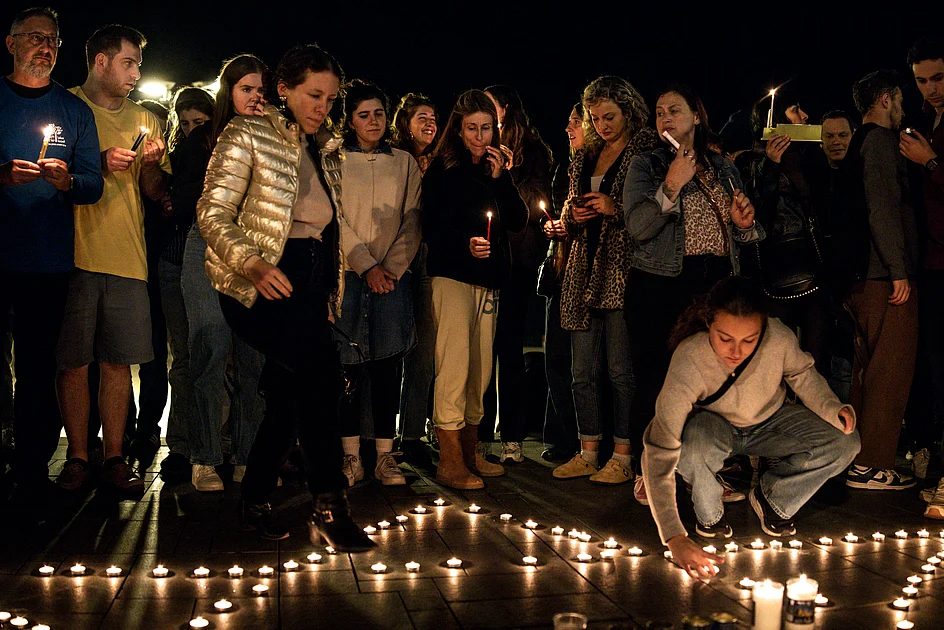
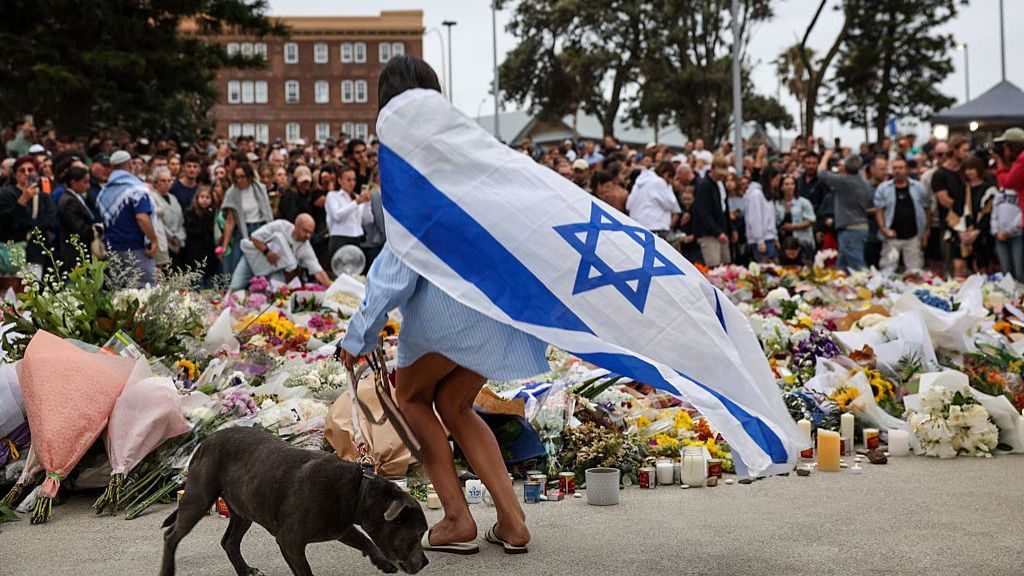
    Prime Minister Anthony Albanese visited the attack site Monday, condemning the “act of pure evil” and pledging national solidarity with Australia’s Jewish community. “We will do whatever is necessary to stamp out antisemitism,” Albanese declared, announcing plans for citizens to light candles in symbolic defiance of darkness.

    The investigation revealed the elder suspect arrived in Australia on a student visa in 1998, while his son was born as an Australian citizen. Security remains heightened at the family’s Bonnyrigg residence, 36 kilometers west of Sydney’s central business district.

    This tragedy represents Australia’s most severe mass shooting since the 1996 Port Arthur massacre that claimed 35 lives. The incident has triggered international condemnations from world leaders including U.S. President Donald Trump and France’s Emmanuel Macron, while prompting enhanced security measures at Jewish events globally.