分类: world

  • Cubans scramble to survive as US vise on island tightens in push to oust government

    Cubans scramble to survive as US vise on island tightens in push to oust government

    HAVANA — As Washington intensifies its economic pressure campaign against Cuba, citizens across the communist-led island are adopting innovative survival strategies to counter what experts characterize as a deliberate attempt to trigger popular unrest and governmental change.

    The economic stranglehold has tightened considerably following recent disruptions to vital Venezuelan oil shipments after US interventions in Caracas. While the full impact of these energy shortages remains impending, Cubans are proactively transforming their lifestyles in anticipation of further hardships.

    Across the island, a quiet revolution in self-reliance is underway. Urban residents are installing solar energy systems, rural communities are returning to subsistence farming, and many are consciously adopting simpler technologies that bypass petroleum dependencies.

    Jose Ángel Méndez Faviel exemplifies this trend, having relocated from central Havana to a farm in Bacuranao to escape the nation’s severe blackouts. “It’s how you survive,” Méndez explained. “It’s best to depend on yourself.” His new agrarian lifestyle enables cooking with firewood and charcoal—impossible in his former darkened city apartment.

    Méndez remains uncertain about President Trump’s specific threats against Cuba but refuses to gamble with his family’s welfare. He has begun stockpiling gasoline, charcoal, and homegrown produce cultivated on his farm. The practical farmer is even considering repurchasing the horse he previously sold, recognizing that “You don’t need fuel for a horse. We need to go back in time.”

    The current crisis compounds existing challenges including chronic blackouts, hyperinflation, and scarcity of basic goods. President Trump’s recent executive order imposing tariffs on nations supplying oil to Cuba has amplified fears of catastrophic economic collapse, with the president himself declaring Cuba “very close to failing.”

    Yet many Cubans dismiss such predictions, particularly those who endured the 1990s “Special Period” following Soviet aid reductions. Yadián Silva, a nurse and classic car driver who has witnessed tourism’s dramatic decline, articulated the prevailing sentiment: “We have problems, and we know we have a lot of problems. But when things happen in Cuba, it’s because people truly feel they should happen. Not because someone from the outside says, ‘do this.’”

    This defiance manifested visibly during recent commemorations for national hero José Martí, where tens of thousands of torch-bearing Cubans, predominantly university students, marched through Havana. Sheyla Ibatao Ruíz, a 21-year-old law student, declared: “We are a dignified people, a people eager to move forward, eager to prosper, who do not believe in threats and are not intimidated by any reprisals from the enemy.”

    Meanwhile, technological innovation flourishes within the constraints. Ángel Eduardo launched “Con Voltage,” a solar installation business, after frustration with studying in darkness hampered his engineering education. Utilizing social media and AI tools like ChatGPT, Eduardo has installed dozens of solar systems across Cuba, experiencing surging demand since Venezuelan oil disruptions began.

    For older entrepreneurs like 62-year-old Niuvis Bueno Zavala, adaptation means exploring new revenue streams for her seaside drink stall. “I’ve never had it this hard,” she confessed, contemplating homemade food sales amid economic blockade.

    The sentiment resonates with retired pilot Pedro Carbonell, who recently waited over two hours for gasoline. “If we don’t have fuel, then we’ll ride bicycles,” he stated, echoing the resilience of the Special Period. “Our wine is bitter. But it’s our wine. And we don’t want anyone from somewhere else coming here and telling us how to drink our wine.”

  • What a reporter found when she returned to Cuba after last trip 3 years ago

    What a reporter found when she returned to Cuba after last trip 3 years ago

    HAVANA — Three years after her previous assignment, Caribbean correspondent Dánica Coto returned to a Cuba transformed by escalating economic hardship and infrastructure decay. In an exclusive interview with AP editor Laura Martínez, Coto documented a nation grappling with unprecedented challenges that permeate every aspect of daily life.

    The visual landscape of Havana tells a story of systemic breakdown. Mountains of garbage accumulate at tourist destinations, where neatly dressed Cubans now scavenge through waste for reusable containers. The colonial architecture that once defined the city’s charm is rapidly deteriorating, with historic facades crumbling into rubble across numerous neighborhoods.

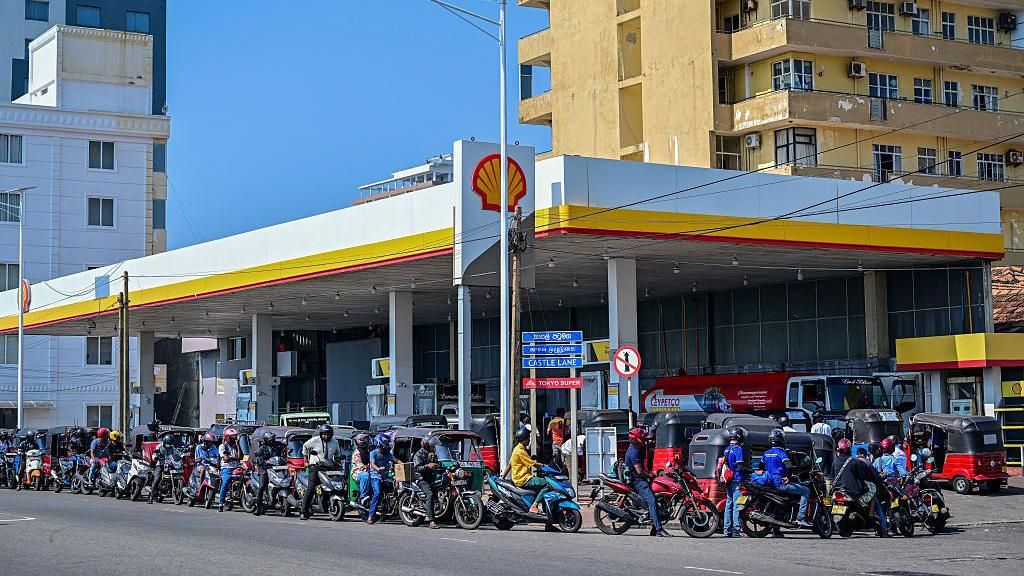
    Energy infrastructure has reached critical failure levels. Chronic power outages plunge the capital into darkness nightly, while fuel shortages create hours-long queues at gasoline stations. Municipal services have deteriorated significantly—garbage trucks and agricultural equipment sit idle without spare parts, and office buildings routinely lack basic amenities like toilet paper and running water by afternoon.

    Cubans demonstrate remarkable resilience through adaptive survival strategies. Families increasingly rely on firewood and charcoal for cooking amid natural gas shortages. Those with means invest in solar panels, while others cultivate personal gardens. Despite these efforts, cash shortages force crowds outside banks, and communication networks experience growing disruptions.

    The nation’s economic crisis deepens amid geopolitical pressures. Many Cubans lived through the 1990s Special Period following Soviet collapse, but current conditions threaten to surpass that hardship. Experts warn that disrupted oil shipments from Venezuela and Mexico—combined with new U.S. tariffs on nations supplying Cuba—could trigger catastrophic consequences.

    U.S.-Cuba relations have deteriorated significantly under the Trump administration, which redesignated Cuba as a state sponsor of terrorism and intensified rhetoric about regime change. Secretary of State Marco Rubio, son of Cuban immigrants, recently declared Cuba “a country that’s been backward” with “no functional economy.”

    Despite these pressures, the Cuban government maintains its defiant posture while citizens express determination to resist external manipulation. The revolutionary slogan “Patria o muerte, venceremos!” (Homeland or death, we will overcome!) continues to resonate, embodying both ideological commitment and the stark choices facing the nation.

  • US warship docks in Gulf of Aqaba as fears of Iran strike grow

    US warship docks in Gulf of Aqaba as fears of Iran strike grow

    A United States military vessel commenced docking operations in the Gulf of Aqaba on Friday amid rapidly escalating tensions with Iran, according to reports from Israel’s public broadcaster Kan. This strategic deployment forms part of enhanced military preparations and security coordination between American and Israeli defense forces.

    The naval movement reinforces existing deployments and elevates both defensive and offensive readiness in anticipation of potential regional developments, as confirmed by security sources. The Gulf of Aqaba holds particular strategic significance as it lies directly south of Eilat, the Israeli port city that suspended operations in July following financial difficulties exacerbated by attacks from Yemen’s Houthi movement.

    Concurrent with these developments, Israeli Prime Minister Benjamin Netanyahu convened a high-level security meeting with senior military officials on Thursday to address classified matters. Israeli media outlets reported the discussions centered on potential US military action against Iran’s nuclear and missile programs. Adding to the diplomatic activity, Israel’s military intelligence directorate head, Shlomi Binder, visited Washington on Wednesday for consultations regarding sensitive issues potentially related to Israeli strike capabilities against Iranian targets.

    The geopolitical tensions unfold against the backdrop of ongoing civil unrest in Iran, where protests initially triggered by economic pressures and cost-of-living crises have been met with government crackdowns. Iranian officials, including Foreign Minister Abbas Araghchi, have accused Israel of orchestrating violence and attempting to provoke US military intervention.

    As precautionary measures, several southern Israeli municipalities including Dimona, Beersheba and Gan Yavne have activated public bomb shelters. Israeli military chief of staff Eyal Zamir has directed increased defensive readiness across all military formations according to Haaretz reports.

    The US has significantly reinforced its military presence in the region with the arrival of the USS Abraham Lincoln carrier strike group, positioning forces within striking distance of Iran. Additional deployments include F-15E Strike Eagles to Jordan, B-52 bombers to Qatar, and an expected THAAD air defense battery. President Trump characterized these movements as dispatching a ‘massive armada’ while warning Tehran against nuclear program advancement.

    Iran’s Revolutionary Guard Corps commander Mohammad Akbarzadeh issued counter-warnings that neighboring countries permitting their territory to be used against Iran would be ‘considered hostile.’ Regional powers including Saudi Arabia, Qatar, UAE, Oman and Kuwait have expressed concerns about potential collateral damage from any conflict. Despite tensions, Iranian officials including First Vice President Mohammad Reza Aref have indicated openness to negotiations under ‘fair, balanced and non-coercive terms.’

  • UN nuclear watchdog discusses risks to Ukraine’s nuclear safety after relentless Russian strikes

    UN nuclear watchdog discusses risks to Ukraine’s nuclear safety after relentless Russian strikes

    VIENNA — The International Atomic Energy Agency’s (IAEA) Board of Governors convened an urgent special session on Friday to address escalating nuclear safety concerns in Ukraine amid intensifying Russian attacks on energy infrastructure. The meeting, requested by the Netherlands with backing from eleven nations including Canada, France, Germany, Japan, and the United Kingdom, aimed to amplify diplomatic pressure on Moscow despite lacking binding authority.

    Netherlands Ambassador Peter Potman presented alarming testimony, detailing how Russia’s ‘ongoing and daily’ assaults have crippled Ukraine’s energy grid during severe winter conditions. ‘These attacks not only deprive millions of Ukrainians of heating and electricity but critically compromise nuclear safety,’ Potman warned, noting the heightened prospect of a nuclear incident approaching ‘the very precipice of reality.’

    IAEA Director General Rafael Grossi emphasized the direct correlation between damaged electrical substations and nuclear risk, stating such targeting ‘undermines nuclear safety and must be avoided.’ An IAEA expert mission is currently assessing ten critical substations essential for maintaining safety at Ukrainian nuclear facilities.

    Ukraine’s nuclear infrastructure includes four active power plants, with the Zaporizhzhia facility remaining under Russian occupation since 2022. While plants generate power internally, they require continuous external electricity for reactor cooling systems. Emergency diesel generators provide backup during power losses, but consecutive failures could precipitate meltdown scenarios.

    Ukrainian Ambassador Yurii Vitrenko urged the IAEA to intensify scrutiny of Russia’s ‘systematic destruction’ of energy infrastructure, acknowledging U.S. President Donald Trump’s diplomatic efforts to curb attacks. However, specifics regarding Russia’s purported commitment to temporarily suspend bombardments remained unclear amid one of Ukraine’s most severe winters in recent history.

  • Ethiopia’s national carrier cancels flights to Tigray region as fears grow of renewed fighting

    Ethiopia’s national carrier cancels flights to Tigray region as fears grow of renewed fighting

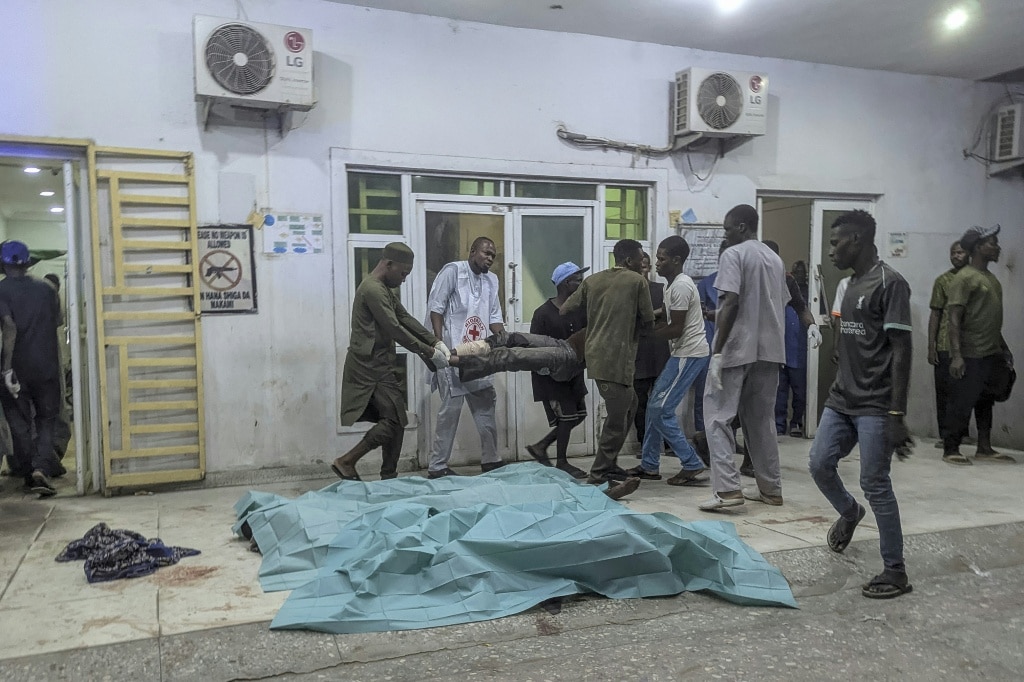
    Ethiopian Airlines has abruptly suspended all flights to and from the northern Tigray region, citing “unplanned circumstances” as tensions escalate between federal forces and Tigrayan authorities. The cancellation, now extending into its second day, signals deteriorating security conditions with reports of drone surveillance and military movements in western and southern Tigray.

    Anonymous security officials confirm the flight suspensions are directly linked to renewed hostilities, triggering civilian exodus attempts by road. In Mekele, Tigray’s capital, transportation services face overwhelming demand with bus bookings to Addis Ababa completely full until next Tuesday. Residents report forming extensive queues at banks and ATMs, many of which have exhausted their cash reserves, as panic buying intensifies.

    This crisis emerges just three years after the landmark 2022 peace agreement that ended a devastating two-year civil war claiming hundreds of thousands of lives. Both sides now accuse each other of violating the truce—Tigray leaders cite federal government drone strikes while Ethiopia alleges Eritrean mobilization of armed groups along their shared border.

    The geopolitical landscape has shifted dramatically since the previous conflict. Peace and conflict experts note the potential formation of a strategic alliance between Tigray’s ruling party (TPLF) and Eritrean President Isaias Afwerki, which could fundamentally alter regional dynamics. Unlike the 2020-2022 war where Tigray was encircled by hostile forces, this configuration might provide Tigray with open supply lines and military support from Eritrea.

    The escalating situation occurs against broader regional tensions regarding sea access. Ethiopian Prime Minister Abiy Ahmed, who previously won the Nobel Peace Prize for reconciling with Eritrea, has recently adopted assertive rhetoric about securing Red Sea access—comments perceived as provocative by neighboring nations. With Ethiopia currently dependent on Djibouti’s ports amid high fees, and Eritrea accusing Ethiopia of harboring “war agendas” targeting its ports, the region faces compounded instability.

  • Worried families in India urge return of crew on ship seized by Iran

    Worried families in India urge return of crew on ship seized by Iran

    Sixteen Indian nationals remain detained in Iran following the controversial seizure of oil tanker MT Valiant Roar in international waters on December 8th. The vessel, operated by Dubai-based Prime Tankers LLC, was apprehended by Iranian authorities alleging transportation of 6,000 metric tonnes of illegal diesel—a claim vehemently denied by the shipping company.

    The geopolitical landscape has complicated resolution efforts, with Iran experiencing significant domestic unrest since late December and increased US military presence in the region creating additional tensions. According to documents filed by India’s foreign ministry in Delhi High Court, ten Indian crew members have been formally arrested and transferred to Bandar Abbas prison, while six remain confined aboard the vessel under deteriorating conditions.

    Families report severe humanitarian concerns, citing inadequate food supplies, limited potable water, and unsanitary living conditions as generators fail and waste disposal systems malfunction. Most personal communication devices have been confiscated, though one phone permits intermittent contact with relatives.

    Diplomatic channels have achieved partial success, with consular access secured for the imprisoned seafarers though not yet for those remaining onboard. The Indian embassy indicates Iranian authorities will facilitate access pending clearances from naval and prosecutorial offices.

    The vessel’s owner, Jugwinder Brar—currently under US sanctions—maintains the ship carried legitimate Very Low Sulphur Fuel Oil (VLSFO) for company operations. Brar alleges Iran previously seized another Prime Tankers vessel under similar pretenses in December 2023, with three crew members still imprisoned after nine months.

    Maritime unions and families condemn the detention of crew members as fundamentally unjust. ‘Cargo disputes should be settled with companies, not workers,’ stated Gayatri Singh, wife of detained Chief Officer Anil Kumar Singh, echoing sentiments that seafarers are being used as ‘human shields’ in broader geopolitical conflicts.

    The situation remains critical for families awaiting reunification, particularly with contractual end dates having passed in January and personal milestones like planned weddings now in jeopardy.

  • Foreign women linked to IS group in Syrian camp hope for amnesty after government offensive

    Foreign women linked to IS group in Syrian camp hope for amnesty after government offensive

    ROJ CAMP, Syria — Foreign women affiliated with the Islamic State group, currently detained in northeastern Syria’s Roj camp, are expressing renewed hope for potential amnesty following significant territorial shifts in the region’s military balance.

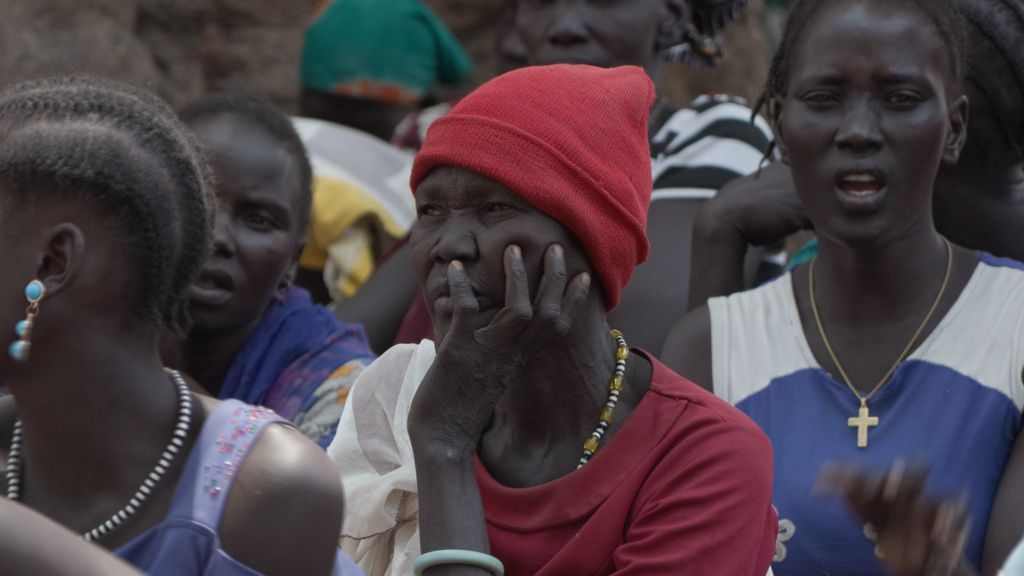
    The camp, housing over 2,300 individuals primarily comprising women and children with IS connections, remains under the guard of the Kurdish-led Syrian Democratic Forces. However, a recent government offensive has substantially weakened the SDF’s control, capturing most of their previously held territories including the massive al-Hol camp which detained approximately 24,000 IS-linked individuals.

    Camp residents interviewed by The Associated Press revealed growing optimism that Syria’s new leadership might offer clemency. This sentiment stems from the political transformation of Ahmad al-Sharaa (formerly known as Abu Mohammed al-Golani), once a designated terrorist linked to al-Qaeda, who now serves as interim president following the toppling of Bashar Assad in December 2024.

    Buthaina, a Tunisian national who has been detained for nine years, articulated the prevailing hope: “The international community gave al-Golani amnesty. I should be given amnesty too. I did not kill anyone or do anything.”

    Camp director Hakmiyeh Ibrahim reported noticeable behavioral changes among residents, who have become increasingly hostile and emboldened by recent developments. “It gave them hope that the Islamic State group is coming back strongly,” Ibrahim observed.

    The situation highlights the complex international dilemma regarding repatriation. While some women express desire to return to their home countries, others like German national Aysha prefer remaining in Syria, stating “Germany is all infidels.” Meanwhile, human rights organizations criticize the prolonged detention without trial as a political failure.

    Beatrice Eriksson of Repatriate the Children in Sweden noted: “The continued existence of these camps is not an unfortunate by-product of conflict, it is a political decision.”

    With Syrian government forces now controlling key detention facilities and part of a ceasefire agreement involving transfer of camp management to Damascus, the future of these detainees hangs in uncertainty as the world watches how Syria’s new leadership will handle this enduring legacy of the IS caliphate.

  • Gaza plan a potential turning point, says UN official

    Gaza plan a potential turning point, says UN official

    A senior United Nations official has characterized the Gaza stabilization initiative as a potential watershed moment for the region, even as humanitarian crises and military operations persist. Ramiz Alakbarov, UN Deputy Special Coordinator for the Middle East peace process, addressed the Security Council on Wednesday, emphasizing that the commencement of the second phase of the Gaza ceasefire agreement represents a crucial advancement in cementing the truce.

    The statement comes alongside Israel’s burial of Ran Gvili, an off-duty police officer killed while combating Hamas militants, whose remains were recently recovered in Gaza. Israeli Prime Minister Benjamin Netanyahu noted that Gvili’s burial “seals the painful reality of the presence of Israeli hostages in the Gaza Strip.”

    Despite these developments, Alakbarov highlighted that nearly Gaza’s entire population requires humanitarian assistance, with Israeli military operations continuing and tensions escalating in the occupied West Bank.

    Palestine’s permanent observer to the UN, Riyad Mansour, asserted that the ceasefire’s success depends entirely on Israel’s complete withdrawal from Palestinian territories and cessation of dictating Gaza’s future. While acknowledging the release of all Israeli hostages and prisoners, Mansour drew attention to the thousands of Palestinian families awaiting the retrieval, identification, and dignified burial of their loved ones killed and buried under rubble.

    Academic experts express skepticism regarding the truce’s prospects. Mehmet Rakipoglu, a researcher at Mardin Artuklu University and the University of Exeter, cited Israel’s repeated violations as evidence that its strategy prioritizes sustained military engagement over genuine political resolution. He further noted that U.S.-led peace frameworks appear to favor Israel due to the absence of penalties for systematic violations.

    Regional dynamics are also shifting, with Gulf states strengthening cooperation with nations like Türkiye in response to Israel’s escalating aggression, which has transformed Gaza from a localized conflict into a catalyst for regional instability.

  • 11 Myanmar syndicate members executed

    11 Myanmar syndicate members executed

    China’s judicial system has carried out the execution of eleven principal operatives from a notorious Myanmar-based criminal syndicate, marking a significant development in cross-border law enforcement cooperation. The Supreme People’s Court confirmed the executions through its official WeChat channel on Thursday, following an extensive legal process that culminated in the approval of death sentences for crimes spanning intentional homicide, assault, unlawful confinement, fraud, and illegal casino operations.

    The convicted individuals, identified as ringleaders Mg Myin Shaunt Phyin and Ma Thiri Maung along with nine accomplices, operated primarily in Myanmar’s Kokang region where they established multiple fraudulent compounds beginning in 2015. Their criminal enterprise collaborated with armed groups that provided both financial backing and military support, creating an extensive network responsible for telecommunications fraud schemes that generated approximately 10 billion yuan ($1.4 billion) in illicit proceeds.

    According to judicial authorities, the syndicate’s activities resulted in fourteen confirmed fatalities among Chinese citizens and numerous injuries to others. The Supreme People’s Court characterized the nature of these crimes as exceptionally severe with devastating consequences, justifying the ultimate penalty under Chinese law.

    The legal proceedings began with the Wenzhou Intermediate People’s Court’s initial death sentence verdict on September 29, which was subsequently appealed by the defendants. The Zhejiang High People’s Court upheld the original ruling in November, after which the case underwent mandatory review by China’s highest judicial authority. The Supreme People’s Court determined that the evidence presented was comprehensive, the legal procedures were properly observed, and the sentencing appropriately reflected the gravity of the offenses.

    Foreign Ministry spokesperson Guo Jiakun addressed the executions as part of China’s broader initiative to combat transnational criminal organizations, particularly those engaged in online fraud and gambling operations. ‘China has been actively cooperating with Myanmar and other nations to eliminate these cross-border threats,’ Guo stated, emphasizing the commitment to protecting citizens’ assets and maintaining regional security through intensified international law enforcement collaboration.

    This case represents one of several high-profile prosecutions targeting criminal networks operating across the China-Myanmar border. In a related development, five members of another family-run syndicate received death sentences in Guangdong province last November, while three additional suspects face multiple charges in Fujian province for their alleged involvement with armed criminal enterprises in Myanmar.

  • Takeaways from AP report on toxic spills from gold mining in Liberia

    Takeaways from AP report on toxic spills from gold mining in Liberia

    A comprehensive investigation by The Associated Press and The Gecko Project has uncovered systemic environmental violations by Liberia’s largest gold mining operation. Bea Mountain Mining Corporation, the nation’s premier gold producer, has repeatedly discharged hazardous chemicals including cyanide at concentrations exceeding Liberia’s legal limits, according to environmental authorities.

    The investigation reveals a pattern of ecological damage and community distress spanning several years. Residents of adjacent villages reported consistent findings of dead fish in local waterways and expressed profound frustration over unaddressed grievances. Beyond chemical contamination, communities attributed structural damage to homes from mining explosions and increased human-wildlife conflicts as elephants, displaced by operational blasts, raided agricultural lands.

    Tensions culminated in violent protests across Gogoima and Kinjor villages in 2024, where residents alleged law enforcement responded with excessive force including beatings, tear gas deployment, and three fatalities. Liberia National Police spokesperson Cecelia Clarke dismissed these allegations as “false and misleading.”

    Financial analysis indicates substantial export revenues exceeding $576 million between July 2021 and December 2022, with government receipts totaling $37.8 million during this period. Despite this economic activity, community investment remained minimal at just $2 million for environmental and social programs—representing merely 0.35% of export earnings. The Liberian government maintains a 5% stake in these operations.

    Regulatory documents retrieved from Liberia’s Environmental Protection Agency (EPA) indicate four documented chemical spills between 2016 and 2023, with the company failing to promptly report incidents as required. EPA inspectors repeatedly recommended financial penalties, yet only one $99,999 fine was issued in 2018, later reduced to $25,000 without explanation.

    Canadian toxicologist Mandy Olsgard, upon reviewing EPA reports, characterized the corporate conduct as “sustained negligence.” In response to mounting violations, Bea Mountain withdrew from the Cyanide Management Code, an international standard requiring independent audits.

    The supply chain investigation traced Bea Mountain’s gold to Swiss refiner MKS PAMP, which supplies technology giants including Nvidia and Apple. While MKS PAMP commissioned an independent assessment that identified health and safety improvements without recommending relationship termination, the findings remain confidential.

    Bea Mountain is ultimately controlled by Murathan Günal through Avesoro Resources, part of the Turkish billionaire Günal family’s Mapa Group conglomerate. Neither entity responded to requests for comment regarding the investigation’s findings.