分类: world

  • US in ‘pursuit’ of third oil tanker in Caribbean, says official

    US in ‘pursuit’ of third oil tanker in Caribbean, says official

    The United States Coast Guard has initiated an active pursuit operation targeting a third sanctioned oil tanker in Caribbean waters, according to an official statement received by AFP on Sunday. This development represents the latest escalation in Washington’s intensified pressure campaign against Venezuela’s crucial petroleum industry.

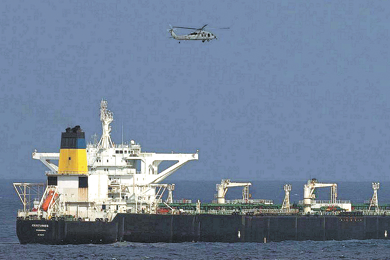
    The vessel in question has been identified by maritime authorities as the Bella 1, an oil tanker that has been subject to American sanctions since 2024 due to its purported connections with Iran and Hezbollah. The US official, who requested anonymity, characterized the ship as operating under a false flag while being part of Venezuela’s “illegal sanctions evasion” network and subject to a judicial seizure order.

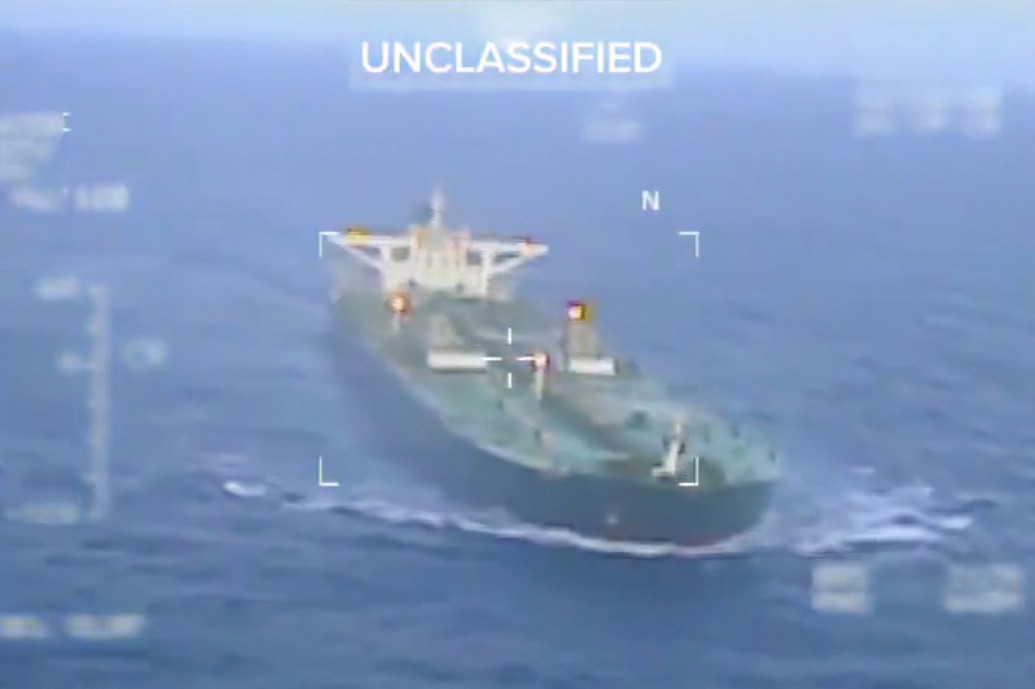
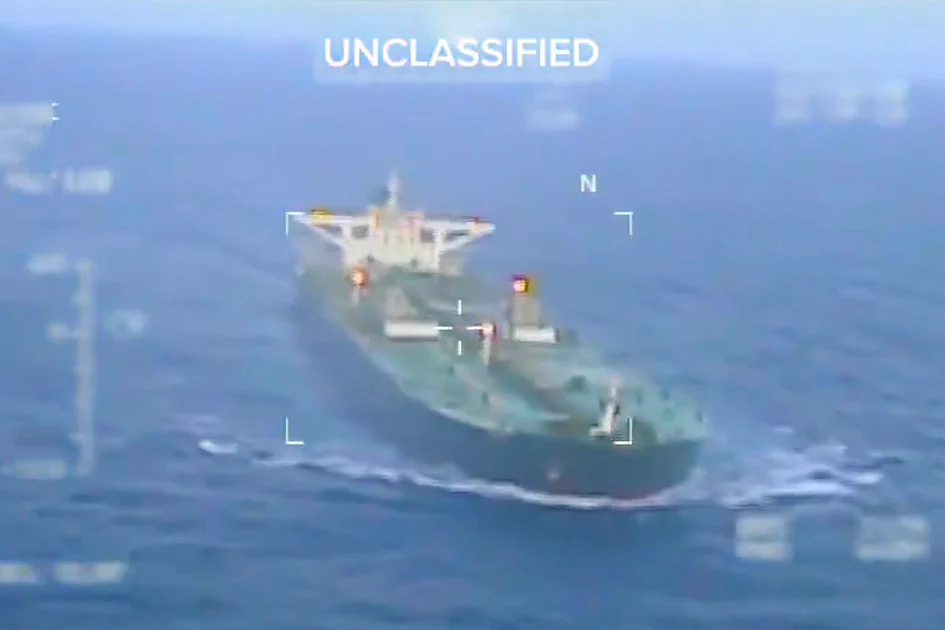
    This maritime operation follows the dramatic seizure of the Chinese-owned, Panama-flagged tanker Centuries just one day earlier. According to TankerTrackers, a specialized vessel monitoring service, the Centuries had loaded approximately 1.8 million barrels of crude oil at a Venezuelan port earlier this month before being intercepted and escorted beyond Venezuela’s exclusive economic zone on December 18.

    The current pursuit marks the third such intervention within a two-week period, demonstrating the implementation of President Donald Trump’s December 16 announcement establishing a blockade against “sanctioned oil vessels” traveling to and from Venezuela. The administration maintains that these measures are necessary to recover allegedly stolen US assets from the oil-rich South American nation.

    Meanwhile, Venezuelan Vice President Delcy Rodriguez addressed the situation through social media channels, highlighting that American petroleum giant Chevron had simultaneously dispatched a tanker carrying Venezuelan crude to the United States. Rodriguez emphasized that this shipment occurred “in strict adherence to regulations and in fulfillment of the commitments undertaken by our oil industry,” while notably avoiding direct commentary on the interdicted vessels.

    The geopolitical tension is further compounded by the deployment of a substantial US naval armada to the Caribbean under the stated mission of combating drug trafficking—a justification that Caracas dismisses as pretext for a campaign to overthrow President Nicolas Maduro and gain control over Venezuela’s substantial oil reserves.

    The Trump administration alleges that Venezuela utilizes its primary resource, petroleum, to finance “narcoterrorism,” prompting additional military actions including a series of airstrikes against suspected drug trafficking vessels since September. These operations, which have resulted in over 100 fatalities, have faced scrutiny regarding their legal justification under international law.

  • Critically endangered ‘camel bird’ returns to Saudi Arabia after almost 100 years

    Critically endangered ‘camel bird’ returns to Saudi Arabia after almost 100 years

    In a landmark conservation achievement, the Prince Mohammed bin Salman Royal Reserve has successfully reintroduced the critically endangered red-necked ostrich to Saudi Arabia’s deserts after nearly a century of absence. This ambitious initiative represents a biological replacement for the extinct Arabian ostrich, which vanished from the region in the early 20th century due to excessive hunting and habitat destruction.

    The red-necked ostrich (Struthio camelus camelus), known historically as the ‘camel bird’ and genetically identified as the closest living relative to the Arabian subspecies, has been carefully selected for its remarkable adaptability to arid environments. With fewer than 1,000 individuals remaining worldwide—primarily scattered across Africa’s Sahel region—this reintroduction marks a critical intervention for the species’ survival.

    This project forms part of a comprehensive ecosystem restoration strategy that has already reintroduced 12 of 23 historically occurring species, including the Arabian oryx, Persian onager, and various gazelle species. The 24,500 square kilometer reserve, spanning from the Harrat lava fields to the Red Sea, represents one of the Middle East’s most biodiverse protected areas, encompassing 15 distinct ecosystems while hosting over 50% of Saudi Arabia’s documented species.

    The reintroduction program aligns with Saudi Arabia’s Vision 2030 and the Saudi Green Initiative, which commit to protecting 30% of the Kingdom’s terrestrial and marine territories by 2030. The royal reserve system, established by royal decree and overseen by Crown Prince Mohammed bin Salman, represents a significant national investment in environmental stewardship and biodiversity conservation.

    Ostriches serve as essential ecosystem engineers, contributing to seed dispersal, insect population control, and maintaining healthy rangeland habitats. Their return promises to restore ecological functions lost with the extinction of the Arabian ostrich, while reviving cultural connections to a species celebrated in ancient Arabic poetry and depicted in sandstone petroglyphs throughout the region.

  • Israel demolishes residential building in east Jerusalem

    Israel demolishes residential building in east Jerusalem

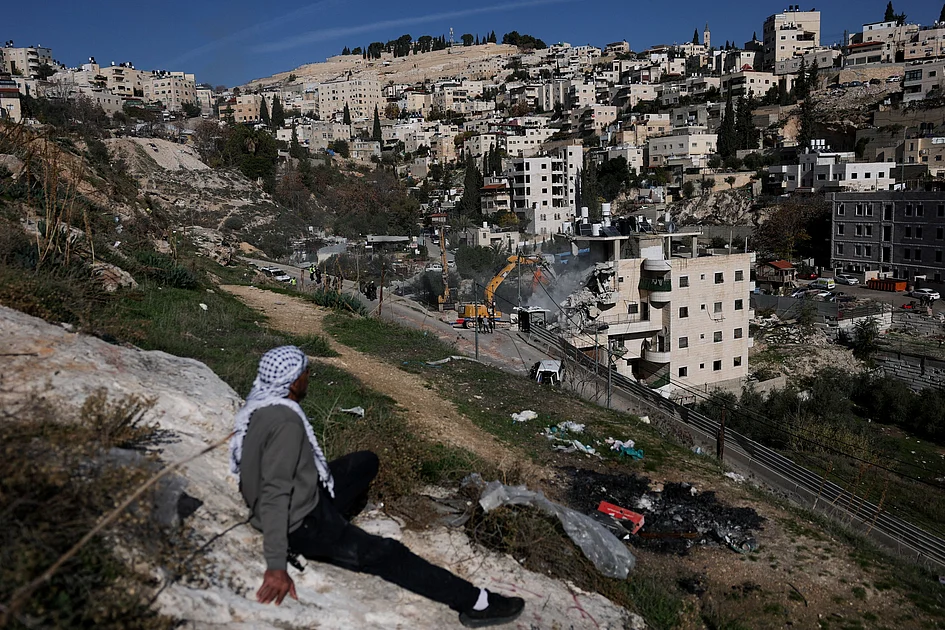
    Israeli authorities executed a significant demolition operation in East Jerusalem’s Silwan neighborhood on Monday, leveling a four-story residential structure that housed approximately 100 Palestinian residents. The pre-dawn operation, described by human rights organizations as the largest single demolition in the area this year, resulted in the displacement of numerous families, including women, children, and elderly residents.

    According to eyewitness accounts, Israeli security forces entered the building while occupants were sleeping, allowing them only minimal time to gather essential documents and clothing before bulldozers commenced demolition. The scene unfolded with personal belongings scattered across adjacent streets as three heavy machinery units systematically dismantled the structure under heavy police cordon.

    The Jerusalem Municipality justified the action citing a 2014 court order that designated the land for recreational and sports purposes rather than residential use. Officials maintained the demolition addressed illegal construction in accordance with urban planning regulations.

    However, Palestinian activists and human rights groups presented a contrasting narrative. The Jerusalem Governorate, affiliated with the Palestinian Authority, characterized the demolition as part of a systematic policy to forcibly displace Palestinian residents and alter the demographic composition of the city. Israeli organizations Ir Amim and Bimkom revealed that the demolition proceeded without prior notice, despite a scheduled meeting to discuss potential legalization measures for the structure.

    The incident highlights the ongoing tensions surrounding Jerusalem’s status, particularly in neighborhoods like Silwan where hundreds of Israeli settlers live among approximately 50,000 Palestinians. Palestinians face severe restrictions in obtaining construction permits through Israel’s planning system, creating a housing crisis that has persisted since Israel’s annexation of East Jerusalem following the 1967 Arab-Israeli war. This latest demolition brings the total to approximately 100 East Jerusalem families displaced through such operations in 2025 alone.

  • Moscow car blast kills Russian general hours after US talks

    Moscow car blast kills Russian general hours after US talks

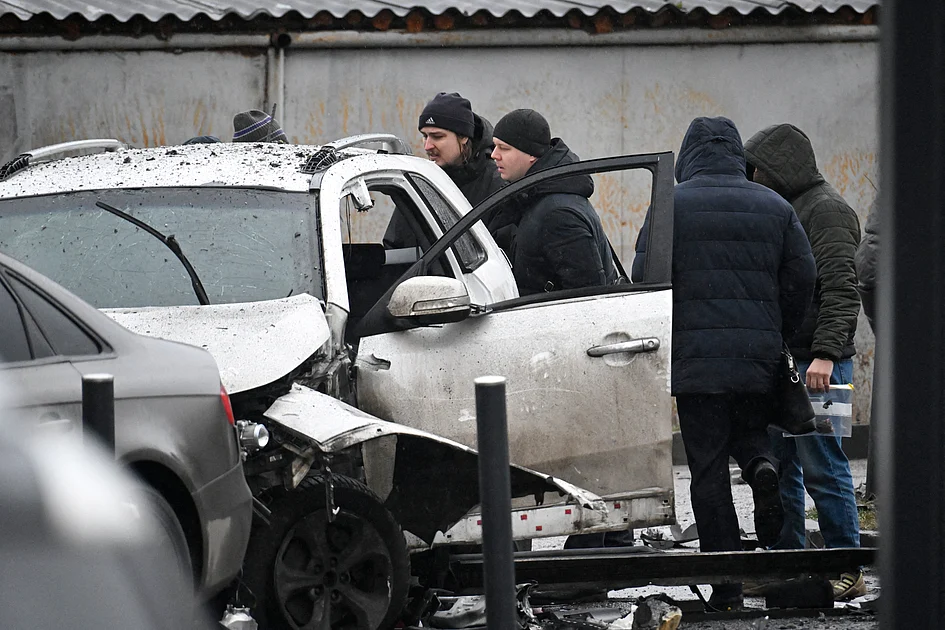
    A targeted car bombing in southern Moscow has claimed the life of Lieutenant General Fanil Sarvarov, a high-ranking Russian military official, intensifying geopolitical tensions amidst ongoing diplomatic efforts to resolve the Ukraine conflict. The 56-year-old head of the Russian General Staff’s training department was killed instantly when an explosive device planted beneath his parked Kia SUV detonated on Monday morning.

    Eyewitnesses reported a powerful explosion that rattled windows in the residential neighborhood where the attack occurred. AFP correspondents at the scene documented a severely mangled vehicle with its doors and rear window blown out, the frame twisted and charred from the blast impact. Security forces immediately cordoned off the area as investigators began forensic examination of the debris.

    The assassination bears striking resemblance to previous attacks on Russian military figures that have been either claimed by or attributed to Ukrainian special operations. Russia’s Investigative Committee confirmed it is examining potential involvement of Ukrainian special services in organizing the lethal attack.

    General Sarvarov possessed extensive combat experience, having participated in Russia’s North Caucasus campaigns during the 1990s Chechnya conflict and commanded Russian forces in Syria from 2015-2016. His death represents the latest in a series of high-profile assassinations targeting Russian military leadership, including the April 2024 killing of General Yaroslav Moskalik and the December 2024 bombing that killed chemical weapons chief Igor Kirillov.

    The assassination occurred against the backdrop of intensified diplomatic engagements, with Russian and Ukrainian delegates having concluded separate negotiations with US mediators in Miami just hours before the attack. Both sides described the talks, which included US special envoy Steve Witkoff and presidential advisor Jared Kushner, as ‘productive and constructive’ despite significant ongoing disagreements regarding territorial concessions in eastern Ukraine’s Donbas region.

    The Kremlin confirmed President Putin has been briefed on the assassination, which threatens to undermine fragile diplomatic progress. Ukrainian officials maintained their standard policy of not commenting on operations within Russian territory, while the Kremlin simultaneously denied US intelligence assessments suggesting expansionist ambitions beyond Ukraine’s eastern regions.

  • The killing of a general in Moscow follows a series of assassinations Russia blames on Ukraine

    The killing of a general in Moscow follows a series of assassinations Russia blames on Ukraine

    Moscow has leveled accusations against Kyiv for conducting a systematic campaign of targeted killings against prominent Russian figures since the onset of the full-scale invasion nearly four years ago. While Ukrainian officials have frequently employed strategic ambiguity—sometimes hinting at involvement, denying responsibility, or offering detailed accounts without formal acknowledgment—this pattern of attacks represents a significant dimension of the ongoing conflict.

    The most recent incident occurred on Monday with the assassination of Lt. Gen. Fanil Sarvarov via a car bomb in Moscow. Russian investigators are currently probing potential Ukrainian involvement, though Kyiv has yet to issue an official statement.

    A review of major incidents blamed on Ukraine includes:

    • **Lt. Gen. Igor Kirillov** (Dec. 2024): Head of Russia’s nuclear, biological, and chemical protection forces, killed alongside his assistant by a scooter bomb outside a Moscow apartment. Ukraine’s Security Service (SBU) had charged him in absentia just prior to the attack and later claimed responsibility. An Uzbek national was arrested for carrying out the operation.

    • **Lt. Gen. Yaroslav Moskalik** (Apr. 2025): A high-ranking General Staff official killed by an under-car bomb near his residence outside Moscow. President Zelenskyy indirectly referenced the ‘elimination’ of Russian command personnel, and a Russian suspect confessed to being paid by Ukrainian security services.

    • **Stanislav Rzhitsky** (Jul. 2023): A former submarine commander linked to missile strikes on Vinnytsia was shot dead while jogging in Krasnodar. While Ukraine’s military intelligence directorate denied involvement, it released precise operational details. A dual citizen was later convicted.

    • **Zakhar Prilepin** (May 2023): The nationalist writer survived a car bombing that killed his driver. A Ukrainian was sentenced to life imprisonment by Russian courts. SBU chief Vasyl Maliuk declined formal responsibility but revealed specific knowledge of Prilepin’s injuries.

    • **Vladlen Tatarsky** (Apr. 2023): A pro-war military blogger was assassinated by an explosive statue presented to him in a St. Petersburg cafe. The perpetrator received a 27-year sentence while claiming ignorance of the bomb. Maliuk described Tatarsky as having ‘paid a karmic price.’

    • **Illia Kyva** (Dec. 2023): The defected Ukrainian lawmaker was found shot dead near Moscow after being convicted of treason in absentia. Ukrainian intelligence warned that ‘the same fate will befall other traitors.’

    • **Darya Dugina** (Aug. 2022): Killed by a car bomb likely intended for her father, philosopher Alexander Dugin. Ukraine explicitly denied responsibility, while Russia’s FSB identified Ukrainian suspects who had allegedly fled abroad.

    This series of incidents illustrates Ukraine’s alleged extraterritorial operations against military leadership, propagandists, and defectors, representing a shadow war within the broader conflict.

  • Ukraine strikes oil terminal, planes and ships in an array of strikes inside Russia

    Ukraine strikes oil terminal, planes and ships in an array of strikes inside Russia

    KYIV, Ukraine — Ukrainian forces have executed a coordinated series of precision strikes targeting critical Russian military and energy infrastructure, marking a significant escalation in tactics aimed at disrupting Moscow’s war capabilities. The multi-pronged offensive, confirmed by officials on Monday, demonstrates Kyiv’s growing capacity to project force deep into Russian territory and occupied regions.

    The strategic operations damaged a vital oil terminal operated by Tamanneftegaz, severed pipeline connections, destroyed two docked naval vessels in the Krasnodar region, and ignited substantial fires at energy facilities. Simultaneously, Ukrainian partisans successfully destroyed two Russian jet fighters at an airbase near Lipetsk in western Russia through covert operations.

    According to Ukraine’s General Staff, additional strikes targeted ammunition depots, drone launch sites, and a temporary base for Russia’s 92nd River Boat Brigade in occupied Crimea. These calculated attacks represent a deliberate shift in Ukrainian military strategy toward undermining Russia’s logistical chain and challenging the perception of Moscow’s operational security.

    Military analysts indicate these operations serve dual purposes: physically disrupting Russia’s war machinery through destruction of energy infrastructure and military assets, while psychologically challenging President Vladimir Putin’s narrative of Russian military dominance amid ongoing peace negotiations. The strikes occur as Ukrainian forces face increasing pressure along the front lines against Russia’s numerically superior army.

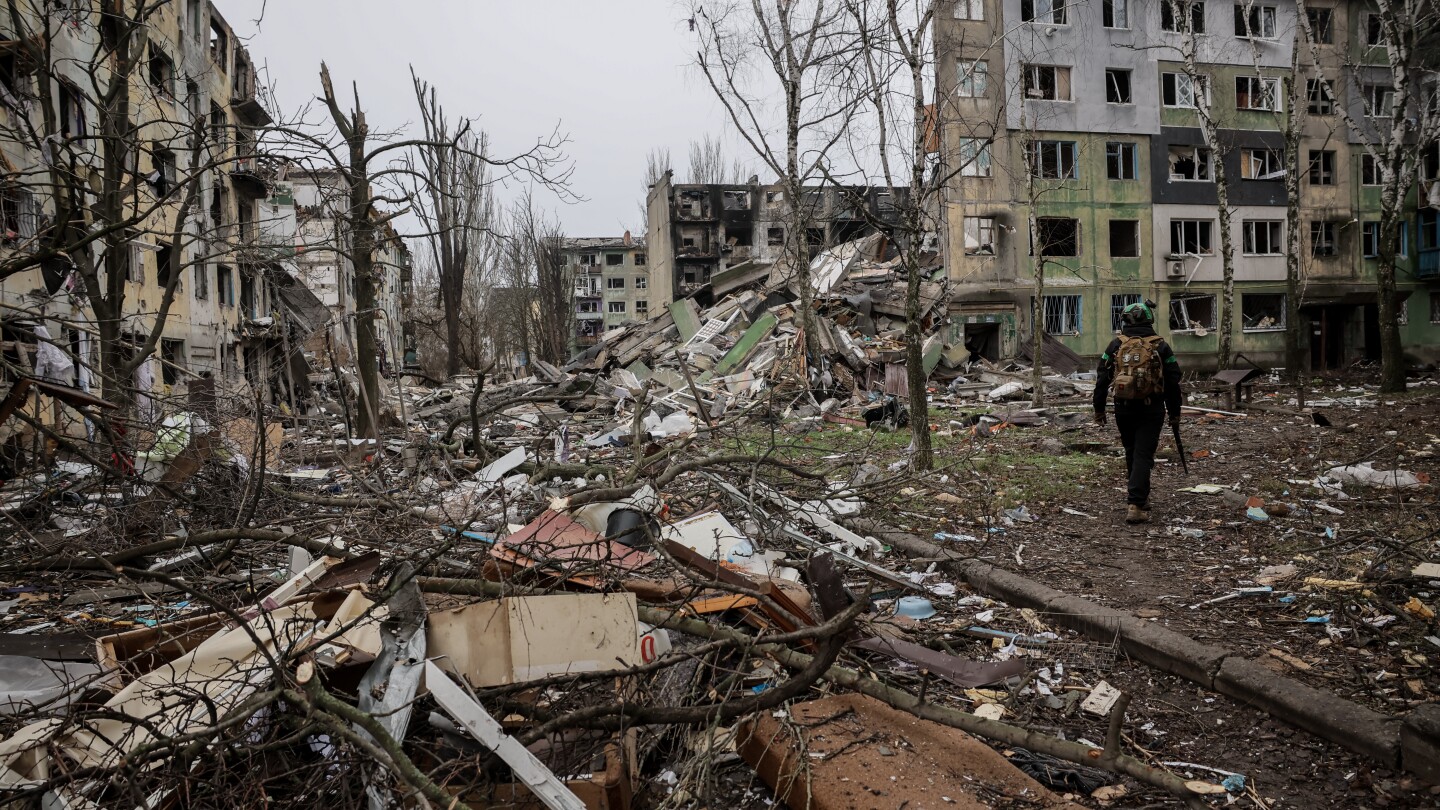
    Meanwhile, Russian forces continued their systematic targeting of Ukraine’s energy infrastructure, launching 86 drones overnight in what Kyiv describes as Moscow’s strategy of ‘weaponizing winter’ against civilian populations. Ukrainian air defenses reported intercepting 58 of the incoming drones, though energy facilities across five regions sustained damage.

    The escalation comes as U.S.-led diplomatic efforts continue seeking breakthroughs in the nearly four-year conflict, with both sides demonstrating capabilities to strike deep behind conventional front lines.

  • Japan’s Niigata OKs restart of world’s largest nuclear power plant years after nuclear disaster

    Japan’s Niigata OKs restart of world’s largest nuclear power plant years after nuclear disaster

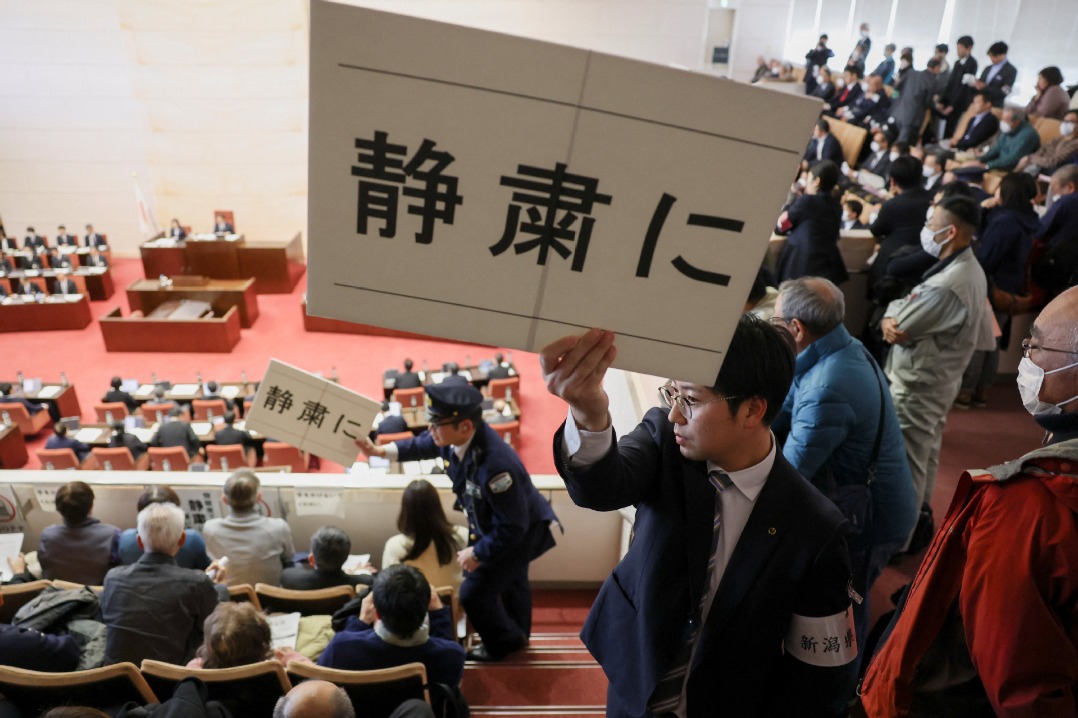
    In a landmark decision signaling Japan’s strategic return to nuclear energy, Niigata Prefecture has granted official approval for the restart of Kashiwazaki-Kariwa Nuclear Power Plant—the world’s largest nuclear facility by generating capacity. This pivotal endorsement comes more than a decade after the 2011 Fukushima Daiichi nuclear disaster that prompted nationwide reactor shutdowns and profound energy policy reevaluations.

    The Kashiwazaki-Kariwa facility, operated by Tokyo Electric Power Company (TEPCO), boasts seven reactors with combined capacity exceeding 8,200 megawatts. Its reactivation represents a critical component of Japan’s strategy to enhance energy security, reduce fossil fuel imports, and meet carbon emission targets. The approval follows extensive safety upgrades and regulatory assessments conducted under Japan’s reinforced nuclear safety standards established post-Fukushima.

    Local authorities emphasized that the restart consent came after thorough consultations with regional stakeholders and implementation of enhanced emergency preparedness measures. The decision reflects growing public acceptance of nuclear power as Japan confronts energy supply challenges and rising electricity costs. However, some community members and activists continue to express reservations about safety protocols and radioactive waste management.

    This development positions Japan to significantly decrease its reliance on imported liquefied natural gas and coal, potentially reshaping regional energy dynamics. The restart process will involve gradual commissioning of reactors following final technical verifications, with initial power generation anticipated within the coming year.

  • Indonesia: At least 16 killed in bus crash; 34 people evacuated

    Indonesia: At least 16 killed in bus crash; 34 people evacuated

    A devastating bus crash on an Indonesian highway has resulted in significant casualties, with at least 16 fatalities confirmed by rescue authorities. The tragic incident occurred during the early hours of Monday when the intercity coach, traveling from Jakarta to Yogyakarta, lost control while navigating a curve at a highway interchange.

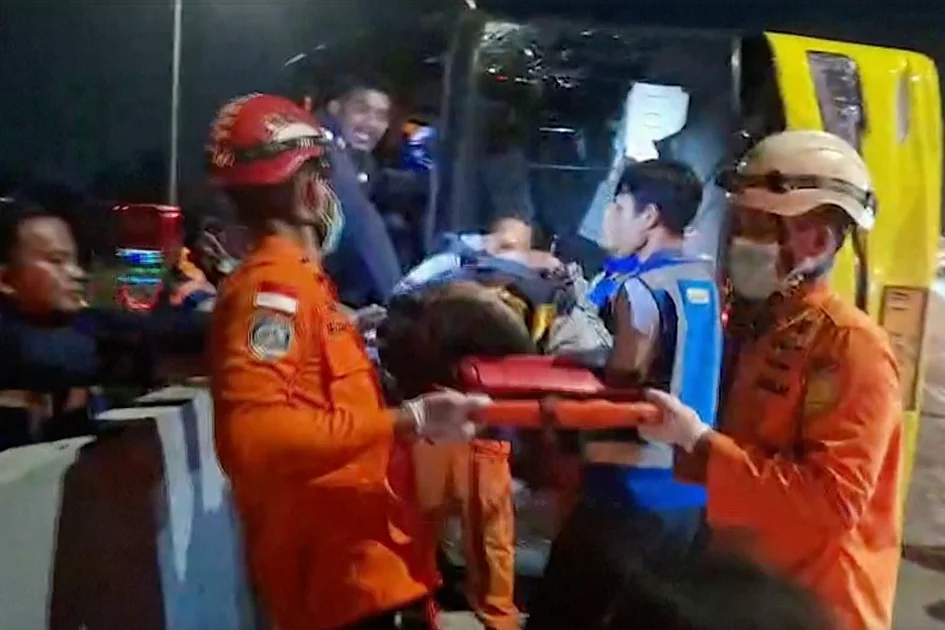
    According to Budiono, head of the local search and rescue agency, the vehicle was moving at considerable speed when it collided with a road barrier, causing it to overturn completely. Emergency response teams successfully evacuated 34 survivors from the wreckage, with 15 individuals pronounced dead at the scene and one additional victim succumbing to injuries while receiving medical treatment.

    Multiple injured passengers have been transported to medical facilities in Semarang for urgent care. Distressing footage released by rescue officials shows emergency personnel carefully removing victims from the overturned bus and preparing remains for transportation.

    This tragedy highlights Indonesia’s ongoing challenges with transportation safety. The Southeast Asian archipelago nation consistently experiences such incidents due to aging vehicle fleets, inadequate maintenance protocols, and frequent disregard for traffic regulations. The accident follows similar previous tragedies, including a 2024 Eid al-Fitr celebration journey that claimed 12 lives and a 2019 Sumatran bus plunge that killed 35 people, underscoring systemic transportation safety issues that continue to plague the nation’s infrastructure.

  • US pursues 3rd tanker off Venezuelan coast

    US pursues 3rd tanker off Venezuelan coast

    Tensions escalated dramatically in the Caribbean Sea as United States Coast Guard vessels initiated pursuit of a third sanctioned oil tanker in international waters off Venezuela’s coast on Sunday evening. This latest maritime intervention represents the most aggressive enforcement action to date in Washington’s ongoing campaign against Caracas.

    According to an unnamed US official, the targeted vessel constitutes part of Venezuela’s ‘sanctioned dark fleet’ allegedly engaged in illegal sanctions evasion operations. ‘It is flying a false flag and under a judicial seizure order,’ the official stated, justifying the interception under US judicial authority.

    The operation follows two previous tanker seizures this month—the first on December 10th and another on Saturday—with all three vessels allegedly transporting oil subject to American sanctions. Homeland Security Secretary Kristi Noem declared the US would persist in pursuing ‘illicit movement of sanctioned oil that funds narco-terrorism,’ vowing that authorities would ‘find you and stop you.’

    Venezuela’s government issued scathing condemnation, labeling the interceptions ‘blatant theft and acts of international piracy’ in an official statement. Caracas specifically denounced the ‘enforced disappearance’ of crew members and warned that these actions ‘would not go unpunished.’

    The escalating maritime confrontations occur alongside substantial US military buildup in the region, including 15,000 personnel and eleven warships—among them the nuclear-powered aircraft carrier USS Gerald R Ford—creating what President Trump described as ‘the largest Armada ever assembled in South American history.’

    While Trump declined to explicitly state whether regime change represents his objective, he remarked that Venezuelan leader Nicolas Maduro ‘knows exactly what I want.’ The president previously ordered a comprehensive blockade against sanctioned tankers traveling to or from Venezuela.

    International concern mounted as Brazilian President Luiz Inacio Lula da Silva warned that armed intervention would create ‘a humanitarian catastrophe for the hemisphere and a dangerous precedent for the world.’ Regional organizations and Latin American nations have urged United Nations intervention and diplomatic resolution.

    The geopolitical confrontation centers on Venezuela’s vast energy resources, including the world’s largest proven oil reserves. The first two seized tankers carried approximately one million barrels each, while numerous additional vessels remain anchored offshore, uncertain whether to risk seizure by attempting transit.

    In parallel developments, US military operations have reportedly sunk 28 vessels since September in Caribbean and eastern Pacific waters, with authorities claiming they transported narcotics—actions resulting in over 100 fatalities.

  • Venezuela denounces 2nd oil tanker seizure

    Venezuela denounces 2nd oil tanker seizure

    Venezuela has issued a formal condemnation following the second seizure of an oil tanker by United States military forces in the southern Caribbean within recent weeks. The incident occurred in international waters on Saturday, December 20th, escalating already heightened tensions between the two nations.

    According to Venezuelan government statements, US Coast Guard personnel supported by Department of War assets conducted a pre-dawn operation to apprehend a private vessel transporting Venezuelan oil. The action resulted in what Caracas described as the ‘forced disappearance’ of the ship’s crew alongside what it characterized as a criminal act of maritime theft.

    US Secretary of Homeland Security Kristi Noem confirmed the seizure through social media platform X, posting an unclassified video showing US helicopter personnel boarding a vessel identified as ‘Centuries’ off the Venezuelan coast. The operation aligns with President Donald Trump’s Tuesday announcement implementing a total blockade against US-sanctioned oil tankers traveling to and from Venezuela, with subsequent interviews confirming intentions to continue seizing additional vessels.

    Venezuelan authorities have denounced the actions as violations of international law and fundamental principles of maritime navigation freedom, vowing to pursue legal recourse through United Nations channels. This latest seizure follows a similar incident on December 10th, which Venezuela previously condemned as ‘blatant theft and international piracy.’

    The escalating maritime confrontations occur alongside a significant US military buildup in the region, described as the largest in generations. Associated Press reports indicate at least 104 fatalities across 28 known strikes since early September, though these operations face growing scrutiny from US lawmakers and human rights advocates questioning evidence standards and alleging extrajudicial killings.

    International voices have expressed concern over the deteriorating situation. Brazilian President Luiz Inacio Lula da Silva warned that armed intervention in Venezuela would create ‘a humanitarian catastrophe’ for the region while establishing dangerous global precedents. Similarly, Cuban Foreign Minister Bruno Rodriguez Parrilla criticized recent US designation of Venezuela’s government as a ‘foreign terrorist organization’ as politically motivated.