分类: world

  • Thailand bombs Cambodian border area as ceasefire talks continue

    Thailand bombs Cambodian border area as ceasefire talks continue

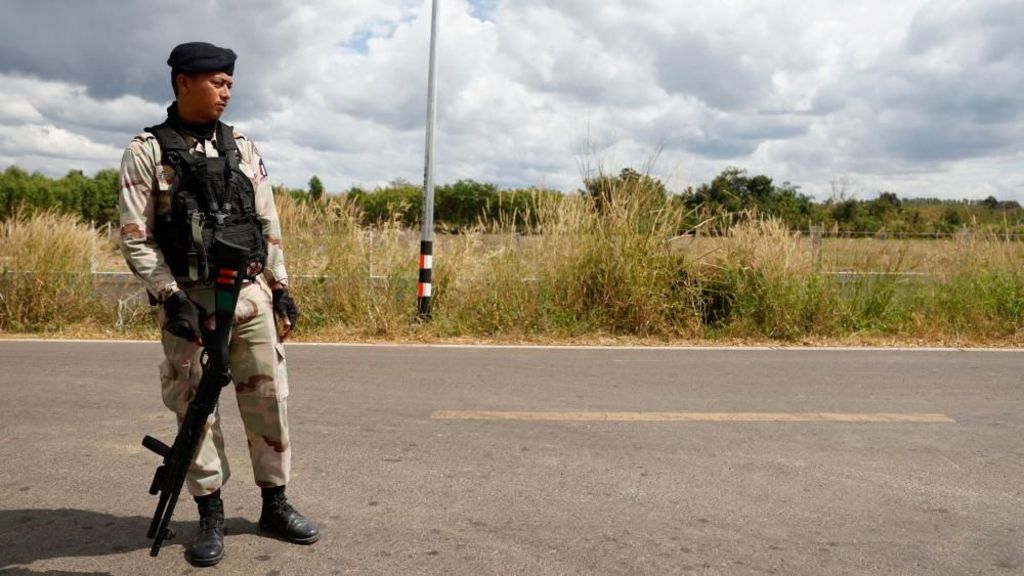
    Escalating hostilities between Thailand and Cambodia have intensified with Thailand’s recent aerial bombardment of disputed border territories, despite ongoing diplomatic efforts to broker peace. The Thai Air Force confirmed targeting what it described as a Cambodian fortified military installation in northwestern Banteay Meanchey province, asserting the operation was executed with precision after civilian evacuations.

    Cambodia’s Defense Ministry presented a contradictory narrative, accusing Thai F-16 fighter jets of deploying approximately 40 munitions in indiscriminate attacks that damaged civilian infrastructure and caused multiple casualties. This latest eruption of violence follows the collapse of a fragile July ceasefire that had temporarily halted five days of intense combat.

    The human toll has reached alarming proportions, with official reports indicating at least 41 fatalities and nearly one million residents displaced since hostilities recommenced earlier this month. Military engagements have now expanded across nearly the entire 500-mile (800km) contested border region.

    Diplomatic channels remain actively pursued as defense ministers from both nations prepare to join third-day negotiations at a border checkpoint. Thai Prime Minister Anutin Charnvirakul expressed cautious optimism about finalizing a new ceasefire agreement, stating, ‘I hope this time will be the last one we’d have to sign, so that peace can occur in the area and people can return to their homes.’

    International powers including the United States and China have engaged in mediation attempts to de-escalate tensions. The current conflict represents the latest chapter in a century-old territorial dispute that has periodically erupted into violence, with a significant escalation occurring in May following a Cambodian soldier’s death and intensifying dramatically in late July with reciprocal artillery barrages and airstrikes.

  • 10 dead, 32 injured in Mexico bus crash on Christmas Eve

    10 dead, 32 injured in Mexico bus crash on Christmas Eve

    A devastating bus accident in eastern Mexico has resulted in significant casualties during the holiday season, with local authorities confirming ten fatalities and thirty-two injuries. The tragic incident occurred on December 24th in Zontecomatlan, a municipality within Veracruz state, as the vehicle transported passengers from Mexico City to the destination of Chicontepec.

    According to official statements from the Zontecomatlan mayor’s office, the victims included nine adults and one child. Municipal authorities have publicly released a comprehensive list of injured individuals alongside the medical facilities where they are currently receiving treatment.

    This Christmas Eve tragedy highlights Mexico’s ongoing challenges with road safety, particularly involving commercial passenger vehicles. Such fatal incidents frequently occur throughout the country’s transportation network, with common contributing factors including excessive speed and vehicle mechanical deficiencies.

    The Veracruz accident represents the second major bus catastrophe in Mexico within recent weeks. In late November, a similar collision in Michoacán state, located in western Mexico, resulted in ten fatalities and twenty injuries, indicating a concerning pattern of transportation safety issues affecting the nation.

  • US launches strike against Daesh militants in northwest Nigeria

    US launches strike against Daesh militants in northwest Nigeria

    In a significant military operation authorized by President Donald Trump, United States forces executed a targeted strike against ISIS-affiliated militants in Nigeria’s northwestern Sokoto state on Christmas Day. The operation, conducted at the formal request of the Nigerian government, represents a notable escalation in US security cooperation with the West African nation.

    President Trump announced the operation via his Truth Social platform, characterizing it as a ‘powerful and deadly strike against ISIS Terrorist Scum’ who he claimed had been ‘viciously killing primarily innocent Christians at levels not seen for many years.’ The operation comes after months of heightened US intelligence gathering, including surveillance flights over Nigerian territory since late November.

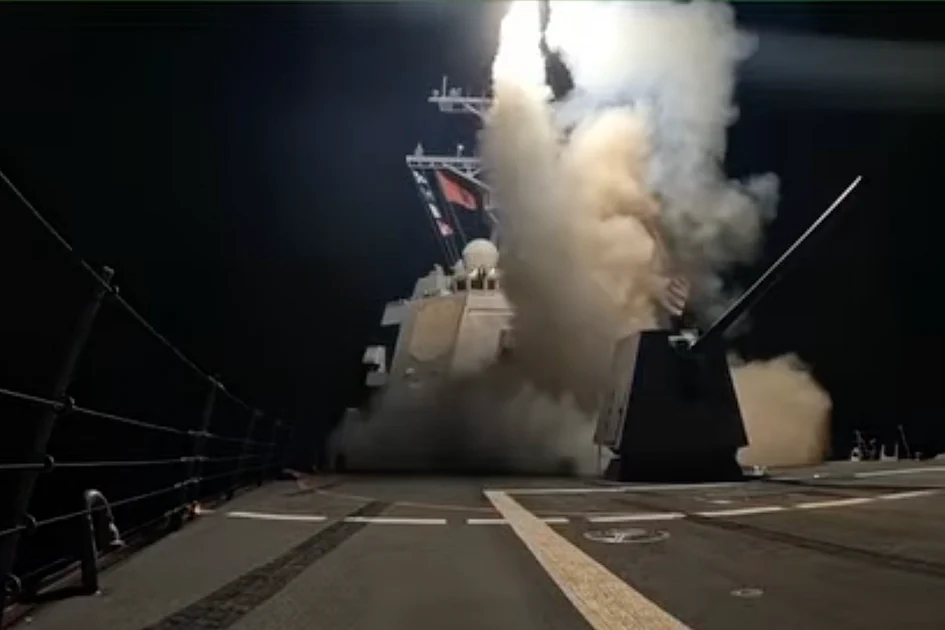
    US Africa Command confirmed the strike eliminated multiple ISIS militants at known terrorist camps. Pentagon-released footage indicated the involvement of naval assets, showing at least one projectile launched from a warship. Defense Secretary Pete Hegseth publicly thanked Nigerian authorities for their cooperation, hinting at potential future operations with the statement ‘More to come…’

    Nigeria’s Foreign Ministry characterized the operation as part of ongoing security collaboration with the United States, emphasizing intelligence sharing and strategic coordination against militant groups. However, the Nigerian government maintains a more nuanced position regarding religious violence, stating that armed groups target both Muslim and Christian communities and that US claims of Christian persecution oversimplify the complex security situation.

    The strike occurs against a backdrop of escalating violence in the region, including a suspected suicide bombing in northeast Nigeria that killed five people and injured 35 others on the same day. President Bola Ahmed Tinubu used his Christmas message to call for religious harmony while reaffirming his commitment to protecting all Nigerians from violence.

    This operation follows similar large-scale US strikes against ISIS targets in Syria earlier in December, demonstrating the Trump administration’s continued willingness to employ military force against terrorist organizations globally.

  • All hail the Panama Canal, a frontline in the US-China trade war

    All hail the Panama Canal, a frontline in the US-China trade war

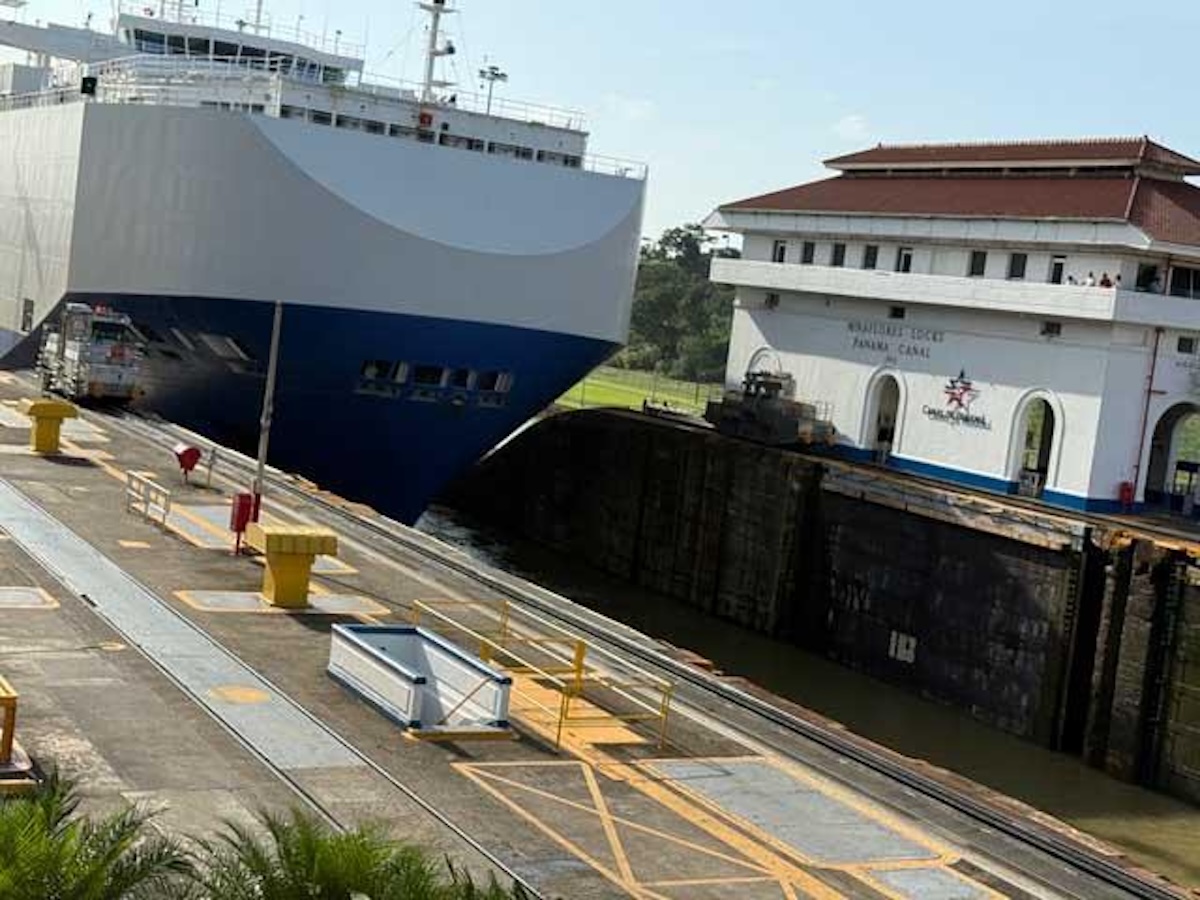
    For American farmers and retailers, the Panama Canal operates like atmospheric oxygen—largely unnoticed until suddenly absent. This reality struck hard in 2023 when severe drought conditions dramatically lowered water levels, creating unprecedented disruptions for global shipping. Vessels carrying critical agricultural exports from the United States found passage impossible, forcing costly reroutes and depressing farm-gate prices. Approximately 25-30% of U.S. grain exports typically traverse this vital waterway, yet during the drought period, virtually none could pass.

    The recent return of rainfall has restored normal operations, once again rendering the canal’s monumental importance invisible to daily commerce. This oversight extends beyond economic functionality to historical significance—the canal represents one of humanity’s most extraordinary engineering achievements, constructed through what can only be described as herculean effort.

    The French initially attempted construction for two decades, suffering catastrophic losses of approximately 20,000 lives before abandoning the project. The United States subsequently undertook the endeavor between 1904-1914, completing it ahead of schedule and under budget despite staggering challenges: 232 million cubic yards of excavation, construction of gravity-operated lock systems that lift ships 85 feet above sea level, and creation of the world’s largest earthen dam at that time.

    Critical to American success was Dr. William Gorgas’s eradication of yellow fever and control of malaria, alongside the organizational genius of Major General George Washington Goethals. The project cost $352 million (approximately $10.8 billion today) and claimed 5,600 lives, predominantly Caribbean workers—a tragic but dramatically improved safety record compared to the French effort.

    The canal’s history intertwines with nation-building—the U.S. facilitated Panama’s independence from Colombia when negotiations stalled—and continues to generate geopolitical tension. Recent controversies have emerged regarding ownership of port facilities at both canal termini, currently held by a Hong Kong-based company. Former President Trump’s comments about ‘taking the canal back’ and China’s demand for 51% ownership in bidding companies highlight how this engineering marvel remains strategically relevant in contemporary superpower relations.

    While businesses may take the canal’s operations for granted, its historical significance and ongoing geopolitical importance ensure it remains firmly in the consciousness of world powers. The original lock systems, still operational today, stand as testament to one of history’s most ambitious and successful infrastructure projects.

  • As Bethlehem lights up again, Palestinian-American Christians reflect on Christmas

    As Bethlehem lights up again, Palestinian-American Christians reflect on Christmas

    In the occupied West Bank city of Bethlehem, the traditional birthplace of Jesus Christ, Palestinian Christians are experiencing a Christmas season marked by fragile relief and profound contradictions. Following the implementation of a US-brokered ceasefire in Gaza on October 10th, 2025, the city has reactivated its Christmas illuminations and restored some public celebrations after previous years of solemn observances.

    The temporary truce has provided Palestinians with limited respite from continuous aerial bombardments and the crippling blockade that restricted essential supplies. However, this reprieve remains tenuous—according to Gaza’s Government Media Office, Israeli forces have committed nearly 1,000 violations since the ceasefire began.

    Reverend Munther Isaac of Bethlehem’s Evangelical Lutheran Christmas Church, who two years ago proclaimed that “Christ is under the rubble” alongside a nativity scene depicting Jesus swaddled in a Palestinian keffiyeh amid debris, now observes families continuing to emigrate due to deteriorating conditions. “We say goodbye to another family every other week or so,” Isaac noted, highlighting how persistent settler attacks and occupation policies undermine dignified existence in their homeland.

    The symbolic dimension of this Christmas has drawn international attention. The U.S. Embassy in Jerusalem recently shared a video featuring Ambassador Mike Huckabee—a known Christian Zionist who has previously denied Palestinian existence—walking through Bethlehem’s streets while promising American support for worship rights. This gesture appears deeply ironic to many Palestinian Christians, given that 3% of Gaza’s Christian community has been killed in Israeli attacks since October 2023.

    Palestinian-American Christians across the United States have articulated their complex perspectives on this paradoxical season. Lydia el-Sayegh of Atlanta reflects that Christmas represents “hope coming in darkness,” drawing parallels between Jesus’ family as refugees and contemporary Palestinian experiences. Philip Farah from Virginia expresses alienation from mainstream churches that avoid controversy, while Tariq Habash in Washington DC describes Christmas as arriving “heavy with contradiction”—celebrating Christ’s birth while children remain trapped under siege.

    In practical terms, the occupation continues to intrude upon religious observance. Khalil Jahshan reports that family in Gaza still hear gunfire and drones during celebrations, while Israeli police disrupted Christmas parades in Nazareth and Haifa—where Santa Claus was reportedly arrested. Daniel Bannoura, a theologian in Indiana, notes that despite surface-level normalcy with decorations, land confiscation and settlement expansion around Beit Sahour create underlying despair.

    The consensus among Palestinian Christians suggests that while the ceasefire has brought physical breathing room, it has failed to address fundamental injustices or create meaningful conditions for peace, leaving the community navigating a complex landscape of measured hope amid ongoing oppression.

  • Saudi Arabia: 5-year jail, 10 million riyal fine for importing, making fake pesticides

    Saudi Arabia: 5-year jail, 10 million riyal fine for importing, making fake pesticides

    Saudi Arabia has unveiled stringent legislative amendments targeting the manufacturing and importation of prohibited or counterfeit pesticides, introducing penalties among the most severe globally for agricultural violations. The Kingdom’s Ministry of Environment, Water and Agriculture has advanced a proposal to overhaul penalty provisions within the Gulf Cooperation Council’s Pesticides Law framework.

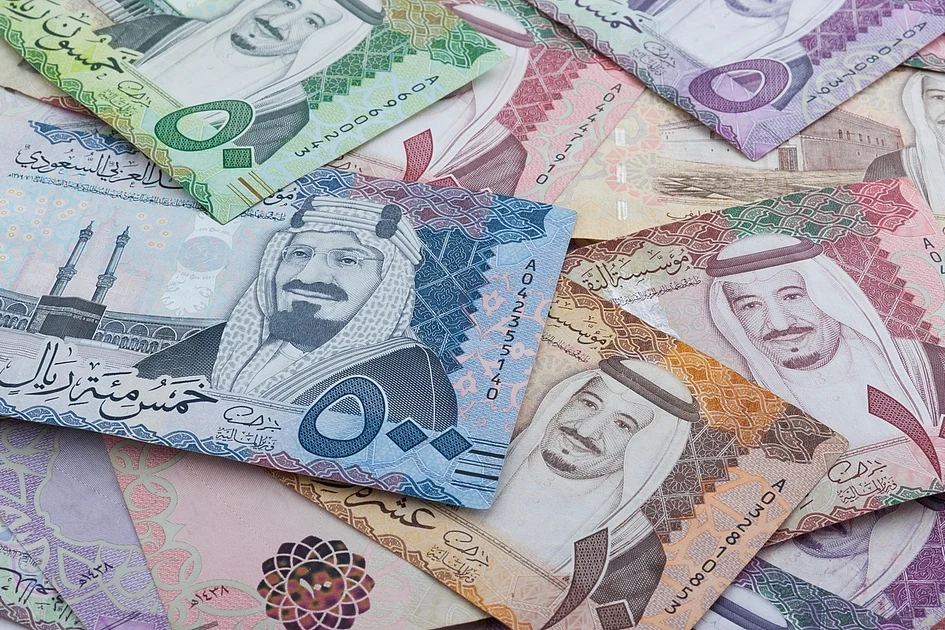
    Under the proposed regulations, violators face imprisonment for up to five years and financial penalties reaching 10 million Saudi riyals (approximately $2.67 million). The Public Prosecution retains authority to double these sanctions for repeat offenses occurring within a three-year timeframe.

    The legislative framework incorporates a tiered enforcement approach. Initial violations that cause no demonstrable harm to human health, animal welfare, plant life, or environmental systems will trigger official warnings and grace periods for compliance. However, violations resulting in documented damage will face immediate criminal prosecution through specialized courts.

    Additional consequences include mandatory destruction of confiscated materials by certified chemical disposal firms or repatriation to country of origin—with all associated costs borne by the violator. Regulatory authorities may impose temporary operational suspensions of up to six months or permanent facility closures for egregious violations. Affected parties retain rights to appeal through the Administrative Court’s established judicial procedures.

    This regulatory strengthening reflects Saudi Arabia’s escalating commitment to environmental protection and agricultural safety within its Vision 2030 diversification initiatives, signaling heightened vigilance against hazardous materials entering its supply chains.

  • Indian forces kill Maoist rebel leader with $120,000 bounty, say police

    Indian forces kill Maoist rebel leader with $120,000 bounty, say police

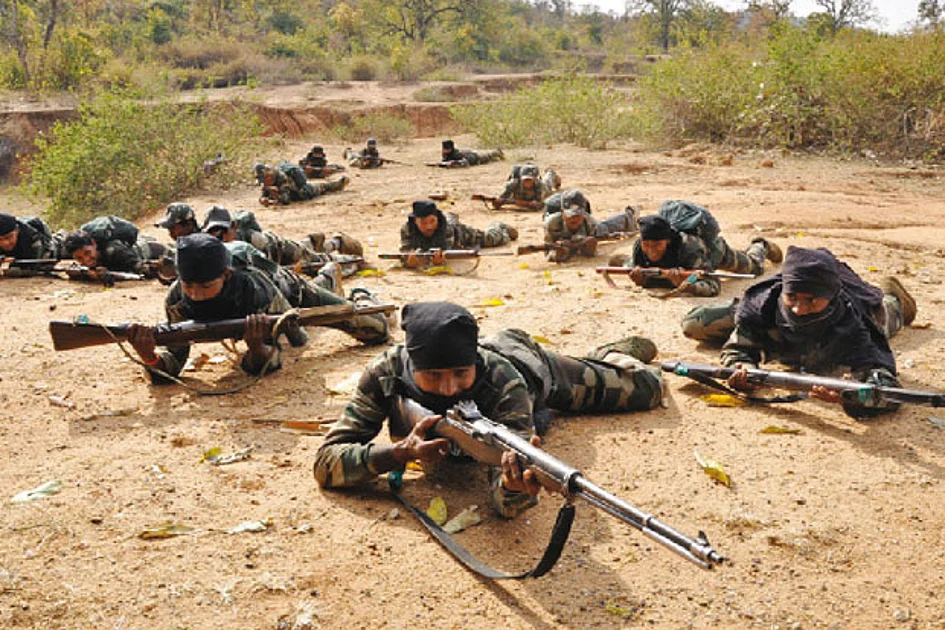
    Indian security forces have achieved a significant breakthrough in their ongoing counterinsurgency operations with the elimination of senior Maoist commander Ganesh Uike during a tactical raid in eastern Odisha state. The operation, conducted on Thursday in Kandhamal district, resulted in four rebel casualties including Uike who carried a substantial bounty of $120,000 on his head.

    According to Odisha police authorities, the operation was launched following specific intelligence regarding Uike’s whereabouts. The 69-year-old rebel leader, who commanded Maoist operations in the coastal region, was killed alongside three associates—two female combatants and one male fighter—during an exchange of gunfire. State police official Yogesh Bahadur Khurania confirmed the identities were being verified while noting no security personnel casualties occurred.

    This engagement represents the latest success in New Delhi’s comprehensive campaign to eradicate the decades-long Maoist insurgency by March 2026. Just one day prior to this operation, security forces had neutralized two additional rebels in the same region, demonstrating the intensified tempo of counterinsurgency activities.

    The Naxalite movement, which originated nearly sixty years ago in the Himalayan foothills, once exerted control over approximately one-third of Indian territory with an estimated fighting force of 15,000-20,000 personnel during its mid-2000s peak. However, government statistics indicate over 500 Maoist combatants have been eliminated since 2024 alone, signaling the rebellion’s substantial degradation in recent years amid sustained security pressure.

  • How can we secure the Middle East’s AI agent workforce

    How can we secure the Middle East’s AI agent workforce

    In a significant diplomatic move, the President of the United Arab Emirates has commenced an official state visit to Pakistan, signaling strengthened bilateral relations between the two nations. The high-profile visit comes at a time when authorities in Dubai are implementing comprehensive security measures for upcoming New Year’s Eve celebrations. For the first time in its history, the iconic Dubai Frame will serve as a centerpiece for spectacular drone light displays, supplementing the traditional fireworks that typically dominate the city’s skyline. Concurrently, Dubai’s transportation authorities have announced major closures along Sheikh Zayed Road and at the pivotal Burj Khalifa metro station to accommodate the unprecedented security and logistical requirements for the massive public events. Official statements have detailed specific timing for these closures, urging residents and visitors to plan their travel arrangements accordingly to ensure public safety during what is anticipated to be one of the largest New Year gatherings globally.

  • Israel ranks lowest in global brand index

    Israel ranks lowest in global brand index

    For the second year running, Israel has anchored the bottom of the global Nation Brands Index (NBI), according to findings released by the private research organization BrandIL. This represents the country’s most dismal performance in the nearly twenty-year history of the index, conceived by policy adviser Simon Anholt.

    The comprehensive NBI framework evaluates national reputations across six critical dimensions: tourism appeal, cultural perception, population image, immigration and investment climate, export and product reputation, and governance quality. The latest rankings placed Japan, Germany, Canada, Italy, Switzerland, and the United Kingdom at the pinnacle. Conversely, Israel found itself trailing behind nations including India, Kenya, Russia, Ukraine, and Namibia. The Palestinian Authority, while not a formally recognized state, also ranked lower.

    Conducted between August and September 2025, the survey revealed a stark 6.1 percent decline in Israel’s overall score from the previous year. A particularly alarming finding was Israel’s last-place ranking in perceptions of its exports and products, signaling a pronounced consumer aversion to goods and services associated with the nation.

    The report underscores a pivotal and troubling shift in international sentiment between 2024 and 2025. Criticism, once primarily directed at the Israeli government, has broadened to encompass attitudes toward Israeli citizens themselves. This evolution is directly correlated with the ongoing military operations in Gaza. Israeli media outlet Yedioth Ahronoth reported a growing perception of Israelis as ‘persona non grata’ in international circles.

    The human cost of the conflict is immense, with Palestinian casualties in Gaza and the West Bank exceeding 72,000 since October 2023. This context has fueled a dramatic reassessment of Israel’s global standing. Beyond rising criticism, the data indicates a generational schism, with more Gen Z respondents characterizing Israel as ‘illegitimate’ and ‘colonial’.

    The economic ramifications are tangible. The ‘Made in Israel’ label is now directly and negatively impacted as boycott movements persist worldwide. While the NBI does not directly track purchasing behavior, BrandIL issued a stark warning of broader economic risks, including a collapse in global trust, a downturn in foreign investment, severe damage to the tourism sector, and a profound erosion of Israel’s stature within the international community.

    This decline is corroborated by other major polls. A recent YouGov survey highlighted that public support for Israel across Europe has hit a record low in 2025, with fewer than a fifth of respondents in Britain, France, Germany, Denmark, Spain, and Italy holding a favorable view. In the United States, an April Pew Research poll found that 53% of Americans now hold an unfavorable opinion of Israel, a significant jump from 42% in March 2022. This negative sentiment is rising across the political spectrum, though it remains more pronounced among Democrats (69%) than Republicans (37%).

    A separate Pew poll confirmed that majority negative views of Israel and Prime Minister Benjamin Netanyahu are now a global phenomenon, prevalent in 20 out of 24 countries surveyed in early 2025. Notably, this disapproval is no longer confined to Arab and Muslim nations but is expanding across Europe and East Asia, with positive perceptions dwindling particularly in Western Europe and among younger demographics globally.

  • At least seven killed in Nigeria mosque bombing during evening prayers

    At least seven killed in Nigeria mosque bombing during evening prayers

    A devastating explosion tore through a crowded mosque in Maiduguri, Nigeria, on Wednesday evening, resulting in the deaths of at least seven worshippers and injuring multiple others. The attack occurred around 6:00 PM local time (1700 GMT) at a mosque within the city’s Gamboru market, where Muslim faithful had gathered for Maghrib prayers.

    Witness accounts and security sources described a scene of chaos following the blast, with victims rushed to nearby medical facilities for emergency treatment. While no group immediately claimed responsibility, anti-militia leader Babakura Kolo characterized the incident as a suspected bombing. Conflicting reports emerged regarding the method of attack, with some witnesses suggesting a suicide bombing while others indicated an explosive device had been placed within the mosque premises.

    Maiduguri, the capital of Borno state, has historically been the epicenter of Nigeria’s prolonged conflict with jihadist groups, including Boko Haram and its offshoot, the Islamic State West Africa Province (ISWAP). Although the city has experienced relative calm in recent years, this attack marks a concerning resurgence of violence in urban areas.

    Security forces promptly cordoned off the area as explosive ordnance disposal teams commenced investigation operations. International NGOs operating in the region issued security alerts advising staff to avoid the Gamboru market vicinity following the incident.

    The bombing occurs against the backdrop of Nigeria’s ongoing counterinsurgency campaign, which according to United Nations estimates has resulted in approximately 40,000 fatalities and displaced nearly two million people since 2009. While violence had diminished from its peak a decade ago, recent months have seen increased militant activity across the northeast region, with growing concerns among analysts about a potential escalation in jihadist operations this year.