分类: technology

  • What does a new US TikTok deal mean for users?

    What does a new US TikTok deal mean for users?

    TikTok has finalized a landmark agreement ensuring its continued operation across the United States, though its substantial user base of 200 million Americans should anticipate notable platform modifications. The resolution establishes a novel corporate framework—TikTok USDS Joint Venture LLC—governed by a seven-member board with predominant American representation and investment. While Chinese parent company ByteDance maintains a 19.9% stake, TikTok CEO Shou Zi Chew retains board membership.

    The platform’s pivotal content recommendation algorithm, which curates personalized For You feeds, will be licensed to Oracle Corporation. Under the leadership of Larry Ellison—a noted ally of former President Trump—Oracle will assume enhanced responsibilities including retraining and updating TikTok’s algorithm utilizing exclusively US user data. This development extends Oracle’s existing oversight of American user data through the security-focused initiative known as Project Texas.

    TikTok emphasizes that both algorithmic operations and user data will reside securely within Oracle’s US cloud infrastructure. Industry analysts suggest the platform will strive to minimize user disruption, making a mandatory migration to a new application improbable given the competitive pressure from Meta’s Instagram Reels and similar short-form video services.

    Concurrent with the agreement’s finalization, TikTok implemented updated Terms of Service for American users. Key revisions include stricter age verification mandating that users under thirteen utilize a restricted “Under 13 Experience,” explicit disclaimers that the new US entity does not endorse platform content, and heightened user acknowledgments regarding generative AI limitations and associated risks.

    Although specific interface changes remain unspecified, the algorithmic retraining using domestic data has sparked concerns regarding potential alterations to content personalization. Experts including Dr. Kokil Jaidka of the National University of Singapore anticipate modifications will likely manifest subtly through gradually weakened personalization rather than abrupt transformations. Core features including short videos, influencer culture, and livestream shopping are expected to persist unchanged.

    The arrangement also secures the operational status of other ByteDance applications in the US market, including CapCut and Lemon8, which previously faced uncertainty during brief ban enforcement in January 2025. These applications will now fall under the protective safeguards established by the new joint venture structure.

  • China’s first reusable liquid rocket test offshore platform set for operation

    China’s first reusable liquid rocket test offshore platform set for operation

    China is poised to activate its pioneering offshore infrastructure dedicated to testing reusable liquid-propellant rockets, marking a transformative advancement in the nation’s commercial spaceflight capabilities. Situated at the Oriental Aerospace Port in Haiyang, Shandong Province, this facility represents China’s sole commercial maritime launch base and is currently undergoing final construction preparations.

    According to a China Media Group report, the platform is scheduled to commence trial operations around February 5, 2026, preceding the country’s inaugural maritime launch and recovery attempt of a commercial liquid rocket during the Chinese New Year period. This strategic initiative addresses the fundamental commercial space challenge of achieving cost-effective, frequent orbital access through rocket reusability.

    The technical sophistication of the facility is evident in its specialized infrastructure. A hydraulic erector system featuring four large cylinders will maneuver rockets weighing hundreds of tonnes from horizontal to vertical positioning. Critical safety systems include a 17-meter-deep flame trench designed to redirect exhaust plumes exceeding 3,000 degrees Celsius during ignition, complemented by an advanced water deluge system for thermal management and acoustic suppression.

    This development builds upon Haiyang’s established launch legacy, having successfully executed 22 sea launches deploying 137 satellites using solid-fuel rockets. The transition to liquid propulsion systems signifies a substantial technological leap, offering superior payload capacity and the reusability essential for scalable satellite constellation deployments.

    The platform integrates within a comprehensively planned zone featuring propellant storage facilities for liquid oxygen, liquid nitrogen, kerosene, and methane, supporting next-generation rocket operations. This infrastructure forms a crucial component of Shandong’s expanding aerospace ecosystem, encompassing launch services, rocket manufacturing, and satellite applications across multiple cities.

    This progress aligns with China’s three-year (2025-2027) action plan to enhance commercial space development, integrating it within national space strategy while fostering innovative productive forces. Recent data from the China National Space Administration reveals substantial growth in commercial space activities, with 50 commercial launches conducted in 2025—representing 54% of China’s total space missions—and 311 commercial satellites deployed, accounting for 84% of all Chinese satellites launched that year.

  • CES 2026: a new era of global innovation

    CES 2026: a new era of global innovation

    Las Vegas witnessed the culmination of CES 2026 on January 9, establishing the event as the largest post-pandemic gathering in the technology calendar. With over 148,000 participants from 150+ countries, including 4,100 exhibitors and 1,200 startups, the conference demonstrated a pivotal evolution from theoretical concepts to practical implementation of cutting-edge technologies.

    The exhibition highlighted the maturation of artificial intelligence into tangible, ecosystem-level applications alongside sustainability innovations and intelligent devices. Gary Shapiro, Executive Chair and CEO of the Consumer Technology Association, emphasized these technologies would “define the next decade of economic growth and competitiveness.”

    Chinese technology firms emerged as dominant forces across multiple sectors including intelligent devices, automotive technologies, next-generation displays, and AI-driven lifestyle solutions. Their presentations attracted significant international attention, reflecting not only technical prowess but increasingly localized global strategies and partnership-oriented approaches.

    Analysts noted Chinese companies are demonstrating deepened commitment to long-term innovation participation rather than mere export expansion. Many highlighted R&D collaborations across North America and Europe, alongside diversified supply chain networks spanning Asia, Latin America, and the Middle East.

    Despite geopolitical complexities, Chinese brands reported sustained acceptance in North American markets. Kenneth Hong, Head of Public Relations for Hisense Americas, noted: “Political narratives have minimal impact on daily business operations. Retailers and consumers prioritize product quality above geopolitical considerations.”

    A defining conference theme was the transition to “physical AI” where intelligence integrates directly into machines capable of perceiving, interpreting, and acting within physical environments. Chinese robotics companies featured prominently, with Shanghai-based AgiBot demonstrating advanced humanoid platforms exhibiting real-world interaction and motion planning capabilities. CES data revealed over half of humanoid robotics exhibitors originated from China, underscoring the country’s expanding influence in embodied AI technologies.

    The event featured significant cross-border collaboration dialogues, including a high-level discussion presided by Lenovo Chairman Yang Yuanqing with semiconductor leaders from Nvidia, AMD, Qualcomm, and Intel. This gathering emphasized global AI progress’s dependence on international cooperation rather than fragmentation.

    Beyond commercial applications, CES 2026 addressed AI’s societal implications, particularly regarding global equity. Derrick Johnson, President of the NAACP, emphasized the need to “narrow, not widen, the gap between developing and developed countries through AI implementation.” Representatives from Ghana’s Ministry of Labour highlighted AI’s potential as an industrial upgrade catalyst and job creation mechanism in emerging economies.

    Business and community leaders consistently emphasized the critical role of public policy in ensuring responsible AI deployment. Jacquelyn Puente of the US Hispanic Chamber of Commerce noted: “Without clear regulatory frameworks, AI systems cannot achieve meaningful organizational integration or deliver necessary solutions.” This sentiment was echoed by Claire Casey of the AARP Foundation, who stressed the necessity of public-private collaboration for scalable global solutions.

  • Researchers break robot ’emotional barrier’

    Researchers break robot ’emotional barrier’

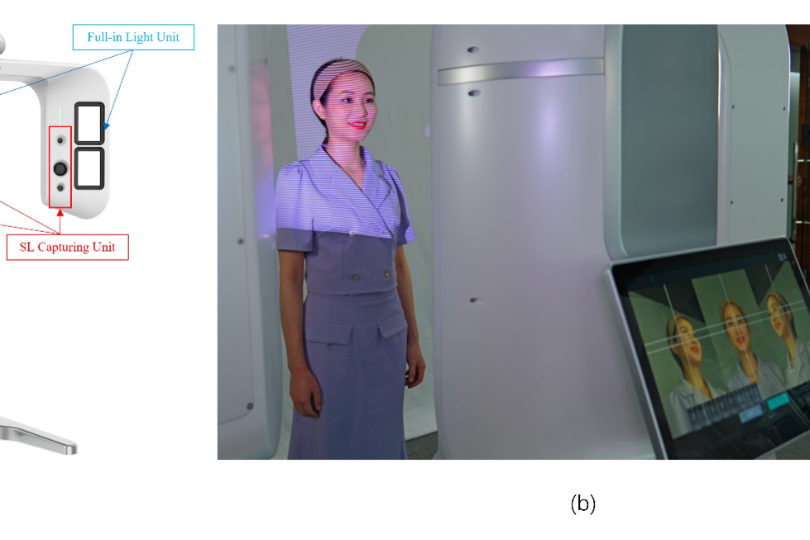
    A groundbreaking advancement in human-robot interaction has emerged from Wuhan’s Huazhong University of Science and Technology, where engineers have developed a sophisticated system capable of decoding and replicating complex human emotions with unprecedented accuracy. Led by Professor Yu Li, the research team has created algorithmic technology that analyzes subtle facial muscle movements to interpret emotional states, representing a significant leap forward in bridging the communication divide between humans and machines.

    The system operates by identifying distinct facial “action units” – minute muscular contractions around the eyes, nose, and mouth that form the visual language of human expression. Through high-precision algorithms, the technology can recognize seven fundamental emotions (anger, disgust, fear, happiness, sadness, surprise, and neutral) with 95% accuracy in real-world conditions. More impressively, it deciphers 15 compound expressions – blended emotional states like ‘happily surprised’ or ‘fearfully disgusted’ – with 70% precision, a rate described as exceptional within current AI capabilities.

    Professor Yu explains the technological breakthrough: “The human face contains dozens of action units corresponding to specific muscle movements. While happiness typically involves raised cheeks and upturned mouth corners, anger manifests through furrowed brows and tightened eyelids. Our system captures these detailed movements while filtering out individual physiological variations, enabling accurate emotional categorization.”

    The innovation extends beyond digital recognition into physical embodiment. The team’s robots feature 20 movable facial points that combine through specialized mechanical systems to produce naturalistic expressions. Unlike traditional robots limited to simplistic mouth movements, these machines achieve three-dimensional lip motion capable of reproducing 46 phonemes and nearly 20 distinct mouth shapes. Enhanced linkage mechanisms for nasal alae, cheeks, and malar regions enable subtle expressions like laughing and crying without the unnatural “segmented movement” typical of robotic faces.

    Real-world applications are already underway. The technology has been deployed in dozens of Chinese schools as digital psychological consultants that adjust responses based on students’ facial cues. In residential communities, these robots serve as emotional companions for isolated seniors, providing “natural, credible and comfortable” interactions when human companionship is unavailable. Expansion into commercial spaces, banking environments, and metaverse platforms is anticipated in the near future.

    Despite these advancements, Professor Yu emphasizes an important distinction: “Understanding emotion does not mean the robot itself has emotions. This technology provides care and support functions but should never replace genuine human social exchanges.” The research earned second prize in Hubei province’s technological invention awards in January, signaling recognition for its potential to transform human-machine interaction while maintaining ethical boundaries.

  • US-TikTok deal: A new reality for China’s tech champions?

    US-TikTok deal: A new reality for China’s tech champions?

    TikTok’s journey through the American regulatory landscape represents a watershed moment for Chinese technology expansion globally. With approximately one-seventh of the world’s population actively using the platform, its parent company ByteDance has navigated a complex maze of national security concerns that first emerged during the Trump administration’s initial term.

    The resolution came through an unprecedented arrangement: ByteDance will maintain partial ownership while establishing a separate U.S. entity through a consortium that includes Oracle. This restructuring effectively severs the American operation from its global network, addressing longstanding apprehensions regarding data sovereignty and potential foreign influence. The agreement mandates that U.S. user data will reside on domestic servers under American oversight, with ByteDance licensing rather than controlling the critical algorithm that powers the platform’s content delivery system.

    Industry analysts highlight the profound implications of this separation. Kelsey Chickering, Principal Analyst at Forrester, notes: ‘The platform’s core strength resides in its content graph—an sophisticated algorithm that processes thousands of user signals to deliver precisely targeted, engaging videos. Retraining this system exclusively on domestic data will fundamentally alter the user experience.’

    The financial architecture of the deal, valued at approximately $14 billion by the Trump administration, allows ByteDance to retain a 19.9% stake in the U.S. operation while relinquishing direct control over data management and algorithmic functions. This compromise enables continued access to America’s 200 million users and 7.5 million business accounts, though under significantly constrained conditions.

    From a strategic perspective, this arrangement mirrors broader geopolitical tensions between Washington and Beijing. Rather than representing an outright victory for either nation, the outcome demonstrates how technology platforms become negotiating chips in larger trade discussions. China can position the outcome favorably—exporting technology on negotiated terms while gaining leverage in other diplomatic areas.

    The operational consequences are substantial. Maintaining parallel algorithms for U.S. and global markets, divided development teams, and separate governance structures will inevitably increase engineering costs, slow innovation cycles, and create operational complexities according to technology architecture experts.

    For content creators and advertisers, the segmentation threatens to diminish the organic global virality that previously characterized TikTok’s ecosystem. Content that gained traction in one region could naturally proliferate across borders, but the newly fragmented system may require redesigned marketing strategies and potentially increased expenditures for U.S. market penetration.

    This development follows ByteDance’s earlier experience in India, where the complete prohibition of TikTok and approximately 200 other Chinese applications created opportunities for domestic alternatives—though none have achieved comparable market dominance. The current U.S. approach reflects an evolving strategy toward Chinese technology firms: rather than comprehensive exclusion, regulated operation within strictly defined parameters.

    While TikTok adapts to these international constraints, its sister application Douyin continues to thrive within China’s domestic market. This parallel success demonstrates ByteDance’s strategic diversification—maintaining a profitable, politically aligned platform at home while navigating increasingly complex global expansion challenges.

    Looking forward, this licensing model may establish a precedent for how Chinese technology companies operate in Western markets amid growing skepticism regarding data security and geopolitical influence. The fundamental question has shifted from data protection to cultural sovereignty—specifically, which nation controls the mechanisms shaping speech, trends, and cultural exchange through digital platforms.

  • Social media firms have come to ban ‘kicking and screaming’, says Australia eSafety boss

    Social media firms have come to ban ‘kicking and screaming’, says Australia eSafety boss

    Australia’s groundbreaking social media prohibition for users under 16 has achieved remarkable early results according to the nation’s internet regulator, with millions of accounts already removed since its December implementation. eSafety Commissioner Julie Inman Grant revealed to the BBC that social media platforms have demonstrated significant resistance to the policy, fearing it might establish a global precedent that other nations could emulate.

    The comprehensive ban, which targets ten major platforms including Facebook, Instagram, Snapchat, Threads, TikTok, X, YouTube, Reddit, Kick, and Twitch, represents the world’s most stringent youth protection legislation. Unlike similar measures elsewhere, Australia’s framework notably excludes parental approval exemptions, setting a new benchmark for digital child safety regulations.

    Government data indicates substantial compliance, with approximately 4.7 million accounts identified as belonging to minors already deactivated. Commissioner Inman Grant characterized children as an “incredibly lucrative” demographic for social media corporations, noting that platforms originally designed for adults incorporate addictive features that make youth protection particularly challenging.

    Despite initial concerns about potential migration to alternative platforms or circumvention through age verification manipulation, early monitoring data suggests these scenarios have not materialized significantly. The regulatory body maintains a vigilant stance, preparing to issue additional compliance notices to companies including Snapchat, with non-compliance carrying potential penalties reaching A$49.5 million.

    The international community watches closely as the United Kingdom considers parallel legislation, with the House of Lords recently endorsing similar restrictions through amendments to educational legislation. While technology firms like Meta acknowledge the need for enhanced youth protection measures, they contest the blanket ban approach, advocating instead for app store-level age verification systems.

    Legal challenges have emerged, with Reddit mounting a constitutional challenge in Australia’s High Court despite complying with the regulations, arguing the policy infringes upon privacy and political rights. The government remains resolute, with Communications Minister Anika Wells affirming that Australia “will not be intimidated by big tech” in protecting children’s digital wellbeing.

  • Inception, AppliedAI partner to build a unified advanced workflow platform for enterprises

    Inception, AppliedAI partner to build a unified advanced workflow platform for enterprises

    In a significant development for the artificial intelligence sector, Inception—a G42 subsidiary and regional leader in AI-powered enterprise solutions—has entered into a strategic partnership with AppliedAI, an Abu Dhabi-based technology firm renowned for its enterprise AI exports. The collaboration was formally established during the World Economic Forum in Davos, signaling a joint commitment to setting new global standards in AI-driven strategic decision-making and operational execution.

    AppliedAI brings to the partnership its flagship innovation, Opus—an AI-native workflow platform featuring the world’s first enterprise-scale Large Work Model (LWM) and Work Knowledge Graph (WKG). This technology enables organizations to design, automate, supervise, and audit structured, executable workflows, particularly within highly regulated industries. Combined with Inception’s expertise in developing and deploying secure, scalable AI products at both enterprise and national levels, the alliance aims to accelerate the adoption of intelligent, agent-driven operations in sensitive and mission-critical environments.

    The partnership addresses a pressing market need identified in McKinsey & Company’s State of AI in 2025 report, which reveals that nearly two-thirds of organizations have yet to scale AI across their enterprises. The report further highlights workflow redesign as the critical differentiator between high-performing AI implementations and less successful endeavors.

    Through this collaboration, the companies will deliver a unified platform powered by Opus that enables advanced enterprise workflow automation, decision intelligence, and large-scale execution. Designed to support national digital priorities and enterprise transformation initiatives, the platform represents a significant advancement in operational AI capabilities.

    Ashish Koshy, CEO of Inception, emphasized the transformative potential of the partnership: ‘Our collaboration with AppliedAI unlocks a new class of AI-driven enterprise solutions designed for real-world complexity and scale. With a platform that integrates intelligent agent orchestration with deep workflow and decision intelligence, organizations can transition from experimentation to operational AI that delivers measurable impact.’

    Arya Bolurfrushan, CEO of AppliedAI, added: ‘Enterprises and governments increasingly demand AI systems that not only inform decisions but execute work reliably, transparently, and at scale. Partnering with Inception allows Opus to extend this capability across new markets and the world’s most complex organizations. Together, we are turning strategic intent into operational reality.’

  • TikTok closes deal to split US app from global business. Here’s what to know

    TikTok closes deal to split US app from global business. Here’s what to know

    In a landmark resolution to years of geopolitical tension, TikTok has finalized a comprehensive agreement ensuring its continued operations across the United States. The breakthrough follows protracted negotiations addressing Washington’s national security concerns regarding the platform’s Chinese ownership.

    The solution establishes TikTok USDS Joint Venture LLC, an independently governed entity with a majority-American board of directors. This new structure will oversee all U.S. operations through a sophisticated data protection framework. Cloud computing giant Oracle assumes critical responsibility for securing American user data and supervising the retraining of TikTok’s proprietary content recommendation algorithm within its U.S. cloud infrastructure.

    Ownership distribution reveals a strategic balance: ByteDance retains a 19.9% stake while three primary U.S. investors—Oracle, Silver Lake, and Emirati AI investor MGX—each hold 15% shares. The remaining 35.1% is distributed among additional American entities including Michael Dell’s family office and Susquehanna International Group affiliate Vastmere Strategic Investments.

    The agreement represents a political victory for former President Donald Trump, who announced on social media his satisfaction with preserving TikTok’s American presence. The resolution avoids the previously legislated January 2025 ban that would have taken effect had ByteDance failed to divest its U.S. operations.

    While the core algorithm remains licensed from ByteDance, it will undergo retraining exclusively on U.S. user data under Oracle’s supervision. Industry analysts suggest this data localization may alter the user experience, potentially resulting in slower performance and less精准 content recommendations compared to the global version.

    The settlement concludes a contentious chapter that began during the Trump administration’s initial ban attempts in 2020, intensified through Biden’s 2024 legislation, and involved temporary service interruptions during legal battles. The compromise demonstrates how major technology platforms navigate complex international relations while maintaining service to TikTok’s estimated 200 million American users.

  • Watch: Human edges AI in dramatic drone racing finale in Abu Dhabi

    Watch: Human edges AI in dramatic drone racing finale in Abu Dhabi

    In a stunning reversal of expectations at the ADNEC Centre Abu Dhabi, South Korean FPV pilot Minchan Kim defeated an autonomous drone system in a gripping best-of-nine finale at the A2RL Drone Championship. The historic matchup, held on January 22, 2026, saw human intuition ultimately prevail against machine precision in what organizers describe as a critical testing ground for autonomous systems.

    The championship’s climax unfolded with tactical sophistication as Kim employed a strategy of calculated patience against TII Racing’s AI drone. Rather than challenging the autonomous system’s superior speed directly, the human pilot maintained consistent flight patterns through the obstacle course gates, capitalizing on rare but decisive errors by the AI competitor. The contest reached its peak at a tense 4-4 tie, forcing a final heat that captivated spectators and professional pilots alike.

    Kim revealed the psychological intensity of competing against artificial intelligence: ‘When I fly with AI, I see the autonomous drone in my camera view, and it generates significant psychological pressure. The turbulence from nearby drones created additional aerodynamic challenges that required constant mental composure.’ His preparation involved both technical precision in drone positioning and deliberate psychological conditioning, repeating self-affirmations before each launch.

    While human pilots demonstrated superior recovery capabilities, the Technology Innovation Institute’s autonomous system established itself as the world’s fastest racing drone. Senior researcher Aaesha Al Shehhi acknowledged her team’s relatively recent entry into the field compared to human pilots with decade-long experience: ‘The privilege that human pilots have is their ability to recover from errors mid-flight. Our systems cannot yet replicate this adaptive capability when encountering unexpected conditions.’

    The event also featured a groundbreaking demonstration of simultaneous four-drone autonomous racing, marking a world first in coordinated AI flight systems. Although the formation quickly devolved due to sensor limitations and aerodynamic interference, the demonstration highlighted both the potential and current constraints of multi-drone autonomy.

    Organized by ASPIRE, the innovation arm of Abu Dhabi’s Advanced Technology Research Council, the championship serves as a real-world laboratory pushing autonomous systems beyond theoretical capabilities. The competition forms part of the broader Unmanned Systems Exhibition, where defense, aerospace and technology entities converge to advance autonomous mobility research.

    Despite human victory in this iteration, researchers emphasize the rapidly narrowing gap between human and artificial performance in extreme environments. The data collected from these high-speed encounters directly informs the development of more resilient autonomous systems capable of handling real-world unpredictability.

  • Chinese company unveils plans for commercial space flights

    Chinese company unveils plans for commercial space flights

    Beijing InterstellOr Human Spaceflight Technology has announced groundbreaking plans to launch commercial space tourism services using its newly developed CYZ-1 manned spacecraft. The revelation came during a Thursday business presentation in Chengdu, where founder and CEO Lei Shiqing detailed the company’s vision for making suborbital space travel accessible to private citizens.

    The CYZ-1 spacecraft represents a significant advancement in China’s burgeoning commercial space sector, featuring an innovative two-part design comprising a crew module and a dedicated escape capsule. With specifications including an 8-ton mass, 4-meter diameter, and 21-cubic-meter interior volume, the spacecraft will accommodate six passengers alongside multiple viewport windows for optimal cosmic viewing.

    Launch operations will utilize a small carrier rocket to propel the spacecraft to approximately 70 kilometers altitude before separation. The vehicle will then continue its ascent through inertia, crossing the internationally recognized Kármán line at 100 kilometers—the conventional boundary of space—with capacity to reach altitudes up to 200 kilometers without entering orbit.

    Passengers will experience approximately three minutes of weightlessness during the peak of their journey before the craft initiates atmospheric re-entry. The entire mission, from launch to landing, will span approximately 20 minutes, concluding with a controlled parachute-assisted descent to ensure safe touchdown.

    InterstellOr’s development roadmap includes two unmanned test flights scheduled before the end of 2028, followed by the inaugural crewed mission. The company emphasizes its commitment to delivering what it describes as a “safe, comfortable and affordable” spaceflight experience, capitalizing on recent favorable policies implemented by the Chinese government to stimulate commercial space innovation.