分类: technology

  • China’s Long March-8 rocket launches new internet satellites

    China’s Long March-8 rocket launches new internet satellites

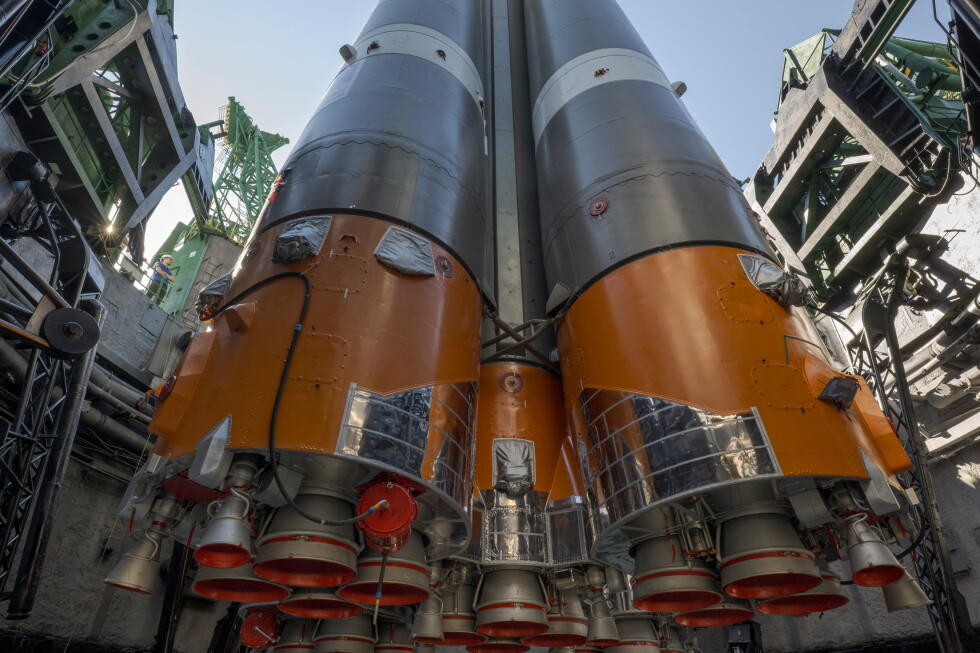
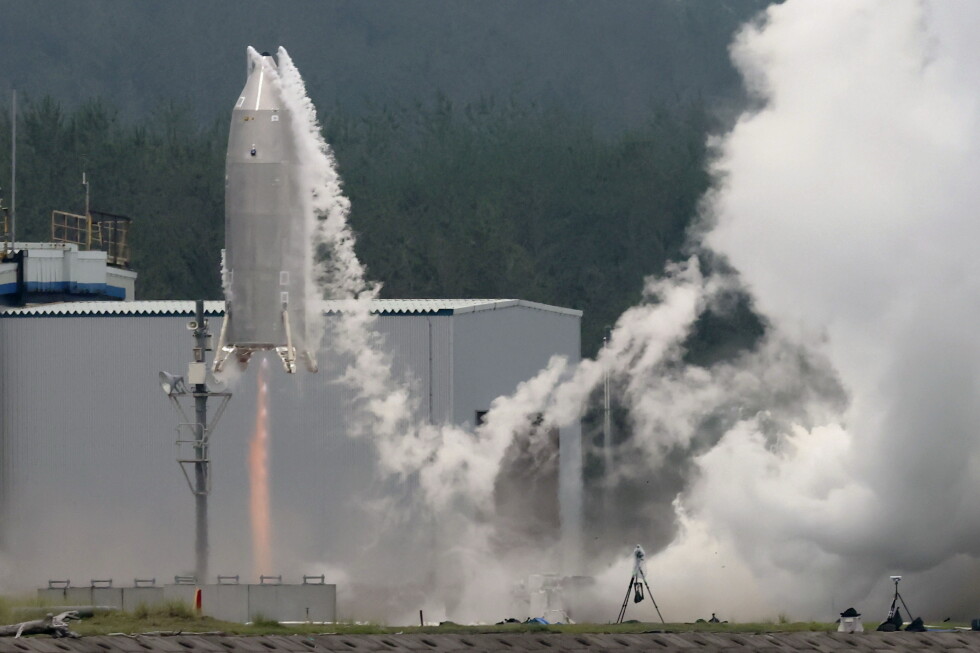
    In a successful commercial space mission carried out on Tuesday, China launched its Long March-8 carrier rocket from the Hainan commercial spacecraft launch site located on the country’s southern Hainan Island, placing 18 new internet satellites into their pre-planned orbital positions.

    The liftoff of the rocket occurred at 9:32 pm Beijing Time, marking another milestone in the expansion of China’s domestic satellite internet infrastructure. The 18 satellites delivered to orbit constitute the seventh batch of networking satellites developed for the Qianfan Constellation, a planned large-scale low-Earth orbit satellite network designed to deliver global internet connectivity services.

    The launch, conducted from China’s purpose-built commercial space launch facility in Hainan, demonstrates the continued reliability of the Long March rocket family and advances the country’s progress in building out its commercial space sector. This mission adds additional nodes to the growing Qianfan network, bringing the constellation closer to its operational goal of providing comprehensive, uninterrupted internet coverage across the globe.

    As demand for global satellite internet connectivity continues to rise driven by increasing remote work, IoT deployment, and connectivity needs in underserved regions, progress in the Qianfan Constellation project represents a key step forward in China’s commercial space development ambitions.

  • Tianjin University festival blends blossoms with innovation

    Tianjin University festival blends blossoms with innovation

    Against the backdrop of blooming crabapple blossoms across campus, Tianjin University’s annual Crabapple Blossom Festival has undergone a striking transformation, evolving from a traditional cultural celebration into a multifaceted open campus event that weaves together technological展示, higher education outreach, cultural engagement and career development support.

    This year’s event stood out for its central highlight: a large-scale public exhibition showcasing inventive, student-led innovation projects that span multiple high-tech fields. Among the standout works on display were an intelligent inspection robot designed specifically to assess and preserve historic architecture, filling a gap in precision maintenance for cultural heritage sites, and an integrated unmanned inspection platform capable of operating across land, sea and air environments for industrial and scientific monitoring purposes.

    To deepen public engagement with its academic work, the university opened all 16 of its research and science education bases to community visitors and prospective students. The open bases offered a full suite of interactive activities, including guided lab tours, live technical demonstrations, and public lectures covering cutting-edge disciplines from synthetic biology and smart grid technology to marine science, giving attendees a rare first-hand look at frontier academic research.

    Beyond technology and culture, the festival also prioritized student career development, hosting a large-scale career planning carnival that drew more than 4,000 participating students. To equip young people with modern job search tools, the event provided free access to AI-powered resume optimization and mock interview platforms, alongside one-on-one career consultation sessions with industry experts and university career advisors.

  • OpenAI encourages firms to trial four-day weeks to adapt to AI era

    OpenAI encourages firms to trial four-day weeks to adapt to AI era

    As artificial intelligence grows increasingly integrated into global workplaces and its capabilities advance at an unprecedented pace, OpenAI, the developer of the widely used ChatGPT platform, has laid out a series of people-first policy recommendations urging employers across industries to test the feasibility of a four-day workweek with no corresponding cut to worker pay.

    Outlined in OpenAI’s new policy paper *Industrial Policy for the Intelligence Age*, the proposals are framed as a starting point for urgent global discussions on how societies can adapt to the coming AI transformation— a shift the company acknowledges will bring widespread benefits to productivity and innovation, but also significant disruptive change to existing labor markets and career trajectories.

    OpenAI argues that ongoing advances in AI are rapidly cutting down the time required to complete many common work tasks, bringing a full transition to advanced AI systems into closer view than many policymakers and business leaders anticipate. “If progress continues, we can expect systems to be capable of carrying out projects that currently take people months,” the report notes, adding that this seismic shift will fundamentally reorganize how companies operate, how knowledge is generated, and how workers access meaningful employment and economic opportunity.

    Beyond the push for four-day workweek pilots, OpenAI has put forward a suite of additional policy and business recommendations. It calls for incentivizing companies to deliver long-lasting improvements to worker benefits, including higher retirement contributions, expanded healthcare coverage, and subsidized childcare. The company also recommends expanding job opportunities in people-centric sectors that are less vulnerable to AI displacement, such as early childhood education, childcare, and public healthcare. OpenAI adds that its initial set of proposals is primarily targeted at policymakers and business leaders in the United States, with the goal of jumpstarting broader global conversations about proactive governance of AI growth.

    The recommendations come amid ongoing, fierce debate over how AI will reshape global labor markets over the coming decades. Last December, Bank of England Governor Andrew Bailey warned that AI-driven job displacement could mirror the massive labor upheaval seen during the first Industrial Revolution, which displaced millions of traditional agricultural and craft workers over a century. This is not the first time a major AI developer has laid out a vision for social and economic policy changes to manage AI’s growing impact; OpenAI’s proposal to create a public wealth fund that would give all citizens a direct stake in AI-driven economic growth echoes nearly identical policy ideas released by competing AI firm Anthropic last October. Anthropic’s framework also called for upgrading worker training programs to prepare people for emerging AI-era jobs and expanding energy and computing infrastructure to support sustained AI development.

    Despite the warnings of widespread disruption from major AI developers, many economic analysts argue that AI’s transformative impact on jobs, productivity, and the broader economy may be much further off than tech leaders claim. In a recent research note, Adam Slater, lead economist at Oxford Economics, pointed out that most scenarios predicting rapid, transformative AI growth rely on overly optimistic assumptions about productivity gains and the speed of global AI adoption. Slater noted that while past waves of technological innovation have delivered large long-term productivity gains, these improvements often take decades to materialize across the broader economy, and can slow far more quickly than early projections predict.

    As the global AI development race accelerates—with companies pouring billions into research into even advanced systems, including hypothetical “superintelligence” that could outperform humans on most cognitive tasks— the debate over how to shape policy to mitigate harm and share AI’s benefits continues to intensify. Readers can follow the latest technology trends and breaking AI news by signing up for *Tech Decoded*, the weekly newsletter covering the global tech sector.

  • China is winning one AI race, the US another – but either might pull ahead

    China is winning one AI race, the US another – but either might pull ahead

    Seventy years ago, the most high-stakes global technological contest of the Cold War saw the United States and the Soviet Union pour billions of dollars and the world’s top scientific talent into developing increasingly powerful nuclear arsenals. Today, a new great power rivalry is unfolding, this time between Washington and Beijing, with a completely different prize at stake: global dominance of artificial intelligence (AI).

    Unlike the Cold War nuclear race, this contest plays out not just in classified government facilities, but in university research labs, the boardrooms of Silicon Valley’s most valuable startups, and the campuses of China’s leading tech hubs, with trillions of dollars of investment and the future of the global economy hanging in the balance. As University College London cognitive neuroscience researcher Nick Wright frames it, the competition can be neatly split into a battle between AI “brains” and AI “bodies” — with each power holding distinct historical advantages that are rapidly shifting as the race accelerates.

    For years, the United States has held an unchallenged lead in AI “brains”: the software, microchips, and large language models (LLMs) that power conversational AI tools like ChatGPT. The turning point for mainstream AI came in November 2022, when California-based OpenAI launched ChatGPT, the first widely accessible LLM trained to hold natural, conversational interactions with users. The launch sent shockwaves through the global tech industry, with social media flooded by users sharing innovative use cases for the new tool overnight.

    Today, OpenAI reports more than 900 million weekly users of ChatGPT — nearly one in eight people on Earth — and rivals including Google, Anthropic, and Perplexity have poured billions of dollars into developing competing LLM systems to capture a share of the emerging commercial market, which threatens to upend entire white-collar industries. But beyond commercial gain, US policymakers have framed AI dominance as a core strategic priority in the rivalry with China, with American advantage built not just on clever algorithms, but on control of the advanced hardware that powers cutting-edge AI.

    Virtually all of the world’s most advanced high-performance microchips, required to train and run large LLMs, are designed by US firm Nvidia, which in 2024 became the first company in history to reach a $5 trillion market valuation. Most of these chips are manufactured by Taiwan Semiconductor Manufacturing Company (TSMC) in Taiwan, a US ally. Washington has leveraged a decades-old framework of export controls, strengthened dramatically by President Joe Biden in 2022 as the AI race heated up, to block China from accessing these chips. The US’s “foreign direct product rule” forces even foreign manufacturers like Dutch semiconductor equipment giant ASML — the only company in the world that produces the extreme ultraviolet lithography machines required to make advanced chips — to comply with US export restrictions, blocking shipments to China.

    For years, this policy appeared to successfully lock in US advantage in AI “brains” — but in January 2025, the same week that Donald Trump was inaugurated for his second presidential term, China upended the status quo with the launch of its own conversational AI chatbot, DeepSeek. For end users, DeepSeek delivers comparable performance to ChatGPT: it can answer complex questions, write functional code, and is available entirely for free — at a fraction of the development cost of leading American LLMs.

    The launch triggered immediate market upheaval: Nvidia lost $600 billion in market value in a single day, the largest single-day loss in US stock market history. AI journalist Karen Hao argues that Washington’s export control policy may have backfired dramatically: forced to develop LLMs without access to cutting-edge American chips, Chinese developers were pushed to innovate more efficient model architectures, accelerating the country’s push for AI self-reliance.

    In Beijing, DeepSeek acted as a major catalyst for the country’s AI ecosystem, according to Selina Xu, a researcher focused on Chinese AI policy working in the office of former Google CEO Eric Schmidt. The launch also highlighted a key structural difference between the two countries’ AI industries: while US firms tightly guard AI intellectual property behind closed, proprietary systems, Chinese developers have adopted a widespread open-source approach, publishing model code publicly to allow other firms to build on existing work rather than starting new projects from scratch. As a result, Xu notes, while top American proprietary models may still hold a small quality edge, Chinese models deliver 90% of the capability at just 10% of the cost, erasing much of the US’s historical lead in AI brains.

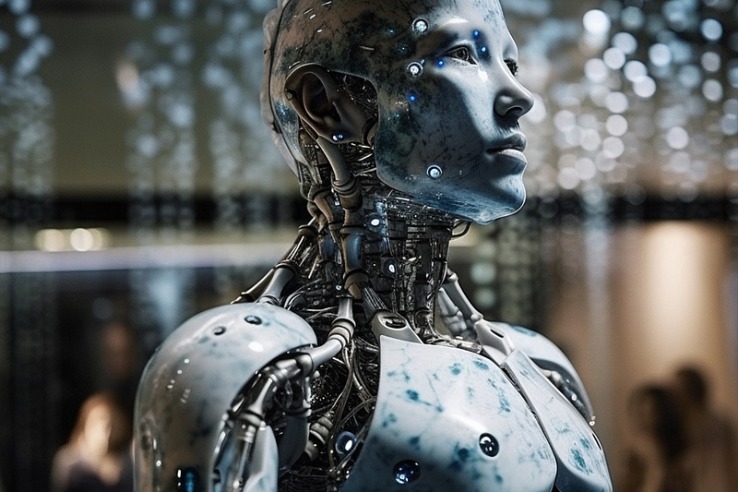
    When it comes to AI “bodies” — the physical robotics and drones that integrate AI into real-world tasks — China has held the upper hand for more than a decade. Beginning in the 2010s, the Chinese government poured billions of dollars in subsidies into robotics research and manufacturing, leveraging the country’s position as the world’s leading manufacturing hub to build a dominant domestic industry. Today, China is home to more than two million working industrial robots — more than the rest of the world combined — and international visitors to major Chinese cities are often surprised by how fully integrated robots are into daily life, from autonomous drone food deliveries to automated retail restocking.

    China has made particularly rapid progress in humanoid robots, human-shaped machines designed to replicate human movement and task performance. A 2025 report from the bipartisan US think tank Center for Strategic and International Studies highlighted a fully automated “dark factory” in Chongqing, where 2,000 robots and autonomous vehicles work together to roll a new car off the production line every minute, capable of operating 24/7 without any human staff. Facing a rapidly aging population that will see more than 300 million people aged 60 or older by 2035 — a total larger than the entire current population of the United States — the Chinese government sees humanoid robots as a critical solution to filling labor gaps in manufacturing and elder care. Today, China controls 90% of global exports of humanoid robots.

    Even with this lead in physical robotic systems, however, China still faces a gap when it comes to the intelligent software “brains” that enable robots to carry out complex, variable tasks. Simple repetitive industrial tasks only require basic control software, which China can produce domestically, but advanced robots capable of adapting to unstructured environments need agentic AI — a form of AI that can operate as an independent actor to complete multi-step assignments without constant human input. For this high-value AI software, Wright notes, the United States still holds a clear lead — and 80% of a robot’s total value comes from its brain, not its body.

    Today, both powers are racing to integrate agentic AI into physical robotic systems, and US firms have already demonstrated breakthroughs in this space. Boston Dynamics, the American engineering firm, has integrated agentic AI into its famous four-legged robot Spot, which has become a viral online sensation with millions of views of its capabilities. Spot now carries out autonomous safety inspections in industrial warehouses, detecting overheating equipment, gas leaks, and chemical spills, then feeds its findings to AI analytics software that can resolve issues without any human intervention.

    Beyond industrial applications, the fusion of AI and robotics is already transforming military conflict: last year, Ukraine deployed the Gogol-M, an AI-powered aerial mothership drone that can fly hundreds of kilometers into Russian territory, release smaller attack drones, and allow those drones to autonomously identify targets and detonate without any human guidance.

    With no clear finish line to the AI race, it remains impossible to predict which power will come out on top, says Greg Slabaugh, professor of computer vision and AI at Queen Mary University of London. Unlike the 1969 moon landing, Slabaugh argues, AI victory will not come down to one singular, defining moment. Instead, long-term sustained advantage will depend on which country most effectively embeds AI across its entire economy and sets global standards for the technology — just as with past transformative technologies like electricity and computing, the ability to scale and adapt matters more than inventing the technology first.

    The two powers are also pursuing fundamentally different governance models for AI: large US private tech companies are pushing to speed development with minimal regulation, while China’s government places strict state oversight over all AI research. One model promises a future of hyper-charged consumer capitalism built around AI, while the other frames the technology as a tool to be directed by the state for national goals.

    Oxford Said Business School professor Mari Sako notes that each power is well-positioned to succeed under its own framework, but when two competing systems clash, the side that can win the support of global users and adopters is most likely to emerge on top. With the entire global balance of power in the 21st century hanging in the balance, this AI race could well be the contest that decides which nation emerges as the world’s leading superpower.

  • China-built engine fueled by hydrogen test-flown

    China-built engine fueled by hydrogen test-flown

    In a historic milestone for global green aviation development, an independently developed Chinese megawatt-class hydrogen-fueled turboprop engine has completed the world’s first successful maiden test flight. The 7.5-tonne unmanned cargo aircraft fitted with the AEP100 engine completed the 16-minute flight at an airport in Zhuzhou, Hunan Province on Saturday, marking a new chapter for carbon-free aviation technology.

    According to the Aero Engine Corporation of China (AECC), the developer of the engine, the AEP100 system operated stably and reliably throughout the entire flight. The aircraft traveled 36 kilometers, holding a steady cruising speed of 220 kilometers per hour at an altitude of 300 meters, before returning safely to base after completing all pre-planned test missions. AECC experts noted that this successful maiden flight represents a transformative breakthrough, moving China’s domestic hydrogen-powered aviation engine program from purely conceptual technological development to practical engineering application.

    The achievement also confirms that China has built a fully self-contained, end-to-end technical supply chain for hydrogen-fueled aviation engines, spanning from the manufacturing of core specialized components to full system integration. The successful test verified that integrating hydrogen-powered propulsion systems with aircraft flight platforms is engineeringly feasible and reliable, creating a solid foundation for future mass industrial deployment of hydrogen energy in the aviation sector. This milestone also signals that China’s green aviation power development has crossed a key threshold, shifting from early technological exploration to hands-on engineering practice.

    Beyond the technical breakthrough itself, experts project that the advancement of hydrogen-powered aviation technology will drive coordinated upgrades across the entire hydrogen energy industrial chain. This spans upstream green hydrogen production, midstream hydrogen storage and refueling infrastructure construction, and downstream development of high-end equipment and advanced new material clusters. These linked developments will in turn accelerate the shift toward green, low-carbon, high-quality growth across China’s whole aviation industry.

    Looking ahead, as production costs for green hydrogen continue to fall globally, the economic and energy security benefits of hydrogen-powered aviation will become increasingly prominent. Industry planners expect the technology to first enter early commercial use in low-altitude aviation segments, such as unmanned cargo delivery and inter-island logistics transport, before gradually expanding to serve regional passenger routes and eventually long-haul mainline passenger aircraft.

  • How China fell for a lobster: What an AI assistant tells us about Beijing’s ambition

    How China fell for a lobster: What an AI assistant tells us about Beijing’s ambition

    In March 2026, an unconventional artificial intelligence tool called OpenClaw sparked a nationwide digital frenzy across China, where users have affectionately nicknamed the customizable agent a “lobster” and coined the term “raising lobsters” to describe the process of fine-tuning the tool to fit their personal and professional needs. The viral trend has laid bare China’s accelerating push to integrate artificial intelligence across every corner of its economy, while also highlighting the growing tensions between rapid innovation, regulatory oversight, and shifting labor markets.

    For many Chinese users, OpenClaw has been a revelation. The tool was originally developed by Austrian coder Peter Steinberger, and its open-source codebase gives it a unique advantage in China’s market: unlike closed, Western AI platforms such as ChatGPT and Claude that remain inaccessible to most Chinese users, OpenClaw’s code can be freely adapted to run on domestic large language models developed by Chinese tech firms. That accessibility has turned it into a grassroots AI movement that has captured the attention of everyone from casual hobbyists to major technology corporations and government policymakers.

    Wang, a young IT engineer who asked to keep his full name private due to his unregistered side business selling digital goods on TikTok — a platform banned in mainland China — is one of the millions of Chinese users who have dived into “raising lobsters” in recent months. When he first tested a custom OpenClaw build modified for his e-commerce work, he said he was stunned by its capabilities. Manually uploading new product listings to TikTok Shop is an hours-long grind: it requires editing images, writing SEO-friendly titles and product descriptions, adjusting pricing and promotional discounts, registering for marketing campaigns, and coordinating with influencer partners. Normally, Wang can only complete around 12 listings a single day. But his custom “lobster” can push out up to 200 complete listings in just two minutes, he claimed. “It is scary, but also exciting. My lobster is better than I am at this,” Wang told the BBC. “It writes better, and can instantly compare my prices with every competitor – something I would never have time to do.”

    OpenClaw had already earned significant attention in global tech circles even before its viral rise in China: Nvidia CEO Jensen Huang publicly hailed it as “the next ChatGPT”, and Steinberger, its creator, was recently recruited to join leading U.S. AI lab OpenAI. But the grassroots enthusiasm that turned it into a nationwide cultural trend is a distinctly Chinese phenomenon, according to Wendy Chang, an analyst with the Mercator Institute for China Studies (MERICS).

    The viral traction of OpenClaw in China is no accident. It comes on the heels of years of targeted investment in AI development, backed by top-level political support from China’s central leadership that has encouraged domestic innovation in the sector. The groundwork was laid in early 2025, when Chinese open-source AI platform DeepSeek, built by domestic engineers educated at China’s top universities, surprised global observers with its capability, proving that Chinese developers could compete in the global AI race and demonstrating strong domestic demand for open, adaptable AI tools. This set the stage for OpenClaw’s rapid adoption once it caught the attention of Chinese tech communities.

    Major domestic tech giants such as Tencent and Baidu quickly got in on the trend, releasing their own custom-built versions of OpenClaw for users. In cities ranging from Beijing to Shenzhen, hundreds of people from all age groups — from secondary school students to retired residents — lined up outside the two firms’ headquarters to claim free custom OpenClaw builds. Public figures from across China’s digital ecosystem have also embraced the trend: popular comedian and author Li Dan told his millions of Douyin followers that he was so immersed in his OpenClaw that he even talked to his “lobster” in his sleep, while Cheetah Mobile CEO Fu Sheng regularly documented his own experience “raising lobsters” on social media, cementing the phrase in the country’s online lexicon.

    Users have adapted their “lobsters” for a huge range of use cases: some stock market enthusiasts have claimed their custom OpenClaw builds can analyze market trends to identify optimal entry and exit points for trades, even executing trades automatically despite the high risk of costly errors. Other users highlight the tool’s ability to cut down on repetitive work and streamline multi-tasking for daily personal and professional tasks. Wang summed up the sentiment of many users when he called OpenClaw “the AI era’s answer for ordinary people.”

    China’s national strategy of “AI Plus”, which aims to integrate artificial intelligence across all major industries from manufacturing to services, has created a policy environment that encouraged OpenClaw’s early growth. Multiple local governments rolled out financial incentives to encourage entrepreneurs to integrate OpenClaw into their business operations. The eastern manufacturing hub of Wuxi, for example, offered rewards of up to 5 million yuan ($726,000) for OpenClaw-based applications in manufacturing such as industrial robotics.

    “Everyone in China knows that the government sets the pace, and the government tells you where the opportunities are,” said Rui Ma, founder of the Tech Buzz China newsletter. “It’s practical for most people. That’s probably a better plan, to just follow the government directive than to really try to figure it out on your own.” Since Beijing prioritized AI development, thousands of domestic startups and established tech firms have rushed into the AI sector, supported by a range of policy perks including subsidized office space, low-interest loans, and cash grants for innovation. Today, companies across almost every sector — from automotive manufacturing to healthcare, consumer electronics to logistics — are racing to integrate AI into their products and internal operations. The competition in China’s domestic AI market is already fierce: since 2023, more than 100 domestic large language models have launched in what local media have dubbed the “Hundred Model War”, and only around 10 remain major competitors today.

    Experts note that while Chinese AI platforms still lag behind leading Western models in overall capability, the gap has narrowed steadily in recent years. For Chinese policymakers, promoting the open-source OpenClaw framework is a strategic move to help close that gap further, according to analyst Jenny Xiao.

    But as the initial hype has cooled, growing challenges have emerged that have forced a shift in the narrative. First, many users have been caught off guard by the recurring cost of running custom OpenClaw agents, which require paid “tokens” for every interaction. More critically, national cybersecurity authorities have raised alarms about unregulated use of the tool. Last month, Beijing’s cybersecurity watchdog issued a public warning about major security risks linked to improperly modified and deployed OpenClaw builds, and a growing number of government agencies have since banned staff from installing the tool on work devices. Many institutions that once offered custom OpenClaw installations have now shifted to removing the tool from official systems.

    This back-and-forth is characteristic of China’s top-down policy approach to emerging technology, observers say. Local governments often rush to embrace new tools that align with central leadership’s priorities to compete for approval, then pull back when risks emerge. Ma describes this dynamic as “disorder with control”, and notes that Beijing’s regulatory intervention does not mean policymakers are turning against AI development broadly.

    In fact, policymakers see AI tools like OpenClaw as a potential partial solution to one of China’s most pressing social problems: youth unemployment, which has remained above 16% in recent months. Many government incentive programs tied to OpenClaw specifically target “one-person companies” — small, solo-run startups built with the support of AI tools — offering subsidies of up to 10 million yuan to encourage new business formation. “Who’s the most likely to build a one-person company? Probably young people who face a tough job market,” Xiao explained.

    For many Chinese workers, the rapid spread of AI tools like OpenClaw has already created widespread anxiety about job displacement. A recent commentary in state-run newspaper *People’s Daily* captured the growing national mood: “Some say that in 2026, if you don’t ‘raise lobsters’, you’ve already lost at the starting line.” Jason, an IT programmer whose team now only hires candidates with prior experience working with AI tools, called the shift “genuinely terrifying.” “It’s mostly people leaving, with very few new hires coming in,” he said.

    Wang, the e-commerce entrepreneur who built his own custom “lobster” to streamline his business, acknowledges that the rapid pace of AI change is scary, with widespread fears that many workers could be replaced by AI tools. But he remains optimistic about his own future. He expects his TikTok shop business, scaled up by his “lobster”, to become his full-time occupation, eliminating the need for his regular IT job. And if AI eventually advances enough that “lobsters” can run entire e-commerce shops on their own, squeezing him out of the market? “I’ll use AI to find another business,” he said.

  • Underwater robots battle real-sea blues to boost marine ranching in China

    Underwater robots battle real-sea blues to boost marine ranching in China

    Off the rugged coast of Zhuhai, Guangdong, choppy grey-green South China Sea waters have become an unexpected testing ground for a technological revolution that could reshape China’s rapidly growing marine aquaculture industry. In late March, 16 teams of engineers and researchers gathered here for the final round of the first-ever Guangdong-Hong Kong-Macao Greater Bay Area Marine Underwater Robot Application Challenge – a competition unlike any before, held not in controlled laboratory tanks or calm shallow coastal bays, but in a fully operational working marine ranch.

    This shift from controlled testing environments to unforgiving open-sea conditions is no trivial change. Organizers designed the competition to directly tackle the most persistent operational challenges that have long held back marine ranching operators, turning industry pain points into a catalyst for building more cost-effective, reliable, commercially viable robotic solutions that can power a smarter, more resilient ocean economy.

    Over two days of competition, participating teams put their custom-built machines through real-world tasks that mirror the daily work of marine ranch crews: recovering misplaced submerged mooring anchors, harvesting shellfish from the seabed, and removing accumulated biofouling from aquaculture netting. Unpredictable offshore currents, choppy swells, and high water turbidity – conditions that often disrupt sensitive underwater electronics – put every robot’s capabilities to a rigorous, unforgiving test.

    Judges emphasized that the open-sea setting pushes developers to prioritize practical, industry-ready performance over flashy lab prototypes. Teams are forced to optimize their designs for three critical industry requirements: cost-effectiveness, long-term reliability, and user-friendliness for on-site ranch workers, clearing key barriers to rapid commercial rollout.

    The need for these solutions is far from hypothetical. In 2025, Typhoon Ragasa devastated local marine ranch operations, leaving Yuehe Fisheries, a major local producer, with more than 700 lost iron anchors scattered across the seabed. Hiring human divers to recover the anchors is prohibitively expensive, leaving most of the valuable equipment unrecovered to date.

    “That’s nearly 1 million yuan (around $145,000) in direct losses,” explained Lin Jincheng, general manager of Yuehe Fisheries. Lin noted that multiple competing teams already demonstrated the exact capabilities the industry desperately needs: strong autonomous operation and reliable anti-interference performance in messy, real-sea conditions.

    For winning competitors like Shenzhen Hanhai Huafan Cleaning Robotics, a specialized underwater cleaning robot developer based in nearby Shenzhen, the event has made the massive market opportunity for practical underwater robotics crystal clear.

    Cai Qianxia, the company’s marketing manager, explained that its proprietary cleaning robots can operate around the clock, delivering efficiency more than 10 times higher than traditional manual cleaning methods. “Before, if you wanted to clean even a small sailboat hull, you either had to hire expensive divers or wait weeks for a dry dock slot,” Cai said. “That takes your vessel out of service, costs you money, and there are countless other limitations that robots eliminate.”

    In the competition’s inspection and monitoring category, a team from Westlake University took home first prize by integrating underwater embodied AI with large language models and advanced multimodal perception technology. Team member Wang Zhangyuan noted that the competition broke down the long-standing barrier between lab research and industrial demand, bringing algorithms out of controlled lab environments and into the real-world scenarios where they are needed most.

    The Zhuhai challenge was intentionally built from the ground up to respond directly to unmet industry needs. Before the competition opened, organizers published a 150-million-yuan “opportunity list” of real operational requirements from marine ranch operators, covering everything from aquaculture net inspection to lost debris retrieval and ecological monitoring. That request for solutions has already translated to more than 100 million yuan in potential orders from 17 marine ranch developers across Guangdong province. Four of the competition’s top award-winning teams have already signed preliminary agreements to establish local operations in Zhuhai’s Xiangzhou District.

    This event fits into a much broader national push to develop China’s blue economy and deep-sea technology sector. China’s domestic underwater robotics market surpassed 10 billion yuan in 2024, and industry forecasts project it will grow to 40 billion yuan by 2027. For the first time, the Chinese government identified “deep-sea technology” as a strategic emerging industry in its 2025 Government Work Report, unlocking new investment and policy support for the sector.

    Zhuhai, a coastal city with 9,348 square kilometers of maritime territory under its jurisdiction, has emerged as a leading hub for this development. By the end of 2025, the city had built 10 large truss-type marine ranch platforms and 452 gravity net cages, and is home to 40 oceanographic innovation platforms and 140 high-tech marine enterprises.

    A senior official from the Zhuhai Municipal Marine Development Bureau explained that the competition will accelerate the translation of underwater robotic research into real-world commercial applications, while strengthening connections across the entire “industry-academia-research-application-finance” innovation chain. The end goal is to upgrade China’s marine ranching sector and cement Zhuhai’s position as a leading regional marine economy hub.

  • China’s domestic service sector embraces robots, AI

    China’s domestic service sector embraces robots, AI

    Against the backdrop of shifting demographics and rising consumer demand for professional household care, China’s vast, traditionally labor-heavy domestic service industry is undergoing a rapid digital transformation, with artificial intelligence and robotics becoming core tools to reshape service delivery and matching efficiency. A groundbreaking example of this tech integration can be found in Hefei, the capital of Anhui province, where a smart diaper sensor developed through a partnership between local domestic service provider Wansao and an AI startup is redefining infant care. The wearable device, fitted with high-sensitivity odor and humidity detectors, automatically tracks a newborn’s physical condition, logs real-time digestive data, and sends instant alerts to caregivers’ wearable wristbands when a diaper change or attention for an upset stomach is needed. This data is then synced with a cloud-based digital platform alongside caregiver-kept feeding records to build a personalized health profile, enabling nannies and parents to monitor infant development with far greater precision than traditional manual care. The developers have already outlined plans to adapt the technology for use with frail, elderly care recipients who require round-the-clock monitoring, expanding its impact beyond childcare. This smart device is just one of dozens of technology trials transforming China’s domestic service sector, which already hit a market value of 1.2 trillion yuan ($174 billion) and employed more than 30 million workers nationwide in 2024. Beyond sensor-based monitoring solutions, AI-powered digital platforms are overhauling the outdated worker-client matching process. Wansao president Ding Xiaomei explained that the company is building large language model-powered platforms trained on years of aggregated domestic service industry data and private industry knowledge bases. These platforms do not only address common questions from both families and domestic workers, but also generate detailed digital work profiles for service providers, allowing the system to quickly match households with candidates that fit their specific needs from a database of tens of thousands of workers. Robotics is also carving out a key space in the market, particularly in the fast-growing eldercare segment. Across multiple Chinese cities, companion robot Xiaoli, developed by Beijing-based Seelink Technology, is already deployed in nursing homes and private family homes. The robot conducts routine health checks including blood pressure and blood oxygen monitoring, sends automatic alerts to family members when abnormal health indicators are detected, and provides conversational companionship to socially isolated elderly residents. Li Yang, a representative of Seelink Technology, noted that the company has launched two tailored versions of Xiaoli — one for institutional eldercare facilities and another for home-based care — and plans to continuously expand the robot’s service capabilities to meet evolving needs. Two major forces are driving this rapid tech adoption in the domestic service space: surging consumer demand and targeted government policy support. Demographic change has been the core demand driver: by the end of 2024, China was home to more than 310 million people aged 60 and above, accounting for roughly 22 percent of the total population. Combined with shrinking average household sizes that leave fewer family members available to provide informal care, demand for both professional childcare and eldercare domestic services has skyrocketed. Industry data from Chinese research firm Zero Power Intelligence Group shows that China’s eldercare robot market already surpassed 30 billion yuan in 2024, with projections to hit 50 billion yuan by 2025. Li Yang noted that just a few years ago, only a small number of companies were developing intelligent companion robots for eldercare, but today, new market entrants are increasing rapidly, making the sector increasingly dynamic. Policy support has also acted as a key catalyst for transformation. In April 2025, China’s Ministry of Commerce joined eight other central government departments to release a policy guideline supporting the upgrading of household service consumption. The guideline explicitly called for accelerating the sector’s digital transformation, and encouraging the adoption of emerging technologies to expand innovative application scenarios across all segments of household services. Despite the clear growth trajectory and promising potential, industry insiders point out that the sector still faces tangible practical barriers to widespread adoption. For one, current robotics solutions remain prohibitively expensive for most average households. Additionally, most existing smart machines can only perform narrow, simple tasks, as navigating the unstructured, complex environment of a typical household requires far more advanced perception and mechanical dexterity than current commercial technologies offer. Data security and standardization also remain major sticking points: domestic work inherently involves processing highly sensitive personal information, and the absence of unified industry-wide data standards makes secure, efficient data sharing and processing far more complicated. Still, industry observers remain optimistic about the long-term future of tech integration in the space. As Yang noted, the development trajectory is clear and manageable, and smart technologies will likely evolve from serving as specialized assistants in commercial care settings to becoming reliable, everyday companions in ordinary households across China.

  • Nation’s open-source chip ecosystem to push global collaboration

    Nation’s open-source chip ecosystem to push global collaboration

    For decades, accessing the architecture required to design cutting-edge high-end computer chips has come at a prohibitive cost: millions of dollars in mandatory licensing fees locked most early-stage startups out of the industry, creating an uneven playing field dominated by a small handful of proprietary technology holders. Today, a game-changing open standard called RISC-V instruction set architecture is rapidly growing in global traction, offering a free, collaborative alternative to the closed, costly proprietary models that have long defined the sector.

    During the 2026 Zhongguancun Forum, China’s premier annual event for showcasing top national scientific and technological advances held in Beijing last week, industry and research leaders announced that China has successfully built out a complete, end-to-end RISC-V ecosystem. This integrated network spans from foundational technological innovation to full-scale industrial implementation, establishing China as a key global contributor to the worldwide push for more accessible, autonomous computing infrastructure.

    To simplify how RISC-V works, an instruction set architecture can be thought of as the core “dictionary” that allows chips to function. Just as humans rely on dictionaries to understand and use words, a chip depends on this set of standard instructions to interpret and run software commands. While legacy architectures such as Intel and AMD-controlled x86 charge steep licensing fees and ban users from modifying the core design, RISC-V operates on an open-source model that grants anyone the right to freely use, alter, and build on the existing framework.

    At a side event held alongside the main forum, the Chinese Academy of Sciences (CAS) unveiled two landmark new developments that complete the domestic ecosystem. The first is Xiangshan, an open-source processor platform that acts as the high-performance hardware core of the ecosystem. The second is open-Ruyi, a domestically developed operating system built from the ground up exclusively to run on the Xiangshan hardware.

    As modern computing continues to evolve, simply increasing a chip’s raw clock speed is no longer enough to meet growing demand. The central challenge today is scalable computing: the ability to manage massive volumes of concurrent tasks and distribute processing power efficiently across complex networks. This makes high-performance processor cores the “command centers” that determine a computing system’s overall speed and functionality.

    According to Bao Yungang, deputy director of the CAS Institute of Computing Technology, the Xiangshan core currently ranks as the most powerful open-source RISC-V processor available globally. In the SPEC CPU2006 industry benchmark test, the standard for measuring processor performance, the Xiangshan core hits 16.5 points per gigahertz — a score that reflects exceptional efficiency when handling complex computational tasks. Bao added that the Xiangshan-openRuyi pairing creates a reinforcing feedback loop, where technological development responds directly to industry needs, and real-world application in turn drives further innovation. He also noted that the Xiangshan core is already deployed in key sectors including artificial intelligence, cloud computing, and industrial controls.

    Unlike traditional chip development workflows, where software is retrofitted to match existing hardware — a process that often creates unnecessary inefficiencies, open-Ruyi was designed from its inception to align perfectly with the Xiangshan core’s unique technical specifications, explained Wu Yanjun, deputy director of the CAS Institute of Software. This native alignment unlocks full performance potential, as the synergy between hardware and software is critical to maximizing processing power, Wu noted.

    To lower the barrier for third-party developers and enterprises to join the ecosystem, CAS also launched the RuyiSDK, a comprehensive software development kit that acts as a one-stop resource for engineers. The toolkit provides all the pre-built tools, documentation, and frameworks developers need to build custom software for the platform, eliminating the need to start development from scratch.

    Beyond accessibility and innovation, the shift to open-source chip architecture also addresses growing global concerns over supply chain security, offering a path for countries and companies to avoid being cut off from critical computing technology due to trade disputes, export restrictions, or exploitative pricing. Liu Yanan, chip technology director at China Mobile (Suzhou) Software Technology Co., explained that the long-term goal of the ecosystem is to deliver an autonomous, cost-effective computing infrastructure that can meet the wide range of processing demands created by the fast-growing global digital economy.

    To date, CAS has assembled one of the world’s largest RISC-V research and development cohorts, with more than 600 hardware-focused researchers and 400 software engineers working on the project. Its global open talent and development programs have already drawn more than 27,000 participants from over 1,100 universities across the world, marking a clear shift toward a more inclusive, collaborative global model for the future of semiconductor development.

  • Future ‘air taxis’ showcased in Wuhan

    Future ‘air taxis’ showcased in Wuhan

    Shortly after the 2026 Spring Festival holiday, Wuhan’s annual government economic conference took an unexpected futuristic turn: the quiet convention space at Hongshan Auditorium was underscored by the low hum of spinning rotor blades, where four cutting-edge electric vertical takeoff and landing (eVTOL) aircraft stood on public display. More than just a technological exhibition, the event served as a clear public declaration of Hubei province’s ambition to become a leading hub for China’s fast-growing low-altitude economy, a sector recently elevated to national strategic priority by Beijing.

    As the industry moves beyond early concept testing and into the final stretch toward full commercial rollout, 2026 is widely viewed as a make-or-break year for crossing the gap between experimental development and mass consumer adoption. Huang Xiaofei, vice president of strategy for Shanghai-based eVTOL developer Volant Aerotech, framed the moment as a pivotal inflection point: “As the core technological driver of a projected trillion-yuan market, eVTOL has officially exited the concept verification phase and entered the commercial sprint.”

    The four aircraft on display in Wuhan each showcased distinct innovations tailored to address current gaps in the emerging eVTOL sector, from consumer accessibility to operational range and specialized use cases. E-hawk Technology’s 1.2-metric-ton model, for example, integrated fully enclosed rotors to drastically improve ground safety, a key concern for urban deployment. Company chairman Cai Xiaodong outlined a two-pronged approach to bring the aircraft to market: consumers will be able to purchase their own craft for a projected price below 2 million yuan ($289,500), or access air taxi services via a ride-sharing model that mirrors popular on-demand ground ride-hailing apps. “In the future, it will be as simple as pulling out your phone from a residential compound or city park to call a real flying taxi,” Cai explained, noting the firm plans to launch a two-seat version this year focused on low-altitude logistics and scenic tourism operations.

    Wuhan-based Xunqi Technology addressed one of the most common limitations of pure-electric eVTOLs: range anxiety. Its hybrid tilt-rotor V1000 model uses a hybrid range-extender system to deliver a total range exceeding 1,000 kilometers — enough to fly nonstop from Wuhan to Beijing, Guangzhou, or Shanghai without mid-journey recharging. “Pure electric eVTOLs’ biggest shortfall is range, which we solve with our hybrid system,” said Li Jia, the company’s deputy chief designer. The 400-kilogram capacity craft has already had its type certification application accepted by the Civil Aviation Administration of China, a critical regulatory milestone, with its first full test flight scheduled for 2026.

    One of the most socially impactful prototypes on display came from Wuhan Fusheng General Aviation, which unveiled a pure-electric eVTOL designed to function as a flying micro intensive care unit for emergency medical response. Traditional medical evacuation helicopters cost roughly 10,000 yuan per hour of operation, but the new design cuts that cost to just 2,200 yuan per hour, according to company executive president Chen Zhaoyan. What makes the craft unique, Chen added, is its ability to complete patient triage, real-time vitals monitoring, and medical data synchronization directly within the cabin, with an interior purpose-built to accommodate a full stretcher and portable CT scanner. Later this year, the firm will partner with Wuhan University’s Zhongnan Hospital to test the aircraft’s capability for transporting medicine and blood plasma, with a goal of making the affordable technology accessible to ordinary communities by 2027.

    Rounding out the exhibition was the SW01, a compact recreational eVTOL that stood out for its consumer-friendly design. Replacing complex traditional aircraft controls with a familiar steering wheel and throttle setup, and featuring a transparent open canopy, the craft targets recreational users with a target price below 500,000 yuan, letting casual users safely fly over scenic parks and lakes.

    The Wuhan showcase is far more than a local technology event: it reflects a coordinated national push to unlock the low-altitude economy. A newly revised civil aviation law, set to take effect in July 2026, will formalize clear management rules for airspace below 300 meters, clearing away long-standing regulatory barriers for eVTOL deployment. Earlier this month, five central government departments including the Ministry of Industry and Information Technology released joint guidelines mandating that at least 90 percent of low-altitude public airways be covered by ground mobile communication networks by 2027, laying the critical infrastructure needed for widespread safe operation of urban air taxis.