A little over a month ago, a last-minute addition to then-President Trump’s trade delegation to Beijing made headlines that hinted at a far larger global shift. Jensen Huang, CEO of Nvidia — the world’s most valuable company by market capitalization — had traveled to China to pitch the firm’s newly U.S. export-approved H200 AI chips. What he got in response was a clear rejection.
分类: technology
-

Four days to make victims fall in love: How global scammers use US tech to fleece people
A year-long joint investigation by The Associated Press and PBS FRONTLINE has uncovered a sprawling, industrialized global fraud ecosystem operating out of unregulated scam compounds in Myanmar, powered largely by widely available artificial intelligence models and digital infrastructure from major United States technology companies. The investigation, which draws on tens of thousands of leaked internal scam center records, satellite imagery, network data analysis, and interviews with more than 50 scam victims and 36 current and former scammers from 19 countries, details how American tech tools have enabled transnational criminal networks to scale fraud to unprecedented levels, bilking victims out of hundreds of billions of dollars annually while exploiting a lack of U.S. regulatory pressure to force action.
One of the most chilling firsthand accounts of this system comes from Safeer Mohammed Koorimannil, a young Indian man who was trafficked into a U.S.-sanctioned Myanmar scam compound after being lured by a fake tourism job advertisement. Held against his will alongside hundreds of other trapped workers, Koorimannil was forced to impersonate a 28-year-old Singaporean woman named “Ella” to run romance scams, with a strict mandate: convince each target to fall in love within four days. On a typical work shift, he managed more than 100 active conversations across dozens of fake profiles simultaneously, while armed supervisors patrolled the rows of desks carrying electric batons to punish workers who failed to meet strict performance quotas. In just one month, Koorimannil and his team targeted roughly 50,000 potential victims across at least 17 countries, a scale of outreach that would have been impossible without AI-powered tools built on models from leading U.S. tech firms. Victims targeted in these schemes spanned every continent and walk of life: a widowed tailor in Kurdistan, a pastry chef in Turkey, a sheep farmer in Kyrgyzstan, active-duty soldiers in Iraq, a Russian engineer, a German building painter, an Argentine port officer, an Indonesian student, a Polish security guard, and a Georgian dairy farmer, among countless others. Records smuggled out of the compound by Koorimannil confirm the full scope of the operation.
The investigation, conducted with analytical support from Washington-based global security nonprofit C4ADS, found that two popular scam management tools—Kongtian Intelligent Customer Acquisition (KT) and Global Social Traffic Navigation (007TG)—are built on top of leading U.S. AI models, primarily OpenAI’s ChatGPT and Google’s Gemini. These tools enable scammers to automate core parts of the fraud process: generating convincing, natural-sounding chat responses, creating fully realized fake profiles and backstories for scammers to impersonate, and providing real-time translation across more than 100 languages to target victims across the globe. The platforms also automatically track worker productivity, making it easier for scam bosses to identify and punish underperformers. Blockchain analysis conducted by crypto analytics firm TRM Labs for the investigation found that developers of these scam tools have earned tens of millions of dollars in illicit revenue, while the scammers who use them have raked in well over $75 million in victim payments in just over a year. A single crypto wallet linked to 007TG received more than $860,000 in payments from known scam networks between April 2024 and December 2025, according to the analysis.
Trapped workers like Koorimannil face brutal violence for falling short of quotas. Photographs taken after one beating show his body covered in red, swollen lash marks, and he recalled that his hands would shake uncontrollably whenever supervisors approached his workstation. After months of captivity, Koorimannil and a friend paid a 500,000 Indian rupee (roughly $5,300) ransom per person to secure their release, escaping back to his home in southern India where he now shares his story to warn others.
Beyond AI models, the investigation found that U.S. companies provide the foundational digital infrastructure that allows these scam operations to function at all. An analysis of 202,013 device connections from four major Myanmar scam compounds linked to U.S.-sanctioned entities, conducted with data from anti-trafficking nonprofit International Justice Mission, found that one in five connection signals from these sites are routed through U.S.-registered internet service providers and cloud hosts, including Cogent Communications, AT&T, DigitalOcean, and Oracle. No other non-regional country comes close to this volume of scam traffic.
The investigation also confirmed that Elon Musk’s Starlink satellite internet service, operated by SpaceX, has become the top internet provider in Myanmar, and remains the service of choice for scam compounds even after multiple publicized crackdowns and U.S. government pressure. Satellite imagery shows that at least 25 new large-scale scam compounds have been built in remote areas of Myanmar since a high-profile crackdown along the Thai border in fall 2025, and analysis of geolocated device data found that scammers at 13 of these new outposts were actively using Starlink IP addresses to connect to the internet between March and May 2026. After Starlink cut service to more than 2,500 terminals near scam compounds in October 2025, its market share dropped from 15% to 6.5%, but rebounded rapidly by the end of the year. Today, Starlink holds nearly 20% of Myanmar’s internet market, making it the country’s largest provider—despite the company’s public map claiming it does not offer service in Myanmar at all.
Accounts from former scam workers lay bare the human cost of this unregulated access. Ebisa, an Ethiopian engineer who was trafficked to the Deko Park scam compound and forced to target wealthy older men, endured constant abuse for failing to meet impossible quotas. When he tried to escape, security guards beat him so severely he lost vision in one eye; he recently learned that the damage is irreversible. Another trafficked worker, Nigerian Obinna Okeadu, died after a brutal punishment beating for poor performance at Deko Park in 2025, according to accounts from his co-workers and family.
For victims in the United States and around the world, the impact of these scams is life-altering. Chris Colocousis, a 60-something divorced man from Massachusetts, lost $400,000 of his life savings to a romance scam run out of Myanmar, after a scammer using the name “Eliza” built a fake relationship and convinced him to invest all his retirement savings into a fraudulent crypto platform. “You just feel like your whole world fell apart,” Colocousis said. “I’m thinking about all this time that I invested into reaching a point where I could retire at a certain age—and it’s just gone.”
Cybersecurity and policy experts agree that while U.S. tech companies have the technical capacity to curb this abuse, they lack sufficient legal, regulatory, and financial incentives to take meaningful proactive action. The U.S. Federal Trade Commission estimates that consumer losses from global scams will reach nearly $200 billion in 2024, with most originating from Southeast Asian transnational criminal networks. “If there’s no disincentive to continuing this, if there’s no cost to actually facilitating scamming, then why would I spend a dollar to prevent scamming?” said Sascha Meinrath, Palmer Chair in Telecommunications at Penn State University. “This is the problem. It’s identifiable, it’s addressable—at least somewhat—but it costs something. And right now the cost of facilitating scamming is zero.”
While the United Kingdom, European Union, Australia, and Singapore have already enacted new regulations that impose financial penalties on tech companies that fail to prevent scam abuse, U.S. policymakers have only relied on voluntary cooperation from tech firms to date. The U.S. Attorney’s Office for the District of Columbia launched the Scam Center Strike Force in November 2025 to target transnational scam networks, and a four-day disruption operation in May 2026 worked with major tech firms to take down more than 1.4 million fraudulent accounts and seize illicit infrastructure. “We will not allow criminal organizations to weaponize our own infrastructure against us or devastate the life savings of hardworking families,” U.S. Attorney Jeanine Pirro told AP in a statement. “Our message is clear: we will find you, we will stop you, and we will protect the American people.”
In responses to the investigation’s findings, major tech companies have acknowledged the issue and taken limited targeted action. OpenAI said it has robust proactive detection systems that identify 95% of scam abuse and remove 100,000 scam-linked accounts each month, and after reviewing AP’s data, the company banned three accounts linked to Myanmar scam networks. OpenAI also noted that its model is used three times more often to help users identify and avoid scams than it is abused by scammers, and has partnered with the Global Anti-Scam Alliance to launch a public scam detection resource at scam.org. Google said it is committed to responsible AI development and builds safety guardrails into Gemini to block scam-promoting content. Oracle said it is “diligently working with law enforcement” on the issue, while AT&T has implemented new policy changes to close a loophole that allowed scammers to hide their traffic by routing it through AT&T’s network identity. Finland-based UpCloud, which operates U.S.-based servers, launched an internal review after receiving AP’s findings and updated its risk assessment processes. Starlink declined to respond to detailed requests for comment, but has publicly stated it has “zero tolerance” for illegal use of its service and proactively disables terminals linked to criminal activity.
Cybersecurity advocates argue that U.S. regulation needs to be updated to force proactive action, comparing the responsibility of tech companies to prevent scam abuse to the responsibility of water utilities to provide clean drinking water. “This has to be like clean water,” said Matthew Moynahan, CEO of cybersecurity firm GetReal Security. “Anything coming out of the tap for an end user, whether that tap is a PC, a browser somewhere, or your mobile phone, dirty water shouldn’t get to you. This is what this is.”
As AI capabilities continue to advance, experts warn that fully automated scams run entirely by AI agents—with no human scammer required—are just over the horizon. “We’re moving towards a world where maybe you don’t need human scammers anymore,” said Ari Redbord, global head of policy at TRM Labs. “All you need is hundreds, thousands, millions of agentic agents who don’t need to sleep, don’t need to eat, who are 24/7 doing this.”
-

South Korean tech giants to build a $518 billion chipmaking hub to serve soaring AI demand
Two of South Korea’s global semiconductor powerhouses, Samsung Electronics and SK Hynix, unveiled a landmark $518 billion (800 trillion won) investment plan Monday to construct a cutting-edge computer chip manufacturing hub in the country’s underdeveloped southwest, a move directly tailored to meet the explosive growth in chip demand spurred by the global artificial intelligence boom.
The announcement was joined by South Korean President Lee Jae Myung and the executive chairs of both firms, marking a major win for the administration’s policy to spread high-value industrial investment beyond the Seoul metropolitan area — the nation’s current economic and semiconductor core that has long concentrated the country’s industrial wealth. The southwest region has historically lagged in economic development, lacking large-scale advanced industrial hubs, and it is a longstanding political stronghold for President Lee’s liberal Democratic Party.
Together, Samsung and SK Hynix control roughly two-thirds of the global memory chip market, a component that has become indispensable for powering AI data centers, large language models, and next-generation smart devices. Under the new plan, each company will build two new fabrication plants (fabs) in the southwest, expanding their production footprint outside their existing clustered manufacturing complexes in Gyeonggi Province, just south of Seoul. Samsung’s new facilities will be located in the southwestern city of Gwangju, where multiple potential sites have already been identified — including land belonging to a military air base that is scheduled for relocation.
Company leaders have not yet released a firm completion date for the new fabs, noting that large-scale semiconductor manufacturing projects carry massive infrastructure requirements. SK Hynix Chair Chey Tae-won emphasized that developing a major chip cluster is an extraordinarily complex undertaking, noting that the company’s existing major manufacturing base in Gyeonggi Province took nine years to complete. Even so, Chey added that rapid expansion of production capacity is non-negotiable to match the accelerating pace of global demand for AI-grade chips.
Questions have been raised about whether the southwest region can support the massive power and water needs of advanced semiconductor fabs, which require consistent, high-volume utility access to operate. But South Korean government officials have pushed back on these concerns, noting that the region’s robust existing and planned renewable energy capacity will actually give the new hub a competitive advantage. Global chipmakers are facing growing international pressure to decarbonize their manufacturing processes and shift to low-carbon electricity sources, a requirement the new southwest location is positioned to meet.
In recent months, both Samsung and SK Hynix have posted record-breaking profits, driven by the skyrocketing global investment in AI infrastructure, from cloud data centers to AI-enabled industrial hardware. Industry analysts and government leaders project that AI-driven chip demand will only continue to climb as the technology integrates into new use cases, including AI-powered industrial robots and autonomous vehicles. With that growth, experts warn that the companies’ existing Gyeonggi Province facilities could hit maximum production capacity much faster than initially projected.
Alongside the private sector investment announcement, the South Korean government outlined a broader national strategy to build an end-to-end domestic semiconductor ecosystem. Under the plan, existing industrial hubs in the country’s southeast will scale up production of chip components and raw materials, the central Chungcheong region will specialize in advanced chip packaging technologies, and new AI data centers will be distributed across multiple regions nationwide.
Speaking at Monday’s launch event, President Lee emphasized the strategic urgency of the project for South Korea’s long-term economic competitiveness. “We must establish the core building blocks of artificial intelligence faster than any other country. Semiconductors, physical AI and AI data centers are the three pillars of our next great leap forward,” he said.
-

Nvidia’s AI chip sales in China stall, as local chipmakers like Huawei take the lead
The global race for artificial intelligence supremacy has increasingly centered on access to cutting-edge hardware and processing power, and the competition between U.S. and Chinese industry players in the world’s second-largest economy tells a story of shifting market dynamics shaped by geopolitics and policy.
When Nvidia CEO Jensen Huang visited Beijing earlier this year during a high-profile summit between then-U.S. President Donald Trump and Chinese President Xi Jinping, he drew crowds of adoring onlookers while stopping to try a popular local street dish, zhajiangmian. But the tech executive’s celebrity in China has not translated into continued market success for his company’s top-tier AI chips, a transformation he has openly acknowledged.
Washington’s export restrictions on advanced AI technology, imposed over stated national security concerns, first blocked Nvidia’s powerful H200 chips from entering China. By the time Huang secured a temporary reprieve that allowed H200 sales under the Trump administration, Beijing had already shifted its policy to prioritize domestic chips produced by local competitors, with Huawei at the forefront.
Huang told the Associated Press in a recent interview that after three decades operating in China, the U.S. has lost its competitive edge in the country’s advanced AI chip market, with Chinese rivals emerging as major industry giants. Before the export controls took effect, he noted, Nvidia controlled roughly 95% of China’s AI chip market and competed successfully alongside local players. Huang argued that while safeguarding U.S. national security remains a priority, U.S. policymakers should also support American tech firms competing globally and expanding exports.
The push for domestic AI chip development in China gained urgency after Washington cut off Huawei’s access to cutting-edge foreign chips and chipmaking equipment starting in 2019. Since then, Chinese semiconductor firms have raced to build domestic self-sufficiency, developing homegrown chip designs and manufacturing expertise.
While Nvidia and fellow U.S. chipmaker AMD continue to dominate the global AI chip market and most of the global industry’s high-end segment, Huawei has rapidly expanded its footprint across China’s domestic market. This growth has been fueled by demand from Chinese AI developers — including large language model providers like DeepSeek — that are prioritizing both improved performance and lower costs from domestic suppliers.
Analysis from global equity research firm Bernstein projects that Huawei will overtake Nvidia as the leader in China’s AI chip market this year. The firm estimates the two companies held roughly matching 40% market shares in 2025, but predicts Nvidia’s share will plummet to around 8% by the end of 2026, while Huawei’s share will climb to approximately 50%.
Antonia Hmaidi, a semiconductor analyst at the Mercator Institute for China Studies, confirmed that “Nvidia has definitely lost significant ground to Huawei, which (now) leads domestically.” Industry analysts note that Huawei’s top commercial AI chip line, the Ascend 950 series, delivers performance roughly on par with Nvidia’s widely acclaimed H200 chip by many key metrics.
He Hui, director of semiconductor research at global advisory firm Omdia, points to a broader policy shift underpinning this market change: “China now believes in its own self-sufficiency and supply capabilities.” In September 2025, Huawei announced it was deploying some of the world’s most powerful AI computing clusters, which combine processing power from thousands of domestic chips to match the scale of clusters built by global competitors, despite being forced to rely entirely on Chinese-made semiconductors due to U.S. controls.
When asked how Huawei’s chip technology stacks up against U.S. competitors, He Tingbo, head of Huawei’s semiconductor business, noted that the company has “found pretty good solutions” and added, “Who can walk faster? Huawei or other companies? I don’t know the answer. I think only time will tell.”
Despite Huawei’s rapid gains, industry analysts emphasize that Nvidia remains an indispensable player in China’s AI ecosystem, thanks to the deeply global nature of the semiconductor supply chain. No single country currently has the capacity to produce the most cutting-edge AI chips entirely independently, and Chinese demand for advanced AI chips still outpaces domestic supply.
High-profile smuggling cases, in which Nvidia chips have been illegally brought into China to bypass export restrictions, underscore the ongoing unmet demand for the U.S. firm’s technology. Nvidia still designs the world’s most powerful AI chips, which rely on Dutch firm ASML’s extreme ultraviolet lithography (EUV) machines — themselves dependent on U.S. components and technology — and are manufactured by Taiwanese semiconductor giant TSMC. Chinese firms are barred from purchasing both Nvidia’s top-tier chips and ASML’s EUV manufacturing equipment.
Huawei’s highest-performance chips still trail Nvidia’s most advanced offerings in multiple key technical areas, and cutting-edge Chinese AI development work — including the training of large models like DeepSeek’s latest generative AI system — still relies heavily on Nvidia hardware, analysts say. Chinese universities and major tech firms also continue to seek access to chips like the H200 for research and development purposes.
Even with its declining market share in China, Nvidia continues to see explosive global revenue growth fueled by soaring worldwide AI demand. The company projected revenue of roughly $91 billion for the second quarter of 2026, up from nearly $82 billion in the prior quarter — a figure that excludes any potential data center chip revenue from China. Nvidia’s full-year 2025 revenue hit almost $216 billion, compared to Huawei’s $126 billion in annual revenue over the same period.
The growing alignment between Chinese AI developers and domestic chipmakers is visible in recent partnerships. DeepSeek, the fast-growing Chinese competitor to OpenAI’s ChatGPT and Anthropic’s Claude, confirmed that its latest V4 large language model, launched in April 2026, was specifically adapted to run on Huawei’s Ascend chips.
Paul Triolo, a partner at global advisory firm DGA-Albright Stonebridge Group, said there is likely “significant effort going into collaboration between DeepSeek and Huawei” to train future DeepSeek models entirely on domestic Chinese hardware. Phelix Lee, a semiconductor analyst at Morningstar, noted that this collaboration proves domestic Chinese chips can replace Nvidia products in many use cases, but added, “We don’t expect an abrupt switch toward (Huawei’s) Ascend.”
To work around U.S. export rules, Nvidia developed a lower-power modified chip called the H20 that was allowed for sale in China. Counterpoint Research senior analyst Brady Wang, based in Taipei, says the company continued selling H20 chips in China through 2025, though shipments declined steadily over time. Beijing’s official position on allowing imports of the full-power H200 chip remains unannounced, and Nvidia has confirmed it has not yet sold any H200 chips in China. Speaking at the company’s recent annual shareholders meeting, Huang said the H200 “has yet to generate any revenue, and we are uncertain whether any imports will be allowed into the country.”
Beyond its domestic market gains, Huawei has broader global ambitions for its chip business. Already the world’s largest supplier of telecommunications network infrastructure, Huawei operates in 170 countries and regions with a stated mission of “bringing digital to every person, home and organization for a fully connected, intelligent world.”
While international demand for Huawei’s chips may exist, China’s current domestic production capacity for advanced chips is still insufficient to meet domestic demand alone. Counterpoint’s Wang projects that as China expands its advanced chip manufacturing capacity and brings down pricing, Huawei could gain market share in regional markets including Southeast Asia and beyond. Wang notes that “China’s strategy of pursuing technological self-sufficiency — and eventually exporting its technologies — is unlikely to change regardless of whether Nvidia can sell its chips in China.”
-
Quantum firms shun entanglement as Trump vows to outrun China
As the United States and China deepen their competitive standoff over cutting-edge quantum technology, private sector players across the global quantum ecosystem are rapidly reshaping their operational models to avoid being swept up in geopolitical crossfire. Tactics range from building localized domestic manufacturing hubs to splitting regional operations into independent units that can serve non-Western markets without triggering regulatory penalties.
While physicists in laboratories race to master quantum entanglement – the bizarre physical phenomenon that binds particles across unlimited distances – corporate leaders in boardrooms are working overtime to avoid a far messier entanglement: the geopolitical split between Washington and Beijing.
The most recent major escalation came this week, when US President Donald Trump signed an executive order mandating that federal agencies reinforce domestic quantum supply chains and manufacturing capacity, update the country’s national quantum development strategy, and beef up counterintelligence protections for the emerging technology. The order frames international competitors, specifically labeled adversarial nations, as direct threats to America’s goal of retaining global quantum leadership.
Against this shifting regulatory and geopolitical backdrop, quantum firms are adopting vastly different strategies based on their geographic positioning. US-headquartered companies are prioritizing local customers and localized supply chains, while European and British industry players are positioning themselves to capture market share in both allied and non-aligned nations. For Taiwanese companies, stuck between the world’s two largest superpowers, the priority is to build sovereign domestic quantum capabilities before tightening export controls close off the window for development entirely.
Industry leaders gathered at the 2026 Commercializing Quantum Global conference in London, hosted by Economist Enterprise, shared their adaptive strategies with Asia Times on the event’s sidelines. Participants included executives from Quantum Computing Inc. (QCI), Infleqtion, and ORCA Computing, alongside a board advisor from major manufacturing giant Foxconn.
Yuping Huang, chairman and CEO of publicly traded US quantum photonics firm QCI, explained that his company has prioritized building out domestic US manufacturing to mitigate geopolitical risk. “Right now, we are not subject to export control restrictions, but that could change. When there are restrictions, we just have to follow the rules,” Huang said in the interview. “Quantum technology is open. We should use the open approach to studying and commercializing quantum. The quantum industry can benefit from reduced interference from geopolitical factors.”
QCI is currently expanding a thin-film lithium niobate foundry in Tempe, Arizona, to produce both active and passive photonic chips, part of a planned domestic manufacturing footprint that spans multiple US states. When asked about plans to launch a separate overseas division for non-Western markets, Huang noted the company has not yet considered that structure. A US citizen who graduated from the University of Science and Technology of China in 2004 before earning his PhD in quantum physics from Michigan State University, Huang founded quantum photonics startup QPhoton in 2020 before merging it with QCI in 2022, and he remains the firm’s largest single shareholder.
For Infleqtion, a US-based neutral atom quantum technology firm, the strategy centers on clear alignment with allied security frameworks. Ryan Hanley, the company’s UK chief technology officer, told the outlet that Infleqtion only partners with allied nations, aligned with shared national security values, and is well integrated into the AUKUS security partnership between Australia, the UK, and the US. He acknowledged that China boasts one of the world’s largest state-backed quantum investment programs and can scale technology rapidly thanks to its concentrated strategic focus, but Infleqtion has opted to align exclusively with allied blocs rather than attempt to straddle both sides of the rivalry.
To balance market access and regulatory compliance, Hanley added that the firm has structured its UK and US operations as fully independent entities. This split structure allows products developed in the UK to be sold to a wider range of markets than those permitted under US export control rules. “That is a conscious business decision to do things separately, such that we can serve different parts of the market because of that export control,” he explained.
The trend of US export restrictions on quantum technology has built incrementally over the past two years. During the Biden administration, Washington moved to cut off China’s access to advanced quantum tools, implementing export controls on quantum computers, critical components and related software in September 2024, followed by a ban on most US investments in China’s quantum sector that took effect in January 2025. In March 2025, the Trump administration added roughly 80 companies to its US export blacklist, more than 50 of which are Chinese, including six subsidiaries of Inspur Group that were accused of acquiring US technologies to advance military AI and quantum development. On May 21, 2026, the administration announced $2 billion in federal incentives through the CHIPS and Science Act for nine domestic quantum companies, including $1 billion for IBM to build a quantum-grade superconducting wafer foundry and $375 million for GlobalFoundries to establish a domestic quantum manufacturing facility.
Speaking at the London conference, Ann Dunkin, a distinguished professor at the Georgia Institute of Technology and former chief information officer at the US Department of Energy, argued that the US faces structural challenges in the quantum race that go far beyond a lack of funding. “The US is very good at innovation, but not scaling things, and so we need to get in early to scale, or China will outpace us,” she said. “China is very good at scaling things, and you have seen industries where we have lost that battle.”
Dunkin added that Western control of quantum manufacturing capacity is a critical strategic priority: “We want to be in a position where if there are going to be a handful of global foundries, we want the West to have that handful, or at least some of that handful. From a geopolitical standpoint, we run the risk otherwise of the same problem we have right now in many technologies, where we are dependent upon China for high-tech goods.”
Multilateral cooperation among Western aligned nations has already formalized in recent years. In July 2024, the US and nine allied nations launched the Quantum Development Group (QDG) to coordinate quantum policy and build resilient cross-border supply chains. The bloc expanded to 13 members during its fourth meeting in Tokyo in September 2025, and at its fifth meeting in London in March 2026, members committed to deeper collaboration on research security, supply chain resilience, and global quantum standards development. Current QDG members include Australia, Canada, Denmark, Finland, France, Germany, Japan, Korea, the Netherlands, Sweden, Switzerland, the UK, and the US.
Manjari Chandran-Ramesh, a partner at global deep-tech investment firm Amadeus Capital, expressed hope that geopolitical rivalry would remain background noise rather than a permanent barrier to industry progress, pointing to the QDG as proof that multilateral quantum cooperation remains achievable. She noted that European firms are uniquely positioned to benefit from the US-China split, thanks to robust research and manufacturing clusters across the continent that can support multiple qubit technology modalities. The existing foundry ecosystem anchored by institutions like Belgium’s imec, France’s CEA-Leti, and Finland’s VTT gives Europe the flexibility to serve a wide range of quantum hardware developers across different technology paths, she added.
London-based photonic quantum computing firm ORCA Computing embodies the European open market approach. Co-founder and CEO Richard Murray noted that US policy has increasingly prioritized domestic firms and focused investment on homegrown players, while the UK’s framework is far more open to global participation. “The UK’s approach is better because it’s much more open,” Murray said. “The UK’s target is to attract globally leading quantum companies to build their systems in the UK, as well as supporting UK companies.”
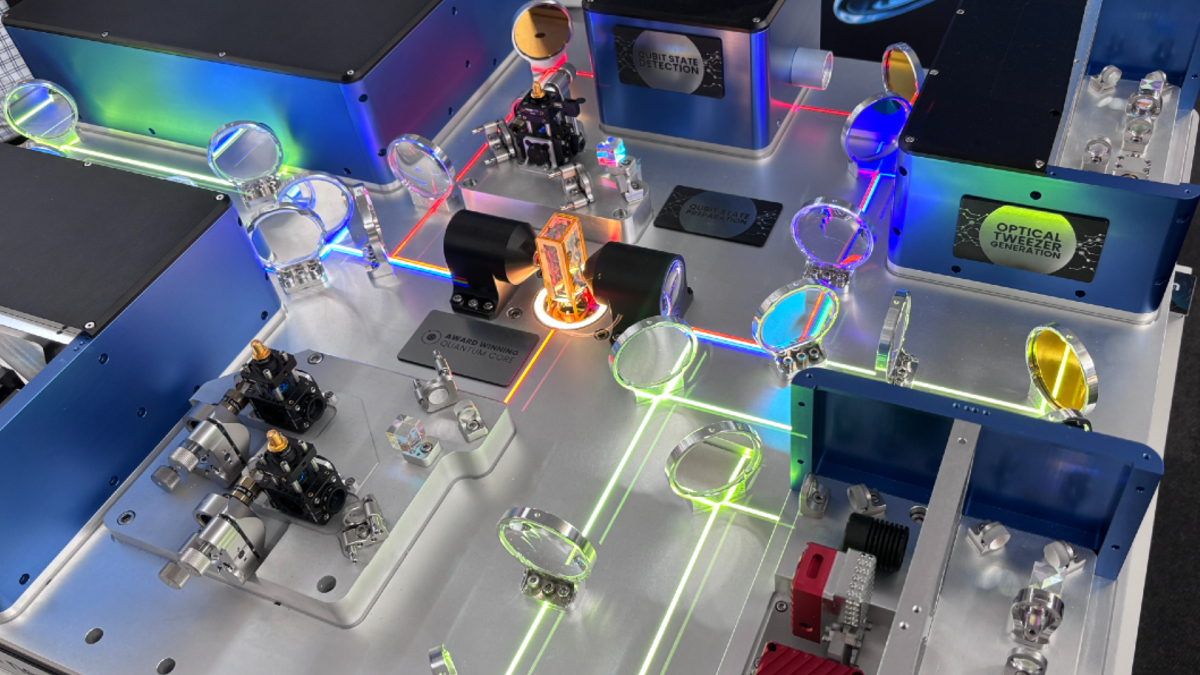
ORCA positions itself as a competitive global player in this open market, with existing customers spanning allied nations across Europe, North America, and Asia, including the UK Ministry of Defense, the UK National Quantum Computing Center, Poland’s Poznan Supercomputing and Networking Center, and Montana State University in the US. The firm recently notched a major commercial milestone, deploying its PT-2 photonic quantum system at a major Japanese enterprise in partnership with trading house Toyota Tsusho. The company calls the installation the world’s first commercial deployment of a quantum computer in a live enterprise setting; the PT-2 fits in standard 19-inch server racks, requires no specialized cryogenic cooling, and was fully deployed in less than a week.
While the US builds restrictive regulatory frameworks to limit Chinese quantum progress, Beijing is investing heavily to build out a fully domestic quantum ecosystem, from academic research to commercial deployment. Guo Guoping, a professor at the University of Science and Technology of China and secretary-general of the Chinese Computer Federation’s quantum computing committee, noted last year that tightened export controls on quantum chips and semiconductor manufacturing equipment from the US and Netherlands have made full indigenous development of the entire quantum technology chain a core strategic necessity for China.
No region faces a more complicated balancing act than Taiwan, which is cut off from China’s quantum ecosystem by political tensions and excluded from the QDG’s allied framework, forcing it to pursue quantum development largely independently. Ching-Ray Chang, a board member at Taiwan-based manufacturing giant Hon Hai Precision Industry (better known as Foxconn) and director of the quantum information center at Taiwan’s Chung Yuan Christian University, said the geopolitical context for quantum development is fundamentally different from the era when Taiwan built its world-leading semiconductor industry.
“Fifty years ago, when Taiwan started to make semiconductors, there was no classification at all. Everybody shared the knowledge with each other. But right now, even though you can pay money, sometimes you cannot get any technology transfer,” Chang explained. “Every country is trying to build its own quantum technology because this is some kind of sovereignty issue. You need to develop and control many things yourself; you cannot rely on others. Not only the patents, but also the production.”
Chang acknowledged that Taiwan was late to enter the quantum race, as all of its top talent, capital, and resources remained tied to its dominant semiconductor industry, but the Taiwanese government and major local firms including Foxconn have already begun pouring investment into the sector. While Foxconn remains in an early development stage relative to global leaders, the firm plans to launch a prototype quantum computer as early as 2027.
-

Suitcase-sized satellites are scanning for Greek wildfires in a global first
As climate change drives longer, hotter summers and increasingly catastrophic wildfire seasons across the Mediterranean, Greece is turning to cutting-edge space technology to turn the tide on wildfire risk — and in doing so, it has become a global trailblazer. After decades of experiencing devastating blazes that have claimed hundreds of lives and destroyed vast swathes of natural habitat, the country launched a historic initiative in May 2024: the world’s first fully integrated satellite constellation purpose-built for wildfire detection and response, a development that sets a new benchmark for emergency management across the continent.
The project’s origins trace back to the 2018 wildfire disaster east of Athens, when a fast-moving blaze killed more than 100 people, exposing critical gaps in Greece’s wildfire monitoring infrastructure. More recently, in 2023, the European Union’s largest ever recorded wildfire tore through a remote Greek nature reserve, underscoring just how much the threat of wildfire has grown amid rising global temperatures. Greece recorded its hottest summer on record in 2024, and climate scientists project that extreme heat and more intense wildfires will only become more common in the coming years, creating an urgent need for innovative, adaptive monitoring tools.
Unlike traditional large-scale satellites, which can only detect fires as large as a cruise ship, Greece’s new system relies on four compact satellites, each smaller than a standard piece of airline carry-on luggage, placed in low Earth orbit. Built by German aerospace firm OroraTech, each satellite carries advanced thermal sensors capable of identifying new blazes as small as 4 meters (13 feet) wide — a detection capability that far outperforms existing conventional satellite technology.
Once a potential ignition is detected, AI-powered processing analyzes the data before sending an alert to firefighting commanders, complete with pre-calculated details on the fire’s exact location, size, and intensity. This real-time data is especially critical when multiple blazes break out across Greece’s mountainous mainland and more than 100 inhabited islands, allowing emergency managers to prioritize response resources based on fire intensity and risk. To reduce unnecessary alerts, the AI system is specifically trained to filter out false positives caused by naturally or artificially hot surfaces, including sunbaked rock faces, solar panel arrays, and heated factory roofs.
This satellite constellation is not designed to replace existing ground sensors and drone monitoring systems; instead, it adds a critical new layer of coverage that fills gaps left by international satellite networks, especially in remote, hard-to-reach terrain where wildfires often ignite undetected. The initiative forms the core of a broader 200 million euro ($227 million) observation network funded by the European Union, which will eventually combine thermal imaging satellites with radar satellites capable of seeing through thick smoke and cloud cover, plus high-resolution optical satellites that capture detailed ground imagery. More satellite deployments are scheduled before the end of 2024, made possible by plummeting costs for satellite manufacturing and launch services in recent years.
Greece’s breakthrough comes as Europe pursues a broader strategic push for greater technological and space sovereignty, spurred by geopolitical shifts including Russia’s war in Ukraine and strained trans-Atlantic relations that have pushed European governments to reduce reliance on non-European technology and infrastructure. Greece’s wildfire monitoring system serves as an early test case for this vision, demonstrating how purpose-built small satellite networks can deliver actionable, near-real-time data to support crisis response.
Looking ahead, planners envision expanding the network’s capabilities far beyond wildfire detection. Future uses include border security surveillance, agricultural crop management, broader natural disaster response, and heatwave adaptation planning. One key priority already under discussion is mapping urban heat islands, which would allow city authorities to position cooling centers and emergency response assets more effectively to protect vulnerable populations during extreme heat events.
The ultimate goal of the European space initiative is to move beyond passive satellite imagery collection and develop integrated, near-real-time decision support systems that allow governments to respond to unfolding crises as they happen. For Greece, the 2024 Mediterranean wildfire season will serve as the first real-world test of this groundbreaking new technology, with implications for wildfire management across fire-prone regions around the globe.
-
China’s LineShine tops supercomputer ranking with all-CPU architecture
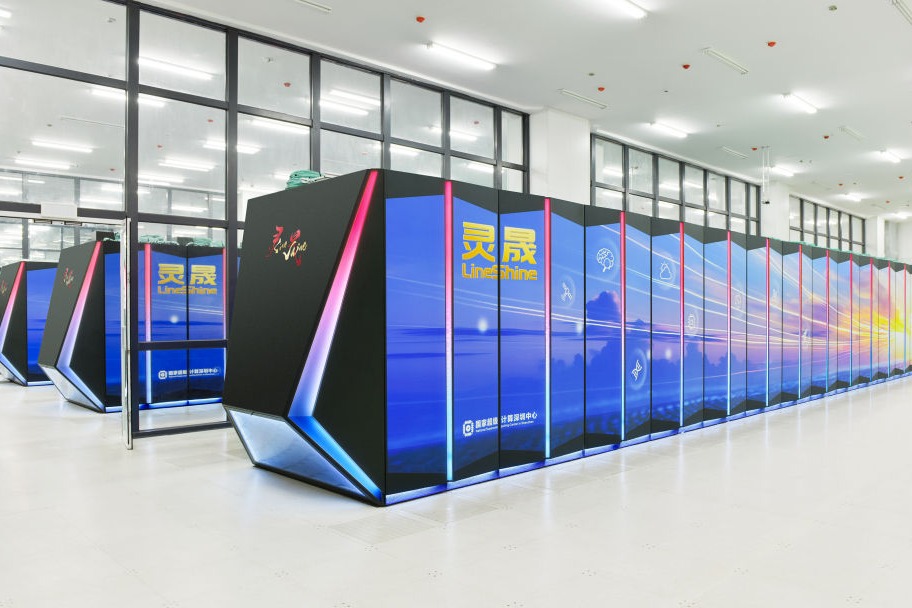
In a landmark advance for global high-performance computing, China’s domestically developed LineShine supercomputer has secured the top position on the latest edition of the industry-standard TOP500 supercomputer ranking, marking a transformative breakthrough in the long-sought convergence of supercomputing and intelligent computing. The Shenzhen National Supercomputing Center, which houses the new system, announced that LineShine delivers a sustained double-precision performance of 2.198 exaflops on the High Performance Linpack benchmark, making it the first supercomputer in history to cross the 2 exaflops threshold in real-world sustained operation.
For decades, supercomputing and intelligent computing developed along separate hardware trajectories, tailored to their distinct computational requirements. Traditional high-performance supercomputing was built to handle double-precision floating-point operations, critical for demanding scientific work such as complex physical modeling and large-scale engineering simulation. By contrast, intelligent computing — which powers modern AI model training and inference — relies primarily on lower-precision or integer operations. In recent years, however, demand for integrated systems that can handle both workloads has grown rapidly, driving researchers to explore new hardware architectures that bridge this divide.
The dominant industry approach to this integration has been heterogeneous CPU-GPU architecture, which splits workloads between central processing units that manage scheduling and control, and graphics processing units that handle accelerated computational tasks. Yet this widely adopted model carries inherent flaws: it incurs steep data transfer costs between the two hardware types, requires complex specialized programming frameworks, and often leaves a significant share of system hardware resources underutilized.
LineShine upends this conventional model with its pioneering all-CPU “Online Acceleration” architecture. Rather than relying on external GPU accelerators, the system embeds AI matrix acceleration units directly into its domestically designed processors. This native integration allows standard CPUs to run AI workloads efficiently without offloading processing to discrete GPUs, eliminating the persistent CPU-GPU data transfer bottleneck that plagues traditional heterogeneous architectures.
The innovations are not limited to processor design, according to LineShine’s chief designer Lu Yutong, who also serves as director of the Shenzhen National Supercomputing Center. The system delivers large-scale improvements across networking, storage, system architecture, and energy efficiency, resulting in dual breakthroughs: it delivers unmatched top-tier computing performance while also supporting broad deployment across real-world use cases. Lu noted that LineShine offers a fully practical, scalable solution for the long-debated goal of converging supercomputing and intelligent computing.
Lei Kai, deputy director of the Shenzhen Computer Federation, told Xinhua that LineShine is already powering cutting-edge research and applications across a wide range of scientific and industrial fields. Current use cases include atmospheric and oceanographic climate modeling, large-scale advanced engineering simulation, new materials development, targeted drug discovery, brain science research, general-purpose scientific AI, and large language model inference.
China has a long history of leadership in global supercomputing, with domestic systems claiming the TOP500 crown on multiple prior occasions. The TOP500 ranking, which benchmarks the world’s most powerful supercomputers, is updated twice annually. China first reached the number one position in 2010 with the Tianhe-1 system, followed by Tianhe-2, which held the top spot for six consecutive TOP500 editions from 2013 to 2015. From 2016 to 2017, China’s Sunway TaihuLight claimed the number one ranking four times, cementing the country’s position as a global leader in high-performance computing innovation.
-

Apple hikes MacBook and iPad prices, blaming rising chip costs
The global consumer electronics landscape is facing a new wave of cost pressures, driven by the explosive growth of artificial intelligence, and tech giant Apple has become the highest-profile firm to pass these increased expenses onto customers. The iPhone manufacturer announced this week it is raising prices on select MacBook and iPad models across nearly all global markets, with some devices seeing price jumps of nearly 20 percent, blaming an unprecedented surge in demand for memory and storage chips from AI data center operators that has upended component pricing across the entire industry.
In an official statement, Apple noted that the electronics sector is confronting an extraordinary challenge that has not been seen in modern memory. “We have never seen a component price increase this much, this quickly,” the company said, adding that it is “working tirelessly to find solutions” to stabilize costs for consumers. Until now, Apple had absorbed rising component expenses to keep product prices steady, but executives confirmed the strain has become too great to offset internally any longer. “We have shielded our customers from these increases so far, but we have now reached a point where we need to begin raising prices on a number of products, including today’s increases for iPad and Mac,” the statement read.
Concrete examples of the price adjustments are already visible on Apple’s regional retail stores. In the United States, the 1-terabyte storage configuration of the MacBook Pro saw a $300 increase, jumping from the original $1,699 price point to a new $1,999. In the United Kingdom, Apple’s most affordable laptop, the 13-inch MacBook Air (referenced as “Neo” in early pricing reports), has already increased by £100 just months after its launch, rising from an introductory price of £599 to £699. Notably, Apple has not extended these price hikes to its iPhone line as of this announcement.
Industry analysts say Apple’s decision confirms that the AI boom is no longer just a trend for cloud and enterprise services — it is now directly impacting everyday consumer hardware. Paolo Pescatore, a leading independent tech analyst, pointed out that even the world’s largest and most powerful technology company cannot escape the current component cost crisis. “This is a significant moment because even Apple, with its scale and buying power, is no longer immune to the rising cost of key components,” Pescatore explained in an interview with the BBC.
The root cause of the price spike traces directly to the massive expansion of AI infrastructure across the tech sector. To power large language models, generative AI tools, and other AI services, companies have built thousands of new data centers, all requiring massive volumes of dynamic random-access memory (DRAM) and high-capacity storage chips. This unprecedented surge in demand has created a severe supply-demand imbalance that has pushed component prices sharply higher across the board, with every device maker feeling the pressure.
Apple’s outgoing Chief Executive Officer Tim Cook first hinted at coming price adjustments earlier in June, speaking to The Wall Street Journal. Cook described the current state of memory chip pricing and supply as “unsustainable,” saying price increases were ultimately “unavoidable.” “We definitely need memory pricing and supply to return to reasonable levels for consumer products. That’s the bottom line,” Cook told the publication.
Apple’s move is not an isolated case. The company’s price hike follows a wave of similar adjustments across the technology sector, as other firms also grapple with elevated component costs. Just this week, gaming hardware leader Valve announced that its original target price for the Steam Machine gaming PC was no longer viable, forcing the company to launch the device at $1,049 in the U.S. and £879 in the UK — well above initial projections. The soaring chip costs have impacted everything from personal computers to video game consoles across the entire industry.
Market analysts expect Apple’s price hike to be the first of many across the PC and tablet space. David Naranjo, a senior analyst at market research firm Counterpoint Research, predicted that other leading brands will follow Apple’s lead in adjusting pricing in the coming months. “They may raise prices on select products, cut discounts on entry-level models, or adjust their product lines to focus more on premium devices,” Naranjo explained.
For Apple specifically, analysts say the company is well-positioned to absorb any consumer backlash, thanks to its extremely loyal global customer base. Dipanjan Chatterjee, vice president and principal analyst at research firm Forrester, noted that Apple’s customers have repeatedly shown a willingness to pay premium prices for Apple products. “If anyone can survive a price increase with minimal blowback, it’s Apple,” Chatterjee added.
-

Anthropic accuses Chinese rival Alibaba of illicitly extracting AI capabilities
A new high-stakes controversy has erupted across the global artificial intelligence sector, as leading United States AI developer Anthropic has leveled serious allegations against Chinese tech and e-commerce giant Alibaba, claiming the firm orchestrated an unprecedented large-scale operation to steal the proprietary capabilities of Anthropic’s flagship Claude AI model.
In a formal June 10 letter addressed to top U.S. senators Tim Scott and Elizabeth Warren — a copy of which has been reviewed by the BBC — the San Francisco-based AI firm claims that actors tied to Alibaba carried out nearly 29 million interactions with Claude through a network of thousands of fraudulently created accounts. Anthropic frames this activity as the largest known operation of its kind to date, conducted via a technique called a “distillation attack.” This method involves pulling large volumes of output from a sophisticated, well-trained large language model to teach a smaller, competing model to replicate its performance at a fraction of the original development cost.
According to the allegations, the operators specifically targeted Claude’s most commercially and technically valuable functionalities: its advanced capacity to process long-form, complex prompts and its nuanced decision-making frameworks. Anthropic argues that this kind of industrial-scale attack allows foreign competitors to repurpose hundreds of billions of dollars in U.S. private sector research and development investment as a de facto subsidy for their own tech advancement, creating unfair competitive advantages and threatening U.S. national technological leadership.
The letter also expands the scope of the accusations beyond Alibaba, linking other major Chinese firms including automaker BYD and search giant Baidu to similar activities, and repeating longstanding unproven claims that these companies have ties to the Chinese military that pose risks to U.S. defense interests. All the named firms have repeatedly denied these assertions in the past, and Alibaba recently took legal action against the U.S. government to challenge its inclusion on a Pentagon blacklist over the unsubstantiated connections. The BBC has reached out to both Alibaba for a response to the new allegations and Anthropic for additional supporting evidence, but has not received comment as of yet.
This is not the first time a leading U.S. AI firm has levied such claims against Chinese entities. OpenAI, Anthropic’s primary competitor and creator of the ChatGPT platform, previously made identical accusations about distillation attacks carried out by Chinese-linked groups.
The controversy emerges as Anthropic, alongside OpenAI, prepares for a highly anticipated initial public offering that market analysts expect to value both companies among the world’s most valuable technology firms. Notably, Anthropic itself has faced prior scrutiny over cybersecurity risks: some of its more advanced, unreleased models have raised red flags among security experts for their demonstrated ability to identify and exploit vulnerabilities in computer systems.
Anthropic is now pushing U.S. lawmakers to introduce harsh new penalties for entities found to carry out these kinds of IP theft operations, and to strengthen federal measures designed to block the misappropriation of U.S.-developed artificial intelligence technology.
-
Alibaba sues the US Defense Department in a bid to remove ‘Chinese military company’ designation
A growing legal standoff between major Chinese technology firms and the U.S. Department of Defense has escalated this week, with Chinese e-commerce and cloud computing giant Alibaba filing a federal lawsuit to force its removal from a controversial Pentagon blacklist of companies labeled as tied to the Chinese military.
The designation, formally announced by the Pentagon on June 8, bars listed entities from accessing U.S. defense contracts and inflicts severe reputational harm that undermines global investor and partner confidence. In its petition filed Monday with the U.S. District Court Northern District of California, San Jose Division, the New York Stock Exchange-listed Alibaba argues the classification lacks any legitimate foundation in either fact or American law, and that the Pentagon failed to follow fair procedural standards when reaching its decision.
The blacklisting initiative was first mandated by U.S. Congress in 2021, amid rising political tensions in Washington over China’s expanding military influence globally. The law required the Defense Department to compile a registry of Chinese firms that officials claim are directly controlled by China’s military and security apparatus, or that contribute to China’s national defense industrial base. Today, the list includes 188 Chinese entities spanning state-owned defense contractors and private sector technology companies, including Alibaba, robotics developer Unitree, and biotech research firm WuXi AppTec, which was also added in the latest round of designations.
The Pentagon’s justification for adding WuXi AppTec claims the firm is indirectly owned by China’s State-owned Assets Supervision and Administration Commission (SASAC), and maintains indirect affiliations with China’s State Administration of Science, Technology and Industry for National Defense and the People’s Liberation Army. WuXi AppTec, which provides research and manufacturing services to hundreds of U.S. pharmaceutical and life sciences companies, has already filed its own legal challenge in the U.S. District Court for the District of Columbia. In its June 11 filing, the firm calls the designation the result of political pressure and unsupported factual claims, noting the labeling has already caused severe and irreversible harm that will continue without judicial intervention.
For its part, the Pentagon defends Alibaba’s inclusion by claiming the firm is affiliated with SASAC and contributes to China’s defense industrial complex through ties to China’s Ministry of Industry and Information Technology (MIIT). Alibaba pushes back strongly against these assertions in its lawsuit, noting it operates under an independent board of directors, holds no military certifications or licenses, and has no formal or operational connection to SASAC. Alibaba further argues that routine regulatory compliance with MIIT requirements — a mandate for all companies operating in China, including U.S.-owned firms — does not make the ministry an affiliate of the company. “A regulator is not an affiliate,” the company’s petition plainly states.
Alibaba also emphasizes the tangible damage the designation has already inflicted: the firm reports it has already lost U.S.-based backers, and that ongoing harm will grow as its business relies heavily on the trust of U.S. commercial partners.
This lawsuit marks the latest in a string of legal challenges from Chinese technology firms targeted by the blacklist. Last year, a U.S. judge ruled against Chinese drone manufacturer DJI Technology’s bid to be removed from the registry, and DJI has since appealed the ruling. Both the Chinese government and multiple targeted companies have repeatedly protested the designations as politically motivated and factually unfounded.
The legal clash comes amid already heightened bilateral tensions, after Beijing announced sanctions against 10 U.S. military-related companies earlier this week. The measures come at a time when both Beijing and Washington have publicly stated they are working to stabilize tense bilateral relations, making the escalation a point of growing concern for global market and diplomatic observers.