分类: sports

  • ‘There’ll be a decision’: Roosters provide update on Lindsay Collins as mystery surrounds Sam Walker’s future

    ‘There’ll be a decision’: Roosters provide update on Lindsay Collins as mystery surrounds Sam Walker’s future

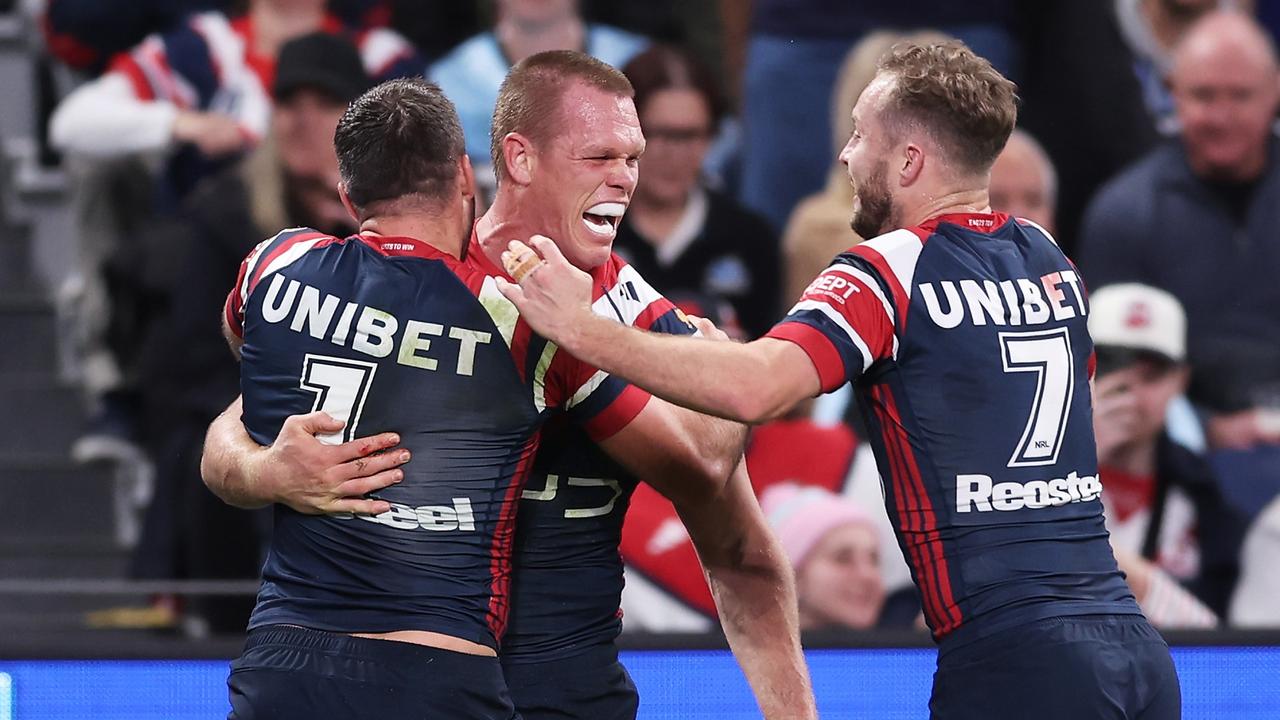
    The Sydney Roosters are prioritizing long-term player safety over a quick return for veteran forward Lindsay Collins, as the representative player continues his recovery from a recent concussion sustained in late June. Head coach Trent Robinson has outlined the club’s deliberate, cautious approach to Collins’ comeback, revealing a final call on the 30-year-old’s return to matchday action will be made next Monday.

    Collins suffered the latest head knock during a June 26 clash against the Brisbane Broncos, where he developed noticeable concussion symptoms during halftime and was immediately pulled from the game. The injury forced him to miss the high-stakes State of Origin decider, and he was also sidelined for the Roosters’ narrow victory over the Parramatta Eels last weekend. He has not been included in the matchday squad for Friday’s highly anticipated showdown against the Melbourne Storm, though a potential return for the following week’s fixture against the Newcastle Knights remains on the table if his recovery progresses as expected.

    The club’s extra precaution stems from Collins’ well-documented history of repeated head knocks, and as of this week, the forward has not yet resumed full contact training with the squad. “He’s had a really good week, and I’d say Monday there’ll be a decision on the following week,” Robinson told reporters ahead of the Storm clash. “It’s just a cautious approach. Obviously he couldn’t play Origin and that took him out, so we’ve just taken a bit of a longer route to get him back on the field and do it in the right way.”

    In other squad updates, strike centre Robert Toia, who was initially named on the bench as backline cover, will also miss Friday’s match after carrying heavy fatigue from a gruelling State of Origin campaign. The Roosters will welcome back two representative players, however: hooker Reece Robson and young halfback Sam Walker, both of whom were rested for last week’s Eels fixture to recover from their Origin commitments.

    Amid ongoing contract negotiations surrounding Walker’s future with the club, Robinson offered glowing praise for the 20-something playmaker following his breakout maiden State of Origin series for the Queensland Maroons, where he claimed the prestigious man-of-the-match award in the series’ second game. Robinson highlighted the clear developmental benefits Walker gained from the high-level representative experience, noting that the opportunity has already elevated his on-field performance back at club level.

    “I’ve seen some really good understanding. I thought he played exceptionally well in his first series. I thought his understanding of what was needed was great,” Robinson said. “I’ve seen some real benefits walking back in here from that time, so that’s a real positive. Sammy’s been on a path for a long period of time. He’s played a lot of footy already, over 100 games at his age. Now he’s played Origin, and the best years are still yet to come for Sammy. That development and any experience you get over and above the round games of footy – whether you play finals footy, whether you play grand finals, whether you play State of Origin, whether you play for your country – they’re all experiences that layer on towards better development as a player.”
  • Tens of thousands of Argentine soccer fans celebrate their team’s World Cup semifinal victory

    Tens of thousands of Argentine soccer fans celebrate their team’s World Cup semifinal victory

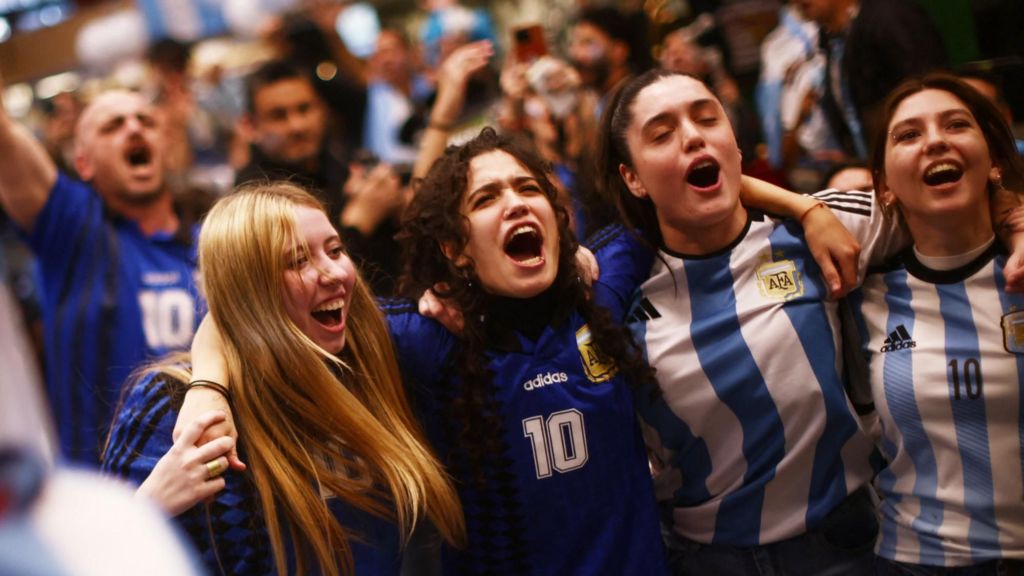
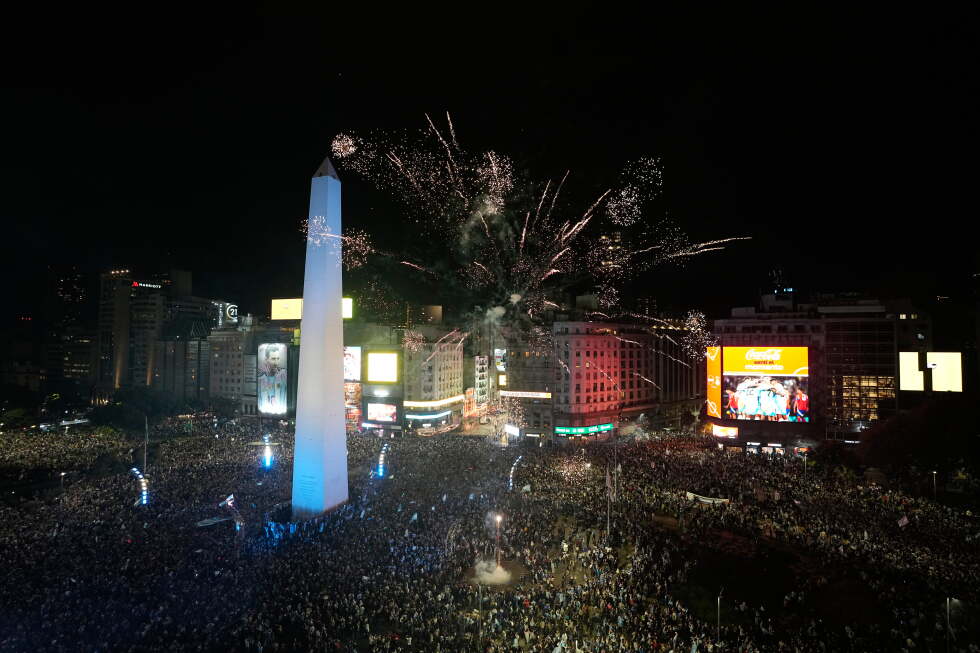
    BUENOS AIRES, Argentina – As the final whistle blew on a heart-stopping 2-1 World Cup semi-final victory over England in Atlanta on Wednesday, waves of ecstatic Argentine soccer fans poured into the capital’s downtown streets, turning a cold winter evening into a collective outpouring of national joy decades in the making.

    From the towering Obelisk monument to downtown plazas, fans turned the city into a sea of the iconic light blue and white of Argentina’s flag. Screams of celebration mixed with tears of emotion, as the most fervent revelers sprinted shirtless through steady rain, while young fans climbed lamp posts and traffic signals to wave national banners high. The party, fans confirmed, would rage long into the night, undeterred by the dropping winter temperatures.

    The match’s deciding moment came two minutes into stoppage time, when Lautaro Martinez slotted home the winning goal, punching the defending 2022 World Cup champions’ ticket to Sunday’s final against Spain. For many of the thousands gathered at the Obelisk, the win meant far more than a spot in the sport’s biggest match. The rivalry between Argentina and England extends far beyond the soccer pitch, rooted in the decades-long dispute over the Falkland Islands – called the Malvinas by Argentina, which claims the territory as its own sovereign land – and the 1982 Falklands War, where an Argentine military dictatorship’s failed attempt to retake the islands left 649 Argentine soldiers, most of them young, under-resourced conscripts, dead.

    “This is not just about football, it’s about beating the country that broke our hearts,” said 40-year-old Maria Bertero. “My heart still aches for all the young boys who were sent to their deaths.” As she spoke, the pain of history softened into unbridled joy for Wednesday’s result: “It’s tremendous. It’s magic. It makes me proud to be Argentine.”
    Even a 48-year-old Catholic nun, Rosana Beto Cruz, joined the throng of strangers jumping and dancing together around the Obelisk. “The World Cup, our national team, it makes this happen,” she said, marveling at the spontaneous unity of the crowd.

    The result has not been without controversy online, where unsubstantiated conspiracy theories have circulated claiming FIFA and match referees colluded to advance superstar Lionel Messi and Argentina to the final, fueled by several contentious in-game decisions. But the baseless claims did nothing to dampen the euphoria on Buenos Aires’ streets.

    Jorge Luis Lema, 38, who watched the match at a downtown bar, recalled the crowd’s somber mood through most of the game, until Enzo Fernandez’s unstoppable 85th-minute strike turned tension into pure celebration. “All this talk about it being fixed, about FIFA being involved, have they even looked at what’s happening on the field? How much we’ve suffered? It’s a lie. Football is football. Whoever wins, wins. And Argentina won once again,” Lema said.

    The soccer rivalry between the two nations dates back to the 1986 World Cup, when Diego Maradona’s infamous “Hand of God” goal and his iconic “Goal of the Century” carried Argentina to a legendary quarter-final victory over England, cementing the match-up as a symbolic clash beyond sport. Now, 39-year-old Messi – who spent years bearing the weight of Maradona’s legacy before claiming Argentina’s first World Cup title in 36 years at the 2022 Qatar tournament – has once again exceeded the nation’s sky-high expectations, fans said.

    “Seeing Messi playing football like this, at his age, it just leaves me speechless,” said Matías Adorno, 28, wearing a Messi jersey in central Buenos Aires’ main fan gathering plaza. “As Argentines, we’ve always put so much pressure on him. But he’s achieved everything I could imagine.”

    Chants of “For the Malvinas, for Diego, for Leo’s last tournament” echoed through the crowds, with fans bouncing in unison to the decades-old war-era chant “El que no salta es un ingles” – “Whoever doesn’t jump is an Englishman.”
    Beyond soccer and historical rivalry, the night of celebration served as a rare moment of national unity for a country deeply polarized by the radical libertarian presidency of Javier Milei, and wearied by repeated cycles of crippling economic crisis that have sent living costs soaring.

    “It is just pure joy, especially given the really bad moment we’re going through now, with life being so expensive, with this president who’s dividing us,” said Yanina Quinteros, celebrating with her 6-year-old daughter perched on her shoulders. “Tonight, we’re together. All of us, grandparents, children, mothers, fathers, we’re all just here to celebrate tonight.”

  • Rumbunctious pro-Argentina crowd makes defending World Cup champions feel at home in Atlanta

    Rumbunctious pro-Argentina crowd makes defending World Cup champions feel at home in Atlanta

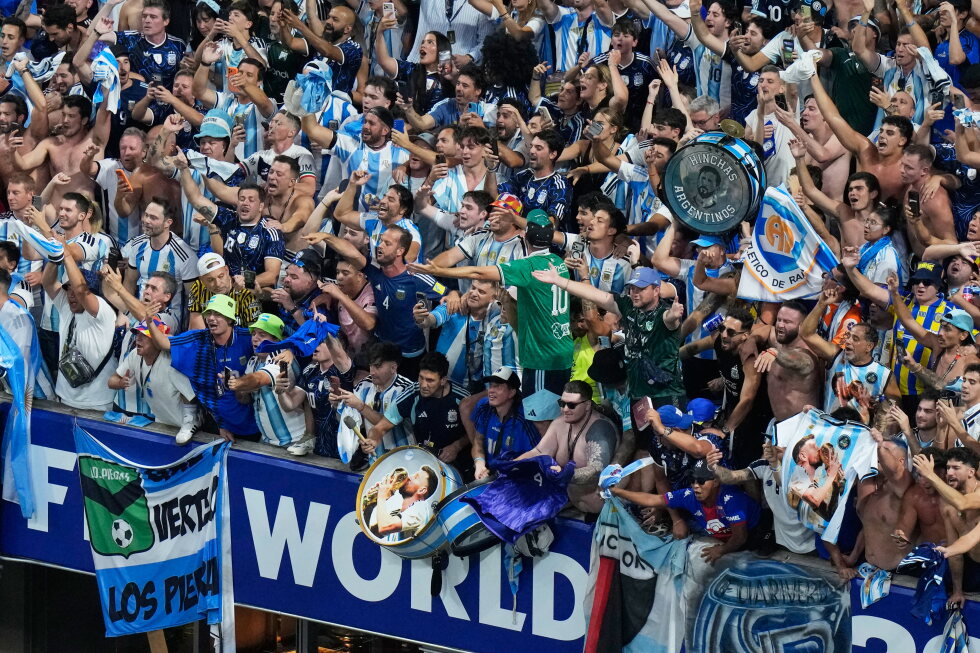
    ATLANTA — Argentine soccer supporters have long held a reputation for their unbridled, raucous devotion to their national men’s team, and that unwavering, electric passion turned Atlanta’s Mercedes-Benz Stadium into a home-field advantage for the side during their dramatic 2025 FIFA World Cup semifinal clash against England.

    Though thousands of miles from Buenos Aires, the overwhelmingly pro-Argentina crowd turned the venue into a sea of light blue and white, serenading their players with constant chants, traditional folk songs, and deafening roars that echoed through the stadium from the opening kickoff to the final whistle.

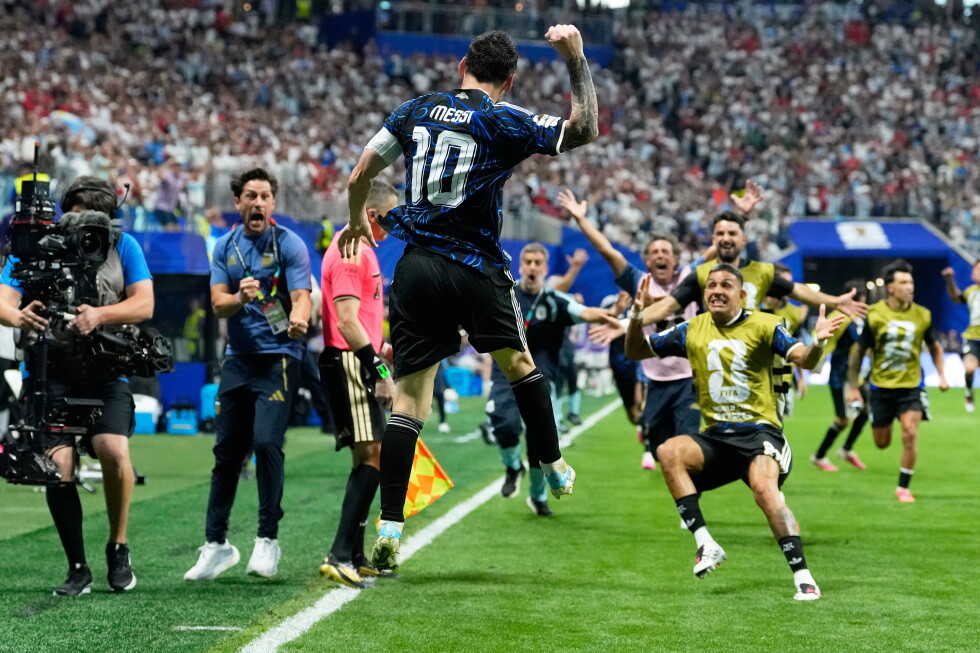
    The energy boiled over into unbridled celebration in the 85th minute, when Enzo Fernandez slotted home the equalizing goal off a precision assist from captain Lionel Messi. The eruption of joy sent cups and water bottles flying from the upper concourse down to the field level, dousing sections of the stands as fans jumped and screamed. Fans ripped off their shirts and swung them wildly over their heads, and the cheering showed no signs of fading even minutes after Lautaro Martinez netted the game-winning goal to seal a 2-1 come-from-behind victory for Argentina.

    After the final whistle, Messi, Fernandez and other players celebrated by parading around the pitch shirtless, drinking in the chaotic, joyful atmosphere as the crowd continued to roar, neither the fans nor the players willing to let the iconic moment end.

    Argentina head coach Lionel Scaloni called the fan support unmatched, speaking to reporters after the win. “No words, no words. A joy for our country, for our people,” Scaloni said. “We are unique, truly, and it’s not arrogance, it’s from the heart. We are unique. These people today carried us to win the match, so I’m grateful.”

    It was only after security personnel began moving through the stands, blowing whistles to guide exiting crowds, that the massive throng of Argentine supporters began slowly making their way toward the stadium exits.

    Gaston Reinoso, an Argentine expatriate who traveled from Houston to Atlanta to attend the match, said the fan base’s collective passion defies simple explanation. “It’s really hard to explain the passion that these fans have,” Reinoso said. “When you are Argentinian, you feel soccer like religion. This may be everything for you. You can see an event like this, it’s a moment when people forget about religion, politics, everything. Everyone is united. This is Argentina, there’s nothing like it.”

    While Argentine fan bases have drawn criticism for unruly conduct at some past World Cup tournaments, Reinoso said the city of Atlanta has welcomed the team and its supporters with open arms throughout the tournament, even as the side has repeatedly fallen behind early before rallying for wins. Slow, underwhelming starts have become a pattern for Argentina in this World Cup, Reinoso noted, but that has done nothing to weaken the fan base’s steadfast support.

    Wednesday’s match marked a return to Atlanta, the site of one of the tournament’s most dramatic earlier comeback wins for Argentina: a 3-2 victory over Egypt in the group stage. Pulling off another unlikely late comeback with two goals in the closing minutes, fans sent cascades of water flying through the stadium in celebration.

    “It was like a spray from God, from the sky,” Reinoso said of the flying water. “I started crying.”

    Next up for Argentina is a spot in the World Cup final, scheduled for this Sunday in East Rutherford, New Jersey, where they will face off against Spain for the global title. Few would bet against a massive turnout of blue-and-white clad Argentine supporters in the stands, bringing their signature passion to the sport’s biggest stage.

  • ‘That’s why he’s the king’ – Messi sets up third World Cup final

    ‘That’s why he’s the king’ – Messi sets up third World Cup final

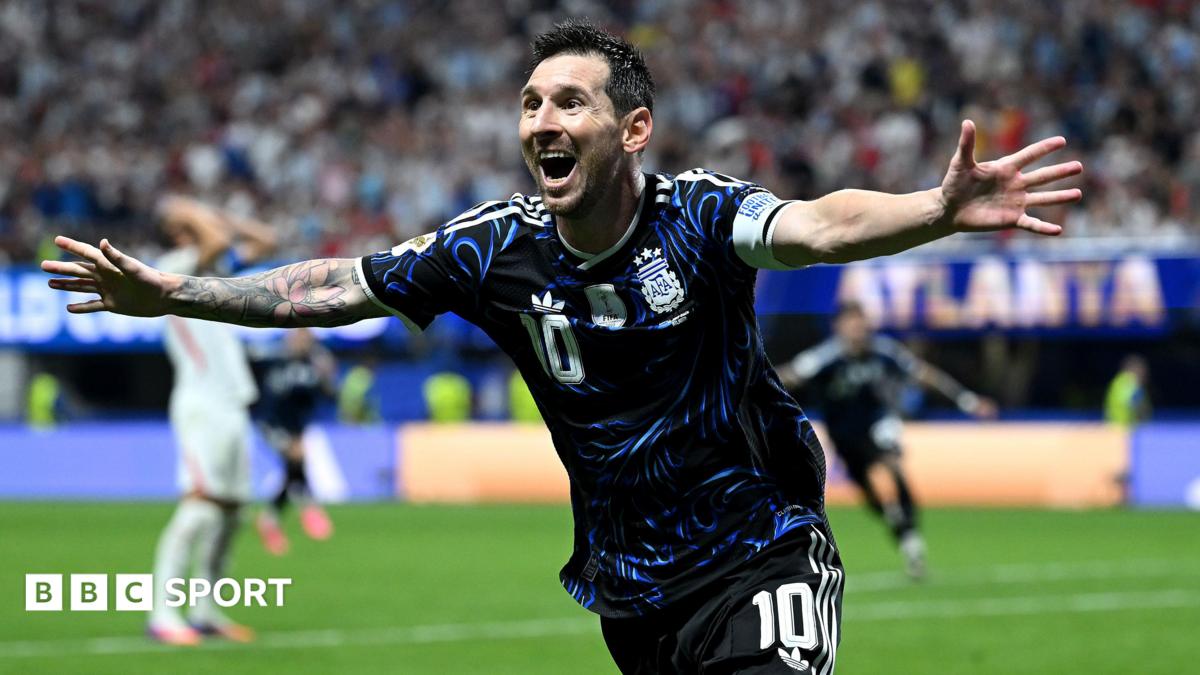
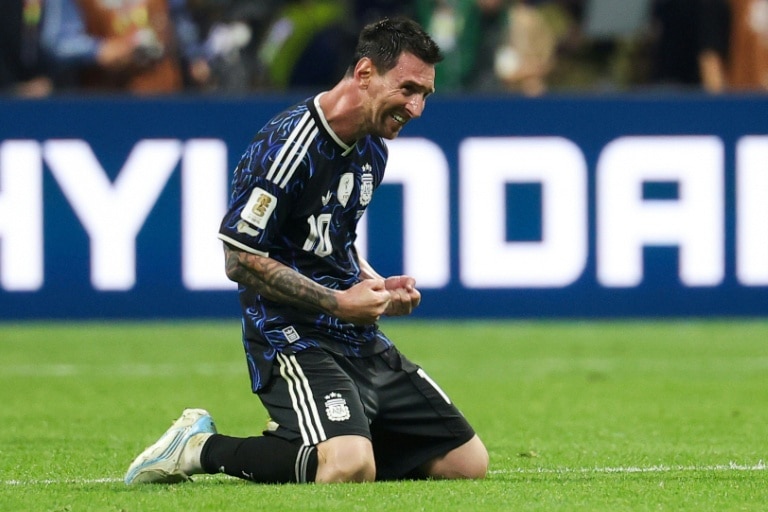
    Four years ago in Qatar 2022, the world believed Lionel Messi had written the final chapter of his World Cup story. At 35, the Argentine icon lifted the sport’s biggest prize, confirming his status as football’s undisputed greatest and announced the tournament would be his last. What no one predicted was that four years later, at 39, he would deliver one of the most devastating performances in World Cup semifinal history, crushing England’s title hopes and booking Argentina a spot in their second consecutive World Cup final.

    The stage was set in Atlanta for Messi’s first ever career meeting with England — a fixture Three Lions fans and manager Thomas Tuchel would quickly come to regret. A gritty, attritional first half saw the veteran operate in a more central role, showing only flashes of his trademark quality. That changed after Anthony Gordon put England ahead in the 55th minute. When Tuchel opted to bring on extra defenders and drop his side into a deep block, Argentina dominated 88% of possession over the next 37 minutes, and Messi, shifted out to the right wing, turned the tie into a one-man show.

    The statistical breakdown of Messi’s performance defies belief. He completed nine successful dribbles — more than the entire England side combined, which managed just seven. He recorded seven touches in the opposition penalty area, matching the total of every English player on the pitch. He created four scoring chances, put in nine game-high crosses, and delivered the two decisive assists that turned a 1-0 deficit into a 2-1 come-from-behind win. He is the first player since record-keeping began in 1966 to notch nine dribbles and two assists in a single World Cup knockout match.

    Messi’s first assist came from a well-rehearsed corner routine in the 85th minute, finding Enzo Fernandez unmarked on the edge of the box to slam home the equaliser. Then, in stoppage time, he delivered a pinpoint cross that Lautaro Martinez nodded into the back of the net for the winning goal, sending Argentina through to Sunday’s final in New Jersey against Spain — the country where Messi spent the bulk of his club career with Barcelona.

    This 2026 tournament has cemented Messi’s unprecedented World Cup legacy. Already the tournament’s all-time top scorer with 21 World Cup goals — 15 of which have come after his 35th birthday — he has notched eight goals at this edition, tying Kylian Mbappe for the tournament lead. With four assists to Mbappe’s three, he holds the advantage in the Golden Boot tiebreaker, and is just one assist behind tournament leader Michael Olise, putting him in contention for both the top scorer and top assister honors.

    What makes this run all the more remarkable is the unlikely journey that brought Messi to this point. Back in 2016, at 29, a heartbroken Messi retired from international football after losing the 2014 World Cup final and three consecutive Copa America finals. He reversed that decision, went on to win two Copas America, and lifted the 2022 World Cup in Qatar — a moment that seemed to complete his career. When he left European football for Inter Miami in MLS a year later, the general assumption was he would wind down his career far from the biggest international stages. Even 12 months ago, few expected him to feature at this 2026 tournament.

    Now, he has reinvented his game once again. Biographer and football journalist Guillem Balague notes Messi has overhauled his tactical approach at least five times throughout his career, and this tournament is no exception: before the England match, he had walked 47% of the total distance he covered across the tournament — the highest share of any outfield player, conserving energy for the moments that matter. He has now scored or assisted in 13 consecutive matches for club and country; a goal involvement in Sunday’s final against Spain will tie his 2011 record of 14 straight games with a goal contribution, and he will become only the second player in history, after Cafu, to feature in three World Cup finals.

    Footballing figures across the globe have poured praise on Messi after the semifinal masterclass. Argentina manager Lionel Scaloni said: “He’s the best player in history, I don’t know what else he would have to do to prove that. The majority of Spaniards love him.” BBC pundit and former England defender Micah Richards added: “They have Lionel Messi. They have the ‘GOAT’. The greatest of all time. We thought it could have been Jude Bellingham or Harry Kane, but this is why he is the king. He walks around the pitch and then he comes alive when the ball comes to his feet. This genius comes into play and sometimes that is just the difference.”

    England captain Harry Kane acknowledged Messi’s match-winning quality, saying: “For large parts of the game we dealt with him really well, but as always with the most dangerous players in the world when they have the ball they can create something. He’s one of the best players ever for a reason.” Former England goalkeeper Joe Hart pointed to England’s tactical choice that opened the door for Messi: “The guys went back to what they did against Mexico and Norway where they locked the door. What that did was free up Lionel Messi, who had the skeleton key – he absolutely ran the show for the last 15 minutes.”

    Many had assumed 2022 would be Messi’s final World Cup, and even after this run, logic suggests 2030 — when Messi will turn 43 — is too far out. But for an eight-time Ballon d’Or winner who has defied every expectation and prediction at this stage of his career, one thing is clear: no one should dare presume what comes next for the greatest player the game has ever seen.

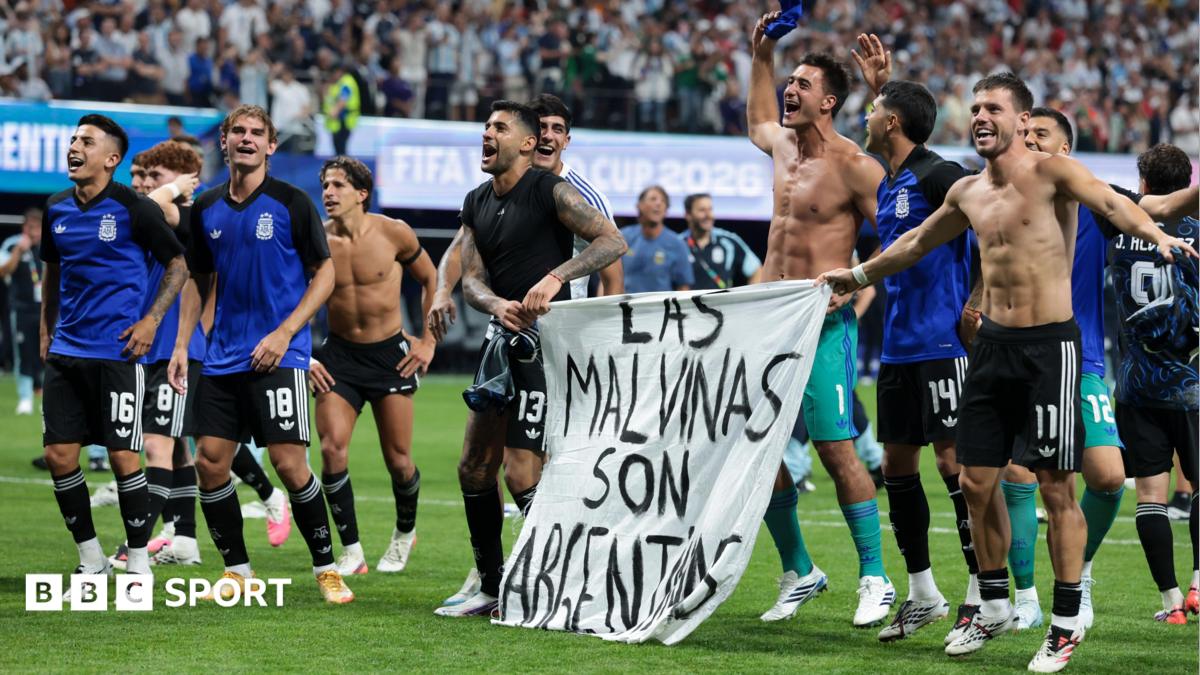
  • Argentina face action after waving Falklands banner

    Argentina face action after waving Falklands banner

    A stunning late comeback victory for defending champions Argentina over England in the 2026 World Cup semi-final has been overshadowed by a provocative political gesture that now puts the South American side at risk of formal disciplinary action from global football governing body Fifa. Playing in Atlanta, Argentina overturned a 1-0 deficit to score two late goals, securing a 2-1 win over Thomas Tuchel’s England side and booking their place in Sunday’s tournament final against Spain.

    What should have been a moment purely of sporting celebration quickly turned controversial, when members of the Argentina squad unfurled a banner emblazoned with the phrase “Las Malvinas son Argentinas” — translated as “The Falklands are Argentine” — a reference to the long-running sovereignty dispute over the South Atlantic territory. The Falkland Islands, a self-governing British Overseas Territory located around 300 miles off Argentina’s eastern coast, has been contested by Buenos Aires and London for decades. The disagreement erupted into open armed conflict in 1982, when Argentine forces invaded the islands, leading to a 74-day war that claimed the lives of 655 Argentine servicemen, 255 British military personnel, and three civilian residents of the islands.

    This is not the first time Argentine football authorities have faced sanction from Fifa over this exact gesture. Back in 2014, the Argentine Football Association was fined £20,000 after players displayed the same slogan on a banner ahead of a friendly match against Slovenia. Fifa ruled at the time that the action violated its regulations banning political statements and player misconduct.

    In the wake of Wednesday’s semi-final win, senior Argentine political figures have publicly backed the team’s gesture. Argentina’s vice-president Victoria Villarruel took to social media platform X to write that the match “wasn’t just another match”, pairing her post with a video appearing to show Argentine service members. “The Falklands are Argentine,” she added. “They banned bringing them to the stadium and forgot that we carry them in our blood and our hearts.” In pre-match comments, Villarruel had already framed the fixture as an opportunity “to put the invaders in their place”, stoking political tensions ahead of kickoff.

    This is not the first incident of its kind during Argentina’s 2026 World Cup run: following the team’s dramatic 3-2 round of 16 victory over Egypt, players sang chants referencing the Falkland Islands alongside tributes to Argentine legends Diego Maradona and Lionel Messi.

    Notably, Argentina manager Lionel Scaloni had explicitly stated ahead of the semi-final that he refused to conflate football and politics. “The reality is that this is a football match. I can’t mix things up, especially out of respect for what happened so many years ago,” Scaloni told reporters ahead of the game. “It was a very sad period in our history, and there isn’t much we can do about it, that’s the reality. Things are happening elsewhere in the world, and we criticise the existence of war. We certainly remember those people, of course. But it is a football match – we shouldn’t confuse the two.”

    Due to longstanding historical tensions between the two nations, the semi-final was already held under heightened security measures, with organizers preparing for potential unrest surrounding the high-stakes fixture. The match was ultimately decided by late goals from Enzo Fernandez and Lautaro Martinez, who turned the game on its head to send Argentina through to the final, leaving England eliminated from the tournament at the semi-final stage. Fifa has yet to announce the timeline or details of any disciplinary proceedings against Argentina following the banner protest.

  • England’s Tuchel: ‘Easy to say that it was wrong’ to play defensive with lead vs Argentina

    England’s Tuchel: ‘Easy to say that it was wrong’ to play defensive with lead vs Argentina

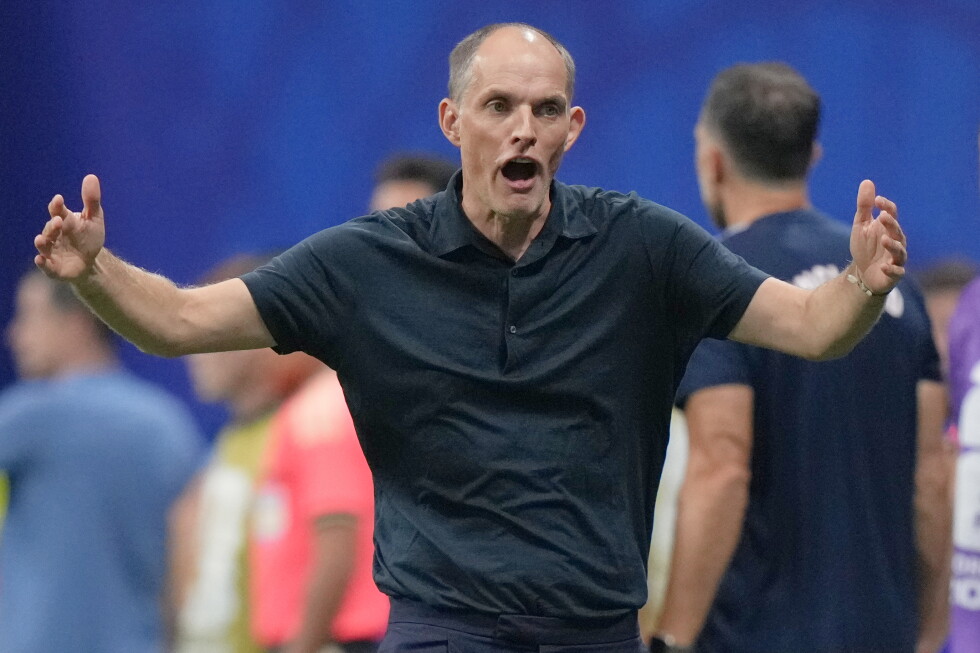
    ATLANTA — In a stunning, last-minute turnaround at the World Cup semifinals, Argentina pulled off a dramatic 2-1 victory over England on Wednesday, booking their ticket to the tournament final against Spain courtesy of two late goals set up by legend Lionel Messi. The result leaves England’s decades-long dream of reaching their first World Cup final since 1966 in tatters, and has put head coach Thomas Tuchel’s late-game tactical choices under intense scrutiny.

    England had held a solid 1-0 lead since Anthony Gordon found the back of the net in the 55th minute, and looked poised to hold onto the advantage through the final whistle. As the clock wound down, Tuchel made a series of adjustments intended to fortify England’s goalmouth and defend their one-goal advantage: the manager shifted to a five-back formation, substituting defender Reece James for Dan Burn in the 82nd minute, and swapping midfielder Declan Rice for defender Nico O’Reilly to add more aerial presence to the box.

    Tuchel later explained the decision, noting that England had been repeatedly vulnerable to Argentina’s crossing attacks early in the half. “They won every header. They kept crossing and crossing. So we went to a back five to close the gaps inside and be stronger in the air,” he said, acknowledging full responsibility for the result. “Straight after our goal, with no substitutions, we just conceded way too many crosses and way too many chances. So we tried to help. But of course the responsibility is on the coach. And … if it doesn’t go well, it’s easy to say that it was wrong.”

    The tactical shift failed to contain Messi, who orchestrated Argentina’s late surge with masterful play. Just three minutes after Tuchel’s substitutions, the Argentine star played a sharp pass into the path of Enzo Fernandez just outside the 18-yard box. England’s defenders failed to close down the midfielder, who fired a curling precise right-footed strike that left diving goalkeeper Jordan Pickford with no chance, equalizing the score in the 85th minute.

    Argentina kept piling on the pressure as England’s deep-block defense continued to crack. After hitting the crossbar and wasting another close header opportunity, Messi delivered yet another perfect cross in the second minute of stoppage time. England defenders lost track of striker Lautaro Martinez, who powered a close-range header into the net to secure the winning goal.

    Martinez attributed the comeback to England’s tactical choice to drop deep and defend their lead after taking the lead, which drained the English side of energy and gave Argentina room to work. “They got tired. They pressed for 60 minutes and then just ran out of steam. They got their goal and then sat back. That gave us more composure to move the ball around and stretch the pitch,” Martinez said.

    England captain and striker Harry Kane reflected on the devastating loss, noting that the team’s decision to prioritize defending after taking the lead ultimately cost them a spot in the final. “We played a good game for the large majority of it. Once we went 1-0 up, we seemed to just try and hold on, which at this level is not enough,” Kane said. “Just gutted, gutted. Because we’ve worked so hard to get here.”

    Per data from statistics firm Opta, this defeat marks only the second time this century that the team that scored first in a World Cup semifinal went on to miss out on the final. The first time also involved England, in their 2018 semifinal loss to Croatia. Argentina will now face Spain, led by young star Lamine Yamal, in the World Cup title match this Sunday.

  • Argentina fans celebrate World Cup win over England

    Argentina fans celebrate World Cup win over England

    Jubilant scenes erupted across Argentina and major diaspora communities in the United States this week as the national men’s football team sealed a dramatic semi-final victory over England, punching their ticket to the World Cup final. From bustling city plazas in Buenos Aires to suburban neighbourhoods in Miami and New York, millions of fans flooded the streets waving sky-blue and white striped flags, blowing vuvuzelas, and singing traditional chants long into the night. The win, which came after a tightly contested match that kept supporters on the edge of their seats, has united the global Argentina fanbase in collective excitement, with many describing the moment as a once-in-a-generation opportunity to lift football’s most coveted trophy. Local authorities in major Argentine cities reported large but peaceful gatherings, with fans sharing hugs and taking to social media to post clips of their celebrations that have since gone viral across platforms.

  • The World Cup final is set, with Messi and Argentina facing Yamal and Spain for the title on Sunday

    The World Cup final is set, with Messi and Argentina facing Yamal and Spain for the title on Sunday

    The expanded 48-team 2026 FIFA World Cup co-hosted across the United States, Canada and Mexico is days away from crowning a new champion, and the title decider has delivered one of the most anticipated storylines in modern soccer history. When Lionel Messi’s defending champion Argentina faces Spain’s rock-solid defensive side in East Rutherford, New Jersey this Sunday, it will be more than a fight for the golden trophy—it is a clash of contrasting styles, generations, and long-brewing destiny that no soccer fan could have scripted.

    The road to the final began with two breakout semifinal performances. On Tuesday, Spain booked their spot with a commanding 2-0 victory over France, while a day later, tournament comeback kings Argentina pulled off another late rally to defeat England 2-1, punching their ticket to the decider.

    Argentina enters the match chasing history that has not been made in more than 60 years. The South American side is vying for its fourth World Cup title, and would become the first nation to win back-to-back World Cups since Brazil achieved the feat in 1958 and 1962. Leading the charge is Messi, the tournament’s all-time leading goalscorer, who has powered Argentina to a tournament-high 19 goals so far—an explosive attacking record that stands as the best in the competition.

    Standing in their way is a Spanish side built on elite defensive discipline that has been nearly unbreakable throughout the tournament. Spain has conceded just one goal across seven matches, the lowest total of any team, earning their place in the final as they chase their second World Cup title, their first coming in 2010. Ranked second in the pre-tournament FIFA world rankings behind Argentina’s top spot, La Roja have been almost unbeatable for more than a year: they carry a 37-match unbeaten streak across all competitions into Sunday’s final, with 28 wins and nine draws since their last loss, a 1-0 defeat to Colombia in March 2024.

    What makes this final even more remarkable is the twist of fate that brought the two teams to New Jersey, after a planned pre-tournament showcase never came to be. As the reigning South American and European champions respectively, Argentina and Spain were scheduled to meet in a high-profile Finalissima clash in Doha, Qatar last March. The match was ultimately canceled over security concerns, sparked by escalating regional unrest linked to the ongoing conflict involving Iran, the United States and Israel. What was supposed to be a preview of a World Cup final has instead become the main event, with the two sides set to square off not at Lusail Stadium—site of Argentina’s iconic 2022 penalty shootout win over France— but at a venue just outside New York City for soccer’s biggest stage.

    Beyond the team rivalry, the final will deliver a once-in-a-generation meeting between two Barcelona superstars separated by 20 years. A viral 2007 photograph captured Messi, then a rising young star participating in a UNICEF initiative, posing with an infant. That baby was Lamine Yamal, now Spain’s breakout young left-footed talent who followed in Messi’s footsteps to become a star at Barcelona. Two decades after that innocent photo op, the pair will share the World Cup final pitch, capping the tournament with a narrative that feels too perfect to be scripted.

    A look at both teams’ journey to the final highlights their contrasting paths to the decider. Spain have remained unbeaten throughout this World Cup, posting six wins and one draw across seven matches, with 13 goals scored and just one conceded. Their campaign began with a tense 0-0 draw against Cape Verde in the group stage, followed by a 4-0 rout of Saudi Arabia and a 1-0 win over Uruguay. In the knockout round, they dismantled Austria 3-0, edged Portugal 1-0, defeated Belgium 2-1, and shut out France 2-0 to reach the final.

    Argentina, by contrast, has been perfect so far, with seven wins from seven matches and zero draws, netting 19 times while conceding seven. The Albiceleste started their group stage campaign with a 3-0 win over Algeria, a 2-0 defeat of Austria, and a 3-1 victory over Jordan. They have lived up to their “comeback kings” reputation in the knockout round, grinding out tight wins: 3-2 over Cape Verde, 3-2 over Egypt, 3-1 over Switzerland, and the late 2-1 turnaround against England that booked their final spot. Argentina also brings an impressive long-form World Cup unbeaten streak into Sunday: they have not lost a World Cup match since their opening group game defeat to Saudi Arabia in 2022, going 11 wins and two draws over their last 13 outings.

    As the 104-match, five-week extravaganza comes to a close, all eyes turn to the East Rutherford pitch. One side boasts the most dynamic attack in the tournament, the other boasts the tightest defense. One is led by the greatest goalscorer in tournament history chasing back-to-back titles, the other is a youthful defensive juggernaut led by the sport’s next great star chasing a second world crown. After a canceled pre-tournament match and a months-long journey across North America, the biggest World Cup in history is set for a picture-perfect ending that no fan will want to miss.

  • Messi’s Argentina stun England in comeback to reach World Cup final

    Messi’s Argentina stun England in comeback to reach World Cup final

    In a drama-charged World Cup semi-final that will go down as one of the most memorable chapters in the decades-long Argentina-England football rivalry, Lautaro Martinez’s 92nd-minute match-winning header sealed a dramatic 2-1 comeback victory for defending champions Argentina, who will now face European champions Spain in Sunday’s historic final. Played out in front of a packed crowd of 68,239 fans at Atlanta’s Mercedes-Benz Stadium, the contest lived up to every bit of its billing as a clash between two of the sport’s most storied national sides.

  • One Extraordinary Photo: France’s Kylian Mbappe shows his frustration against Spain

    One Extraordinary Photo: France’s Kylian Mbappe shows his frustration against Spain

    ARLINGTON, Texas — For veteran Associated Press photojournalist Julio Cortez, a Pulitzer Prize winner and AP’s regional chief photographer based in Dallas, this Women’s World Cup assignment marked his third time covering the global tournament, capping 16 years of work with the news agency. What began as a quiet stretch of the match shifted into one of the most memorable photographic opportunities of the entire competition, capturing the raw, unfiltered heartbreak of elite sports at its highest stakes.

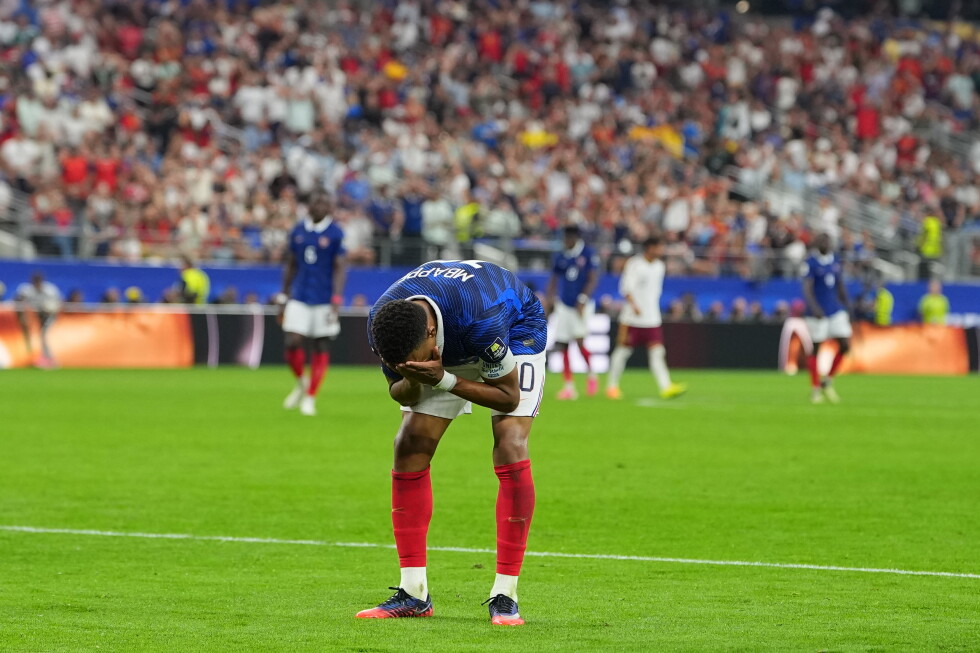
    The match was France’s semifinal against Spain, and with less than 10 minutes remaining in regular play, the French side was staring down a 2-0 deficit, with the clock ticking down on their dreams of reaching a third consecutive World Cup final. For French superstar Kylian Mbappé, every missed scoring chance had already been followed by unmistakeable displays of frustration, and the 81st minute would bring one of the game’s last best opportunities for France to get back into the match.

    Mbappé broke into open field after receiving a well-placed pass, with Spanish goalkeeper Unai Simon rushing out of his penalty box to cut off the advance, leaving the Spanish net completely unguarded. The breakaway left France with a golden chance to cut the deficit to a single goal, setting up a potential late comeback. But Spain’s backline rallied quickly, blocking the attempt and shutting down the threat before France could capitalize. In the immediate aftermath, Mbappé froze, unable to believe his missed opportunity. He doubled over, buried his face in his hands, and in that moment of unguarded emotion, Cortez captured the iconic image that would come to define the match’s outcome.

    Cortez never expected to get the shot when the breakaway unfolded. Moments before, the play had been concentrated on the opposite side of the pitch, so he had positioned his 400mm telephoto lens on a luxury suite above the team benches, where global soccer icon David Beckham was seated in attendance. With no high-stakes action near his vantage point, Cortez had been scanning the stands for celebrity guests — until the sudden breakaway shifted all momentum back to his side of the field.

    In the space of a single second, Cortez switched gears, moving from his long-lens camera to a second body outfitted with a Sony G-Master 50-150mm f/2 lens to frame the fast-developing play. After the scoring attempt was blocked, Cortez kept his lens locked on Mbappé, anticipating the star’s raw reaction to the missed chance that would all but end France’s run in the tournament. For several seconds, other players cleared out around Mbappé as he processed the disappointment, leaving Cortez a clean frame to capture the unscripted moment of despair.

    What makes the image stand out, beyond its perfect timing, is how it distills the high emotion of a World Cup semifinal. France came into the match chasing history, eyeing a third straight trip to the tournament’s championship match — a feat that would have cemented their status as one of the greatest international sides of the modern era. But Spain’s organized defense shut down every French attacking push throughout the late stages of the game, leaving Mbappé visibly frustrated long before the fateful 81st minute; the star had already picked up a yellow card in an earlier run-in with Simon.

    In any high-stakes elimination match, emotions run to extremes: the winner leaves the pitch with unbridled joy and a spot in the final, while the loser is left to grapple with the crushing weight of what could have been. This shot does not capture a goal, a celebration, or a trophy lift — it captures the quieter, universally recognizable pain of falling short at the last moment, turning a single frame of the match into a story that resonates far beyond soccer.