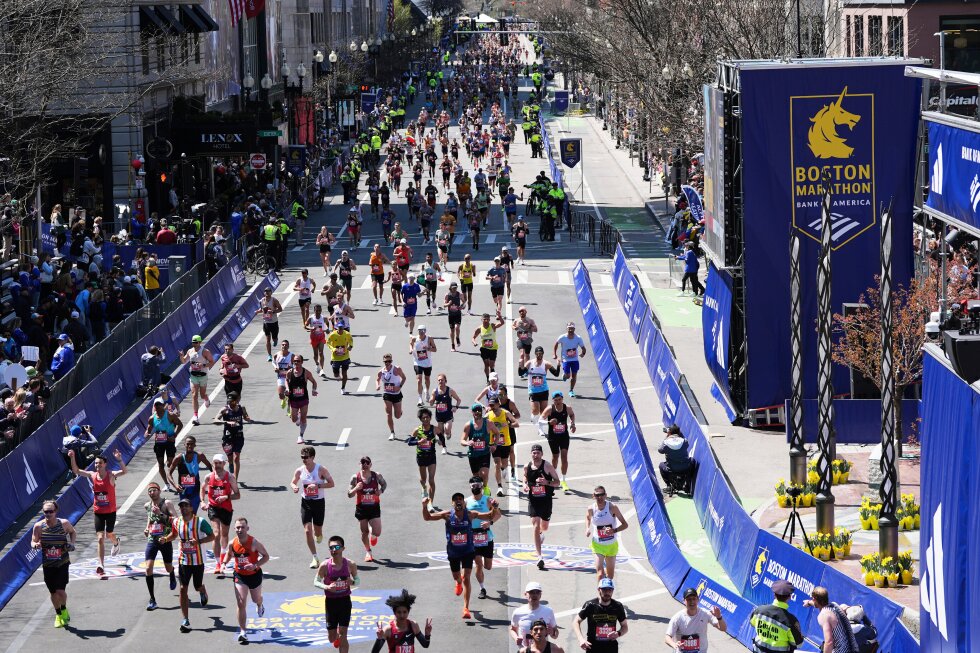
The Boston Marathon, one of the world’s most iconic and grueling road races, faces a unique, longstanding challenge: balancing its centuries-old historic character with the needs of a modern, massive field of athletes. Stretching 26.2 miles across eight Massachusetts cities and towns, much of the course runs along narrow Colonial-era streets that cannot be widened or re-routed to accommodate growing participant numbers. This year, race organizers are turning to data-driven crowd science expertise to refine crowd flow, improve athlete experiences, and even explore controlled future expansion without altering the race’s beloved core identity.
Leading the overhaul is Marcel Altenburg, a senior crowd science lecturer at Britain’s Manchester Metropolitan University and an ultramarathon runner with a background as a German army captain. Altenburg has spent years advising major global events, airports, and large-scale exhibitions on safe, efficient crowd management, and he brings a deep respect for what makes the Boston Marathon unique. “There are certain things that we can’t change — that we don’t want to change — because they make the Boston Marathon,” Altenburg explained. “As a scientist, I can’t be overly rigid about applying research here; the race needs to stay what it is, because that’s what runners and fans love.”
First held in 1897, the Boston Marathon traces its roots to the 1896 inaugural modern Olympic marathon, itself inspired by the legend of Greek messenger Pheidippides, who ran from the battlefield of Marathon to Athens to deliver news of victory over Persia before collapsing and dying. From just 15 participants in its first running, the race grew to a peak of 38,000 runners for its 100th edition in 1996, and has stabilized at roughly 30,000 participants annually since 2015. This year’s field includes more than 32,000 runners, plus hundreds of thousands of spectators that line the course, putting massive strain on the narrow New England roads and forcing local communities to close key thoroughfares for hours, disrupting daily commerce and commutes.
Race director Dave McGillivray noted that the race’s biggest constraints have always been time and space. “It would be kind of great someday to be able to grow the race a little bit more,” he said. “The problem with this race is that it’s about two things: time and space. We don’t have either. … So, we’re trying to be innovative.”
To solve these constraints, Altenburg ran more than 100 computer simulations of the race, testing different configurations within the existing event time window to identify adjustments that would improve the athlete experience. Organizers granted him wide creative latitude to test everything from extra starting waves to repositioned aid stations, evaluating every change at key points along the course to measure whether it would benefit runners.
The most visible change for this year’s race is the shift from three starting waves to six, with groups segmented by runners’ qualifying times. This adjustment, which builds on a wave system first introduced in 2011, spreads participants out along the narrow 39-foot-wide starting stretch on Hopkinton’s Main Street, eliminating the slow, crowded walking that many runners experienced in the opening miles in past years. Less visible but equally impactful changes include revised bus unloading procedures at the starting area, repositioned water and aid stations, and redesigned finish line chutes where runners collect medals, refreshments, and medical care. Even porta-potty lines are expected to be shorter with the new crowd layout.
Lauren Proshan, chief of race operations and production for the Boston Athletic Association (BAA), which organizes the event, said the data-driven refresh has allowed the 130-year-old race to reinvent itself while preserving its legacy. “For an event that’s as old as ours, 130 years, it allowed us to be a startup all over again,” Proshan said. “The change isn’t meant to be earth-shattering. It’s to be a smooth experience from start to finish. It’s one of those things that you work really, really hard behind the scenes and hope that no one notices — a behind-the-curtain change that makes you feel as if you’re just floating and having a great day.”
Altenburg emphasized that the BAA approached every change with extreme care to protect the race’s historic identity, with detailed planning that began immediately after last year’s race concluded. “What I loved about working with the BAA was how aware they are of what the Boston Marathon is. And they won’t change anything lightly,” he said. “That we check every single option. That we really make sure that if we change something about this historic race, then we know what we’re doing.”
Over the next three years, the BAA will collect feedback from participants to evaluate whether the new layout works, before making any decisions about future expansion or additional adjustments. “Fingers crossed, hope for the best, but we’ll get feedback from the participants,” McGillivray said. “And they’ll let us know whether or not it worked or not.”
Even with the latest data and crowd science insights, there are hard limits to what adjustments can achieve: extending course closure time is off the table, and the historic route will remain unchanged. At the end of the day, Altenburg noted, the hard work of running the marathon still falls to the athletes themselves: “I can talk. I’m a scientist. I just press a button and it’s going to be. But the runners still have to do it.”