分类: sports

  • Marc Marquez cruises to Germany MotoGP Grand Prix victory

    Marc Marquez cruises to Germany MotoGP Grand Prix victory

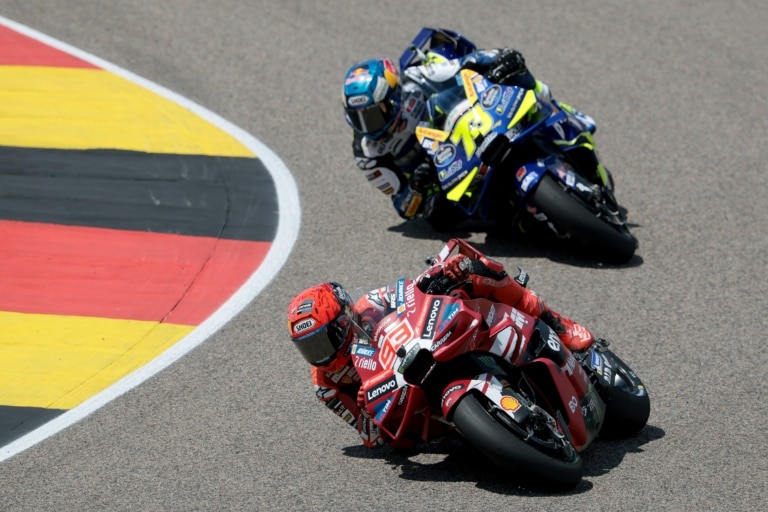
    Motorcycle racing legend Marc Marquez delivered a masterclass performance at the Sachsenring circuit on Sunday, claiming a commanding victory at the German MotoGP Grand Prix and etching his name deeper into the sport’s history books by equaling Giacomo Agostini’s long-standing record of 10 premier-class wins at a single venue.

    The 33-year-old Spanish racer, a seven-time MotoGP world champion, entered the weekend starting from pole position and never looked threatened for the top spot throughout the 10-lap contest. He crossed the finish line with a comfortable 1.996-second gap over second-place finisher Ai Ogura of Aprilia-Trackhouse, with Ogura’s Spanish teammate Raul Fernandez rounding out the top three to complete the podium.

    Marquez’s dominant weekend did not end with Sunday’s main race victory: he also took the checkered flag in Saturday’s sprint event, a result that only reinforces his widely accepted nickname as the “King of the Ring” among fans and competitors alike for his unrivaled success at the German track.

    In a post-race interview, Marquez expressed his elation over the historic milestone, saying, “Super, super happy. You know, it was a special weekend. I was super concentrated because… if I want to have any chance to win the championship, I need to attack here. It’s what we did these last races. And yes, super happy to achieve 10 victories in MotoGP class here in the Sachsenring.”

    The victory has reignited Marquez’s title push heading into the sport’s summer break, putting him firmly back in contention for the 2024 crown. He has now closed the points gap to just 18 points behind standings leader Jorge Martin, his fellow Spaniard who finished fifth in Sunday’s race.

    The early stages of the grand prix saw a tight on-track battle between Marquez and his younger brother Alex Marquez, who started the race from second position on the grid. The fight for the lead ended abruptly after 10 laps, when Alex Marquez, riding for Ducati-Gresini, suffered a crash and slid off the track, exiting the race early.

  • McCullum fired as England test coach but will continue with T20 and ODI teams

    McCullum fired as England test coach but will continue with T20 and ODI teams

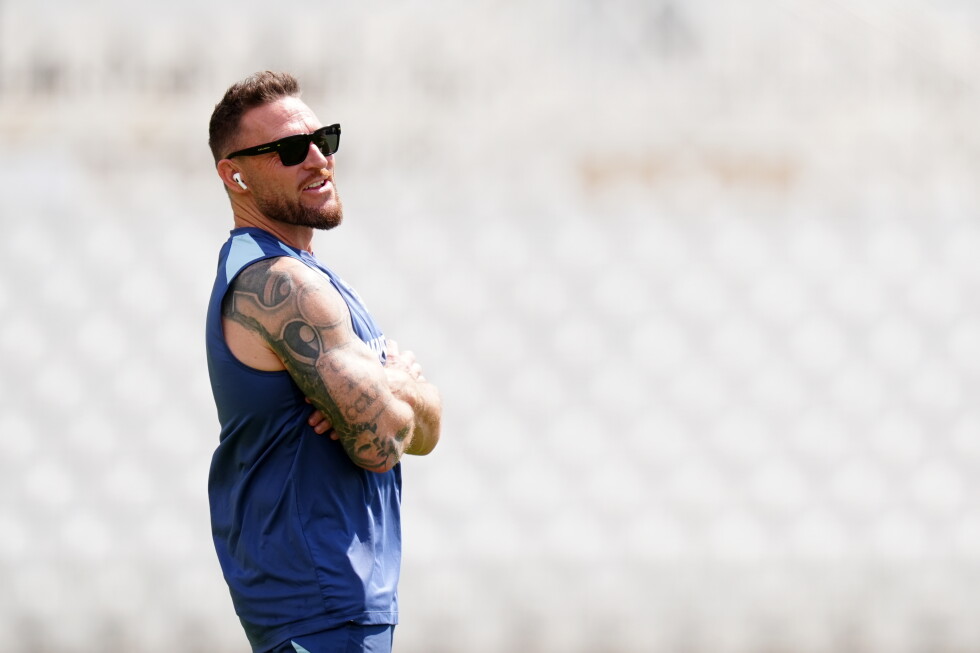
    Southport, England – In a significant shake-up to English cricket leadership announced Sunday by the England and Wales Cricket Board (ECB), Brendon McCullum will step down from his position as head coach of England’s men’s Test cricket team after four years in the role. The New Zealand-born coach will, however, retain his leadership posts for England’s T20 and One Day International (ODI) white-ball sides.

    McCullum’s departure comes on the heels of back-to-back disappointing Test results for the national side, beginning with a 4-1 Ashes series loss to Australia last winter, where the team faced widespread public scrutiny over questions of inconsistent professionalism. Just two weeks before the ECB’s announcement, England suffered a home Test series defeat to New Zealand – that result marked England’s first home series loss in a three-Test or longer format since 2012. The shake-up also comes shortly after former Test captain Ben Stokes announced his retirement from international cricket following the New Zealand series, closing the chapter on the aggressive, high-risk style of play coined “Bazball” that defined McCullum and Stokes’ tenure together.

    In the official ECB statement, McCullum expressed clear disappointment over the decision to part ways with the Test program, saying he was “gutted not to be continuing” with the side – a phrasing that indicates the change was initiated by ECB leadership, not McCullum himself. “But I respect the decision,” he added. “My focus now is on giving everything I’ve got to the white-ball teams and helping England keep moving forward.”

    Even as the governing body opted for a change ahead of the 2025-26 Ashes series in Australia, ECB leaders were unanimous in praising McCullum’s transformative impact on English Test cricket. ECB CEO Richard Gould highlighted the New Zealander’s role in revitalizing the national program: “Brendon breathed new life into England men’s test team during an exciting period which saw some amazing victories, and we’re grateful for all he has given to the role.” Gould added that the decision to make a change now was rooted in the board’s goal of securing Ashes victory next summer.

    The ECB described the Bazball era, defined by McCullum’s emphasis on aggressive, fearless batting and match-risking strategy, as one of the most exciting and progressive periods in the history of England’s Test cricket. Rob Key, ECB’s men’s cricket director, echoed that praise, noting McCullum’s lasting legacy in reshaping the team’s mentality and developing a new cohort of young cricketing talent that will lead England’s program for years to come. “He leaves the test team well-set and poised to achieve great things,” Key said.

    Reflecting on his four-year tenure leading the Test side, McCullum struck an optimistic tone about his time in the role. “It’s been an absolute privilege to watch him shape the mentality of the team, to one the players have loved, and see him develop a new generation of talent who will be at the heart of England men’s teams for years to come,” he said. “There have been some unbelievable highs and a few tough days along the way, but that’s all part of taking on a challenge like this. I wish the test team nothing but success. There’s a hell of a lot of talent in that dressing room and they’re a special bunch of lads. I’ll always be backing the boys, with a smile on my face, and hoping they keep taking the game on. I know they’ll continue to make people proud.”

    McCullum has held combined red-ball (Test) and white-ball coaching roles for England since January 2025. Notably, his white-ball regime has just delivered a standout result: England’s T20 side completed a dominant 4-0 home series sweep over India earlier this month, catapulting the team to the top of the ICC men’s T20 world rankings. England’s next Test match campaign is scheduled to begin next month against Pakistan, with the ECB expected to name McCullum’s replacement for the Test role in the coming weeks.

  • ‘Animals’, Hand of God and Beckham – Argentina and England’s World Cup rivalry

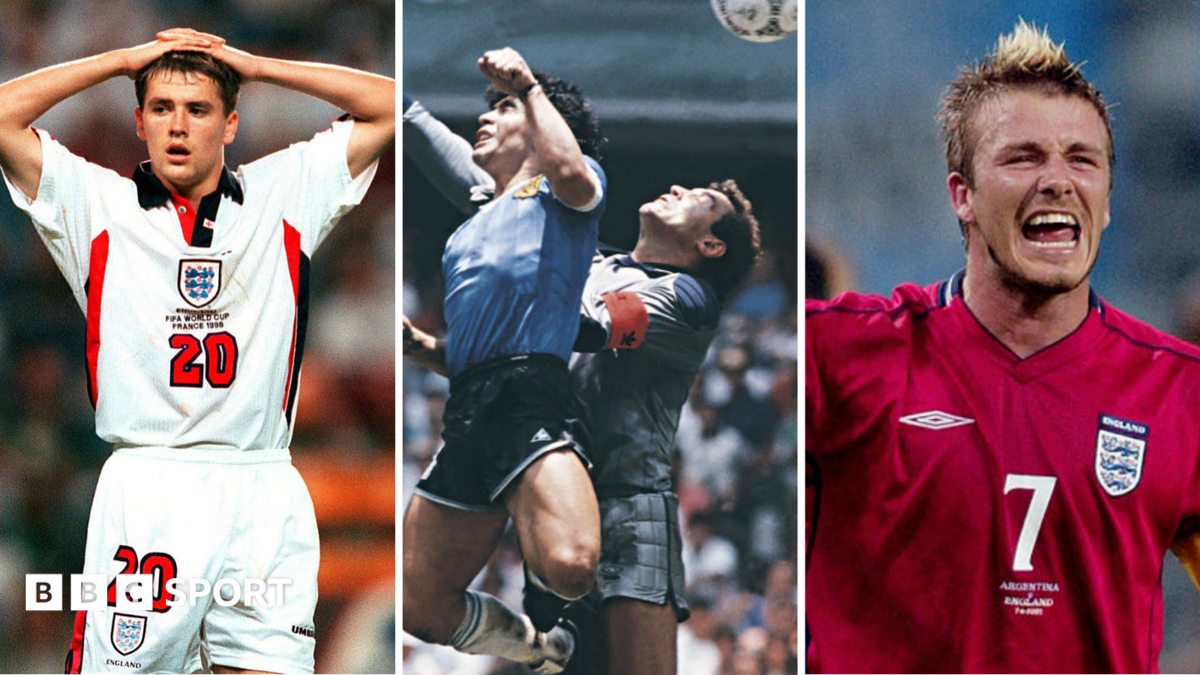
    ‘Animals’, Hand of God and Beckham – Argentina and England’s World Cup rivalry

    For more than six decades, the World Cup rivalry between England and Argentina has stood as one of the most storied, contentious, and culturally significant matchups in global football. Woven through with iconic individual moments, fiery on-pitch confrontations, and deep-seated geopolitical tension, the fixture has produced memories that still define generations of football fans on both sides of the Atlantic. This Wednesday in Atlanta, the two nations will meet for the sixth time at a World Cup, with defending champion Argentina facing off against England for a spot in the 2026 World Cup final – a matchup that marks Lionel Messi’s first ever career appearance against the Three Lions.

    The origins of this bitter rivalry trace back to the 1962 World Cup group stage, where goals from Ron Flowers, Bobby Charlton, and Jimmy Greaves secured England a 3-1 win. While both nations finished the group with one win and one loss, England advanced to the knockout round at Argentina’s expense thanks to a superior goal difference. This early result laid the groundwork for what would become one of the most infamous matches in football history four years later, on home soil for England at the 1966 World Cup.

    In that 1966 quarter-final, controversy erupted just 33 minutes in when Argentine captain Antonio Rattin was sent off for a trip on Bobby Charlton and repeated dissent toward referee Rudolf Kreitlein. Rattin refused to leave the pitch for nearly eight minutes, delaying the match and inflaming tensions that boiled over off the pitch too. England manager Alf Ramsey famously labeled the Argentine side “animals” and refused to let his players swap shirts after they held on to a 1-0 win secured by Geoff Hurst’s controversial winner, which Argentina still claims was an offside. The match was so chaotic that it directly prompted the introduction of the red and yellow card system, which debuted at the 1970 World Cup to replace referees’ informal verbal warnings. Rattin, who led Argentina through the 1962 and 1966 tournaments, passed away at the age of 89 just days before this 2026 semi-final clash.

    The rivalry reached a new peak of intensity at the 1986 World Cup in Mexico, played just four years after the two nations fought the Falklands War. Political tensions spilled onto the pitch, with Argentine media and fans framing the quarter-final clash as a chance to avenge the military defeat, while British outlets leaned into nationalistic rhetoric to stoke animosity. That match produced two of the most iconic moments in World Cup history: Diego Maradona’s “Hand of God” – an illegal hand punch that beat England goalkeeper Peter Shifton to open the scoring, unseen by officials – and just four minutes later, a 60-yard solo goal that saw Maradona dribble past half the England team to double Argentina’s lead. Gary Lineker pulled a late goal back for England, but Argentina held on to advance, eventually going on to win the tournament. Maradona would not apologize for the Hand of God until 2005, an apology Shilton never accepted.

    The 1998 World Cup in France delivered another chapter of drama, this time centered on a young David Beckham. After Gabriel Batistuta and Alan Shearer traded early penalties, 18-year-old Michael Owen scored one of the greatest goals in England’s World Cup history – a blistering solo run past the entire Argentine defense to put England up 2-1. Javier Zanetti equalized before half-time, but the match turned when Beckham, provoked by Argentine midfielder Diego Simeone, lashed out with a kick and was sent off. A late Sol Campbell header that would have won the match was ruled out for a foul, forcing the game to penalties. Argentina advanced after misses from Paul Ince and David Batty, and a year later Simeone admitted he had intentionally gone down to trick the referee into issuing a red card when only a yellow was deserved.

    The most recent World Cup meeting between the two sides came in 2002 in Korea-Japan, and it marked redemption for Beckham. Now England’s captain, Beckham scored the only goal of the game from the penalty spot shortly before half-time, after Michael Owen was fouled by Argentine defender Mauricio Pochettino – now a top club manager. The 1-0 win saw England advance to the knockout round, while Argentina were eliminated in the group stage for the first time since 1962. That result remains the last England win over Argentina at a World Cup, and with the last meeting 24 years in the rearview mirror, much of the younger generation of fans on both sides have no first-hand memory of the historic rivalry.

    Heading into Wednesday’s 2026 semi-final, the stakes could not be higher. Argentina is defending its 2022 World Cup title, aiming to book a second consecutive trip to the final, while England is looking to end a 60-year drought since its 1966 world title, led by manager Thomas Tuchel. For Messi, the game will be a historic first: the 39-year-old Argentine great has never faced England in his storied career, adding an extra layer of narrative to a clash that already carries six decades of drama, tension, and history.

    In the lead-up to the match, Three Lions manager Tuchel has publicly expressed frustration with his side’s recent performances, calling them lucky and sloppy, leaving fans to question whether England’s legendary big-match mentality will be enough to overcome the defending champions.
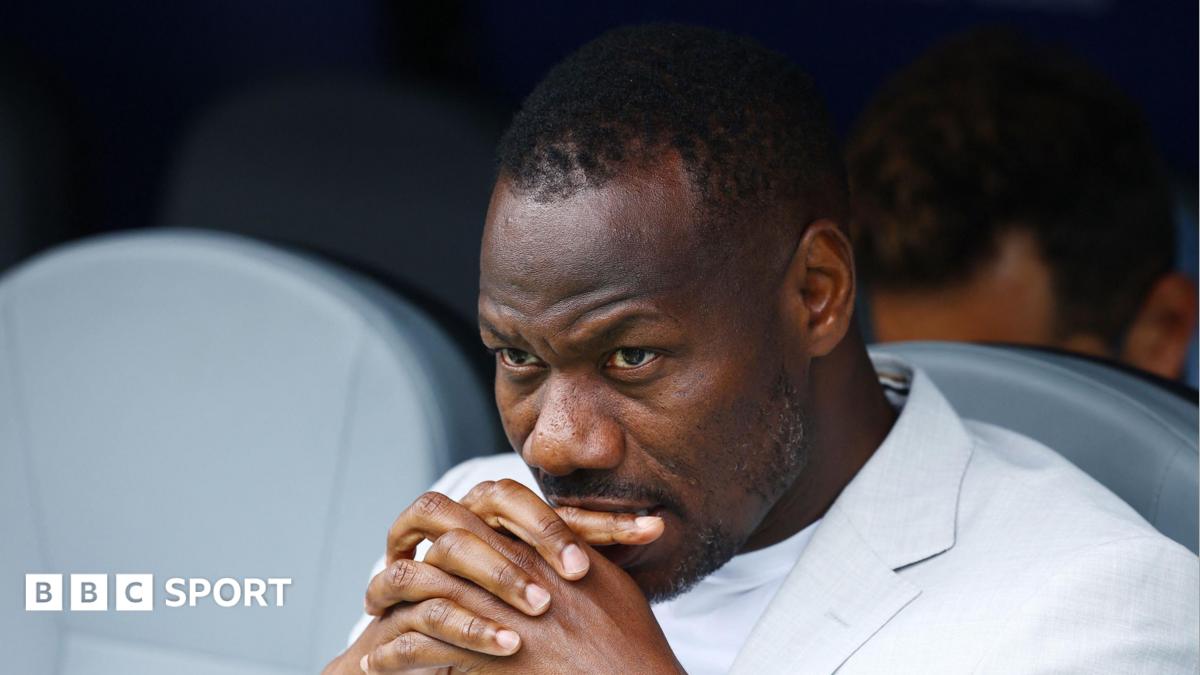
  • Senegal sack manager Thiaw in wake of World Cup exit

    Senegal sack manager Thiaw in wake of World Cup exit

    Another major international football tournament has ended in disappointment for Senegal, with the national federation confirming the dismissal of head coach Pape Thiaw just days after the Teranga Lions crashed out of the 2026 FIFA World Cup in the knockout round.

    Thiaw had held the senior team’s top coaching role since December 2024, and his tenure was marked by controversy long before the squad arrived in North America for this year’s World Cup. The campaign got off to a shaky start: the side suffered back-to-back defeats to France and Norway in their first two Group Stage matches, leaving them on the brink of elimination heading into the final group fixture against Iraq. In a stunning turnaround, Senegal routed Iraq 5-0 to climb into third place in their group, and claimed the final available spot among the highest-ranked third-place teams to advance to the round of 32.

    What followed was a dramatic and heartbreaking exit against Belgium. Senegal held a commanding 2-0 lead late in regulation time, but allowed two late Belgium goals to force the match into extra time. A controversial penalty converted by Youri Tielemans sealed a 3-2 win for Belgium, knocking Senegal out of the tournament.

    The fallout from the defeat was immediate. Key Senegal midfielder Pape Gueye publicly announced just hours after the loss that he would step away from international football, and would not return to the national side as long as Thiaw and the current coaching staff remained in charge.

    After days of internal review, the Senegal Football Federation (FSF) announced Thiaw’s departure in a formal statement. The body said the decision came “after a thorough evaluation of the sporting results and prospects of the national team”, adding that the dismissal was made “in the best interests of Senegalese football”.

    This World Cup exit is the second major setback for Senegalese football in 2026, and cements a period of turmoil that began earlier this year at the 2025 Africa Cup of Nations (AFCON). In that tournament’s final against Morocco in January, Thiaw led his entire squad off the pitch in protest after Morocco was awarded a stoppage-time penalty. After a 17-minute delay, the team returned to the field; Brahim Diaz’s penalty was saved, and Gueye scored an extra-time winner that appeared to give Senegal the title. But in March, the Confederation of African Football (CAF) overturned the result, stripped Senegal of the title, and awarded the win to Morocco due to Thiaw’s walk-off protest. Senegal has since filed an appeal with the Court of Arbitration for Sport to challenge the decision and reclaim the title.

    Thiaw, a former Senegal international, was part of the country’s 2002 World Cup squad that reached the quarter-finals in one of the nation’s most famous tournament runs.

  • Teenage tennis star to play for Ghana in major event

    Teenage tennis star to play for Ghana in major event

    A rising 16-year-old tennis talent from Hadley, Telford, is preparing to compete on an international stage next week, carrying the flag of Ghana at the prestigious Billie Jean King Cup hosted in Gaborone, Botswana. For Gwen Klu, this moment marks the culmination of years of dedicated training and an unexpected journey into competitive tennis that began with a simple school outreach visit.

    Klu’s first encounter with the sport came when a local tennis coach visited her primary school, extending an invitation to train at the Telford Tennis Centre. That casual introduction sparked a lifelong passion, and today, she has spent three and a half years refining her skills at the Ellesmere College Tennis Academy, where she has become a staple competitor for Shropshire’s county-level teams. Her standout performances at junior competitions have earned her an official ITF junior world ranking, catching the attention of national tennis federations across three continents.

    With dual European and West African heritage, Klu holds eligibility to compete for three countries: she was born in the United Kingdom, her father is a former Ghanaian national volleyball player, and her mother hails from France. When Ghana’s tennis federation reached out to extend an invitation to join their national team for the continental tournament, Klu did not hesitate to accept. “Ghana gave me the opportunity first so I just took their call,” she explained, adding that the trip also represents a meaningful cultural opportunity. “I feel like this is quite a good experience and good opportunity to be able to travel different countries in Africa and also to discover the cultures.”

    Klu will compete in the tournament’s Africa III group, where her team will face off against athletes from 10 other African nations, including regional tennis powerhouses Algeria, Nigeria, and Tunisia. The group stage follows a round-robin format, with the top two finishing teams earning promotion to the higher-tier Europe-Africa II division. Despite the stakes of the competition, Klu says she is keeping her focus simple: playing her best tennis, no matter the opponent. “I’ve had a few people from Nigeria, for example, that I’ve already played against, so I’m not bothered about who I’m playing really. I just want to go there and do my best,” she said.

    Looking ahead beyond the tournament, Klu shared that she hopes her performance in Gaborone will attract potential sponsors to support her budding tennis career. Currently, all competition and training costs are covered by her family, and additional financial backing would allow her to pursue more high-level competitive opportunities as she advances in the sport.

  • ‘We should all be excited’ – Messi set for first England meeting

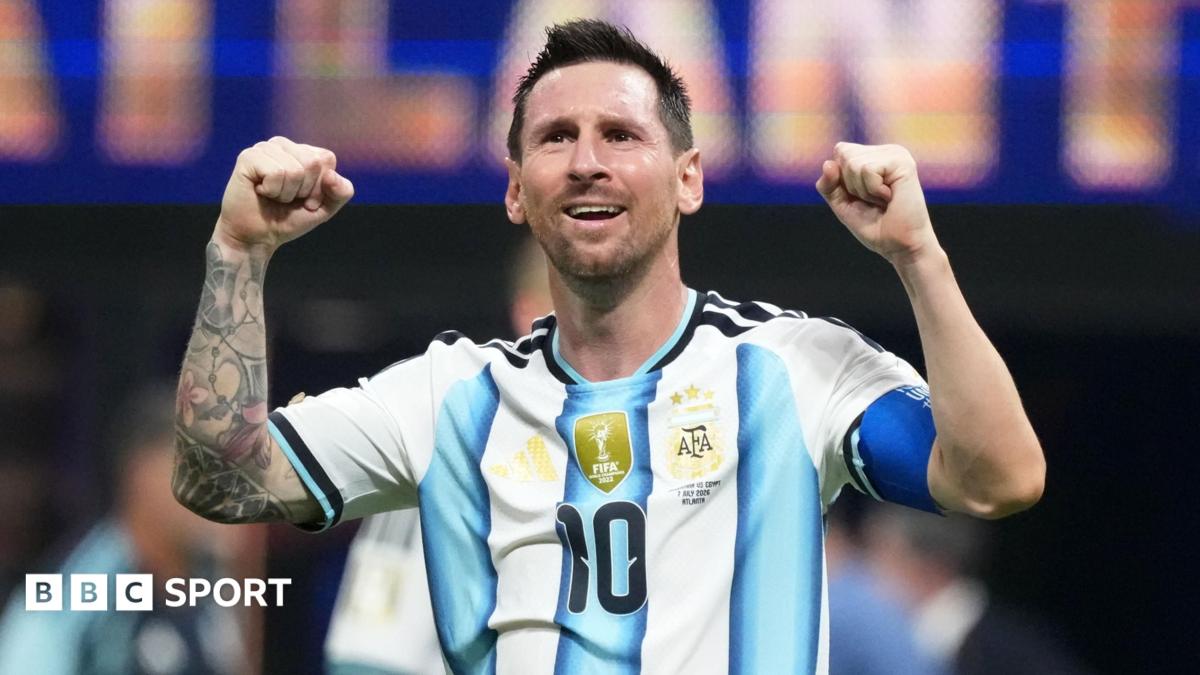
    ‘We should all be excited’ – Messi set for first England meeting

    For 20 years of senior international football, across more than 200 appearances and 125 goals for his country, Lionel Messi has never shared a pitch with England’s men’s national team. That long-awaited gap in the 39-year-old’s legendary career will finally close this Wednesday, when Argentina and England lock horns in a 2026 FIFA World Cup semi-final at Atlanta, kicking off at 20:00 BST and airing live on BBC One and BBC iPlayer. The historic showdown became possible only after a hard-fought quarter-final against Switzerland, where Argentina clawed their way to a 3-1 extra-time victory despite the Europeans holding momentum for large stretches of regular play.

    Though Messi went goalless against Switzerland – his first scoreless match of this tournament – he still remains tied with France’s Kylian Mbappe for the tournament’s Golden Boot lead with eight strikes, and retains his status as the men’s World Cup’s all-time leading goalscorer. Ahead of the unprecedented meeting, football pundits have weighed in on what England can expect from the eight-time Ballon d’Or winner, and just how much of a threat the Inter Miami forward poses.

    BBC pundit Micah Richards called the matchup one that all football fans should be excited for, noting that England’s biggest challenge will be containing an otherworldly talent who cannot be marked through traditional means. “Marking him is impossible because he doesn’t run back. He goes into little spaces where he shouldn’t really be. He switches on at the right times [and] he’s got the best technique. His spatial awareness is fantastic. He’s got a great shot,” Richards said. He added that Messi, like England’s own Jude Bellingham, carries an unmatchable on-pitch personality and aura, calling Messi’s aura “next level” among all active footballers.

    Former England striker Chris Sutton offered a more tempered perspective, telling BBC Radio 5 Live that England should view the matchup as an exciting opportunity rather than a daunting one. “I think Thomas Tuchel and the England players will be relishing the prospect of playing this Argentina team in its current guise, its current form, because this isn’t a great Argentina team but they do have a habit of finding a way,” Sutton explained. Ex-England forward Wayne Rooney echoed that take, pointing out that Messi offers little defensive output for Argentina, which could be an exploitable weakness – but warned that the captain can single-handedly change a match with moments of unrivaled quality. “He doesn’t run back, but he has big moments a bit like with Jude Bellingham. He has big moments and moments of quality. The thing with Messi is his decision-making – he comes to life in moments of the game and he makes the right decision,” Rooney said, adding that consistent concentration and communication between England defenders will be key to limiting the Argentine icon.

    South American football expert Tim Vickery emphasized that this semi-final is the matchup Argentina has been waiting for. “Lionel Messi couldn’t possibly end an international career, over 200 matches, without playing the team that Argentina fans see as their biggest rival,” Vickery told 5 Live, recalling that Argentine fans already chanted “he who doesn’t jump is an Englishman” during the Switzerland quarter-final, a taunt that will likely echo through Atlanta on Wednesday.

    The England-Argentina rivalry is one of the most storied and dramatic in international football, with decades of iconic moments shaping the feud. From Diego Maradona’s infamous “Hand of God” goal that knocked England out of the 1986 World Cup quarter-final, to David Beckham’s controversial red card at the 1998 World Cup, every encounter between the two sides has delivered high-stakes drama. What makes this semi-final even more historic is that it will be the first meeting between the two nations in nearly 21 years, and the first ever for Messi in a senior Argentina shirt.

    Messi made his senior Argentina debut in 2005 at 18, after leading the nation to a World Youth Championship title earlier that year. Just months after his debut, England and Argentina met in a friendly in Geneva – but Messi was forced to watch from the sidelines, suspended after being sent off just 30 seconds into his senior debut against Hungary. In that goalless (for Messi) contest, Argentina twice took the lead before Michael Owen scored two late dramatic goals to hand England a 3-2 victory under manager Sven-Goran Eriksson. That friendly remains the only senior meeting between the two nations since Messi entered the international scene, leaving the Wednesday semi-final as a completely new milestone for both sides.

    Messi’s career goal record against other nations shows his consistent dominance across every level of opposition. He has scored 11 goals in 12 matches against Bolivia, his favorite opponent, seven goals against both Venezuela and Ecuador, and five and six against South American giants Brazil and Uruguay respectively. Against European opposition, he has scored three goals each against Croatia, Switzerland, and France – including a memorable double in Argentina’s 2022 World Cup final victory over France. Of all the nations Messi has faced more than once, only Qatar has managed to keep him off the scoresheet across two meetings.

  • Lionel Messi’s World Cup scoring streak ends, but his assist sparks Argentina’s win over Switzerland

    Lionel Messi’s World Cup scoring streak ends, but his assist sparks Argentina’s win over Switzerland

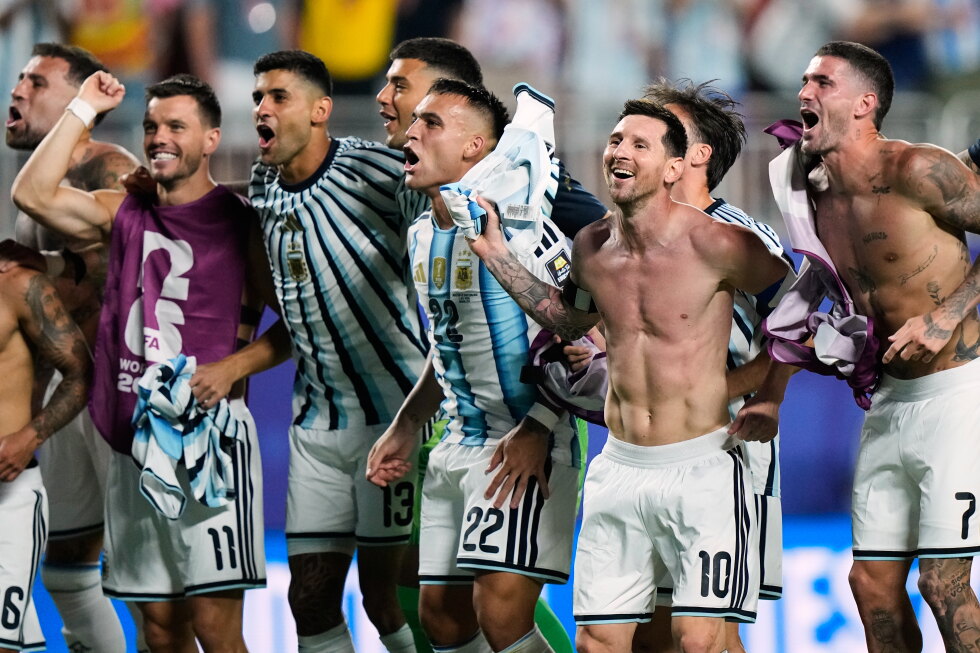
    ATLANTA — In a tense, physical FIFA World Cup quarterfinal clash that went the distance, Argentine soccer icon Lionel Messi saw his historic nine-match World Cup scoring run come to an end against Switzerland Saturday night — but the living legend still dictated the match’s outcome, setting up the opening goal to help propel defending champions Argentina to a 3-1 extra-time victory. The win books Argentina’s spot in the tournament semifinals, where they will face off against England this Wednesday in Atlanta.

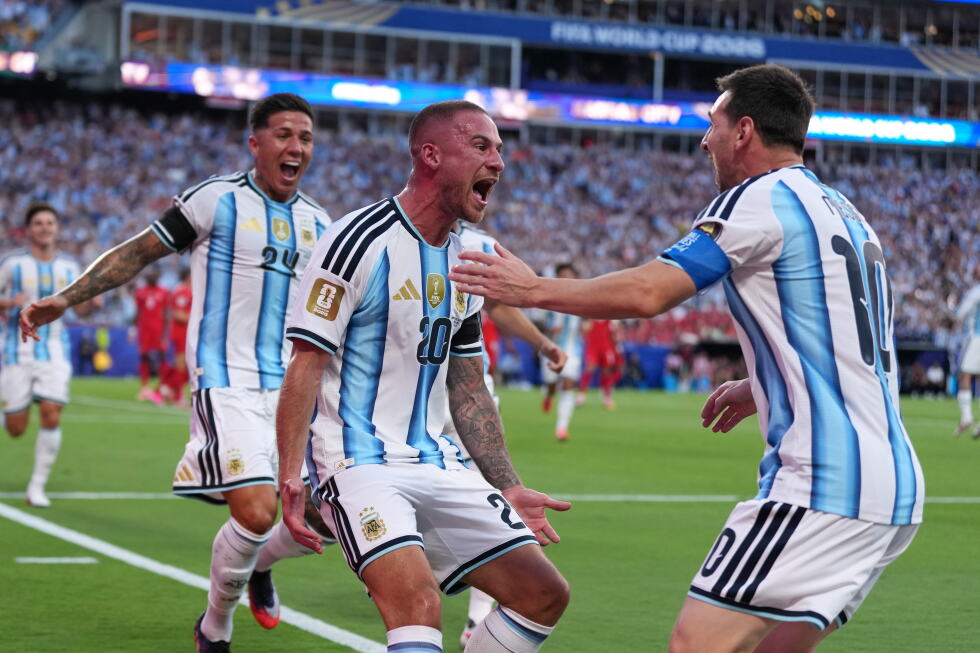
    The match’s first breakthrough came just 10 minutes in, when Messi crafted a corner opportunity with a brilliant display of close control and skillful footwork. The Inter Miami star sent a pinpoint cross into the penalty area, where Alexis Mac Allister converted a clinical header to put Argentina up 1-0. While the opening goal came from Messi’s playmaking, the 39-year-old took a hard blow to the area near his right eye in the second half, requiring on-field attention from training staff to patch him up for the remainder of the match.

    Switzerland held firm to level the scoreline in the 67th minute, forcing the tightly contested knockout match into 30 minutes of extra time. With fatigue setting in for both sides, Julian Alvarez broke the deadlock with an unstoppable 112th-minute strike that curled into the top corner of the Swiss net, before Lautaro Martinez iced the win with a late closing goal to seal the 3-1 final score.

    Heading into the matchup, Swiss head coach Murat Yakin faced widespread media questioning about how his side planned to contain Messi, who entered the match as co-leader in the tournament’s Golden Boot race alongside France’s Kylian Mbappé. Yakin joked that the question was unsurprising, noting that his staff had prepared multiple game plans to stop the Argentine, adding that the real test would be executing those plans on the pitch. In the end, the Swiss side largely delivered on their goal of shutting down Messi’s scoring: they successfully held the all-time tournament leading goalscorer, who has 21 career World Cup goals to his name, off the scoresheet, snapping his streak that included goals in six consecutive knockout round matches.

    Messi’s run of form at this year’s tournament has already cemented his status as the tournament’s standout player. A little over three weeks before the Swiss clash, Messi opened his World Cup campaign at the same venue with his first-ever World Cup hat trick, leading Argentina to a 3-0 opening group stage win over Algeria. He carried that form through the knockout rounds, notching eight goals heading into the quarterfinal. His tournament has not been without close calls, however: he missed penalty chances against both Austria and Egypt, with the second miss leaving Argentina trailing 2-0 and on the brink of elimination. Even in that high-pressure moment, Messi stepped up to turn the tide: he assisted Cristian Romero’s 79th-minute header to get Argentina on the board, then scored an equalizer four minutes later against Egyptian goalkeeper Mostafa Shobeir, before Enzo Fernandez scored a stoppage-time winner to send Argentina through to the quarterfinal.

    With many speculating that this tournament could be Messi’s last appearance on the World Cup stage with Argentina’s national team, Argentine head coach Lionel Scaloni heaped praise on the veteran playmaker, comparing his consistent elite performance to that of a well-oiled machine. “Those that are not so much acquainted with him might be surprised, and at 39 years of age some people might think he will not rise to the challenge,” Scaloni said. “But I’ve said this before, as long as he wants to be the best — and I’m not saying this because I’m coaching him — but because if he wants to continue, he will continue to be the best.”

  • West Indies beats New Zealand by 7 wickets in the 1st ODI to lead the 5-match series

    West Indies beats New Zealand by 7 wickets in the 1st ODI to lead the 5-match series

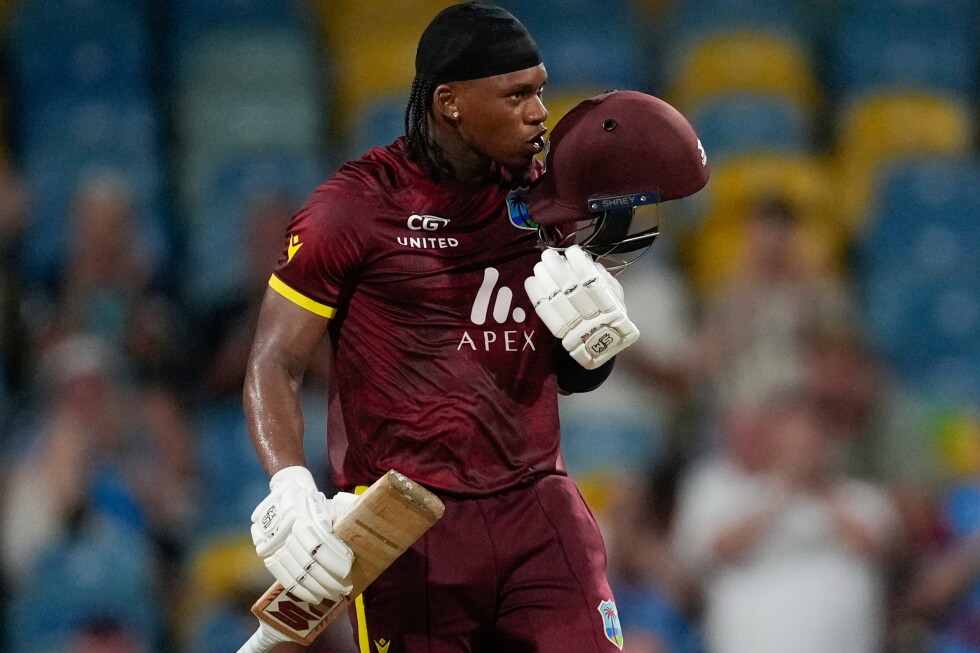
    PROVIDENCE, Guyana – The West Indies kicked off their five-match one-day international series against New Zealand with a confident seven-wicket victory on Saturday, built on a match-defining 131-run third wicket stand between Keacy Carty and Shai Hope that anchored the hosts’ run chase.

    New Zealand won nothing but regret after being sent in to bat first upon winning the toss. All-rounder Daryl Mitchell, fresh off a match-winning century that secured a test series victory over England just weeks prior, carried the Black Caps’ batting lineup with a top-scoring 65 runs. Will Young chipped in with 49, combining for an 80-run opening partnership with Henry Nicholls who made 27, but the rest of the batting order failed to convert promising starts into big scores. Michael Bracewell, Mark Chapman, Tom Latham and Mitchell Santner all reached the 20s but could not push on to match-defining contributions.

    By the 40th over, New Zealand sat comfortably at 216 for four, on track to post a total in excess of 300 that would have put the West Indies under serious pressure in home conditions. But a catastrophic late-order collapse changed the entire course of the game: the Black Caps lost their final six wickets for just 33 runs, folding all out for 267. Debutant West Indies bowler Vitel Lawes was the star of the collapse, claiming three key wickets – Nicholls, Chapman and Bracewell – to finish his maiden international outing with figures of 3 for 54.

    The West Indies got off to a solid start in their run chase, reaching 92 for two in the 19th over with opener Akeem Auguste contributing 38 runs from 58 deliveries before Carty and Hope came together at the crease. The pair controlled the tempo of the innings perfectly, keeping the required run rate below one run per over by ticking along at between five and six runs per over, eliminating any sense of urgency or pressure from the chase.

    Carty, who hit his fourth ODI century exactly one year ago, survived a controversial mid-innings scare when he appeared to dislodge the bails with his bat after hitting a six off Jacob Duffy’s bowling. Umpires ruled the shot had been completed before the stumps were disturbed, allowing Carty to continue batting. He made the most of the let-off, moving to 95 off 112 deliveries – just five runs short of his fifth international century – before holing out to Nathan Smith off Michael Bracewell’s bowling.

    After Carty’s dismissal, Hope anchored the remaining overs to see the West Indies across the line, finishing unbeaten on 87. He shared an unbroken 45-run stand from just 31 balls with Sherfane Rutherford, who ended the innings not out on 22. Even with 37 runs needed from the final five overs, the pair remained unflustered, steadily bringing the target within reach before closing out the win. A six from Hope from the first ball of the 49th over and a second six from Rutherford to the fifth ball of the same over wrapped up the chase with seven full deliveries remaining.

    The second match of the five-match ODI series will return to the same Providence venue on Monday, with the West Indies looking to extend their early series lead.

  • Switzerland’s Breel Embolo given red card for simulation after video review at World Cup

    Switzerland’s Breel Embolo given red card for simulation after video review at World Cup

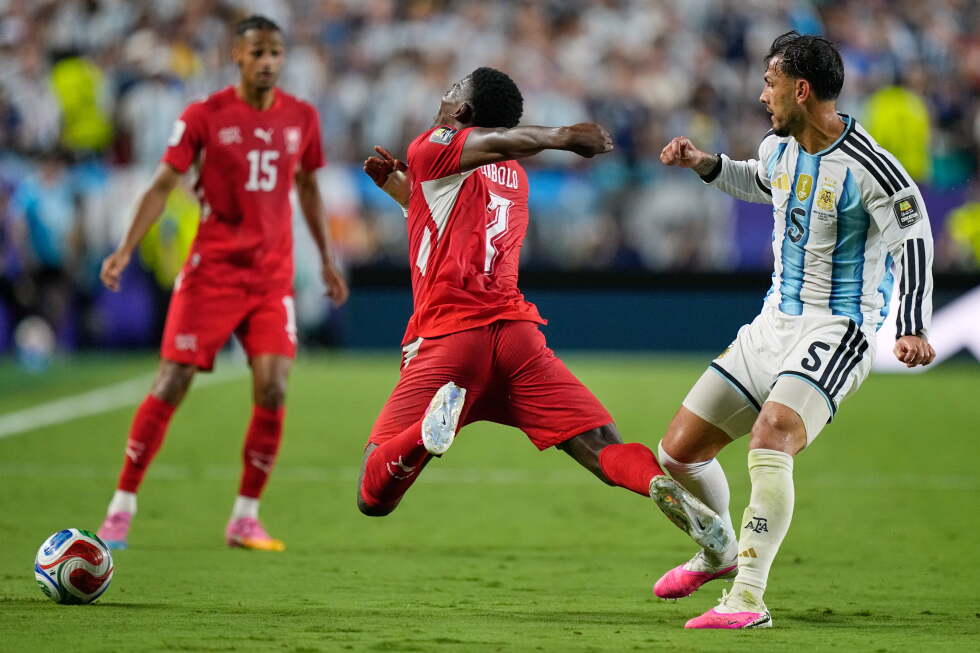
    KANSAS CITY, Mo. — A dramatic turning point unfolded in Saturday night’s World Cup quarterfinal clash between Switzerland and Argentina, as Swiss striker Breel Embolo was ejected from the match following a VAR review that exposed his attempt to feign a foul tackle. The incident, which altered the course of the tightly contested game, marked only the second time the tournament’s “mistaken identity” VAR protocol has been used to reverse a yellow card booking.

    Initially, Argentine midfielder Leandro Paredes was issued a yellow card for what referees believed was a reckless tackle that sent Embolo to the turf. But when the video assistant referee pulled the clip for closer examination, clear footage proved Embolo had already begun falling to the ground before Paredes made any physical contact. What looked like a standard foul was actually a deliberate attempt to draw a wrongful penalty against Argentina.

    The booking fell to Embolo instead, and the timing of the card proved devastating for Switzerland: Embolo had already received a yellow card earlier in the match, so the second infraction elevated to a red card ejection. With the score locked at 1-1, the Swiss side was forced to play the entire remainder of the high-stakes knockout match with just 10 men on the pitch.

    The red card came just moments after Swiss winger Dan Ndoye had scored the equalizing goal to level the match, swinging all momentum back in Switzerland’s favor. Embolo’s ejection immediately flipped that momentum back to Argentina, turning the tide of the quarterfinal in a single, game-altering sequence.

    The reversal of the original booking via the “mistaken identity” protocol is a rare occurrence at the World Cup. This protocol explicitly permits VAR to step in when match officials incorrectly award a card to the wrong player, a rule that was invoked for only the second time throughout this tournament. The sequence added another layer of controversy to a knockout match already packed with tension, highlighting how VAR continues to reshape the landscape of high-stakes international soccer.

  • Messi and Argentina take a 1-0 lead over Switzerland into halftime of World Cup quarterfinal

    Messi and Argentina take a 1-0 lead over Switzerland into halftime of World Cup quarterfinal

    KANSAS CITY, Missouri – The 2024 FIFA World Cup quarterfinal clash between Argentina and Switzerland delivered another iconic early moment from soccer legend Lionel Messi, who helped the defending champions grab a critical 1-0 halftime lead on Saturday night. A perfectly placed corner kick from Messi found the head of teammate Alexis Mac Allister in the 10th minute, putting the tournament favorites ahead before most fans had even settled into their seats at Arrowhead Stadium.

    Coming into the match, Switzerland’s defensive organization had been one of the biggest stories of the tournament. The Swiss side had given up just three goals across their first five matches, and they looked set to continue that form when they controlled possession in the opening minutes of the contest. But Messi, whose career has been defined by game-changing moments on the world’s biggest stage, turned the tide in an instant. After helping force the corner, he stepped up to take the set piece and delivered a cross that cut through the Swiss penalty area perfectly for Mac Allister’s finish.

    The early goal holds multiple notable layers for both sides. It marks the earliest goal Argentina has scored throughout this entire World Cup run, and it is the first time Switzerland has found itself trailing in any match this tournament. For Argentina, the early strike also lifted a tangible weight off the squad heading into the rest of the match. The defending champions have navigated a rocky knockout stage so far: they only narrowly defeated Cape Verde in extra time to open the elimination round, and just days earlier, they needed a dramatic late comeback – three goals in 11 minutes – to erase a 2-0 deficit and defeat Egypt.

    Argentina, a three-time World Cup winner that currently holds the tournament title, is chasing history in this year’s competition. A win against Switzerland would see them advance to the semifinal, putting them one step closer to becoming the first men’s national team to successfully defend a World Cup crown since Brazil accomplished the feat in 1962. Waiting for the winner of the quarterfinal is England, who secured a 2-1 win over Norway earlier the same day to book their semifinal spot. The upcoming semifinal is scheduled to take place Wednesday in Atlanta.