分类: sports

  • Disappointed France and England meet for third place in the World Cup

    Disappointed France and England meet for third place in the World Cup

    MIAMI GARDENS, Florida — For two elite soccer powerhouses that entered the 202X FIFA World Cup with trophy dreams dancing in their heads, the next match is not one either side ever imagined they would be playing. After bowing out in the semifinal round, France and England will share an unwanted stage Saturday, contesting the World Cup’s third-place playoff while Argentina and Spain prepare to battle for the sport’s biggest prize in Sunday’s final.

    Neither side hid their disappointment at falling just one win away from a spot in the final, a result that ends their pursuit of the global title they came into the tournament chasing. France entered the competition as one of the pre-tournament favorites to lift the trophy, while England was gunning to end its 58-year wait for a second World Cup crown, following its historic 1966 victory.

    “None of us wanted to play in this game for third place,” French defender Ibrahima Konate shared with reporters on Friday. “But we don’t have a choice to play. France and England have a big story together. And yeah, we are looking forward for the game tomorrow, and let’s see what will happen.”

    While the third-place match offers no path to the World Cup title, it still carries meaningful subplots for both sides. For England manager Thomas Tuchel, the game presents an opportunity to rebuild public standing after widespread criticism of his tactical decisions in the Three Lions’ tight semifinal loss to Argentina. For French superstar Kylian Mbappé, he still has a shot at claiming the tournament’s Golden Boot, awarded to the top goalscorer across the competition.

    Mbappé currently sits level on eight goals with Argentine captain Lionel Messi atop the scoring leaderboard. Messi holds a narrow advantage on the tiebreaker, however, having notched four assists to Mbappé’s three. England’s Harry Kane and Jude Bellingham remain in the hunt as well, with six goals each.

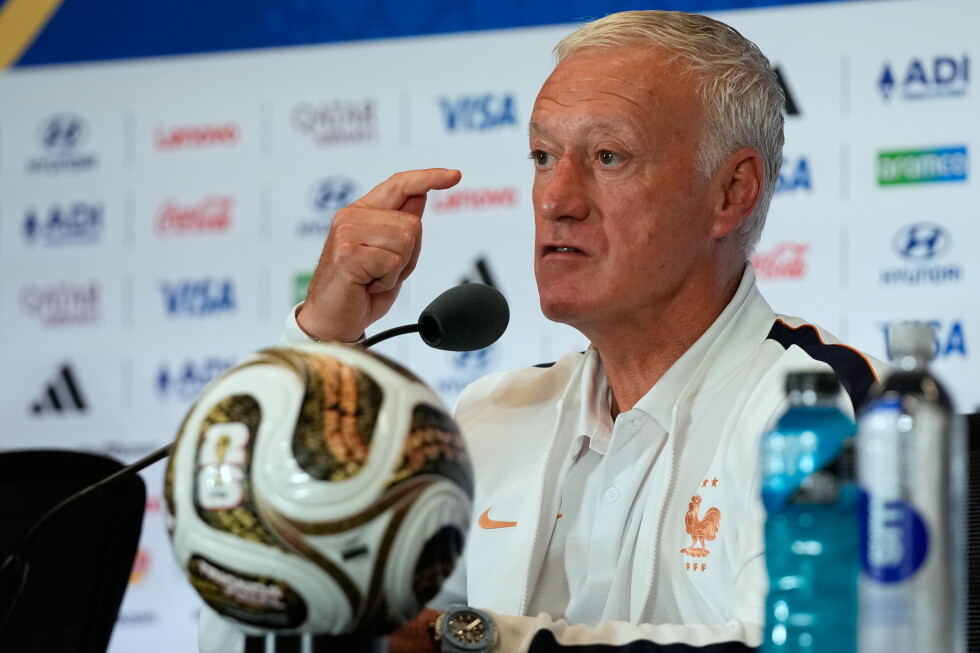
    Didier Deschamps, France’s head coach, confirmed that Mbappé will be available for selection on Saturday, though he plans to rotate his regular starting lineup for the fixture. “We do have a match for the third place playoff, and there’s a duty,” Deschamps said. “We have duties. I have duties, my staff has duties and so do the players. We have a responsibility to wear this jersey for all the French people who are cheering for us.”

    Beyond individual accolades and team pride, Saturday’s match will mark a historic capstone: it is the final game in charge for Deschamps, who has led the French national team for 14 years. Konate said the French squad is determined to send their manager out with a victory as a tribute to his tenure. “He carried many French players,” Konate said. “We had some disappointing moments, but he brought a lot of joy.”

    Deschamps’ legacy with France is already cemented: he led the nation to a World Cup victory in 2018, suffered a heart-wrenching penalty shootout loss to Argentina in the 2022 final, and saw his side undone by a solid Spanish defensive block that neutralized France’s potent attacking trio of Mbappé, Ousmane Dembele and Michael Olise in this year’s semifinal. The manager’s only major title is the sport’s biggest prize, though he also led France to a runner-up finish at the 2016 European Championship on home soil.

    “I know it will be the last match and I also know that the French national team will be missed,” Deschamps said. “I had the privilege for 15 years to be up here with this jersey, to experience magnificent moments, more difficult moments. The French national team is the most beautiful thing that has ever happened to me in my professional career.”
  • Leader Herbert, Burns equal record 62 at British Open, DeChambeau docked two shots

    Leader Herbert, Burns equal record 62 at British Open, DeChambeau docked two shots

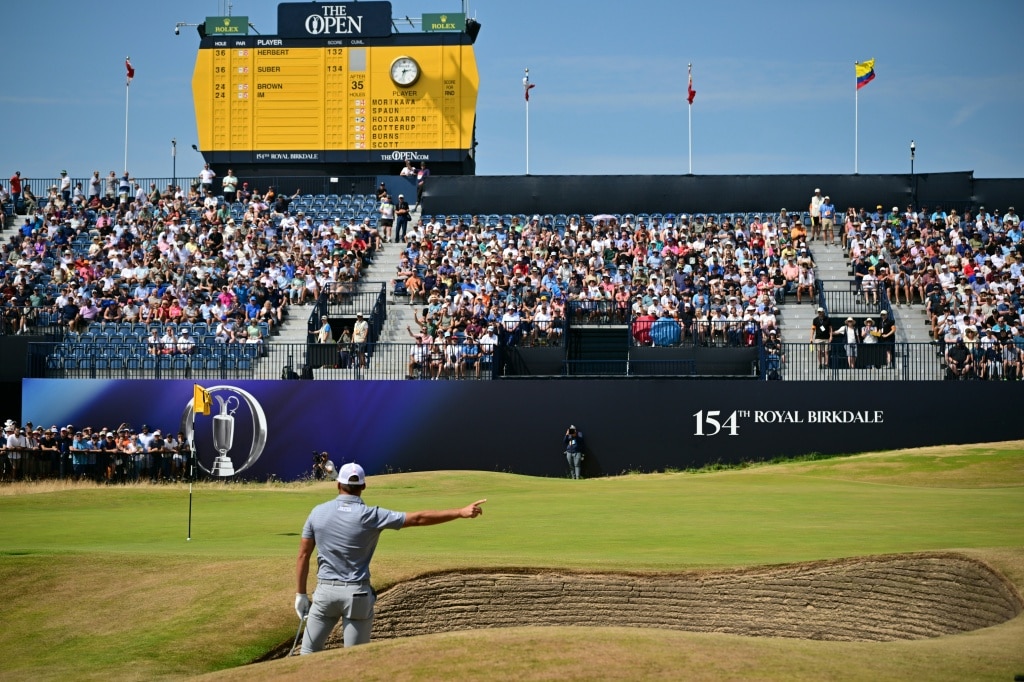
    The second round of the 2025 British Open at Royal Birkdale delivered one of the most dramatic days in major golf history Friday, as Australia’s Lucas Herbert and American Sam Burns both matched the all-time record for the lowest 18-hole score in men’s major championship golf, carding 8-under-par 62s that left the tournament leaderboard reshaped and packed with surprises.

    Ranked 97th in the world and competing on the breakaway LIV Golf Tour, Herbert entered the day far from the list of pre-tournament favorites but exploded into contention with a historic round that nearly ended with an unprecedented achievement. The 30-year-old Australian got off to a blistering start, sinking birdies on his first three holes before adding three more birdies at 5, 7, and 9 to turn in a 28 on the front nine – a new British Open record for the opening nine holes.

    Herbert carried his momentum through the back nine, picking up additional birdies at 12, 13, and 16 to reach 8-under par through 17 holes, putting him one stroke away from becoming the first player in major golf history to shoot a 61. But after a wayward tee shot on the par-4 18th, nerves got the better of the leader in front of thousands of packed spectators: two tentative putts left Herbert with a bogey, and he missed his short par attempt that would have secured his place in the history books as the sole record-holder. Herbert doubled over his putter in open disappointment after the slip, but said after the round he remained proud of his performance.

    “It was not lost on me the amount of history in major championships and the opportunity I had to obviously break the record,” Herbert told reporters. “To tie it as well is still something I’m really proud of.”

    Less than an hour after Herbert finished his round, Burns matched the historic score, taking the opposite path to 62 with a six-under-par 30 on the back nine. The world No. 18 sank a 20-foot birdie putt at 17 before chipping in from a greenside bunker at the final hole to secure his share of the record. The round catapults Burns to five-under-par for the tournament, putting him firmly in contention heading into the weekend.

    “I caught myself by surprise,” Burns said after his round. “I think the finish there the last three holes was just a bonus.”

    The 62s tie the course record set by Branden Grace the last time the Open was hosted at Royal Birkdale in 2017, and match the five previous 62s carded across the history of men’s major championships. After his second round, Herbert holds a two-shot lead over the rest of the field heading into the third round.

    The day’s drama did not end with the historic low rounds. Two-time U.S. Open champion Bryson DeChambeau appeared poised to close within one shot of Herbert’s lead before rules officials handed him a two-stroke penalty for inadvertently improving his lie during his second shot at the fifth hole. The penalty came after a lengthy discussion between DeChambeau and officials over whether he improperly trampled down rough grass to improve his stance, dropping DeChambeau down the leaderboard and erasing his near-leader position.

    Further down the leaderboard, several top golfers fought to secure their spots for the weekend and position themselves for a comeback. World No. 4 Cameron Young is tied for second at six-under-par alongside overnight leader Jackson Suber and Ryan Gerard, putting him in strong position to claim his first career major victory. Defending champion and world No. 1 Scottie Scheffler sits four shots off the lead, but a series of missed short birdie putts kept him from challenging Herbert for the top spot on Friday.

    Four-time major champion Rory McIlroy survived a rocky opening round to make the cut, shooting a four-under 67 on Friday to climb to one-under-par for the tournament. The Northern Irishman opened with a 72 that included six bogeys, leaving him on the cut line heading into the second round. “I think the main objective today was to be here for the weekend, which I am,” McIlroy said. “I think if I can get off to a decent start tomorrow, be four of five under for the tournament, I’ll be right in it.”

    Local favorite Tommy Fleetwood earned deafening cheers from the home crowd with a late charge, carding three birdies in his final five holes to climb to four-under-par, putting him within striking distance of the lead. High-profile casualties of the cut include world No. 3 Matt Fitzpatrick and former major champion Justin Rose, both of whom missed the weekend cut after two underperforming rounds.

  • Argentina and Spain will play for the World Cup trophy and, in a first, the winner gets rings

    Argentina and Spain will play for the World Cup trophy and, in a first, the winner gets rings

    As the 2026 FIFA World Cup final between Argentina and Spain approaches this Sunday in New York, the sport’s global governing body is introducing a historic first that blends a beloved North American sports tradition with soccer’s most prestigious championship. Beyond lifting the iconic World Cup trophy, Sunday’s victors will walk away with another unique commemorative honor: official championship rings, a milestone never before seen in World Cup history.

    Championship rings have long been a cornerstone of championship celebration across North American amateur and professional sports, with roots stretching back to the late 19th century. Yet this tradition has remained largely outside of common practice for international soccer and global football championships, making FIFA’s new initiative a notable shift for the world’s biggest single-sport event. The rollout of this new honor, tied to a World Cup final hosted on U.S. soil, is widely viewed as a deliberate nod to the long-standing championship tradition familiar to North American sports audiences.

    Under the new framework, the traditional gold medals that have long been awarded to World Cup-winning squads will remain in place. Immediately after the final whistle confirms a champion, the winning team’s captain and head coach will receive their temporary rings to mark the moment of victory. The full squad will ultimately receive 30 fully customized permanent rings, crafted to honor the win. FIFA confirmed that one face of each ring will feature the classic World Cup trophy design, while the opposite side will be customized specifically to capture the unique identity of the winning 2026 squad.

    In a limited production run that nods to the 2026 host year, only 2,026 individually numbered rings will be produced. Each ring will be custom-fitted for its recipient and comes with an official certificate of authenticity to guarantee its origin. Of the total production run, 30 rings are reserved for the winning squad, leaving the remaining 1,996 rings to be made available for purchase by general fans. FIFA has not yet released any details about the pricing of these limited-edition collectible rings.

    To understand the significance of this new addition, it is important to trace the origins of the championship ring tradition. Historians trace the practice back to at least 1893, when the Montreal Hockey Club claimed the Dominion Hockey Challenge Cup — the precursor to today’s Stanley Cup — and commissioned simple commemorative bands etched with tiny hockey stick designs at the top. By the 1920s, Major League Baseball franchises had adopted the practice of awarding rings to World Series champions. When the National Basketball Association was founded in the late 1940s, championship rings became a standard part of title celebrations almost from the league’s launch. The National Football League has also awarded rings to every Super Bowl champion since the first iteration of the game in the 1960s.

    Today, the tradition extends far beyond North America’s top professional leagues. Halls of fame across the U.S. award honorary rings to inducted members, and U.S. Olympic and Paralympic athletes receive championship rings as part of the official recognition package for competing at the Games. The custom is now widespread across all levels of U.S. sports, from top professional leagues down to collegiate programs, high school teams and even youth sports leagues, where rings serve as a tangible lifelong memento of a championship run. With this new initiative, FIFA brings that longstanding tradition to the biggest stage in global soccer for the first time.

  • ‘Great innings ends’: Cricket mourns West Indies great Sobers

    ‘Great innings ends’: Cricket mourns West Indies great Sobers

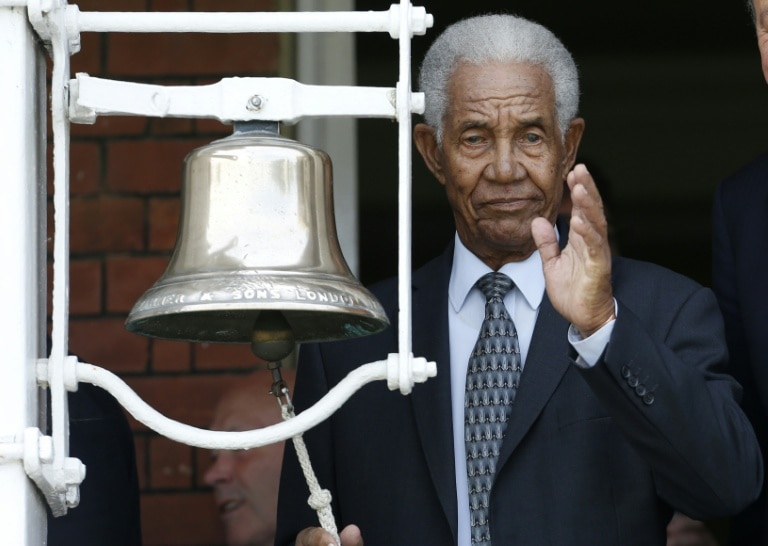
    The global cricket community is in mourning this week following the passing of one of its most iconic and transformative figures, West Indian legend Sir Garfield Sobers, who died at the age of 89. Born in Barbados, Sobers built a 20-year international career that redefined the standard for elite all-round cricket, earning widespread acclaim as the greatest player to ever step onto the pitch from fans, peers, and experts alike.

    Sobers made his extraordinary Test debut in 1954 at just 17 years old, facing England, and went on to represent the West Indies in 93 Test matches between 1954 and 1974. Over his international tenure, he amassed 8,032 runs and claimed 235 wickets, posting staggering career averages of 57.78 with the bat and 34.03 with the ball. As captain, he led the West Indies in 39 Tests between 1965 and 1972, leaving an indelible mark on the team’s legacy long after his retirement.

    One of Sobers’ most groundbreaking records came in 1958, when at 21 he notched an unbeaten 365 against Pakistan, breaking Len Hutton’s long-standing record for the highest individual score in Test cricket. That record stood for 36 years, until fellow West Indian great Brian Lara hit 375 against England in 1994 — a moment Sobers was present to celebrate. Off the pitch, he remained a beloved supporter of emerging talent in the sport he shaped.

    Sobers’ versatility was unmatched by most of his contemporaries: a dynamic left-handed batter, he could bowl both spin and seam bowling with equal skill, and was widely regarded as one of the finest fielders of his era. Another of his historic firsts came during his tenure playing county cricket for Nottinghamshire, when he became the first player in first-class cricket history to hit six sixes in a single over, doing so off Glamorgan bowler Malcolm Nash.

    His unprecedented career earned him a place among Wisden’s five Cricketers of the 20th Century, alongside fellow legends Donald Bradman, Jack Hobbs, Viv Richards and Shane Warne. Even the great Australian batsman Donald Bradman, widely considered one of the sport’s greatest ever batters, called Sobers the greatest cricketer of all time in his ultimate tribute.

    In the wake of his passing, tributes have poured in from across the global cricket ecosystem. West Indies Cricket first shared the news on social media platform X on Friday, writing: “A great innings has come to an end. In our hearts, now and forever, Sir Garfield Sobers,” alongside a portrait of the star labeled “Legend, Icon, Hero.”

    West Indies Cricket CEO Chris Dehring described Sobers as a towering figure whose impact on the sport and the Caribbean region can never be overstated. “Sir Garfield was more than the greatest all-round cricketer the world has ever seen,” Dehring said in a statement. “He was the embodiment of West Indies cricket at its finest — bold, brilliant, innovative and unapologetically excellent. His extraordinary achievements transformed the way the game was played and inspired generations of cricketers.”

    Nottinghamshire County Cricket Club, where Sobers played during his county career, honored their former player as “cricket’s greatest-ever all-rounder” and a defining icon in the club’s 178-year history. International Cricket Council chairman Jay Shah echoed that sentiment, noting that the sport had lost one of its most beloved icons. “Sir Garfield Sobers was not only the finest all-rounder the game has ever known, but one of the greatest cricketers in history,” Shah said. “His remarkable ability to influence a match in every facet of the game set him apart from his peers.”

    England Cricket also paid tribute on X, writing: “One of the greatest to ever play the game. Forever in our hearts, Sir Garfield Sobers.” Former England opening batsman Geoffrey Boycott shared a personal tribute in The Telegraph, recalling Sobers’ quiet, commanding presence on the pitch. “He was like a panther with a purposeful, loping and confident walk,” Boycott wrote. “I just loved the way Garry walked out to bat. He didn’t say anything. He did not need to. There was no ego. His walk let the opposition know he was there for business.”

  • Cubes and lubes: Europe’s ‘Speedcubers’ twist for glory

    Cubes and lubes: Europe’s ‘Speedcubers’ twist for glory

    Brows furrowed in unbroken concentration, Juliette Sebastien grips her well-worn Rubik’s Cube, her fingers flying across the colored faces at a dizzying pace. In just 25.03 seconds, she twists the final block into place and slaps the completed puzzle onto the competition table—one of thousands of lightning-fast solves unfolding at the 11th European Speedcubing Championships, hosted this year in Arnhem, in the eastern Netherlands. The event brings 1,200 competitors from 53 nations together to test their puzzle-solving speed across a wide range of unique and challenging disciplines.

    Sebastien, France’s national speedcubing champion, has dedicated countless hours to honing her craft ahead of the tournament, putting in three to four hours of daily practice in the lead-up after months of at least one hour of training daily. Her preparation was not without setbacks, however: a painful wasp sting to her dominant hand threw off her training routine in the final weeks before the competition. “I do training blocks of 100, 200, sometimes 300 solves,” the 25-year-old student explained in an interview with AFP. “There are always new techniques that you can learn.”

    While Sebastien’s 25-second solve for the 4×4 cube category—an event slightly more complex than the standard 3×3 Rubik’s Cube—is widely viewed as a strong result, top competitors in the fastest divisions reach speeds that defy belief. The current 2×2 Rubik’s Cube world record, held by Chinese speedcuber Ziyu Ye, stands at a staggering 0.39 seconds, a time faster than most people can blink.

    The constant, rhythmic clack of twisting cube faces echoes across the five large sports halls that house the championships. Competitors wander the venue’s corridors in team-branded gear, many solving practice cubes absent-mindedly without looking, or even using only one hand. “There are more cubes here than people,” joked 31-year-old Dutch competitor and programmer Jeroen Plug, a quip that rings true across the puzzle-filled venue.

    Far from being a casual hobby gathering, the tournament is run with strict regulations and military-level precision to ensure fair play. Before each round, competitors hand their custom cubes to official scramblers, who reset each puzzle to an identical starting configuration for every athlete, eliminating any advantage from pre-adjusted cube setups. Two competitors compete side-by-side during each round, each monitored closely by a dedicated referee with a camera tracking every movement, while a digital timer records solve times down to one hundredth of a second. Scrambled cubes are kept hidden in opaque boxes until the start of a round; once the box is opened, competitors get 15 seconds to inspect the cube’s layout before placing their hands on a touch sensor to start the timer and begin their solve.

    The tight regulations come in response to a recent controversy that shook the global speedcubing community: the so-called “Sliding Scandal”. The incident involved competitors cheating by surreptitiously moving their hands from the starting sensor to the cube early, gaining critical fractions of a second that could be the difference between a world record and a mid-tier result. In the wake of the scandal, multiple previously approved world records were stripped from the official record books, and the controversy remains a quiet topic of conversation among participants on the sidelines of the Arnhem tournament.

    One of the most surprising open secrets of competitive speedcubing is the key role that custom lubrication plays in top performance. Every competitor applies a precise, personalized amount of specialty lube to their cubes to adjust the turning speed and feel to match their solving style, explained Loes Wentink, who manages the official lube station at the championships. “It makes a big difference to the competition,” said the 21-year-old electrical engineering student. Some lubricants actually increase friction, she noted, because many new high-performance cubes come from the factory so smooth that they turn too fast for competitors to control. “Sometimes you can’t control it… and if you can’t control it, then your solve won’t be as good,” she said. Other lubes are designed to eliminate the dreaded “sandy” feel, a gritty, rough texture that can develop in well-used cubes over time. Just as professional tennis players customize their racket string tension or cricket players adjust their bat weight, each speedcuber’s cube and lube combination is a deeply personal setup tailored to their unique technique.

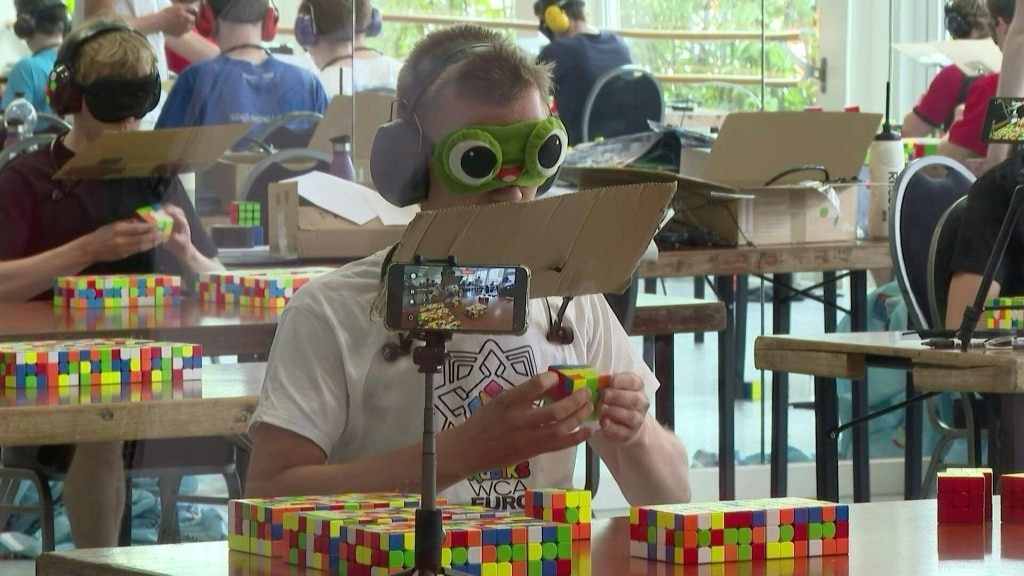
    Recent technological advances have reshaped training for the sport, even as many high-tech tools remain banned from competition. Many competitors mount GoPro cameras to their heads during training to record their solves and review their technique for errors. So-called “smartcubes” equipped with Bluetooth sensors can track every turn in a companion mobile app and suggest adjustments to improve speed, but these devices are not allowed during official competition. Technology offers no advantage anyway in one of the event’s most popular disciplines: blindfolded speedcubing, one of 17 total categories offered at the championships. In blindfolded competition, competitors have one hour to memorize the starting layout of as many cubes as possible, then solve all of them while wearing a blindfold. The current world record for the discipline stands at 63 correctly solved cubes in a single round.

    Heading up the 1,200-participant event alongside 250 volunteers and officials is Yinte Dik, the 25-year-old accountant and longtime speedcuber who has competed internationally since 2017. Dik noted that the tournament draws participants across a wide generational range, from competitors as young as 8 years old to seasoned players up to 71. At the European continental level, Poland’s national team is widely recognized as the powerhouse to beat, while the United States and China field the strongest competitors globally.

    While competitive speedcubing can be an intense, high-pressure sport, Dik emphasized that it is built around an inclusive, tight-knit global community that welcomes new participants of all backgrounds. “Everyone can train, so it’s not that you have to have big brains or something, everyone can do it,” Dik told AFP. “You just have to practise a lot and you can make it.”

  • Argentines and Spaniards face divided loyalties ahead of Spain-Argentina World Cup final

    Argentines and Spaniards face divided loyalties ahead of Spain-Argentina World Cup final

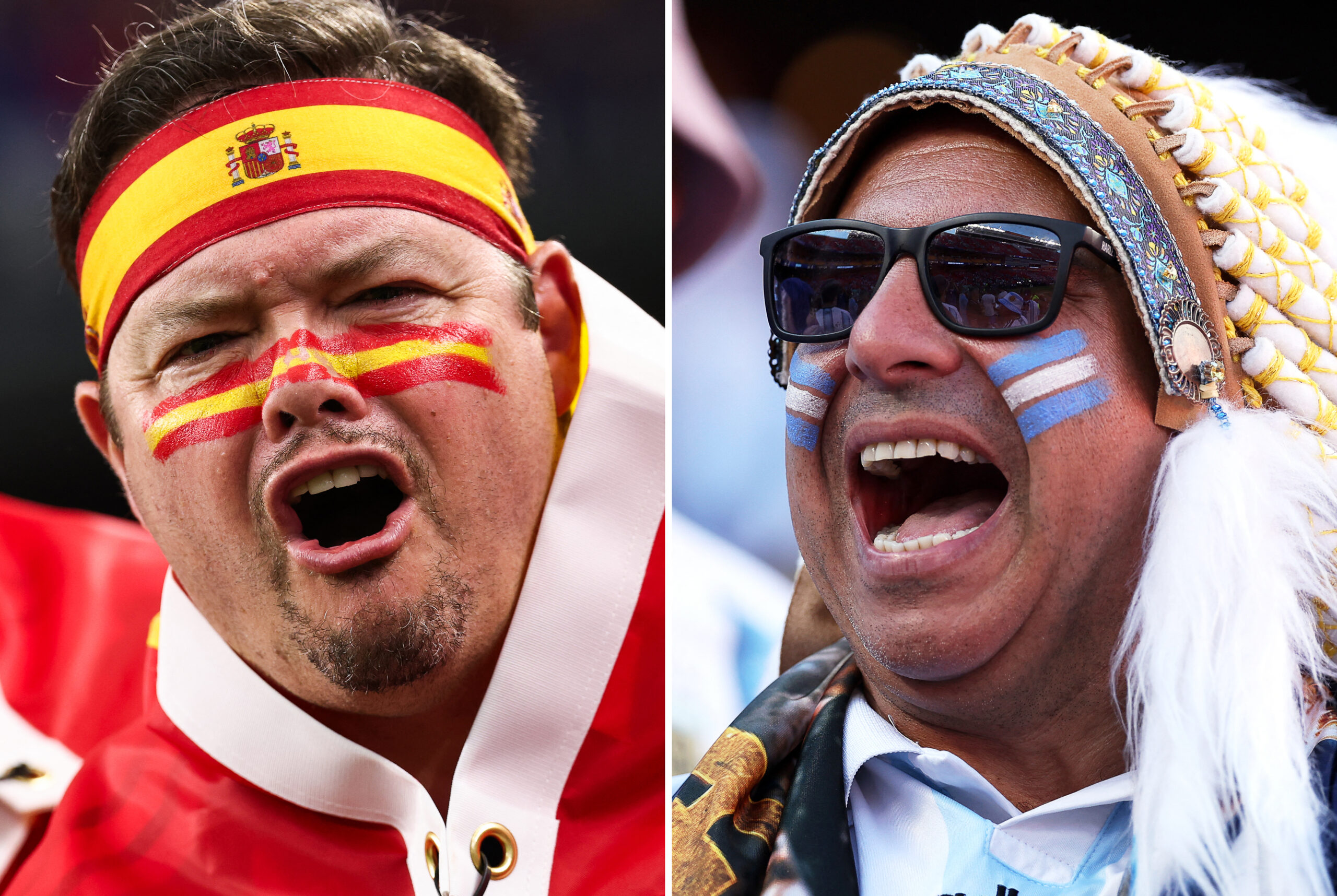
    The 2026 FIFA World Cup’s final showdown between Spain and Argentina is far more than a battle for soccer’s biggest global prize — it is an unexpected emotional test for hundreds of thousands of people with deep ties to both Spanish-speaking nations, whose shared histories and cultures have bound their communities together for centuries. This historic match, set to take place in New Jersey, marks the first time two Spanish-speaking countries have met in a World Cup final since the very first tournament in 1930, where hosts Uruguay defeated Argentina 4-2 in Montevideo.

    The bond between Argentina and Spain stretches back to the founding of Argentina’s capital, Buenos Aires, by Spanish explorer Pedro de Mendoza in the mid-1500s. Even after Argentina won its independence from Spanish rule, the Iberian Peninsula’s cultural influence persisted and grew, amplified by massive waves of Spanish immigration to Argentina in the first half of the 20th century. Today, millions of Argentines can trace their lineage to Spanish ancestors, while reverse migration over the past 50 years has made Spain home to more than 450,000 Argentine-born people, according to 2025 Spanish census data. This interconnectedness extends to soccer itself: Argentine legends Alfredo Di Stéfano and Lionel Messi became global icons playing for Spain’s most storied clubs, Real Madrid and FC Barcelona respectively.

    Unlike many high-stakes international soccer matchups, this final does not grow out of a long-standing bitter rivalry. In fact, the two nations have only faced off once before in World Cup history, a 1966 group stage match that ended in an Argentine victory. That lack of history has not eased the internal conflict for fans with split loyalties, however.

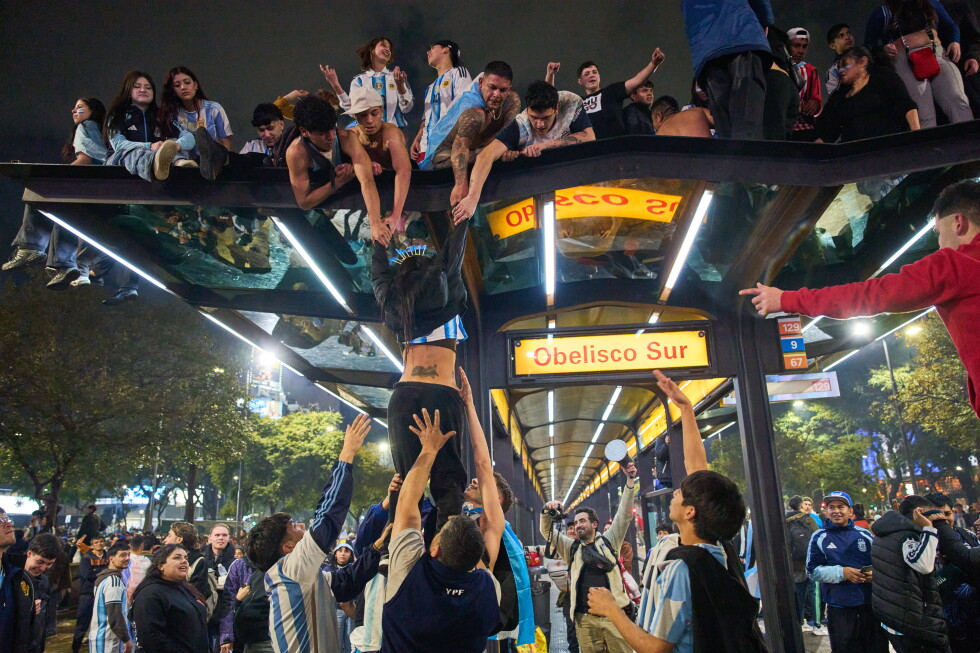
    For long-term Argentine residents born in Spain, the choice between supporting La Furia Roja (Spain’s national team) or La Albiceleste (Argentina’s national team) feels like an impossible choice between two family members. Juan Manuel Posada, a 75-year-old originally from Asturias who moved to Buenos Aires in 1968, summed up the conflict: “It feels like being caught between a rock and a hard place.” Though his heart remains tied to his native Asturias and the Spanish national team — and he supports Spanish club Sporting de Gijón alongside Argentina’s Independiente de Avellaneda — he says he will not be heartbroken if Argentina claims the trophy. Posada laughed as he recalled a deal he struck with his Argentine grandson: the pair will celebrate no matter who wins, but he doubts they would risk wearing a Spanish jersey to celebrate at the Obelisk, Buenos Aires’ iconic central gathering spot for Argentine national team victory parties.

    Eighty-one-year-old Manuel Fernández Acevedo, who moved from Galicia in northern Spain to Argentina as a young child, echoed that balanced perspective. “May the best team win. If Spain wins, that’s great, and if it’s Argentina’s turn, that’s fine too,” he said.

    The same divided excitement holds for the hundreds of thousands of Argentines who have built new lives in Spain, driven to leave their home country by decades of political instability and repeated economic crises. Nineteen-year-old Nahuel Barreta, who has lived in Málaga for a year, says he views the match as a respectful contest between family. “It feels like home here. We’re going to watch the match at a downtown bar with friends — it’s our usual ritual. I’ve never experienced a World Cup like this,” he said.

    In recent days, this unique final has spawned viral humor across social media, with thousands of users sharing stories of Argentine-Spanish couples declaring temporary “divorces” until the final whistle, and playful battles to convince children to root for their preferred side. For a match that pits two deeply connected nations against each other for soccer’s highest honor, there is no doubt: this is a World Cup final that feels like a truly family affair.

  • Why the World Cup final has morphed into a debate on Palestine and Israel

    Why the World Cup final has morphed into a debate on Palestine and Israel

    As global football communities and sports networks engage in heated debates over the outcome of the 2026 FIFA World Cup final, the showdown between Spain and Argentina has transformed into far more than a contest for the sport’s most prestigious trophy or a battle for national bragging rights. Across social media platforms, from viral TikTok clips to widely shared X posts and memes, thousands of fans worldwide have framed Sunday’s final as a de facto referendum on political solidarity with Palestine, amid the ongoing Israeli military campaign in Gaza that has drawn widespread global condemnation.

    Many online observers have framed the match in stark political terms: “Pro-Palestine vs Pro-Israel,” one X user posted of the upcoming clash. Tensions have risen online as Argentina faces widespread criticism from pro-Palestinian advocates, who link the defending 2022 champions to Israel due to the close political alignment between the current Argentinian government and Tel Aviv. Argentinian President Javier Milei has publicly declared himself “sincerely proud to be the most Zionist president in the world,” a statement that has drawn significant international attention and backlash. Last week, Israeli Prime Minister Benjamin Netanyahu openly confirmed his support for Argentina in the final during a podcast interview, specifically citing Milei as “a great friend of Israel” as the reason for his backing. Israeli politicians further amplified this connection on Wednesday, taking to social media to publicly celebrate Argentina’s semi-final victory over England.

    On the opposite side, Spanish Prime Minister Pedro Sánchez has earned a reputation as one of Europe’s most prominent and vocal advocates for Palestinian statehood and rights. Under Sánchez’s leadership, Spain officially recognized the State of Palestine as a sovereign nation in 2024, implemented a full arms embargo on Israel, and has consistently pushed for a permanent ceasefire to end the humanitarian crisis in Gaza. This clear political stance has won Spain widespread support from pro-Palestinian fans globally, with many sharing footage of Sánchez’s 2024 recognition announcement alongside posts declaring “Full support to Spain in the World Cup Final.”

    “You have a team that is literally endorsed by Netanyahu… That doesn’t look good… Against the team that is representing the country in Europe that is most outspoken against the genocide in Gaza,” one TikTok user posted, echoing a sentiment shared by thousands of other fans. “We were all rooting for Argentina four years ago, but some more fucked up shit happened, and we don’t feel that way anymore.” Another X user expanded on this framing, writing, “This Sunday’s World Cup final is about more than just football. It’s a battle between good and evil: between one of the countries that has been among the strongest supporters of Palestine and the world’s most Zionist country, in the words of its own president.”

    The political framing has extended beyond government leadership to the players themselves. A viral video of Spanish young star Lamine Yamal waving the Palestinian flag during FC Barcelona’s La Liga title celebration parade in May has been widely reshared by pro-Palestinian fans, who contrast this public display with the silence of Argentina’s global icon Lionel Messi on the Israel-Gaza conflict. Critics of Argentina have also highlighted Messi’s past brand partnerships with Israeli companies, as well as photographs from FC Barcelona’s 2013 “Peace Tour” to Israel and Palestine, which show Messi posing with then-Israeli Prime Minister Benjamin Netanyahu and former Israeli President Shimon Peres at the Western Wall. These images have been heavily promoted by Israeli official channels, sparking backlash from pro-Palestinian activists. However, other observers have noted that Messi also met Palestinian President Mahmoud Abbas in the occupied West Bank during the same tour, arguing that the football star should not be held personally responsible for an official club trip organized by FC Barcelona.

    This politicization of football is not a new development during this 2026 World Cup, with Palestine taking center stage in multiple matches throughout the tournament. In one notable earlier incident, Argentinian fans waved Israeli flags at Egyptian head coach Hossam Hassan after he celebrated his team’s first ever knockout stage victory by entering the pitch carrying a Palestinian flag. During Spain’s 2-0 semi-final win against France, Oscar-winning Spanish actor Javier Bardem made headlines after he was filmed accepting a Palestinian flag from a fan in the stands. When asked for a message to the Palestinian people, Bardem pressed his hand to his heart and responded simply, “Existence is resistance,” and later reaffirmed “Spain stands with Palestine” in a separate video posted during the team’s round-of-16 match against Portugal.

    Beyond the debate over Palestine solidarity, Argentina has also faced online criticism over widespread perceptions of unfair bias from FIFA in favor of the defending champions. The wave of international criticism has prompted many Argentinian fans to push back online, working to clarify that Milei’s hardline pro-Zionist stance does not reflect the views of the general Argentinian public, many of whom hold pro-Palestine views. Other Argentinian supporters have pushed back against what they call an oversimplification of the match, pointing out that Argentina recognized Palestine as a free and independent state all the way back in 2010, under then-president Cristina Fernández de Kirchner, far earlier than Spain’s 2024 recognition.

    Dyab Abou Jahjah, president of the Hind Rajab Foundation, offered a nuanced perspective on the politicization of the final in a post Wednesday. “Sport has always been intertwined with politics, and it always will be. But reality is more complex than that,” he wrote. “Argentina is not Israel. Argentina is not Zionist. It cannot be reduced to any ideological camp… On Sunday, I will still be supporting Spain, out of genuine gratitude for that explicit solidarity. But I will not approach the match as a fanatic or an ideologue. If Argentina plays as brilliantly as they did today, they will deserve to win.”

  • Uncertainty clouds the forecast on whether wildfire smoke will affect the World Cup final

    Uncertainty clouds the forecast on whether wildfire smoke will affect the World Cup final

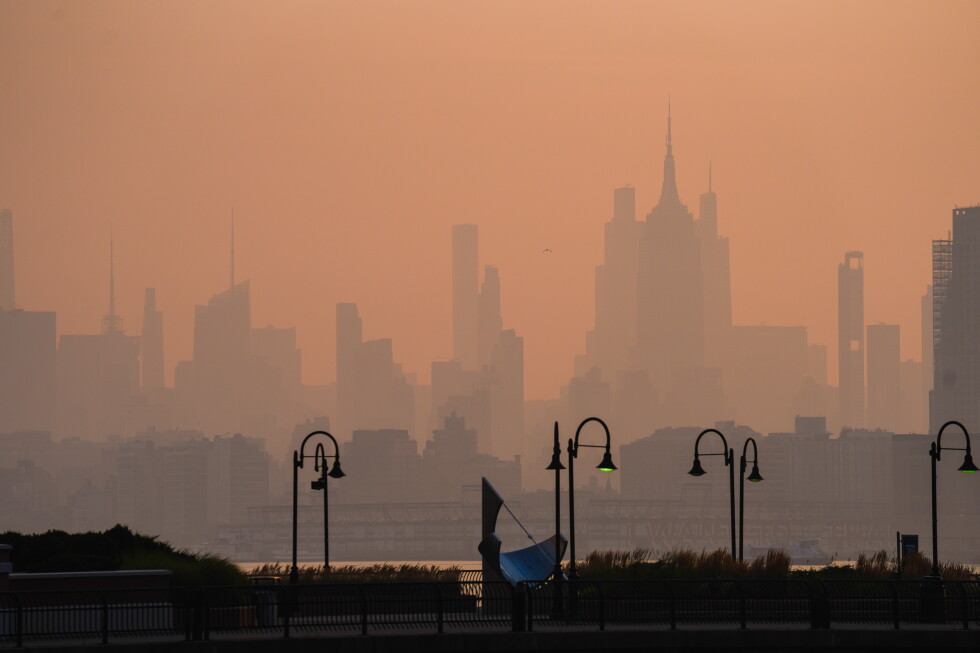
    EAST RUTHERFORD, N.J. — As the highly anticipated World Cup final between Spain and Argentina approaches Sunday, a shroud of uncertainty from distant Canadian wildfires hangs over the match, with hazy conditions and unpredictable air quality threatening to disrupt one of soccer’s biggest global stages.

    Spanish midfielder Mikel Merino acknowledged Friday that the acrid scent and visible haze from the wildfires, which have spread across large swathes of the eastern U.S., are impossible to miss, but his team is working to tune out the disruption. “For a game that is as important as a World Cup final, you have to be able to shut out external factors as much as possible,” Merino said. “Luckily, we are being careful with every detail thanks to the federation and the organizers of the World Cup.”

    At present, the full impact of the smoke on Sunday’s match remains unclear. The World Health Organization projects that air quality in East Rutherford, the host city for the final, will improve to the “moderate” range by game day. However, that forecast is complicated by incoming weather and shifting wildfire activity.

    A controversial misstep last week amplified concerns over team safety: Spain held a full outdoor practice in East Hanover on Thursday, when local air quality fell into the hazardous range. Environmental and health experts have criticized the decision, noting the session should have been moved indoors. Requests for comment sent to FIFA and the Spanish Football Association asking whether an indoor practice was considered or logistically possible went unanswered.

    Air quality did show measurable improvement across the region on Friday, forecasters say, but shifting conditions could change the outlook rapidly. Up to 1.25 inches of rain is expected to fall across northern New Jersey on Saturday, but a second mass of smoky air is projected to move in behind the storm system.

    “If the fire intensity really picks up again through Saturday, it’s possible it puts more smoke into the atmosphere that then might quickly follow that rain event,” explained Mark Parrington, senior scientist at the Copernicus Atmosphere Monitoring Service. “Following that, it looks like there is another smoky air mass following in behind that system, but it’s not clear right now how much or how it might reach New York or New Jersey, when it comes to actually Sunday.”

    Beyond the disruption to the match, health experts warn that wildfire smoke poses significant risks to attendees and athletes alike, a threat amplified by rising global temperatures that have driven larger and more intense wildfire seasons across North America. Multiple medical studies have confirmed that wildfire smoke contributes to tens of thousands of premature deaths annually, impacting nearly every organ system in the human body.

    Within hours of smoke exposure, particulate matter can trigger severe asthma flare-ups and increase emergency ambulance dispatches. Medical researchers explain that smoke irritates the body, triggering widespread inflammation that targets a person’s pre-existing vulnerable areas, setting off a cascade of immune system responses that can lead to serious cardiovascular and respiratory complications. As a general rule, Parrington noted, public health guidance advises limiting strenuous outdoor activity when pollutant levels are high, a warning that carries extra weight for at-risk attendees with pre-existing conditions.

    White House officials confirmed Friday that former President Donald Trump is scheduled to meet with FIFA President Gianni Infantino later that day to discuss the situation. Senior members of the White House FIFA Task Force, including executive director Andrew Giuliani, have been in ongoing talks with soccer’s governing body to monitor the wildfire impact and coordinate preparations, according to an anonymous official familiar with internal discussions.

    Sunday’s final is expected to draw roughly 80,000 fans to the open-air MetLife Stadium in the Meadowlands, the shared home venue of the NFL’s New York Giants and New York Jets. Organizers have not yet announced any plans to postpone, move, or modify the match schedule as of Friday’s update.

    This report was assembled with contributions from SNTV videographer Davidde Corran (East Hanover, N.J.), AP White House reporter Seung Min Kim, AP Science Writer Seth Borenstein (Washington, D.C.), and AP Sports Writer Jim Vertuno (Austin, Texas).

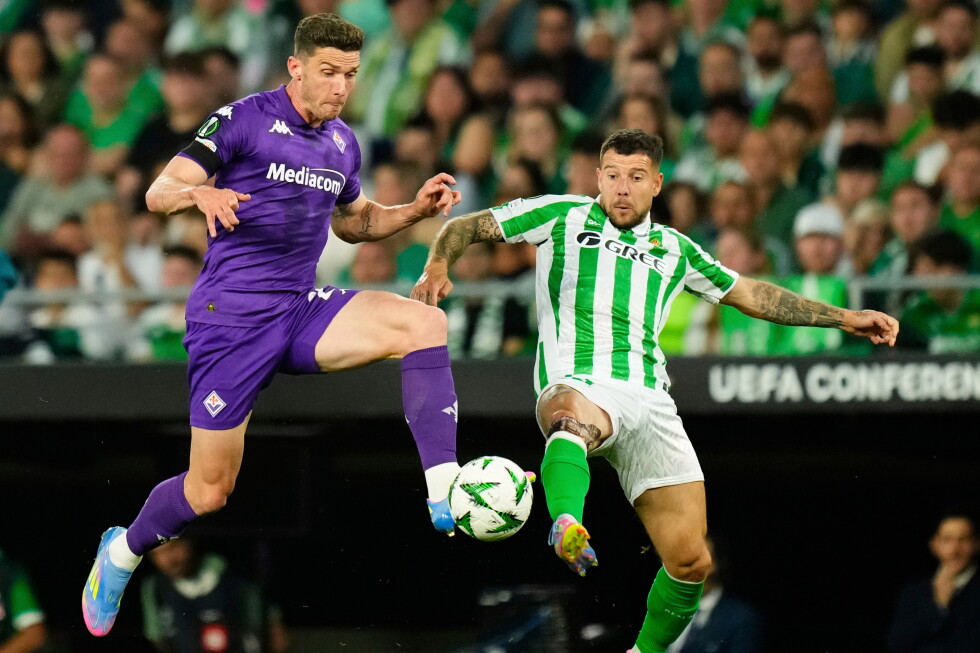
  • Schalke signs former Germany winger Robin Gosens on loan from Fiorentina

    Schalke signs former Germany winger Robin Gosens on loan from Fiorentina

    Fresh off earning promotion back to Germany’s top-tier Bundesliga, FC Schalke 04 has announced a high-profile loan signing of 32-year-old former German national team winger Robin Gosens from Italy’s Serie A club ACF Fiorentina. The deal, confirmed by the Gelsenkirchen-based club on Friday, includes a pathway to a permanent transfer at the end of the loan spell if pre-agreed performance and league conditions are met.

    German football outlet Kicker has detailed the two key clauses tied to the permanent move: Schalke must successfully avoid relegation and retain its Bundesliga status for the 2025-26 season, and Gosens must hit a specified threshold of first-team appearances for the club across the loan term.

    Schalke’s sporting director Youri Mulder expressed overwhelming enthusiasm about the acquisition, framing Gosens as a transformative addition for the newly promoted side. “We’re delighted that Robin Gosens has chosen us,” Mulder stated in the club’s official announcement. “We’re getting a player of immense quality and a true leader for our squad. Over the past few years, Robin has demonstrated his commitment, mentality, and an unwavering drive for success at both club and international levels.”

    A versatile left-sided player capable of playing both wing and full-back, Gosens brings more than a decade of top-flight experience across three major European leagues to Schalke. He earned 24 caps for the German men’s national team, with his most recent international appearance coming in 2025.

    Gosens’ career path traces back to his birthplace of Emmerich, a German town on the border with the Netherlands, where he was born to a German mother and Dutch father. He moved across the border to join the youth academy of Dutch top-flight club Vitesse Arnhem just before his 18th birthday in 2012, kicking off his professional career in the Eredivisie. After a breakout spell with Heracles Almelo, he earned a move to Italy’s Atalanta BC in 2017, where he first rose to global prominence under manager Gian Piero Gasperini. Atalanta’s iconic 3-4-3 formation played to Gosens’ relentless work rate, allowing him to thrive in both overlapping left-back and attacking left winger roles.

    Following his successful stint at Atalanta, Gosens moved to Inter Milan, before returning to the Bundesliga with Union Berlin in 2023, his first spell at a German club. He joined Fiorentina in 2024, and now returns to the Bundesliga just one year later to link up with newly promoted Schalke.

  • Garry Sobers, towering West Indies cricket all-rounder, dies at 89

    Garry Sobers, towering West Indies cricket all-rounder, dies at 89

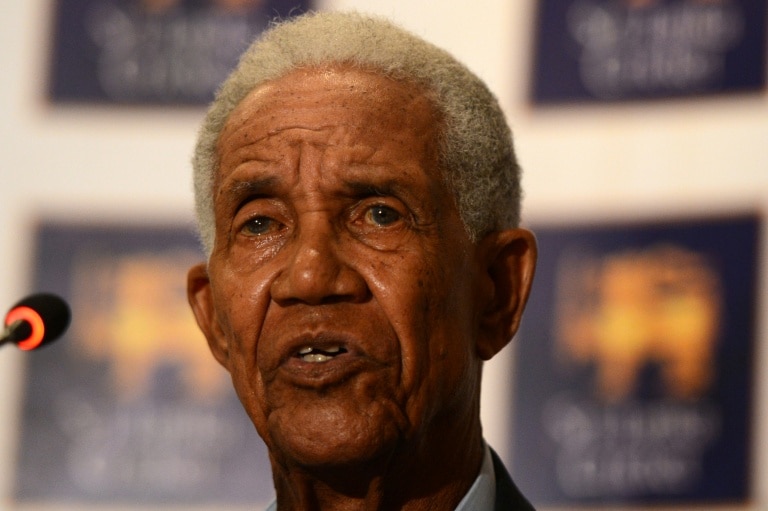
    The global cricket community is mourning the passing of Sir Garfield ‘Garry’ Sobers, the iconic West Indies all-rounder universally regarded as one of the greatest players to ever step onto a cricket field, who died at the age of 89.

    Across the 20th century, cricket produced no shortage of generational talent, but fans and experts alike have long placed just two players in a tier of their own: legendary Australian batsman Donald Bradman and Sobers. Confirming the loss on social media Friday, West Indies Cricket shared a heartfelt tribute: “A great innings has come to an end. In our hearts, now and forever, Sir Garfield Sobers.”

    Sobers’ standing in the sport was cemented decades ago. In a 1999 poll of 100 leading cricket experts conducted by Wisden for its selection of Five Cricketers of the 20th Century, Sobers earned 90 votes — falling just 10 votes shy of a perfect tally that only Bradman achieved. Even Bradman himself, who passed away in 2001, offered Sobers the highest possible praise, calling him “in my opinion, the greatest cricketer of all time.”

    That glowing acclaim stems not just from Sobers’ impressive statistical record or his graceful on-field style, but from the unprecedented breadth of his skill across every aspect of the game. As a batsman, he compiled 8,032 Test runs across 93 matches at an average of 57.78 — a career mark that would alone secure any player a place in cricket’s hall of fame. As a bowler, he claimed 235 Test wickets at an average of 34.03, with the rare versatility to open the bowling with fast left-arm pace or switch to orthodox or wrist spin when pitches deteriorated, a talent that caught the eye of West Indies selectors when he was just a teenager. He was also one of the most agile and sharp fielders of his era, holding 109 Test catches — most often at slip, though as captain he would regularly position himself in the high-risk short-leg spot when off-spinner Lance Gibbs was bowling.

    Australian all-rounder Alan Davidson summed up Sobers’ unmatched versatility in a 2016 interview marking Sobers’ 80th birthday: “The bloke could do just about anything on a cricket field except umpire. He was a complete cricketer, magnificent fielder, bowled all types of bowling, and when in form, he absolutely decimated great bowling attacks. You could not set a field to him because he just had that innate ability to be able to score runs whenever he wanted to.”

    Born Garfield St Aubrun Sobers in Bridgetown, Barbados, in July 1936, Sobers’ early life was marked by tragedy when he was just six years old: his father, a merchant seaman, died when his ship was torpedoed by a German U-boat off the coast of North Carolina. Even from a young age, Sobers displayed extraordinary athletic talent across multiple sports, and he made his first-class debut for Barbados as a spinner against touring India in January 1953, at just 16 years old. A year later, after facing the touring Marylebone Cricket Club (MCC) side and just two first-class appearances total, he was called up as a last-minute replacement for the injured Alf Valentine to make his Test debut against England at Sabina Park in March 1954. Though England won the match by nine wickets, Sobers made an immediate impact, dismissing star batsman Trevor Bailey in his very first Test over and finishing with four wickets for 75 runs in England’s first innings.

    It took just four years for Sobers to etch his name into the record books, during a Test against Pakistan in Kingston. At the time, Len Hutton’s 364 against Australia had stood as the highest individual Test score for 20 years. Sobers hit an unbeaten 365 in that match, breaking the record in his first ever Test century; the new record stood for 39 years, until fellow West Indian Brian Lara hit 375 against England in 1994. Later that same decade, in the famous tied Test of Brisbane in 1960-61, Sobers scored a blistering 132 that set the pace for one of the most memorable Test series in cricket history. Davidson later called that innings “absolutely one of the greatest I have ever seen in my life. He didn’t just beat the field. He split the field. His placement was just incredible.”

    In 1964-65, Sobers took over from Frank Worrell as West Indies captain, leading the side to its first ever series win against Australia at home. He captained the side through 1972, when he handed the reins to Rohan Kanhai, with mixed overall results, but his leadership laid critical groundwork for the West Indies team that would grow into the most dominant side in international cricket through the 1970s and 1980s. Even as his career wound down, Sobers delivered historic performances: in 1972, he scored 254 for the Rest of the World team at the Melbourne Cricket Ground, an innings Bradman called “probably the greatest exhibition of batting ever seen in Australia.”

    Beyond international cricket, Sobers led South Australia to a Sheffield Shield title and played county cricket for Nottinghamshire in England. In 1968, he made global cricket history once again, becoming the first first-class cricketer to hit six sixes off a single six-ball over — a feat that was only matched once in top-tier first-class cricket in the decades that followed, by Indian all-rounder Ravi Shastri in 1985.

    Sobers retired from Test cricket in 1974, and was knighted for his contributions to sport a year later. In 2004, the International Cricket Council created the Sir Garfield Sobers Trophy, awarded annually to the best men’s cricket player in the world, in his honor. For most fans and contemporaries, however, Bradman’s simple, unreserved praise will remain the defining description of his legacy: the greatest cricketer of all time.